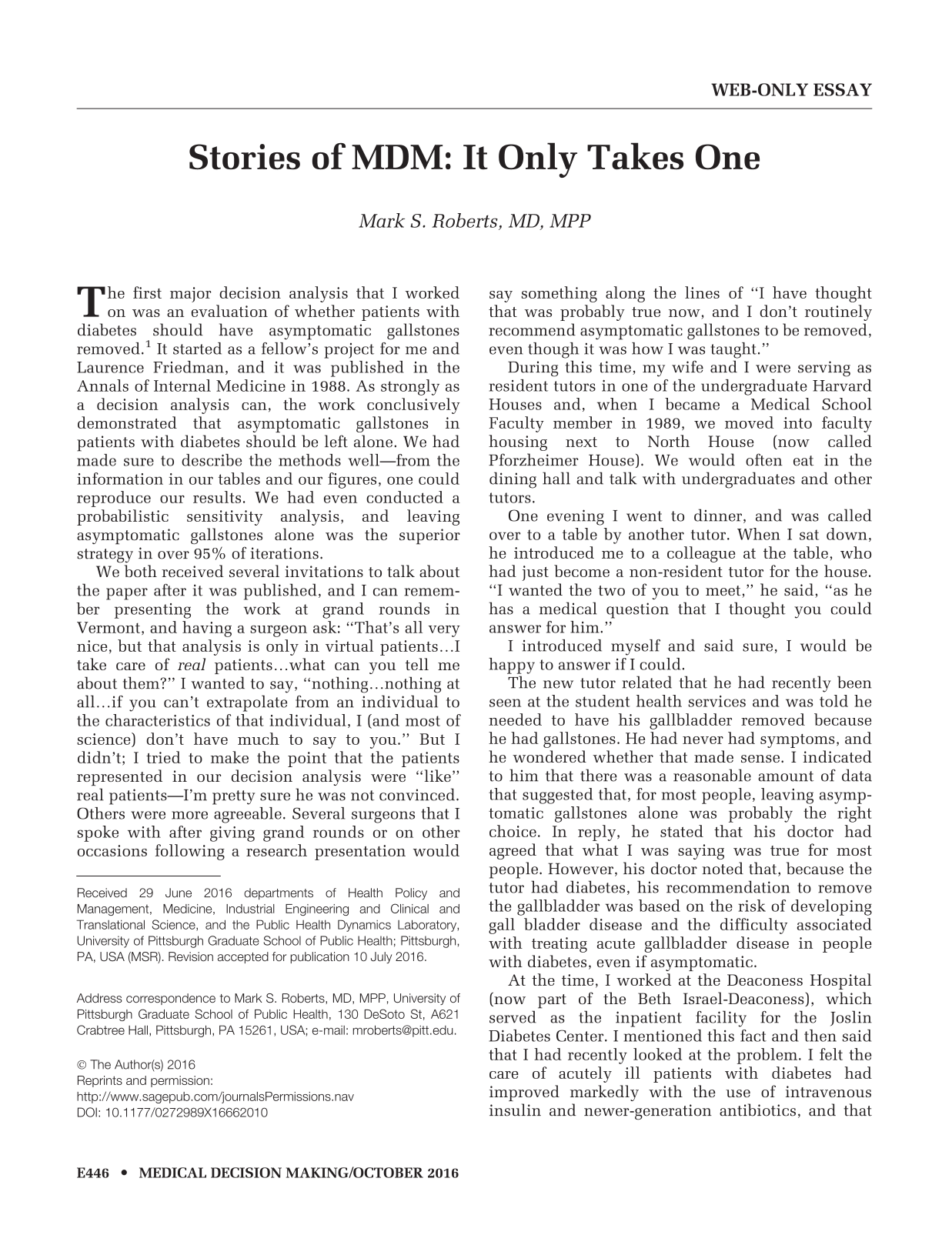
Other
 Restricted accessOtherFirst published October, 2016pp. E446-E447

Select search scope: search across all journals or within the current journal


 Restricted accessOtherFirst published October, 2016pp. E446-E447Restricted accessAbstractFirst published October, 2016pp. E448-E609
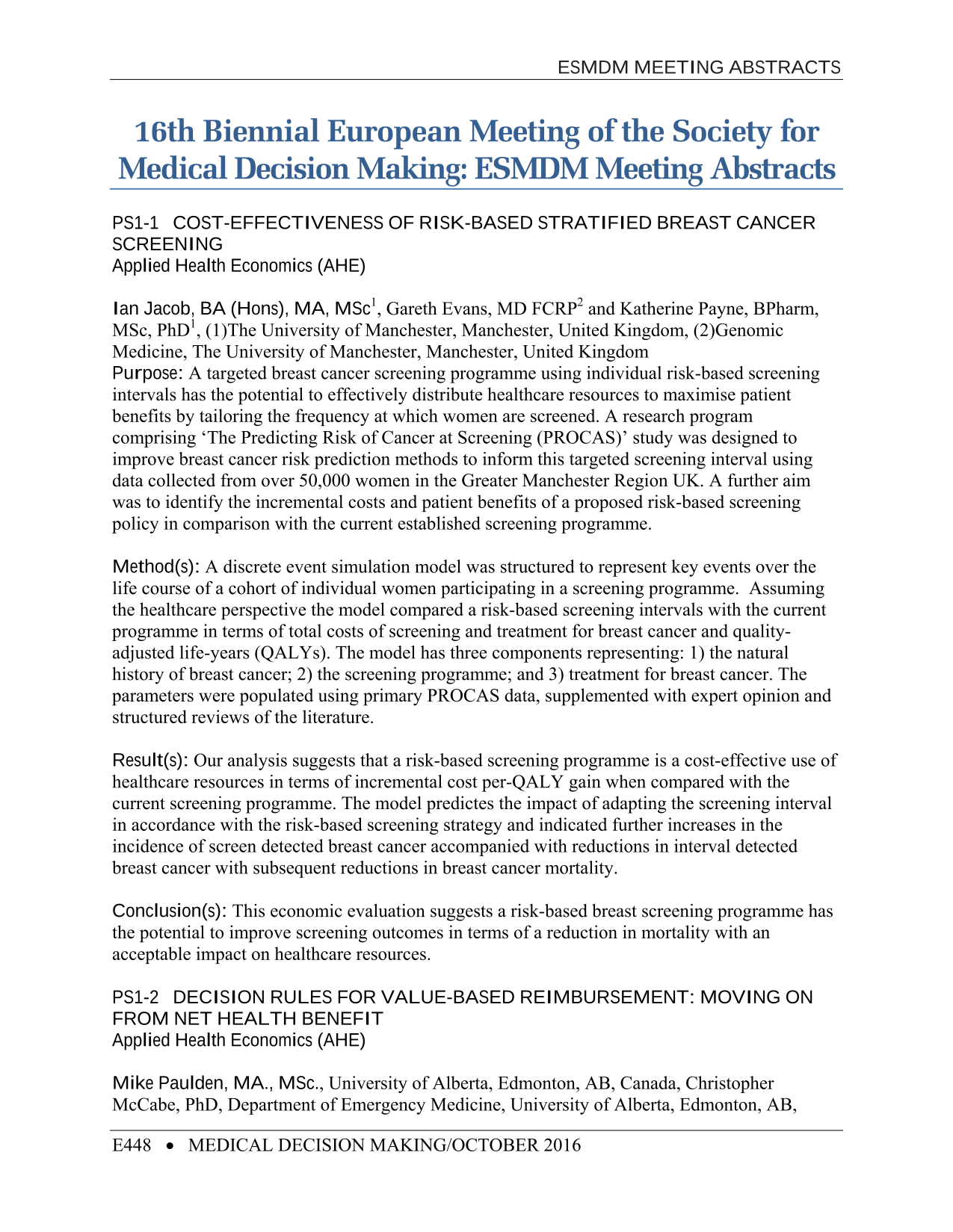 Restricted accessOtherFirst published October, 2016pp. E610-E623
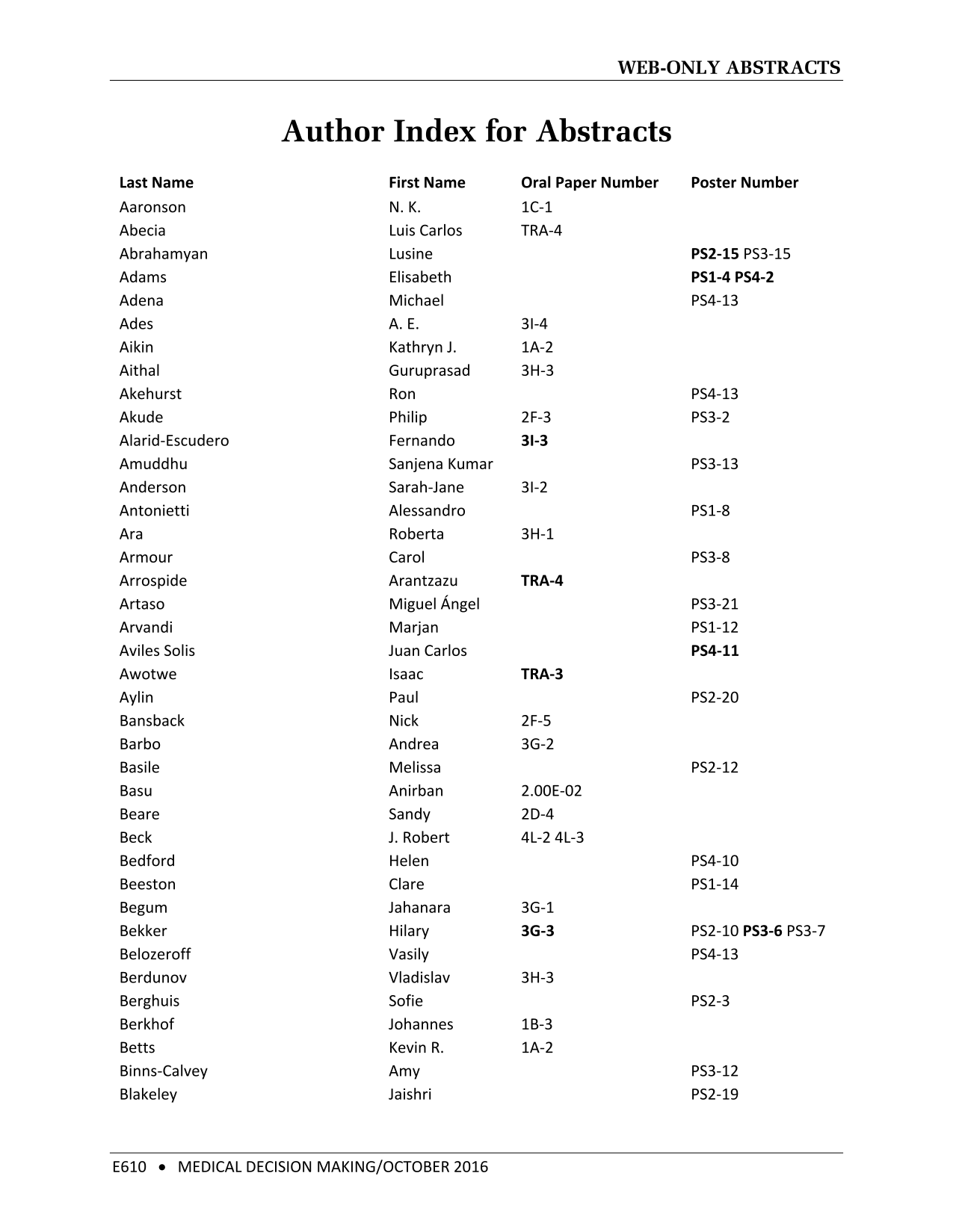 Restricted accessEditorialFirst published October, 2016pp. 795-797
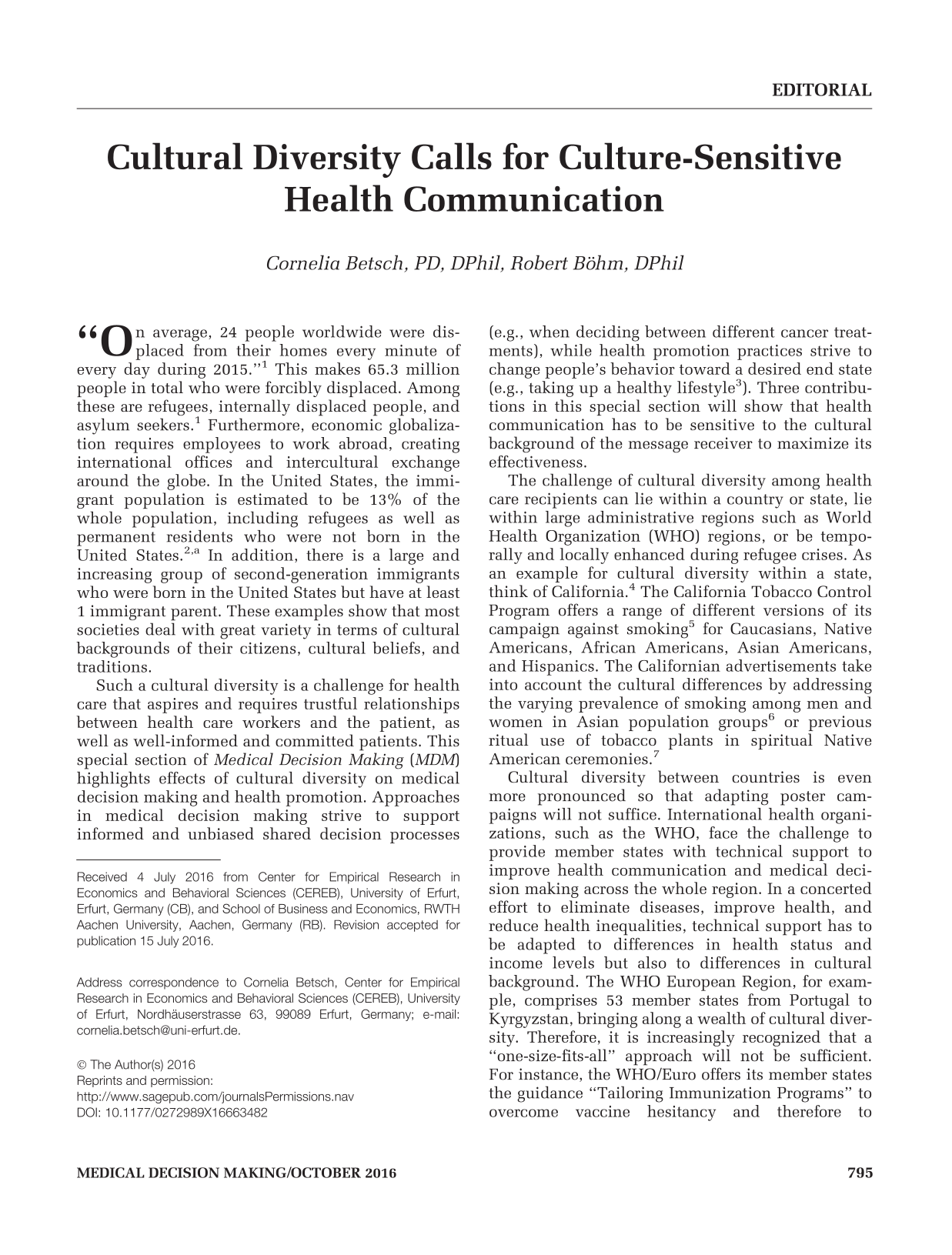 Restricted accessReview articleFirst published October, 2016pp. 798-810Restricted accessReview articleFirst published October, 2016pp. 811-833
This review introduces the concept of culture-sensitive health communication. The basic premise is that congruency between the recipient’s cultural characteristics and the respective message will increase the communication’s effectiveness. Culture-sensitive health communication is therefore defined as the deliberate and evidence-informed adaptation of health communication to the recipients’ cultural background in order to increase knowledge and improve preparation for medical decision making and to enhance the persuasiveness of messages in health promotion. To achieve effective health communication in varying cultural contexts, an empirically and theoretically based understanding of culture will be indispensable. We therefore define culture, discuss which evolutionary and structural factors contribute to the development of cultural diversity, and examine how differences are conceptualized as scientific constructs in current models of cultural differences. In addition, we will explicate the implications of cultural differences for psychological theorizing, because common constructs of health behavior theories and decision making, such as attitudes or risk perception, are subject to cultural variation. In terms of communication, we will review both communication strategies and channels that are used to disseminate health messages, and we will discuss the implications of cultural differences for their effectiveness. Finally, we propose an agenda both for science and for practice to advance and apply the evidence base for culture-sensitive health communication. This calls for more interdisciplinary research between science and practice but also between scientific disciplines and between basic and applied research.
Restricted accessResearch articleFirst published October, 2016pp. 834-843Restricted accessResearch articleFirst published October, 2016pp. 844-853Uptake of vaccination against seasonal influenza is suboptimal in most countries, and campaigns to promote vaccination may be weakened by clustering of opinions and decisions not to vaccinate. This clustering can occur at myriad interacting levels: within households, social circles, and schools. Given that influenza is more likely to be transmitted to a household contact than any other contact, clustering of vaccination decisions is arguably most problematic at the household level. We conducted an international survey study to determine whether household members across different cultures offered direct advice to each other regarding influenza vaccination and whether this advice was associated with vaccination decisions. The survey revealed that household members across the world advise one another to vaccinate, although to varying degrees, and that advice correlates with an increase in vaccination uptake. In addition, respondents in Japan, China, and the United States were less likely to offer advice to older adults than to the young, despite older adults’ being the target age group for vaccination in both Far Eastern countries. Furthermore, advice was not primarily directed to household members within the age groups advised to vaccinate by national health policies. In Japan, advice was offered more to ages outside of the policy guidelines than inside. Harnessing the influence of household members may offer a novel strategy to improve vaccination coverage across cultures worldwide.
Restricted accessResearch articleFirst published October, 2016pp. 854-867Restricted accessResearch articleFirst published October, 2016pp. 868-875Restricted accessResearch articleFirst published October, 2016pp. 876-886Restricted accessResearch articleFirst published October, 2016pp. 887-899Restricted accessResearch articleFirst published October, 2016pp. 900-910Restricted accessResearch articleFirst published October, 2016pp. 911-922