Editorial
 Available accessEditorialFirst published May, 2016pp. 251-252

Select search scope: search across all journals or within the current journal


 Available accessEditorialFirst published May, 2016pp. 251-252Available accessResearch articleFirst published May, 2016pp. 253-264
Studies have demonstrated the extensive use of coercion in Norwegian nursing homes, which represents ethical, professional as well as legal challenges to the staff. We have, however, limited knowledge of the experiences and views of nursing home patients and their relatives.
The aim of this study is to explore the perspectives of nursing home patients and next of kin on the use of coercion; are there situations where the use of coercion can be defended, and if so, under which circumstances?
The data are based on individual interviews with 35 patients living in six nursing homes and seven focus group interviews with 60 relatives.
Participation was based on written informed consent, and the study was approved by the Regional Committees for Medical and Health Research Ethics.
More than half of the patients and the majority of the relatives accepted the use of coercion, trusting the staff to act in the patient’s best interest. However, the acceptance of coercion is strongly related to the patients’ lack of understanding, to prevent health risks and to preserve the patient’s dignity.
The majority of nursing home patients and relatives accepted the use of coercion in specific situations, while at the same time they emphasised the need to try alternative strategies first. There is still a need for good qualitative research on the use of coercion in nursing homes, especially with a closer focus on the perspectives and experiences of nursing home patients.
Available accessResearch articleFirst published May, 2016pp. 265-276Acting ethically, in accordance with professional and personal moral values, lies at the heart of nursing practice. However, contextual factors, or obstacles within the work environment, can constrain nurses in their ethical practice – hence the importance of the workplace ethical climate. Interest in nurse workplace ethical climates has snowballed in recent years because the ethical climate has emerged as a key variable in the experience of nurse moral distress. Significantly, this study appears to be the first of its kind carried out in New Zealand.
The purpose of this study was to explore and describe how registered nurses working on a medical ward in a New Zealand hospital perceive their workplace ethical climate.
This was a small, qualitative descriptive study. Seven registered nurses were interviewed in two focus group meetings. An inductive method of thematic data analysis was used for this research.
Ethics approval for this study was granted by the New Zealand Ministry of Health’s Central Regional Health and Disability Ethics Committee on 14 June 2012.
The themes identified in the data centred on three dominant elements that – together – shaped the prevailing ethical climate: staffing levels, patient throughput and the attitude of some managers towards nursing staff.
While findings from this study regarding staffing levels and the power dynamics between nurses and managers support those from other ethical climate studies, of note is the impact of patient throughput on local nurses’ ethical practice. This issue has not been singled out as having a detrimental influence on ethical climates elsewhere.
Moral distress is inevitable in an ethical climate where the organisation’s main priorities are perceived by nursing staff to be budget and patient throughput, rather than patient safety and care.
Available accessResearch articleFirst published May, 2016pp. 277-293The concept of dignity can be divided into two main attributes: absolute dignity that calls for recognition of an inner worth of persons and social dignity that can be changeable and can be lost as a result of different social factors and moral behaviours. In this light, the nursing profession has a professional dignity that is to be continually constructed and re-constructed and involves both main attributes of dignity.
The purpose of this study was to determine how nurses described nursing’s professional dignity in internal medicine and surgery departments in hospital settings.
The research design was qualitative.
This study was approved by the ethics committees of the healthcare organizations involved. All the participants were provided with information about the purpose and the nature of the study.
A total of 124 nurses participated in this study.
The data were collected using 20 focus group sessions in different parts of Italy. The data were analysed by means of a conventional inductive content analysis starting from the information retrieved in order to extract meaning units and sorting the arising phenomena into conceptually meaningful categories and themes.
Nursing’s professional dignity was deeply embedded in the innermost part of individuals. Regarding the social part of dignity, a great importance was put on the values that compose nursing’s professional identity, the socio-historical background and the evolution of nursing in the area considered. The social part of dignity was also linked to collaboration with physicians and with healthcare assistants who were thought to have a central role in easing work strain. Equally important, though, was the relationship with peers and senior nurses.
The organizational environments under scrutiny with their low staffing levels, overload of work and hierarchical interactions did not promote respect for the dignity of nurses. To understand these professional values, it is pivotal to comprehend the role of different health professions in their cultural milieu and the evolution of the nursing profession in diverse countries.
Available accessResearch articleFirst published May, 2016pp. 294-307Suicidality is a life-and-death struggle in deep loneliness and psychological pain. There is a lack of knowledge about what could help the suicidal patients’ struggle for continued life. The aim of this study was to develop a deeper understanding of suicidal patients in the aftermath of suicidal attempts. The research question was ‘What resources in the person himself or herself and his or her surroundings are crucial in a suicidal crisis to maintaining the will to live and hope for life’?
The study has a hermeneutic approach and an explorative design. Data were collected using semi-structured interviews with 10 participants: men and women 21–52 years of age. The context was two emergency psychiatric units and one crisis resolution team.
The participants signed an informed consent before the interviews were conducted.
This article presents three themes: (a) becoming aware of the desire to live, (b) an experience of connectedness and (c) someone who cares.
The suicidal person’s awareness of wishes, dreams, hopes and will, but also of their feelings in the aftermath of the suicide attempt, seemed to play a crucial role in a suicidal crisis. Experiences of connectedness remind the person of the responsibility in his or her own life and in the lives of others and seemed to strengthen the urge to go on. Private and professional relationships seem to be crucial in stimulating the desire and hope to go on living.
Becoming aware of the desire to live, being connected to others and experiencing someone who cares is necessary for life. Both private and professional networks seemed to be important resources that could remind the suicidal person of his or her own dignity as part of being human.
Available accessResearch articleFirst published May, 2016pp. 308-317Fear and aggression are often reported among professionals working in locked psychiatric wards and also among the patients in the same wards. Such situations often lead to coercive intervention. In order to prevent coercion, we need to understand what happens in dangerous situations and how patients and professionals interpret them.
What happens when dangerous situations occur in a ward? How do professionals and patients interpret these situations and what is ethically at stake?
Participant observation and interviews.
A total of 12 patients and 22 professionals participated.
This study has been accepted by the Regional Committee for Medical and Health Research Ethics in Norway.
(a) Both atmosphere and material surroundings were interweaved within dangerous situations, (b) the professionals applied stereotypes when interpreting dangerous situations and (c) the professionals and the patients had different interpretations of what triggered dangerous situations.
The discussion centres on how care ethics and a dialogical practice might contribute towards combating difficult situations and the ways in which change is an ongoing ethical process of becoming.
The ethics of care and a dialogical approach are suggested as ethical frameworks for preventing fear, danger and aggression in psychiatric wards. Both frameworks can be understood as patient-driven, including the relational and contextual perspectives. It means a shift from professionally driven processes to patient-driven dialogue.
Available accessResearch articleFirst published May, 2016pp. 318-327In this article, the right to health is discussed as a social right and an essential requisite in the construction and guarantee of human rights, more precisely human dignity, considering this right as a complex but effective process in the transformation of the social reality. In the first place, the activities of the public power and its difficulties to guarantee universal access to health are highlighted. This scenario ends up inhibiting the practice of the right to health and prevents users from enjoying and using it. In that sense, this article challenges and explores some alternatives to solidify and put in practice the right to health in Brazil. Departing from the analysis of the Unified Health System (SUS) and social participation in Brazil, this article discusses the judicialization of health in the country, highlighting the difficulties the State faces to equitably offer universal healthcare to society. This context offers an opportunity for reflection and a paradigm change, from the “judicialization of health” to the “judicialization of health policies.” Finally, the public health policies adopted by other countries are emphasized, in the attempt to construct the empowerment of human beings in the practice of their rights, particularly social participation and the discussion about the States’ responsibility to put their citizens’ right to health in practice. In conclusion, the political and collective construction of the right to health needs to be encouraged, distinguishing the legitimate interests of the different interlocutors involved.
Available accessResearch articleFirst published May, 2016pp. 328-338In modern society, death has become ‘forbidden’ fed by the medical technology to conquer death. The technological paradigm is challenged by a social-liberal political ideology in postmodern Western societies. The question raised in this study was as follows: Which arguments, attitudes, values and paradoxes between modern and postmodern tendencies concerning treatment and care of older persons with an implantable cardioverter defibrillator appear in the literature?
The aim of this study was to describe and interpret how the field of tension concerning older persons with an implantable cardioverter defibrillator – especially end-of-life issues – has been expressed in the literature throughout the last decade.
Paul Ricoeur’s reflexive interpretive approach was used to extract the meaningful content of the literature involving qualitative, quantitative and normative literature. Analysis and interpretation involved naive reading, structural analysis and critical interpretation.
The investigation complied with the principles outlined in the Declaration of Helsinki.
The unifying theme was ‘Normativity under change’. The sub-themes were ‘Death has become legitimate’, ‘The technological imperative is challenged’ and ‘Patients and healthcare professionals need to talk about end-of-life issues’. There seems to be a considerable distance between the normative approach of how practice ought to be and findings in empirical studies.
Modern as well as postmodern attitudes and perceptions illustrate contradictory tendencies regarding deactivation of the implantable cardioverter defibrillator and replacement of the implantable cardioverter defibrillator in older persons nearing the end of life. The tendencies challenge each other in a struggle to gain position. On the other hand, they can also complement each other because professionalism and health professional expertise cannot stand alone when the patient’s life is at stake but must be unfolded in an alliance with the patient who needs to be understood and accepted in his vulnerability.
Available accessResearch articleFirst published May, 2016pp. 339-356The right of children to have their voice heard has been accepted by researchers, and there are increasing numbers of qualitative health studies involving children. The ethical and methodological issues of including children in research have caused worldwide concerns, and many researchers have published articles sharing their own experiences.
To systematically review and synthesise experts’ opinions and experiences about ethical and methodological issues of including children in research, as well as related solution strategies.
The research design was a systematic review of opinion-based evidence, based on the guidelines by Joanna Briggs Institute.
A search of five computerised databases has been conducted in April 2014 and 2271 articles were found. After screening the titles, abstracts, full texts and appraising the quality, 30 articles were finally included in the review. A meta-aggregative approach was applied in the data analysis and synthesis process.
Ethical approval is not needed as it is a systematic review of published literature.
Six themes were identified, including evaluating potential risks and benefits, gaining access, obtaining informed consent/assent, protecting confidentiality and privacy, building rapport and collecting rich data. The similarities and differences between research involving children and that involving adults were indicated.
All potential incentives should be justified when designing the study. Further studies need to research how to evaluate individual capacity of children and how to balance protecting children’s right to participate and their interests in the research. Cultural differences related to researching children in different regions should also be studied.
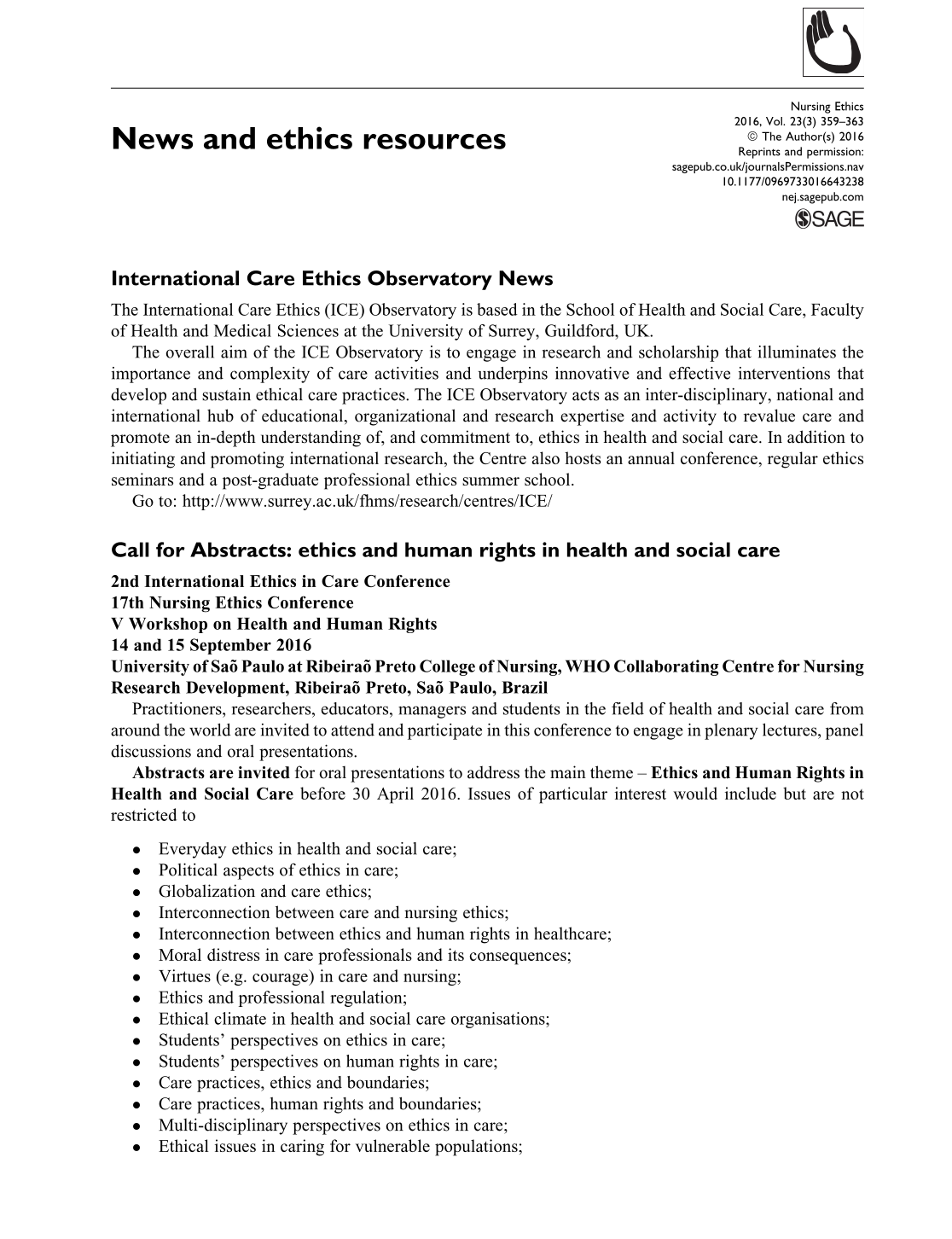
Available accessReview articleFirst published May, 2016pp. 357-358 Available accessNewsFirst published May, 2016pp. 359-363
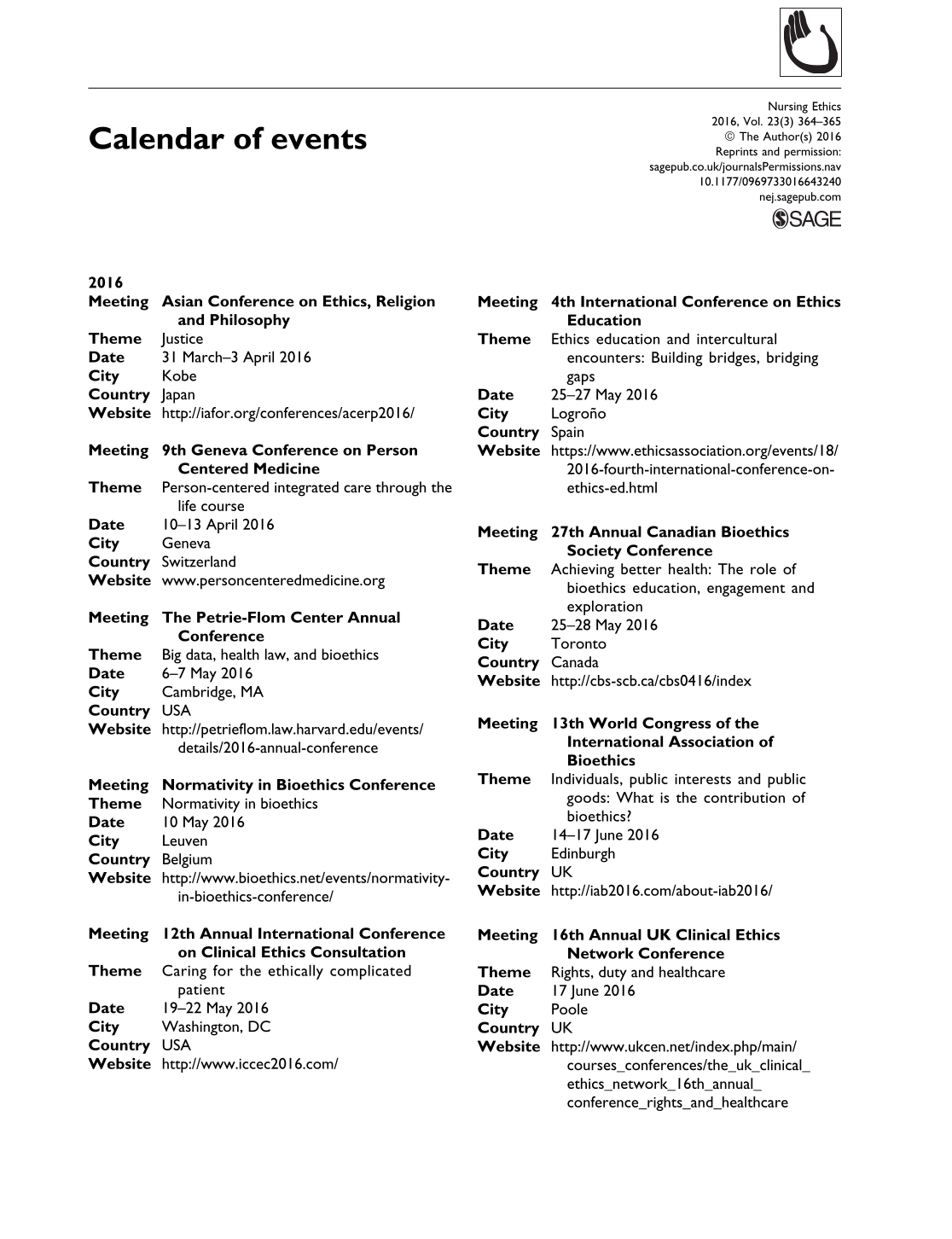
 Available accessCalendarFirst published May, 2016pp. 364-365