Research article
Select search scope: search across all journals or within the current journal

Angiolymphoid hyperplasia with eosinophilia (Kimura's disease) is a relatively uncommon subcutaneous lesion, which can be confused with angiosarcoma. A case is presented. The differential diagnosis and therapy are discussed.
A malignant fibrous histiocytoma from the maxillary sinus of a 51-year-old woman was treated surgically with adjuvant chemotherapy and radiation. The maxillary sinus is an unusual site for this rare and controversial neoplasm, as a review of the literature shows.
We report a third case of an unusual malignant neoplasm of the paranasal sinuses in a 60-year-old woman. Similar cases have been previously reported and called malignant teratoma. In consultation with Ackerman (written communication, February 1976) we propose the term “teratocarcinoma” and believe this is to be a more descriptive term and less likely to be confused with the generic term “teratoma,” which is a benign tumor.
A lethal case of rhino-orbital-cerebral phycomycosis (mucormycosis) in an otherwise healthy man is presented. The clinical, radiologic, and ante mortem surgical pathology associated with microbiologic examinations failed to yield the diagnosis of fungal infection as the cause of a clinical presentation of acute sphenoid sinusitis with a fulminant cavernous sinus thrombosis. No similar case report was found in review of the literature. There is a need for a high degree of suspicion in this condition to improve the uniformly poor prognosis in this devastating infectious disease. Emphasis is placed on the necessity for early tissue or microbiologic diagnosis with appropriate histologic stains and fungal cultures. Treatment consists of extensive surgical excision of all necrotic or questionably viable tissue in conjunction with alternate-day amphotericin B therapy.
Lymphomas are statistically the second most common malignant tumor of the head and neck, following squamous cell carcinoma. They may present in the cervical lymph nodes or in extranodal areas. This paper presents an unusual case of a non-Hodgkins lymphoma that presented in the infratemporal fossa of a 25-year-old woman. The anatomy of the infratemporal fossa is reviewed, and evaluation and therapy of lesions in this area are discussed.
A clinically appearing, well-encapsulated lipoma was locally excised from the right posterior upper buccal gingival sulcus of a 24-year-old man and diagnosed histologically as pleomorphic liposarcoma. A right maxillectomy with preservation of orbital function was followed by 5,000 rads of planned postoperative radiation therapy. Four months later the tumor recurred outside of the original site, which has been controlled by further radiation and chemotherapy to these areas.
A 58-year-old man had an enlarging right fronto-orbital mass. A biopsy specimen of a right nasal cavity tumor was reported as meningioma. Preoperative evaluation including skull roentgenograms, tomograms of the paranasal sinuses, brain scan, computerized axial tomography, and carotid angiography substantiated a large subfrontal mass with paranasal sinus and orbital extension.
A combined approach through a right frontal craniotomy and right lateral rhinotomy was used for a complete removal of this tumor. A review of the literature is contained herein.
Frontal sinus mucocele was our preoperative diagnosis in a patient who had frontal swelling and downward displacement of the eye. Supporting this were typical roentgenogram changes, a long history of asthma, pansinusitis, and previous multiple-polypectomy surgery. Frontal sinus exploration revealed a locally eroding lesion.
It was composed of spindled cells and lipid-laden histiocyctes with a pattern of fibrous xanthoma and was treated conservatively. It should not be confused with true malignancies such as fibrous histiocytoma having a similar histopathologic appearance and requiring more aggressive surgical treatment.
A case is presented of a child with a desmoid tumor of the pterygopalatine fossa in which approximately a third of the mandible including the condyle was removed for exposure. The trimmed mandibular segment was then returned to position with a fascia cap over the condyle and intermaxillary fixation was instituted. The graft was followed by serial roentgenogram over five years. The graft took completely, grew with the patient, and resulted in normal dental occlusion and normal mandibular excursion.
A patient with platybasia of the skull and temporomandibular joint ankylosis is presented. Relief of brain stem compression by the impingement of the odontoid through a soft, hypoplastic clivus was done by first doing a mandibular condylectomy to open the mouth. A transoral-transpharyngeal route was then employed to excise the odontoid process.
A 39-year-old man had three coexistent neoplasms of the larynx, squamous papilloma, verrucous carcinoma, and squamous carcinoma. In our review of the English literature, we could not find a similar case report. The potential transformation of benign laryngeal papilloma to verrucous carcinoma and infiltrating squamous cell carcinoma is discussed.
This paper presents a case report of a 67-year-old man who was seen in the Otolaryngology Clinic, University of Wisconsin Medical Center with a seven-month history of dyspnea and laryngeal stridor. On examination there were several slightly tender firm submucosal nodules in the soft palate and left tonsilar area and a 1.5-cm polypoid subglottic mass arising from the body of the cricoid cartilage. Because of the marked airway obstruction, a tracheotomy was necessary. The laryngeal polypoid mass was removed and biopsies were obtained from the submucosal nodular masses of the palate. Microscopic examination of the tissue revealed the lesions to be caseating granulomas, and actinomycosis was identified on the cultures.
The patient received long-term penicillin therapy and has remained asymptomatic.
A discussion of the biologic and clinical aspects of actinomycosis is included. A review of the literature revealed only one other description of endolaryngeal actinomycosis.
Lentigo maligna melanoma is a malignant melanoma with a recognizable clinical pattern. It is a slow-growing, pigmented tumor evolving from a premalignant lesion on the exposed cutaneous surface of an elderly patient. Histologically, it is marked by pleomorphism of melanocytes with evidence of invasion.
A case is presented demonstrating the features of this malignant melanoma with an exceptionally good prognosis. The importance of the clinical and histologic correlation is emphasized to ensure proper diagnosis and treatment.
Rabies is a rare, fatal viral infection, usually transmitted by the bite of an infected animal. Some 30,000 Americans are immunized annually, however, so public health considerations are common. The development of a new vaccine, grown in human diploid cell culture, is discussed. It appears to have high antigenicity with no serious morbidity. A case of a patient with fatal rabies who had fever, delirium, dysphagia, and cervical and pectoral subcutaneous emphysema is presented.
Hemangiomas consist of a spectrum of benign vascular tumors with variable clinical behavior and microscopic morphology, which usually occur in infancy. A rare variant of these tumors is the invasive subcutaneous hemangioma, which shows an aggressive growth pattern by invading subcutaneous structures and recurring after apparent excision. The authors describe an adult patient with a large submandibular invasive hemangioma who was treated by preoperative embolization and surgical excision.
The otolaryngologist has a reference frame for congenital stridor that rarely includes diagnosis of a bronchogenic cyst. The life-threatening potential of this lesion makes consideration and recognition imperative. Representing less than 5% of the mediastinal childhood masses in the infant, respiratory distress most often initiates diagnostic studies leading to identification and extirpation. The case presentation highlights the clinical course.
The diagnostic hallmark of this case was the delayed onset of stridor with subsequent progression. Thereafter, a chest film and barium swallow suggested the diagnosis. In newborns, however, such cysts may not be evident on routine chest films and, nonetheless, cause significant respiratory distress from airway compression.
Surgical extirpation should be affected as soon as possible after the diagnosis is entertained in order to insure against a sudden respiratory death.

A case of fatal disseminated aspergillosis in a renal transplant patient is presented. The initial manifestation of the disease was consistent with thyroiditis. Autopsy findings are shown and support this unique presentation. The diagnosis of aspergillosis is difficult to make and may require pulmonary biopsy. Early diagnosis and treatment with amphotericin B are the keys to successful management of the disease.
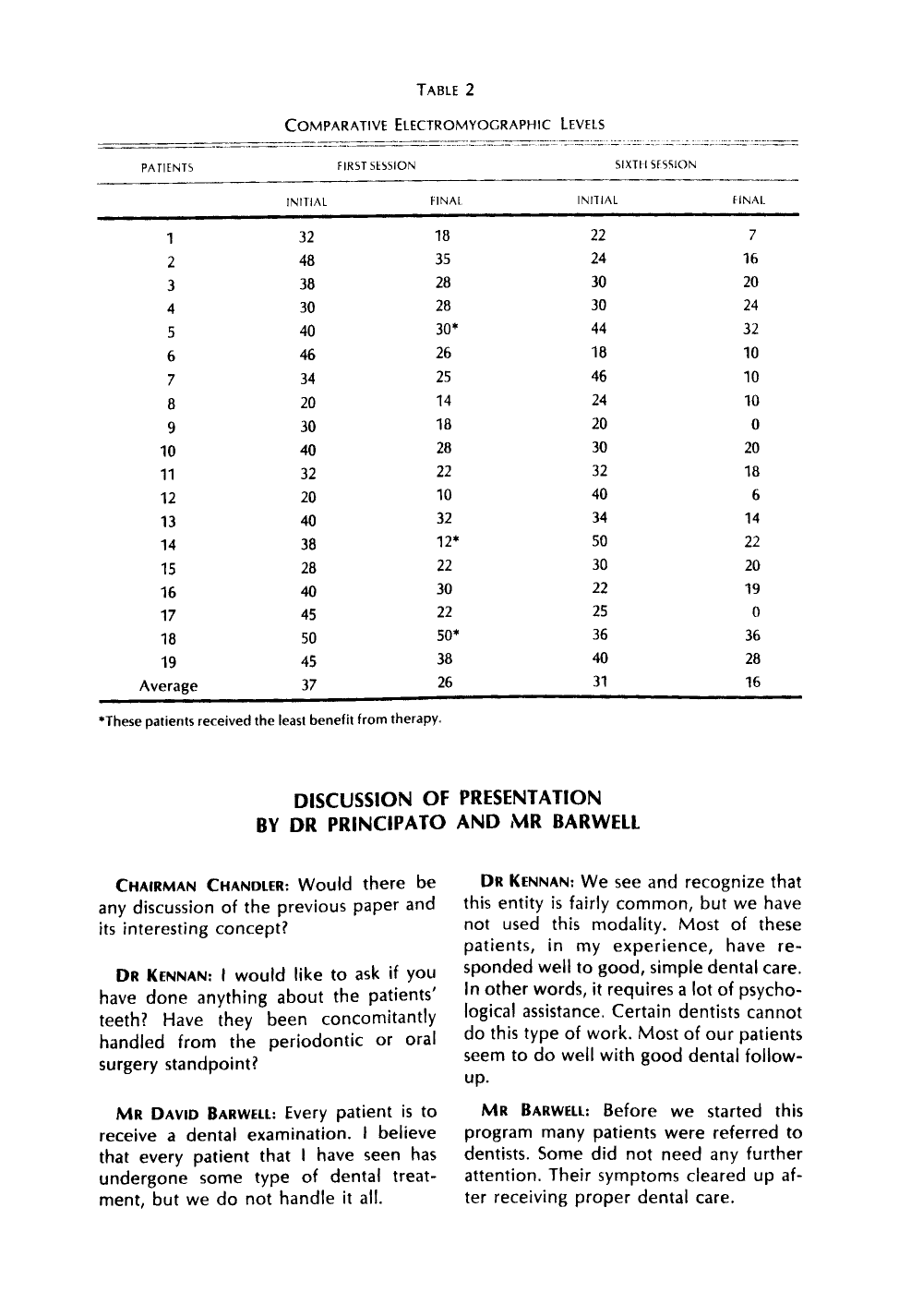
Biofeedback training involves electromyographic recording of the patient's level of facial muscle tension with concurrent presentation of that level to the patient in a visual or auditory manner. The objective of biofeedback training in patients with temporomandibular joint dysfunction is to provide them with an insight into abnormal facial muscle activities, which include clenching and grinding of the teeth and lip- and cheek-biting habits. This insight coupled with relaxation programs affords the patient an opportunity to eliminate abnormal behavior patterns that foster temporomandibular joint symptomatology.

The Transcochlear approach is described for resection of lesions arising anterior or medial to the internal auditory canal as well as for those arising directly from the clivus. Through an extended complete mastoidectomy the facial nerve is totally decompressed and rerouted posteriorly from the stylomastoid foramen to the internal auditory canal. The fallopian canal, promontorium, and cochlea are removed anteriorly and medially as far as the internal carotid artery, obtaining exposure to a triangular area limited by the superior petrosal sinus, inferior petrosal sinus, carotid, and internal auditory canal, giving adequate exposure to the structures of the clivus and the midline (basilar artery, vertebral arteries, and the sixth cranial nerves).
Sixteen patients with advanced head and neck carcinomas were treated with cis-diamminedichloro platinum chemotherapy; seven preoperatively and nine for recurrent disease. Cis-platinum was given by 24-hour infusions of 80 mg/m2 every three weeks. There was 50% regression in 38% (6) of the patients; another 38% (6) had 25% to 50% regression. Toxicity was minimal, with vomiting occurring in 75% (12) of the courses, renal toxicity in 6% (2), leukopenia in 13% (4), thrombocytopenia in 9% (3), and anemia in 31% (10). Of the seven patients who had serial audiograms, only one experienced ototoxicity. Cis-platinum, given by 24-hour infusion, was effective in reducing tumor bulk in 75% (12) of the patients with advanced head and neck carcinomas, without undue morbidity.


This project was designed to determine whether cleft lip repair has an influence on facial growth. To study this, 62 rabbits were divided into four groups: control, control without repair, Millard-type repair, and Bardach-type repair. Surgical clefts of the lip, alveolus, and the palate were created in 6-week-old rabbits. Periodic measurements were made of the pressure exerted by the lip on the maxillary alveolus. The animals were killed 20 weeks postoperatively. The skulls were processed and measurements were taken from the skulls.
The pressure measurements showed a definite increase in lip pressure on the maxillary alveolus for the lip repair group. This pressure was high soon after surgery, rapidly returned toward the control level, but never reached it.
Skull measurements indicate an inhibition in anterior maxillary growth for the “control without repair” group. This inhibition was even more profound in the two lip repair groups. No significant differences were found in maxillary width or mandibular length.
When correlations were made to see if increased lip pressure resulted in decreased anterior maxillary growth, a significant correlation was found for both lip repair groups. This means that as the pressure of the lip repair increased, it resulted in a decrease in anterior maxillary growth.
The data reported here indicates that cleft lip surgery must be considered as having a definite influence on anterior maxillary growth inhibition observed in the cleft lip and palate population. Further studies are indicated to determine the role of cleft palate repair on facial growth.
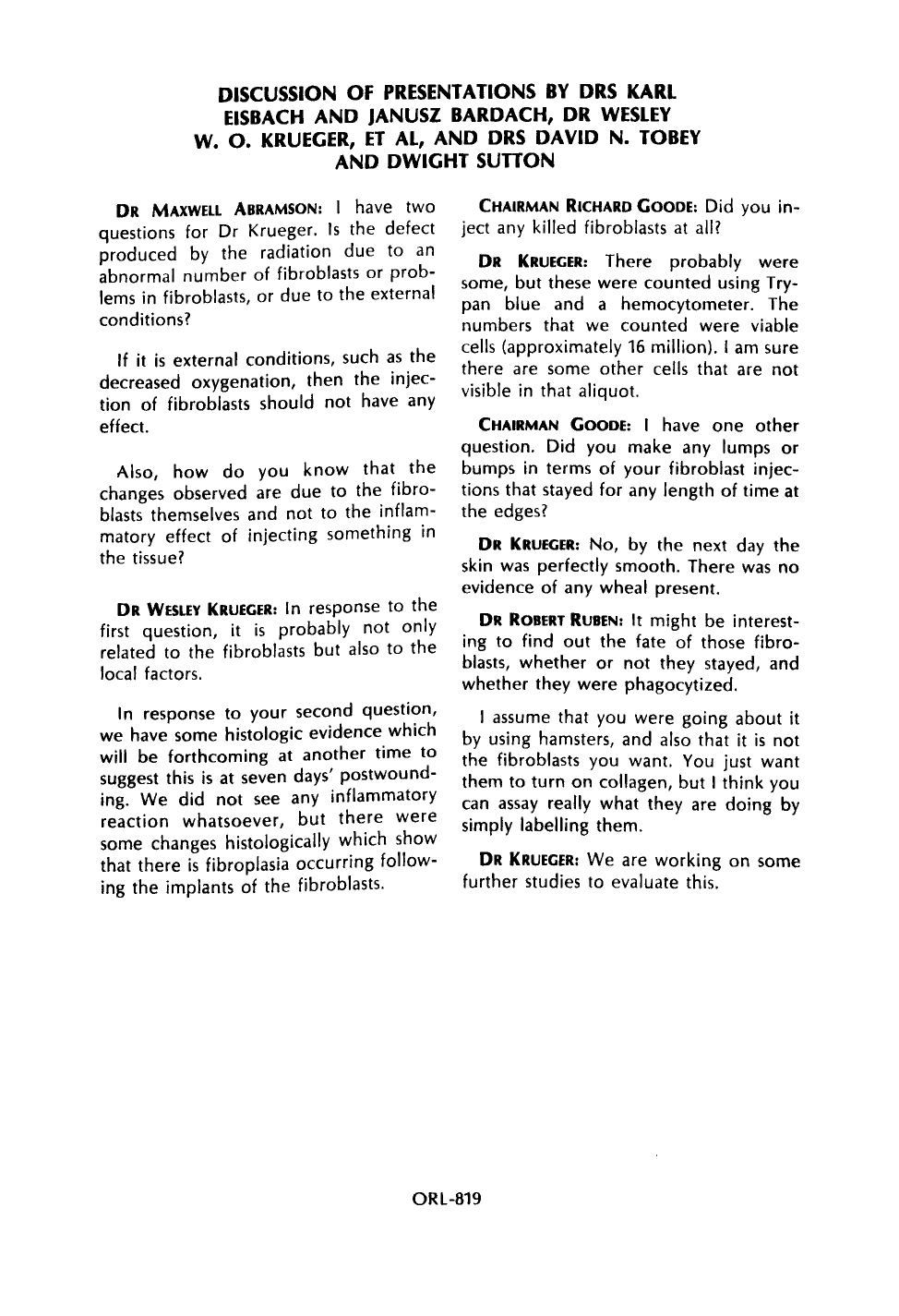
Irradiation of normal tissues at the dose/time factor employed in the treatment of solid tumors impairs the subsequent healing of surgical wounds made in those tissues. Irreversible radiation damage to regional fibroblasts is one cause of impaired healing. This study was conducted to determine whether syngeneic guinea pig fibroblasts, harvested from tissue culture when injected into irradiated guinea pig skin at the time of wound closure, could improve wound healing. Breaking strength determinations indicate that irradiated wounds demonstrate enhanced wound healing if implanted with fibroblasts.
Functional electrical stimulation is being explored in the extremities. A major obstacle is found in programming the firing sequence. In 1976, David Zealear proposed using the activity on the normal side in axial muscle pairs that normally function symmetrically to act as a template to control the stimulator. This method was demonstrated in laryngeal muscles in dogs, and is now demonstrated in the face with future applications being proposed.
The facial nerve on one side was sectioned in a series of rabbits. Implanted electrodes received electrical potentials from selected muscles on the normal side. Bursts of electrical activity on the normal side during a blink or a twitch were used to trigger a muscle stimulator, which was routed to matching muscles on the paralyzed side. This technique restored symmetric function to the hemiparalyzed face.


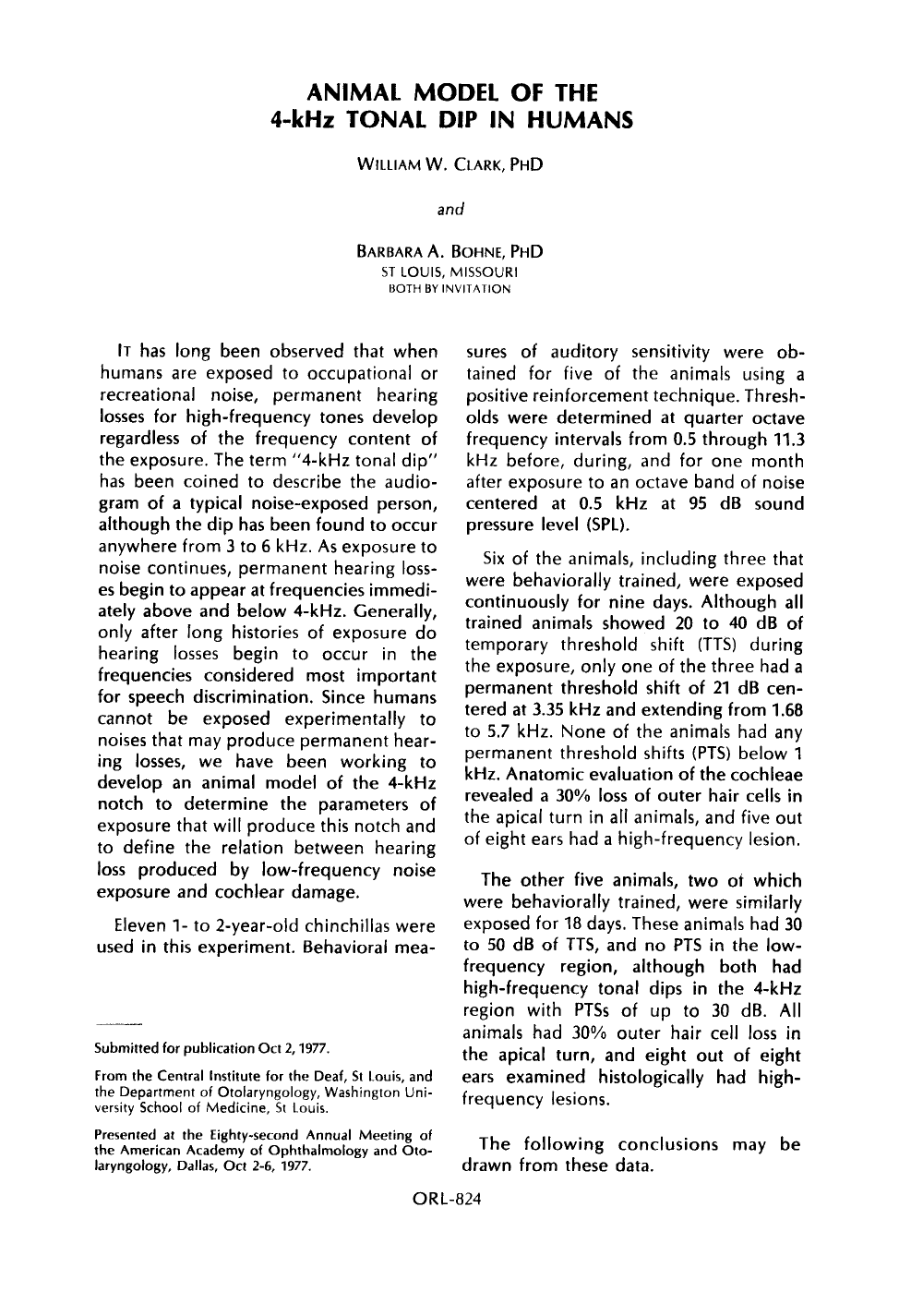
Human subjects were exposed to an octave-band noise for 24 hours. Temporary threshold shifts increased for the first eight hours of exposure and then were asymptotic. While threshold shifts were largest at about one-half octave above the center frequency of the noise, a second maximum was observed at higher test frequencies. The exact frequency of this second maximum decreased from 7.0 kHz, for a noise centered at 2.0 kHz, to 5.5 kHz for a noise centered at 0.5 kHz. This result could be caused by the travelling wave pattern along the cochlear partition or to the production of distortion products.


Caloric testing plays a prominent role in evaluating the vestibular system. A unilateral reduced vestibular response (RVR) is a common abnormality and is consistent with peripheral vestibular pathology. An erroneous interpretation of RVR may be made due to the following circumstances: laboratory technique, the influence of directional preponderance (DP) on monothermal tests (MT), unilateral hyperactivity, or pseudocaloric (PC) nystagmus. These errors in interpretation may be avoided by (1) repeating any single irrigation that is significantly different from the other three, to rule out laboratory technical error; (2) performing bithermal (BT) testing if any abnormality on monothermal testing exists, to eliminate the effects of directional preponderance; (3) observing that a right/left (R/L) difference is not due to unilateral hyperactivity, by noting absolute slow phase (SP) velocity; and (4) by demonstrating bidirectional sensitivity of the cupula before concluding that residual caloric function exists instead of no function.
Preliminary results with an eustachian tube prosthesis have been reported. This paper updates our experience with the prosthesis. Our series is now 95 patients with follow-up of 2 to 32 months (average of 14 months). The success rate in obtaining a healed aerated middle ear is 75% (71). The eustachian tube prosthesis continues to give encouraging results in problem tympanoplasty cases.