
Editorial
 Available accessEditorialFirst published September, 1999pp. 93-94

Select search scope: search across all journals or within the current journal


 Available accessEditorialFirst published September, 1999pp. 93-94Available accessResearch articleFirst published September, 1999pp. 95-99
To evaluate health-related quality of life (HRQoL) in a prospective randomised trial of patients suffering from venous ulceration, comparing the original four-layer bandage system with a new four-layer system (Profore).
Randomised prospective parallel groups trial.
Community leg ulcer clinics within two trusts in England.
Patients newly presenting for treatment suffering from chronic leg ulceration, with ankle–brachial pressure index (ABPI) >0.8.
Patients entering the trial were asked to complete the Nottingham Health Profile (NHP) at entry and after 12 and 24 weeks of treatment. Principal analysis was the comparison of final NHP scores analysed by ANOVA with baseline scores entered as a covariate.
In all, 231 of 232 patients who entered the trial completed the initial questionnaire, with 208 patients completing at least one follow-up questionnaire. Improvements were noted for all scores after 24 weeks, which were significantly greater in the 167 patients whose ulcers had healed compared with the 41 whose ulcers remained unhealed for the domains of Sleep (mean difference [
Patients suffering from leg ulceration show improvements in perceived health following effective ulcer management. The two bandage systems achieved similar improvements in perceived health over 24 weeks.
Available accessResearch articleFirst published September, 1999pp. 100-104To evaluate leucocyte rheology, expressed as leucocyte filtration, polymorphonuclear leucocyte (PMN) membrane fluidity and cytosolic Ca2+ concentration in subjects with post-phlebitic leg syndrome (PPS).
In 22 subjects with PPS we determined leucocyte filtration [unfractionated, mononuclear (MN) and PMN cells], employing the St George Filtrometer, PMN membrane fluidity using the fluorescent probe 1-[4-(trimethylamino)phenyl]-6-phenyl-1,3,5-hexatriene (TMA-DPH) and PMN cytosolic Ca2+ concentration using the fluorescent probe Fura 2-AM. Subsequently we determined the same PMN parameters after in vitro activation with 4-phorbol 12-myristate 13-acetate (PMA) and
At baseline we observed a difference in the filtration parameters of unfractionated and MN cells and an increase in PMN cytosolic Ca2+ concentration. After activation, a significant variation in PMN filtration parameters was evident both in normals and in PPS subjects, although in subjects with PPS this variation, especially with PMA, was significantly greater. We found a decrease in PMN membrane fluidity and an increase in PMN cytosolic Ca2+ concentration only in subjects with PPS.
These results suggest that there is a functional alteration of systemic leucocytes in PPS, in which the mechanisms are not yet clear.
Available accessResearch articleFirst published September, 1999pp. 105-110In recent years, pathophysiological studies and treatment approaches of chronic venous insufficiency (CVI) have focused on haemorheology.
To analyse erythrocyte aggregation (EA) and blood viscosity (BV) in mild and severe stages of CVI.
In 147 patients (three severity stages), EA was measured with a photometric aggregometer, and BV with a cone-plate viscosimeter. Patients with concomitant pathologies affecting haemorheology were excluded.
EA was higher in patients (mean EA 10M: 16.4 vs 14.5 control), increasing progressively with the evolution of CVI (
We found progressive impairment of the haemorheological profile with the worsening stages of CVI, related to age, severity stage and fibrinogen. Rheological impairment is likely to play a part in the pathophysiology of CVI, and perhaps may be useful in its management.
Available accessResearch articleFirst published September, 1999pp. 111-117To determine the relationship between varicose veins and duration of menstrual life, age of menopause, pregnancy, oral contraceptive use and hormone replacement therapy (HRT).
Cross-sectional study.
City of Edinburgh, UK.
Eight hundred and sixty-seven women aged 18–64 years randomly selected from 12 general practices.
After completing a questionnaire, which included questions on reproductive history, the women underwent a comprehensive clinical examination including the assessment of varicose veins (trunk, hyphenweb and reticular varices), followed by duplex scanning of their legs.
Women who had been pregnant at least once were more likely to have minor hyphenweb or reticular varices than women who had never been pregnant (
These results suggest that alterations in the balance of the sex hormones may have a role in the aetiology of varicose veins.
Available accessResearch articleFirst published September, 1999pp. 118-122To evaluate the clinical relevance of neovascularisation at the saphenous ligation site.
Long-term follow-up after previous varicose vein surgery in a single patient group.
Vascular clinic of a university hospital.
Eighty-two patients (106 limbs) with a mean follow-up period of 56 months after correct saphenous ligation were submitted to duplex scanning.
Clinical assessment and colour duplex scanning of all the operated limbs. Reintervention in 15 limbs with perioperative evaluation of recurrent veins.
Limbs with and without recurrent varicose veins were classified according to the degree of neovascularisation: grade 0 = no new communicating veins, grade 1 = tiny new vein with diameter <4 mm, grade 2 = new communicating vein with diameter >4 mm and pathological reflux. On reintervention the presence of neovascular veins at the site of the previous ligation was checked.
In 68 limbs without recurrent varicose veins, grade 0 was observed in 50 limbs (74%), grade 1 in 12 limbs (18%) and grade 2 in six limbs (9%). In 38 limbs with recurrent varicose veins, grade 0 was diagnosed in eight limbs (21%), grade 1 in four limbs (11%) and grade 2 in 26 limbs (68%). In 15 limbs with recurrent varicose veins and grade 2 neovascularisation, reintervention confirmed the duplex findings.
The presence of grade 2 neovascularisation was associated with the recurrence of varicose veins, suggesting a causal relationship.
Available accessBrief reportFirst published September, 1999pp. 123-125To demonstrate the effect of a newly developed device, the Muscle Pump Activator, on venous flow velocity of the lower limbs.
Prospective study.
Tertiary-care teaching hospital.
A group of 30 healthy volunteers.
The Muscle Pump Activator is a self-activated pedal device for use in the sitting position. Venous flow velocity was measured by duplex examination of the femoral vein at rest and during activation by the subject of the device. Subjective reports were also collected.
Venous flow velocity increased from 13.3 (SD 2.4) cm/s at rest to a maximum of 70.3 (SD 14.4) cm/s during 15 s of pedalling (
This Muscle Pump Activator significantly improves venous flow velocity and holds promise as a useful adjunctive modality for the prevention of postoperative deep vein thrombosis. It is easy to use and well tolerated. Studies are now needed in clincial settings with large groups of patients.
Available accessCase reportFirst published September, 1999pp. 126-127Case report.
BMI Priory Hospital, Birmingham, UK.
A 67-year-old man presenting with unilateral lower limb oedema. Past history included ipsilateral lower limb melanoma and Parkinson's disease, treated by pergolide.
Laparotomy to confirm a diagnosis of retroperitoneal fibrosis (RPF) causing iliac vein obstruction.
RPF is a rare complication of pergolide therapy for Parkinson's disease. Previous reports have also described iliocaval obstruction and there may be an association between pergolide-induced RPF and venous complications.
Available accessAbstractFirst published September, 1999pp. 128-134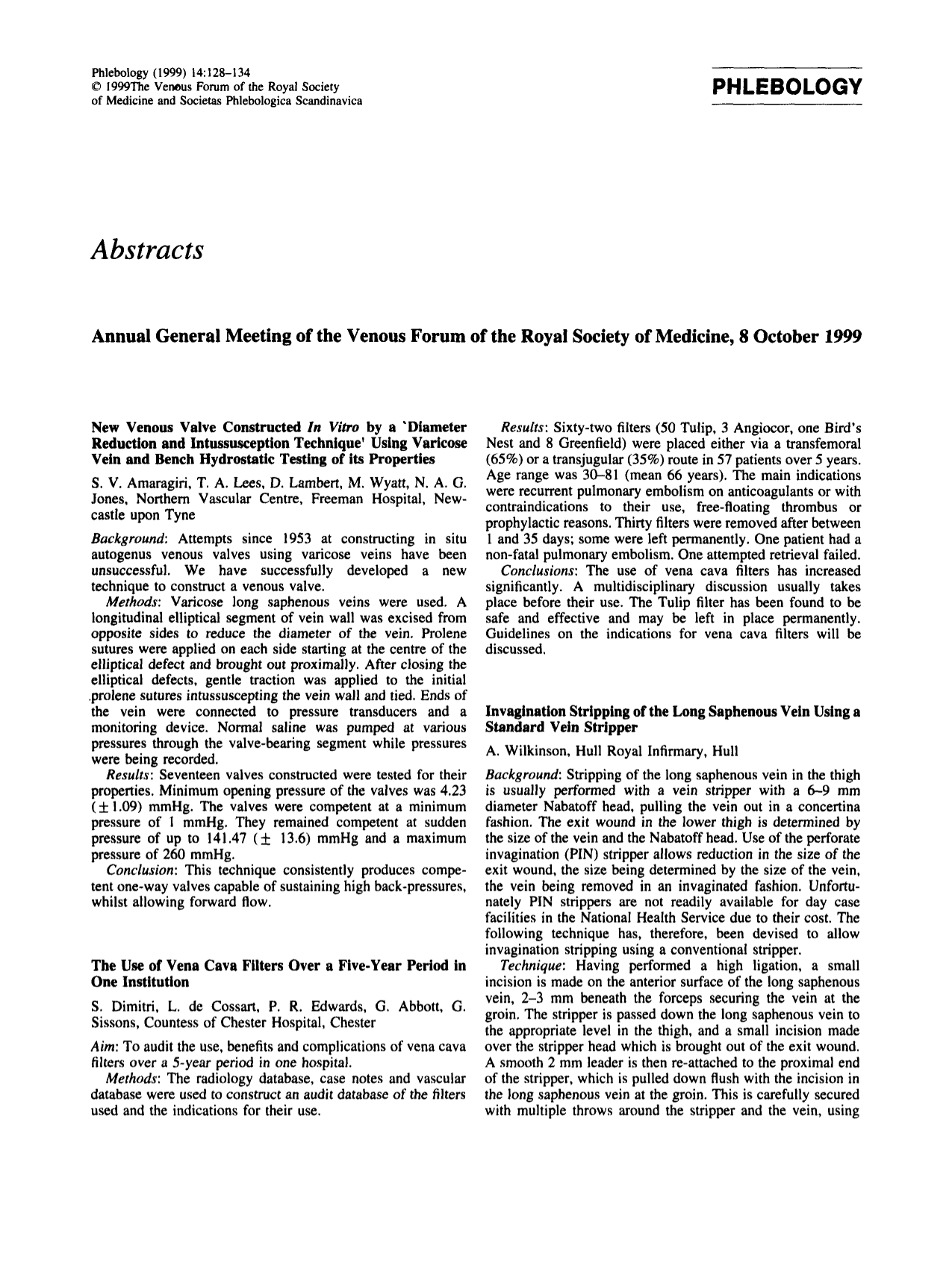 Available accessLetterFirst published September, 1999pp. 135-135
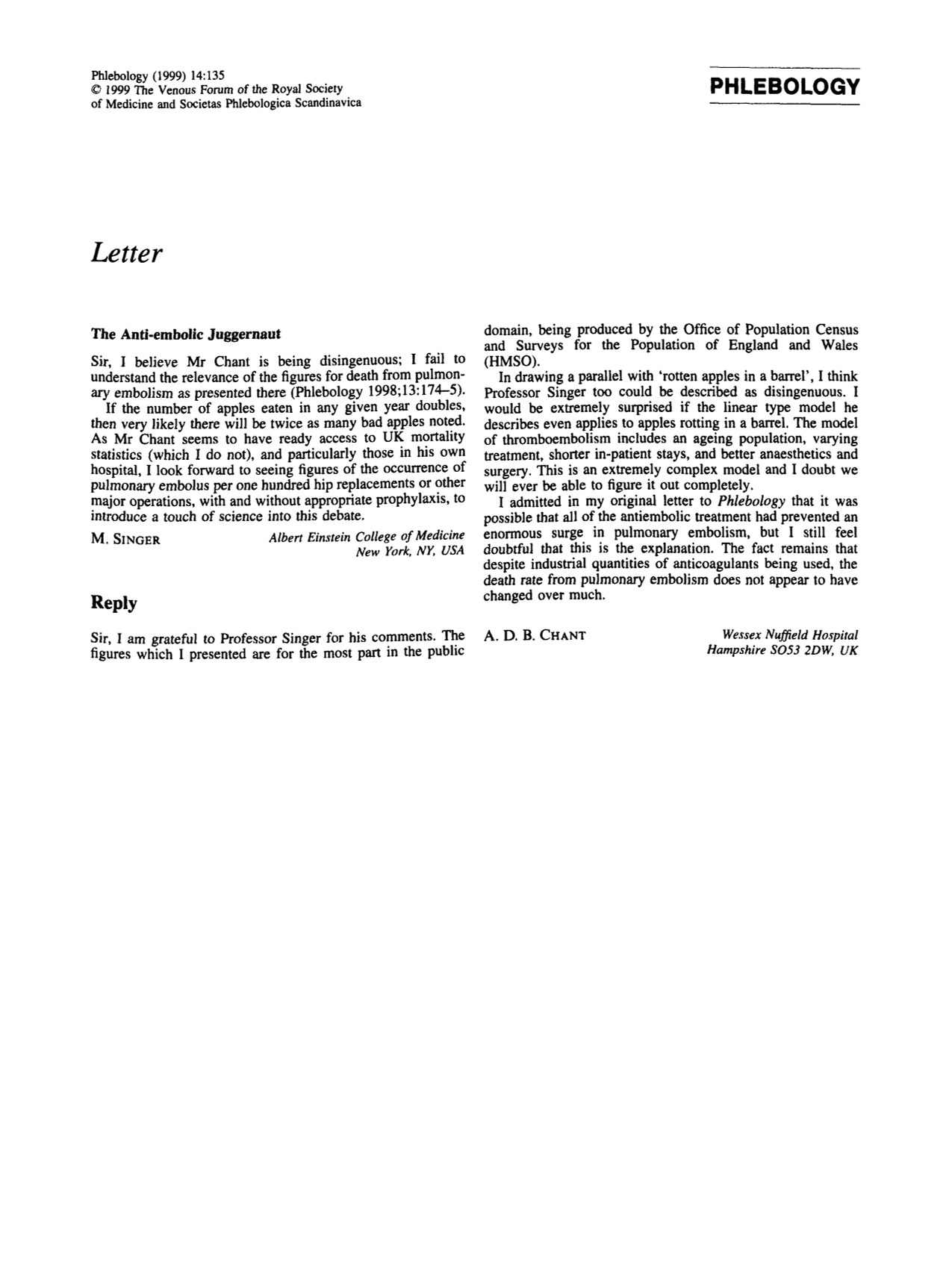 Available accessLetterFirst published September, 1999pp. 135-135