Other
Select search scope: search across all journals or within the current journal

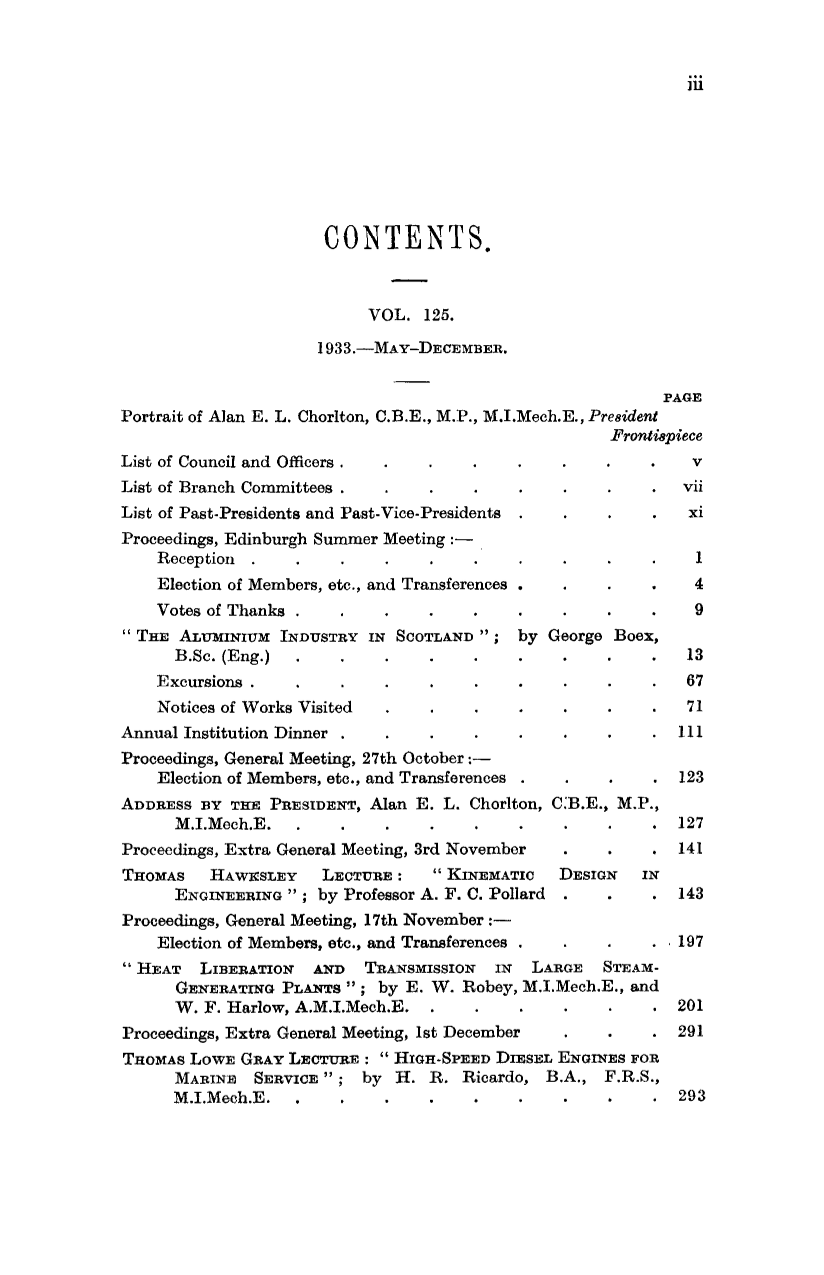
The production of aluminium is divided into five sections: mining, alumina manufacture, carbon electrode works, aluminium reduction works, and rolling mills; and the reasons determining the location of factories are set forth. The aluminium industry in Scotland includes the manufacture of alumina and carbon electrodes, and the electrolytic production of the metal. The latter is absolutely dependent on cheap regular supplies of electrical power, as approximately 26,000 kilowatt-hours are required for the manufacture of one ton of aluminium from alumina.
The Burntisland Alumina Works of the British Aluminium Company are described. The process is a chemical one: the ore is ground and mixed in caustic soda liquor and digested under pressure and heat. Separation of solid impurities takes place, leaving a sodium aluminate liquor from which alumina hydrate settles out and is subsequently calcined. The plant includes grinding machines, digesters, decomposition tanks, rotary calciners, and accessory plant such as pumps and conveyers. A large supply of steam is necessary for the process.
The Carbon Works at Kinlochleven supply the electrodes necessary for three factories in the north of Scotland, and a description is given of the various raw materials used and their conversion into baked electrodes by grinding, mixing whilst hot with a binder of tar and pitch, pressing under 2,000 tons pressure, and baking in producer-gas-fired furnaces.
The electrolytic furnaces used to produce aluminium from alumina are similar in principle at the Foyers, Kinlochleven, and Lochaber factories, and as the latter is the latest factory erected in the north, a short description of the power system is given. Ultimately the power house will contain some 120,000 h.p. of generating plant. At present 33,000 kW. are installed. Each of the furnaces takes 40,000 amperes and is built of steel plate with a carbon lining forming a bath and serving as a cathode. The molten aluminium is deposited as a layer under the electrolyte, which is cryolite, and the carbon anode electrodes are consumed as the alumina is decomposed.
The cost of the complete development at Lochaber will be in the neighbourhood of £4,500,000.


The demand for heavier duties and exacting guarantees of performance which has accompanied recent developments in steam-raising plants, has necessitated closer inquiry into the fundamental principles on which their performance depends. The authors present their views on certain aspects of the subject. These have been formed as a result of experience, combined with a consideration of the work of laboratory investigators. It would appear that important facts revealed by laboratory research do not always receive the attention due to them, and frequently erroneous ideas persist for years without question.
The paper discusses the function of the chain grate mechanical stoker with particular reference to the subject of furnace design and secondary air application. It deals with the effect on the size and cost of equipment generally, which would result from a closer observance of the laws of heat transfer and frictional loss in flowing gases, and discusses particularly the phenomenon of delayed heat release in flue gases and the effect of this in boiler plant performance. The cause and prevention of air heater corrosion is dealt with, and the results of investigations into the dew point temperature of flue gases are given.


The paper describes measurements on the heat transfer from iron and copper pipes of diameters ranging from
to 3 inches, at various temperatures up to 90 deg. C. in air moving with velocities up to 30 ft. per sec. when the axis of the pipe is placed transverse to the stream of air.
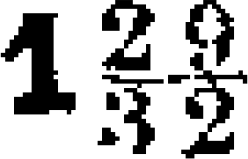
An iron pipe of external diameter
inches was also tested when placed longitudinally along the direction of the air stream and subdivided into sections, the heat loss from various sections being measured. This loss is greatest at the section where the air first meets the pipe, and gradually falls off along the pipe. If the air is artificially made turbulent, the loss from all the sections shows an increase, the greatest change being shown by the first section. The heat loss from a longitudinal pipe is of the order of one-half that from a transverse pipe. A number of similar iron pipes of
inches diameter were studied when arranged in banks in square formation. In this case the second layer of pipes met by the air loses more heat than the first layer, the third layer losing the same as the second. It is suggested that this is due to the eddy motion set up in the air when it passes the first layer, no further increase in the eddy motion occurring afterwards.

In the diagonal formation with rows
inches apart, the first section again loses least heat. In this case not only is the loss in the second row greater than that in the first, but there is a further increase in passing from the second to the third row, after which the coefficient is constant.
When air impinging on a bank in staggered formation is artificially made turbulent, the heat loss from every row is increased to such an extent that the first row loses more heat under these conditions than the third row when there is no artificial turbulence.
In addition, an investigation was carried out with pipes below 0 deg. C. If there is no ice or snow deposit on the pipes, the curve connecting H/kθ with Vd/
The advantage of expressing the fineness of a powder by means of the specific surface is the facility with which this factor may be correlated with external factors in an investigation on the production or use of fine powders. A method of calculating the specific surface of a powder has been devised, which can be applied to practically all powders irrespective of the material from which they are produced.
The dimension of a single particle having the same shape and density as the particles constituting a powder, and having the same specific surface as the average for the powder, can be calculated from the grading analysis. The shape of an irregular particle can be defined numerically by two parameters. These shape factors are combined with the above dimensional factor and the density of the material to obtain an expression from which the specific surface of the powder can be calculated.
Although it is now more than ten years since the first geared oil engine installation put to sea, no country other than Germany has made any serious attempt to exploit this method of propulsion. The success of Germany's geared ships has, however, completely proved the reliability of this type of drive, and has exploded the once prevalent belief that mechanical reduction gearing would not withstand the uneven torque of the oil engine.
The author first gives a brief historical survey of the geared oil engine ships at present in service, beginning with the original vessels of the
The advantages of incorporating reduction gearing are then dealt with, the author maintaining that the disadvantage of added weight due to the inclusion of gears is more than compensated for by the advantages resulting from smaller engines running at higher speed.
The types of drive in common use, namely, the rigid and the “Vulcan” types, are then described, together with the method of obtaining synchronized starting and reversing.
It is pointed out that, although torsional vibration problems disappear to a large extent with the “Vulcan” drive, they are of extreme importance in the case of rigid drives. A complete analysis of the question is therefore made at the end of the paper, and expressions are obtained from which may be calculated the natural frequencies of the normal types of installation. A worked example is included to show the application of these expressions.
Factors affecting the grip, which depends wholly on the elastic properties of the mating materials, are presented in the first part of the paper by a consideration of force fit practice in the assembly of wheel centres on axles. The degree of accuracy obtained in machining operations is determined by an examination of the out-of-roundness and the out-of-straightness of the cylindrical mating surfaces. The importance of considering the physical properties of the materials used in elastic grip assemblies is indicated by results obtained from specimens taken from wheel centres. Curves showing the residual force fit of elements which failed to satisfy back pressure tests suggest that failure was due to excessive fit allowances.
The effect of a reduction in the surface contact area is demonstrated by a series of tests on small steel elements. The nature of the lubricant is shown to have a great effect on the force necessary to produce axial slip in a force fit assembly. The lubricants considered include rape, sperm, Bayonne and “Texaco” motor oils, a mixture of graphite and engine bearing oil, and a cutting lubricant used in metal removal operations. The influence of “skin” or film on the mating surfaces before applying the lubricant is examined in a series of tests in which the mating elements are assembled with surfaces made clean by the use of solvents and by rubbing with a clean cloth. The quality of the grip established by mating the elements, by heating the hollow element, by cooling the solid element, and by pressing the hollow element over the solid element, is considered. Experimental results show that the grip is dependent on a surface film condition which may separate the elements on assembly and may be independent of the method of assembly. The condition of the mating surfaces after the fit is broken is examined and illustrated in each case.
Torsional resistance to slip is considered in the latter part of the paper. Force and shrink fit assemblies in which the elements are mated with surfaces lubricated, and with surfaces perfectly dry and free from film, are examined. An analysis of the results of tests provides further evidence of the great influence of a surface film condition on the resistance to slip and affords a means of comparing the axial and torsional coefficients of friction.
The author points out the difficulty in designing steam locomotives of high overall efficiency, no matter to what type they may belong, and shows that the efficiency of Diesel locomotives is considerably higher, while they also possess certain other advantages, particularly in bringing about a reduction in permanent way maintenance costs.
Early Diesel locomotives are described and an account is given of the collaboration between the German and Russian railways, to investigate various types of transmission, and of the transportable locomotive laboratory which was built for carrying out the necessary tests.
The economic aspect of railway operation is carefully analysed, and the results of extended trials in Russia of steam, Diesel-electric, and Diesel geared locomotives are given and compared with the latest available figures for operating costs in this country, and with figures for sparsely populated regions in Asia.
The author, while not advocating wholesale adoption of Diesel locomotives everywhere, arrives at the conclusion that they have a definite sphere of usefulness, particularly in regions where water is scarce or of bad quality. He also emphasizes the necessity for standardized types of Diesel locomotives, and suggests that owing to the inherent drawbacks in the transmissions both of the Diesel-electric and Diesel geared types, there may be a future for the Diesel locomotive with direct drive with an enlarged engine, provided that, by research and experimental work, the difficulties previously encountered with direct drive can be removed.
The author also notes that from the point of view of fuel consumption and simplicity the speed of the Diesel engine and the number of cylinders should not exceed certain limits.
Figures for the total annual production of sugar show that it forms one of the great crops of the world, and the machinery used, both in handling the canes and in the factory, is of considerable importance. The author describes the method of sugar production, beginning with the supply of cane from the field to the factory, and then describing the simple defecation, sulphitation and carbonatation processes.
An account is given of the actual machinery used in sugar factories, and the design of crushing mills is considered. In all modern mills the top roll is fitted with a hydraulic pressure regulator. Until recently the majority of hydraulic attachments which came under the author's observation were badly designed or totally unsuited for their purpose. This was largely due to failure to realize the large amount of friction which can occur in the accumulator rams, in the rams in the cap, and in the bearing which slides in the gap in the mill cheek. The methods adopted to overcome this in the best modern practice are described. The methods of driving, by steam engines or electric motors, are discussed, and mention is made of the types of motors in general use. The variable factors are such that it is not possible to lay down any general rule as to the power necessary, but from a large number of examples in operation it has been found that the power required varies from 10·5 to 12 h.p. per ton of cane ground per hour. To cover faulty operation of the plant a fair margin of power is usually allowed in the prime mover. Diagrams are given showing the variation in the power required at different points in the mill and at different times in the working day. The author then deals with the chief points in the design of evaporators, vacuum pans, and crystallizers.
There is little waste in a sugar factory, and the refuse products or “bagasse” are used as fuel in the boilers. Some practical points in connexion with the use of this form of fuel are given, and the author concludes with some remarks on the layout of sugar factories. In an Appendix an analysis of the costs of crop, manufacturing expenses, and maintenance is given.
Primarily owing to the special nature of the fluids handled in the oil industry, welding has thoroughly established itself, and is being increasingly employed in all phases of oil refining and handling. Various types of tanks, treatment vessels, and pipe lines of all-welded construction are now being used for the most searching fluids, with complete absence of the joint leakage which occurred with the older methods of construction. Welding methods also show substantial reductions in material and site costs.
In order to indicate the very large number of examples of welded construction as applied to the storage and transport of oil, the subject is dealt with on the basis of a flow sheet which shows generally how an oil, found abroad and conveyed to this country for refining, is handled from the time it leaves the well until it is ready for the consumer. Reference is mostly made to commonly used liquid petroleum products such as motor spirit, lubricating oil, furnace, and Diesel oil. The handling of these products is described with reference to the methods employed by one or two well known concerns, but such methods are typical of those employed in other parts of the world.
In introducing the subject the authors suggest a classification of boilers on a pressure basis. Alternative methods of drum construction are reviewed, leading to an investigation of the effects of higher saturated steam temperatures on the physical characteristics of the metal and the factor of safety. Attention is paid to the analysis of stresses induced in the drums of large high-pressure installations, with comments on the limitations of standard design rules and formulae. Similar treatment of the subject of boiler tubes follows, attention being directed particularly to the combined effects of temperature and stress.
The importance of accurate estimation of furnace exit temperature, especially in relation to superheat, and the effects of modern designs of water-cooled furnaces are then discussed. The influence of radiant heat emission from non-luminous gases in the convection passes is emphasized. A simple graphical method for determining the rate of natural circulation is outlined and the retarding influence of high pressure is discussed.
Orthodox designs of high-pressure boilers, the relative merits of which are compared, present no serious difficulty in operation, providing adequate attention is paid to feed water treatment, some aspects of which are discussed. Further developments are contingent upon the economic extension of the range of commercial heat-resisting metals; the adoption of more logical and adequate rules and regulations governing design; and closer investigation into the behaviour of tubes, etc., under high pressures and temperatures and subject to the conditions prevailing in a boiler when in service.