Editorial
Select search scope: search across all journals or within the current journal

Cervical cancer is an important health problem in developing countries. Most women present with advanced disease, resulting in low cure rates. Screening by Visual Inspection with the Aid of Acetic Acid and optionally HPV DNA detection as a second test is technically feasible. However, the majority of women appear to be reluctant to attend a screening clinic. This is probably due to lack of knowledge and a low priority of women's health in local communities. There is an obvious need to obtain more knowledge on communities’ perceptions and understanding of cervical cancer. Furthermore, we need more information on what issues should be addressed in order to perform cervical cancer screening in an acceptable manner.
Treatment of cervical cancer in developing countries is highly dependent on the resources and skills available.
Efforts to provide adequate palliation should be enhanced as relief of troublesome symptoms can often be achieved by relatively simple and low-cost measures.
Ultrasonography in pregnancy is one of the most important advances in antenatal and obstetric emergency care. The benefits of diagnostic ultrasound in a resource-poor setting are well known and undisputed. Routine ultrasound can provide real benefit to patients when it is included in antenatal care programmes designed to improve maternal and neonatal health, and it should become a standard procedure in developing countries. Proper training of the antenatal ultrasound imager is very important. This should include training in ethics, use and misuse of ultrasonography as well as good technique and understanding of implications for clinical care to improve sensitivity. Training should be aimed not only at doctors but also at midwives who conduct most of the antenatal care and skilled deliveries in developing countries. Communication with patients and information about the limitations and benefits of ultrasound are essential to alleviate fear and to discourage irrational expectation and demand. Finally, routine antenatal ultrasound should be monitored closely for possible misuse, such as sex screening and selective abortion of normal female fetuses, and non-indicated overuse by healthcare professionals for their own financial benefits.
The objective of this study is to determine the feasibility of utilizing trained auxiliary nurse midwives (ANMs) in downstaging for cancer cervix in a rural area.
The study population included all married women in the age group of 35-59 years in two villages of the field practice area. It was a cross-sectional study. Two ANMs were trained in history taking, visual inspection of the cervix, using of speculum and collecting Papanicolaou smears. After training, they made home visits and identified women with gynaecological symptoms suggestive of cervical cancer. These women were asked to report to Rural Maternity and Child Welfare whom homes where the ANMs did a visual inspection of the cervix and made a cervical smear.
Atotal of 1402 women were registered of the ANMs could identify 368 women (26%) with symptoms. Only 192 (52.2%) of these women reported for examination. Chronic cervicitis accounted for the largest proportion of the cases (44.8%). In all, three cases were diagnosed as suspected cases of cancer cervix. On cytology, three cases (1.5%) turned out to be malignant. When clinical findings of the ANM were compared with results of cytological examination, a high degree of sensitivity (78.4%) and positive predictive value (97.1%) were observed in diagnosing abnormal cytological findings. However, the sensitivity for detecting specific conditions was generally low. Sensitivity for detecting erosion was 45%, for chronic cervicitis 30%, and malignancies were totally missed.
In conclusion, this study clearly shows that ANMs, if trained, would be capable of identifying symptomatic women, differentiating a normal cervix from an abnormal one and taking an adequate smear for cytological examination.
A key goal of the Integrated Management of Childhood Illness (IMCI) strategy is to improve the management of childhood illness at health facilities. IMCI guidelines contain many counselling messages, and as it is not known how well caretakers recall these messages, we studied caretakers’ recall of IMCI messages when given under ideal conditions. At a clinic in Benin, a study clinician performed counselling and confirmed caretakers’ comprehension of all messages. Caretakers were randomly assigned to be interviewed either immediately after the consultation or a day later. Recall was assessed with general and focused open-ended questions. Recall was assessed for 55 caretakers, 29.1% of whom were literate. Caretakers received 3-75 messages (mean = 38.7). The mean percentage of messages recalled was 89.7% immediately after the consultation and 81.9% one day later. These results support IMCI's recommendation that health workers should verify caretakers’ comprehension by asking caretakers to repeat counselling messages during consultations.
An audit to determine the incidence of births to teenage nullipara, pregnancy complications, obstetric intervention rates, maternal and fetal outcomes in 114 teenage nullipara compared with 700 randomly selected older nullipara (age 20–29 years), was undertaken in a tertiary Institution. Births to teenage nullipara contributed 1.7% of all deliveries. Teenagers were significantly more likely to be unbooked for antenatal care(P < 0.0001), book late (P < 0.0001) and be single mothers (P < 0.0001). Teenagers were also significantly more likely to have primary education (P < 0.0001), secondary education (P < 0.001) or be apprentices (P < 0.0001). Teenagers had a significantly higher incidence of caesarean sections (P = 0.0002). There were no significant differences in the incidence of pregnancy complications, induction oraugmentation of labour, preterm delivery, instrumental deliveries and fetal outcome. The maternal mortality ratio for teenagers was 1835 per 100,000 live births. There were no deaths among the older nullipara. It is concluded that the differences in obstetric intervention rates and maternal outcome are due to poor utilization of antenatal care and other social disparity.
The aim of this review is to determine the maternal mortality ratio (MMR) in a Nigerian tertiary health institution (University of Ilorin Teaching Hospital, Ilorin, Nigeria). The review was done through a retrospective analysis of maternal mortality records. The MMR for the 6-year period (1997-2002) was 825 per 100,000 live births. The common causes of maternal mortality included severe pre-eclampsia/eclampsia, 30 (27.8%); haemorrhage, 22 (20.4%) and complications of unsafe abortion 16 (14.8%). Grandmultiparous and patients aged 40 years and above were at the highest risk. This hospital-based MMR is very high and when compared with previous reports showed a 150% increase. Most of the maternal deaths are, however, preventable. Increased efforts at educating women, improvement of the socioeconomic conditions of the populace and strong political commitment in making emergency obstetric care available in rural and district hospitals are some of the measures that need to be adopted to reduce this avoidable tragedy.
This study was conducted to evaluate the obstetric performance of teenage women in India. In total, 13,210 women were included in the study, of whom 840 were teenagers (<19 years) and 12,370 were > 20 years. Antepartum, intrapartum and postpartum events were recorded and comparative analysis was done. We found that teenage women were at a significantly higher risk for development of severe anaemia (relative risk [RR] 1.61, P value < 0.02), eclampsia (RR 1.95, P value < 0.05), preterm labour (RR 1.25, P value < 0.001), intrauterine growth retardation (RR 2.29, P value < 0.001) and low birth weight (RR 1.24, P value < 0.001). Assisted delivery (11.78% versus 2.23%, P value < 0.001) was significantly more common and caesarean delivery (9.64% versus 17.18%, P value < 0.001) was significantly less common in teenagers. Moderate anaemia, mild pregnancy-induced hypertension, preeclampsia, premature rupture of membranes, antepartum haemorrhage and post dates were all significantly higher in ≥ 20 years group. To conclude, we found that teenage women are a high-risk group, which is aggravated by social and cultural factors. Special attention is required to educate these women for more positive outcomes.

Childhood gynaecological disorders as seen in the University of Calabar Teaching hospital (UCTH), Calabar, Nigeria, over a 10-year period were studied. The aim was to establish the incidence and pattern of presentation of these disorders. Childhood gynaecological disorders constituted 3.1% of gynaecological admissions in UCTH. Vaginal laceration following rape was the most common disorder accounting for 54.8% of the cases. This was most common in the 8 to 11-year age group (52.2%). Vaginal bleeding was the most common presenting symptom (63.1%) and repair of vaginal laceration the most common procedure performed (54.8%).
In Africa, infertility constitutes a major gynaecological complaint and causes enormous socio-psychological stress to the patients. This study examined retrospective data at the University of Benin Teaching Hospital, Benin City, Nigeria, over a 5-year period to determine the factors associated with tubal infertility.
Tubal infertility was confirmed in 13.5% of the 1181 new cases of infertility over the study period. The mean age of the patients was 33.2 ±9.5 years. Over 65% were nulliparous and all socioeconomic classes were affected. Major associated factors included infections such as post-abortal sepsis, puerperal sepsis and pelvic inflammatory disease (PID).
Infertility is largely preventable. Attention should be focused on reducing the incidence of unsafe abortion and its consequences, providing clean and safe delivery as well as reducing the incidence of and ensuring proper treatment of any cases of PID.

We investigated the location of maternal deaths in the Souro Sanou University Hospital of Bobo-Dioulasso, Burkina Faso. In all, the deaths of 585 women of reproductive age (12-49 years) were reviewed, and 132 (22.6%) were found to be maternal. Of these 132,43 (33.6%) occurred outside of the maternity unit. Some direct causes of death (eclampsia and sepsis) and indirect causes of death (cardiac illness and HIV/AIDS) would be omitted if only cases occurring on the maternity ward are investigated. Alarmingly, 93 (70%) of the 132 maternal deaths would have been missed in this hospital if we had used a narrow search process (excluding non-maternity wards) and narrow definition (excluding indirect causes). In conclusion, the results of this study demonstrate the potential for seriously underestimating the magnitude of maternal mortality within facilities and for neglecting pregnant or recently pregnant women dying in non-maternity wards and from indirect complications.
A population-based cross-sectional inquiry was carried out in Delhi to assess the practice of fetal sex determination, sex-selective abortions and awareness about the related law. Atotal of 1514 respondents, selected through multistage cluster sampling from all across Delhi, were interviewed using a pretested, semistructured questionnaire.
Legal awareness (73.6%) was significantly better among the male and urban respondents. Only 39 (2.6%) of the respondents had ever gone for fetal sex determination. In 17 (43.6%) of them, it was done in spite of being aware of its unlawfulness, and in 33 (84.6%), the couple had one or more living male children. Frequency of fetal sex determination was comparable for slum and urban areas. Fifty-six additional cases of fetal sex determination, occurring in the neighbourhood of the respondents, were also reported. A total of 28 cases of female feticide were reported.
Awareness about the illegality of fetal sex determination has improved, compared with the 1997-1998 data collected from East Delhi (55.3-73.6%). However, this comparison also shows a marginal increase in the practice of fetal sex determination (2.1-2.6%). In all cases of feticide, a qualified doctor was involved.
A number of couples abandoned the abortion plan midway, even after detecting that the fetus was female, and there were occasional cases where the doctor refused to abort the female fetus.
A retrospective analysis of laboratory data of 3290 clinically suspected and/or radiologically confirmed cases of hydatidosis revealed that 495 (15%) were positive for specific antibody response. Casoni's test was positive in 481/1938 (24.82%) patients. A significant increase (P < 0.001) in seropositivity was observed during the last 5 years (23.12%, 1999-2003) as compared with previous years (10.97%, 1984-1998), and a similar increase (P < 0.001) in positive Casoni's test was also observed (33.83%, 1999-2003 versus 21.38%, 1984-1998) during the same time period.
We analysed 110 adult patients with cerebral malaria, 38 of whom had serum creatinine above 3 mg%, to study the effect of acute renal failure (ARF) on survival. Patients with cerebral malaria had an increased risk of death (39.5% versus 13.9%) when also suffering from ARF. For each one log unit increase of creatinine at admission, odds of death increased by a factor of 10.8 (95% confidence interval 3.0-39.4).
Maternal mortality rates are much higher in developing countries than in the developed countries. In Nigeria, rates between 500 and 1500 per 100,000 are common. Questionnaires were administered to 30 primary health centres in Edo central senatorial district of Nigeria in order to find out the staffing, 24 h staff coverage of the primary health centre and difficulties encountered in referring patients. It was found that most of the primary health centres had no doctor coverage. The average number of midwives per centre was two, and transport was not usually available for transfers especially at night. It was concluded that lack of commitment on the part of all tiers of government was the reason behind the high mortality rates, and a conceptual model of one resident doctor per centre, with a 24 h coverage by midwives and a central ambulance centre for each local government area, was proposed for the reduction of maternal mortality, using the available resources in Nigeria.
Developing a strategy for monitoring iodine deficiency disorders (IDD) remains a big challenge in rural Nepal where great variations could exist in IDD status. To explore the possibility of variation in urinary iodine excretion (UIE) level in rural settings, we carried out a detailed study of UIE among 586 school children of 20 schools in five villages. Our data revealed statisitically significant differences in UIE values among rural villages and schools in the same villages. The policy-makers should keep such variations in mind for a successful monitoring of IDD in Nepal and other countries where such variations may exist.
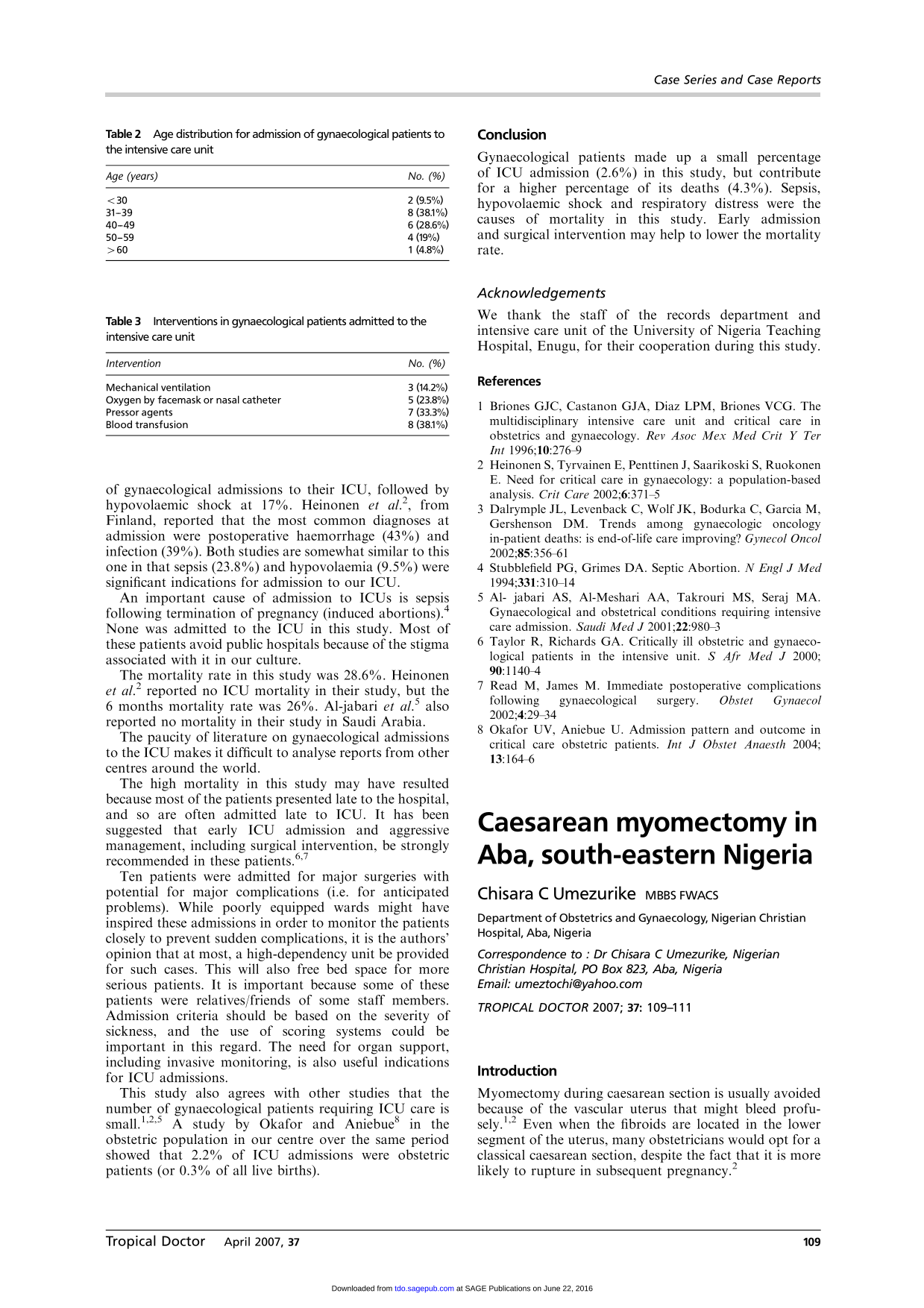
A retrospective study of the management of gynaecological patients admitted to the general intensive care unit (ICU) of the University of Nigeria Teaching Hospital (UNTH), Enugu, Nigeria, over a 6-year span was carried out. Out of a total of 816 patients admitted to the ICU during the study period, 21 (2.6%) were gynaecological patients with the following diagnoses: generalized sepsis, postoperative respiratory distress, hypovolaemic shock, preoperative anaemia and mennorhagia, and major surgery with potential for major complications. The mortality rate was 28.6% with six deaths, sepsis being the major cause of death (four fatalities).

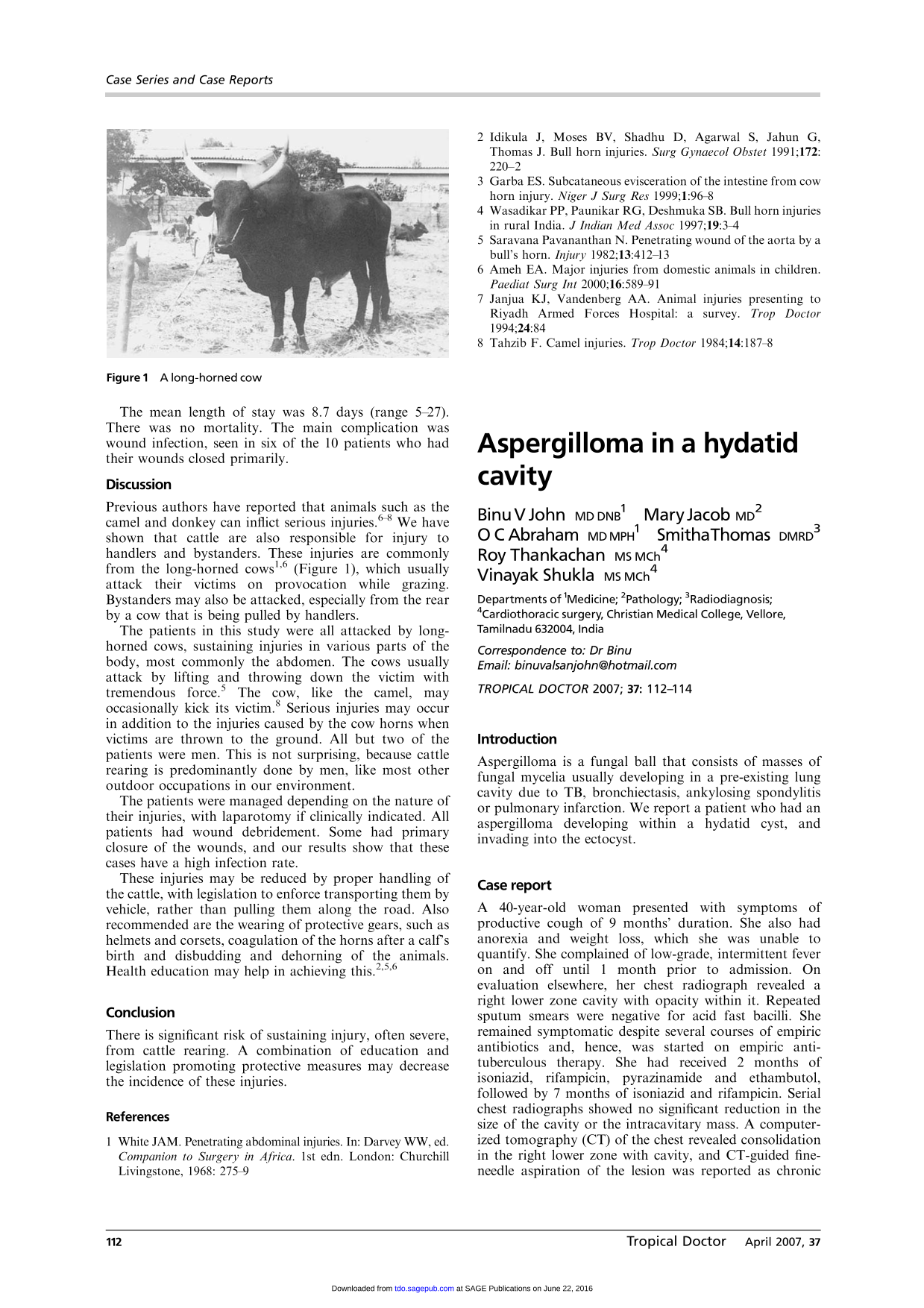
A retrospective study of 32 patients managed for cow gore injuries. The abdomen was involved in 16 (50%) patients, scrotum in six (18.9%), neck in three (9.3%) and other sites in seven (22.8%). All injuries were penetrating in nature and laparotomy was done on 17 (53%) patients.

The records of 168 children managed for burns in a teaching hospital in northwestern Nigeria, between April 1998 and March 2003, were assessed to determine the factors that are responsible for high rates of morbidity and mortality in paediatric burns. The causes of burns were hot water in 86 cases (51.2%), flame in 45 (26.8%), hot soup in 32 (19%) and electricity in five (3%). The main complications were wound infections in 109 (64.9%) patients, anaemia in 68 (40.5%), malnutrition in 54 (32.1%), contracture in 50 (29.8%), persistent hypothermia in 27 (16.1%), tetanus in 14 (8.3%) and one case (0.6%) of massive upper gastrointestinal bleeding, possibly as a result of Curling's ulcer.