




Abstract
In industrial production, the use of enzyme-catalyzed reactions to prepare biochemical products often faces many difficulties. Traditional immobilization technology showed the non-ideal immobilization effect, the activity of the enzyme may be greatly affected, and the final production efficiency is still not ideal. For these dilemmas, this research takes aldo-keto reductase as the object, and tries to use the fast-developing 3D printing technology to optimize the immobilization rate of enzyme, increase the activity of the immobilized enzyme, and open up its potential for industrial applications. In order to ensure that the enzyme activity after immobilization is not affected, single factor experiments and orthogonal experiments were set up, and the optimal conditions for 3D printing were determined through response surface analysis. In addition, the repeated use performance of the printed aldo-keto reductase was also studied, and the results showed that it still retains about 50% of the enzyme activity after six times, reflecting the huge industrial application potential. Finally, the immobilized enzyme was further characterized by SEM to explore the loading of aldo-keto reductase on the printing material. The results are of great significance for the immobilization of catalysts, the production of chiral alcohols, and the application of 3D printing.
Introduction
Free enzymes have the disadvantages of instability, difficulty in recovery, and high cost in the application process, which brings difficulties to the large-scale preparation of chiral drugs. Currently, traditional immobilized enzyme technology is widely used in industry for production. Traditional immobilized enzyme technology can be divided into adsorption method, embedding method. and covalent binding method. The adsorption method uses the adsorption capacity of the carrier itself to fix the enzyme on the surface of the carrier. The advantage is that the technical requirements are simple, the cost is low, and the carrier can be reused, but the immobilization is poor, which easily causes the enzyme to fall off the carrier. The embedding method is to wrap the enzyme in the micro grid of the gel or the ultrafiltration membrane of the semipermeable membrane polymer. The operation is simple and convenient, the cost is low, but the mass transfer resistance is relatively large. The covalent binding method uses the functional group of the enzyme and the group on the surface of the carrier to form a chemical covalent bond to achieve the purpose of immobilization. This method has a strong binding force, but due to the chemical reaction of the enzyme molecule, the active site of the enzyme may be affected.
Based on these limitations, many researchers have tried to use 3D printing technology to improve enzyme immobilization conditions in recent years. 1 In the past few years, 3D printing enzyme-based devices have been widely used in biosensors, bioreactors, and wearable electronic devices. 2 In monitoring specific biomarkers in body fluids (such as sweat, saliva, tears, etc.) and displaying the environment contaminants, 3D printing enzyme-based devices has shown considerable potential.3–7 Utilizing the advantages of simplicity, efficiency, and speed of 3D printing, complex structures can be constructed to improve the immobilization rate and production efficiency of enzymes without causing material loss.7–9 Maier et al. studied the use of agarose to immobilize esterase and alcohol dehydrogenase through 3D printing technology, which proved the effect of printing shape and structure on enzyme activity.10–13 Shen et al. mixed the target enzyme with glucose, grafted tyrosine, double bond chondroitin sulfate, acrylamide monomer and deionized water to prepare a hydrogel, and then various shapes were printed to optimize the mechanical strength of the product. 14 Blanchette et al. used 3D printing to immobilize methane monooxygenase and found that it still maintains a complete catalytic effect. 15 Therefore, the use of 3D printing to immobilize aldo-keto reductase has great research value. Wenger and his colleagues realized a biocatalytic system containing β-Gal. They used water-in-oil internal phase emulsion as a bio-ink to print polymer scaffolds that can carry enzymes. Afterward, a 48-well plate columnar structure was used for activity determination, and the ability to convert 2-nitrophenol β-d-galactoside into 2-nitrophenol was tested by spectrophotometry. 16
Based on the above-related research progress, this topic uses aldehyde ketone reductase to study the potential of 3D printing technology in optimizing immobilized enzyme technology. Aldehyde ketone reductases (AKRs) are a kind of oxidoreductase, which is a superfamily composed of more than 190rproteins, divided into 16 families. 17 Its monomer contains approximately 320 amino acid residues, with a molecular size of 34-37kDa. 18 Aldo-keto reductase can act on substrates including sugars, fatty aldehydes, steroid hormones, prostaglandins, and carcinogens, with a broad spectrum of substrates. 19 Because aldehyde ketone reductase has excellent chemoselectivity, enantioselectivity, and regioselectivity, it has significant advantages in the preparation of chiral drugs. Therefore, it reflects the research value of this experiment. In recent years, the research progress of aldehyde ketone reductase in the asymmetrical synthesis of duloxetine intermediates has been very rapid. 20
At present, there are few studies on the immobilization of aldo-keto reductase by 3D printing, especially the impact of its reusability on industrial production is still unknown. Therefore, aiming at the key property of enzyme activity, through single factor experiment and orthogonal experiment, the response surface optimization design is carried out. According to the obtained immobilization conditions, 3D printing technology is used to combine the AKR7-2–1 with the printing material (Figure 1). In combination. Through CAD and other computer-aided technology, the immobilized particles containing enzymes with a certain shape are printed on. Immobilized enzyme’s activity and reusable performance are studied.
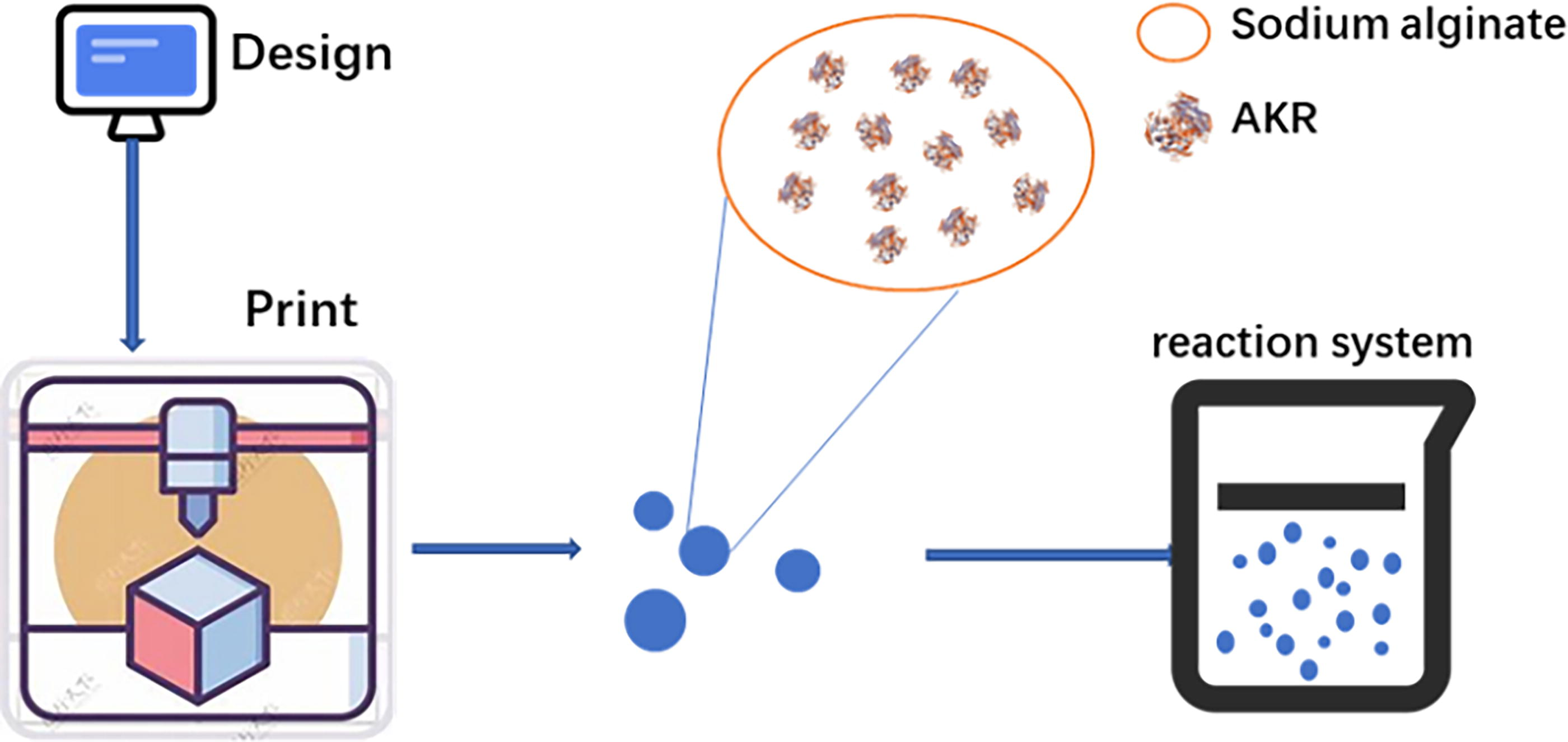
The process of 3D printing enzyme-based equipment.
Materials and Method
Strains and materials
NADPH is purchased from Sigma-Aldrich Co. (Shanghai, China). Sodium alginate is purchased from Solarbio (China), and calcium chloride (CaCl2) is purchased from SINO Chemical (China). The reaction substrate is methyl pyruvate. All other compounds are analytical grade unless otherwise noted.
Enzyme activity determination
According to the research of Pei et al., 21 AKR7-2–1 was obtained and it has the highest catalytic activity for methyl pyruvate, so we use methyl pyruvate as the reaction substrate. When catalyzing, aldo-keto reductase requires the participation of the cofactor NADPH, and NADPH has an obvious absorption peak at 340 nm, so the enzyme activity can be measured according to the change of its OD. The reaction system is 220 μL, including 180 μL PBS, 10 μL NADPH, 20 μL methyl pyruvate, and 10 μL enzyme. The maximum activity is set to 100%.
Optimization of enzyme immobilization conditions
After single-factor experiments, we have determined the three factors that have a greater impact on the enzyme activity, including temperature, sodium alginate concentration, and calcium chloride concentration. 22 Then the orthogonal experiment is used to study the effect of the combined effect of the three factors on the enzyme activity. Finally, we perform response surface analysis on a series of enzyme activity data obtained by orthogonal experiments to get the optimal ratio of the three factors.23,24
Ink preparation
The optimal conditions are 1 wt% sodium alginate, 2 wt% calcium chloride concentration, and temperature 30°C. Prepare 10 mL 2 mg/L free ketoreductase solution, add 1 mL enzyme solution to 9 mL deionized water, then add 0.1 g sodium alginate (1 wt%) to it, and perform ultrasonic treatment until it’s completely dissolved. In addition, a calcium chloride solution (2 wt%) is prepared for cross-linking and curing during printing. 25
3D printing enzyme-containing polymer
Under 3D printing control and the pressure of 0.4 MPa, 0.3 MPa, and 0.25 MPa, the aldo-keto reductase/SA microspheres with particle diameters of 2 mm, 2.5 mm, and 3 mm were printed. 3D bio-printer is REGENOVO. Then put them into the calcium chloride solution for cross-linking and curing for 30 min. Finally use deionized water to wash away the residual calcium chloride on the surface after the curing is completed.
Reuse performance research
The 20 mL reaction system which including 1 mL substrate, 1 mL 0.1 mM NADPH, and 18 mL PBS buffer was constructed. Use an ultraviolet spectrophotometer to measure the OD340 for 1 min, and then the enzyme activity was calculated. As the number of times increases, the enzyme activity has a certain decay trend. 26 We continuously measured the enzyme activity 10 times in order to study its repeated use performance.
SEM analysis
Set two identical sample groups, dry the samples, apply them evenly on the conductive tape, and plate them with ion sputtering equipment. The scanning voltage is set to 5 kV, and the enzyme load is observed with a scanning electron microscope.
Results and Discussion
Optimal conditions for immobilization of aldo-keto reductase
The influence of temperature, the mass concentration of SA and CaCl2 on AKR7-2–1 were determined. In Figure 2a, for every 10°C increase in temperature, the relative enzyme activity decreases by about 10–20%. When the temperature reaches 60°C, the relative enzyme activity is reduced by half, and then the rate of change of the enzyme activity decreases. According to Figure 2b, when the calcium chloride concentration is 4 wt%, the enzyme activity reduces by 35%, and the inhibitory effect is obvious. When the concentration of calcium chloride increases, the enzyme activity starts to rise instead, possibly because Ca2+ activation the spatial conformation of the aldo-keto reductase. 27 If increasing the calcium chloride concentration, the enzyme activity begins to decrease significantly, so the concentration of calcium chloride should be controlled below 6 wt%. According to Figure 2c, when the concentration of sodium alginate is increases 0.8 wt%, the enzyme activity decreases significantly, indicating that the concentration of sodium alginate has a significant effect on the enzyme activity. Taken together, temperature, calcium chloride concentration, and sodium alginate concentration are important factors that affect the activity of AKR7-2–1, and the effect of their interaction on enzyme activity can be further explored.
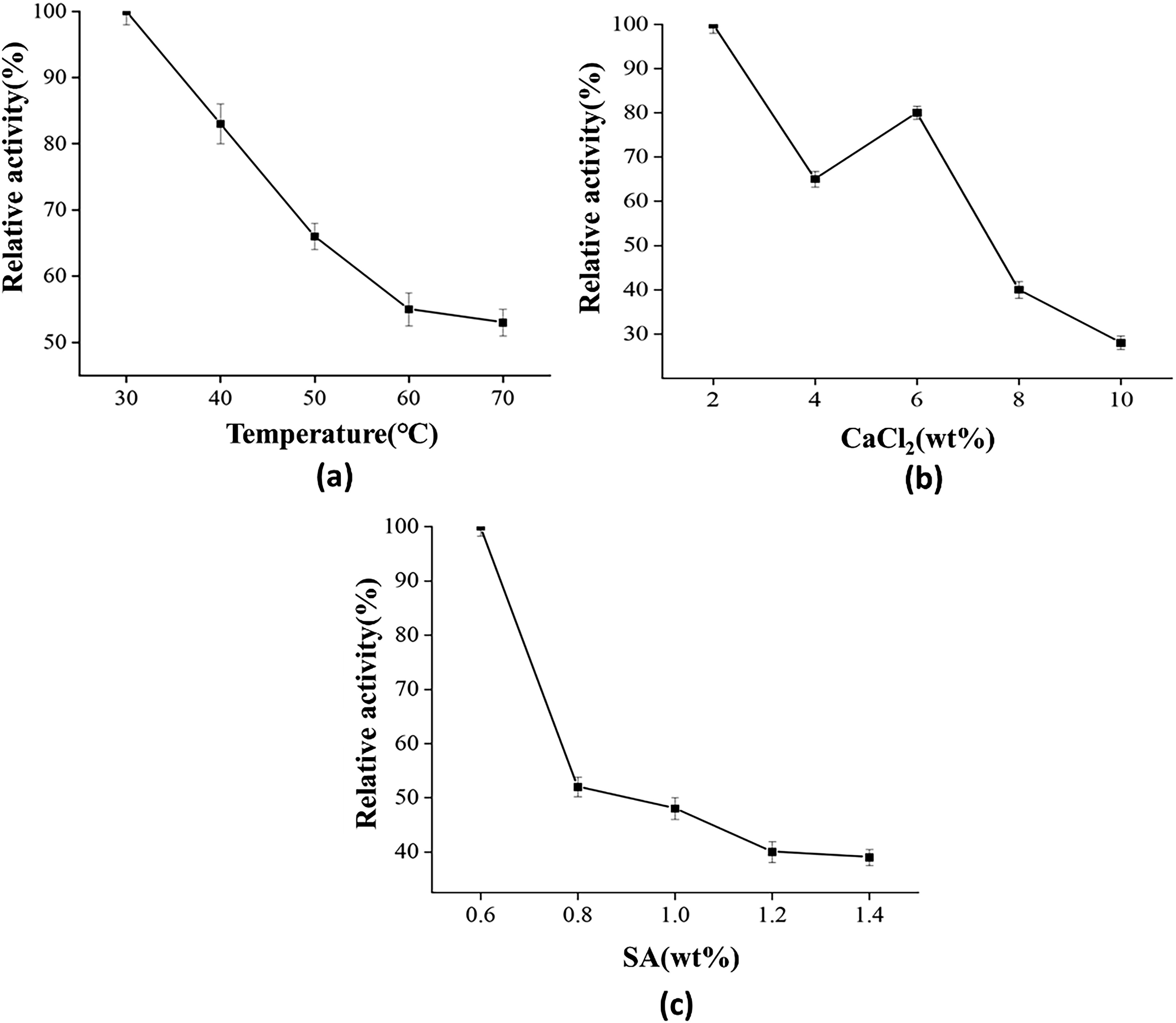
The effect on enzyme activity was determined by single factor experiment, and the maximum enzyme activity was defined as 100%.
Based on the single factor experiment, in order to further optimize the condition parameters of 3D printing aldehyde ketone reductase, an orthogonal experiment was designed to determine the effect of different combinations of the three factors on the enzyme activity. According to the experimental results obtained, response surface analysis obtains a three-dimensional response surface map. Figure 3a shows the effect of the interaction of sodium alginate concentration and temperature on the activity of aldo-keto reductase; Figure 3b shows the effect of the interaction of calcium chloride concentration and temperature on the activity of aldehyde and ketone reductase; Figure 3c shows the effect of calcium chloride concentration and sodium alginate concentration on aldo-keto reductase activity. According to Figures 3a and b, two response surfaces are similar. As the temperature decreases, the enzyme activity gets higher, which indicates that temperature is an important factor affecting the activity of AKR7-2–1. The overall response surface of Figure 3c is relatively flat, indicating that the concentration of sodium alginate and calcium chloride have smaller effects on enzyme activity. Many studies have shown that sodium alginate is an ideal immobilization material.28–30 Based on the interaction of the three factors, the best immobilization parameters for 3D printing are 1 wt% sodium alginate, 2 wt% calcium chloride concentration and 30°C, for ensuring that the activity of AKR7-2–1 remains optimal. Saha et al. also used the response surface method to optimize the concentration of sodium alginate and calcium chloride when immobilizing xylanase, which proved that this method can more comprehensively optimize the printing conditions on the 3D printing immobilized enzyme. 31
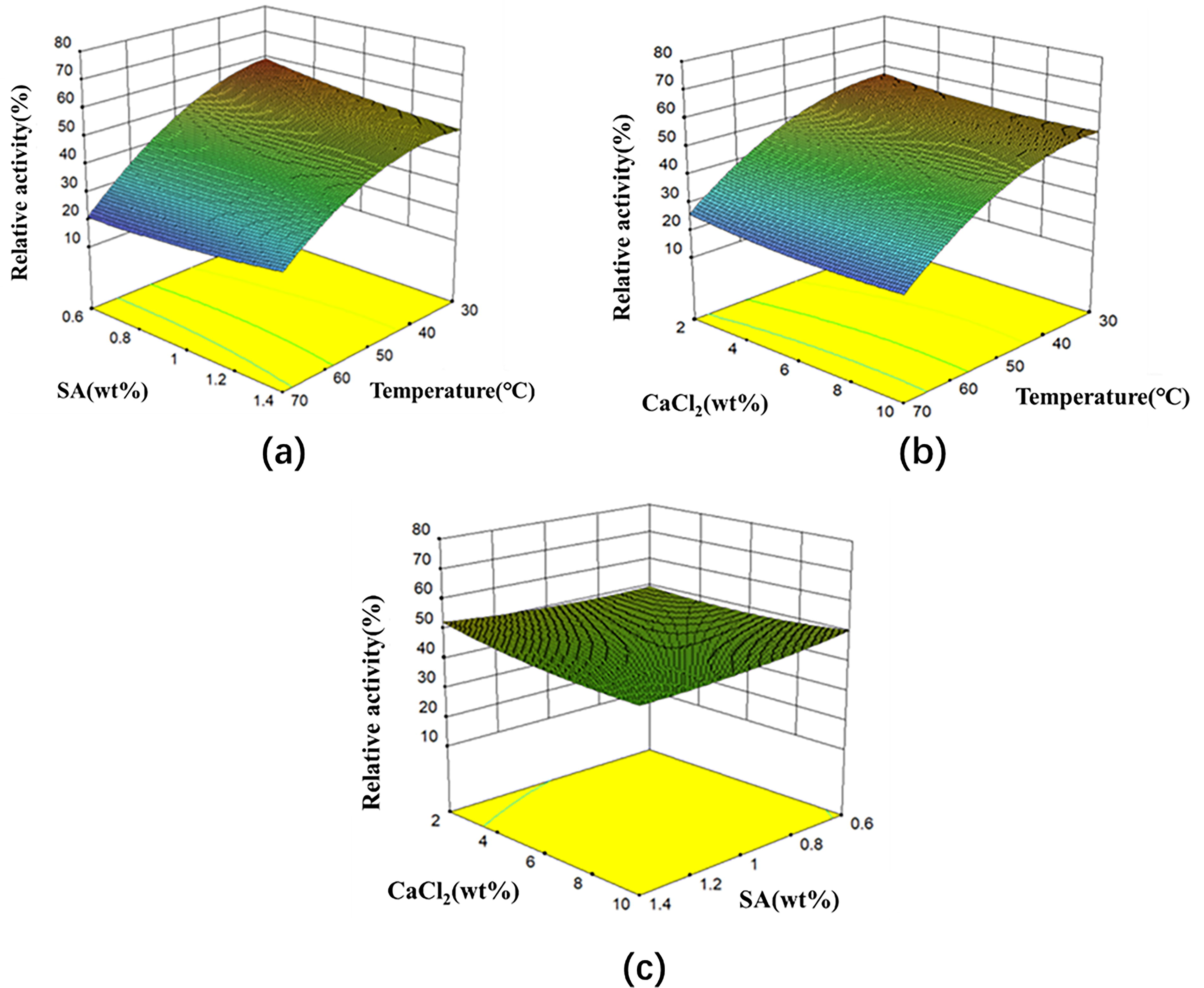
Box–Behnken response surface analysis.
Enzyme activity and reusable performance
The OD340 is measured with a spectrophotometer, and the free enzyme activity is calculated to be 0.921 U/mL. The enzyme activities of the three microspheres is 0.616 U/mL, 0.602 U/mL, and 0.858 U/mL, which decreased by 33.1%, 34.6%, and 6.8% compared with the free enzyme activity.
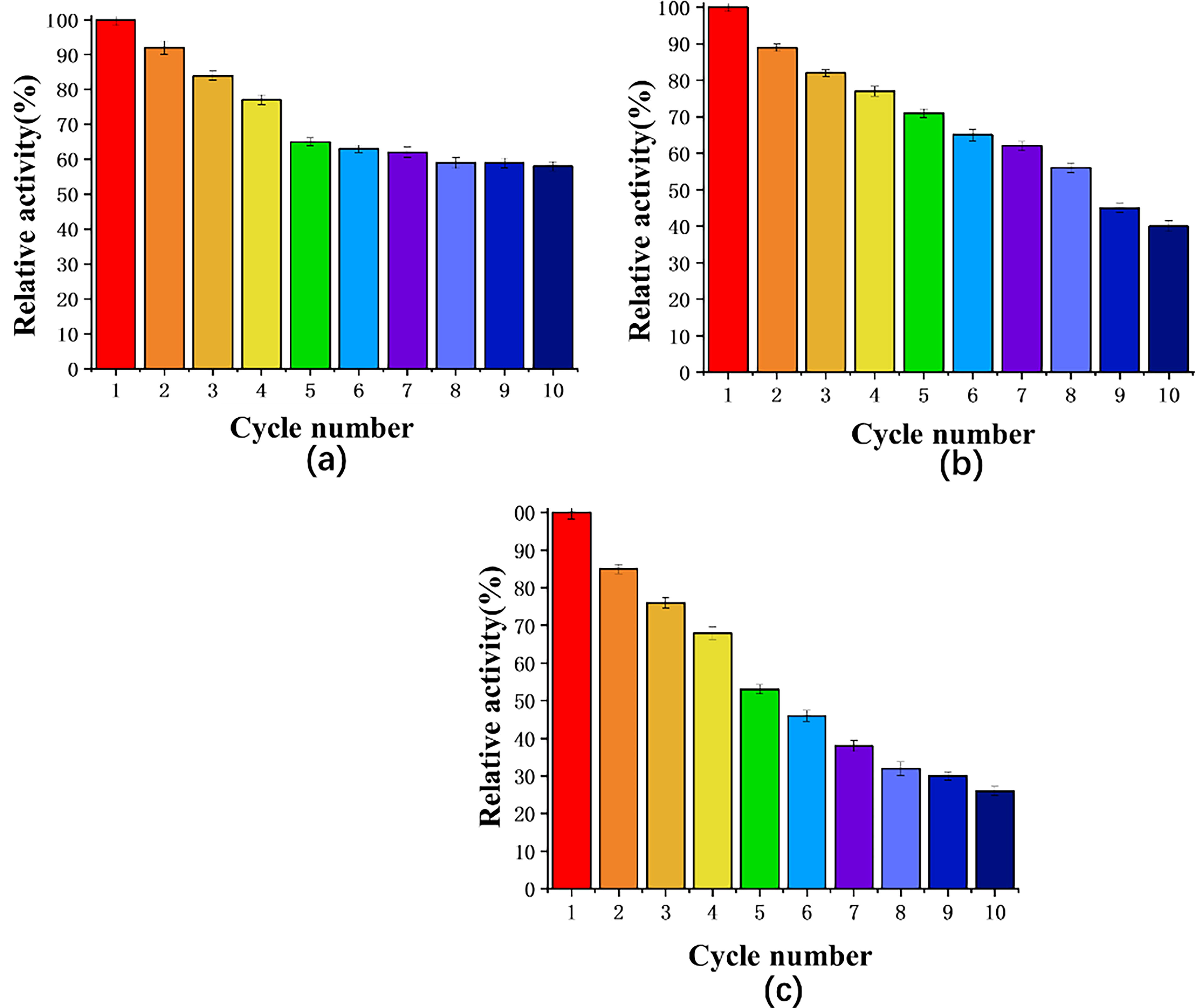
In industrial production applications, it is particularly important to ensure the reuse rate of immobilized enzymes, which can reduce production costs and increase production rates. Therefore, we measured the enzyme activity once every 1 hour for three enzyme-containing microspheres of different particle sizes, and performed ten consecutive enzyme activity determinations. We define the first enzyme activity as 100%. The results are shown in Figure 4, the enzyme activity of the three size microspheres all decreases with the increase in the number of uses. According to Figure 4a, the enzyme activity of 2 mm microspheres remained at about 60% after five times of use, indicating that it has good application potential. According to Figure 4b, the enzyme activity of 2.5 mm microspheres was used after eight times. Enzyme activity dropped below 50%. According to Figure 4c, the enzyme activity of 3 mm microspheres decreases relatively quickly. After five times of use, the enzyme activity decreases to less than 50%. However, since the original enzyme activity of 3 mm microspheres is relatively high, it is theoretically after seven times of use. The enzyme activity is similar to the 50% enzyme activity of the former two. In summary, when the number of use of the three-size microspheres reaches five to seven times, half of the enzyme activity can still be maintained, which proves that it can be applied to industrial production. Some researched 3D printed AKR-IA and measured its reusability, and found that it was at least five times longer than the free enzyme (unpublished data), which once again proves the great potential of 3D printing aldehyde ketone reductase.
Loading situation of immobilized enzyme
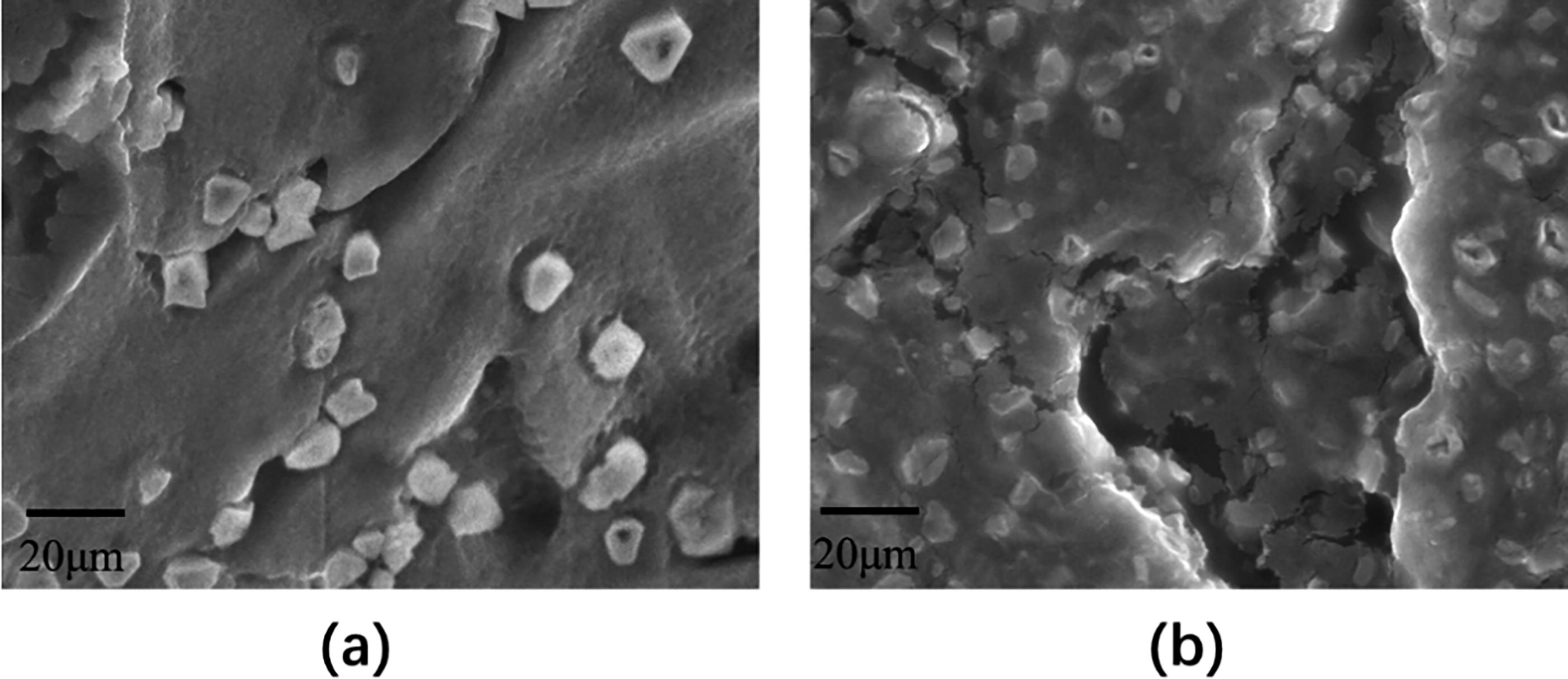
Through scanning electron microscopy, we observed the SEM characterization of free enzymes and 3D printed enzyme-containing microspheres. Figure 5a shows that the size of AKR7-2-1 is about 10 μm. Figure 5b shows that the enzyme is in alginic acid and chloride. The loading conditions on the microspheres formed by the cross-linking and solidification of calcium show that the enzymes are all embedded in the material, which proves that the immobilization of 3D printing AKR7-2-1 is stable and not easy to fall off, and it is in the gap of calcium alginate. There is also AKR7-2-1. Therefore, it is determined from the essential principle that 3D printing immobilized aldehyde ketone reductase has good reusability and broad application prospects.
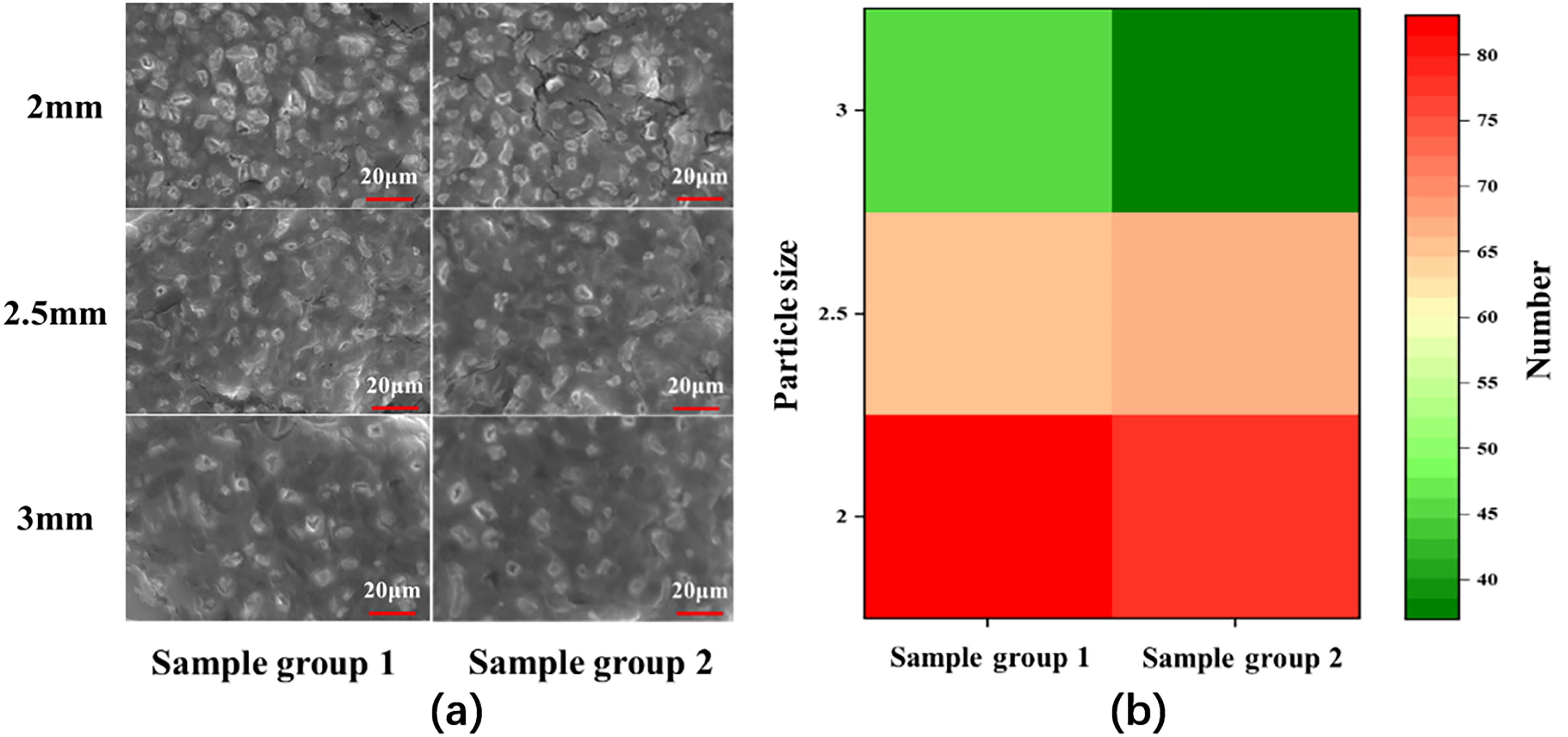
We also observed the loading of AKR7-2–1 on the microspheres of different sizes in the two sample groups, as shown in Figure 6a. Theoretically, the enzyme content on the three particles directly affects the final catalytic efficiency. Therefore, we counted the enzyme load on a specific area and drew a heat map. Figure 6b shows that the amount of enzyme on the same particle size particles of the two samples is similar, the larger the particle size, the less enzyme content. This may be related to the decrease of the surface area of the microspheres as the particle size increases.32–34 In addition, the larger the particle size, the looser the structure of the microspheres, so they are easy to fall off in a liquid environment. This also explains that the enzyme activity of the 3 mm microspheres in Figure 4c decreased rapidly with the increase of use times.
Conclusion
The repeated use performance of the printed aldo-keto reductase showed that it still retains about 50% of the enzyme activity after six times, reflecting the huge industrial application potential. Based on the data of single factor experiment and orthogonal experiment, we carried out a response surface optimization design on the immobilization conditions of printing AKR7-2-1, and focused on its reusability after printing. We found that 3D printing aldo-keto reductase has good reusability. 35 Although the enzyme activity of the immobilized enzyme is lower than that of the free enzyme, it is more convenient to use in industrial production. We preliminarily verified the reusability of 3D printing immobilized enzymes, which can still retain 50% of the enzyme activity after 5–7 times of use. Cui et al. 3D printed a bioactive polyurethane coating containing carbonic anhydrase, and compared the enzyme activity with the traditional coating and found that the recovery rate was increased by four times. 36 These studies show the huge application potential of 3D printing enzyme catalysts. After further observing the immobilization of the enzyme on the printed microspheres using a scanning electron microscope, we found that as the size increases, the enzyme loading per unit volume decreases significantly. However, the total enzyme activity does not decrease accordingly. On the contrary, the 3 mm microspheres retain the maximum enzyme activity. This work is based on 3D printing technology, taking advantage of its rapid mass production, to study immobilization of aldo-keto reductase, which has great potential in the field of chiral drug production, and preliminary exploration and study of its industrial application potential.
Footnotes
Authors’ Contributions
Z.K.W. did experiments, S.Y.Z. and L.J.Z. writing—review of the article, Z.K.W. and W.J. wrote and modified this article, and W.J. designed and supervised this work.
Data Availability
The raw data supporting the conclusions of this article will be made available by the authors, without undue reservation, to any qualified researcher.
Disclosure Statement
The authors state that they have no competing interests.
Funding Information
The work was supported by the