Abstract

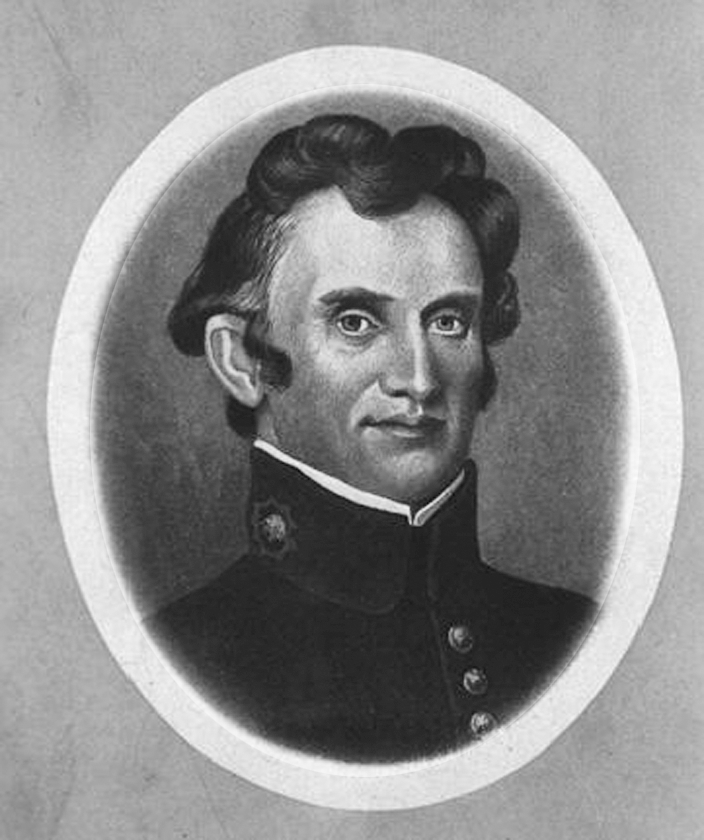
Beaumont was a surgeon in the U.S. army stationed on the frontier. In 1822, he happened to treat a French-Canadian worker in the fur trade who had suffered a stomach wound from an accidental musket blast, which had not properly closed. For 8 years Beaumont peered into the man's stomach, took samples, did experiments, made careful observations, and finally in 1833 published his findings in a book. In this relatively short period of time, Beaumont revealed more about the actual workings of the human stomach than all of the previous 4000 years of recorded medical history.
Here is a list of some characteristics of Beaumont's research: The study was not planned. There were no research hypotheses. There was no statistical analysis. No agency funded the research. There was no human-subjects oversight. He did not publish in a journal. The sample size was completely inadequate. He had no laboratory data.
In other words, the largest step forward ever taken in medical research to understand the workings of the stomach had none of the characteristics that we now take as hallmarks of biomedical science.
I have to confess to a perhaps exaggerated admiration for 19th-century science. The gaps in fundamental knowledge that were narrowed or closed from 1800 to about 1920 seem to me to have been very, very considerable. They are even more astounding in retrospect, when we recognize that none of the modern engineering tools that were to come in the 20th century were available to 19th-century scientists, thereby imposing technical barriers to what they could do in their experiments. To my mind, however, they made up for the lack of tools by being clever, by thinking hard about how to design experiments and interpret the results, and perhaps most of all, by keeping their scientific designs close to their own experience in areas they understood from professional practice. Beaumont used nothing more than a pipette and a thermometer, and pieces of food attached to strings, which he dangled in his patient's stomach, and crude observations on digestion, to make his conclusions.
One of the ways that modern biomedical research has diverged from the 19th century is in deprecation of the “N-of-1” study. Case studies are commonly regarded as being near the bottom of our evidence hierarchy. To be sure, most case studies do not lead to generalizable knowledge, but as Beaumont showed, sometimes they do. And when they do, the results can be impressive. What Beaumont had going for him was a case (the workings of the stomach) that is exceedingly generalizable on its face (how many fundamentally different versions of the human stomach can there be?). It is hard, in the modern era, to find fortuitous cases like Beaumont's. What one needs is a patient who exhibits the features of the pathology of interest in a clear form, unobstructed by coexisting conditions or idiosyncratic characteristics, who can be studied as Beaumont did his patient. If we accept that Beaumont's success was a large step forward, and that it would be good to occasionally make such steps, it is certainly difficult to see how we might fashion research policy to promote such happenings. The irony is that by holding N-of-1 research in low esteem, we systematically discourage one of the avenues by which we might make rather large advances.
The other way in which we have diverged from the 19th century is in the invention of the clinical trial. The most important basic fact about the modern clinical trial is that almost anyone (with modest training) can carry one out. The rules have become so standardized and simplified that, like the Model T Ford, clinical trials can roll off the assembly line one after the other in mind-numbing succession. But while the Model T provided the blessings of mobility to the U.S. population, it is less than clear that the clinical trial has done anything similar for medicine. There is a vast gap between the summary statistics computed on the mass-production of data from a typical clinical trial and the individual patients who volunteered, complied with instructions, and contributed their data to the trial. There is a very fundamental way in which the individual patient has become invisible in the modern biomedical research paradigm.
There are (at least) two different ways of knowing in biomedical science. One uses hard thinking, reliance on collateral science, clever experimentation, and shrewd inference and interpretation, as a path to generalizable knowledge. William Beaumont exhibited much of this in his gastronomic research. The other way poses simplified questions, searches for relevant populations to sample, focuses on population-level measures as outcomes, and concentrates on the removal of bias in estimating population characteristics. Conventional clinical research has given itself almost completely to the second way. Perhaps one of the most significant contributions of complementary and alternative medicine research to the biomedicine of the 21st century might be a return to giving appropriate value to the first way of knowing.