




Abstract
Objective:
The aim of the present study is to highlight the beneficial effects of yoga practice on bio-parameters, such as oxidative stress, antioxidant components, immune functions, and secretion of stress hormones, in healthy young people.
Study design:
This study was conducted on healthy volunteers recruited from among university students, who were divided into two groups: a control (no yoga intervention, n=13) group and a yoga (n=12) group. Yoga practice was with an instructor for 90 minutes once a week spread over 12 weeks, with recommendations to practice daily at home for 40 minutes with the help of a DVD. The yoga program consisted of yoga body poses (asanas), exercises involving awareness, voluntary regulation of breath (pranayama), and meditational practices. Whole blood samples were collected when the volunteers had fasted for 8 hours at 0 and 12 weeks. The oxidative stress/antioxidant components, immune-related cytokines, and stress hormones were evaluated in serum or plasma.
Results:
Serum levels of nitric oxide, F2-isoprostane, and lipid peroxide were significantly decreased by yoga practice (p<0.05 or p=0.01), whereas serum total glutathione (GSH) contents, activities of GSH-peroxidase, and GSH-s-transferase were remarkably increased after yoga practice compared with the control group (p<0.05 or p=0.01). Yoga practice also significantly increased immune-related cytokines, such as interleukin-12, and interferon-γ, in serum (p<0.05 or p=0.01). Yoga practice significantly reduced the plasma levels of adrenalin (p<0.05) and increased plasma levels of serotonin compared with the control group (p<0.05).
Conclusions:
Regular yoga practice remarkably attenuated oxidative stress and improved antioxidant levels of the body. Moreover, yoga beneficially affected stress hormone releases as well as partially improved immune function.
Introduction
R
Regarding the physiologic condition, yoga practice not only can improve muscular efficiency, endurance time, and enhancement of aerobic exercise capacities but also can reduce perception of exhaustion after exertion caused by physical exercise. 11,12 In addition, yoga is widely used to alleviate mental stress via modulation of hypothalamus-pituitary-adrenal axis activation. 3,5,13,14
On the other hand, the homeostasis between oxidative stress and antioxidant components are most important for the constitution of a healthy life. The breakdown of this state can lead to various disorders, including inflammation, cancer, and aging. 15 –17 Furthermore, continuation of these pathologic conditions can also provoke impairment of the immune systems. Previous studies showed that the psychological condition is also an important factor in maintaining a healthy status. Mental stress–derived psychological disorders, such as anxiety or depressions, have become social-medical issues. These conditions evoke specific disorders, such as neuronal degenerative disease (e.g., Alzheimer's disease and Parkinson's disease). Therefore, it is critical to control these physiologic and psychological elements for a human's healthy body.
During the last three decades or more, studies reported on the effects of yoga on healthy people as well as patients with certain diseases. Numerous studies showed that the properties of yoga improve antioxidant components, enhance immune functions, and reduce mental stress response by separately targeting certain diseases. 10,14,18,19 However, there is no evidence showing that yoga concurrently improves physical or psychological conditions. Only a few studies reported that the benefit of yoga are achieved by enhancement of antioxidants and inflammation or stress and inflammation, respectively. 20 –22
Therefore, the present study sought to evaluate the effect of yoga on oxidative stress/antioxidant status, immune system, and release of stress hormones in healthy university students concurrently.
Materials and Methods
Participants
A total of 30 university students (Daejeon, Republic of Korea), who were not experienced with yoga, were recruited. The volunteers who wanted to participate in this clinical trial were not working at night, did not abuse alcohol, did not smoke more than five cigarettes per day, did not take medication, and were not severely overweight (body–mass index >30 kg/m2). These volunteers met the requirements of the first criterion. After recruitment of volunteers, a physician and radiologist conducted examinations and excluded persons who had abnormalities on hematologic or radiologic tests or a history of certain disorders. Among the 30 volunteers, 2 of them did not meet the requirements of the second criterion, and 3 of them declined to participate, thus, a total of 25 participants (11 men and 14 women) were enrolled (median age, 22 years; range, 19–25 years). These participants were allocated to a control group (5 men and 8 women; median age, 22.0 years) or a yoga group (6 men and 6 women; median age, 21.0 years) by using Microsoft Excel randomization routine (Fig. 1 and Table 1).
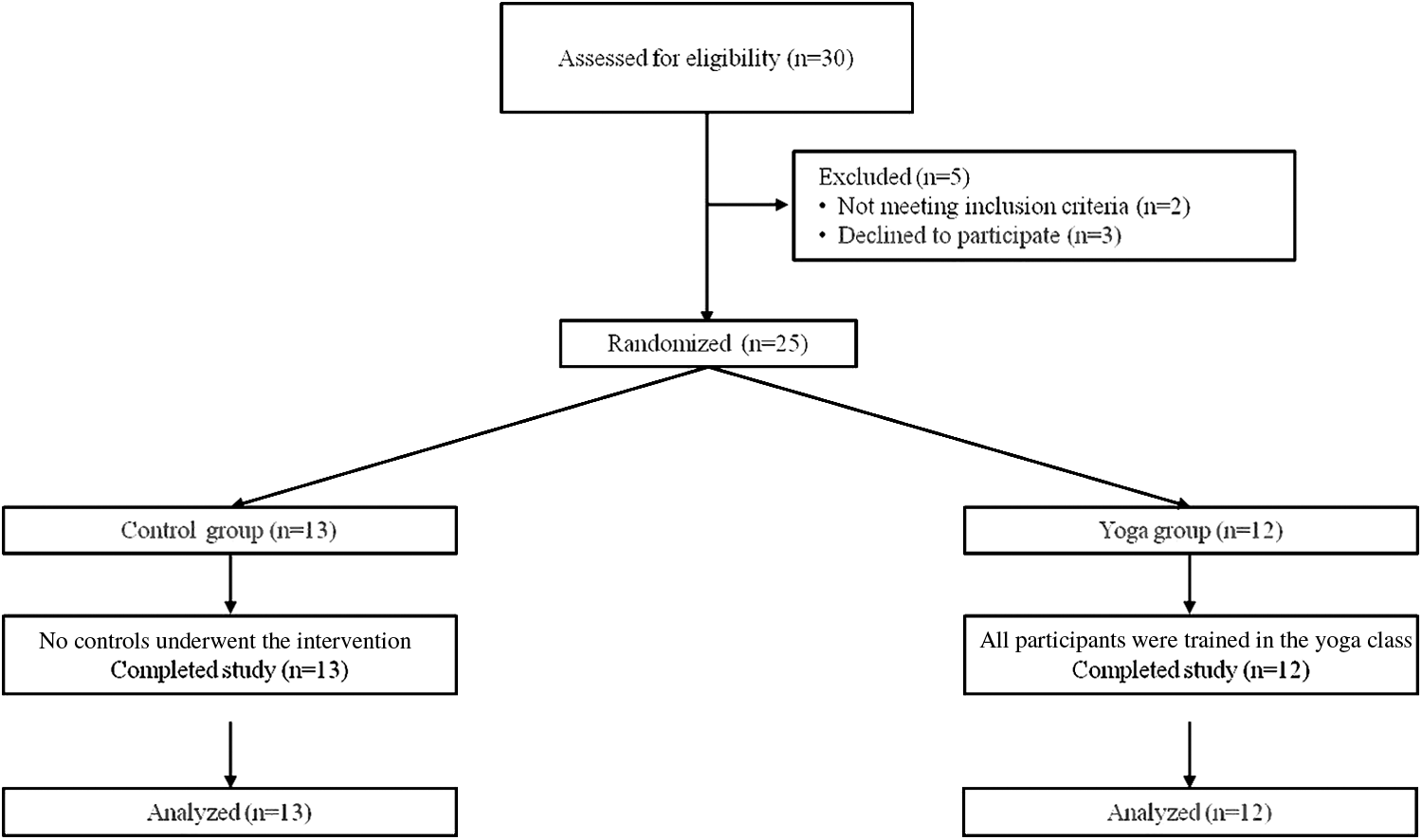
Flow diagram of participants' progress through the phases of the randomized clinical trial.
A total of 25 participants completed both control and yoga training program for 12 weeks. All participants measured their body characteristics before each program. No significant differences were seen within or between groups. Unless otherwise noted, values are expressed as mean±standard deviation. Ages are expressed as median (range).
Informed consent was obtained from each participant, and the Ethics Committee of Daejeon University Hospital, Republic of Korea, approved the study protocol (authorization number: DJOMC-103).
Study design and yoga program
Yoga classes were conducted 1 day a week for 90 minutes, with each session spread over 12 weeks. The instructor was a certificated yoga instructor from South Korea (Association of Yoga Instructors in South Korea). Participants in the yoga group were asked to attend at least 10 of the total 12 weeks of the yoga session and to practice on their own at least three times at home during the experiment period by watching a 40-minute DVD provided by the instructor. If the participants did not attend 10 of 12 sessions or the recommended home practice of yoga, they were dropped from the experiment. Participants confirmed the home practice of yoga at every yoga session.
23
On the other hand, participants in the control group (inactive members of the yoga group) were asked not to attend yoga classes but rather to continue their usual social life and physical exercise activities during each session for the equivalent of the yoga group under the supervision of the physical trainer (e.g., running on a treadmill, exercising on a bicycle, jumping rope, participating in free exercises) (Supplementary Table S1; Supplementary materials are available online at
The present study aimed to study the effects of yoga on the physiologic and psychological health status of individuals. Therefore, the yoga program was established for the current study; it consisted of yoga body poses (asanas), exercises involving awareness and voluntary regulation of breath (pranayama), and meditational practices (Table 2). 10, 21, 24, 25
For analysis of biomarkers, peripheral blood was collected from the arm vein by using BD Vacutainer® Push Button Blood Collection Set (Franklin Lakes, NJ). The plasma samples were obtained with EDTA-treated tube (BD Vacutainer®, K2 EDTA, BD Science), and the serum samples were obtained after 20 minutes at 25°C in vacuum tubes (BD Vacutainer®, SST™, BD Science) at two time points (before week 0 and after a 12-week session). The serum and plasma samples were separated supernatants, and they were stored at −70°C for analysis of biomarkers. During the 12 weekly sessions of yoga classes, no participants in either group reported adverse events associated with taking part in the study.
Determination of serum nitric oxide level
Serum nitric oxide (NO) level was determined by the Griess method. Briefly, 40 μL of serum samples was transferred into a 96-well plate, and 160 μL of Griess reagent (1% sulfanilamide, 0.1% N-[1-naphthyl] ethylenediamine hydrochloride, and 2.5% H3PO4) was added. After reaction at room temperature for 20 minutes, the purple-azo-dye product was detected at 540 nm by using a spectrophotometer (Molecular Device Corp., Sunnyvale, CA).
Determination of serum malondialdehyde level
Serum lipid peroxide level was determined using thiobarbituric acid-reactive substances (TBARS) as previously described. 26 TBARS concentration was expressed as malondialdehyde (MDA) in serum. Briefly, 50 μL of serum, or standard solution, was added to 500 μL of 20% trichloroacetic acid. This was then mixed with 200 μL of 0.67% thiobarbituric acid and heated at 100°C for 30 minutes, followed by cooling on ice and vigorous vortexing with 1 mL n-butanol. After centrifugation at 3000 g for 20 minutes, the absorbance of the upper organic layer was measured at 535 nm with a spectrophotometer and compared with a 1,1,3,3-tetraethoxypropane standard curve.
Determination of serum F2-isoprostane level
The serum level of F2-isoprostane was determined by using a commercially available enzyme-linked immunosorbent assay (ELISA) kit (ENZO Life Sciences, Farmingdale, NY). The procedures followed the manufacturer's protocol, and the absorbance was read by an ELISA reader (Soft Max 5.1, Molecular Devices, Sunnyvale, CA).
Determination of serum glutathione redox system level
Total glutathione (GSH) content in serum was determined according to a previously described method. 27 Briefly, 50 μL of diluted serum (in phosphate-buffered saline, 10 mM, pH 7.2) or total glutathione standard was combined with 80 μL of 5, 5′-dithiobis (2-nitrobenzoic) acid (DTNB)/nicotinamide adenine dinucleotide phosphate-oxidase (NADPH) mixture (10 μL of 4 mM DTNB and 70 μL of 0.3 mM NADPH) in a 96-well microplate. Next, 20 μL (0.06 unit) of GSH reductase (GSH-Rd) solution was added to each, and the absorbance was measured by using a plate reader at 405 nm (Molecular Devices).
GSH peroxidase (GSH-Px) activity in the serum level was determined according to the method described previously. 28 Briefly, 50 μL of NADPH reagent (5 mM NADPH, 42 mM GSH, 10 U/mL GSH-Rd in 1.25 mL of distilled water) was added to 890 μL of GSH-Px buffer (50 mM Tris HCl, pH 8.0, 0.5 mM EDTA). Then, 50 μL of serum sample and 10 μL of 30 mM tert-butyl hydroperoxide solution were added to the mixture. The final absorbance was measured at 340 nm using an ultraviolet spectrophotometer (Varian, Agilent Technologies, Santa Clara, CA).
GSH-Rd activity in serum was determined according to the slightly modified version of a previous method. 29 Briefly, 150 μL of glutathione disulfide with 30 μL of GSH-Rd assay buffer (100 mM potassium phosphate buffer, pH 7.5, 1 mM EDTA) was added to 30 μL of serum sample and diluted with GSH-Rd dilution buffer (100 mM potassium phosphate buffer, pH 7.5, 1 mM EDTA, 1 mg/mL bovine serum albumin). Then, 75 μL of DTNB and 2 mM NADPH were added, and the absorbance was read at 412 nm.
Determination of serum catalase and superoxide dismutase activities
Catalase activity in serum was determined according to the method described in a previous study. 30 Briefly, 150 μL of phosphate buffer (250 mM, pH 7.0), 150 μL of 12 mM methanol, and 30 μL of 44 mM hydrogen peroxide were mixed with 300 μL of serum samples or standard solutions in the 13×100-mm test tube. The reaction was allowed to proceed for 10–20 minutes and finished by the addition of 450 μL of Purpald® solution (22.8 mM of Purpald in a 2 N potassium hydroxide) (Sigma-Aldrich, St. Louis, MO). The mixture was left for 20 minutes at 25°C, and then added with 150 μL of potassium periodate (65.2 mM in 0.5 N potassium hydrate) in the same tube. The absorbance of the purple formaldehyde adduct was measured at 550 nm using a spectrophotometer (Molecular Devices).
The serum level of superoxide dismutase (SOD) activities was determined using a SOD assay kit (Dojindo Laboratories, Kumamoto, Japan) according to the manufacturer's protocol. Bovine erythrocyte SOD (Sigma) was used as a standard.
Determination of immune-related cytokines in serum
The serum level of tumor necrosis factor-α (TNF-α), interferon-γ (IFN-γ) and interleukin-12 (IL-12), were determined using a commercially available ELISA kit (BioSource, San Jose, CA). The procedures were followed using the manufacturer's protocol. Each cytokine was determined at 450 nm and revised with 570 nm using a spectrophotometer (Soft Max 5.1).
Determination of stress hormones in plasma
The stress-related hormones, including cortisol, tri-catecholamine, and serotonin, were determined using a commercial ELISA kit (LDN-MS E-5000 for cortisol, LDN-BA E-6000 for tri-catecholamine and LDN-BA-09000 for serotonin, LDN-BA E-6300, LDN, Nordhorn, Germany). The protocols were followed as per the manufacturer.
Statistical analysis
Statistical comparisons of values among groups, and changes of values between groups were analyzed using a t-test with the PASW Statistics 20 program (SPSS, Inc., Chicago, IL). Levels of statistical significances were reported at p<0.05 and p<0.01.
Results
Effects on oxidative stress status
The yoga practice significantly decreased by approximately 0.6-fold the serum levels of NO (p<0.01), but no decreases were seen in the control group. The changed serum NO values were significantly reduced by the yoga practice as compared with the changed values of the control group (p<0.05) (Fig. 2A). The serum MDA level in the control group was not altered (values were about the same as at the initial measurement), whereas the yoga group showed significant decreases (about 0.7-fold lower than that of the initial value; p<0.001). The changed values of serum MDA were reduced by yoga practice as compared with the control group (p<0.01) (Fig. 2B). In the yoga group, serum levels of F2-isoprostane were significantly decreased by approximately 0.7-fold of the initial value (p<0.01); no changes occurred in the control group. The changed values of serum F2-isoprostane were significantly reduced in the yoga group compared with the control group (p<0.05) (Fig. 2C).
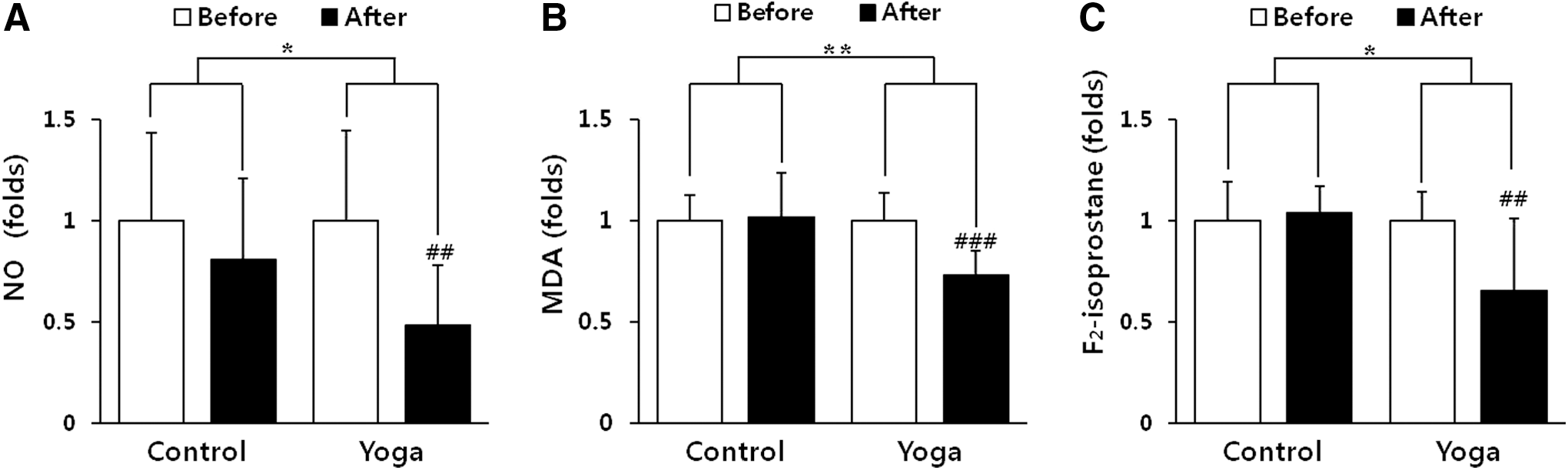
Serum levels of oxidative stress parameters. Nitric oxide (NO)
Effects on antioxidant components
After 12 weeks of the trial, both groups showed significant increases in total GSH levels in serum: approximately 1.3- and 2.1-fold higher than the initial value, respectively (p<0.05 in the control group; p<0.001 in the yoga group). The changed value of total GSH in serum was significantly increased in the yoga group versus the control group (p<0.01) (Fig. 3A). GSH-Px activities were significantly increased in the yoga group by 1.9-fold, whereas GSH-Rd activities were about 1.2-fold higher in the control group compared with initial values (p<0.05 for GSH-Px in the yoga group in GSH-Px and for GSH-Rd in the control group). Yoga practice led to significantly increased changes in GSH-Px activity but not GSH-Rd activity (p<0.05) (Fig. 3B and C). Glutathione-S-transferase (GST) activities were not altered in either group, whereas the changed values of GST activity were slightly but significantly increased in the yoga group compared with the control group (p<0.05) (Fig. 3D). Serum catalase activities were not altered in either group, while serum SOD activities in the control group were significantly lowered, approximately 0.7-fold than that of the initial value (p<0.05 for SOD in control group) (Fig. 3E and F).

Serum levels of antioxidant components. Total glutathione (GSH) contents
Effects on immune-related cytokines
At the end of the experiment, the serum levels of IL-12, INF-γ, and TNF-α were not significantly altered in either group compared with the initial values. The changed values for both serum IL-12 and INF-γ were significantly increased in the yoga group compared with the control group (p<0.05 for IL-12 and p<0.01 for INF-γ) (Fig. 4A and B). No significant change in TNF-α values occurred in the control and yoga groups (Fig. 4C).
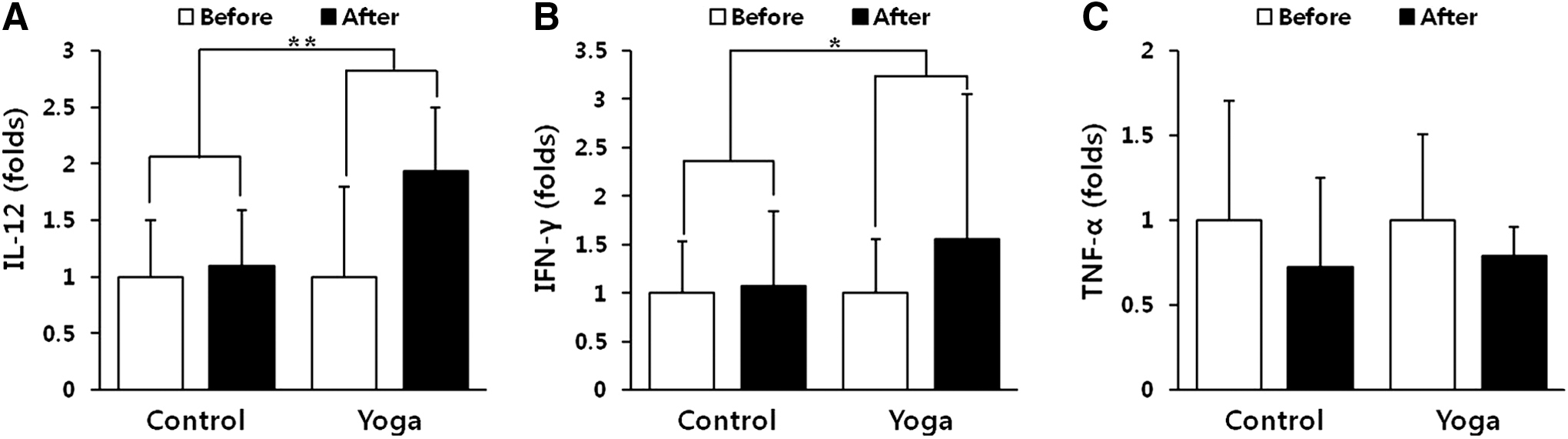
Serum levels of cytokines. Interleukin (IL)-12
Effects on the secretion of stress hormones
The plasma level of cortisol in the control group was significantly higher, by 1.3-fold, than its initial value (p<0.01); the yoga group also showed slight increases in plasma cortisol, by about 1.1-fold (Fig. 5A). Plasma serotonin levels were not significantly altered compared with the initial value in the control group but were significantly increased in the yoga group (p<0.05 in the yoga group). The changed serotonin values were significantly increased with yoga practice compared with the control group (p<0.05) (Fig. 5C). The plasma levels of both dopamine and noradrenaline were not altered compared with their initial values, and the changed values were also not significantly changed between groups (Fig. 5C and D). Plasma adrenaline levels were significantly decreased by approximately 0.8- and 0.6-fold versus their initial values in both groups (p<0.05 for the control and yoga groups) (Fig. 5E). Of the changed plasma values, adrenaline was significantly decreased in the yoga group compared with the control group (p<0.05) (Fig. 5E).
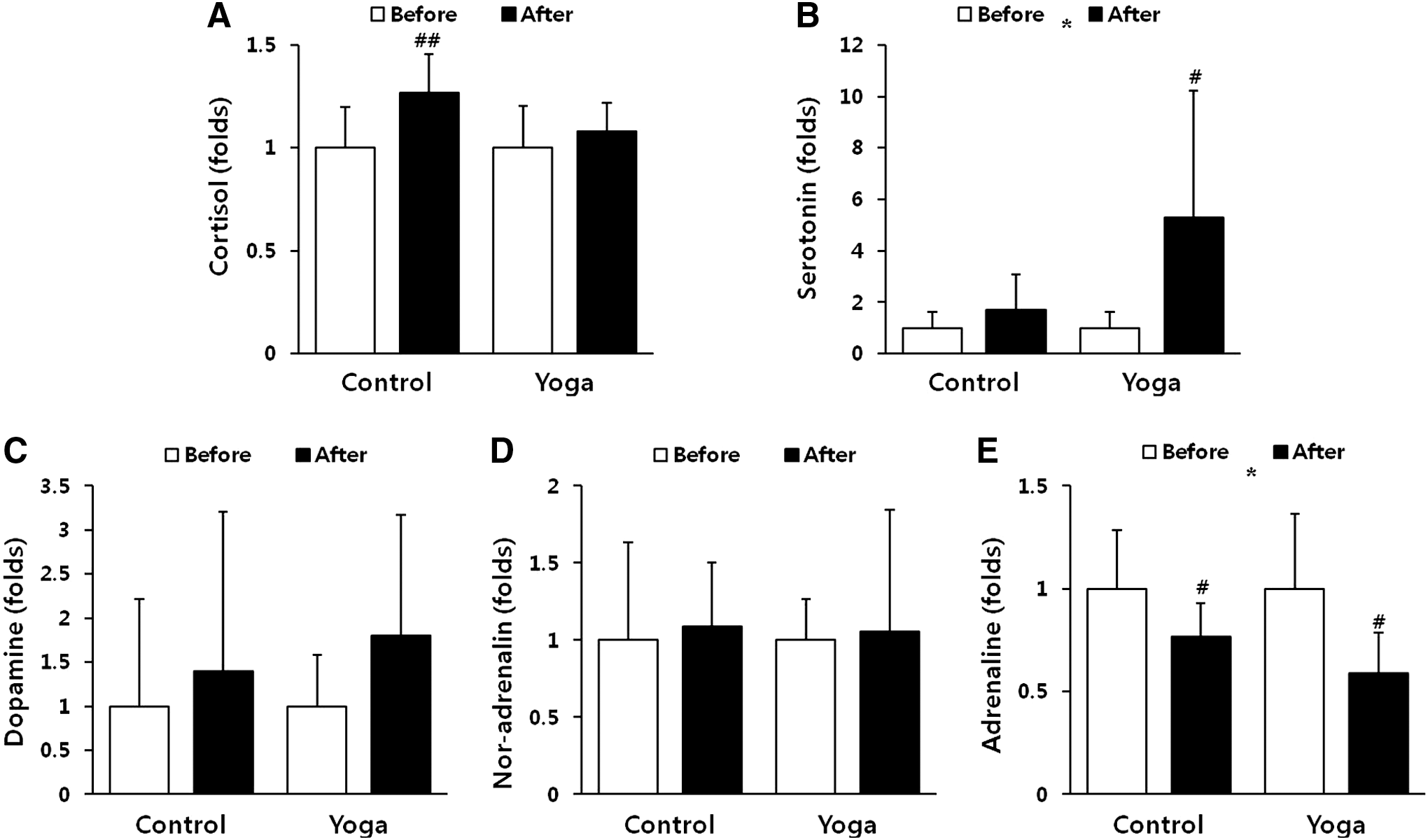
Plasma levels of stress hormones. Cortisol
Discussion
Oxidative stress and antioxidant status, the immune system, and stress hormone releases are critical issues for living a healthy life. If any one of these does not work properly, the pathophysiologic status of the body will change. Thus, people have started consuming healthy supplementary diets or performing exercises for maintaining a healthy life. Among the various ways to achieve this, yoga is one of most popular physical activities in the world.
During the last few decades, many study groups tried to reveal the properties of yoga in both healthy and unhealthy conditions by estimating physical and psychological parameters. Some studies previously evidenced one or two combined parameters in pathologic or healthy status; however, no studies estimated these parameters concurrently. The present study investigated the beneficial effects of yoga in antioxidant components, stress hormone releases, and the immune system through the health status of young adults (all participants were university students).
The participants in both groups attended almost all sessions during the 12 weeks of the study. The rates of attendance were approximately 95% in both groups (Supplementary Fig. S1A). Contrary to our expectations, participants in the yoga group were alone, performed yoga practice of home, and primarily completed yoga practice by themselves (>92%) (Fig. S1B). This study investigated the beneficial effects of yoga on both physiologic and psychological health status; thus, the yoga program was designed to be suitable to a person's intentions. For physiologic health status, the yoga program was developed according to yoga studies that assessed the oxidative stress/antioxidant components and immune-related cytokines. 10,21 In addition, for psychological health aspects, such as regulation of breath and meditational practice, the program design considered previous similar studies. 24,25
Oxidative stress is one of most serious concerns in the world, and it can directly or indirectly affect various spectrums of the pathophysiologic conditions in a human body, such as DNA damage and cancer. Thus, it is important to strengthen antioxidant capacities, as well as reduce oxidative stress–induced damages. In general, oxidative stress is initiated by forming excessive amounts of free radicals, which contain reactive oxygen species and reactive nitrogen species. They are small molecules and highly react to normal tissue, which can lead to mediation of tissue or cell damages for a short time. Therefore, it is important to reduce oxidative stress; this is also the main target in treating oxidative stress–related diseases.
In the present study, serum NO levels were significantly decreased by yoga practice (p<0.05) (Fig. 2A). NO in particular is well known for having both negative and positive effects on the body. NO benefits the human body by aiding the blood stream; however, excessive generation of NO leads it to act as a free radical that causes oxidative stress damages to normal cells or tissues. 31,32 In addition, MDA is the final product of lipid peroxidation and is a critical biomarker in the final stage of oxidative stress. On the other hand, isoprostane, which is formed from prostaglandin-like compounds, leads to a free radical–initiated peroxidation of arachidonic acid. Thus, this compound and its value well represent markers of oxidative stress. 33
The current results showed that yoga practice significantly decreased both MDA and F2-isoprostane in serum (p<0.05 and 0.01, respectively) (Fig. 2B and C). This study also showed that the regular practice of yoga for 12 weeks significantly decreased oxidative stress–related concerns, including serum levels of NO, MDA, and F2-isoprostane.
To protect against or prevent oxidative stress, all bioorganisms have evolved an antioxidant system. It is divided into two categories: enzymatic and nonenzymatic antioxidant components. Among them, GSH is the most representative antioxidant protein. The enzymatic antioxidant components are composed of enzymes that defend against oxidative stress. GSH is used by GSH-Px as a donor of a hydrogen atom to reduce hydrogen peroxide into water. Thus, an increased content of GSH and enzymatic-antioxidant components are helpful for an antioxidant defense mechanism that reduces oxidative stress. 34 The total GSH contents, activities of GSH-Px, and GST were significantly increased after yoga classes (p<0.05 for GSH-Px and GST; p<0.01 for total GSH, Fig. 3A, B, and D). Yoga practice might enhance the antioxidant system; thus, it could efficiently work to decrease the oxidative stress.
This study also surveyed the immune and inflammation-related cytokines. The immune system plays pivotal defense roles against exogenous invaders via innate and adaptive immunity. Innate immunity directly quenches the exogenous invaders, and Adaptive immunity plays more complex roles than innate immunity via cellular interactions.
IFN-γ, as a type II IFN, plays critical roles in both innate and adaptive immunity, such as preventing viral infections and tumor genesis control. This cytokine activates macrophages stimulated from natural killer cells. INF-γ is also secreted by CD4-positive T cells (helper T [Th] cell) and CD8-positive T cells (cytotoxicity T cells), which contribute to adaptive immunity. 35 A previous study reported that IFN-γ is a pivotal cytokine for strengthening the modulation of innate and adaptive immunity. 36 On the other hand, IL-12, known for helping differentiate native T cells into Th1 cells, is known as a T cell–stimulating factor. IL-12 can regulate the function as well as the growth of T cells. 37 Thus, IL-12 is a crucial cytokine for regulating adaptive immunity. Both IL-12 and IFN-γ in serum were significantly increased by yoga practice (p<0.05 or 0.01) (Fig. 4A and B). A previous study corresponded to the current study; in students who experienced extreme stress due to examinations, the serum level of IFN-γ was increased after yoga practice compared with the control group. 20 Moreover, many studies have shown the anticancer and immune strength effects of yoga. It might be thought that the immune-related cytokines were deeply associated with those properties. 38,39
Finally, the stress-related hormones that are provoked by excessive psychological stress and emotional reactions are important ingredients for maintaining well-being in life. During stress, the stress hormones are abnormally secreted, and this can negatively affect the human body. 40 –42 Cortisol, known as a representative stress, can beneficially affect inflammatory disease under circumstances of excessive stress; however, it can threaten the health status of the human body by leading to, for example, depression and anxiety. 43 Moreover, the abnormal secretion of cortisol can affect other stress-related hormone releases, including dopamine, noradrenaline, and adrenaline. Before starting this experiment, the current investigators planned to obtain blood samples at an accurate time point (at 2:00–3:00 p.m.) for measuring cortisol levels because cortisol was secreted by way of the circadian rhythm. Contrary to expectations, the plasma cortisol levels were not significantly decreased in either group (Fig. 5-A). The results showed that cortisol levels were slightly increased. A previous study revealed that physical activities, such as African dance, increased cortisol levels in saliva as a response to physical reaction. 44 In this study, controls continued their physical exercise activities; thus, the increase in cortisol might be caused by the slightly higher elevation of plasma cortisol. Therefore, further studies need to consider this in assessing psychological stress and its related hormones.
Plasma adrenaline levels, on the other hand, were significantly lowered by yoga practice (p<0.05) (Fig. 5E). Adrenaline is a known stress hormone, and it plays a role in the fight-or-flight response from the sympathetic nervous system. 45 The abnormal release of adrenaline can lead to oxidative stress damage. 46
Serotonin, in contrast to the stress hormones, has a benefit for psychological disorders, such as depression and anxiety, 47 and for chronic fatigue disorders. 48 As per the expectation for this study, yoga practice caused a significant increase in plasma serotonin levels (p<0.05) (Fig. 5B). Abnormal stress hormone releases are deeply linked to oxidative stress, inflammatory reactions, and immune dysfunction. 49,50 Over the past few decades, scientific evidence has supported the beneficial effects of yoga practice for regulating abnormal stress hormone releases. 44,51 –53 The current results corresponded well to those of previous studies. This study showed that yoga practice is beneficial for stress hormone releases via an increase in serotonin, as well as a decrease in adrenaline release.
This study has some limitations. First, the sample size was small. Although the study demonstrated the significant differences in oxidative stress/antioxidant components, immune system, and stress hormone releases, more participants than the calculated sample size in the current study are needed to ensure a certain level of significance.
Second, the study lacked a parallel control group and had some methodologic weakness. Before this clinical trial was planned, the authors referred to some previous studies of yoga; 10,24 however, few studies explained program for the control group that was equivalent to that in the yoga group. Thus, the current study allowed the control group to freely access their physical exercise activities as well as their social activities during experimental periods. After the final session of the experimental intervention, diaries from both groups were collected and analyzed. Because physical activities can directly or indirectly affect both physiologic and psychological statuses, those analyses are important factors. As a result, the physical exercise activities of the control group differed in variety, and those participants exercised the correct way with the aid of a physical trainer (Table S1). Although previous studies evidenced that physical exercise induces oxidative stress, 54 the present study showed positive results, including GSH-Rd and adrenaline (Fig. 3A and C, Supplementary Table S2). It might be thought that free will–based physical exercise, which was not intense or in an exhausting mode, efficiently increased those antioxidant components.
Finally, this study obtained the results only via measuring the serum or plasma samples. Apart from the oxidative stress/antioxidant parameters and immune system, stress responded subjectively to each person's character. Therefore, some of the previous studies showed antistress effects of yoga by using a questionnaire. 23,24 In the current study, however, evaluated the effects of yoga by measuring stress hormones in plasma. Future studies should refer to this.
Despite these limitations, the findings suggest that yoga practice can reduce oxidative stress-related biomarkers and enhance both antioxidant components and immune-related cytokines. Moreover, yoga also beneficially affected the participants' psychological stress-related status, as shown by increases in plasma levels of serotonin and a decrease in adrenaline levels.
Footnotes
Acknowledgments
This research was supported by the Industry Source Technology Development Program, founded by the Ministry of Knowledge Economy (MKE) and the Ministry of Education in the Republic of Korea, Science and Technology (1043869).
Author Disclosure Statement
No competing financial interests exist.
References
Supplementary Material
Please find the following supplemental material available below.
For Open Access articles published under a Creative Commons License, all supplemental material carries the same license as the article it is associated with.
For non-Open Access articles published, all supplemental material carries a non-exclusive license, and permission requests for re-use of supplemental material or any part of supplemental material shall be sent directly to the copyright owner as specified in the copyright notice associated with the article.
