




Abstract
Pediatric tuina is a traditional Chinese medicine (TCM) modality that is well-accepted and applied in China currently. As a traditional medicine, it is based on TCM theories and clinical experience. In the TCM area, the “self-healing” system of the human body includes two aspects: self-regulation and adaptation, through which pediatric tuina could rectify dysfunctional states and guide the transition back to homeostasis. Pediatric tuina manipulations sufficiently, specifically, and accurately simulate certain sensory receptors in the skin, which in turn activates the internal self-healing function of the human body. We summarized the main opinions on pediatric tuina mechanism in ancient literature into three minor perspectives and demonstrated them by combining them with modern medical knowledge. First, children at a young age are more responsive to stimulations on the skin surface; second, the sensory receptors and pediatric tuina acupoints on the skin surface have a similar distribution pattern; third, the specific manipulations of pediatric tuina provide multiple stimuli that are detected by a variety of surface sensory receptors for information collection. Each point could be tested via clinical trials with appropriate-designed comparisons.
INTRODUCTION
Pediatric tuina, also called traditional Chinese medicine (TCM) pediatric massage, is a special TCM modality with a history of over 2000 years. It is a complementary and alternative therapy based on TCM theories and clinical experience. Although few studies have been conducted to explore its mechanism, previous clinical trials suggested its beneficial effects on several pediatric conditions, such as diarrhea, anorexia, torticollis, cerebral palsy, scleroderma, and enuresis. 1 Pediatric tuina could regulate yin and yang, order descent and ascent, adjust deficiency and excess, and apply warming or clearing manipulations of human body. 2 The aforementioned functions aim to increase human’s Zhengqi (“healthy qi”), which is a collective designation for all normal functions of the human body and its ability to maintain health. Zhengqi is similar with the “self-healing system” in the modern medical field, and it involves two aspects: self-regulation and adaptation. 3 Zhengqi self-regulates organisms according to the internal and external changes of human body. When changes from an injury or threat exceed the limit that the body can adjust to by itself, external strengths, such as pediatric tuina, are needed to activate the internal self-healing system. This in turn determines the difference between adaptation (health) and maladaptation (disease). 4 The process also has similarities to the modern adaptive homeostasis theory (put forward by Selye), and pediatric tuina, as a type of stressor, 5 leads to adaptive responses in the body 6 (see Fig. 1). We summarized the effect theory of pediatric tuina into three main points by using modern medicine knowledge (see Fig. 2).
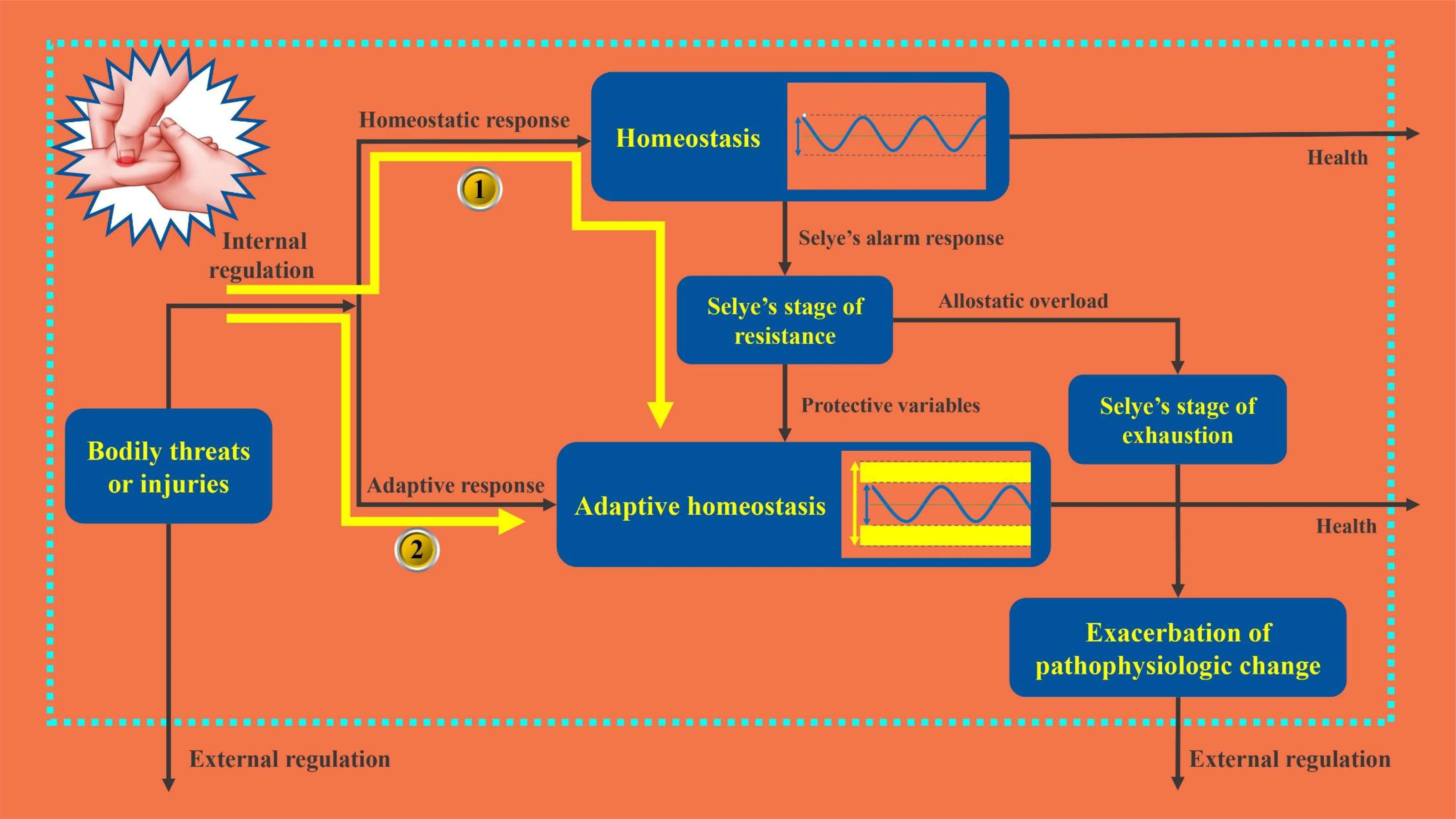
Two possible pathways of the internal self-healing functions of pediatric tuina. The present study posits that the effect of pediatric tuina is related to the motivation level of the self-healing system of the human body. Pediatric tuina stimulates the self-regulation function for treating diseases (including homeostasis and adaptive homeostasis) and promotes the adaption system for health care (including adaptive homeostasis). Both pathways aim to exert the internal adaptive ability of the human body as far as possible by sufficiently and accurately stimulating the specific acupoints.

Key points of the mechanism of pediatric tuina. The potential mechanisms underlying pediatric tuina therapy can be succinctly summarized in three main points: children at a young age have a wider adaptive homeostasis range
VIEWS OF MODERN MEDICINE
Why Tuina Works Better on Infants and Children?
TCM believes that children under 6 years of age, especially those under 3 years, respond well to pediatric tuina due to their physiological features. 7 Children’s organs are delicate and their physiological functions are immature. Therefore, their organ qi is clear and swift, which makes them more responsive to pediatric tuina. “Tuina Three-Character-Scripture” (Tuina Sanzijing) wrote that: “When using a single tuina acupoint, manipulations should be conducted 30000 times in adults (≥16 years), 3000 times in children (5–15 years), 300 times in infants (≤4 years) …” 8 In order to attain optimal therapeutic outcomes, elderly individuals generally require a greater amount of manipulation as compared with young children and infants, as the latter population displays heightened responsiveness to sensory stimuli. This phenomenon aligns with contemporary medical principles. The skin is the largest organ, 9 and organs possess wider basic and adaptive homeostatic ranges at a young age 10 (see Fig. 2a). In addition, the reduced basal levels of stress-responsive enzymes may provide greater flexibility for cellular responses, consequently enhancing the capacity of the cell to mitigate damage. 10 As a result, when subjected to identical pediatric tuina stimulation on the skin, younger children demonstrate an accelerated ability to regulate fundamental and adaptive homeostatic responses, ultimately leading to enhanced intervention outcomes.
Why the Distribution of Pediatric Tuina Acupoints Make Sense
The distribution of acupoints for pediatric tuina was found to be relatively consistent across various dynasties, with slight variations observed. Notably, the acupoints are mainly concentrated in the palms and head regions. It is believed that “Myriads of channels of the children converge at the palms.” 7 As an illustration, in the Ming and Qing dynasties, acupoints for pediatric tuina were distributed across the head–face, thorax–abdomen, waist–back, upper limbs, and lower limbs, with counts of 39, 17, 12, 122, and 28, respectively. 11 Based on this acupoint distribution pattern, we drafted a child body model and adjusted the size of different body areas according to the density of acupoints—more acupoints meant a larger area—(see Fig. 2b, right). Coincidentally, our model looks a lot like the famous somatosensory homunculus discovered by Wilder Penfield (see Fig. 2b, left). 12 The somatosensory homunculus is a well-known representation of the cortical mapping of the touch sensation, in which distinct regions of the body are mapped onto specific cortical areas. The size of each body region in the homunculus is determined by the density of sensory receptors in that region, with the head and hands occupying a relatively larger cortical area due to their high density of sensory receptors compared with other body parts. This study demonstrates a remarkable similarity in the distribution of sensory receptors and pediatric tuina acupoints. This finding suggests that the therapeutic effects of pediatric tuina may be closely linked to the stimulation of sensory receptors on the skin surface. By targeting specific acupoints on the skin, pediatric tuina may activate the corresponding sensory receptors in the underlying tissue, leading to a range of physiological responses that contribute to the therapeutic benefits of this ancient form of Chinese intervention.
How Pediatric Tuina Manipulations Activate Specific Surface Sensory Receptors
Unlike adult tuina, pediatric tuina uses points, lines, circles, or areas, and the corresponding manipulations vary. 13 Practitioners of manual therapies commonly employ a variety of single manipulations, including but not limited to pressing, rubbing, nipping, kneading, pushing, arc-pushing, pinching, rotation, and other techniques. These techniques are applied with varying degrees of force, frequency, and direction, allowing for the attainment of specific therapeutic effects. 13 Skilled practitioners can employ a range of techniques to achieve targeted therapeutic outcomes in their patients. Different manipulations can produce various types of sensory stimuli, such as pain, joint movement, light touch, superficial touch or pressure, bending of the hairs, cutaneous pressure, proprioception, two-point discrimination, depression, and stretch of the skin. These stimuli are transduced by different types of sensory receptors in the peripheral nervous system, as depicted in Figure 2c. For instance, deep pressure and vibration are transduced by Pacinian corpuscles, whereas Meissner’s corpuscles are responsible for transducing light touch. Thus, the specific sensory stimuli produced by different manipulations are dependent on the type of sensory receptors that are activated. 14 Pediatric tuina involves the use of a variety of manipulations that can provide multiple sensory stimuli to the body. These stimuli are detected by the peripheral nervous system and transmitted to the central nervous system, where they are processed and integrated. 15 The rich information provided by these stimuli can assist the body in maintaining a stable internal environment. This is achieved through the activation of a series of bio-regulatory functions via the neuroendocrine-immune network. 16
MODERN RESEARCH IN PEDIATRIC TUINA
For clinical research, thousands of clinical trials have been conducted on various pediatric conditions, and several systematic reviews have been carried out. Our team did an overview to systematically evaluate and summarize the evidence on pediatric tuina among infants and children. Two reviewers independently screened articles, extracted information, and conducted quality appraisals. We included randomized clinical trials (RCTs) with meta-analysis comparing pediatric tuina with standard intervention, routine care, waitlist, placebo, and combined intervention. MEDLINE, Embase, Health Technology Assessment Database, the Cochrane Database of Systematic Reviews, Database of Abstracts of Reviews of Effects, Allied and Complementary Medicine, the China National Knowledge Infrastructure, Wanfang Data, SinoMed, and CQVIP were searched from inception to September 2023. Sixteen systematic reviews involving meta-analysis were included, suggesting that pediatric tuina has beneficial effects on improving the functioning of the nervous system, digestive system, and respiratory system of children, as well as relieving jaundice in infants. Pediatric tuina can also be important when medical facilities, drugs, and other treatments are absent or difficult to access. The evidence has to be treated with great caution due to the low quality of the included studies and original RCTs. Among all the included studies, few discussed about the mechanism of pediatric tuina. Experimental research was limited in the area of pediatric tuina. Two research explored the mechanism of pediatric tuina for fever in rabbits, demonstrating that the mechanism of fever-reducing action might be related to the changes in plasma metabolites and metabolic pathways.17,18
DISCUSSION
Despite the long history and rich clinical experience of pediatric tuina, scientific evidence is still lacking to support its mechanism and effects, thus, more research is warranted. As a potentially simple and convenient complementary and alternative therapy, pediatric tuina has the potential to improve children’s health. 19 In China, there has been a rapid development of pediatric tuina as a modality, with many policies implemented since 2012 to promote its use. This has been reflected in the increasing number of internet searches for the keywords “pediatric tuina” in recent years. The Baidu Index shows a breathtaking growth of internet searches for the keywords “pediatric tuina”, with a number of 2850 times daily in 2018, as compared with 300 times daily in 2011, 740 times daily in 2014, and 1550 times daily in 2016. Pediatric tuina can be performed by appropriately trained therapists, such as parents or caregivers, and may be a useful complementary and alternative intervention for various pediatric conditions, particularly when medication or medical equipment is not accessible. Therefore, it makes sense for the whole world to know and have an understanding of this intervention.
It is important to increase awareness and understanding of this intervention worldwide and to continue to advance our knowledge of its clinical efficacy and underlying mechanisms. Given its empirical nature, few studies have been conducted to investigate the mechanism of action of pediatric tuina. Future experimental and clinical studies could be designed to explore ethical methods to further elucidate the three points discussed above. The present study provides novel insights into the underlying mechanism of pediatric tuina, emphasizing the significance of sensory receptor stimulation in the therapeutic effects of this practice. Also, the precise mechanisms by which pediatric tuina modulates the neuroendocrine-immune network remain an area of active research. Further investigations are warranted to better understand the aforementioned research areas, with the aim of advancing our knowledge of the therapeutic potential of this traditional form of TCM intervention.
Footnotes
ACKNOWLEDGMENTS

AUTHOR DISCLOSURE STATEMENT
No competing financial interests exist.
FUNDING INFORMATION
No funding was received for this article.