




Abstract

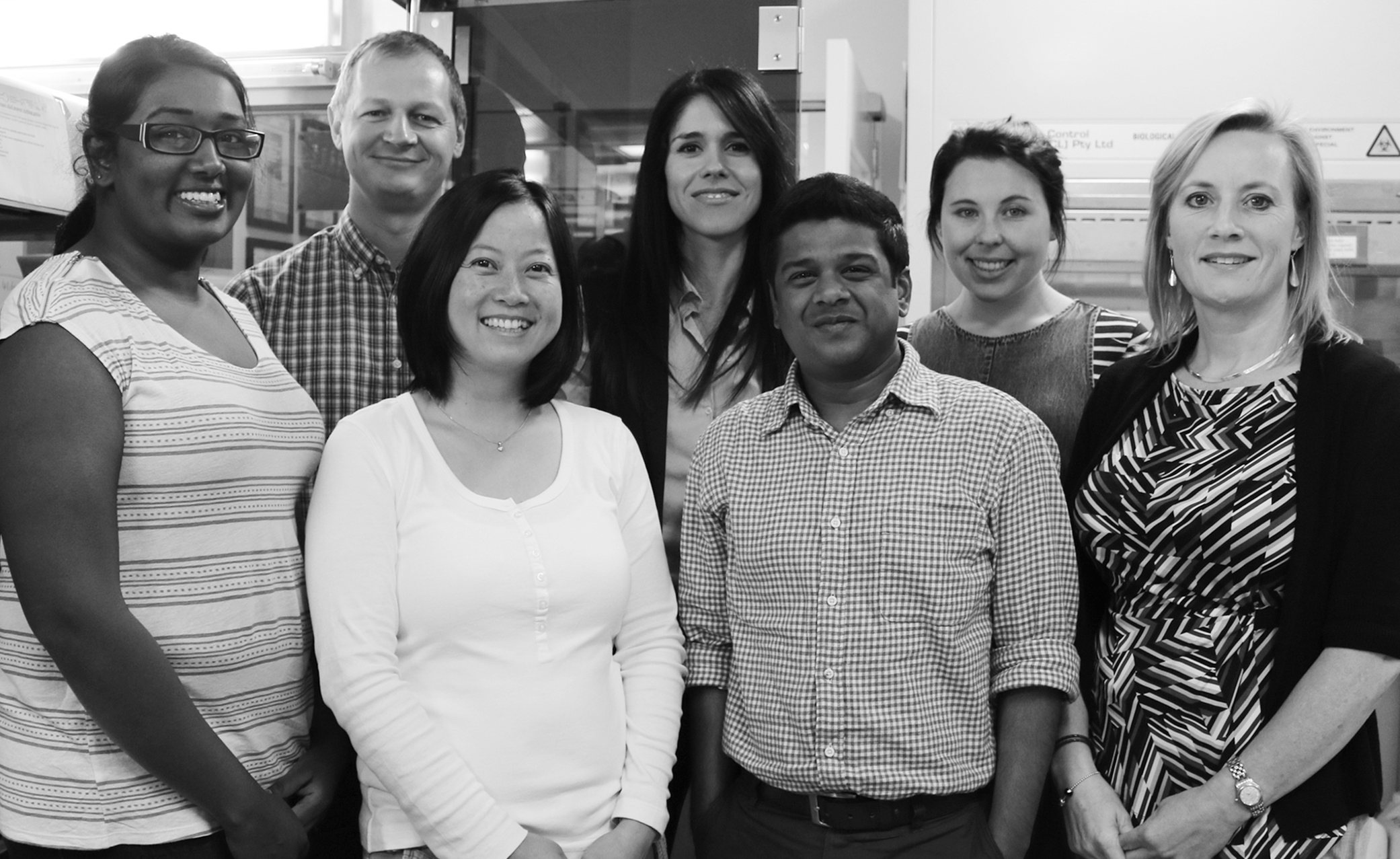
Associate Professor Kaylene Simpson is Head of the Victorian Centre for Functional Genomics at the Peter MacCallum Cancer Centre in Melbourne, Australia. The facility enables high throughput genome‐wide human and mouse short interfering RNA, short hairpin RNA, microRNA, and long noncoding RNA screening using high‐content imaging and/or plate reader approaches. Recently, the facility also established an Australia‐first Reverse Phase Protein Array platform. Both facilities are open to biomedical researchers Australia‐wide and enable discovery‐based research projects from a wide range of disciplines. The laboratory is also currently developing high throughput CRISPR gene editing strategies and offers short tandem repeat profiling for cell line authentication. Associate Professor Simpson took up this position in October 2008 after 6.5 years in the Department of Cell Biology at Harvard Medical School, Boston, where she pioneered a high throughput siRNA screening approach using high‐content imaging to assess wound healing in breast cells. 1 Associate Professor Simpson plays a critical role in guiding each screen from the assay development phase through to data analysis. With a PhD in mammary gland development and lactation biology and postdoctoral experience in breast cancer and stem cell biology, Associate Professor Simpson also spends some research time focusing on mechanisms regulating breast carcinoma cell migration and invasion, particularly in collaboration with local researchers. Associate Professor Simpson is the founder and organizer of the Annual Australian High Content Screening and RNAi meeting, the President Elect of the Society of Biomolecular Imaging and Informatics (SBI2), and is a very active member of the Institute's Graduate program.
I have always been a very practical person and early in secondary school I was certain I would be a math teacher. However, I got to the 11th grade and found biology fascinating; I think my interest in science really started then. Although I completed secondary school focusing on math, physics, and chemistry, I was drawn back to the biological sciences as an undergraduate at Monash University, where I ended up majoring in genetics. My earliest influence was a wonderful woman who was a secondary math teacher and taught me Calisthenics for many years. She was a friend, a mentor, and someone highly engaged in the community who had time for everyone. Sadly she passed away far too young with pancreatic cancer, and that in itself became even more motivation for my career path.
I was extremely fortunate to be working in Boston at the time RNAi came on the scene, starting first with hairpin RNAi at Beth Israel Deaconess Medical Centre and then moving to the Brugge laboratory where we were ground breaking in getting access to synthetic RNAi libraries from Dharmacon. At the time, we had $60,000 to spend, which did not go far. Nevertheless, the ability to focus on 1,180 gene targets rather than 2 and the discoveries that would produce were beyond anything we could imagine. We developed a high-content imaging screen to measure cell motility and in the process defined many of the rules that still govern RNAi screening today. In making our family decision to return to Australia after our postdoctoral period, I knew I needed a niche, rather than setting myself up in direct competition with the many people I already knew focusing on breast cancer invasion and metastases. Looking back at my career to that point, what I enjoyed the most was developing new technologies and assay readouts and I decided these technical skills could be broadly used for the benefit of many. Late 2007 I approached the Peter MacCallum Cancer Centre with a proposal to head up an RNAi screening facility akin to the Institute of Chemistry and Cell Biology (ICCB)—the Longwood screening facility at Harvard Medical School where I had performed all my screening as a postdoc. Peter Mac has a strong reputation as an early adopter of technology; indeed a viral hairpin screening platform had already been set up earlier in 2008.
Life has a way of working out. Peter Mac accepted my proposal, and my salary on return to Australia was initially funded by the philanthropic Peter MacCallum Foundation. Then only 1 week after returning, our grant application was shortlisted and we were interviewed by the Australian Cancer Research Foundation (ACRF), a renowned philanthropic organization that funds national infrastructure and innovation. We fortunately got the ACRF grant that year that enabled us to purchase all the necessary liquid handling robotics and imaging infrastructure, and the VCFG began in earnest. I was the first of a new breed of core platform leaders, bridging the gap between strict fee for service and research collaboration to provide full academic engagement to assist researchers from the start to finish of their projects.
Subsequently we have received infrastructure funds from the federally funded National Collaborative Research Infrastructure Strategy. We are the discovery-based node of the Australian Phenomics Network (
We have refined our transfection protocols over the years, we understand off-target effects in far more detail now, and our transfection optimization, cellular and bioinformatics analyses pipelines are very well established. This enables researchers to enter their screening campaign with robust protocols for cell biology, automated liquid handling and imaging, ensuring a high-quality screen, and getting them where they need to be much more quickly. I would say most of the innovation now comes in developing the experimental question. Addressing the biology using the most robust and representative assay is imperative, as is collecting as much information as possible. We have seen screens evolve from plate reader-based measurements of cell viability for measuring synthetic lethality to highly complex multiparametric high-content imaging-based screens, right through to quantitation of 3D cellular structures. Bioinformatics support is key to performing genome-scale screens and we have been fortunate to always have an analyst on the team who can process the data and train new users.
I cannot take the credit for actually founding SBI2; that lays with Paul Johnston (University of Pittsburgh) and Joe Trask (The Hamner Institutes and now PerkinElmer).
2
Paul and Joe together decided that we needed a dedicated, academic-led group to bring the quantitative high-content imaging field together, to bring new blood into the space, and to provide a strong educational component both online and at conferences. I have organized the annual Australian High Content Screening and RNAi meeting (
From its inception, SBI2 has been heavily vested in education and exposure to the broader research community. Partnering with ASSAY and Drug Development Technologies, a journal specializing in assay development, has enabled us to aggregate similarly focused articles into one central collection of articles. After publication of the first SBI2 special issue in 2013, we have been gaining recognition and momentum, such that last year we had sufficient high-quality submissions to publish two special issues, one coinciding with the conference and the other in November. Not only are we publishing new research articles but also conference details and opinion pieces. Last year we also included a full transcript and summary of the inaugural open forum on unmet needs in the field held at the annual meeting. I think these SBI2 issues are only going to keep getting better.
Peter Mac is a remarkable research institute; our ability to combine translational and basic research is second to none and we are world leaders in running clinical trials. The institute is a virtual department of the University of Melbourne, enabling all our students to be enrolled through the University. My laboratory* has primarily performed technical research and development to improve protocols. I collaborate with other principal investigators to formally cosupervise PhD and Masters students. The VCFG has recently expanded, enabling us to perform more research-driven questions ourselves, particularly in the area of developing high throughput CRISPR/cas9 screening strategies. Heading a core platform means I am engaged in developing screening projects for a broad range of disease models. There are a number of screens that have been performed as a direct result of clinical knowledge, after which validation of the target genes has been continued in the research laboratory, leading to the provisional patenting of several targets.
Gene editing using the CRISPR/cas9 nuclease strategy is really changing the face of functional genomics right now. There are still technical challenges and the majority of screening is being performed using a pooled viral strategy that is not conducive to high-content phenotypic screening. It is still early days and the technology is constantly improving. I believe RNAi and CRISPR will coexist into the future; they are complementary tools. I would also say that 3D culture together with quantitative imaging is enjoying renewed resurgence; especially with a clinical and pharmacogenomics focus, combination of these technologies will make great inroads to cancer therapy strategies in the future.