




Abstract
Efavirenz (EFZ) is a biopharmaceutics classification system (BCS) Class-II, first-line antiretroviral (ARV) drug. However, its utility through the oral route is restricted by its poor solubility. The objective of this study was to formulate EFZ-loaded binary-mixed micelles as a potential carrier for oral administration of EFZ. Rubingh's regular solution theory was used to determine the interaction behavior of the two components (Cremophor RH 40 and Phospholipon 80H) and of the mixed micelles and synergistic behavior was confirmed. The mixed miceller system was formulated using solvent evaporation method and a 32 factorial design was used for the optimization of selected independent variables. Miceller systems were further characterized in terms of morphology, particle size, zeta potential, percent entrapment efficiency, and drug loading. Fourier transform infrared and differential scanning calorimetry measurements confirmed the entrapment of EFZ in the micelles. The optimized formulation presented desirable qualities viz., nanometric size (17.27 ± 0.079), high entrapment efficiency, and good colloidal stability. The prepared optimized micelles can be potential carriers for EFZ in ARV therapies.
Introduction
Though the oral route is most preferred route for drug administration, dissolution of drugs is quite often a rate-limiting step, and this poses a major challenge for effective delivery of poorly water-soluble drugs through the oral route. 1 Insoluble drugs are not very well absorbed from the gastrointestinal tract and show low and variable oral bioavailability (40%–45%) attributed to the dissolution rate limitation. 2 Various approaches have been investigated to enhance the dissolution of poorly water-soluble drugs viz., micronization, solid dispersions, hydrotropy, 3 microemulsification, nanoparticles, 4,5 lipid-based systems, 6 and micellar systems. 7 –10
Among these approaches, surfactant micelles have gained considerable attention in the last two decades as adjuncts and drug carrier systems for the delivery of poorly water-soluble drugs. 11 –13 Micelles have been explored as drug carriers for poorly water-soluble drugs to the site of action at concentrations that increase their intrinsic water solubility. 14,15 Hydrophobic core structure of micelles can bind hydrophobic moieties and the hydrophilic shell can protect loaded therapeutic moieties from the gastrointestinal environment and thus improve the drug bioavailability. 16,17 The fundamental mechanism to this is not clear. However, in addition to the solubility enhancement, stability enhancement, P-gp inhibition, absorption as intact particles, bioadhesion, and tight junction opening are the widely accepted mechanisms. 18
Micelles (10–100 nm) are formed by the self-assembly of surfactants or polymers above their critical micelle concentration (CMC). The lower the CMC, the more stable the micelles are at lower concentrations of amphiphiles in the medium. 17,19,20 The limitation posed by traditional single surfactant/polymer-based micelles is that they rapidly break upon dilution, which can result in premature leakage of the drug leading to its precipitation. Thus, there was a need to enhance the stability and solubilization capacity of single surfactant micelles. Two or more copolymer materials could form mixed micelles. The synergistic effect of the combination of surfactants can lead to better results as compared with a single surfactant. 21 These micelles are called mixed micelles and they have advantages such as higher drug-loading capacity, lower CMC, stronger stability, longer release time, and higher bioavailability. 22
Phospholipids are biocompatible and amphiphilic polymers that possess self-assembly, emulsifying, and wetting characteristics. When introduced into an aqueous environment, phospholipids self-assemble to generate different supermolecular structures (liposomes, micelles), which are dependent on their specific properties and conditions. On incorporation of a second polymer, they can form mixed micelles. 23,24
Efavirenz (EFZ), a synthetic antiretroviral (ARV) agent (Fig. 1), is a non-nucleoside reverse transcriptase inhibitor agent, which acts through noncompetitive inhibition of HIV-1 reverse transcriptase. It is a crystalline lipophilic solid categorized as a biopharmaceutics classification system (BCS) class II drug, practically insoluble in water and freely soluble in methanol with an aqueous solubility of 3–9 μg/mL. 25 It has a pKa value of 10.2 and log p-value of 5.4 and with an intrinsic dissolution rate of 0.037 mg/cm2/min, which limits dissolution of its dosage forms. 26 Attempts have been made to improve the solubility of EFZ using high-energy grinding and preparing polymeric micelles approaches. 25,27 –29
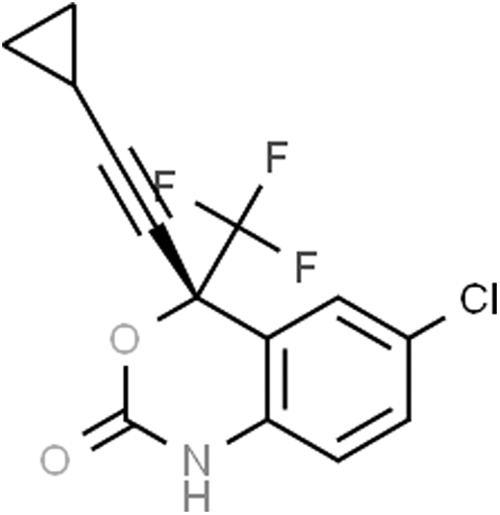
Chemical structure of EFZ. EFZ, efavirenz.
The objective of this work is to explore the potential of mixed polymeric micelles in solubility enhancement of BCS class II drug. To achieve this objective, EFZ-loaded mixed polymeric micelles were synthesized using a solvent-evaporation method. The polymeric micelles contained phospholipon 80H (PL-80H) and Cremophor RH 40. Factorial design was utilized for optimization of the formulated miceller dispersion. The synthesized micelles were subsequently characterized for particle size (PS), morphology, polydispersity index (PDI) and zeta potential (ZP), entrapment efficiency and drug loading, thermal analysis, and in vitro drug release. To ascertain the effect of storage conditions, the physical stability of optimized formulation was evaluated.
Materials and Methods
Materials
Drug (EFZ) was obtained as a gift sample from Aurobindo Pharma Ltd., Hyderabad, India. Phospholipon 80H (PL-80H) was obtained from Lipoid GmbH, Germany; Cremophor RH 40 was obtained from BASF India Ltd., Mumbai, India. Other chemicals and reagents were of analytical grade.
Determination of EFZ Solubility in Various Media
The solubility of EFZ was evaluated by adding 10 mg of EFZ into a beaker containing 10 mL of media. The media used were methanol, ethanol, water, 0.1 N hydrochloric acid (HCl) (pH 1.2), phosphate buffer (pH 6.8), 1% w/v sodium lauryl sulfate (SLS) solution, freshly prepared surfactant solutions (0.5% w/w) and binary mixture of Cremophor RH 40 and PL-80H (1:1, 5%, w/v) (Table 1). The samples were agitated using a magnetic stirrer at 50 rpm for 24 h at 25°C. Subsequently, samples were centrifuged at 3,500 rpm for 30 min and filtered through a 0.45 μm pore membrane. The concentration of EFZ was determined at 248 nm using an ultraviolet (UV)-visible spectrophotometer (V-730; JASCO, New Delhi, India). 26
Results of Efavirenz Solubility in Various Media
Data presents mean ± SD (n = 3).
Cremophor RH 40:PL-80H was 1:1 w/w.
HCl, hydrochloric acid; PL-80H, phospholipon 80H; SD, standard deviation; SLS, sodium lauryl sulfate.
Determination of CMC
The CMC of Cremophor RH 40 and binary mixture of Cremophor RH 40 and PL-80H at 1:1 ratio were determined using the iodine (I2) UV spectroscopy method. 30 –32 I2 (1 g) and potassium iodide (KI) (2 g) were dissolved in 100 mL distilled water to prepare the KI/I2 standard solution. Solutions of Cremophor RH40 and binary mixture of Cremophor RH 40 and PL-80H in a concentration ranging from 0.00001% to 0.5% were prepared. An aliquot of 100 mL of KI/I2 standard was added to each solution. The mixtures were incubated for 12 h in a dark place at 25°C. The UV absorbance of samples was measured at 366 nm (V-730; JASCO). For CMC determination, the absorbance was plotted against the logarithm of surfactant concentration (Figs. 2 and 3). A sharp increase in absorbance was recorded as CMC.
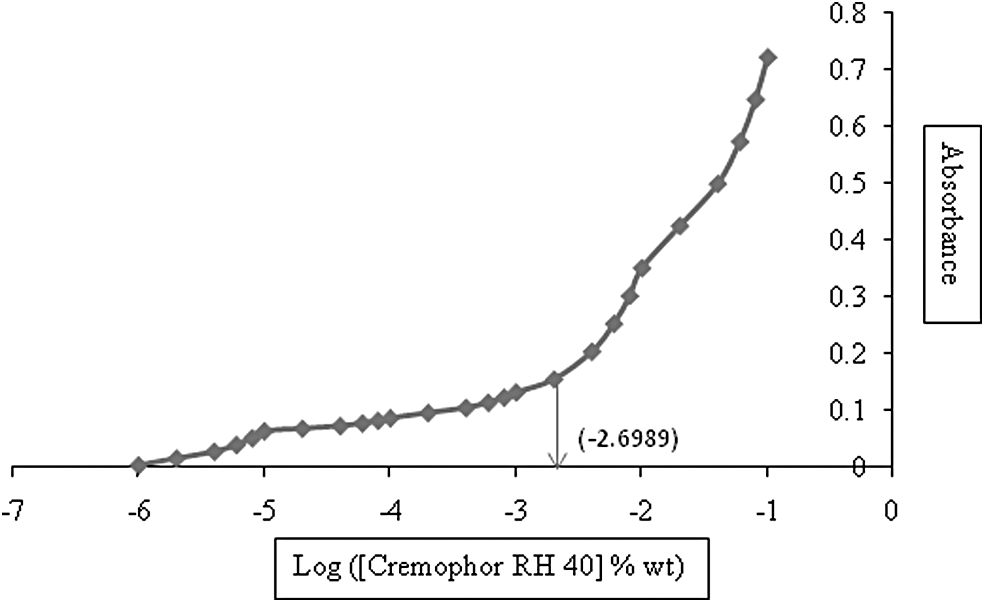
Plot of UV intensity of I2 versus concentration of Cremophor RH 40 in distilled water. I2, iodine; UV, ultraviolet.

Plot of UV intensity of I2 versus concentrations of binary mixture of (Cremophor RH 40 and PL-80H [1:1]) in distilled water. PL-80H, phospholipon 80H.
Formulation of Mixed Polymeric Micelles of EFZ
A 32 full factorial design was used for the optimization of the procedure to form mixed micelles. The concentration of PL-80H (X1) and Cremophor RH 40 (X2) were considered independent variables. The dependent variables were PS (Y1) and percentage entrapment efficiency (Y2).
Preparation of EFZ—PL-80H Complex
EFZ (450 mg) and PL-80H in weight ratios of 1:0, 1:1, 1:2, were placed in a round-bottom flask and dissolved in ethanol. The mixture was then refluxed at 50°C for 2 h. The ethanol was evaporated under vacuum using a rotary vacuum flash evaporator (PBU-6, Superfit, India) and the dried residues were collected and placed in desiccators. 33
Preparation of the Mixed Micelles Consisting of EFZ or EFZ-PL-80H Complexes and Cremophor RH 40
The EFZ-PL-80H complex micelles were prepared using solvent-evaporation method. Briefly, EFZ-PL-80H or EFZ alone were dissolved in 10 mL of ethanol at 50°C, with gentle agitation (40 rpm) for about 1 h to make a clear mixture. Cremophor RH 40 was added to the clear mixture, followed by gentle agitation (40 rpm) for about 1 h until the mixed micelles formed. Subsequently, 15 mL of prewarmed (50°C) distilled water was added. The solution was evaporated in a rotary evaporator (rotary vacuum flash evaporator, Superfit, India) to remove the ethanol. During solvent evaporation, the rotary film evaporator was operated at 50 rpm under a vacuum of −0.1 MPa. The temperature was maintained at 50°C. The solution was subjected to centrifugation at 13,000 rpm for 15 min and filtered through cellulose acetate filters (pore size: 0.45 μm) to remove the insoluble substances. A portion of the filtrate (mixed micelles) was stored for further use or characterization. 34
Characterization of Mixed Polymeric Micelles of EFZ
Determination of PS, PDI, and ZP
The PS analysis of mixed micelles was performed using dynamic light scattering (Zetasizer Nano ZS-90; Malvern Instruments, Worcestershire, UK). Before measurement, samples were diluted with distilled water, if required, until being translucent. 35 Additionally, PDI was measured to assess the PS distribution. 36 ZP of the diluted sample (batch F6), having a pH range between 5.5 and 6.5, was analyzed (Zetasizer Nano ZS-90, Malvern Instruments) for evaluation of their physical stability. 37 Measurements were done in triplicates for three independent samples of each formulation and the average values ± standard deviation was calculated.
Determination of entrapment efficiency and drug loading
Mixed micelles were centrifugated at 14,000 rpm and temperature 4°C for 1 h using a cooling centrifuge (REMI Instruments Division, Vasai, India) to separate the unentrapped precipitated drug from the encapsulated nanodispersion. Sample aliquots from the supernatant were diluted with methanol to disrupt the micelle structure. 38 The drug was spectrophotometrically analyzed in the diluted supernatant at maximum wavelength (λmax) 248 nm. Determination of entrapment efficiency (%EE) and drug loading (%DL) were calculated using the following equations. 39

Fourier transform infrared spectroscopy
Fourier transform infrared (FTIR) spectrum of EFZ, physical mixtures of EFZ with PL-80H and Cremophor RH 40, and micelle batch F6 were recorded over a range 4,000–400 cm−1, to study principal peaks using FTIR spectrophotometer (Vector 22; Bruker, MA) with DATA Software – OPUS 7.5. For the FTIR experiments, the samples were compressed to disks using KBr pellet method. 40,41
Differential scanning calorimetry analysis
For recording the thermograms, 5 mL of micelle dispersion (formulation F6) was freeze dried without any adjuvants. The micelle batch F6, was frozen by freezing in an ultra-low freezer (MDF-U55V-PEULT, Panasonic, Japan) at −81°C for 24 h and further freeze dried (Labconco, Free Zone 2.5 Plus, Missouri). Thermogram of the EFZ, physical mixture of (EFZ: Cremophor RH 40: PL-80H) in equal proportion, and freeze-dried micelle batch F6 was recorded by using differential scanning calorimetry (DSC) 4000 PerkinElmer, Waltham, MA. An empty aluminium pan was used as a reference. DSC measurements were performed at a heating rate of 10°C/min from 30°C to 350°C. 42,43
Morphological characterization
Transmission electron microscopy (TEM) was used to study the morphology of the prepared mixed micelles. The morphology of the prepared mixed micelles was observed using TEM (JEM 2100; JEOL Ltd., Tokyo, Japan). A drop of 2% w/v aqueous solution of phosphotungstic acid was used for contrast enhancement. The samples were mounted on a 400-mesh carbon-coated copper grid under an argon atmosphere using a high-vacuum evaporator and scanned. 44 –46
Comparative in vitro dissolution study
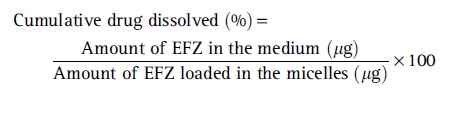
Prepared micelle (batch F6) 2 mL equivalent to 60 mg of EFZ was placed in a dialysis bag (LA 395–1 MT dialysis membrane −110, flat width 32.34 mm, diameter 21.5 mm, capacity approximately −3.63 mL/cm; Himedia Laboratories Pvt. Ltd, Mumbai, India) to determine in vitro dissolution of EFZ. The bag was closed from both sides with clips and immersed in the dissolution vessel containing 1% SLS in 900 mL distilled water (Disso 2000, LabIndia), and dissolution test apparatus with a paddle stirrer at 50 rpm. SLS has excellent solubilization capacity and it can mimic the naturally occurring surfactants and micellar media in the gastrointestinal tract. 47 A temperature of 37°C ± 0.5°C was maintained throughout the study. Aliquots (5 mL) were withdrawn through a filter (0.45 μ) at different intervals of time. The samples were suitably diluted and assayed using a UV spectrophotometer (V-730; JASCO) at 248 nm. The dissolution experiments were replicated three times each (n = 3). Under similar conditions, dissolution of pure EFZ (60 mg) was also carried out and compared with the dissolution of EFZ from the micelles. 48,49 Percentage cumulative dissolution of EFZ at different time intervals was calculated from the equation:
Stability of micelles under storage condition
The physical stability of mixed micelles (batch F6) under storage conditions was evaluated. Freshly prepared EFZ-loaded mixed micelles were transferred into glass vials and stored at 25°C for 6 months. The stability of micelles was monitored based on time-dependent changes in the physical characteristics, like PS, PDI, ZP, %EE, %DL, and precipitation of EFZ. 38
Results and Discussion
Determination of Solubility in Various Media
The highest solubility of EFZ was observed in 1% SLS, therefore, this medium was selected for dissolution study (Table 1). Among the surfactants, EFZ showed the highest solubility in Cremophor RH 40. Thus, it was selected to prepare the mixed micelles. Furthermore, a binary mixture of Cremophor RH 40: PL-80H was also prepared and the solubility of EFZ was found to be higher in the binary mixture as compared with the single surfactant (Cremophor RH40).
Determination of CMC
Furthermore, to substantiate the solubility study results, binary mixture CMC values were calculated using Rubingh's regular solution theory 50 and were compared with the experimental values determined using the I2 UV spectroscopy method.
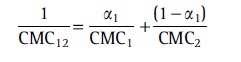
where CMC12, CMC1, CMC2, are the CMCs of the binary mixture, Cremophor RH 40 and PL-80H, respectively. α1 is the molar fraction of surfactant 1 (Cremophor RH 40) in the binary mixture. A large difference between the experimental and calculated CMC values was observed. The experimental CMC values (1.6658 × 10⁻³ mM) are lower than the calculated CMC values (1.1173 × 10⁻¹ mM), indicating a synergistic interaction between the two surfactant molecules with negative deviation. Rubingh's equation of regular solution theory was used to quantify nonideal behavior of binary surfactant mixture and to calculate the micellar molar fraction of Cremophor RH 40 (x1) by:

The interaction parameter (β) was calculated by substituting the value of x1 in following equation:
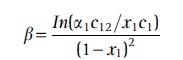
Negative, positive, and zero values of β indicate synergism, antagonism, and ideal mixed micelle formations, respectively. Larger the absolute value of β (positive or negative) stronger is the interaction (repulsion or attraction) between the surfactants. 51,52 Based on the results, a negative β value was obtained from a mixed miceller system of Cremophor RH 40, which indicates that the mixed micelles exhibited synergism and attractive interaction in the mixed state (Tables 2 and 3). The values for micelle molar fraction x1 (0.7026) show that in mixed micelles, the molar fraction of Cremophor RH 40 (x1) was higher than the molar fraction in binary mixture solution (α1) (4 × 10⁻⁴). This indicates that the contribution of Cremophor RH 40 is significantly higher in mixed micelle when compared with PL-80H. This can be because Cremophor RH 40 has very low CMC and preferentially partition into micelles. Hence, by applying Rubingh regular solution theory, it was concluded that (Cremophor RH 40+PL-80H) mixed micelles formation was thermodynamically favored and exhibited synergism in their mixed micellar state. Therefore, the mixed micelles were further formulated using both the polymers viz., Cremophor RH 40 and PL-80H.
Results of the Critical Micelle Concentration Values by Iodine Ultraviolet Spectroscopy Method
CMC, critical micelle concentration; I2, iodine.
Critical Micelle Concentration and Interaction Parameter Values of Cremophor RH 40 and Phospholipon 80H Binary Mixture
Characterization of Mixed Polymeric Micelles
A 32 full factorial design was used to study the effect of Cremophor RH 40 and PL-80H (Table 4). The PS for all batches was found to be in the nanometric size ranging from 17 to 387 nm.
32 Full Factorial Design
Coded levels: X1 Phospholipon 80H % w/v: (+1): 6%, (0): 3%, (−1): 0% X2 Cremophor RH 40% w/v: (+1): 15%, (0): 9%, (−1): 3%.
PDI, polydispersity index; PS, particle size.
Factorial design
Optimization studies were carried out to determine the level of the two independent variables in designing an optimum formulation to achieve higher %EE and smaller PS. The optimization studies were carried out using Design expert software 11.1.2.0. (Stat Ease, Inc., Minneapolis, MN). The following statistical model incorporating interactive and polynomial terms was used to evaluate the responses:

where Y is the dependent variable (PS or %EE), ß0 is the arithmetic mean response of the nine runs, and ß1 is the estimated coefficient for the factor X1. The main effects of the amounts of X1 (% w/v PL-80H) and X2 (% w/v Cremophor RH 40) represent the average result, when the factors were changed one at a time from their low to high values. The interaction terms (X1X2) showed how the response changes when two factors are simultaneously changed. The results indicate that both PS and %EE are strongly dependent on the concentration of both PL-80H (X1) and Cremophor RH 40 (X2). 53,54 The magnitude of coefficient and the mathematical sign it carries (i.e., negative or positive) in the generated polynomial equations, indicates either synergistic or an antagonistic effect. Insignificant factors were identified using analysis of variance (Table 5). From the data obtained, for both the dependent variables, the p-values <0.0500 indicate that model terms are significant, and a value greater than 0.1000 indicate that the model terms are not significant. In the case of PS, X1, X2, X1X2, and X1 2 are significant model terms. In the case of %EE, X1, X2, X1 2 , and X2 2 are significant model terms.
Results of Analysis of Variance on the Particle Size and Entrapment Efficiency from Different Loaded (F1 to F9).
Significant.
For PS and %EE, the model F-value was found to be 385.30 and 58.69, respectively, which implies that the model is significant. The resultant equations for dependent variables (PS and entrapment efficiency) in terms of coded factors are presented below:
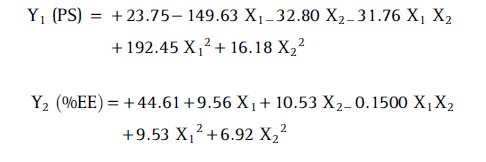
where, Y1 is the PS, Y2 is the entrapment efficiency (%EE), X1 is the concentration of PL-80H, and X2 is the concentration of Cremophor RH 40.
Three-dimensional response surface plots for the measured responses were presented to determine the change of the response surface. Response surface plots have applications in situations where several input variables potentially influence some performance measure or quality characteristic of the process. 55 Figure 4A shows that PS increases with an increase in the concentrations of PL-80H and decreases with an increase in the concentration of Cremophor RH 40. Therefore, it can be derived that the change of both independent variables had a significant effect on response Y1. Figure 4B shows that percent entrapment efficiency increases significantly with higher levels of both PL-80H and Cremophor RH 40. Based on the results, micelle batch F6 was found to be an optimized formulation.
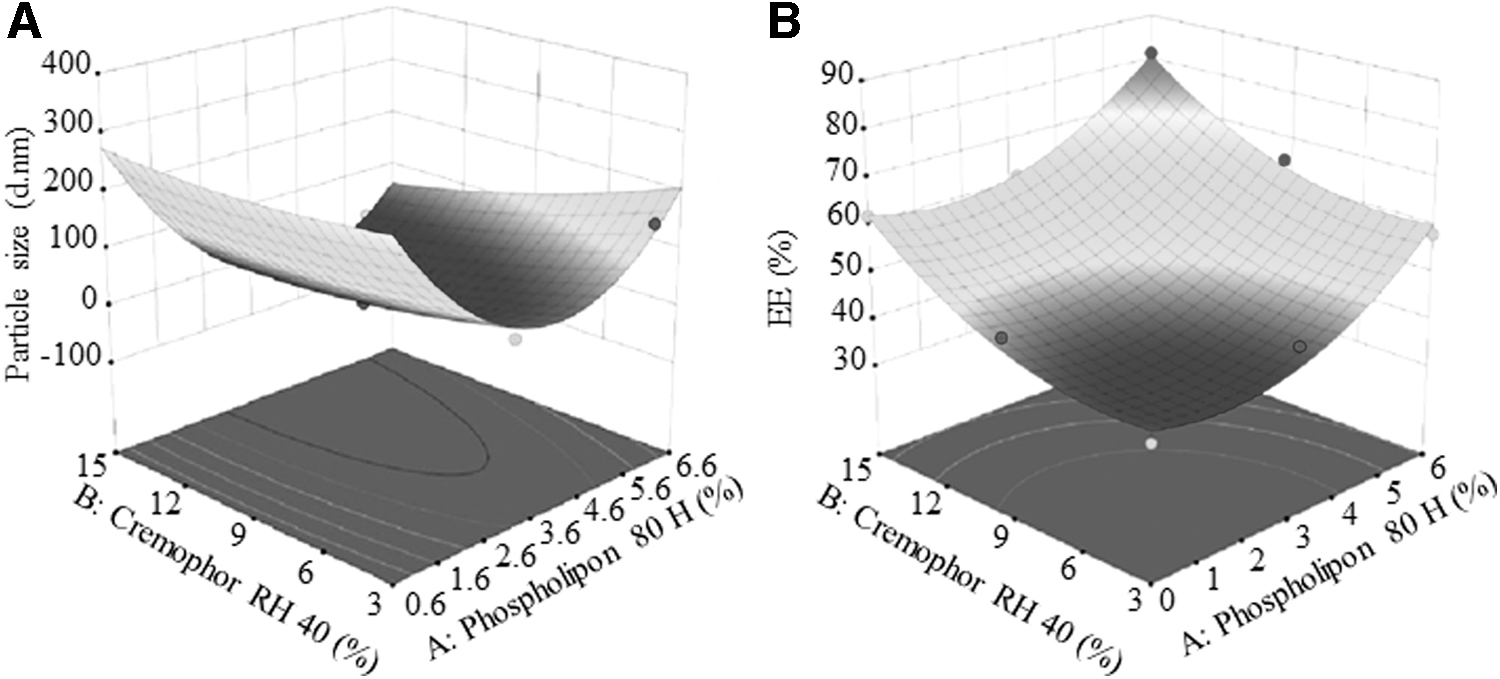
Response surface plots showing the influence of PL-80H (X1) and Cremophor RH 40 (X2) on PS
Determination of PS, PDI, and ZP
The mean PS of different miceller formulations (batch F1–F9) was found to be in the range of 17.27 ± 0.079 to 387 ± 0.85 nm (Table 4). The PS of micelle batch F6 (Fig. 5) showed the least PS with unimodal size distribution. It was observed that with increasing the concentration of Cremophor RH 40 and PL-80H in the formulation, the PS decreases. The PDI value of 0.33 indicates that the formulation has a narrow size of distribution. The physical stability of developed miceller system was estimated based on ZP values depending on the charge of micelles. With an increase in ZP values, the system becomes more stable against aggregation, as the charged particles repel one another. Irrespective of the type of miceller dispersion, if ZP is high, it remains dispersed but forms a hard cake on the settlement. If the ZP value is moderate, flocculation occurs and forms hard cake dispersions. The value of ZP ±30 is considered stable for colloidal dispersions. Above and below this value, caking zone starts, and this causes coalescence of particles. 56 The ZP value of developed micelles (batch F6) obtained was −20.7 mV, which indicates the formation of a stable system (Fig. 6).
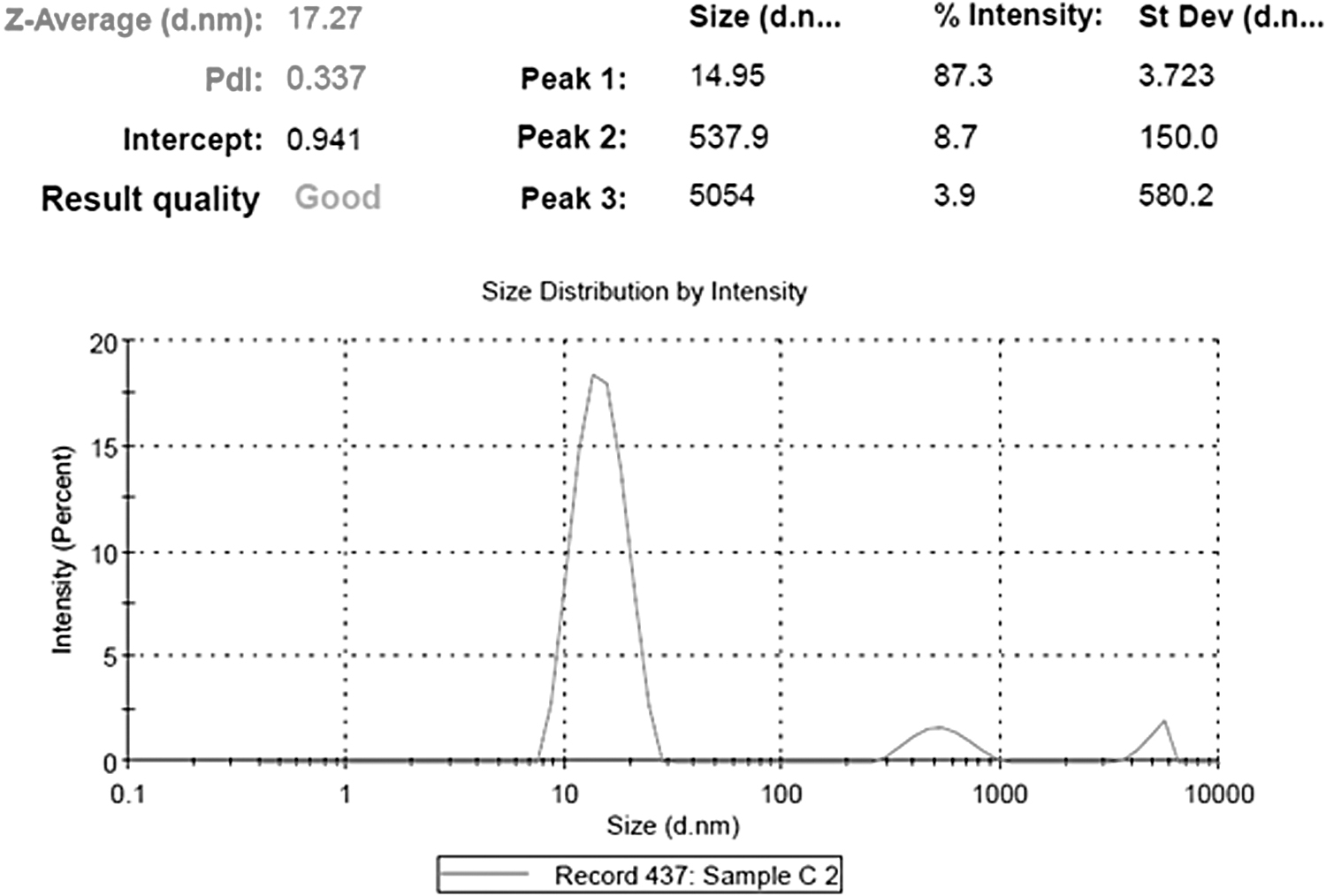
Result of the PS distribution of EFZ-loaded micelle (batch F6).
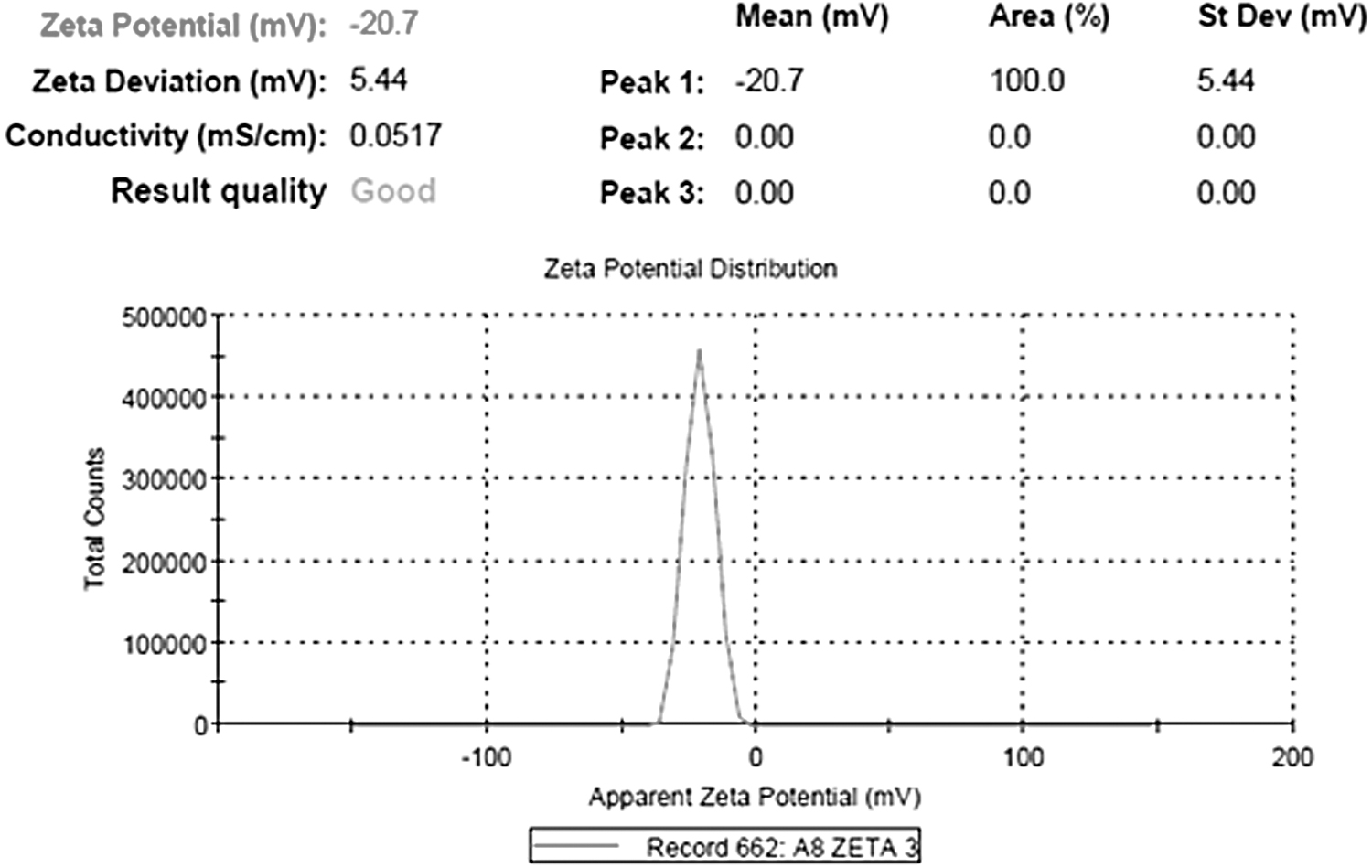
Result of ZP of EFZ-loaded micelle (batch F6). ZP, zeta potential.
Entrapment efficiency and drug loading
The percentage entrapment efficiency of various micelle batches (F1–F9) was found in the range of 38.31% and 81.40%. The entrapment efficiency was increased with a higher level of concentration of both polymers viz., PL-80H and Cremophor RH 40 (Table 4). Formulation F6 showed the highest entrapment efficiency (81.40%), among all the nine formulations. In the traditional micelles, the solubility of a hydrophobic drug depends on the hydrophobic core formed. The hydrophobic part of phospholipid alone is too short to form micelles. In the mixed micelles, the PL-80H forms the primary micelles, and the additional nonionic surfactant (Cremophor RH 40) increases the volume of the hydrophobic region of the micelle. This resultant expansion of the micelle core structure provides a larger space for the hydrophobic drug to solubilize. 57 Cremophor RH 40 contains hydroxyl sites on its hydrophobic tails. The hydrogen bond acceptor sites on EFZ forms the hydrogen bond with these hydroxyl sites, whereas the hydrophobic chains of both the polymers form the Van der Waals hydrophobic interactions. Thus, the mixed micelle formed offers slightly hydrophilic aggregates at the hydrophobic core, which makes EFZ soluble in such core.
FTIR spectroscopy
FTIR spectra of EFZ, physical mixture, and micelle (batch F6) are shown in Figure 7. A decrease in the intensity of EFZ bands related to the C − H stretching (1,467.27, 1,350.36, 1,299.12 cm−1), C–O–C (1,102.71 cm−1), and C = O stretching (1,732.46 cm−1) in the spectra of physical mixture was observed. The FTIR spectra also highlight the presence of the bands concerning the stretch O − H in the physical mixture (3,442 cm−1), which overlaps the N − H band of EFZ (3,318 cm−1). Additionally, the stretch vibration of the N − H (3,318 cm−1) of EFZ was practically absent in the micelle, suggesting a possible complexation within the micelle. The C = O stretching (1,732.46 cm−1) in the micelle was still present but at a lower intensity. In the miceller systems, intermolecular interactions (EFZ+PL-80H+Cremophor RH 40), especially hydrogen bonding, are strongly evident. It was inferred that the complex formed by EFZ and the polymers is transient and will liberate active drug when released in physiological systems.
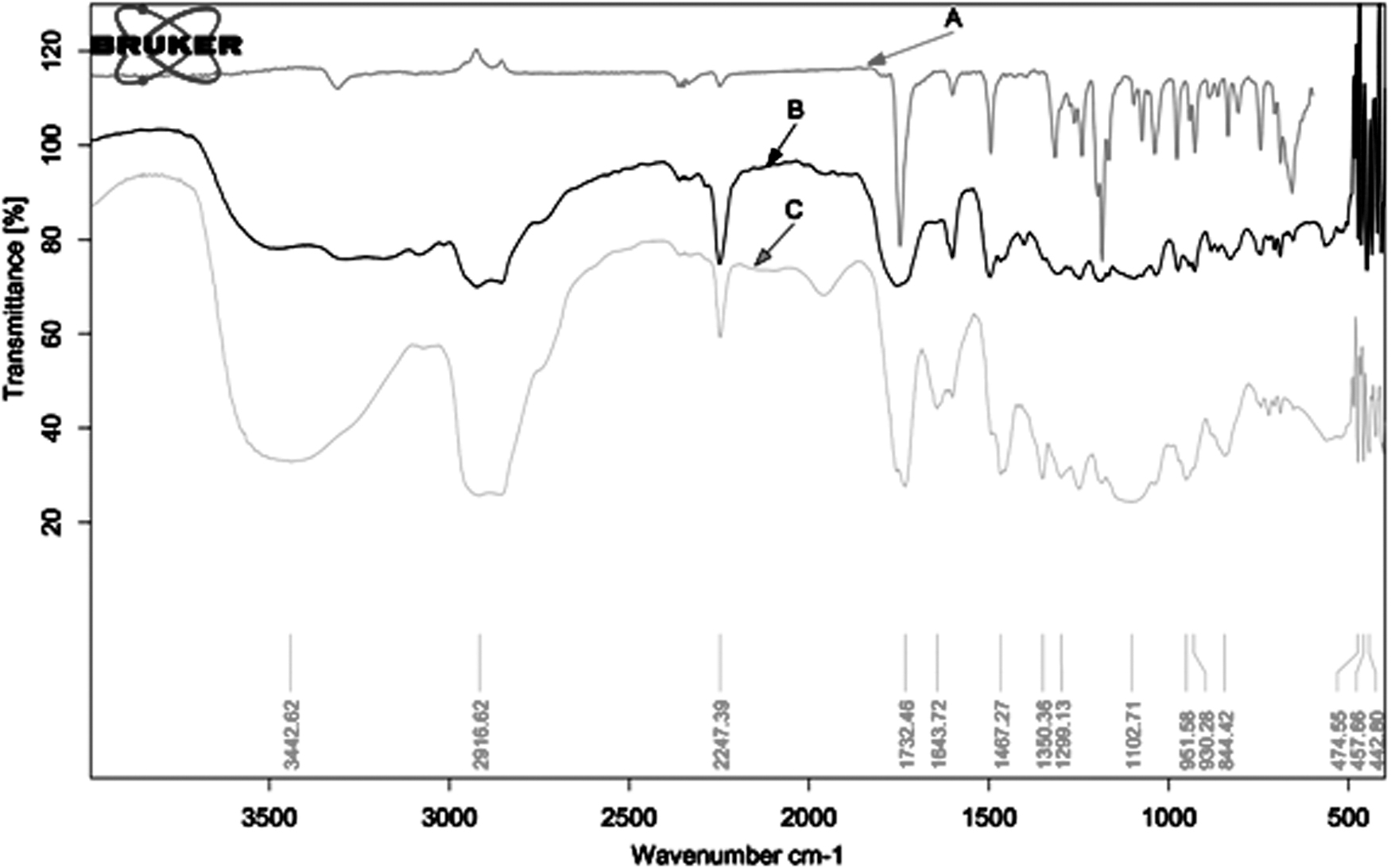
FTIR spectra of pure EFZ
DSC analysis
DSC thermogram of pure EFZ, physical mixture, and micelle (batch F6) are shown in Figure 8. The EFZ thermogram (Fig. 8A) showed an endothermic event in the range between 137.6°C and 139.61°C (peaking at 138.58°C) (rate of change in enthalpy [DH] = 54.10 J/g) corresponding to the melting of EFZ. The physical mixture thermogram (Fig. 8B) showed three discrete endothermic events. The first endothermic event was in a broad range between 68.70°C and 73.57°C (peaking at 71.21°C) and (DH = 6.591J/g), the second endothermic event in a broad range between 149.23°C and 152.19°C (peaking at 149.71°C) and (DH = 2.9849J/g), and the third endothermic event in a broad range between 232.24°C and 240.39°C (peaking at 235.72°C) and (DH = 1.1938J/g); EFZ in physical mixture showed an endothermic event between 149.23°C and 152.19°C (peaking at 149.71°C) and (DH = 2.9849J/g), suggesting a shift in melting point to a higher temperature compared with the pure EFZ. Hence, it is suggested that the presence of Cremophor RH 40 and PL-80H hinders the EFZ melting process, leading to its shift to a higher temperature. Thus, it is suggested that the system gives stability to the drug. The freeze-dried micelle thermogram (Fig. 8C) showed no endothermic event, which suggests that EFZ is entrapped in the freeze-dried micelle.
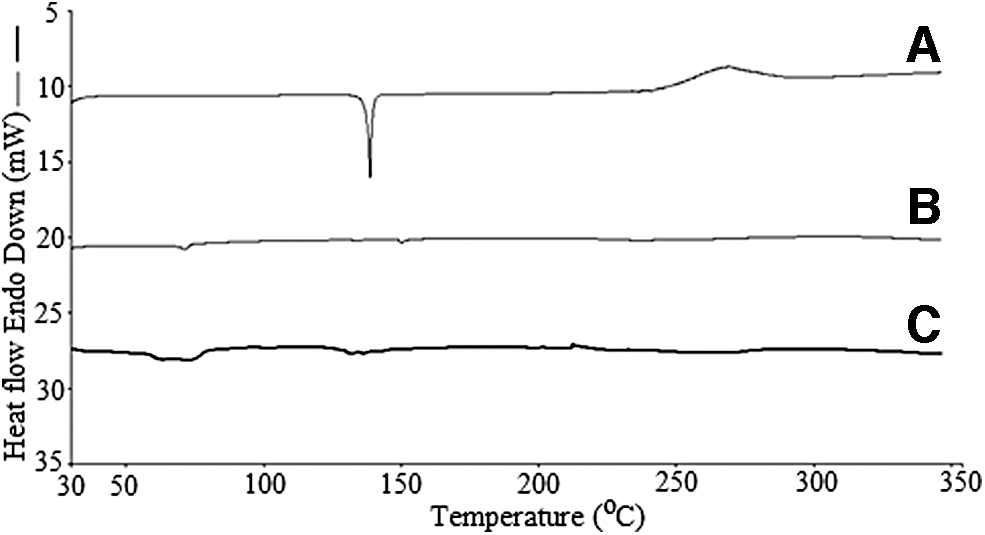
DSC thermogram of pure EFZ
Morphological characterization
The TEM image showed that the micelles exhibited a regular spherical or spheroid morphology, no aggregation, and with an average diameter of ∼20 nm (Fig. 9).
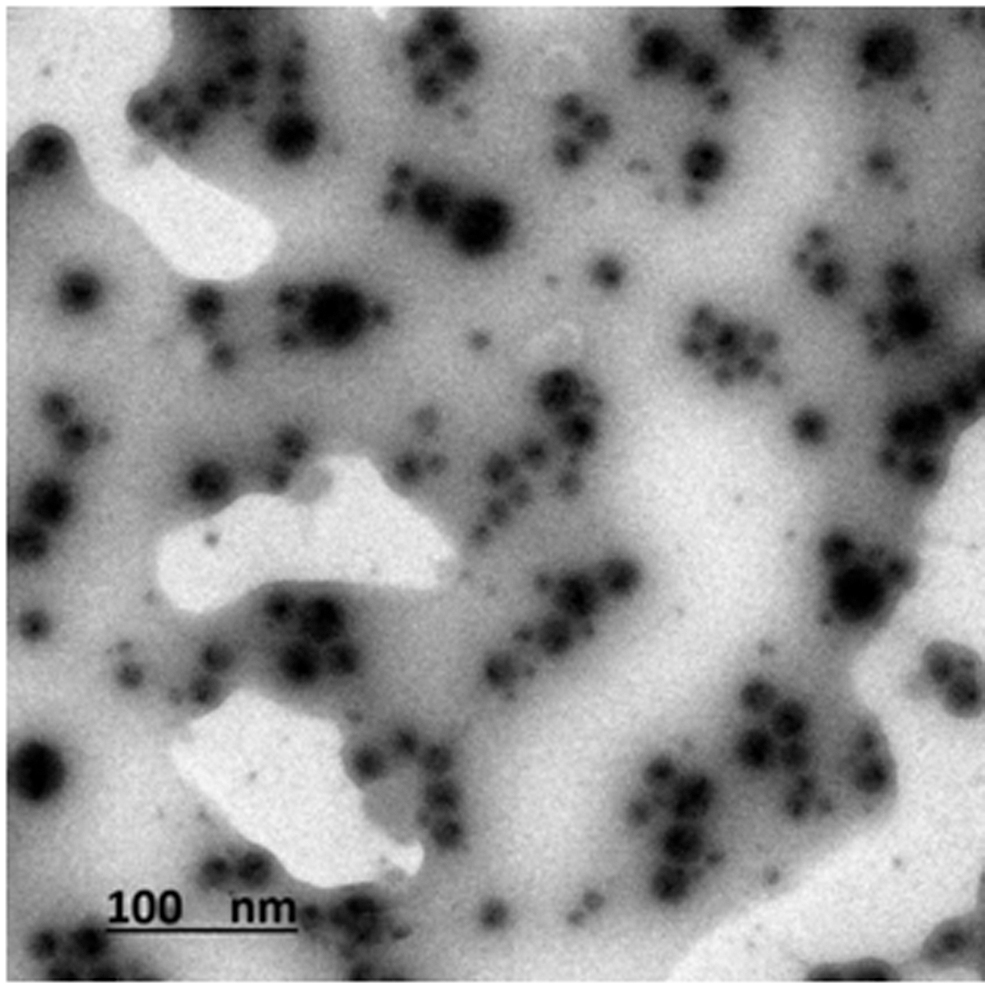
Transmission electron micrograph of micelles (batch F6).
Comparative in vitro dissolution study
The in vitro dissolution profile was measured to evaluate the promoting effects of the micelle on the in vitro dissolution. The dissolution profiles of pure EFZ and the micelle (batch F6) in 1% SLS medium under sink conditions are shown in Figure 10. SLS is a commonly used surfactant in dissolution media for poorly water-soluble drugs. Based on solubility studies, the highest drug solubility was achieved in 1% SLS, therefore, it was selected as the dissolution medium. Rapid dissolution of EFZ (99.67%) from the micelles within 50 min was observed. In contrast, only 49.20% of the pure EFZ was dissolved within the same time. These findings suggest that the micelles improved the dissolution of the loaded EFZ.
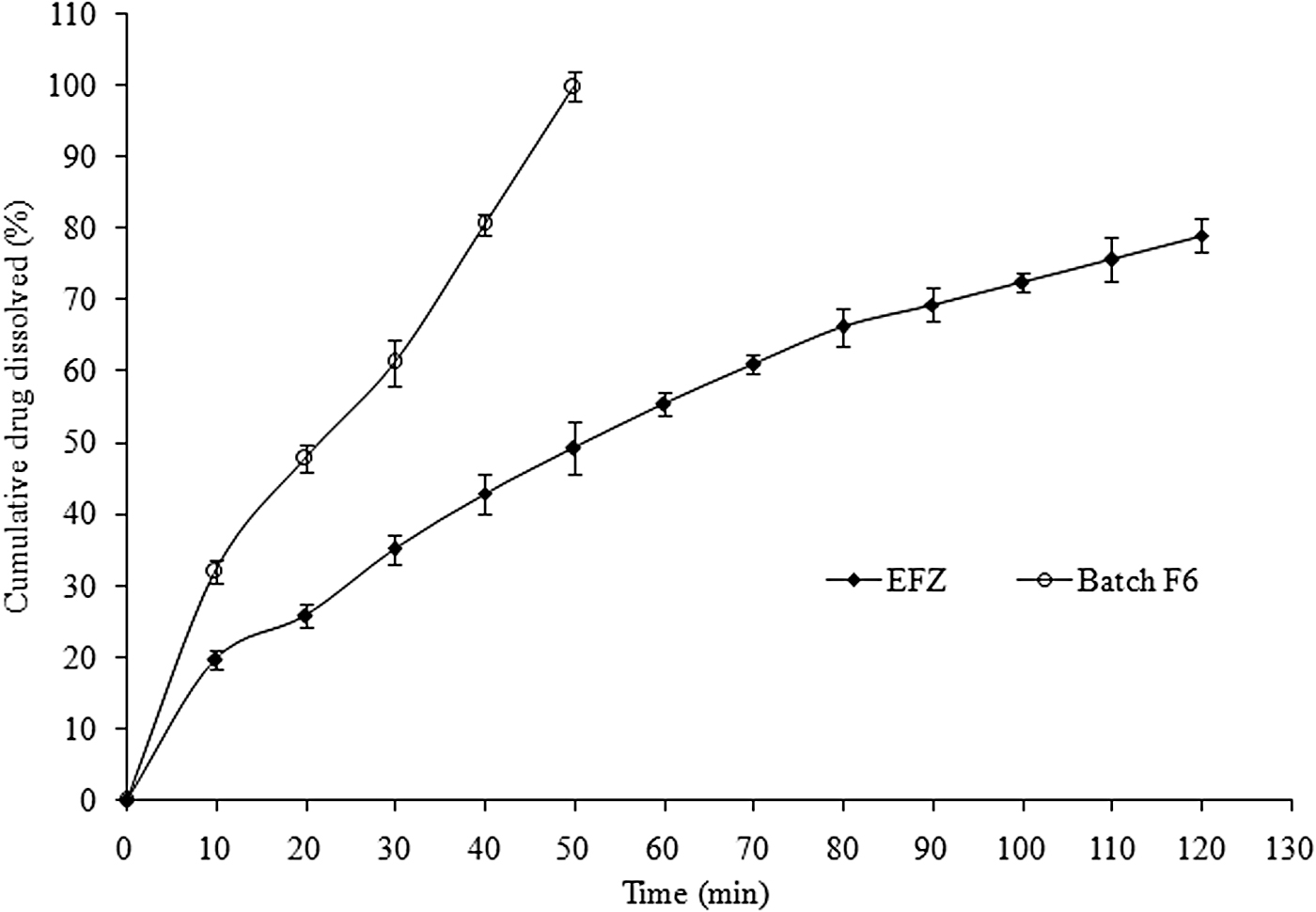
Results of comparative in vitro dissolution study of pure drug and micelle (batch F6) using dialysis bag in 900 mL distilled water stirred at 50 rpm and 37°C ± 0.5°C.
Stability of micelle under storage condition
The storage stability of aqueous micelle formulation (batch F6) was tested at 25°C for 6 months. The results suggested that the micelle formulation did not show any noticeable change in the PS, PDI, ZP, %EE, %DL, and no precipitation of EFZ was found during this period (Table 6). The results indicated that the drug-loaded micelles were physically stable at room temperature for at least 6 months.
The Results of Stability Study of Mixed Micelle (Batch F6) at Room Temperature (25°C)
Data represent mean ± SD (n = 3).
DL, drug loading; EE, entrapment efficiency; EFZ, efavirenz.
Conclusion
This study aimed to design mixed micelles of ARV drug, EFZ. Mixed micelles containing Cremophor RH 40 and PL-80H were successfully prepared using the solvent evaporation method. The binary mixture of Cremophor RH 40 and PL-80H showed strong synergistic interaction. This synergistic behavior in terms of interaction parameter was found to be negative. The concentration of Cremophor RH 40 and PL-80H was optimized using a 32-factorial design. It was observed that optimized formulation presented desirable qualities viz., nanometric size, high %EE, and good colloidal stability. A comparative in vitro dissolution study showed fast dissolution of EFZ from micelle than pure EFZ. Endothermal peaks in DSC graphs of mixed micelles suggested EFZ encapsulation micelles. This study demonstrates the potential of mixed micelles as a novel delivery vehicle of EFZ.
Footnotes
Acknowledgments
The authors are grateful to Smt. Kashibai Navale College of Pharmacy and Savitribai Phule Pune University, Pune, Maharashtra, India for providing research facilities to carry out this work.
Disclosure Statement
No competing financial interests exist.
Funding Information
This research did not receive any specific grant from funding agencies in the public, commercial, or not-for-profit sectors.