




Abstract
A reverse-phase high-performance liquid chromatographic (RP-HPLC) method was developed to analyze the simultaneous estimation of doxorubicin and clotrimazole. The method was achieved by Nucleodur C18 column with dimension 250 × 4.6 mm (5 μm) using gradient elution. The mobile phase contained 0.2% formic acid (pH 3.2) and acetonitrile. The flow rate was kept at 1.0 mL/min and detection and quantitation of both drugs (doxorubicin and clotrimazole) were achieved using a photodiode array detector at 276 nm, which was the isosbestic point for both drugs. The proposed method was validated according to the current International Council for Harmonization of Technical Requirements of Pharmaceuticals for Human Use guidelines for specificity, linearity, accuracy, precision, and robustness. The developed method showed a linear response (R 2 > 0.999), and was accurate (recoveries 97%–103%), precise (resolution ≤1.0%), sensitive, and specific. Thus, the developed RP-HPLC method for the simultaneous estimation of both drugs was successfully validated and can be utilized for the estimation of these drugs in the formulations being developed.
INTRODUCTION
Breast cancer is the most prevalent category of cancer in women and the second leading cause of cancer mortality worldwide. 1,2 Breast cancer in females has now surpassed lung cancer and it is frequently diagnosed worldwide. 3 According to the collaborative report from the American Cancer Society and the International Agency for Research on Cancer titled “Global Cancer Statistics 2020,” breast cancer is the most common cancer diagnosed among women for the first time. 4 There were 2,261,419 breast cancer cases reported in 2020 worldwide, which accounted for 11.7% of all the cancer cases detected worldwide. Breast cancer was responsible for 684,996 deaths and accounted for 6.7% of all cancer-related deaths. 5
India shows the heterogeneity in cancer. In women, breast cancer is very common. In India, breast cancer has surpassed cervical cancer and is the main cause of cancerous death. 6,7 For every two newly diagnosed women in India, one dies of breast cancer every 13 min. 8
A combination of drugs is always preferred over monotherapy for cancer treatment as every drug has a different mechanism on target site. 9,10 A drug delivery system with a combination of two drugs may offer a synergistic effect and reduce the toxicity associated with a higher dose of a single drug. 11
Doxorubicin
Doxorubicin (7S,9S)-7-[(2R,4S,5S,6S)-4-Amino-5-hydroxy-6-methyloxan-2-yl] oxy-6,9,11-tri hydroxy-9-(2-hydroxyacetyl)-4-methoxy-8,10-dihydro-7H-tetracene-5,12-dione, is an anthracycline glycoside antibiotic. It is derived from Streptomyces peucetius bacterium, was first introduced in 1970, and is widely used as a chemotherapeutic agent. 12 –14 It is effective against different types of cancer (e.g., ovary, breast, and gastrointestinal). 15 Doxorubicin possesses high solubility with poor permeability and has been categorized under BCS class III. 16 Doxorubicin inhibits the enzyme topoisomerase II, which may lead to DNA damage and induction of apoptosis (squeezing between the base pairs). Doxorubicin intercalates within DNA base pairs, causing breakage of DNA strands and inhibition of both DNA and RNA synthesis. 17 –20
Clotrimazole
Clotrimazole is 1-[(2-chlorophenyl)-diphenylmethyl] imidazole, a member of the azole family. 21,22 It is a synthetic and lipophilic imidazole derivative, primarily used to treat infections caused by various fungi. The strains against which it is most effective are known to be Candida spp., Vulvovaginal candidiasis, Trichophyton spp., Microsporum spp., and Malassezia furfur. 23 –25 It also has anticancer properties and has been researched for its potential in breast cancer cell lines (drug repositioning). It acts by inhibiting glycolytic enzymes (hexokinase, phosphofructokinase, and aldolase), which may lead to deprivation of cancer cells. 26
The mechanism of clotrimazole involves triggering G1-phase arrest and the cancerous cell needs more energy for proliferation compared to a healthy cell. Clotrimazole also inhibits two other glycolytic enzymes, phosphofructokinase (PKF), and aldose. An overexpression of PKF in the cancerous cells is observed which makes it an effective target for anticancer drugs. 27,28 Another main mechanism of clotrimazole is blocking the Ca2+-activated potassium (IK) channel and limiting the Ca2+ metabolism, which helps slow the proliferation of cancerous cells (Fig. 1). 29
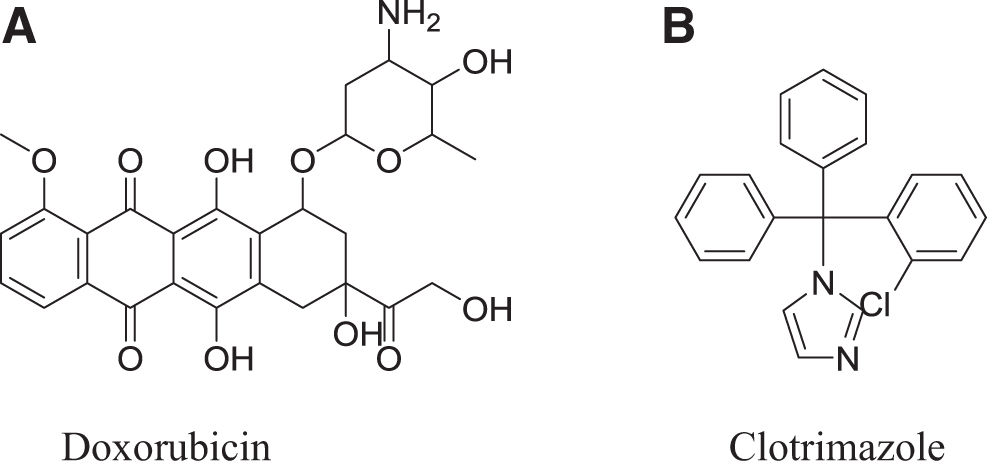
Chemical structure of
Literature evidence suggests if clotrimazole is combined with an anticancer drug, it may be an effective treatment strategy against cancer cells. Keeping this fact into consideration, a novel combination of two drugs, that is, doxorubicin and clotrimazole, is being formulated in nano-formulation for the treatment of breast cancer. As a part of this work, following the International Council for Harmonization of Technical Requirements of Pharmaceuticals for Human Use (ICH) guidelines, the high-performance liquid chromatography (HPLC) method has been developed and validated for the estimation of these two drugs in combined form. The linearity of response, precision, ruggedness, and robustness of the described method has been checked. 30
EXPERIMENTAL METHODOLOGY
Materials
Doxorubicin HCl was gifted by Neon Laboratories Ltd. (Mumbai, Maharashtra). Clotrimazole was gifted by Sun Pharma Mumbai (Maharashtra). The solvents acetonitrile, methanol, formic acid, and so on were of analytical grade and were purchased from Rankem Chemicals and Loba Chemie Pvt. Ltd.
Instruments
Ultrafast liquid chromatography system consisting of a binary pump (LC-20 AD; Prominence, Shimadzu, Japan), a degasser unit (DGU-20A5), photodiode array detector (SPDM20A; Shimadzu, Japan), Rheodyne injector with 20 mL sample injector loop, and Nucleodur C18 column with dimension 250 × 4.6 mm (5 μm) was used for development of the analytical method. LC solution software was used to record the chromatograms. Cyclone mixer (CM-101; REMI India) and analytical balance (AX 200; Shimadzu Analytical Pvt. Ltd., India) and were used during the study.
Method
Method development
Determination of the suitable drug absorbance wavelength
Both drugs (doxorubicin and clotrimazole) were initially scanned for their maximum ultraviolet (UV) absorbance using the UV/VIS spectrophotometer (UV-1800; Shimadzu) in the range of 200–800 nm to confirm the suitable wavelength for the HPLC method optimization. For the maximum UV absorbance, 10 μg/mL of both drugs was prepared and scanned to obtain an isosbestic point. The column used to separate the drug was a C-18 reverse-phase column (Nucleodur C18, 250 × 4.6 mm).
Preparation of mobile phase
For method development, 0.2% v/v solution of formic acid (phase A) and acetonitrile (phase B) were used as mobile phase in gradient mode. The final solution was degassed using vacuum filtration (0.45 mm nylon membrane filter) and sonicated. Sonication was carried out for 10 min using a Labman-ROHS sonicator (Table 1). 31
Gradient Mode Used for Method Development
Preparation of the stock solution for doxorubicin and clotrimazole
A standard stock solution of doxorubicin and clotrimazole was prepared by weighing 10 mg of each drug individually, dissolving in 10 mL of methanol in a volumetric flask, and then sonicated to obtain the concentration 1,000 μg/mL, respectively. The solution was further diluted to have 100 μg/mL concentrations.
Preparation of working solution
From the solution having a concentration of 100 μg/mL, 1 mL was taken and added to a 10 mL volumetric flask. The volume was made up by adding the solvent. The concentration obtained was 10 μg/mL and filtered with a microsyringe filter.
Method Validation
The optimized method for the simultaneous estimation of doxorubicin and clotrimazole has been validated as per ICH Q2 (R1) guidelines for the evaluation of system suitability, specificity, precision, accuracy, linearity, range, limit of detection (LOD), limit of quantitation (LOQ), and robustness.
Specificity
The specificity of the developed method was determined by comparing standard drugs and samples. Predetermined concentrations of 10 μg/mL of standard and working solutions were injected into the HPLC six times and were analyzed. The percentage of relative standard deviation (RSD) was calculated from the obtained peak areas.
Linearity and range
The linearity of measurement was evaluated by analyzing the standard solution of doxorubicin and clotrimazole in the range of 2–10 μg/mL for both drugs. The calibration curve was plotted between the concentration and mean peak area of each concentration. From the curve, the regression equation and coefficient were recorded.
Accuracy
The accuracy of the method was calculated through absolute recovery of the drug from the prepared samples. The samples were prepared at three different levels, that is lower quantified concentration (LQC, 80%), medium quantified concentration (MQC, 100%), and high quantified concentration (HQC, 120%). To achieve this, 4.8, 6, and 7.2 μg/mL concentration solutions were made in a volumetric flask. These three concentrations were run six times on HPLC. The absolute percentage recovery of the drug was calculated by using the equation,
Precision studies
The precision study was evaluated in two steps: repeatability and intermediate precision. Repeatability was performed by injecting six injections at three levels, that is, LQC, MQC, and HQC, simultaneously in a day. For intermediate precision, there are two steps; in the first step, an interday study was carried out by injecting LQC, MQC, and HQC samples six times each for three different days. In the second step, an interanalyst study was performed by three different analysts by preparing the samples of LQC, MQC, and HQC six times, each prepared by using the same experimental conditions. The mean data were evaluated and the percentage relative standard deviation was calculated.
LOD and LOQ
LOD and LOQ of doxorubicin and clotrimazole were calculated based on the standard deviation of intercept and slope using the equation,
where Q is the standard deviation of the intercept and S is the slope of the calibration curve.
Robustness
The effect of some changes in chromatographic conditions like flow rate (±2 mL/min), change in wavelength (±2 nm), and change in pH (±2) was determined to confirm the robustness of simultaneous estimation of both the drugs.
Forced degradation studies
The stability of pharmaceutical compounds is highly critical, influencing the safety and efficacy of medicinal preparations. Both FDA and ICH guidelines emphasize the essential role of stability testing information, elucidating the evolution of drug substance and product quality when subjected to diverse environmental conditions. 32
Preparation of samples under different stressed conditions
Stress degradation studies were conducted using an initial drug concentration of 1 mg/mL. To investigate hydrolysis under neutral conditions, the drug was dissolved in water and subjected to reflux at 50°C for 8 h. In acidic conditions, a study was carried out using 0.1 N HCl at 50°C for 8 h. Alkaline hydrolysis experiments were performed using 0.1 N NaOH solutions at 50°C for 8 h. For oxidative degradation, the drug was exposed to 3% and 30% H2O2 at room temperature for 12 h. 33
Solid-state degradation studies were conducted by subjecting the pure drug to dry heat at 60°C for 12 h. Photodegradation studies were carried out in water for 12 h, while suitable samples were kept in the dark. Periodic sampling was performed, and the collected samples were appropriately diluted and subjected to HPLC analysis.
RESULTS AND DISCUSSION
Selection of UV Wavelength
Doxorubicin showed an absorption maximum at 480 nm and clotrimazole had absorption maxima at 263 nm. The isosbestic point of both drugs (doxorubicin and clotrimazole) was found to be at 276 nm, as shown in Figure 2. The method development and validation for both drugs were carried out at 276 nm.
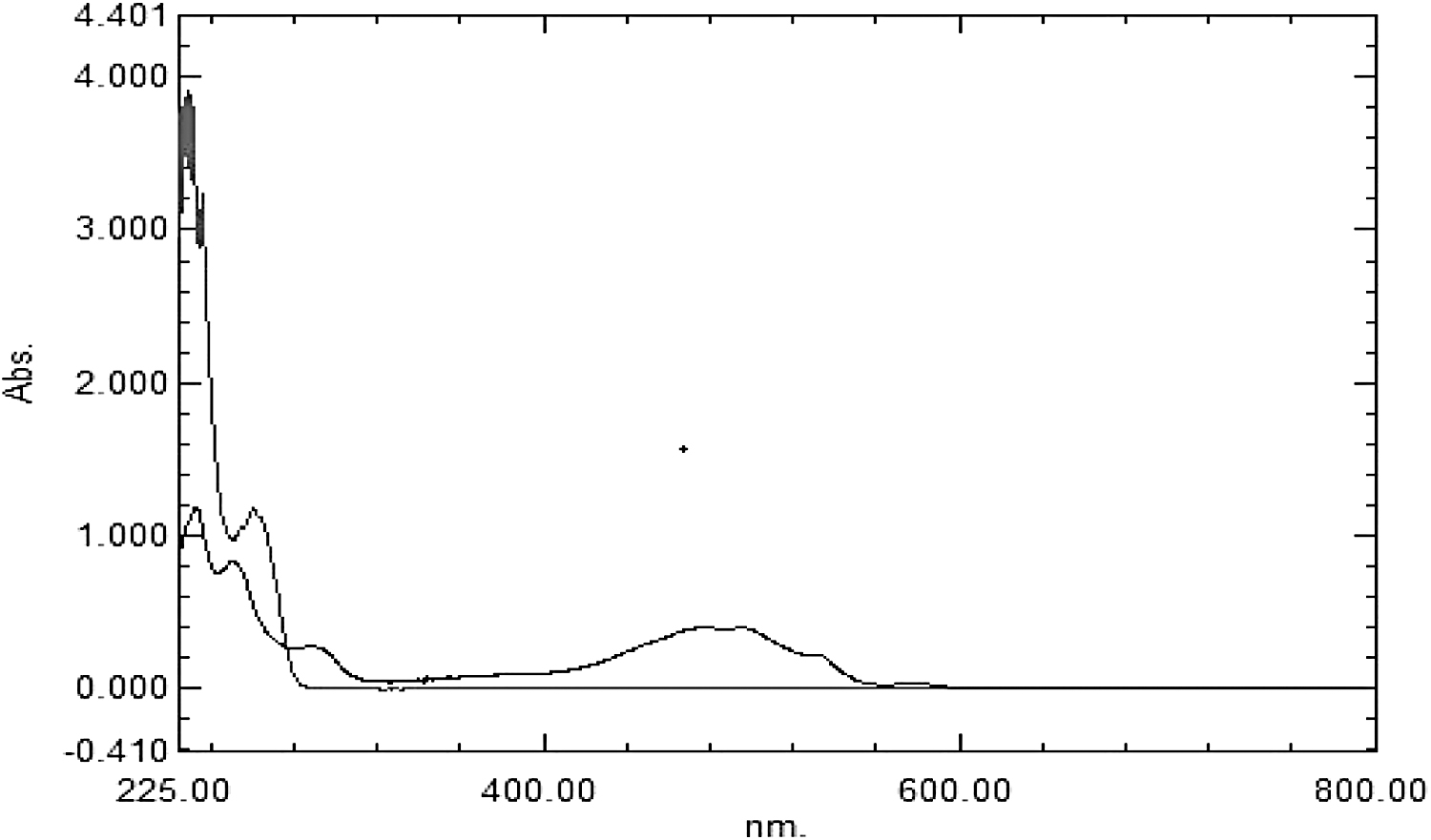
Absorption maxima of doxorubicin and clotrimazole showing isosbestic point at 276 nm.
Optimization of Chromatographic Conditions
Chromatographic separation
The reverse-phase (RP) HPLC gradient mode was used to perform chromatographic separation. Both drugs (doxorubicin and clotrimazole) were eluted using the gradient method, as shown in Table 1. Nevertheless, the drugs were eluted for 15 min; the run was extended for an additional 5 min to guarantee that all drug residues were completely removed from the column and that the system had returned to its initial equilibrium. The whole chromatogram acquired for 20 min is shown in Figure 3, which shows the peaks for both the drugs. Doxorubicin had a retention time of 4.957 min, which was considerably separated from the peak of clotrimazole, which had a retention period of 12.807 min (Table 2).
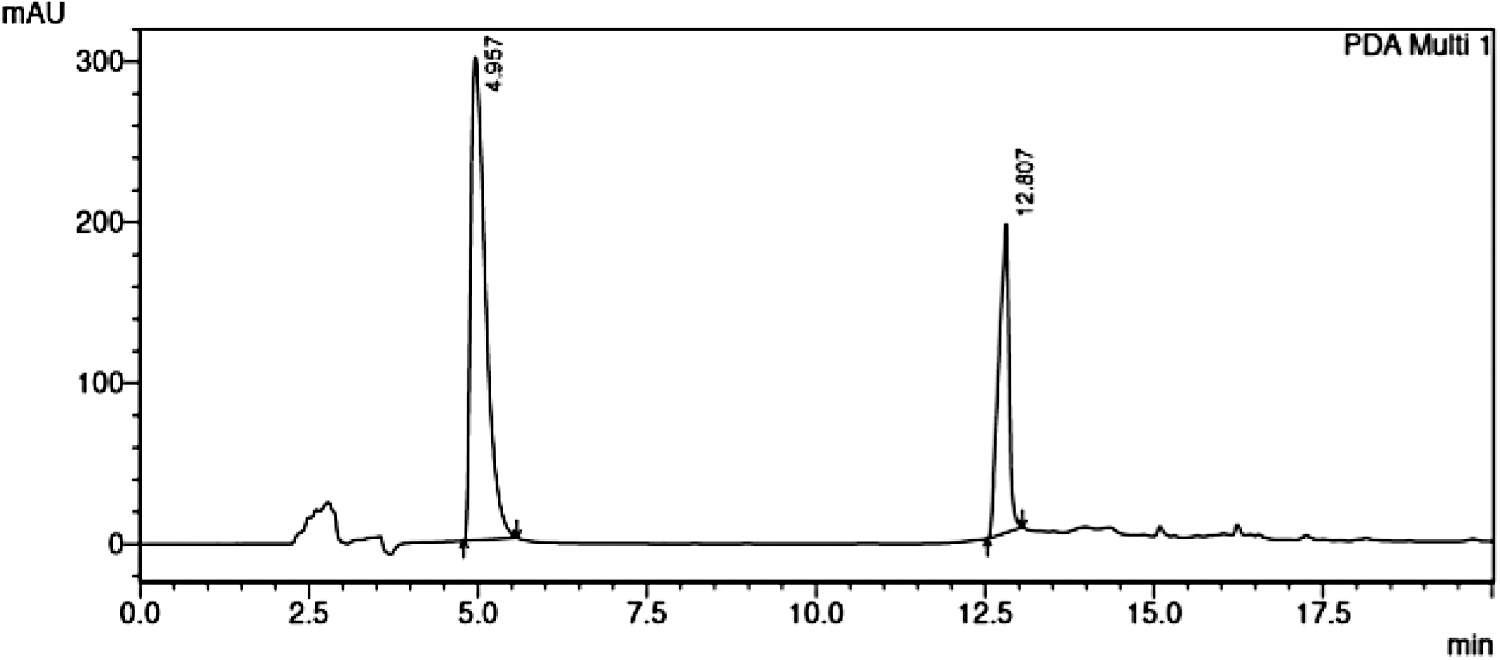
Chromatogram of doxorubicin and clotrimazole showed retention time at 4.957 and 12.807, respectively.
Optimized Chromatographic Conditions
System Suitability
Six injections of both drugs doxorubicin and clotrimazole showed that the limits tested were within an acceptable range. The retention time of doxorubicin and clotrimazole was 4.957 and 12.807 min. The tailing factor for the peaks of both doxorubicin and clotrimazole was <2, showing good peak regularity, and the number of theoretical plates was more than 2,000 (acceptance limits >2,000) in all chromatographic runs to ensure good column efficiency throughout the developed separation process (Table 3).
System Suitability Parameters for Doxorubicin and Clotrimazole
HETP, height equivalent to a theoretical plate.
Linearity
Two sets of six injections each of doxorubicin and clotrimazole were delivered. Comparing doxorubicin and clotrimazole, the regression equation for doxorubicin was y = 31134x + 1413.2, whereas clotrimazole was y = 29354x + 4551.3. The estimated correlation coefficient for both drugs was 0.999. The calibration curve for both drugs has been shown in Figures 4 and 5, respectively.
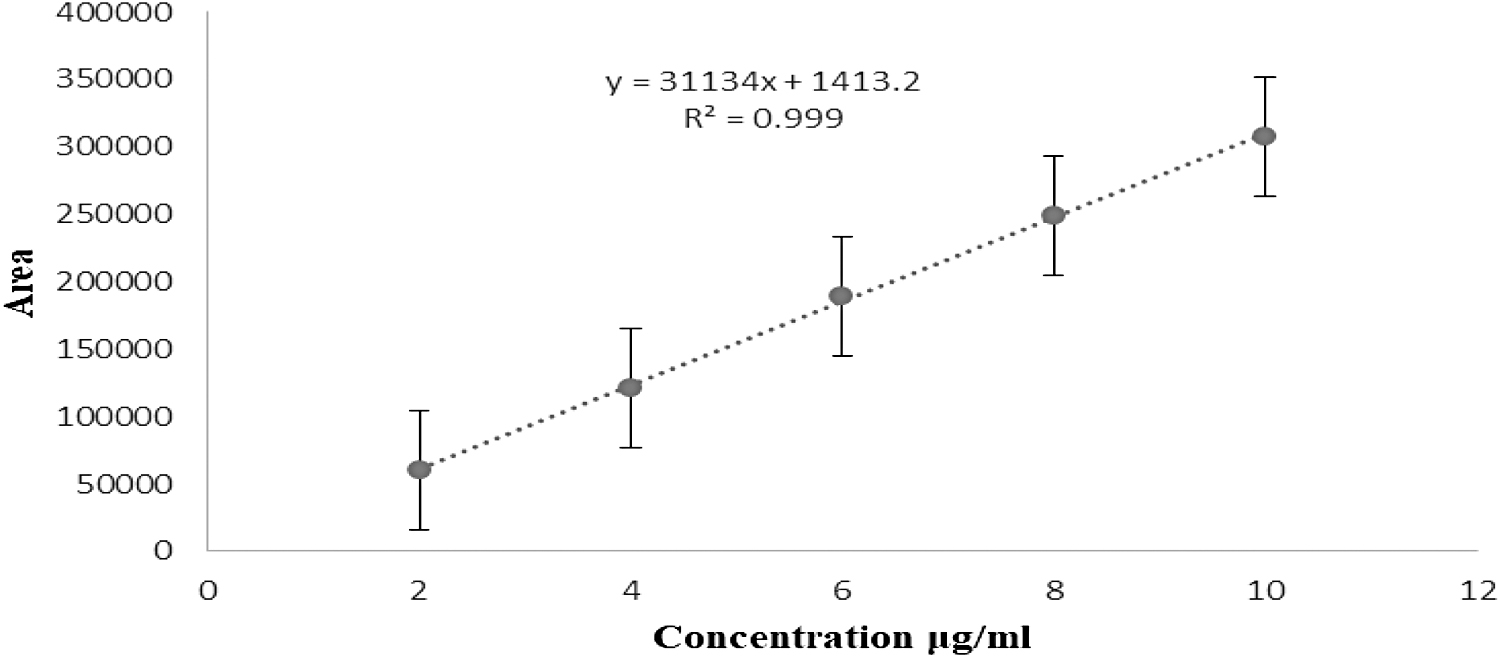
Calibration curve of doxorubicin.
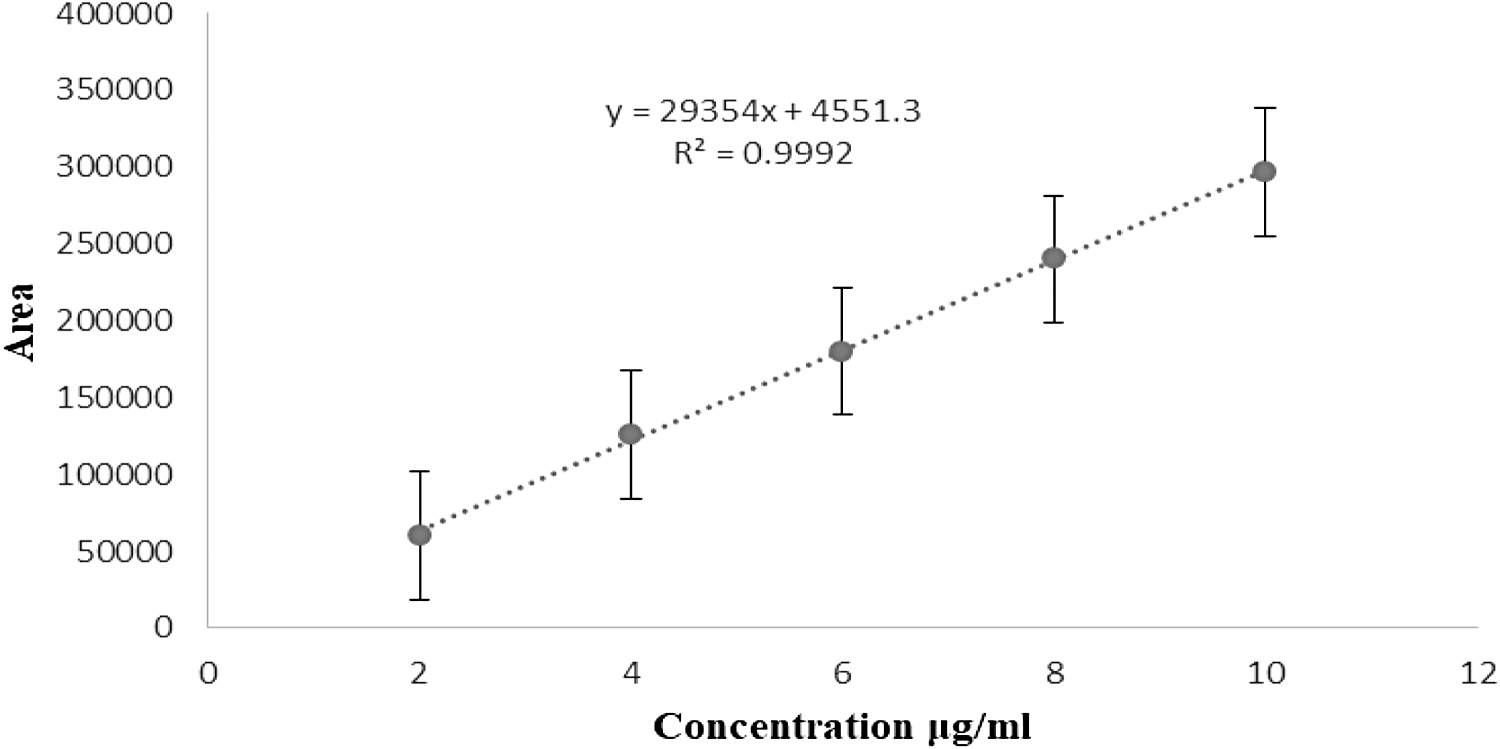
Calibration curve of clotrimazole.
Accuracy
The accuracy of the developed method was evaluated by calculating the absolute recovery of the pure drug from the prepared samples. The absolute percentage recovery of the drug was calculated by using the given equation and results are recorded in Table 4.
Results of Accuracy Study
HQC, high quantified concentration; LQC, lower quantified concentration; MQC, medium quantified concentration; RSD, relative standard deviation.
Precision Study
The interday and intraday studies were carried out by injecting concentrations of LQC, MQC, and HQC six times and the results found for doxorubicin and clotrimazole were repeatable and precise over three successive days. The results for both intraday and interday studies exhibited great repeatability and precision with all data expressed in % RSD, which was in the acceptance limit (% RSD <2). The results were recorded in Tables 5 and 6.
Results of Precision Study of Doxorubicin
SD, standard deviation.
Results of Precision Study of Clotrimazole
LOD and LOQ
The LOD and LOQ of doxorubicin were found to be 0.68 μg/mL and LOQ was 2.29 μg/mL, respectively, whereas, the LOD of clotrimazole was 0.81 μg/mL and LOQ was 2.69 μg/mL, respectively.
Robustness
In the developed method, small variations in the chromatographic conditions were made. The effect of change in pH (±2), flow rate (±2), and wavelength (±2) was observed. The results showed very slight changes, which were negligible in the retention time of both drugs. These results indicated the developed method was robust even under changed conditions. The observed data have been compiled in Tables 6 –8 , respectively.
Robustness of Doxorubicin
Robustness of Clotrimazole
Forced Degradation Studies
As evident from the results recorded in the chromatogams shown below in Figure 6, both doxorubicin and clotrimazole exhibited substantial degradation under acidic conditions, with doxorubicin showing complete degradation and clotrimazole displaying a degradation percentage of 75.51%. This suggests that both drugs are vulnerable to acidic environments. Similarly, alkaline hydrolysis led to the complete degradation of both doxorubicin and clotrimazole, emphasizing their susceptibility to alkaline environments. Notably, oxidative degradation induced by H2O2 resulted in significant degradation for both drugs, with the extent of degradation being influenced by the concentration of H2O2. Doxorubicin demonstrated moderate susceptibility to oxidative stress, while clotrimazole exhibited a higher susceptibility to oxidative degradation, particularly at a higher concentration of H2O2. 34
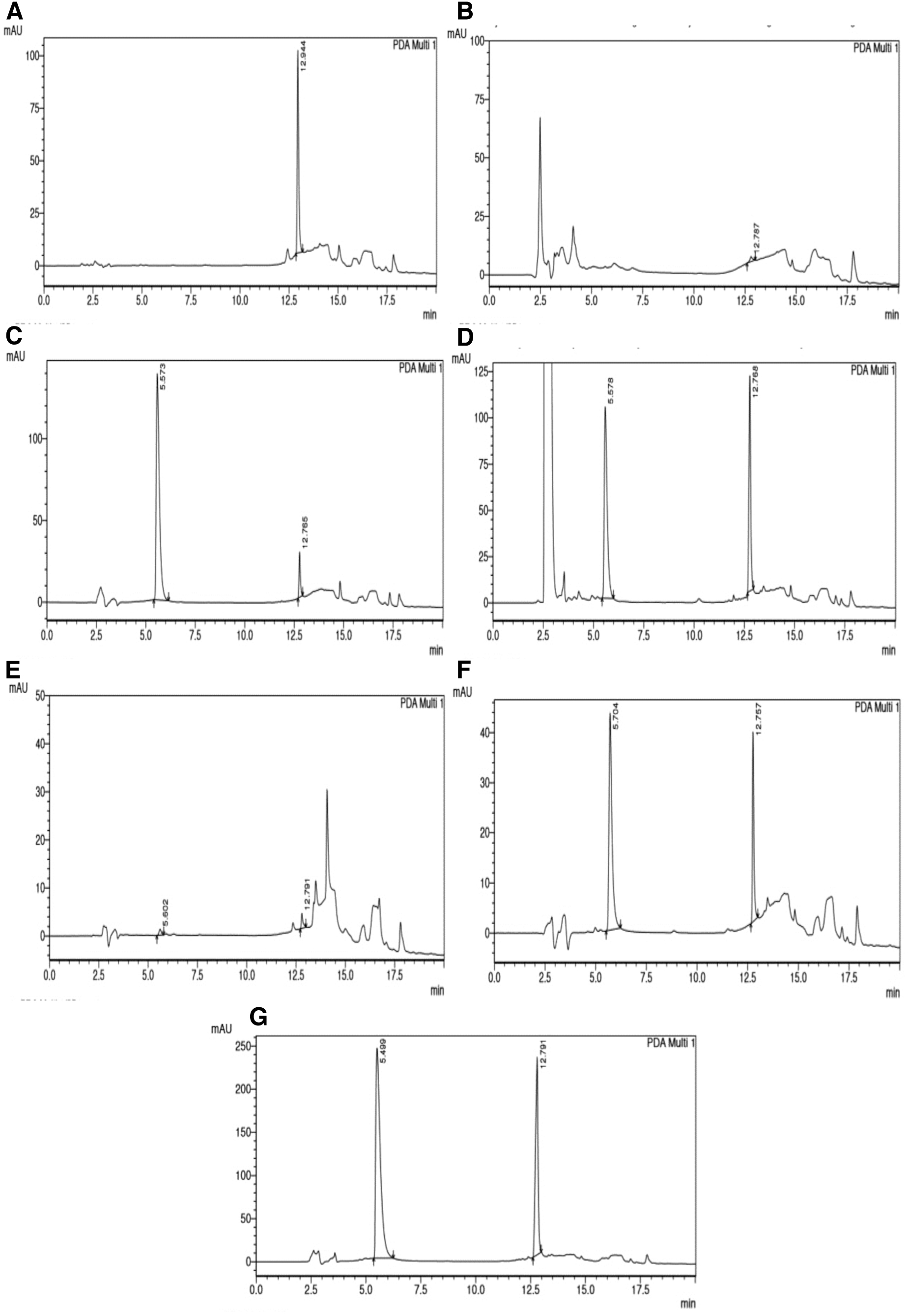
HPLC chromatogram under different stress conditions.
Furthermore, the results of neutral degradation revealed considerable loss for both the drugs, suggesting their sensitivity to neutral conditions as well. Solid-state degradation studies indicated a moderate level of degradation for both doxorubicin and clotrimazole when subjected to dry heat, signifying their vulnerability to thermal stress. Photolytic degradation studies indicated that both drugs are prone to degradation upon exposure to light, with doxorubicin showing a degradation percentage of 62.11% and clotrimazole displaying a degradation percentage of 66.34%. 35 These findings underscore the importance of protecting these drugs from light exposure during storage and handling. The observations of forced degradation studies have been compiled below in Table 9.
Forced Degradation Studies
CONCLUSION
The proposed RP-HPLC gradient method for simultaneous estimation of doxorubicin and clotrimazole is novel in terms of the uniqueness of this combination. The developed method is a simple and economical method for the estimation of both drugs in combination. Validation of the method complied with excellent linearity, accuracy, precision, system suitability, specificity, and robustness and the observed values of LOD and LOQ for doxorubicin and clotrimazole were also lower. The method demonstrated a high degree of practical utility for the estimation of a combination of drugs in pharmaceutical dosage forms.
Footnotes
ACKNOWLEDGMENTS
The authors are grateful to Neon Laboratories and Sun Pharma for providing us the gift sample of doxorubicin and clotrimazole, respectively. The authors also wish to thank the School of Pharmaceutical Sciences, Lovely Professional University, for providing the research facilities and required atmosphere to perform this analytical study.
AUTHORs' CONTRIBUTIONS
P.S.: Experimental work, P.R.: Experimental work, Writing; B.K.: Data curation and interpretation, M.S.H.: Proofreading and referencing, P.W.: Proofreading; G.S.: Data curation; R.K.: Conceptualization and reviewing and editing.
DISCLOSURE STATEMENT
No competing financial interests exist.
FUNDING INFORMATION
No funding was received for this article.