




Abstract
Dr. Christine Foyer (B.Sc. 1974; Ph.D. 1977) is recognized here as a Redox Pioneer because she has published an article on redox biology that has been cited more than 1000 times, 4 other articles that have been cited more than 500 times, and a further 32 articles that have been each cited more than 100 times. During her Ph.D. at the Kings College, University of London, United Kingdom, Dr. Foyer discovered that ascorbate and glutathione and enzymes linking NADPH, glutathione, and ascorbate are localized in isolated chloroplast preparations. These observations pioneered the discovery of the ascorbate-glutathione cycle, now known as Foyer-Halliwell-Asada pathway after the names of the three major contributors, a crucial mechanism for H2O2 metabolism in both animals and plants. Dr. Foyer has made a very significant contribution to our current understanding of the crucial roles of ascorbate and glutathione in redox biology, particularly in relation to photosynthesis, respiration, and chloroplast and mitochondrial redox signaling networks. Antioxid. Redox Signal. 15, 2383–2391.
Educational and Professional Training
Summary of Dr. Foyer's Top Contributions
Three areas of plant biology cover Dr. Foyer's research contributions: plant redox metabolism, photosynthesis, and stress biology. She has made a significant contribution to the advancement of current knowledge in plant biology, particularly in the areas of (i) plant antioxidant metabolism and signaling; (ii) chloroplast and mitochondrial redox signaling pathways; and (iii) plant carbon/nitrogen (C/N) interactions. However, in this nomination, only areas (i) and (ii) will be presented and discussed. A list of articles that highlight Dr. Foyer's contribution in the area of plant antioxidant metabolism and signaling is presented in Table 1.
Background, Development, and Training
Christine Foyer was born in Gainsborough, in the county of Lincolnshire, which is in the middle of England but nearer the east coast. This part of England is largely agricultural land, but it specializes in crops like sugar beet, peas, and flowers such as tulips. From 16 to 18, for her higher level exams, Christine studied at the John Leggott Sixth Form College (
From John Leggott College, she went to the University of Portsmouth to study for the Bachelor of Sciences degree in Biology. There were several inspirational teachers at the University of Portsmouth, but it was there where she first met Professor Barry Halliwell, who was then a junior lecturer. It was Barry Halliwell who inspired her to focus on plant biology rather than animal sciences. When he moved to take up a lecturer position in the Department of Biochemistry in Kings College, at the University of London, United Kingdom, she agreed to do her Ph.D. studies with him there. The title of her Ph.D. thesis, which was completed in October 1977, was “The Function and Relationship of Ascorbic Acid and Glutathione in Spinach Leaves.”
After her postdoctoral studies, she had two postdoctoral positions. The first was with Professor David Hall at the Department of Plant Sciences at the University of London, United Kingdom. David Hall was also an inspirational scientist whose life was dedicated to advancing plant science for the benefit of humanity. After that, she had a postdoctoral fellowship in the lab of Professor David Walker in Sheffield. It was in this lab that she developed a keen interest in the carbon assimilation processes of photosynthesis, particularly the regulation of assimilate partitioning and the role of redox regulation in the co-ordination of plant metabolism. In David Walker's lab, she also learned the important value of teamwork in facilitating rapid progress and networking in developing knowledge and skills.
In 1988 she took up her first permanent post as a Directeur de Recherche (2eme classe) at the Institut National de la Recherche Agronomique (INRA) in Versailles, France, where she extended the studies on the regulation of photosynthesis and associated redox metabolism that she had undertaken during her Ph.D. and postdoctoral work to incorporate the regulation of plant C/N partitioning. Thereafter, she took up her first managerial post as Head of the Environmental Biology Department at the Institute for Grassland and Environmental Research (IGER) at Aberystwyth, Wales, United Kingdom. Over her 4 years at IGER, she ran a Department of over 100 people and also a laboratory with 10 Ph.D. students, 2 postdoctoral workers, and 2 technicians. She then accepted the post of Head of the Biochemistry and Physiology Department at Rothamsted Research in Harpenden, United Kingdom, and ran a large Department of over 120 people in addition to her own research group. In 2001, she moved back to basic research as an Individual Merit Promotion Scientist at Rothamsted Research.
She accepted the Chair in Molecular Agriculture at the University of Newcastle upon Tyne in 2006. However, in 2009, Christine was offered the post of Professor of Plant/Crop Sciences in Africa College (
Area of Interest in Redox Biology
Redox metabolism as a central integrator of plant growth and defense responses
Christine Foyer's enduring interest in how photosynthetic organisms master the art of redox control to manage energy supply with demand began through discussions with Barry Halliwell, David Hall, and John Allen. Christine's interest in the roles of ascorbate and glutathione in plant biology that began in her Ph.D. studies increased as she realized that these are truly multifunctional metabolites. Starting as a biochemist, Christine was able to elaborate her knowledge and studies into the signaling functions of ascorbate and glutathione as new tools and technologies became available, and she was able to study the synthesis and accumulation of these antioxidants in transformed plants. Christine remains indebted to Karl Kunert for his enthusiastic insistence in 1990 that she should take up the unparalleled opportunity to discover more about glutathione metabolism through manipulation of glutathione synthesis in transgenic plants, particularly poplar. These studies led to a number of important discoveries that laid the foundations for Christine's further studies on the functions of glutathione in the control of cell proliferation and defense. At the Society for Free Radical Research Europe Meeting in 2007, in Vilamoura, Portugal, Christine was inspired by a presentation by Professor Federico Pallardó, University of Valencia, Spain, concerning the sequestration of glutathione into the nucleus during the mammalian cell cycle. After this talk I introduced Christine to Federico and this fortuitous meeting led to a productive collaboration on the roles of glutathione in the cell cycle in animals and plants.
Christine has also investigated the roles of ascorbate in plant growth and development. In 2003, her lab was the first to describe the effects of ascorbate abundance on the plant cell transcriptome, and define for the first time how ascorbate levels change the abundance of transcript regulating plant growth and defense. These ground breaking discoveries led directly to Christine's present work on the mechanisms by which ascorbate controls changes in gene expression particularly through changes in the plant hormone, abscisic acid (ABA).
The concept of cellular redox homeostasis was slow to develop in plants and really has only recently been established. The foundations for a long and productive collaboration on this concept were laid when Graham Noctor came to work in Christine's lab. Through numerous discussions with Graham, Christine came to truly appreciate the complexities of cellular redox control and this meeting of minds allowed the elaboration of ideas concerning the operation of the plant cell redox hub, with ascorbate and glutathione as its heart. This collaboration, which continued when Graham set up his own lab, also incorporated different elements of redox metabolism, particularly those occurring in mitochondria. For Christine, research into redox regulation and signaling remains a domain of endless fascination and possibility.
On the other hand, Christine was always mindful of the needs of agriculture and food security, seeking to translate basic advances in redox biology into the development of tools for enhancing stress tolerance in crops. To further this goal, Christine has a significant number of collaborations with other labs worldwide; in particular, she undertakes fundamental research and capacity building activities in collaboration with colleagues in Africa.
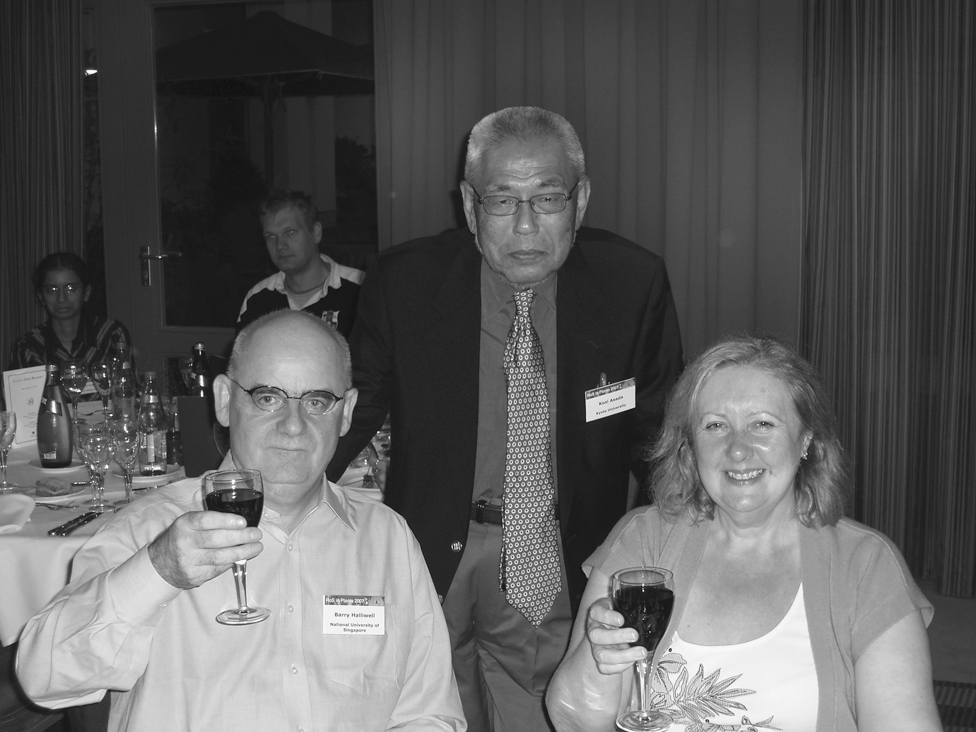
Description of Key Finding 1
Discovery of the Foyer-Halliwell-Asada cycle
As a Ph.D. student at Kings College, London, under the supervision of Barry Halliwell, Christine Foyer resolved the issue of how H2O2 was metabolized in chloroplasts. Based on an initial hypothesis that ascorbate and glutathione had the potential to act in detoxification (31), Christine Foyer showed that these metabolites and also enzymes linking NADPH, glutathione, and ascorbate were present in isolated chloroplast preparations (13, 14). Foyer and Halliwell proposed the simple metabolic scheme for this pathway that is still used today (Fig. 1).
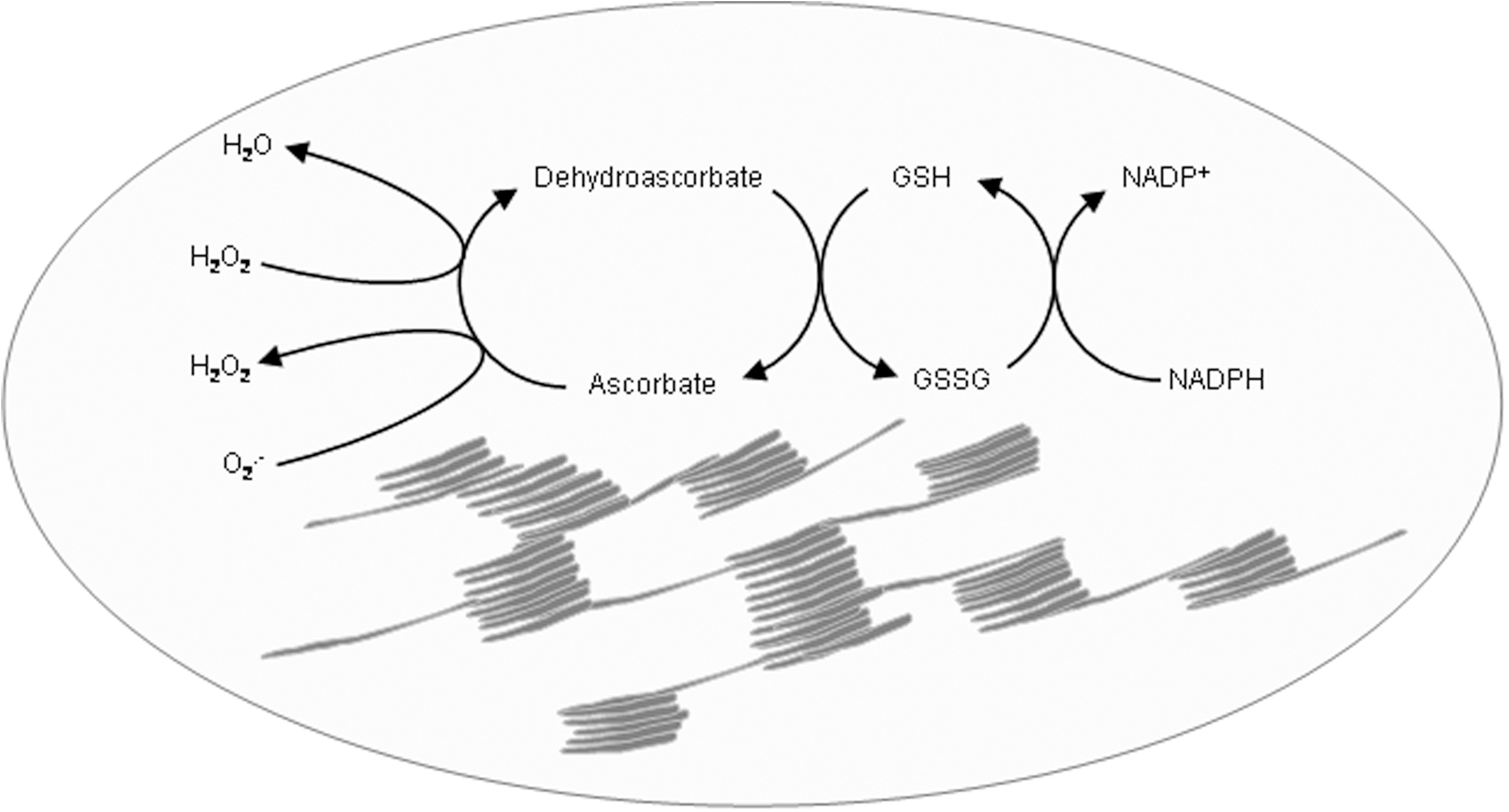
With Professor Halliwell, Christine Foyer pioneered the discovery of this novel pathway for maintaining the redox state of the chloroplasts and protecting the sensitive thioredoxin-modulated enzymes of carbon assimilation from oxidative inactivation. This pathway or cycle (Fig. 1) is referred to as the Foyer-Halliwell-Asada cycle after the names of the three major contributors. At the time of this discovery, no specific ascorbate- or glutathione-dependent peroxidase had been identified in plants. The proposed role of ascorbate and glutathione in H2O2 metabolism in chloroplasts led to the successful identification of thylakoid-bound and soluble stromal ascorbate peroxidase (29, 34). Later, the group of Professor Kozi Asada, in Japan, expanded the knowledge on this cycle with the demonstration of the involvement of monodehydroascorbate and the enzyme monodehydroascorbate reductase (32, 38, 39). It was subsequently shown that ascorbate could also be regenerated in the chloroplast by other mechanisms depending on ferredoxin or NADPH (3).
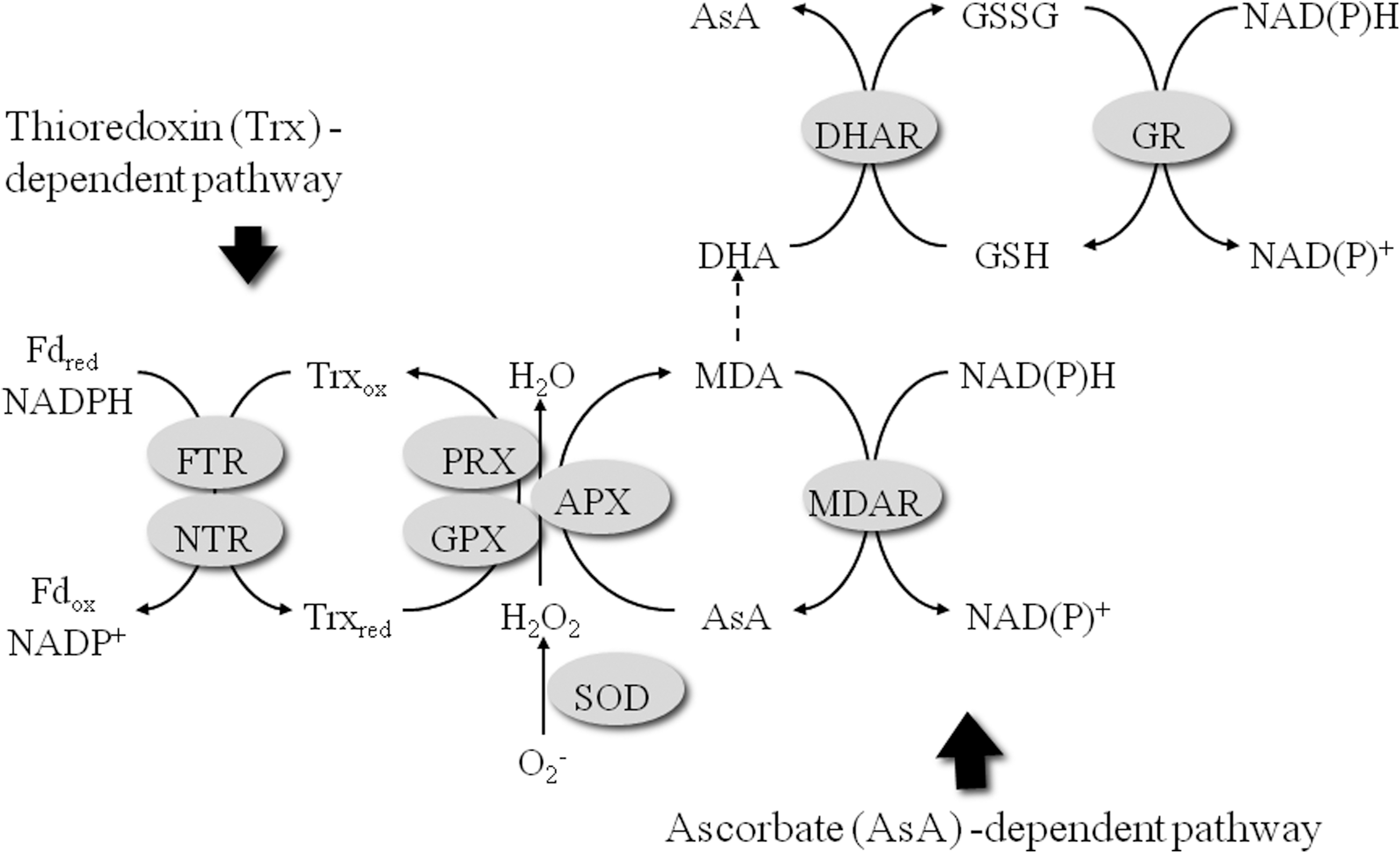
The Ascorbate-Glutathione cycle or Foyer-Halliwell-Asada pathway is a reaction sequence considered to be a crucial mechanism for H2O2 metabolism in both animals and plants. Chloroplasts lack catalase, which is the peroxisomal scavenger of H2O2 and therefore rely on the reduction of H2O2 to H2O via ascorbate-specific and thiol-specific peroxidases (Fig. 2). The use of ascorbate as a reductant generates monodehydroascorbate because of the one electron oxidation of the former. Monodehydroascorbate radicals rapidly disproprortionate to dehydroascorbate and ascorbate, a reaction that is catalyzed by monodehydroascorbate reductase (MDAR) (Fig. 2). Dehydroascorbate is reduced back to ascorbate in the presence of dehydroascorbate reductase together with the oxidation of reduced glutathione (GSH) to glutathione disulphide (GSSG). The regeneration of GSH from GSSG occurs in the final step of the cycle, in which glutathione reductase regenerates GSH with the oxidation of NADPH to NADP+ (Figs. 1 and 2). Components of this pathway have been shown to be present in animals, and in the plant cell cytosol, mitochondria, and peroxisomes, as well as the chloroplasts (12, 33, 37, 44, 52, 53). Moreover, the Ascorbate-Glutathione cycle is one of the very few examples of a pathway that was initially described in plants and that was later shown by others to be equally important in animal cells. Christine Foyer has continued to pioneer investigations that have increased our current understanding of the roles of ascorbate and glutathione in plant redox biology and she has presented new concepts on their redox functions in highly cited reviews and commentaries (15 –21, 40). Much of our current understanding of the importance of ascorbate in photosynthesis stems from her work (1, 2, 22 –24).
Description of Key Finding 2
Relationship between ascorbate and mitochondrial complex 1
Christine Foyer is recognized as one of the fundamental pioneers establishing the contribution of ascorbate to cellular redox-related mechanisms that link mitochondrial function to that of the chloroplasts. With colleagues she provided the first crucial evidence concerning the intracellular localization of the terminal enzyme of ascorbate biosynthesis (36), L-galactono-1,4-lactone dehydrogenase (GLDH) in mitochondria and showed its coupling to the cytochrome pathway (4 –6). On inhibition of the tricarboxylic acid cycle ascorbate synthesis can be engaged as an alternate electron donor to the mitochondrial electron transport chain. Working with colleagues from Argentina (Carlos Bartoli) and Australia (Harvey Millar), Christine Foyer was able to demonstrate that GLDH is localized on a sub-set of respiratory chain complex I, which is a crucial component of the redox regulation mechanisms in photosynthetic cells (36). The laboratory of Rosine De Paepe then showed that complex I accumulation is prevented in mutants lacking GLDH, suggesting that this enzyme has a role in stabilizing complex I structure (51).
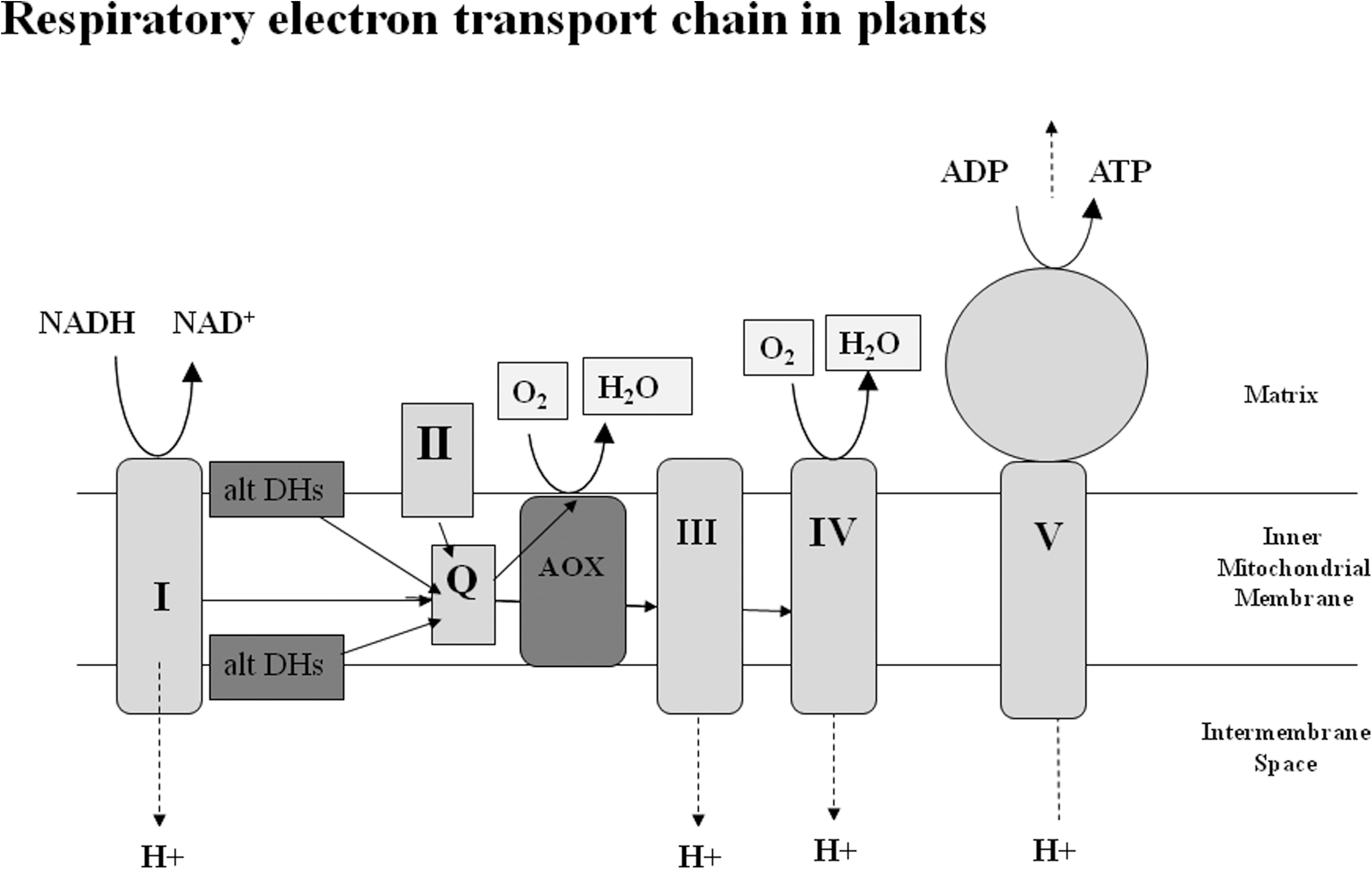
The plant respiratory electron transport chain localized in the inner mitochondrial membrane is similar to the animal counterpart. It is composed of four main complexes (I–IV) and the ATP synthase, but has additional components such as the alternative oxidase and the alternative external and internal NAD(P)H dehydrogenases (alt DHs), which are specific to plants (Fig. 3). These additional components provide a high level of flexibility that is important in plant survival (41). Mutants that are deficient in complex I, such as the cytoplasmic male sterility mutant (CMSII), adapt their respiratory metabolism by inducing alternative pathways (30, 54). Working with Rosine De Paepe and Graham Noctor (France), Christine showed that CMSII plants display enhanced stress tolerance and altered nitrogen assimilation and signaling through effects on phytohormones, particularly gibberellins (9 –11, 47).
Description of Key Finding 3
Antioxidant signaling pathways and the role of glutathione sequestration in the nucleus during the mitotic cell cycle
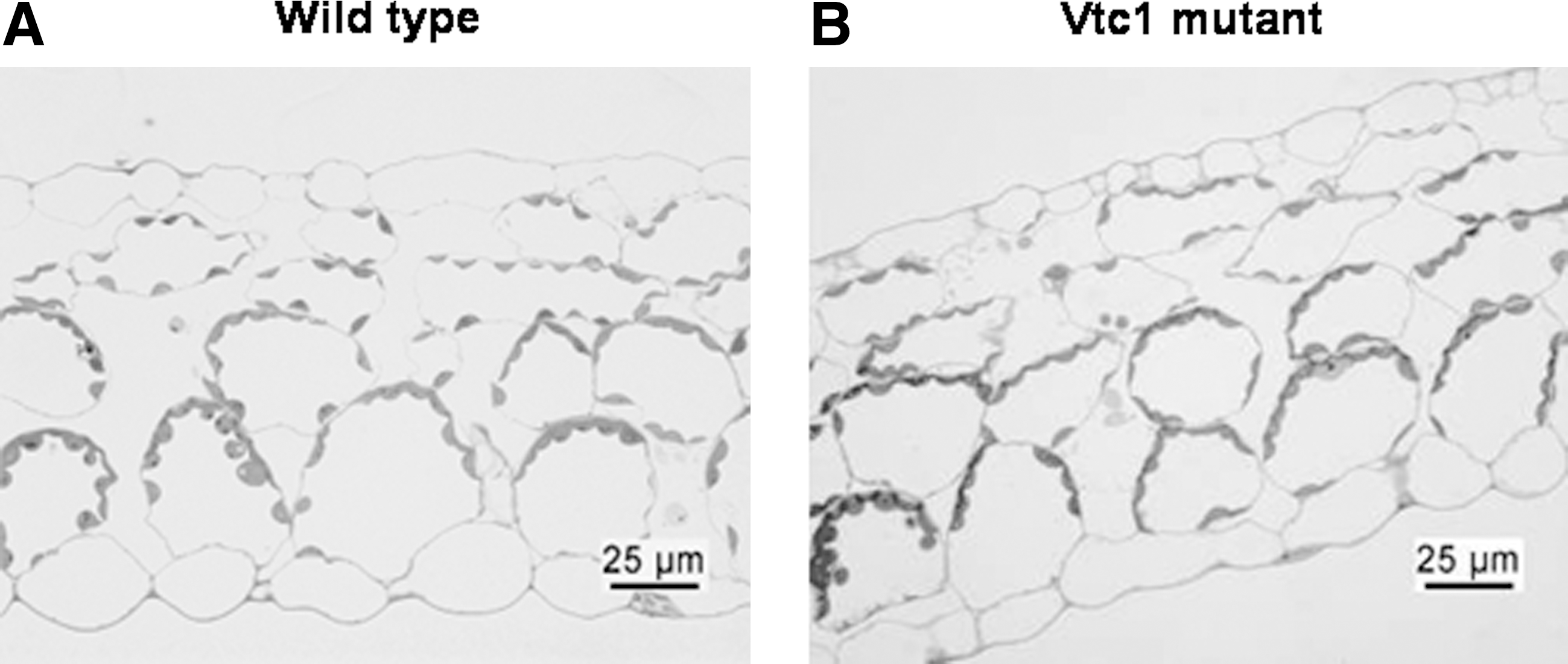
Christine Foyer is recognized as the founder of studies establishing ascorbate-dependent signal transduction pathways and effects on gene expression (35, 45). She was the first to demonstrate that the abundance of ascorbate has profound effects on gene transcription and to show that these are mediated, at least in part, via interactions with hormone signaling pathways, with a main involvement of ABA (45). Much of this work has focused on the characterization of the ascorbate-deficient (vtc) mutants of Arabidopsis thaliana, which have proved to be useful tools in furthering our knowledge of how ascorbate participates in the regulation of plant growth and defense processes. The vtc1 and vtc2 mutants have low ascorbate levels but do not suffer from enhanced oxidative stress. These mutants are more sensitive to abiotic stresses but have better resistance to biotrophic fungal pathogens (45, 46). The fact that these mutants have a characteristic slow growth phenotype that is linked to a smaller cell size (Fig. 4) (42, 46) led Christine Foyer to study how ascorbate controls plant growth, for example, by manipulation of ascorbate oxidase (49, 50).
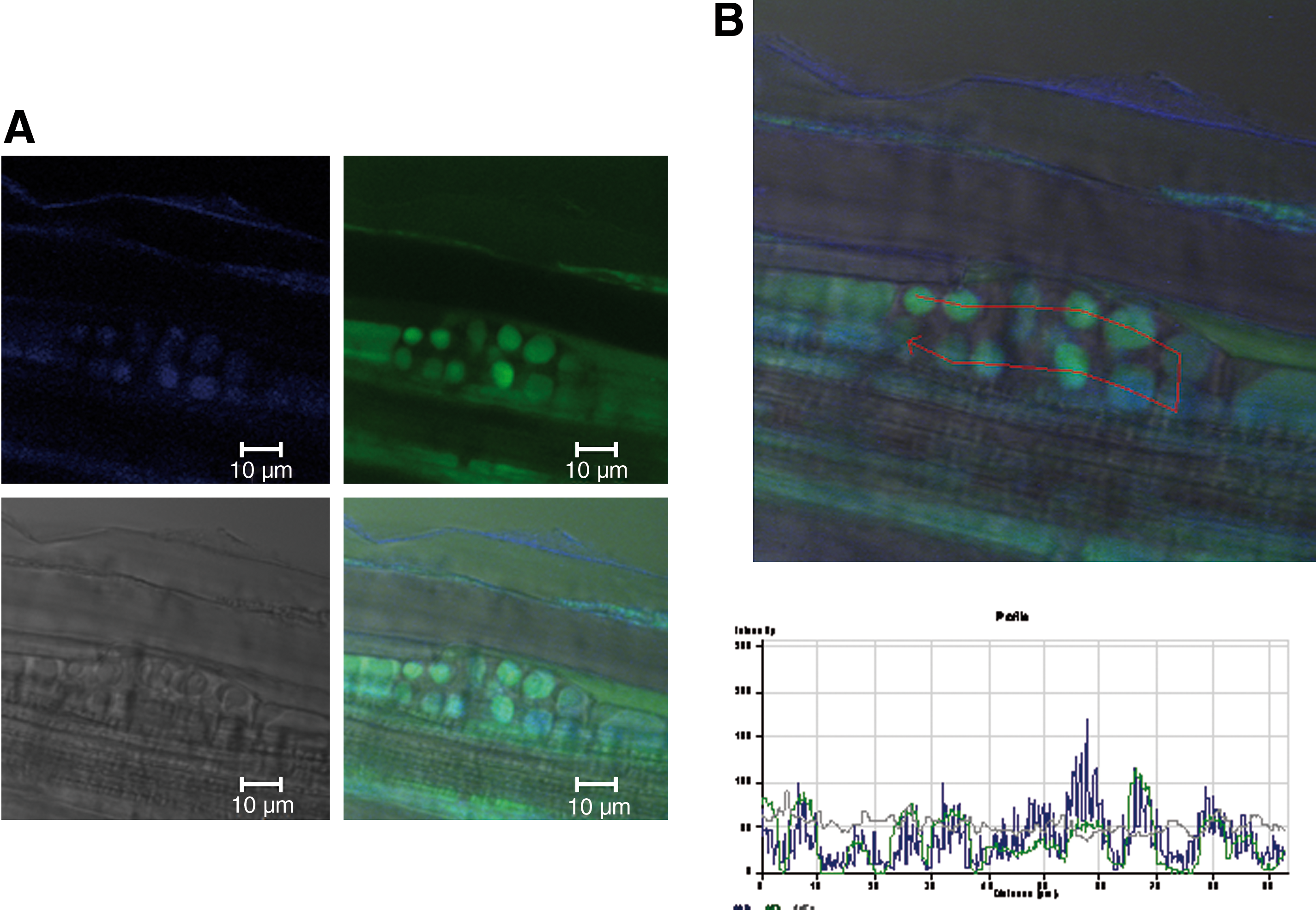
Christine Foyer also pioneered studies on the investigation of glutathione synthesis and homeostasis in transgenic plants (25, 55). She has reported the first findings on GSH recruitment into the nucleus during the plant mitotic cell cycle (7, 8, 48). A fruitful collaboration with Federico Pallardó (Spain) enabled Christine's lab to demonstrate that GSH colocalises with nuclear DNA in the G1 phase of plant cell cycle (7, 8, 48). Her lab was the first to demonstrate that GSH recruitment into the nucleus at the G1 phase of the cell cycle can be observed upon the first synchronous division of the pericycle cells in A. thaliana in the formation of the lateral root primordium (8) (Fig. 5).
Other Achievements
An early achievement while Christine was still a postdoctoral fellow was to produce and publish a book on photosynthesis (26), which sold a significant number of copies. She has published over 200 original articles, 40 reviews, 62 book chapters, and 1 book, as well as editing 5 other books. The impact of her work is further evidenced from her Hirsch index (or h-index) score of 67. The Web of Knowledge for individual year counts for the last 5 years reported 292 results with an average citation per article of 51.23. Christine is listed in the top 10 most cited authors world-wide in animal and plant sciences (
Current Position
After working for a significant part of her career in research institutes, Christine chose to move back to a University environment, where she could be more involved in teaching, training, and capacity building through research activities. For these reasons, Christine Foyer was pleased to accept a new Professorship in 2009, which was in Africa College at the University of Leeds. Christine set up the Africa College Web site (
Christine's lab is based in the Centre of Plant Sciences at the University of Leeds, where she is Professor of Sustainable Agriculture. Her lab undertakes fundamental research in redox biology and related work on enhancing stress tolerance, which contributes to the key goals of sustainable enhancement food security world-wide, using molecular physiology, biochemistry, and biotechnology approaches.
Christine undertakes a broad range of undergraduate and postgraduate teaching activities at the University of Leeds and she actively participates in capacity building programs with partners in Africa. Through such efforts, Christine's lab seeks is to secure uptake of research results and the application of current knowledge, particularly through the use and sharing of existing skills, information, and technologies of the partners, that can ultimately benefit farmers and the wider public. It is also of note that Christine is committed to active engagement and support of activities contributing to the public awareness of science and education. Ulrich Heber once told Christine that “your own research is like having a precious child, requiring infinite patience and care but very much loved.” Christine considers that this aptly sums up how she manages to sustain her boundless enthusiasm for redox biology: “I once heard a radio interview with Lance Armstrong after he had won yet another big race and he was asked how he did it. He simply said that it came down to practice, practice, and more practice, every day even on Christmas day. My view is that science is something very like that because it is compulsive and you have to keep with it all the time and not get despondent when things do not work well. Being passionate about science is what carries you through the hard times so that it isn't so much work, as a hobby that you do for a living. It is the thrill of achieving a better understanding and finding real pleasure in putting new ideas together, explaining data and passing on knowledge that keeps you going no matter what!”
Footnotes
Acknowledgments
Professor Christine Foyer wishes to thank the many people who have inspired and worked with her throughout her career. In particular, she is deeply grateful to Barry Halliwell, who was the best Ph.D. supervisor anyone could want. Christine is indebted to him for his guidance, patience, kindness, supportive, and wisdom. Christine is also grateful to David Hall and Krishna Rao, who are sadly no longer with us, but whose inspiration particularly in the applications of basic science and their happiness and enjoyment of their research made a lasting impression. She gives thanks also to Dirk Inzé for his support and friendship and for serving as a superb role model for how to combine excellence in research with impact and applications. Christine is particularly indebted to Graham Noctor, with whom she has had numerous discussions about redox biology. She thanks him for his unswerving dedication to unraveling the complexities of redox biology and for remaining a source of constant inspiration, valued judgment, and essential criticism. Christine thanks Don Ort for his wisdom and valued judgments, and his honesty which she deeply appreciates. Christine is indebted to Karl Kunert for pushing her relentlessly to take up new ideas and technologies. Without Karl, Christine may not have taken up so many scientific challenges or been able to set up her present extensive collaborations with colleagues in Africa. Christine is indebted to Luis A. del Río for many research discussions and his unwavering support in research collaborations and related activities.
Abbreviations Used
References
Supplementary Material
Please find the following supplemental material available below.
For Open Access articles published under a Creative Commons License, all supplemental material carries the same license as the article it is associated with.
For non-Open Access articles published, all supplemental material carries a non-exclusive license, and permission requests for re-use of supplemental material or any part of supplemental material shall be sent directly to the copyright owner as specified in the copyright notice associated with the article.
