




Abstract
Abstract
Background:
Exclusive breastfeeding is the recommended breastfeeding method for infants during the first 6 postnatal months.
Objective:
This study aimed to increase breastfeeding duration and frequency using a breastfeeding motivation program (BMP), which was structurally based on Pender's Health Promotion Model (HPM) and administered during pregnancy and the postnatal period. The study was also designed to determine the BMP effectiveness in supporting exclusive breastfeeding.
Materials and Methods:
The sample of this randomized controlled trial included 100 pregnant women (50 in the BMP, 50 in the control group) who applied to the pregnancy preparation course in a state hospital located in Usak, western Turkey. Participants in the study were allocated into either the BMP group or control group through systematic sampling and randomization. The BMP was structured based on the HPM and was carried out with the BMP study group four times: during the antenatal period, on the first postnatal day, between the fourth and sixth postnatal weeks, and during the fourth postnatal month. Data were analyzed using the descriptive statistical test, Pearson's chi-square test, independent samples t test, and ANOVA.
Results:
The mothers in the BMP group started breastfeeding earlier than the mothers in the control group (97.1%) and had fewer problems with their first breastfeeding experience. The average score of perceived self-efficacy in breastfeeding and the rate of first breastfeeding experience (70.6%) were higher in the BMP group by a statistically significant amount.
Conclusion:
BMP for breastfeeding, structurally based on Pender's HPM, can help in supporting and maintaining exclusive breastfeeding.
Background
I
In 1990, the Innocenti Declaration published by the World Health Organization (WHO) and the United Nations International Children's Emergency Fund (UNICEF) emphasized that an environment should be created that encourages breastfeeding to be a common practice; that information on this subject should be easy to access; that breastfeeding should be encouraged within the first postnatal hour; that bottle feeding, pacifiers, dummies, etc., should not be given to breastfed infants; and that exclusive breastfeeding for the first 6 postnatal months is very important.3,9–13
Pregnant women's intention to breastfeed, perceived importance of breastfeeding, and self-confidence and self-efficacy in breastfeeding are important motivators for maintaining breastfeeding.5,14
According to Turkey's Population Health Research (TDHS) data, the rate of feeding infants human milk exclusively (5 months) was 30% in 2013, while it was 42% in 2008. 15 Although this is a high rate, the decrease is stil worrisome, and this situation needs intervention. Adequate breastfeeding counseling and support are necessary for initiating and maintaining ideal breastfeeding practices.11,16,17 Dyson et al. 10 stated that education on the benefits of human milk and breastfeeding should start during the antenatal period and continue during the early postnatal period.
Motivational interview (MI) is an instruction and advisee-centered approach that helps advisees discover and resolve ambivalence and thus elicits behavioral change. The MI is a unique way of helping individuals understand their own problems, take action to change, and believe that change is possible. The aim of this method is to improve self-motivation.18–20 The interview is a particularly useful method for those who are unwilling to change. It is a brief therapy method that is easy to learn and apply. The four basic principles of MI are showing empathy, discovering ambivalence, working with resistance, and promoting self-sufficiency. Meta-analyses show that even short interviews of 15 minutes can be effective. It has high reliability as a result of being an evidence-based method. Additionally, it has a wide range of applications across different areas. 21 There are also several other randomized controlled studies that used a breastfeeding motivation program (BMP) to support breastfeeding.5,14,22–24
In MIs, the basic interaction strategies are asking open-ended questions, reflective listening, summarization, assumption, and change talk. 19 Asking explanatory questions, releasing balance of decision, going into detail, questioning extreme situations, looking to the future, and releasing targets and values can be regarded among methods used to talk about change. In MIs, the first stage is creating motivation for change. The second stage is strengthening the commitment to change. Interviews are initiated by summarizing the current situation regarding a problem and change. MIs are continued with key questions, and when necessary, they can be used for information and for giving advice. 21
Health promotion goals include increasing the duration of breastfeeding because of its irrefutable advantages to the mother and baby, society, and the environment. 25 The aim of the Health Promotion Model (HPM) is to teach individuals behaviors that will improve their health. Nola Pender is a nurse philosopher who developed the HPM to integrate the perspectives of nursing and behavioral sciences. The main concept of the model is self-efficacy. The fundamental components of the HPM are behavior-specific cognitions and effects, perceived benefits and barriers, perceived self-efficacy, activity-related effects, interpersonal influences, and situational influences. These fundamental components are the main motivating factors in acquiring and maintaining health-promoting behaviors.26–29 The BMP was structurally based on the conceptual framework of Pender's HPM (Fig. 1). Breastfeeding is a health promotion behavior for mothers and babies. Thus, the basic concepts of the model are appropriate for developing and motivating the breastfeeding habit. Pender's HPM may provide an appropriate conceptual framework for supporting breastfeeding. 28
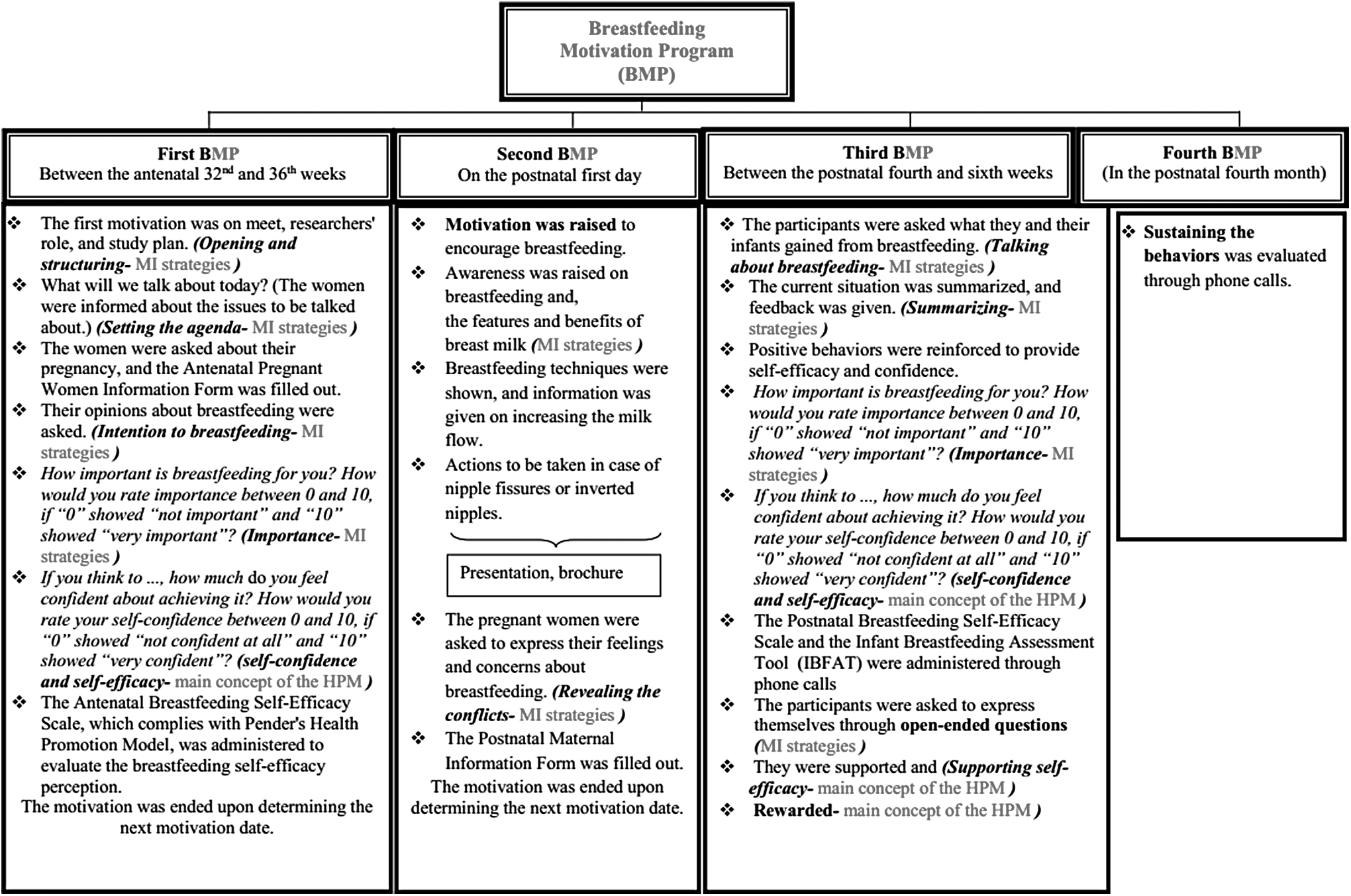
Stages of BMP to support breastfeeding. BMP, breastfeeding motivation program.
This study aimed to increase breastfeeding duration and frequency using the BMP, which was based on Pender's HPM and administered during pregnancy and the postnatal period. The study was also designed to determine the BMP effectiveness in supporting exclusive breastfeeding.
Materials and Methods
Design
A randomized controlled trial and experimental study design were utilized in this study.
Setting
The population of this randomized, controlled, and experimental study comprised all pregnant women (N = 951) who applied to the pregnancy preparation course in a state hospital located in Usak, western Turkey, between February and November 2014.
Sample
A power analysis was performed using the G*Power (v3.1.7) to determine the number for sampling. It was found that both groups should include at least 26 participants at α = 0.05 according to Cohen's d effect size.30,31 The groups in this study therefore each included 50 participants to compensate for possible losses during the study. The study sample included 100 pregnant women (50 in the BMP group and 50 in the control group) who met the inclusion criteria and were allocated to either the BMP group or the control group through systematic sampling and randomization according to the application time. Randomization was performed sequentially in the clinic using a random numbers table.
The inclusion criteria were being a primigravida (in their first pregnancy), being in the 32nd gestational week, being married, not working, having no physical disabilities, having no diagnosis of a psychological disorder, not experiencing a risky pregnancy, and not undergoing a planned cesarean section.
Measurement
Data were collected using the Antenatal Breastfeeding Self-efficacy Scale (BSES)-Short Form, the Postnatal BSES-Short Form, the Infant Breastfeeding Assessment Tool (IBFAT), the Antenatal Pregnant Women Information Form, the Postnatal Maternal Information Form, and the BMP Rating Scale, which were prepared by the researchers based on the literature.
Tokat et al. 32 conducted the validity and reliability study of the Turkish Postnatal BSES-Short Form (Cronbach's alpha 0.86), which was adapted to Turkish culture. This 14-question scale evaluates the extent to which mothers feel adequate in their breastfeeding.
The Antenatal BSES-Short Form is another version of Postpartum BSES for which Tokat et al. 32 rewrote the items using the future tense. Validity and reliability studies of the 14-question scale were conducted and found a Cronbach's alpha of 0.87.
This study also utilized the IBFAT, a six-question scale that identifies the limitations of breastfeeding self-efficacy when the mother feeds the infant. The validity and reliability studies of the Turkish IBFAT were conducted by Çelik and Demirci (Cronbach's alpha 0.9257). 33
The Antenatal Pregnant Women Information Form was created by the researchers based on the relevant literature. It comprised nine questions about sociodemographic characteristics of the mother and aspects of pregnancy.
The Postnatal Maternal Information Form was created by the researchers based on the relevant literature. It includes 18 questions about obstetrical experiences of the participants and the characteristics of their newborn infants.
The BMP Rating Scale was prepared by the researchers based on the relevant literature. This scale consists of three parameters: (1) the participant's intention to breastfeed, (2) the participant's perceived impotance of breastfeeding, and (3) the participant's self-confidence and self-efficacy in breastfeeding. The intention to breastfeed was answered as either yes or no. The answers to the other two parameters of the scale were rated between 0 and 10. 21 The pregnant women's answers were obtained using a visual analog scale.
Data collection procedure
The pregnant women who came to the antenatal outpatient clinics were assigned to experimental and control groups using randomization. The researchers obtained their written and verbal consent and administered the Antenatal Pregnant Women Information Form, Antenatal BSES-Short Form, and the BMP Rating Scale to both groups.
Initially, the researchers held the BMP with participants in the experimental group. The participants in the control group were trained in breast self-examination. The researchers administered the Postnatal Maternal Information Form to the participants in the experimental (BMP) group on their first postnatal day. The researchers also, to increase motivation, made a presentation and distributed flyers afterward. Between the fourth and sixth postnatal weeks, the researchers administered the Postnatal BSES-Short Form, the IBFAT, and the BMP Rating Scale to the participants by telephone. In the fourth postnatal month, the researchers telephoned the participants and evaluated the effect of the motivation program by finding out about the infants' nutrition, weight gain, and behavior.
Between the fourth and sixth postnatal weeks, the researchers telephoned the participants in the control group and administered the Postnatal Maternal Information, the Postnatal BSES-Short Form, the IBFAT, and the BMP Rating Scale. In the fourth postnatal month, the researchers evaluated the infants' nutrition and weight gain by telephone.
The motivations were held by the first author and lasted 20 minutes at most. First author completed a program, which was run by an MI expert, and developed a skill for this issue. The participants were reminded of the motivation during the telephone calls.
Study variables
The independent variable was the BMP.
The dependent variables were average scores on the IBFAT and the BSES; mothers' exclusive breastfeeding status; time of breastfeeding initiation; and the intention to breastfeed, perceived importance of breastfeeding, and self-confidence and self-efficacy in breastfeeding components of the BMP.
Study process
A total of four sessions of the BMP were carried out, starting during pregnancy (between the 32nd and 36th weeks) and continuing during the postnatal period.
BMP schedule
• The First BMP: between 32nd and 36th weeks in the antenatal period.
• The Second BMP: on the first postnatal day.
• The Third BMP: between the fourth and sixth postnatal weeks.
• The Fourth BMP: in the fourth postnatal month.
The BMP was structurally based on the conceptual framework of Pender's HPM. BMP was developed by the authors. The stages of BMP to support breastfeeding are shown in Figure 1.
The participant flow during the study is shown in Figure 2.
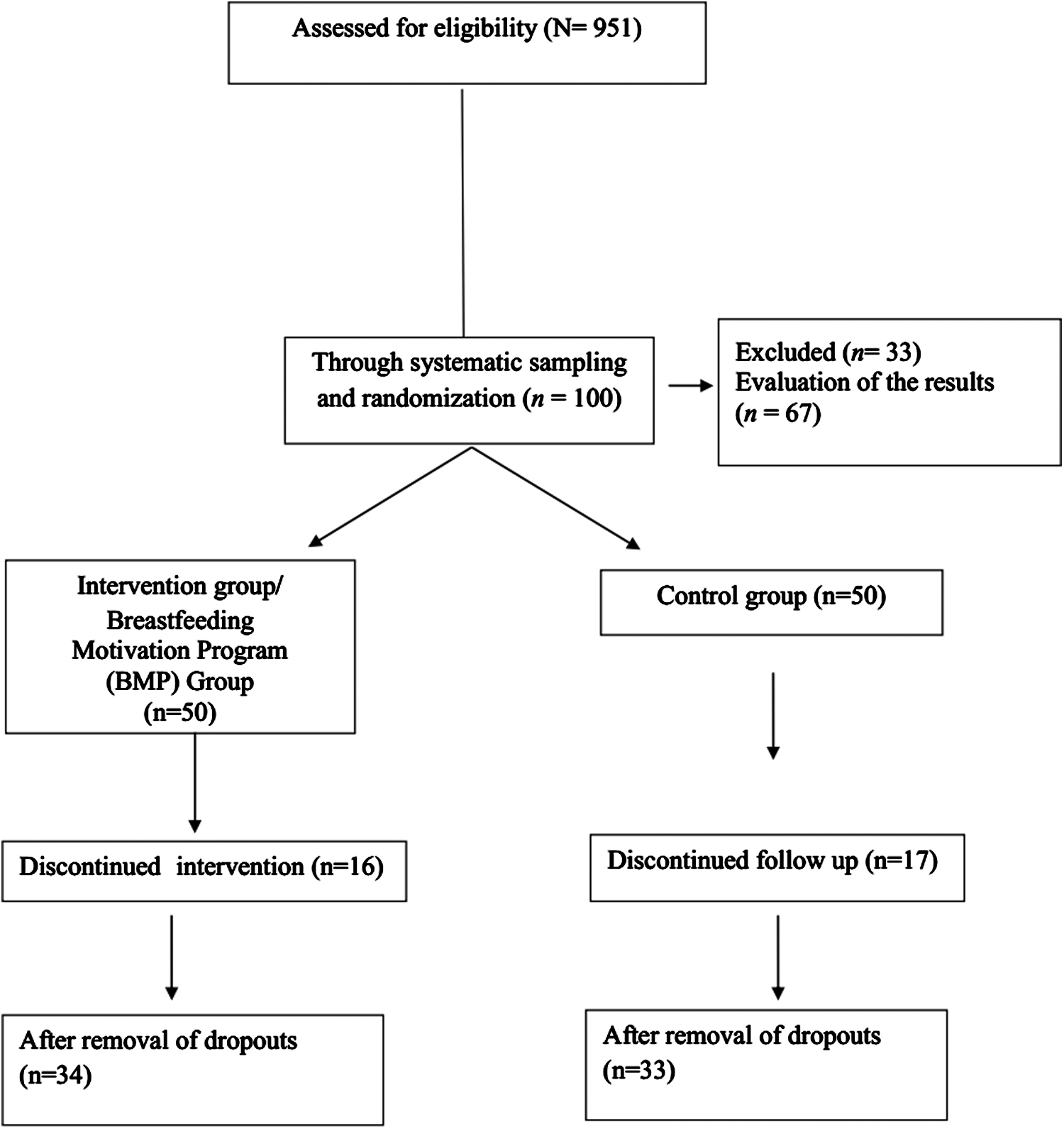
Participant flowchart during the study.
The consort guideline is outlined in Figure 3.
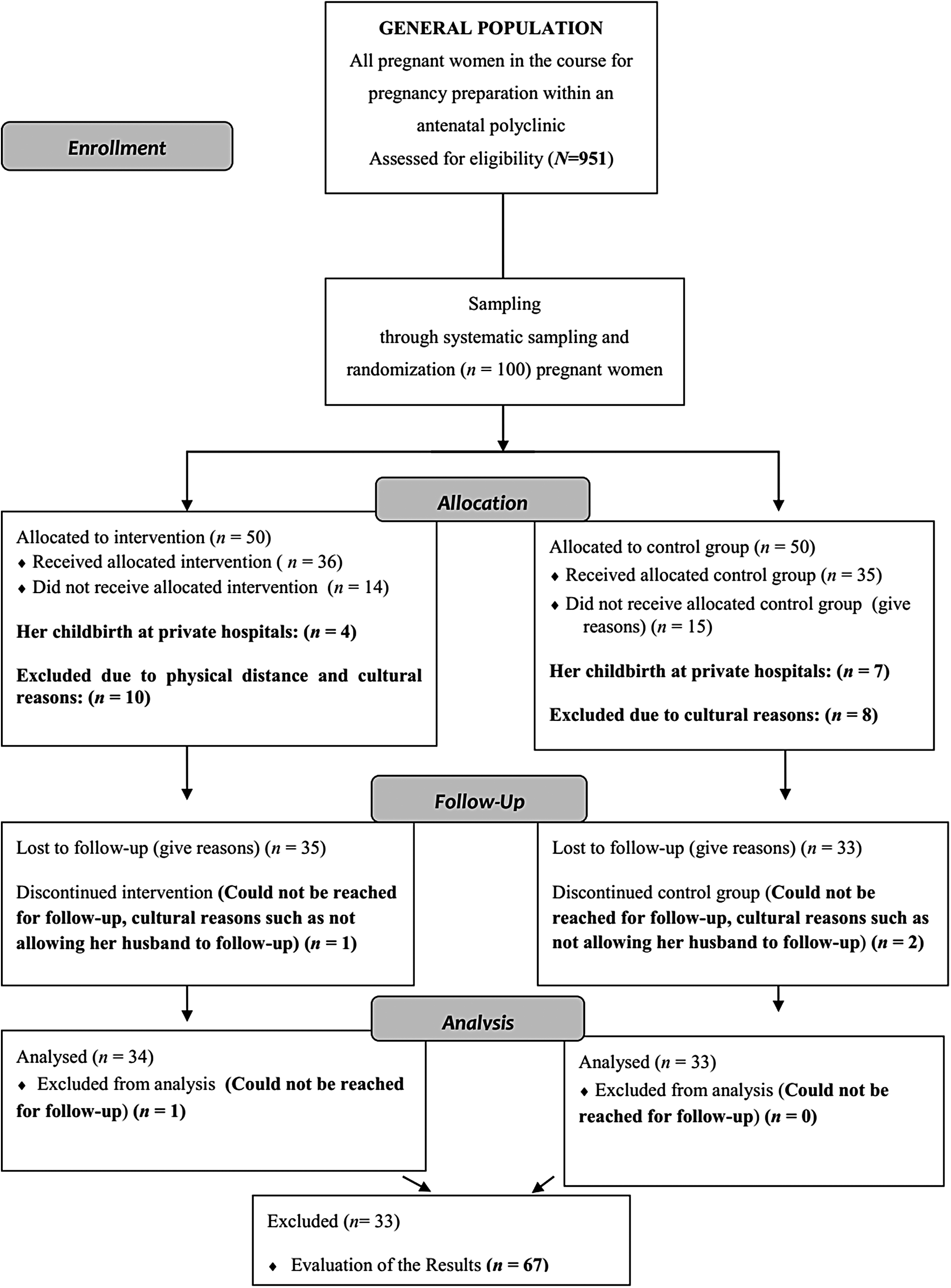
CONSORT guideline for the study.
Data analysis
The Statistical Package for Social Sciences (SPSS) for Windows, version 17.0 (SPSS, IL), was used to analyze the data.
The researchers used descriptive statistical methods (means, medians, numbers, and percentages) to evaluate the study data. The correlation between the groups' BSES and IBFAT scores was analyzed using the independent sample t test and ANOVA. The qualitative comparisons between the groups were made using Pearson's chi-square, continuity correction, and Fisher's exact tests. The researchers conducted an intent-to-treat analysis considering the missing cases and found no statistical difference.
The results were evaluated at the 95% confidence interval, and the threshold for significance was p < 0.05.
Ethical considerations
Approval was obtained from both the Ethics Committee of Usak University (local; ethical registration code: 54749836-050-01-03/26) and the hospital where this study was conducted. The oral and written consents of the pregnant women who volunteered to participate in the study were obtained after they were informed about the study.
Results
The sociodemographic characteristics of a total of 67 participants in the study (34 in the BMP group and 33 in the control group) and some other details regarding their pregnancies are shown in Table 1. The sociodemographic characteristics of the BMP and control groups were similar (Table 1).
p > 0.05; χ2, chi-square test.
BMP, breastfeeding motivation program.
The average ages of the pregnant women in the BMP and control groups were 22.62 ± 4.48 and 22.57 ± 4.33 years, respectively. It was observed that 94.1% of the pregnant women in the BMP group and 75.8% of those in the control group intended to breastfeed, but were worried about doing so. The concern about success in breastfeeding of the pregnant women in the BMP group was statistically significantly higher compared with the pregnant women in the control group (p = 0.045; p < 0.05). The women in the BMP group intended to breastfeed, but were more anxious about doing so than the control group.
The antenatal average score of the BMP group on the BMP Rating Scale was 9.05 ± 1.48 for perceived importance of breastfeeding and 8.12 ± 2.19 for self-confidence/self-efficacy in breastfeeding. In comparison, the antenatal average score of the control group on the BMP Rating Scale was 9.36 ± 1.93 for perceived importance of breastfeeding and 7.36 ± 1.19 for self-confidence/self-efficacy in breastfeeding.
The BMP Rating Scale scoring of the pregnant women in the antenatal period is summarized in Table 2.
Fisher's exact test.
p ≤ 0.05.
χ2, chi-square test; SD, standard deviation; t, independent sample t test.
It was found that 97.1% of the BMP group and 75.8% of the control group breastfed their infants within the first half hour of the first postnatal day; 26.5% of the BMP group and 54.5% of the control group had problems during their first breastfeeding experiences. The rate of giving supplementary food to the infants was 29.4% in the BMP group and 69.7% in the control group. The women in the BMP group started breastfeeding earlier, had fewer problems in breastfeeding, and gave less supplementary food (formula) to their infants compared with the women in the control group; the difference was statistically significant (p < 0.05; p < 0.01).
The study was completed with a total of 67 participants; 34 in the BMP group and 33 in the control group.
The breastfeeding characteristics of the participants on the first postnatal day are shown in Table 3.
Intent-to-treat analysis, considering the missing cases, found no statistical difference.
p ≤ 0.05.
χ2, chi-square test; BMP, breastfeeding motivation program; SD, standard deviation; t, independent sample t test.
The average score of the BMP group on the BMP Rating Scale between the fourth postnatal and sixth postnatal weeks was 10.00 ± 0.00 for perceived importance of breastfeeding and 10.00 ± 0.00 for self-confidence/self-efficacy in breastfeeding, while the average score of the control group was 9.85 ± 0.87 for perceived importance of breastfeeding and 8.36 ± 2.62 for self-confidence/self-efficacy in breastfeeding. The self-confidence/self-efficacy in breastfeeding average score of the BMP group was statistically higher compared with the control group (p < 0.01).
The average number of women who were breastfeeding daily was 13.76 ± 3.65 (8–24) in the BMP group and 12.67 ± 3.04 (7–20) in the control group between the fourth and sixth postnatal weeks, and this difference was not statistically significant (p > 0.05).
The rate of exclusive breastfeeding was 76.5% in the BMP group and 69.7% in the control group between the fourth and sixth postnatal weeks (p > 0.05). This was evaluated considering the last 24 hours at the time of the survey.
The average scores of the BMP group and the control group on the IBFAT between the fourth and sixth postnatal weeks were 11.26 ± 0.86 and 10.79 ± 1.32, respectively, and the difference was not statistically significant (p > 0.05).
Both the BMP and control groups had a statistically significantly higher average score on the BSES between the fourth and sixth postnatal weeks compared with their average scores during the antenatal period (p < 0.01; p < 0.001). No statistically significant difference was found between the average scores of the BMP and control groups on the BSES (p > 0.05).
The rate of exclusive breastfeeding in the fourth postnatal month was found to be 61.8% in the BMP group and 57.6% in the control group, a difference that was not statistically significant. This was evaluated considering the last 24 hours before the time of survey. The average weight and height of the infants in the BMP group were 6.89 ± 0.87 kg and 63.47 ± 2.80 cm, respectively; in comparison, the average weight and height of the infants in the control group were 7.05 ± 0.92 kg and 64.52 ± 3.55 cm, respectively, in the fourth postnatal month. Weight loss was observed in 11.8% of the infants in the MP group and 9.1% of the infants in the control group in the fourth postnatal month, a difference that was not statistically significant (p > 0.05).
Discussion
This study aimed to increase breastfeeding duration and frequency using a BMP based on Pender's HPM that was administered during pregnancy and the postnatal period. The study was also designed to determine the BMP effectiveness in supporting exclusive breastfeeding.
It has been stated that the support of health professionals, starting in the antenatal period and continuing during the early postnatal period, may increase the rate of exclusive breastfeeding in the first 6 months after birth.34–36 Dyson et al. 10 and Hannula et al. 37 found (in their systematic reviews on the effectiveness of professional support in breastfeeding) that interventions that started in the antenatal period and continued during the postnatal period were more effective. They emphasized that methods that used several education models instead of a single education model were more effective in ensuring successful breastfeeding.
In the present study, although no statistically significant difference was found between the BMP and control groups in terms of average scores on the antenatal survey of the perceived importance of breastfeeding and self-confidence/self-efficacy in breastfeeding, the groups' intention to breastfeed was significantly different. The concern about breastfeeding in the BMP group was statistically significantly higher than the control group. In the end, the women in the BMP group, who intended to breastfeed, but were more concerned about doing so than the women in the control group, were provided with an advantage.
Previous studies have indicated that mothers should start breastfeeding within the first postnatal half hour to hour for the adequacy and continuity of human milk.35,38 In the present study, the rate of starting breastfeeding within the first 30 postnatal minutes was higher in the BMP group (97.1%) than in the control group (75.8%). This difference between the groups was statistically significant. However, unlike the findings of the present study, Duran et al. 39 and Onbaşı et al. 36 did not find a statistically significant difference between the groups in their study. In the present study, the rate of women starting breastfeeding soon after birth was higher than that found in previous studies and in the TDHS (2013) 15 data (50%). This finding may be attributed to the effectiveness of the motivation program.
Avoiding problems in the first breastfeeding experiences affects the continuity of breastfeeding thereafter. 4 Li-Yin et al. 40 gave breastfeeding education between the antenatal 20th and 36th weeks and analyzed its effectiveness in the first 3 days and 1 month after birth in Taiwan. They found no statistically significant difference between the experimental and control groups in terms of having problems during breastfeeding on the third postnatal day. The present study found different results for this measure, however. The BMP group had fewer problems in breastfeeding than experienced by the control group, probably because breastfeeding education started during the late pregnancy period (in the 32nd gestational week). On the first postnatal day, the women had more recently received the information and were thus more motivated.
Feeding infants with human milk as their first nutritional source means a healthy start to their life. 11 Onbaşı et al. 36 and Duran et al. 39 both found the rate of infants who were breastfed first to be significantly higher in the experimental group (95.7% and 95.6%, respectively) than in the control group. These findings were similar to the findings of the present study. It can be concluded that the BMP may be effective in supporting women in the initiation of breastfeeding.
Our randomized controlled study highlighted that the average scores of perceived importance of breastfeeding and self-confidence/self-efficacy in breastfeeding of the participants increased after the BMP. Likewise, Chezem et al. analyzed the effect of breastfeeding knowledge, mothers' self-confidence in breastfeeding, and intent to breastfeed and reported that these three factors significantly affected breastfeeding results. In the present study, the average score of self-confidence/self-efficacy in breastfeeding of the women in the BMP group was statistically significantly higher compared with the women in the control group between the fourth and sixth postnatal weeks. These findings were similar to the findings of Chezem et al. 41
The IBFAT evaluates the adequacy of breastfeeding in each feeding. Loke and Chan 42 found a significant difference between the average scores of the experimental and control groups on the IBFAT. In the current study, it can be concluded that the participants became more skillful and adapted to breastfeeding as their infants grew.
Supporting self-efficacy in breastfeeding is one of the basic principles of the motivation program. Self-efficacy is a key factor in facilitating change.19,21,43 It has also been stated that high self-efficacy in breastfeeding significantly affects sustaining the practice.9,44 Loke and Chan 42 found that the mothers' high self-efficacy level had an important effect on exclusive breastfeeding for the first 6 months, with a statistically significant difference between the experimental and control groups. A study in Australia evaluated self-confidence in breastfeeding and other feeding methods being used for neonatal infants through phone calls and the BSES in the last trimester of pregnancy. This Australian study found an increase in the breastfeeding self-efficacy scores from the first postnatal week to the fourth month, with a significant difference between the experimental and control groups. 45 In the present study, the statistically significant increase in the average BSES scores of both the BMP and control groups in the fourth to sixth postnatal weeks might suggest that breastfeeding education in the hospital where this study was conducted was effective.
Wilhelm et al. 14 found no statistically significant difference between the experimental and control groups in terms of the average breastfeeding duration for the first 6 months after birth in their randomized controlled study, which aimed to encourage continuous breastfeeding. Wilhelm et al. 24 conducted a similar study on Mexican American mothers. They performed a motivation program on the third postnatal day, in the second and sixth weeks, and in the sixth month (through phone calls) and found no statistically significant difference between the groups in terms of breastfeeding duration. Rudder et al. 5 also performed motivation programs in the second, fourth, and sixth postnatal months in their randomized controlled study, which aimed to increase exclusive breastfeeding in Australia. They evaluated the rates of exclusive breastfeeding in the fourth and sixth postnatal months and found no statistically significant difference between the experimental and control groups. Similar to these studies, we found no statistically significant difference in rate of exclusive breastfeeding between the BMP and control groups in the present study in the fourth postnatal month. The findings of the present study may be associated with the fact that the mean breastfeeding duration is 17 months in Turkey. 15
Conclusion
The findings of this study suggest that a motivation program based on Pender's HPM can be successful in supporting and maintaining exclusive breastfeeding.
The limitations of the study are as follows:
Pregnancy information and data on breastfeeding issues were gathered through the participants' self-reporting. The descriptive information about deliveries and newborns was taken from the physicians' observation dossier. There were a number of missing cases (n = 33).
The study was limited to pregnant women who agreed to participate in the study at the relevant hospital. Future research should be conducted with larger samples.
Footnotes
Acknowledgment
The authors received no financial support for the research, authorship, and/or publication of this article.
Disclosure Statement
No competing financial interests exist.