




Abstract
Background:
Human milk (HM) is the ideal food for newborn (NB) nutrition, it provides all macro and micronutrients for human growth and development and also contains bioactive compounds, which influence the development of the neonatal digestive and immune systems. The holder pasteurization process is essential to prevent NB infection from donated milk. Therefore, the aim of this study was to check whether or not holder pasteurization could impact the concentration of immune components in HM and the capacity to induce epithelial cell growth.
Materials and Methods:
The study was performed on raw and holder pasteurized (62.5°C/30 minutes) paired milk samples after submission to the freezing process in both phases. For cytokine and adipokine measurements, ELISA was performed on 40 individual samples of HM from single donors. For analyzes of epithelial cell growth, HuTu-80 cells were cultivated in Minimum Essential Eagle medium with 15% of raw or pasteurized milk, eight pairs of milk were used.
Results:
The results showed that no alteration was observed in the concentration of cytokine after milk holder pasteurization, and leptin concentration was reduced in holder pasteurized milk. The heat treatment also did not impact the capacity of breast milk to promote intestinal epithelial cell growth.
Conclusions:
The results showed that donated breast milk pasteurization has a small impact on the HM bioactive concentration compounds. This technique is important to avoid NB infection.
Introduction
Human milk (HM) covers a wide range of functional compounds, including immunoglobulins, oligosaccharides, cytokines, and chemokines, which influence the development of the neonatal digestive and immune system.1,2
As soon as the children are born, they are considered immune-physiologically immature and susceptible to several infections. Thus, early contact with HM is essential to provide passive immune protection derived from the maternal immune load. HM promotes the stimulation of epithelial gut maturation and the differentiation of effector cells in the newborn (NB). Also, it stimulates the production of digestive enzymes, decrease the NB intestinal permeability, bacterial translocation, and endotoxin uptake, thus helping to prevent the development of necrotizing enterocolitis (NEC), especially in preterm infants.1,3–5
However, the permanence of NB in the neonatal intensive care units, and the impossibility of direct suction to the mother's breast may cause greater difficulty for these mothers to extract HM to supply their own child. 6 Alternatively, there is milk for donation in the human milk banks (HMB), this milk comes from mothers who produce more than enough. 7
Since HM is a biological fluid, it is susceptible to contamination. To avoid contamination or pathogen transference, holder pasteurization is performed as a safety method validated to inactivate the most harmful pathogens worldwide.7,8 Although there is already evidence that the method of holder pasteurization at a high temperature for a short time can also be used, demonstrating that it can effectively pasteurize HM, and still obtain a product with better retention of secretory IgA content and activity of lipase stimulated by bile salts, it still needs to be widely studied. 9
However, some factors appear to have reduced concentration after holder pasteurization, including immunoglobulins IgG, IgM, and IgA.10,11 Other factors also appear to have reduced concentration after holder pasteurization such as interferon-gamma (IFN-γ), tumor necrosis factor-α, interleukin 4 (IL-4), and hepatocyte growth factor. 8 Even with already published data, in vivo data about potential effects of this decrease on infants fed pasteurized in comparison to raw milk remains to be confirmed. These potential effects include, for example, losing immunobiological components, hormonal factors, and compounds that promote the proliferation of the child's intestinal epithelium.
Thus, this study aims to assess changes in the concentrations of cytokines (IL-10, IFN-γ, IL-4, and IL-17) and adipokines (leptin, adiponectin, and resistin) present in raw HM after the holder pasteurization process, and also verify the influence of holder pasteurization on milk ability to induce intestinal epithelial cell growth.
Materials and Methods
Sample collection
This study evaluated 96 samples of HM from suitable donors recommended for donation, obtained from a reference HMB in Minas Gerais State. All donations of HM originated from term deliveries and during the lactation period that characterizes mature milk. The samples were delivered frozen at the HMB, which performed the defrost, selection, and classification of the samples for holder pasteurization within a maximum period of 15 days after extraction from the donor.
The samples were composed of duplicates: prepasteurization (raw) (n = 48) and postpasteurization (n = 48), from the same donor, in 5 mL of volume each. The raw samples referred to the HMB that was collected manually or with the aid of extraction pumps by the donor at home, obeying the guidelines for hand hygiene and caution for extraction. The milk was subsequently frozen in glasses with plastic lids and transported to the HMB under a cold chain, that is, the products are kept frozen from collection to consumption, to prevent chemical, physical–chemical, microbiological, and immunological changes.
For holder pasteurization, the water bath for pasteurization of the brand Eme Equipamentos, model ABL-65, was used, in which after reaching the temperature of 62.5°C, the samples were added and remained in this for 30 minutes, being stirred every 5 minutes. After the 30 minutes related to the thermal lethality, the bottles were cooled until the HM reached a temperature equal to or below 5°C. This process consists of the thermal inactivation of 100% of the pathogenic microorganisms that could be present in the HM, since it exposes its contents to a temperature below to boiling point and then to sudden cooling. After the pasteurization process, the samples were again frozen and stored for 5 months, at which point the tests were carried out.
Before all testing, the samples were thawed at 4°C, then centrifuged at 500 g for 10 minutes in a refrigerated centrifuge at 4°C. Since the milk content is heterogeneous, after centrifugation it was easier to distinguish between the cream portion, supernatant, and cellular pellet. The cell pellet and cream were discarded, and the supernatant was aliquoted for analysis. To measure cytokines and adipokines, 40 pairs of samples (80) were used, and for the intestinal epithelial cell cultivation, 8 pairs (16) were used.
All steps in this study were performed according to the Ethics Committee approval at Universidade Federal de Minas Gerais under the code 76768017.7.0000.5149.
Measurement of cytokines and adipokines in HM
The concentration of adipokines and cytokines in the HM samples was measured by enzyme-linked immunosorbent assay (ELISA), using kits from the R&D Systems brand (Minneapolis, MN) following a protocol according to the manufacturer's instructions. The cytokines and adipokines measured were IL-4, IL-10, IL-17, IFN-γ, adiponectin, resistin, and leptin. A preliminary test was carried out to find the best dilution for the test. Thus, we chose to evaluate IL-10, IL-4, IL-17, IFN-γ, and leptin without performing sample dilution, while adiponectin and resistin using the dilution of 1:5. The final analysis of the ELISA data was performed using Prisma software. To test the normality of the samples, we used the D'Augustino–Pearson omnibus normality test. The samples did not assume a normal distribution. To check the differences between pre- and postholder pasteurization, we used the no-paired Wilcoxon matched-pairs test. The statistical significance was assumed when p < 0.05.
Evaluation of the viability of intestinal epithelial cells cultured in the presence of HM
Supernatants from raw and holder pasteurized HM samples were used to evaluate the viability of intestinal epithelial cells cultured with milk. Human duodenal epithelial cells, HuTu-80, were used for this. The medium to cultivate the cells was the Minimum Essential Eagle (E-MEM) medium (GIBCO, Waltham, MA) with 15% HM, raw or pasteurized. As a control, the cells were cultured in E-MEM with 15% fetal bovine serum (FBS), the initial cell concentration was 1 × 10⁵/mL cultivated in 96-well culture plates. Carboxyfluorescein succinimidyl ester dye was added to the culture to check cell proliferation. The cells were incubated at 37°C in 5% carbon dioxide/95% air in a humidified incubator for 96 hours. Cell proliferation was evaluated by flow cytometry (FACSCalibur, BD Biosciences) and the results were expressed in the percentage of proliferation index.
To calculate the number of live cells, they were counted in a Newbauer chamber stained with 0.4% Tripan blue, at an optical microscope at a 40-fold magnification. It was possible to view and manually count the total number of viable cells in the cultures. The counts were performed by two researchers trained for this procedure.
Statistical analyzes were performed using the paired two-tailed Mann–Whitney test, through a comparative analysis between pre- and postpasteurization samples with normal and abnormal distribution evaluated by the D'Augustino–Pearson omnibus normality test. The statistically significant results were shown by p < 0.05.
Results
Hold pasteurization partially influence the concentration of cytokines and adipokines in breast milk
Cytokines are soluble proteins of low to medium molecular weight. Thus, to verify whether holder pasteurization could cause changes in the concentration of cytokines in HM, ELISA tests were performed for cytokines IL-4, IL-10, IL-17, and IFN-γ in raw and holder pasteurized HM. Cytokines were selected according to their representativeness within the differentiation of human T cells, IL-4-Th2, IL-10-regulatory cells, IL-17-Th17, and IFN-γ-Th1.
Upon analysis, we can infer that holder pasteurization partially influenced the concentration of immune compounds in breast milk, it can be seen in Figure 1 that there was no change in the concentrations of cytokines evaluated after the holder pasteurization of HM, while Figure 2 already shows changes in the composition of adipokines.
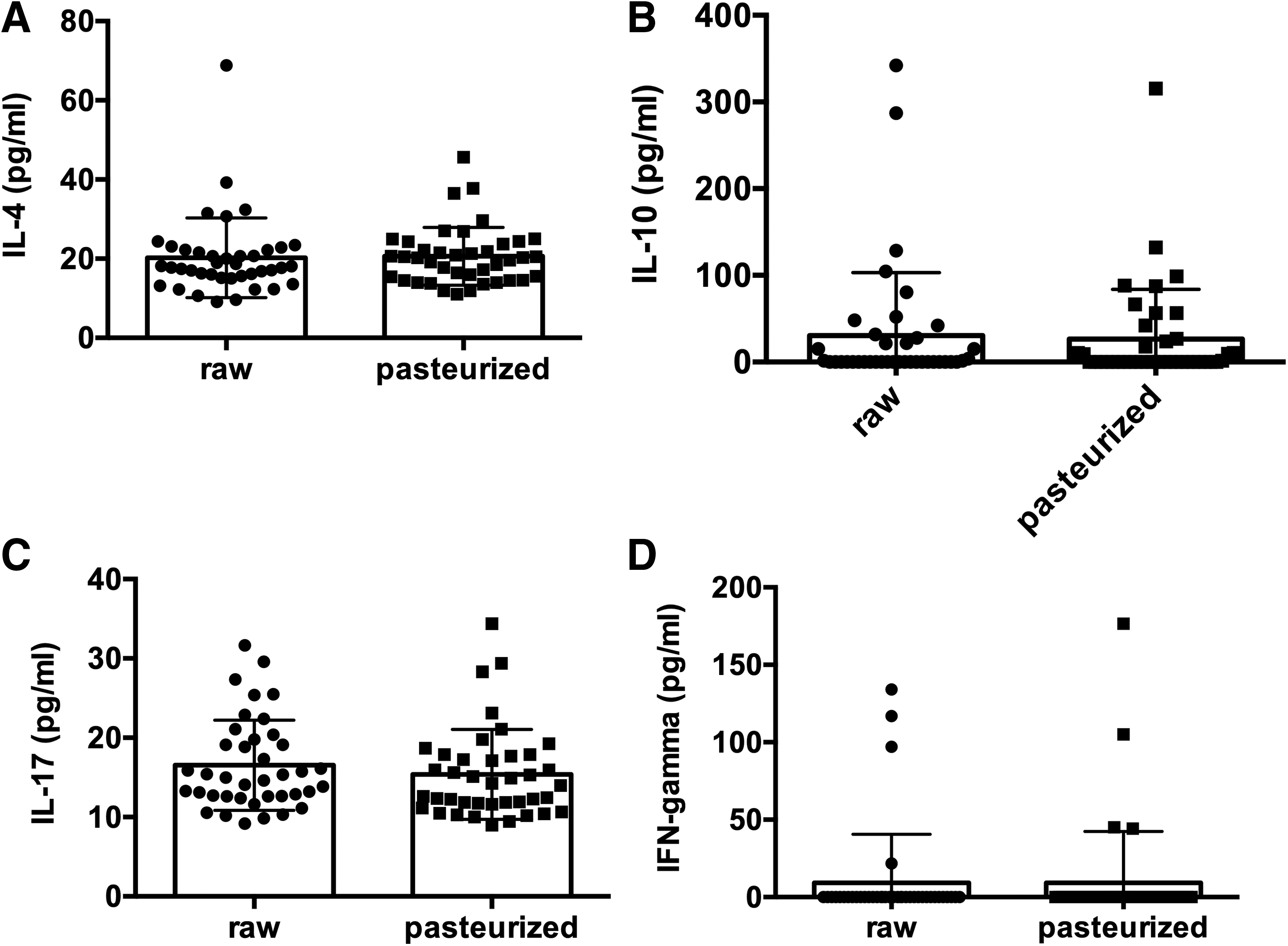
HM pasteurization did not decrease cytokine concentration. Milk samples were donated by HMB in pasteurized and raw milk pairs. Samples were centrifuged and the supernatants were collected without debris or cream part. The cytokines were measured by ELISA according the fabricant instructions.
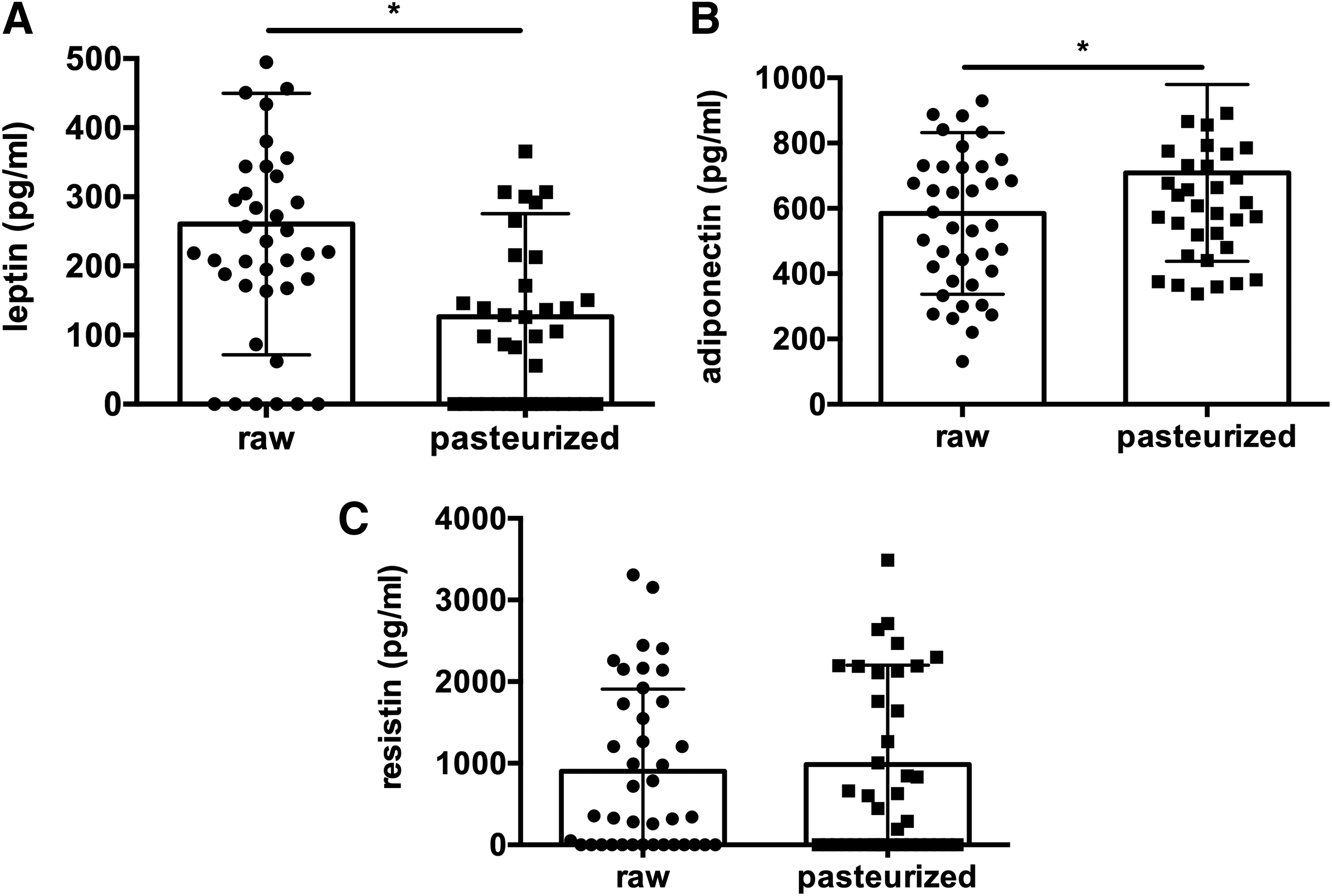
HM pasteurization partially decreases adipokines concentration. Milk samples were donated by HMB in pasteurized and raw milk pairs. Samples were centrifuged and the supernatants were collected without debris or cream part. The adipokines were measured by ELISA according the fabricant instructions. To measure resistin and adiponectin samples were diluted 1:5.
Breast milk holder pasteurization does not affect the viability of gut epithelial cells in vitro
HuTu-80 cells were cultured in the presence of raw or pasteurized HM to assess whether holder pasteurization would interfere with the milk's ability to maintain the growth of these cells. Thus, the cells were incubated in a culture medium containing 15% of raw or pasteurized breast milk. As a control of cell growth and proliferation, 15% FBS was used. As seen in Figure 3A and B, the percentage of cell survival after 96 hours of culture was similar when comparing raw and holder pasteurized milk. The 96 hours marker was used after tests that evaluated growth rates in a standard medium, with potential growth being observed during this period. The rate of cell proliferation was also no different between cells incubated with raw milk or holder pasteurized milk (Fig. 3C). These data suggest that holder pasteurization of breast milk does not impact the milk's ability to favor the growth of the intestinal epithelium cells.
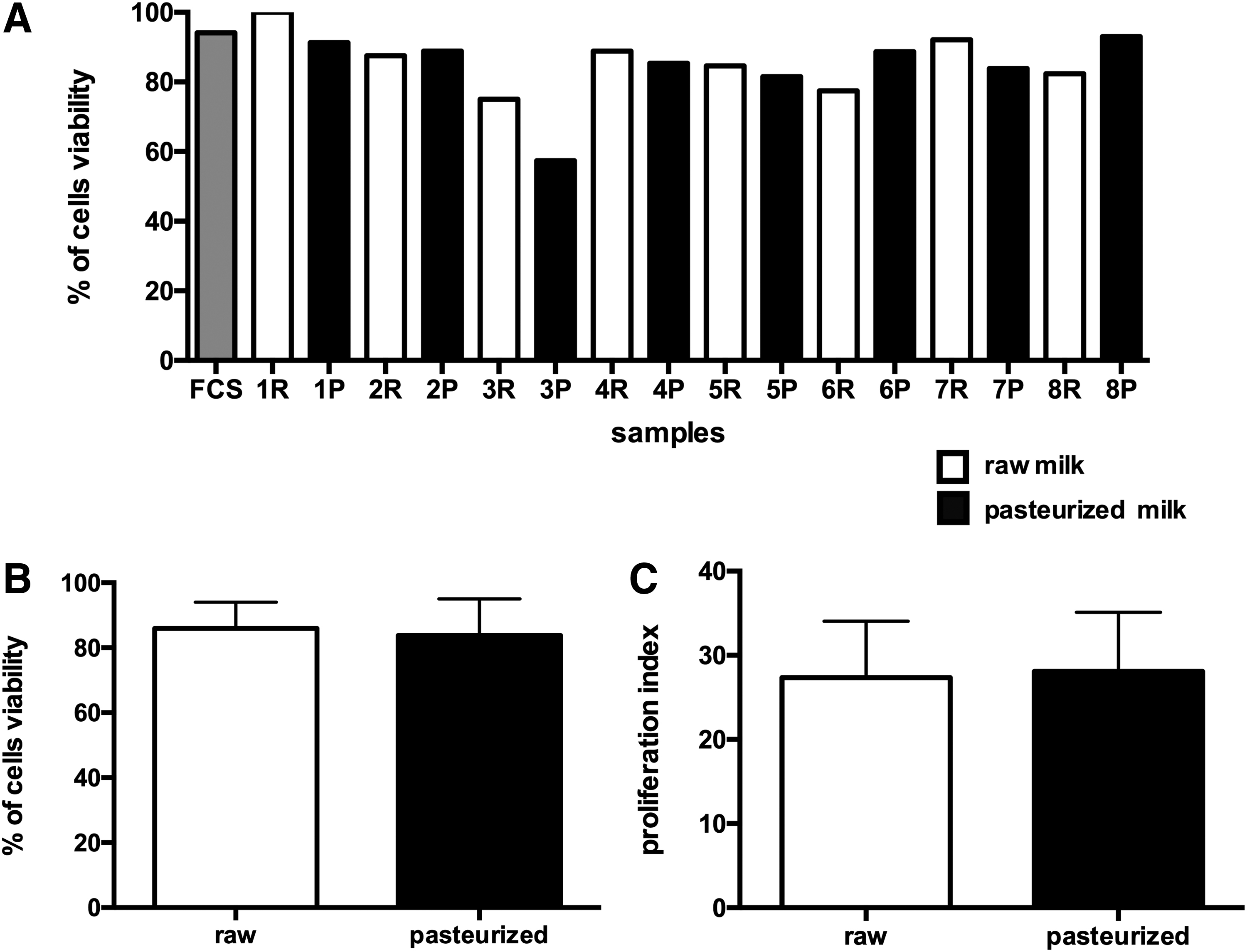
Pasteurization does not impair HM intestinal cell growth induction in vitro. HuTu-80 cells (human intestinal epithelial cells) were cultivated at 1 in EMEN with 15% of HM raw or pasteurized for 96 hours. The initial cell concentration was 1 × 10⁵/mL. The cells received 1:1,000 of CFSE to label the cells under proliferation.
Discussion
The results of this study suggest that holder pasteurization does not compromise the concentration of the cytokines tested, but partially interferes with the composition of adipokines. In addition, holder pasteurization showed to have no impact on the milk's ability to maintain viability and proliferation of intestinal epithelial cells.
Similar results regarding cytokine stability have been demonstrated previously in the work of Espinosa-Martos et al. in relation to the holder pasteurization. 12 The results suggested that the components of immune system present in HM, even in the donor, can be especially protective to the NB during the first weeks of life, especially in the case of babies with low birth weight or extreme prematurity.
In the NB period, differential microbial colonization is related to weeks of gestation and mode of delivery, 13 and also to the type of feeding instituted. 14 Thus, HM supply has been associated with reduced risk of NEC, better digestibility, immune maturation, and development of the intestinal mucosa. 15
Considering the physiological conditions of immunological immaturity present in NB, especially premature infants, the possibility of transferring biologically active compounds from HM is essential even when it is not obtained from the own mother. HM has substantial benefits in terms of improving growth and cognitive development, and in modulating metabolic and inflammatory conditions in childhood and adulthood.1,16
The adipokines present in milk have a primary function in the body's metabolic regulation. The concentration of leptin in HM appears to vary with the circadian cycle, 17 and leptin and adiponectin are related to the prevention of obesity in children. 18 Resistin, on the other hand, is related to increased obesity and glycemic control, 19 but its role in breast milk and the development of the NB has not been well described.
In this study, as shown in Figure 2, it can be seen that there was a reduction of ∼50% in the concentration of leptin (Fig. 2A) after holder pasteurization, and a slight increase of ∼20% in the concentration of adiponectin (Fig. 2B). Resistin showed less variation in its levels regardless of the holder pasteurization process (Fig. 2C). Only a few studies describe the effect of holder pasteurization on the presence or functional activity of adipokines in breast milk. This study added that resistin appears to be more stable to holder pasteurization compared with other adipokines.
The work by Newburg et al. 20 demonstrates that in infants serum adiponectin is significantly related to adiponectin concentrations in the milk consumed, suggesting its transport through the human intestinal mucosa. In addition, it has biological relevance due to the inversely established relationship between milk adiponectin concentrations and baby adiposity, which refers to the association between the receipt of HM and the reduced risk of adiposity in the long run. 20
In contrast, leptin levels were significantly reduced after the holder pasteurization process. The study by Vass et al. found that in unpasteurized samples, leptin levels are almost three times higher in the milk of mothers of premature babies than in donated milk that went through the holder pasteurization process. 21 Studies of umbilical cord blood demonstrate that fetal leptin levels increase with advancing pregnancy, since only after 32 weeks the fetus begin to accumulate significant amounts of adipose tissue, having its own circulating levels of leptin. Thus, delivery before 32 weeks can deprive the baby of the maternal and placental supply of leptin before the endogenous production increases causing its deficiency.22,23 In this case, supplying this adipokine via HM is also essential, while feeding via infant formula does not promote the addition of this component.
Immaturity at birth can also be found in the neonatal intestine. Thus, the HM is able to provide soluble maternal factors and immunologically active milk cells that promote the maturation of the intestinal epithelium, reinforcing the importance of early onset of contact with this content. 24
To analyze the effect of holder pasteurization on the HM ability to continue favoring the maturation of the intestinal epithelium, we used well-validated in vitro models to investigate intestinal epithelial cells. The HuTu-80 cells used in this study are cells derived from the human duodenal epithelium and used in in vitro experiments to access functions and viability of the intestinal epithelium. 19 Given the results found, we can say that the donated HM appears to not have a reduced capacity to induce cell proliferation after pasteurization when compared with raw milk, suggesting that HM continues to promote the maturation of intestinal epithelial cells after undergoing thermal treatment. These results demonstrate that our findings have applicability. They suggest that the HM after holder pasteurization keeps its capacity to promote the development of NB intestine. However, caution always must be shown when extrapolating data from in vitro cell lines to the human in vivo situation.
The intestinal mucosa provides physical, chemical, and immune barriers to block and regulate the passage of luminal contents to the interstitial submucosal tissue. For children who are born with high intestinal permeability because of immature tight junctions, allowing the transfer of cells and growth factors present in HM, it is important to promote effective maturation of the immune system of the NB intestinal mucosa. However, the highly intestinal permeability in NB also allows the outcomes of infectious diseases. 24 For this reason, it is essential to feed the neonate with HM, either raw or pasteurized. Proliferative bioactivity was approximately equivalent in the form of pasteurized HM and control, showing that relevant bioactive molecules present in milk are preserved after pasteurization.
Some studies showed the importance of HM in promoting epithelial cell growth in vitro. Using different cell linage, it was possible to demonstrate that the concentration of growth factors such as transforming growth factor-β, 25 vascular endothelial growth factor, 26 and extracellular vesicles 27 from HM are important to promote intestinal cells proliferation and NEC prevention in vitro and in vivo. The studies demonstrated that even after some milk processing, it still has the capacity to promote intestinal development.
The window in which the NB is more susceptible to these pathogenic lesions is the first days outside the uterus, since they are exposed to numerous microorganisms, among them those of a pathogenic character. These first days are also those in which the greatest immaturity of the mammary gland for milk production and ejection and its inhibition caused by stress and anxiety regarding the NB's health status, which may result in low milk production and greater difficulty in supplying their own milk at this time. 28
This study suggests that offering pasteurized HM could provide protection similar to that offered by the mother's own milk, with regard to the protection of the baby's intestinal mucosa, favoring and contributing to the establishment of an alternative for health promotion and disease prevention. 15 Sullivan et al. suggest that the exclusive use of HM can result in a lower incidence of NEC. 29 However, this protocol is still little used in Brazil for direct treatment of NB, since many hospitals use formulas that mimic the main components of milk, but the formulas do not have the bioactive compounds. In addition, the use of infant formulas and the treatment of NBs affected by NEC generates a substantial cost in the treatment of these patients when compared to the cost-benefit that HM provides.
Thus, the findings of this study suggest that there are still varying results regarding the concentrations of immunological components present in HM after heat treatment with little or no influence on the concentrations of cytokines and growth factors, which guarantees the NB the passive transfer of immunity during the first day of life without causing infections.
Conclusions
The results showed that HM holder pasteurization did not affect the concentration of the cytokines, and little alterations occurred in adipokines. Also, hold pasteurized HM did not impact the intestinal epithelium cell growth in vitro, suggesting the beneficial effects of donated milk to the NB that cannot receive milk from their mothers.
Footnotes
Acknowledgments
The authors would like to thank the Maternidade Pública Odete Valadares—BH/MG, for milk sample donation.
Disclosure Statement
No competing or financial interests exist.
Funding Information
This work received financial support from Fundação de Amparo a Pesquisa de Minas Gerais (FAPEMIG) and Pró-Reitoria de Extensão da Universidade Federal de Minas Gerais (PROEX/UFMG).