




Abstract
Background:
Granulomatous lobular mastitis (GM) is a rare inflammatory breast disease. Reports focusing on GM caused by antipsychotic-induced hyperprolactinemia (HPRL) are very rare.
Aim:
To report a study of GM associated with antipsychotic-induced HPRL and discuss the mechanism and management.
Materials and Methods:
A retrospective review of patients with GM and psychiatric disorders were carried out. The clinical characteristics, management and outcome were collected and analyzed. The relationship between antipsychotics and GM was evaluated using the Naranjo Adverse Drug Reaction Probability Scale (Naranjo scale).
Results:
Nineteen female GM patients with psychiatric diseases, aged 21–39 years, who had received antipsychotics for 0.5–10.2 years were included. Most patients took multiple antipsychotics, and 10 (52.6%) took risperidone-containing regimens. Increased prolactin (PRL) was detected in all patients (range 35.15–200 ng/mL). The scores of Naranjo scale were 7–8, indicated the antipsychotics probably induced GM. All patients received systemic therapy, and were prescribed bromocriptine. Seven patients (36.8%) decreased the dose of antipsychotics, six (31.6%) switched antipsychotics, three (15.8%) continued the primary antipsychotics, and three (15.8%) discontinued antipsychotics. In addition, 14 patients (73.7%) received corticosteroid, 4 (21.1%) received antimycobacterials. PRL decreased to normal in 1 month. Seven patients (36.8%) received excisional surgery. After 12 months' follow-up (range 9–56 months), only three patients (15.8%) had a recurrence.
Conclusion:
Long-term use of antipsychotics may increase PRL levels, and lead to GM. It is vital to assess PRL level and reduce PRL to normal in patients with GM.
Introduction
Granulomatous lobular mastitis (GM) is a rare chronic inflammatory lesion of the breast. The clinical presentation of GM is usually a palpable tender, erythematous breast mass with an abscess or chronic fistula. 1 The clinical and radiological features of GM sometimes mimic malignant disease. 1 Core needle biopsy is usually required to exclude inflammatory breast cancer and other benign inflammatory breast diseases. The etiology of GM is unknown, but growing evidence suggests that a variety of factors, including rare microbial species (such as Corynebacterium kroppenstedtii), breast trauma, hormonal effects, hyperprolactinemia (HPRL) and immunologic disorders, play an important role in the occurrence of GM.2–5
Increased prolactin (PRL) levels in nonpregnant women have been proposed as one of the causes of GM.2,3 PRL-secreting tumors and certain drugs can induce HPRL. 6 HPRL due to antipsychotics is commonly encountered in clinical practice. However, there are only a few case reports focused on GM induced by antipsychotic-induced HPRL, but no observational or prospective study. Here, we report the first observational study on GM associated with antipsychotic-induced HPRL and discuss the mechanism and management of the special condition.
Materials and Methods
The medical record database in our hospital was searched retrospectively for patients with GM and psychiatric disorders between January 2015 and January 2021. Demographic features, clinical, and pathological characteristics of patients with GM were retrieved from the database. The management, follow-up, and outcomes were recorded. Telephone interviews were also conducted for more information. The clinical data of the patients were summarized by descriptive analysis.
The Naranjo Adverse Drug Reaction Probability Scale (Naranjo scale) was used to evaluate the relationship between antipsychotics and GM. Total scores of Naranjo scale range from −4 to +13, and the reaction is considered definite if the score is 9 or higher, probable if 5 to 8, possible if 1 to 4, and doubtful if 0 or less. 7 Signed informed consent was provided by all patients, and the study was approved by the Ethics Committee of our hospital.
Results
Nineteen patients diagnosed as having GM with a history of psychiatric disorders from January 2015 to January 2021 were included in this study. Table 1 shows the clinical characteristics of these patients. All patients were female, and the median age was 32 years (range 21–39 years). Most patients had normal body mass index, but two (10.5%) were greater than 28, which is considered obese. The patients presented with a variety of signs and symptoms, but the chief complaint was a painful breast mass (Fig. 1). Other symptoms included breast erythema, skin edema, breast abscess, and fistula. Physical examination showed that the median diameter of the breast mass was 6 cm (range 3–17 cm), and 17 patients (89.5%) had breast abscess.
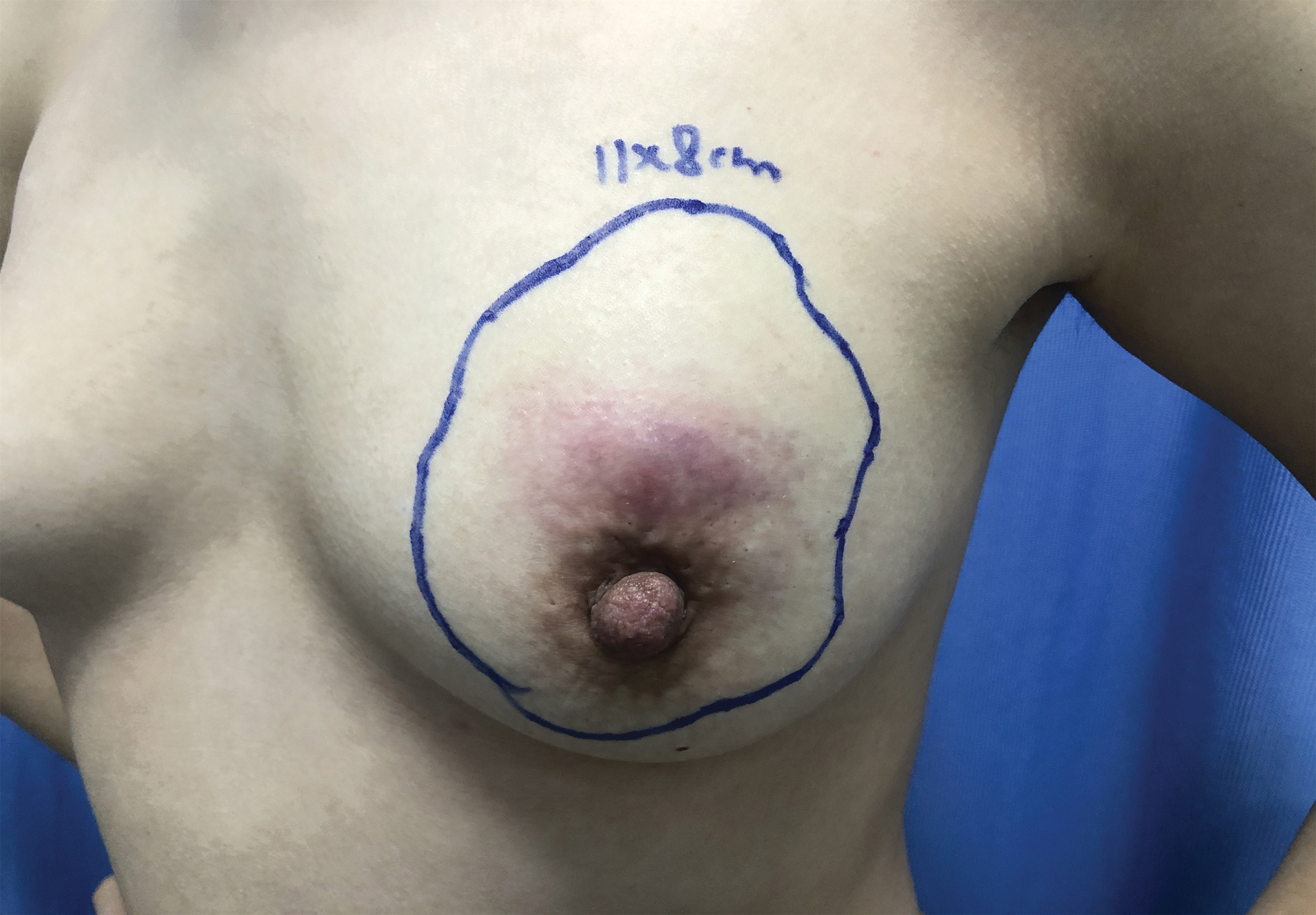
A 30-year-old female with schizophrenia, took risperidone and clozapine for 2 years, suddenly presented erythema and painful mass in the upper area of left breast.
Clinical Characteristics of Patients Diagnosed with Granulomatous Lobular Mastitis Associated with Antipsychotics-Related Hyperprolactinemia
Four patients (21.1%) had mild inverted nipple and two (10.5%) had nipple discharge. Ultrasound showed hypoechoic masses with irregular and blurred borders, inhomogeneous characteristics, sometimes penetrating the skin and subcutaneous tissue, and skin thickening with subcutaneous edema (Fig. 2). All patients had negative bacterial cultures. All patients underwent core needle biopsy, and the pathological diagnosis was GM.

Ultrasound showed hypoechoic masses with irregular and blurred borders, penetrating the skin and subcutaneous tissue.
No history of fever, recent breast trauma, or breast surgery was reported by the patients. Two patients (10.5%) smoked occasionally. Four patients (21.1%) used oral contraceptives temporarily, but none of them had a history of long-term oral contraceptive use. Five patients (26.3%) had no history of childbirth. None of the patients had a personal or family history of breast cancer. All 19 patients had a history of psychiatric disorders, including 13 schizophrenia, 4 depression, and 2 paranoia. These patients had taken antipsychotics for a median of 3.5 years (range 0.5–10.2 years).
Most patients took multiple antipsychotics, including risperidone, clozapine, olanzapine, ziprasidone, quetiapine, aripiprazole, and sulpiride. Ten (52.6%) of them took the regimens containing risperidone. Serum PRL level was examined when the patient was suspected to have GM, and result showed that the median PRL level was 74.69 ng/mL (range 35.15–200 ng/mL), which was above the normal range (2.8–29.2 ng/mL in our hospital). Seven patients (36.8%) had mild HPRL (PRL <50 ng/mL), and 12 (63.2%) had moderate-severe HPRL (PRL ≥50 ng/mL). Three patients whose PRL levels were near or higher than 100 ng/mL underwent pituitary magnetic resonance imaging, and the results showed no hypothalamic disease or prolactinoma.
The management and outcome of these patients are summarized in Table 2. All patients received systemic therapy. Four patients (21.1%) received levofloxacin hydrochloride for 2 weeks in acute inflammation stage, but there was no significant improvement. Seventeen patients with breast abscess underwent aspiration. All 19 patients were prescribed a dopaminergic agonist (bromocriptine), 3 patients discontinued the antipsychotic and refused treatment with the exception of aspiration and bromocriptine. Seven patients (36.8%) decreased the dose of antipsychotics, six (31.6%) switched antipsychotics, three (15.8%) continued the primary antipsychotics, and three (15.8%) discontinued antipsychotics.
Management and Outcome of Patients Diagnosed with Granulomatous Lobular Mastitis Associated with Antipsychotics-Related Hyperprolactinemia
In addition, 14 patients (73.7%) received corticosteroid-containing regimens (methylprednisolone 20 mg/day), 4 (21.1%) received antimycobacterial therapy (rifampicin 0.45 g, isoniazid 0.3 g, pyrazinamide 0.75 g/day). PRL levels in all patients decreased to normal in 1 month.
Following local control of the disease, seven patients (36.8%) underwent excisional surgery (Figs. 3 and 4). None of the patients received mastectomy. The median time to complete remission was 5 months (range 3–18 months). The median follow-up time was 12 months (range 9–56 months), all patients had complete remission, but two patients who continued the primary antipsychotics and one patient who refused treatment with the exception of aspiration and bromocriptine had a recurrence. They decreased the dose of antipsychotics, added aripiprazole, took bromocriptine and corticosteroid, and gained complete remission finally. The scores of the Naranjo scale were 7–8, which indicated that the antipsychotic agents probably induced GM.
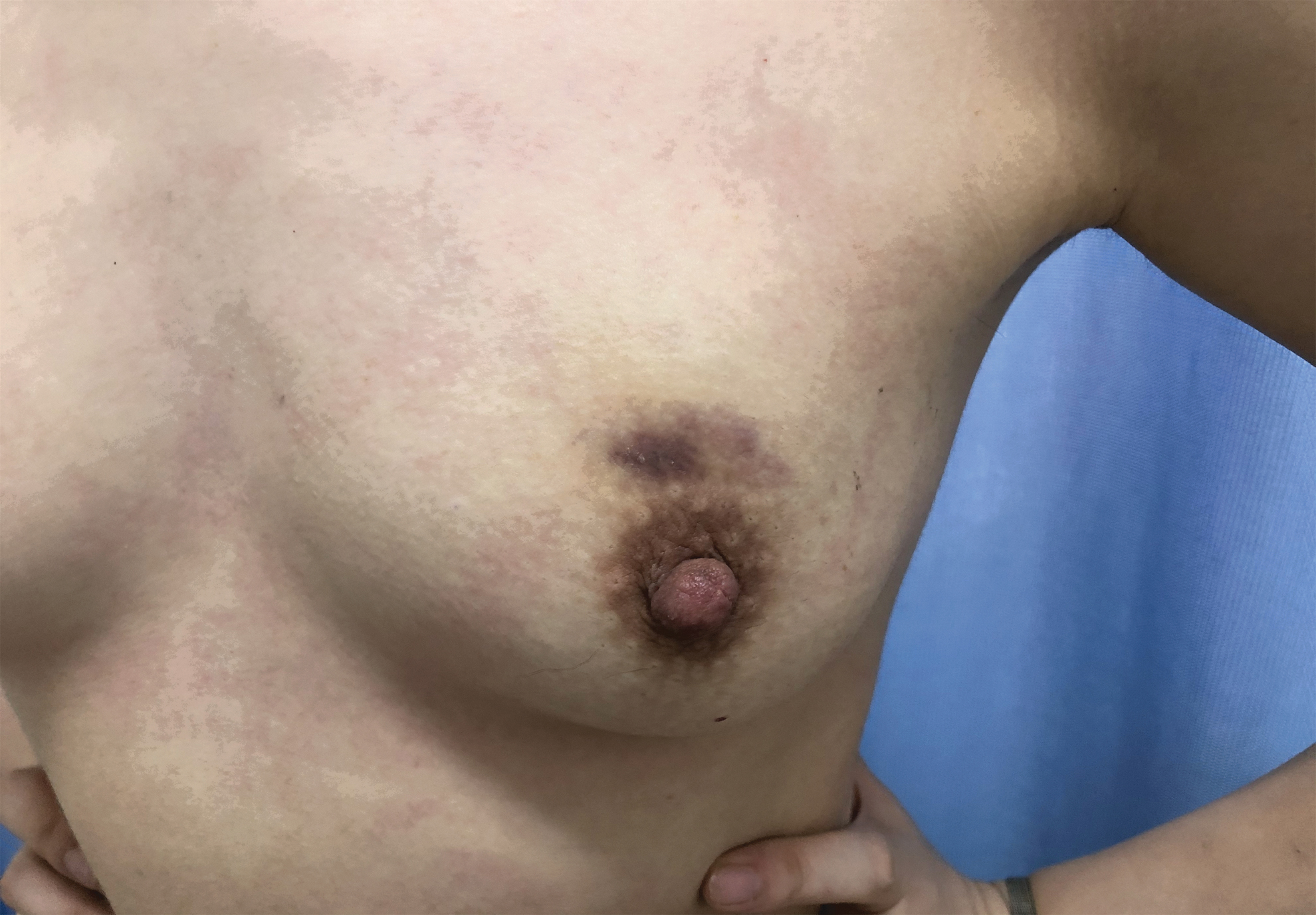
After 4 months of aspiration, taking bromocriptine and corticosteroid, presentation of erythema, and painful mass disappeared, only skin lesions left.
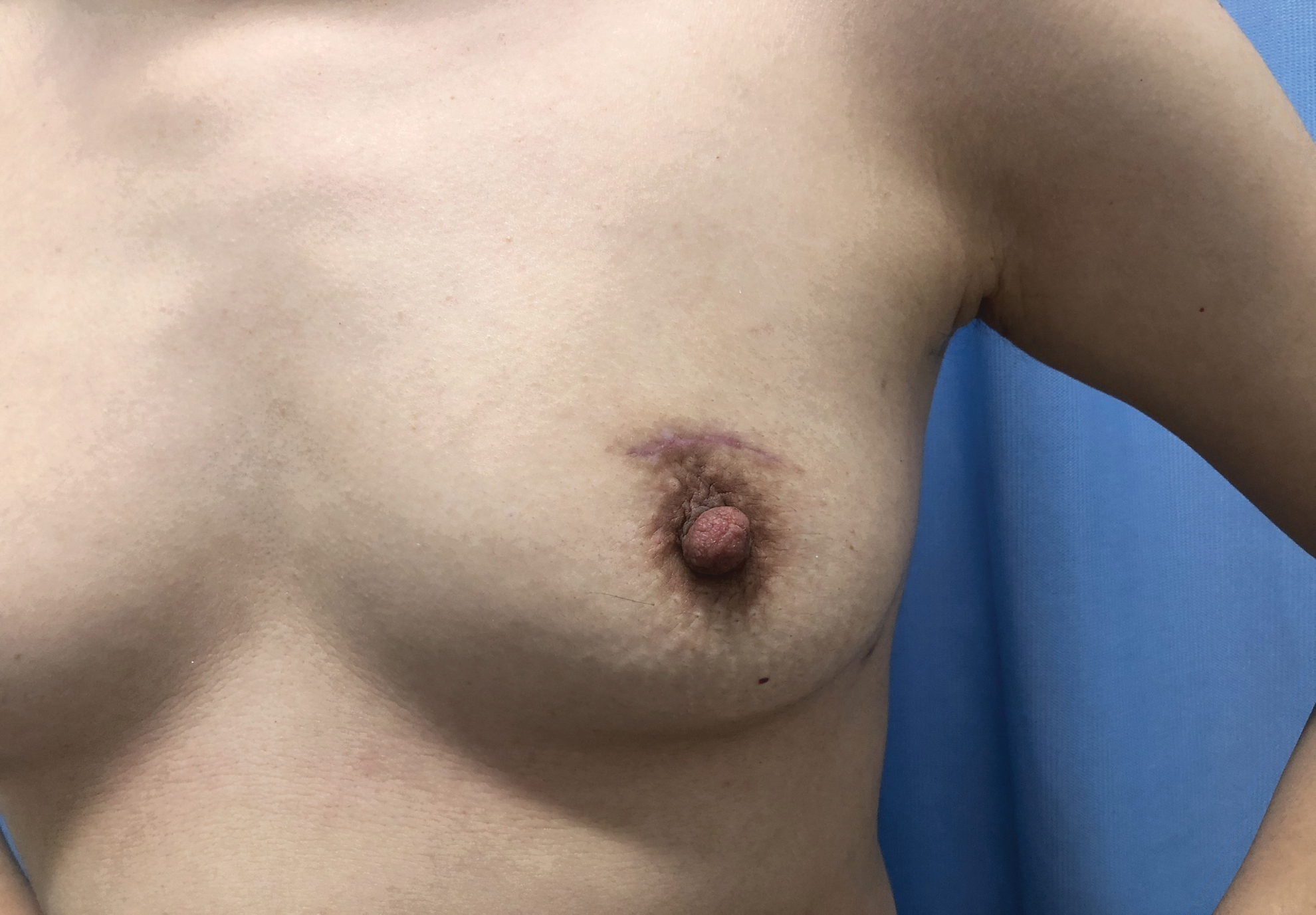
After local control of the disease, the patient received excisional surgery and gained complete remission.
Discussion
GM, a chronic inflammatory lesion of the breast with unknown etiology, was first described by Kessler and Wolloch in 1972. 8 GM is a rare condition, which is most commonly encountered in young parous women, often within a few years of pregnancy, although it can occur in nulliparous women.9,10 GM can present as a painful breast mass with hyperemia and abscess formation. In chronic cases, clinical and radiological features usually mimic malignant disease.1,11,12 Core needle biopsy is recommended to confirm the diagnosis, and all patients clinically diagnosed with GM, received core needle biopsy in our hospital.
The classic pathological feature is a noncaseous granulomatous inflammatory reaction centered on the lobules. A mixed chronic inflammatory process composed of lymphocytes, plasma cells, epithelioid histiocytes, multinucleated giant cells, and neutrophil infiltration with or without microabscess formation can be found in the granuloma.13,14
It is necessary to exclude known causes of granulomatous reactions of the breast, such as tuberculosis, sarcoidosis, Wegener's granulomatosis, and polyarthritis nodosa. 9 No consensus on the optimal treatment for patients with GM exists. Available treatments include antibiotics, corticosteroids, antimycobacterial therapy, and immunosuppressive therapy such as methotrexate, wide local excision, and observation.15–22 Meta-analysis showed that most patients could achieve complete remission with systemic therapy, especially the combination of oral corticosteroids and surgical management.18,19 All patients in our report received systemic therapy, including oral corticosteroid, antimycobacterial agents, aspiration, bromocriptine, and excisional surgery, which showed an excellent effect.
Several causes of GM have been postulated based on retrospective analyses, including smoking, oral contraceptive use, rare microbial species (such as Corynebacterium kroppenstedtii), tumor, or drug-induced HPRL.4,22 HPRL in nonpregnant women has been proposed to play an important role in GM.2,3 Dopamine decreases PRL secretion and serotonin increases it. Several categories of drugs may cause increased PRL, such as H2 receptor antagonists (cimetidine, ranitidine, etc.), dopamine receptor antagonists (risperidone, sulpiride, etc.), and selective serotonin reuptake inhibitor (escitalopram, paroxetine, etc.).6,23,24
PRL stimulates lactation and the synthesis of milk proteins, lactose, and lipids. Raised PRL is responsible for protein and lipid rich secretion accumulation in the ducts. The extravasation of protein and lipid into the interstitial tissue causes aseptic inflammation and triggers an immune response, which subsequently causes GM. 25
HPRL is a highly prevalent but often untreated adverse effect of many antipsychotic agents. Antipsychotic drugs are the main treatment for psychiatric disorders, including schizophrenia, schizoaffective disorder, bipolar disorder, mania, and dementia. These chronic conditions require long-term or even life-long treatment. Antipsychotics mainly act as D2 dopamine receptor blockers, causing loss of the dopaminergic PRL inhibitory factor in lactotroph cells in the anterior pituitary; therefore, resulting in elevated PRL.26–28
All first generation, typical antipsychotic agents are associated with significant HPRL, while newer atypical agents are heterogeneous in their propensity to elevate PRL.24,26,27 The frequency of HPRL is greater with amisulpride, risperidone, and paliperidone and is lower with aripiprazole and clozapine, with olanzapine and quetiapine occupying the middle ground. 27 In most laboratories, the upper limit for serum PRL concentrations is 24–25 ng/mL for women, 28 and 29.2 ng/mL in our hospital. A mild increase in PRL between 25 and 50 ng/mL should be monitored periodically, while a PRL level greater than 50 ng/mL requires intervention. In our study, PRL levels in 7 patients (36.8%) increased mildly, 12 patients had a PRL level greater than 50 ng/mL due to the use of antipsychotics, and all patients received an intervention to decrease PRL levels.
Different treatment strategies have been described, including the following: switching antipsychotics, decreasing the dose of the antipsychotics, adding aripiprazole, or adding dopaminergic agonists. 27 Selecting a personalized strategy for individual patients is the best strategy. In our study, all patients were prescribed a dopaminergic agonist, seven patients (36.8%) decreased the dose of antipsychotics, six (31.6%) switched antipsychotics, three (15.8%) continued the primary antipsychotics, and three (15.8%) discontinued antipsychotics. In addition, 14 patients (73.7%) received corticosteroid and 4 (21.1%) received antimycobacterials. Seven patients (36.8%) received excisional surgery, and all patients gained complete remission finally. The Naranjo scale was used to assess the causality, and the scores indicated that GM was probably induced by the antipsychotics. 7
To date, only a few cases of GM caused by antipsychotic-induced HPRL have been reported.3,25,29 Lin reported a 39-year-old Chinese woman with a history of schizophrenia who had been receiving risperidone for more than 3 years. All laboratory studies were normal except the PRL level which was 84.5 ng/mL. The patient underwent mastectomy. The prescription was changed to clozapine. The residual breast lesions resolved completely 3 months later and no recurrence was noted. 29 Holla reported a 30-year-old female with bipolar affective disorder, who took risperidone for 3 years. Her PRL level was 59.8 ng/mL. The patient then received incision and drainage, oral corticosteroid, and the antipsychotic was switched to quetiapine, and her condition improved. 25
Li reported a 55-year-old Caucasian female with depression and schizoaffective disorder who had been successfully treated with risperidone. The patient complained of swelling and pain in her left breast. Serum PRL level was much higher than normal. She was prescribed bromocriptine. The patient achieved complete remission within 1 month with no recurrence. 3 The result of our study is similar to them, all of these patients gained complete remission through systemic treatment. Although some patients in the literature underwent mastectomy, none of our study patients did.
As far as we know, this is the first observational study focused on GM associated with antipsychotic-induced HPRL. Similar to the reports mentioned above, all our patients had a history of psychiatric disorders, had taken antipsychotics for years, and reported high PRL levels. All patients underwent core needle biopsy, and revealed GM. These patients received systemic therapy, including oral corticosteroid, antimycobacterial therapy, and excisional surgery. Patients received dopaminergic agonists (bromocriptine), or other options to reduce the adverse drug reaction of the antipsychotics. After systemic treatment, our patients gained high complete remission rate and low recurrence rate.
However, this study is a retrospective study with a small sample size, and there are inevitable limitations. In the future, we hope there are more prospective studies to confirm our findings.
Conclusion
We report a study of GM due to HPRL caused by antipsychotics. In our study, antipsychotic-induced HPRL could have caused GM, and systemic therapy showed great efficacy. Additional treatment strategies should be taken to control antipsychotic-induced HPRL. Thus, our report provides more insight into the management of GM, especially in patients receiving antipsychotic therapy.
Ethical Approval
The study was approved by the Ethics Board of our Hospital.
Footnotes
Disclosure Statement
No competing financial interests exist.
Funding Information
This study was supported by Key Medical Discipline Construction Project from Chengdu Municipal Health Commission.