




Abstract
The electrical and magnetic sensory systems of marine animals provide remarkable insights into evolutionary adaptation and their technological potential. This study explores the bioelectric abilities of marine species such as stingrays, electric eels, dolphins, and hammerhead sharks, which utilize specialized organs for hunting, navigation, and self-defense. These adaptations have inspired biomimetic innovations, including underwater navigation devices, bioelectric sensors, and medical diagnostic tools. This study uses a descriptive and qualitative method to show how electroreceptors like the ampullae of Lorenzini help the body pick up on small electric and magnetic fields. These capabilities have significant implications for the development of efficient energy systems, advanced navigation tools, and sensitive medical technologies. However, ethical and ecological challenges arise, especially concerning the conservation of marine species and their habitats. This study highlights the necessity of sustainably integrating biomimetic technologies and promoting further interdisciplinary research to enhance applications while safeguarding marine ecosystems.
Introduction
Marine animals have long been a fascinating subject of research because of their unique ability to adapt to diverse and dynamic environments. One of the most striking adaptations is their ability to detect and generate electric and magnetic fields, which play a crucial role in biological activities such as hunting, navigation, communication, and survival. 1 Gill et al., (2014) stated that in the marine environment, there are natural magnetic and electric fields associated with physical and biological sources, as well as anthropogenic electromagnetic fields that permeate it. 2 Many marine animals detect electric and magnetic fields and utilize them during essential life processes such as movement, orientation, and foraging. Some species, such as stingrays, electric eels, dolphins, and hammerhead sharks, possess specialized sensory organs that enable them to harness bioelectric phenomena to detect prey, avoid predators, and interact with their surroundings.
The electric and magnetic senses of marine animals represent a form of evolutionary adaptation that has captivated scientists from various disciplines. The ability of marine animals, such as stingrays, electric eels, dolphins, and hammerhead sharks, to detect and generate electric fields has provided valuable insights into the biological and ecological roles of these sensory systems. This ability is utilized for hunting, navigation, and self-defense, allowing these animals to locate prey, avoid predators, and communicate in their underwater environments. 3 According to Mouritsen, the Earth’s magnetic field can provide information that can help animals navigate short and long distances. 4 Magnetic information can be useful for determining position (e.g., as part of a map sense) and for identifying favorable movement directions (e.g., as part of a compass sense). True navigation by animals is most likely dependent on events occurring within individual cells that detect magnetic fields. Animals can use their magnetic sense to find their way for the detection, perception, and “interpretation” of magnetic field stimuli. 5 Electrical effects facilitate the seventh sense, the electrostatic perception of sharks, tropical fish, and platypus, which primates have never acquired. The eighth sense, the magnetic sense, is based on magnetic effects and helps bacteria, turtles, pigeons, and other animals find north and up-down on Earth. These two electric/magnetic senses complement the six major senses of seeing, hearing, balance, touch, smell, and taste. 6 Animals can theoretically use magnetic cues to establish a direction of movement relative to the magnetic north (compass orientation) or, more complexly, to orient on a magnetic map. 7 Through a literature-based approach, this article examines the electric and magnetic sensory capabilities of marine animals and their potential applications in various technologies (Fig. 1).
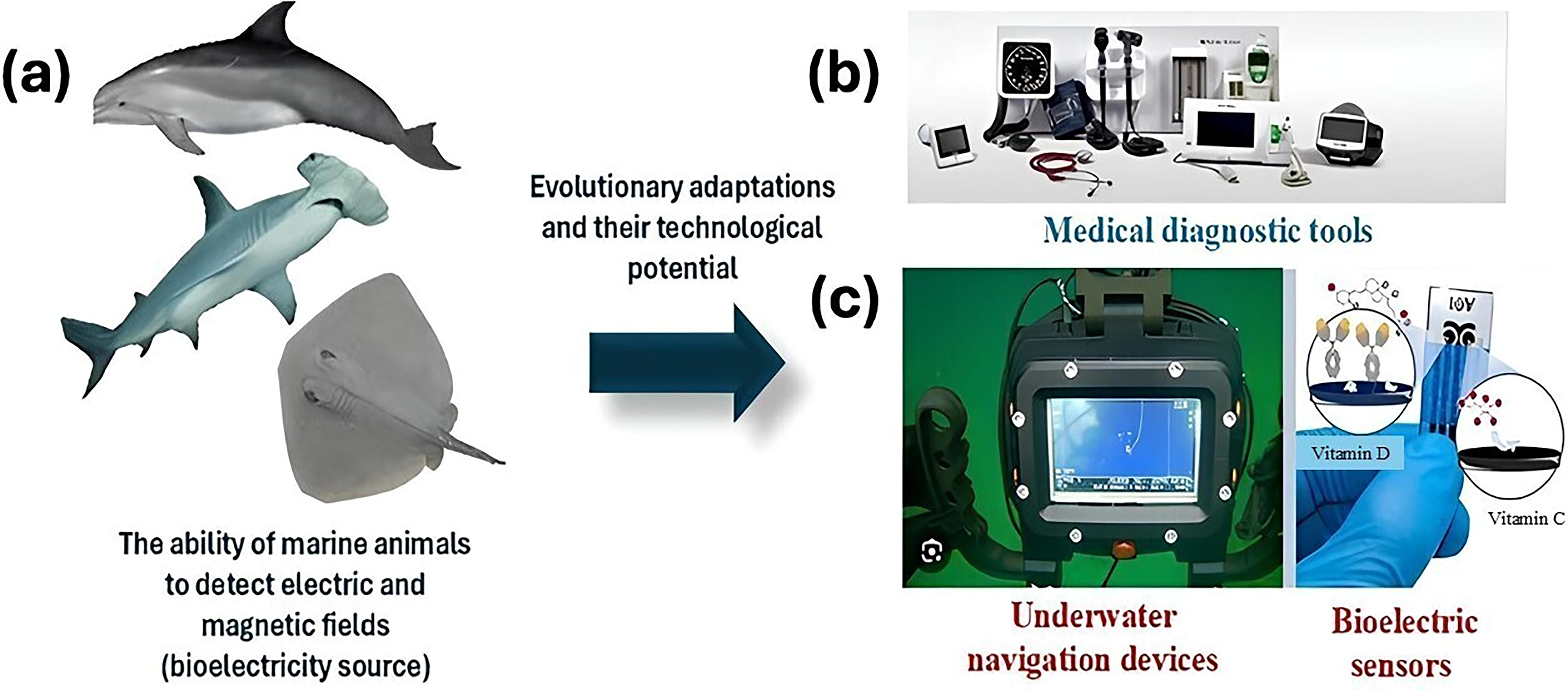
Types of marine animals with electrical potential
Dolphin
In the Cetacean family, the ability to detect bioelectric fields is currently only possessed by the dolphin group, which makes it easier for them to search for food on the seabed. This foraging strategy has also been reported in bottlenose dolphins (Tursiops truncatus), and in electroreceptors from neonates and adult animals. While neonates still possess almost complete vibrissae follicles, including a hair shaft, hair papilla, and cavernous sinus, adult bottlenose dolphins lack these features. In contrast, the innervation density was high and almost equal in both neonates and adult animals. The dolphin generates a continuous electric field with amplitude of 1.5 mV/cm, which gradually reduces to 0.5 mV/cm. Electroreception may explain the short-range prey detection ability of bottlenose dolphins in crater feeding habitats. 8
Hammerhead shark
Vagile, large-bodied marine organisms frequently exhibit a wide range of dispersions. The scalloped hammerhead shark is a cosmopolitan, migratory species found in tropical and warm temperate waters worldwide. It utilizes coastal bays as critical habitats for parturition and juvenile development, providing shelter and abundant food resources. As they mature, adults migrate to the open ocean, where they exhibit complex social behaviors and undertake long-distance movements, often forming large aggregations near seamounts and continental shelves. 9 Hammerhead sharks respond to prey-simulating electric fields, a behavior that has been previously documented in juvenile individuals. Renowned for their exceptional electrosensory capabilities, hammerhead sharks utilize specialized sensory organs called the ampullae of Lorenzini to detect weak electric fields, aiding in prey detection and navigation. Located at the base of a long canal, each subdermal ampulla (chamber) consists of bulbous pouches called alveoli which are lined with sensory hair cells and pyramid-shaped accessory cells that form tight junctions resulting in a high-resistance barrier between the basal and apical surfaces of the sensory epithelium. 10
Stingrays
Stingrays belong to the order Torpediniformes, which are known to have disc-shaped bodies that are either truncate, with a squared-off edge, or extremely slender with a slight anterior notch. They possess thin, narrow jaws, lack labial cartilages, and have a rostrum that is either absent or reduced. Members of the order Torpediniformes have two special kidney-shaped organs that generate and store electricity like a battery, some of which generate enough power to produce a shock of about 220V, while some smaller stingrays can only muster a shock of about 37V. This order includes three families: Torpedinidae (torpedoes), Narcinidae (numbfishes), and Narkidae (sleeper rays). 11
Stingrays possess heads equipped with electric organs derived from branchial muscles, along with small eyes and disc-shaped bodies that are either truncate or extremely slender anteriorly. They exhibit narrow jaws, lack labial cartilages, and have a reduced rostrum. In addition, they are characterized by well-developed tails, as well as prominent dorsal and caudal fins, which contribute to their efficient locomotion and maneuverability in aquatic environments. Large specimens can give a severe jolt, which is normally used to stun small fish on which they feed. The young hatch inside the uterus and are born fully developed. Six species are known from Pakistan, including Torpedo adenensis, T. fuscomaculata, T. marmorata, T. panthera, T. sinuspersici, and T. zugmayeri, among which records of T. marmorata occurrence are based on misidentification. The electrical organs are more clearly visible in the ventral than the dorsal view. The first dorsal fin with a broadly rounded apex, not as tall as the caudal fin, is situated entirely over the pelvic fins. The second dorsal fin is smaller than the first dorsal and slenderer and anteriorly slanted with an oval apex; the second dorsal originates over the posterior tip of the pelvic fin. The distance between the second dorsal and caudal fins is usually larger than that between the dorsal fins. 12
Fish biomechanics involve movement and other physiological processes, including unique and complex muscle anatomy that is critical for bioelectric signal generation. These signals, produced through muscle fiber contraction and relaxation, serve various purposes, such as communication, navigation, and hunting (Fig. 2). Basically, the study of anatomical and physiological systems, particularly muscle organs in fish species, is essential as a reference for understanding the bioelectric signals they generate and the role of bioelectricity in shaping behaviors crucial for their survival. Fish muscles consist of fast and slow fibers, each with distinct functions: fast fibers enable short bursts of speed, such as in escaping predators, whereas slow fibers support sustained swimming and endurance activities. These muscle fibers are intricately connected to the nervous system through a network of nerves, which allows for the coordination of movement and rapid responses to environmental changes, ensuring the fish’s ability to adapt to its surroundings. In marine animals such as rays, hammerhead sharks, and dolphins, genetic variations influence the muscle structure and bioelectric capabilities. For instance, rays have specialized pectoral fin muscles for undulating motion, thereby aiding navigation, while hammerhead sharks utilize their cephalofoil (head structure) to enhance electroreceptive abilities in murky waters. As mammals, dolphins display genetic adaptations in their streamlined bodies and tail flukes, which are optimized for speed and efficient swimming. Their muscle structure, particularly in the tail, is highly specialized for powerful thrust, with a combination of fast and slow muscle fibers that enable both rapid bursts of speed and sustained swimming. Moreover, dolphins have evolved a sophisticated system of musculature surrounding their acoustic structures, enhancing their ability to produce and process echolocation signals for navigation and prey detection. 14 Neural coordination also plays a crucial role in rays; in rays, pectoral fin contractions create wave-like motions guided by precise neural signals, while hammerhead sharks exhibit unique head and body movements that exhibit swift directional changes during hunting. In dolphins, rhythmic tail fluke movements are powered by coordinated muscle contractions and relaxations. 15 The ability to generate bioelectric signals serves a variety of important ecological functions across different species. For instance, rays utilize these signals to detect buried prey and navigate through complex environments, allowing them to adapt to their surroundings with remarkable precision. Hammerhead sharks, with their specialized electroreceptive abilities, can detect weak electric fields emitted by prey from considerable distances, enhancing their hunting efficiency. Although dolphins are primarily reliant on echolocation for navigation, they also use bioelectric signals for communication within their social groups, enabling them to coordinate activities and maintain social bonds within their species.

Fish biomechanics reveal the unique roles of muscles and bioelectric signals in navigation, communication, and survival in aquatic environments. Reproduced and modified with permission from Joshi et al. 13
Mechanism of electricity production in marine animals
Dolphins
The stimulus strength at which the animal responded to 50% of the stimulation was considered the behavioral threshold of the animal. The perception threshold of dolphins (Delphinidae) is 4.6 µV/cm. Considering that fish can produce bioelectric fields, such as 90 µV/cm or even up to 1,000 µV/cm, this sensitivity is suitable for detecting bioelectric fields caused by prey. The electricity production mechanism in dolphins differs from that in fish, which possess specialized electric organs. Dolphins’ natural bioelectric activity, primarily generated by their muscles and nervous system, produces measurable electrical signals. The high sensitivity of specialized structures, such as vibrissal crypts located on the rostrum, enables dolphins to detect external bioelectric fields with remarkable precision. This ability may play a crucial role in their navigation, prey detection, and intraspecific communication, further enhancing their adaptability in aquatic environments. 19
Hammerhead sharks
Electrosensory cues play a crucial role in detecting prey in Sphyrna mokarran, this is further supported by visual evidence of repetitive prey manipulation techniques, such as lateral head-shaking repositioning, which can enhance foraging efficiency and success. The bioelectric detection mechanism of S. Mokarran involves specialized sensory organs known as the ampullae of Lorenzini, these organs consist of canals filled with conductive gel connected to electrosensitive receptors on the skin surface. These receptors can detect changes in the electric field in the surrounding environment, such as bioelectric fields generated by prey, and transmit these signals to the brain for further processing. High sensitivity to bioelectric fields enables hammerhead sharks to track and capture prey with remarkable accuracy, even under low visibility conditions. 20
Stingrays
The first evidence that stingrays use electroreceptors to find food comes from an attack by an electric ray on an active electrode. Torpedo californica makes electricity with the help of a special electric organ called the torpedo electric organ. This organ is made up of electric cells that can produce high voltage to attract prey or protect itself from predators. These cells are located beneath the skin and are arranged in parallel layers, allowing the fish to generate a strong electric current. Upon detecting variations in the electric field through the electroreceptors distributed across its body, the stingray initiates neural impulses that activate its electric organ, resulting in the generation of a controlled electric discharge. The characteristics of the initial pulse sequence suggest that a series of sensory stimuli work together to trigger the attack and regulate the electrical output during the strike, thereby enabling T. californica to accurately direct and modulate the strength of its electric strike while hunting prey. 21
The figure above depicts the electrosensory ampullae on the left side of the hammerhead and sandbar sharks’ heads, categorized into three clusters corresponding to the anterior lateral line nerve branches: buccal (BUC), superficial ophthalmic (SO), and mandibular (MAN). The SO nerve splits into two branches that supply nerves to the superficial ophthalmic anterior (SOa) and superficial ophthalmic posterior (SOp) subclusters, which are physically separate from each other (Fig. 3a and b). The stingray exhibits four different clusters: the BUC, hyoid (HYO), SO, and MAN (Fig. 3c). In all species, the MAN cluster only projects to the ventral side of the head. In contrast, other ampullary clusters contain canals that extend to both the dorsal and ventral regions of the head. Many marine creatures emphasize the electrical signals in their bioelectric fields. These species utilize their electro sensory systems to detect weak bioelectric fields generated by prey. Utilizing its electro-sensory capabilities, the yellow stingray can detect prey concealed within the substrate by interpreting the distinct electric signals emitted through the prey’s biological processes. Similarly, the bonnethead shark, a species of hammerhead shark, uses its highly sensitive Lorenzini ampullae to detect minute voltage gradients in water. These adaptations are crucial for identifying prey in low-visibility environments, such as murky waters and during nocturnal hunting. The waveform data in the figure show how the amplitude and frequency of electric potentials emitted by different marine prey species change with their body size. This information helps researchers understand how predators such as sharks and rays interpret these signals to distinguish between different types of prey and locate them efficiently. These results show how important marine predators electro sensory abilities are to the ecosystem and how they have evolved to fit different ways of feeding. 23

Horizontal view of the electrosensory arrays of
Benefits of Dolphins, Hammerhead Sharks, and Stingrays in the Context of Electrical Energy Production
Analysis of electrical sensitivity mechanism in dolphins
Electroreception, the ability to detect weak electric fields, is a rare sensory trait in mammals, found in only a few species such as the platypus and certain dolphins. This ability is particularly significant for aquatic environments, where visibility is often limited. Owing to special structures on their rostrums called vibrissa crypts, dolphins such as the bottlenose dolphin (Tursiops truncatus) and the Guiana dolphin (Sotalia guianensis) can sense electricity. These adaptations not only facilitate short-range prey detection but also have potential implications for biomimetic technologies.
Research has revealed that the vibrissal crypts of dolphins are densely innervated structures that resemble the ampullary electroreceptors found in other aquatic species. These crypts are remnants of whisker systems that have evolved to detect electrical fields. In bottlenose dolphins, the crypts are innervated by approximately 245 myelinated axons per unit, allowing the detection of electrical fields as weak as 2.4–5.5 µV/cm. 16 Guiana dolphins exhibit similar capabilities, with a detection threshold of 4.6 µV/cm, indicating convergent evolution toward electroreception in these species. 15 Histological studies have revealed that the vibrissae crypts of Guiana dolphins contain a thick network of nerve fibers linked to the trigeminal nerve, and they have features similar to the ampullary organs of sharks. 15 These crypts also secrete a gel-like substance that may aid in electrical conductivity, such as the glycoprotein-based gel found in fish electroreceptors.
Electroreception applications in natural settings and their implications for human life and technology
Dolphins use electroreception as a supplementary sensory system for foraging in low-visibility environments. For instance, during benthic foraging, such as crater feeding, bottlenose dolphins rely on detecting the bioelectric fields of prey buried in sediment. 19 The bioelectric fields produced by fish and other prey range from 50 to 1000 µV /cm, which dolphins can detect at a close range (3–7 cm). 19 The electroreception of Guiana dolphins is especially advantageous in estuarine and turbid waters where visibility is limited. 15 Their ability to sense bioelectric fields allows them to locate prey more effectively while compensating for limitations in echolocation and vision. The study of dolphin electroreception offers a blueprint for innovative technologies. 19 Biomimetic applications include underwater sensors capable of detecting weak electric signals for resource exploration, environmental monitoring, and search-and-rescue operations in low-visibility conditions. 19 Additionally, insights into their sensitivity to electric fields could inform the development of medical diagnostic tools that utilize weak bioelectric signals for noninvasive monitoring.
In addition to foraging, electroreception may aid dolphins in large-scale navigation through geomagnetic orientation. The interaction between electric and magnetic fields in conductive environments may allow dolphins to perceive the Earth’s magnetic field, thereby supporting their migratory and orientation behaviors. 19 Similar principles could inspire further advances in navigation systems, particularly for autonomous underwater vehicles. Dolphins are more sensitive to magnetic fields than elasmobranchs such as sharks, which can detect fields as low as a few nV/cm. However, the sensitivity of dolphins remains sufficiently high to serve essential ecological functions. 19 Bottlenose dolphins detect direct current fields down to 2.4 µV/cm, whereas Guiana dolphins detect forces as weak as 4.6 µV/cm. These thresholds allow the predators to detect prey at short distances, complementing their echolocation and visual systems. 15
Analysis of electrical voltage generation by hammerhead sharks and its potential applications in human technology
Hammerhead sharks (genus Sphyrna), particularly the enormous hammerhead (S. mokarran), are renowned for their unique cephalofoil and advanced sensory systems. The electro sensory system, housed in the ampullae of Lorenzini, enables the detection of weak bioelectric fields in aquatic environments. This article explores the electrical capabilities of hammerhead sharks, specifically focusing on the voltage generation mechanisms, their biological significance, and potential applications inspired by these systems in human technology. The ampullae of Lorenzini in hammerhead sharks detect minute voltage gradients in their surroundings, which can be as low as nV/cm, this sensitivity enables the sharks to locate prey buried under sand and navigate via the Earth’s geomagnetic fields.
The electrosensory system is made up of pores filled with jelly that are connected to canals under the skin. At this point, the voltage differences between the external environment and the body’s own potential are converted into neural signals. These signals are transmitted to the brain for processing, underscoring the shark’s acute environmental awareness. 24 Recent studies have hypothesized that hammerhead sharks can also respond to external electromagnetic stimuli. For instance, experiments using permanent magnets demonstrated behavioral modifications, such as avoidance, indicating overstimulation of the electrosensory apparatus. 25
Potential applications in human technology
The voltage generated within the ampullae is hypothesized to arise from the shark’s movement through varying magnetic fields, consistent with Faraday’s law of electromagnetic induction. As sharks swim horizontally through the Earth’s magnetic field, a relative motion induces an electromotive force across the ampullae. Theoretically, sharks moving at speeds of approximately 1 m/s can generate voltage gradients around 25 µV/m. Given their detection threshold in the nV/cm range, this mechanism is feasible for navigation and environmental interactions.
25
Biomedical Engineering: Understanding the electrosensory mechanism of sharks could inspire innovations in medical devices, such as enhanced electroencephalogram and electrocardiogram sensors. These devices can detect bioelectric signals with greater precision, thereby aiding diagnostics. Robotics and Navigation: By mimicking the shark’s perception of geomagnetic fields, we can develop autonomous underwater vehicles (AUVs) for mapping and exploration purposes. Such systems can rely on induced voltages for orientation, such as how sharks use the Earth’s magnetic field. Energy Harvesting: The principles of bioelectric detection can be harnessed to design energy-efficient sensors and low-power devices capable of operating in remote or underwater environments. Conservation of the marine environment: Studies using permanent magnets show that electromagnetic deterrents might be a safe way to keep swimmers and marine life safe. Devices that mimic the deterrent effect of magnetic fields can reduce shark human conflicts.
20
Analysis of electric voltage generation by stingrays and its potential human applications
Stingrays are fascinating marine creatures known not only for their unique morphology and behavior but also for their ability to generate and sense electric fields. Their electro sensory system gives them this ability. It is a very specialized part of their body that has evolved to pick up tiny bioelectric signals in their environment. The electrogenic abilities of stingrays, especially Potamotrygon motoro, have effects on how animals interact with their environment and how humans make technological progress. The electrosensory system of stingrays is based on the ampullae of Lorenzini, which are sensitive receptors located on their skin. These receptors detect voltage gradients in water, allowing stingrays to identify prey, navigate their environment, and avoid predators. The ampullae consist of pores that connect to subdermal tubules filled with a conductive gel, leading to sensory cells capable of detecting electric fields as low as nV/cm in marine environments. 26
Freshwater stingrays, such as P. motoro, demonstrate adaptations to lower-conductivity environments, their thickened dermis, and compact ampullary structures are tailored to overcome the challenges posed by high-resistance freshwater. Despite these adaptations, they exhibit reduced sensitivity to electric fields compared to their marine counterparts, with detection thresholds of approximately 0.2 mV/cm. 27 Stingrays generate electric fields through ion concentration differences between their internal and external environments. Ion leakage from areas such as the mouth and gill create a bioelectric field that is modulated by the rhythmic activities of these organs. The natural electric output serves as a model for understanding bioelectric phenomena and has potential applications in bioengineering. 28
Behavioral studies of stingrays under controlled conditions revealed their ability to respond to prey-simulating electric fields. For instance, P. motoro was seen to move toward electric dipoles that looked like prey when they were 2.73 cm away. The animal’s sensitivity changed depending on the conductivity of its environment and the voltage gradient of the stimulus. 26
Potential human applications
The electrosensory and electrogenic properties of stingrays have inspired multiple technological advances. For example, biomimetic sensors, leverage the principles of stingray electroreception to create sensitive detectors for underwater navigation, and object detection. These devices mimic the ampullae of Lorenzini and operate efficiently in marine and freshwater environments. 26 Furthermore, the ability of stingrays to generate voltage gradients suggests applications in sustainable energy harvesting and bioelectric medicine. Their bioelectricity can inspire the development of low-power, efficient systems for generating and transmitting electrical signals in medical devices, such as pacemakers and neural stimulators. 28 The electrosensory capabilities of stingrays are of ecological significance. The effects of environmental pollutants, such as crude oil, on aquatic sensory systems highlight the vulnerability of aquatic organisms to human-induced changes. Studies have shown that exposure to contaminants can impair their ability to detect electric fields, potentially affecting their survival and ecological roles. 28
Evaluation of the electrical potential of marine animals in the future
Dolphins
Dolphins, especially the bottlenose dolphin and Guiana dolphin, exhibit remarkable potential in bioelectric applications through their electroreceptive abilities. Their vibrissal crypts, densely innervated with approximately 245 myelinated axons per unit, enable them to detect weak electric fields as low as 2.4–5.5 µV/cm. This capability is crucial for locating prey in turbid or low-visibility waters, where traditional senses such as vision and echolocation may be less effective. 29
From a technological perspective, the sensitivity of dolphins to weak electric fields offers a blueprint for biomimetic underwater sensors. These sensors can be used in various applications, including underwater navigation, environmental monitoring, and search-and-rescue operations. Additionally, their ability to detect bioelectric fields could inspire medical innovations, such as noninvasive diagnostic tools that utilize weak bioelectric signals. 30 However, harnessing this potential presents challenges. Ethical considerations must be considered to avoid harming dolphin populations during research. Furthermore, replicating the complexity of vibrissal crypts in artificial systems remains a significant engineering challenge. Additional studies are required to understand the full range of bioelectric sensitivity and its ecological implications. 31
Hammerhead sharks
Hammerhead sharks, particularly the enormous hammerhead, are renowned for their advanced electrosensory systems. Their ampullae of Lorenzini can detect voltage gradients in the nV/cm range, enabling them to locate prey buried under sand and navigate using the Earth’s geomagnetic field. This extraordinary sensitivity to electric and magnetic fields highlights the potential for innovative technological applications. 32 Inspired by the hammerhead’s electrosensory capabilities, researchers have developed AUVs equipped with biomimetic navigation systems. 33 These systems would rely on induced voltages to orient themselves, such as how hammerheads perceive geomagnetic fields. Additionally, sharks can also sense and react to electromagnetic stimuli, which can help us make sensors and other devices for underwater exploration that use less energy. 32
Despite these advantages, challenges remain. Ethical concerns arise from studying these apex predators because they are often threatened by overfishing and habitat loss. The technological replication of electrosensory mechanisms requires extensive research, particularly to understand the interactions between electric and magnetic fields in marine environments. 32
Stingrays
Stingrays, such as P. motoro, exhibit remarkable electrosensory and electrogenic abilities. Their ampullae of Lorenzini enable them to detect electric fields in marine and freshwater environments, making them highly adaptable predators. Furthermore, stingrays generate electric fields through ion concentration differences, which serve ecological functions such as prey detection, navigation, and predator avoidance. 34
The electrosensory system of stingrays inspired the development of biomimetic sensors for underwater navigation and object detection, these devices mimic the ampullae of Lorenzini and operate efficiently under diverse aquatic conditions. In addition, the ways that stingrays make voltage could be used in bioelectric medicine and sustainable energy harvesting. For instance, their bioelectricity can inspire low-power devices such as pacemakers and neural stimulators. 35 However, the challenges associated with leveraging stingray-inspired technologies are multifaceted. Environmental factors, such as water conductivity and temperature, influence electro sensory performance, which must be considered in artificial systems. In addition, conservation concerns must be addressed, as habitat degradation and pollution threaten stingray populations. 35
Challenges and ethical considerations
Dolphins, with their sophisticated echolocation abilities, streamlined physiques, and complex social behaviors, have long fascinated humans and inspired a variety of technological innovations, including advanced sonar systems and AUV. However, applying dolphin-inspired technologies involves significant technical and ethical challenges that require thorough consideration. From a technical perspective, replicating the complex echolocation mechanisms of dolphins is daunting because of the intricate processing capabilities of their brains and the sophistication of their sonar systems. Additionally, the development of technologies that perform efficiently across diverse underwater environments poses another substantial challenge, because dolphins have evolved remarkable adaptability to varying aquatic conditions. 5 On the ethical front, anthropomorphism and misinterpretation can arise when human traits are incorrectly ascribed to dolphin behaviors, potentially leading to flawed designs if biological principles are misunderstood. Moreover, deploying dolphin-inspired technology risks disturbing marine ecosystems, such as disrupting marine animals’ natural behaviors through artificial sonar systems, which may cause ecological imbalances. Conservation and welfare concern also surface, particularly when studying dolphins in captivity or the wild, because their complex social structures and behaviors may be compromised. Therefore, it is crucial to ensure that research methodologies prioritize the welfare of dolphin populations and minimize potential harm to marine life and ecosystems. 36
Hammerhead sharks are known for their unique cephalofoil (hammer-shaped head) and advanced sensory capabilities they have inspired various biomimetic innovations in fields such as sensory technology, navigation systems, and underwater robotics. However, the application of such technologies presents significant challenges and ethical considerations. One of the key technical challenges lies in replicating the hammerhead shark’s highly specialized sensory mechanisms, such as the ampullae of Lorenzini, which allow them to detect minute electrical signals. Developing artificial systems with comparable sensitivity requires advanced engineering and biological insights. Additionally, emulating their hydrodynamic efficiency and maneuverability, which result from their unique head structure, involves complex modeling and fabrication to ensure functional accuracy in real-world applications. 37
Due to overfishing and habitat destruction, the conservation status of hammerhead sharks raises serious ethical concerns. Research involving live specimens should be prioritized using noninvasive methods to avoid further endangering these populations. Furthermore, deploying biomimetic devices in marine environments risks ecological disruption, potentially interfering with marine life behaviors or introducing pollutants. Environmental impact assessments and eco-friendly designs are essential to mitigate such risks. 38 Another ethical issue involves the commercialization of hammerhead shark-inspired technologies, raising questions about intellectual property rights and potential biopiracy. Ensuring fair acknowledgment and benefit-sharing thought conservation efforts is critical.
Stingrays, with their unique morphology and locomotion, have inspired advances in biomimetic design, particularly in underwater robotics. Their undulating pectoral fins enable efficient and agile movement through aquatic environments, making them suitable models for engineers developing soft robots and AUV. However, the application of stingray-inspired technologies presents several challenges and ethical issues. From a technical perspective, replicating the intricate undulatory propulsion of stingrays remains a significant challenge, this movement requires sophisticated materials and advanced control algorithms to emulate the flexibility and coordination of stingray fins. Moreover, stingrays have adapted to diverse marine habitats with remarkable sensory and navigational abilities. Developing technologies that operate effectively under varying underwater conditions requires an in-depth understanding of their physiology and behavior. Ethical considerations also arise in the development and deployment of these technologies. Research involving stingrays often requires their capture and observation in controlled environments, raising concerns about their welfare and potential stress. Minimizing harm and ensuring humane treatment are essential. In addition, deploying stingray-inspired robots in natural habitats may disrupt local ecosystems, potentially interfering with marine organisms or introducing pollutants. Comprehensive environmental impact assessments are necessary to address these risks. Furthermore, the genetic engineering of stingrays for commercial purposes, such as producing unique leather products, raises significant ethical concerns. These include the welfare of animals, ecological consequences, and moral implications of genetic manipulation. Although stingray-inspired technologies offer promising opportunities for innovation in underwater exploration and robotics, addressing the associated technical challenges and ethical considerations is crucial. A multidisciplinary approach that integrates engineering expertise with ethical deliberation and environmental stewardship is essential to develop these applications responsibly. 39
Conclusions
Marine animals such as stingrays, dolphins, and hammerhead sharks exhibit extraordinary abilities to detect and generate electric and magnetic fields, representing remarkable evolutionary adaptations. These sensory systems, which are supported by special organs such as the ampullae of Lorenzini and electric organs, are very important to their survival because they help them hunt, navigate, communicate, and protect themselves from predators. Their effectiveness in low-visibility environments underscores the sophistication of their biological systems, making them a subject of significant scientific interest. These bioelectric and biomagnetic mechanisms have inspired advances in various fields, including biomimetic technologies, sustainable energy solutions, and medical diagnostics. For instance, underwater navigation systems and bioelectric sensors mimic these sensory capabilities, while stingray locomotion inspires efficient energy harvesting designs. Similarly, dolphin electroreception has contributed to the development of sensitive diagnostic tools for health care applications. These innovations demonstrate the far-reaching implications of studying the sensory systems of marine animals. Nevertheless, the application of such technologies possesses several challenges including ethical concerns include the potential disruption of natural habitats and risks to the conservation of marine species. The growing demand for biomimetic technologies necessitates careful consideration of their ecological impact. In addition, replicating the complexity of these advanced biological mechanisms in technology remains a significant engineering challenge that requires interdisciplinary collaboration among biologists, engineers, and conservationists. Moreover, understanding the delicate balance between technological advancement and ecological preservation is crucial. The study of marine animals should not only aim to replicate their abilities but also prioritize the marine ecosystems sustainability. Efforts should focus on minimizing the harm to biodiversity while maximizing the benefits of biomimetic technologies. Conservation measures must be integrated into every phase of research and development phase to ensure the protection of marine habitats. In conclusion, the marine animal’s bioelectric and biomagnetic systems offer immense potential for innovation across multiple disciplines. However, their study and application must be conducted responsibly, with strong commitment to environmental sustainability. By fostering collaboration between scientific and technological fields, these natural adaptations can inspire groundbreaking advances while preserving the harmony and balance of marine ecosystems. Continued interdisciplinary research is essential to fully realize these opportunities, ensuring that technological progress complements ecological stewardship.
Footnotes
Author’s Contributions
F.B.I. and T.N. conceptualized the article, data curation, supervised, and validated the overall work. F.B.I., T.N., V.A., A.V.L., E.M.K., H.A., and F.A.T. wrote the original article, visualized the figures, and reviewing and editing all the work. All the authors discussed the results and provided constructive comments to the final article.
Author Disclosure Statement
The authors declare no competing financial interest.
Funding Information
No funding was received for this article.