Introduction by Dr. Carlos-Filipe Pereira (Editor-in-Chief, CELLULAR REPROGRAMMING)
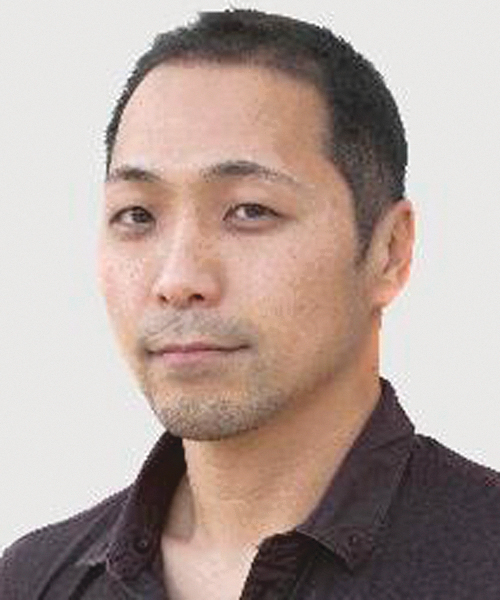
Dr. Pereira: Good morning. My name is Filipe Pereira, Associate Professor at Lund University and Editor-in-Chief of Cellular Reprogramming. I'm very happy to bring you the third interview of Reprogramming Stars, our flagship series capturing the findings, projects, and ideas of the leaders in cellular reprogramming. Today, we have Dr. Keisuke Kaji, professor and MRC senior nonclinical fellow in the Center for Regenerative Medicine, Institute for Regeneration Repair, University of Edinburgh, UK. His lab aims to understand the mechanisms of reprogramming and induced pluripotency to improve technology as well as to apply that knowledge to generate different cell types. Keisuke did his PhD at the Tokyo Institute of Technology, Japan, studying the role of CD9 in fertilization, and in 2003 joined Dr. Brian Hendrich's lab at the Institute for Stem Cell Research, University of Edinburgh, UK. During his postdoc, he investigated function of the NuRD co-repressor complex in mouse peri-implantation development and embryonic stem (ES) cells.
In January, 2008, he started his own group at the University of Edinburgh, and since then made many seminal contributions to the field of cellular reprogramming. These include the establishment of a non-viral single vector reprogramming system using the piggyBac transposon (Kaji et al., 2009; Woltjen et al., 2009), uncovering unique surface markers to track the stages of the reprogramming process (O'Malley et al., 2013), and revealed multiple mechanisms underlying cellular reprogramming (Chantzoura et al., 2015; Dos Santos et al., 2014). Keisuke has been extremely successful and has received funding and awards from prestigious institutions in the UK and Europe, including the MRC, BBSRC, and the European Research Council. Dr. Kaji, thank you so much for joining me today.
Dr. Kaji: Thank you for having me.
Dr. Pereira: It's a pleasure to have you as our third reprogramming star. Your lab has broad expertise in the mechanisms of transcription factor (TF)-mediated cellular reprogramming. Not so long ago, you have published a very nice paper in Cell Stem Cell entitled, “Constitutively active Smad2/3 are broad scope potentiators of transcription factor-mediated cellular reprogramming” (Ruetz et al., 2017). I find this concept of general facilitators of reprogramming fascinating. I wonder if you could tell us how your journey started in cellular reprogramming?
Dr. Kaji: When I was doing PhD, I worked on fertilization, i.e., sperm-egg fusion, and then seeing the egg starts development, I was fascinated how a single cell can make all the different cell types in the body. So, when I finished my PhD, I decided to join a group who studied Epigenetics in Edinburgh. When I was studying how epigenetic modifications regulates mouse ESC differentiation, the first iPSC paper came out. My supervisor was not very interested in iPSC because it was such a competitive field at that time. But I got an idea that if we would express all four Yamanaka factors from one defined loci, the reprogramming might become more homogenous which could be used to study molecular mechanisms. I told this idea to my supervisor, and then he said, “You can do it as long as you do your main project properly”.
Then expressing all four Yamanaka factors under one promoter became my side project. When I started seeing iPSC colonies with the polycistronic vector, my supervisor decided to leave Edinburgh to Cambridge. Because I had my own fellowship at that time, Edinburgh University offered me to stay in Edinburgh and start my own lab. Since then, I have switched my research to the iPSC field completely.
Dr. Pereira: It would be interesting to hear more about your Cell Stem Cell paper. What were your main findings?
Dr. Kaji: When we started that project, we didn't expect we would find a broad scope potentiator of reprogramming. We were interested in why TGF beta receptor inhibitors (TgfbRi) facilitate iPSC generation that was known a few years before our work. People thought it was because TgfbRi enhance mesenchymal-to-epithelial transition (MET), and MET is an essential process to generate iPSCs from fibroblasts. However, in our reprogramming system with high exogenous Klf4 expression, MET is already very efficient as Klf4 is a strong MET driver. In that condition, we observed that TgfbRi increased reprogramming efficiency without showing any enhancement of MET. That's why we started looking at the downstream molecules of Tgfbr in order to understand what molecules are involved in the phenomena. Making a long story short, we found that the non-Smad pathway negatively regulates iPSC generation, but at the same time we also found that Smad3 overexpression can enhance reprogramming.
It was totally unexpected as both inhibition of TgfbRi and activation of one of its downstream molecules enhanced iPSC generation. So, we started looking at the mechanism. What we found was that exogenous Smad3 bound Oct4 target loci in the process of reprogramming, only when Oct4 is co-expressed, following Oct4. When we saw this result, we realized a similarity to a paper published a few years ago from the Young lab, in which they described that Smad3 always followed cell type-specific master TFs and helped them, such as Oct4 in ESCs, MyoD in myoblasts, and PU.1 in B cells.
Dr. Pereira: I remember that paper. It was a Cell paper, right?
Dr. Kaji: Yes, it was. So, if that's the case, we thought maybe Smad3 could help other master TF-mediated cell conversations. And we asked Thomas Graf and Malin Parmar for the collaboration to express our constitutive active Smad3 in their reprogramming systems. And then yes, it helped myoblast-to-adipocyte, B cell-to-macrophage and fibroblast-to-mature neuron conversions, which was the main finding.
Dr. Pereira: This is very interesting! For the audience, Thomas Graf is one of the pioneers in transdifferentiation with the reprogramming of B cells into macrophages. Malin Parmar is also a pioneer but on the newer reprogramming field towards neurons. Curiously, Malin Parmar will be our next reprogramming star, number four! This comparison between pluripotency and the different reprogramming systems was indeed very nice! So, how did you prove that Smad3 goes with master TFs? Did you do ChIP-sequencing for those?
Dr. Kaji: Yes, we did. Only 48 hours after induction of reprogramming factors, though.
Dr. Pereira: You were expecting that it would work the same way during trans-differentiation, lineage-specific master regulators of reprogramming (CEBPα and ASCL1) would recruit then Smad3 to the target sites, right?
Dr. Kaji: Yes.
Dr. Pereira: It's interesting because many different studies have reported minimal programming networks for reprogramming, but more and more we are realizing they work as a complex, right? a reprogramming complex! Do you think Smad3 potentiate reprogramming by helping in establishing these big molecular complexes that then initiate or potentiate the individual cell conversions?
Dr. Kaji: Yes. Sort of like the concept of phase separation. Smad3 is known to interact with co-activators, like p300. Recruiting Smad3 might help to form larger, more stable transcription factories.
Dr. Pereira: I was thinking about the concept of pioneer factors, that bind repressed chromatin, or the factors that bind cooperatively; to both silence gene expression of the initial cell type and activate the expression of the target cell type. So, do you see Smad3 having a role both in the silencing and activation of the pluripotent or neural fate? Or is there a specific part of the reprogramming process where Smad3 would have a more important role?
Dr. Kaji: I don't think Smad3 has or helps pioneering activity, although I do not have data on this. Smad3 is known to have a short recognition motif, and weak DNA binding affinity. I think it is why their binding is easily influenced by other dominant TFs. As the short Smad3 binding motif can exist frequently, chromatin opening by pioneering factors can expose new Smad3 binding sites near their target loci, which facilitates co-binding of master TFs and Smad3. As for silencing of the initial cell type gene expression, I support the idea that exogenous TF expression relocates the endogenous TF binding, resulting in loss of original cellular identity, proposed by Kathrin Plath and José Polo, in the area of iPSC reprogramming.
Dr. Pereira: You also mentioned the epithelial-to-mesenchymal transition. That's a topic you explored in another publication in Stem Cell Reports (Chantzoura et al., 2015). Can you tell us a little bit more about those findings?
Dr. Kaji: Probably many people were aware of this, but didn't show in a systematic way. What we found is that what is important/not important for efficient iPSC generation largely depends on the reprogramming systems. It probably includes cell culture condition, starting cell materials, etc., but we focused on expression levels of KLF4. For example, if you have a high KLF4 expression level, MEFs can go through MET very efficiently and you can hardly enhance MET further with other ways. Namely, it is not possible to enhance iPSC generation via enhancing MET.
We also demonstrated that if you had a robust exogenous KLF4 expression level, you could reprogram Nanog knockout MEFs with a similar efficiency to reprogramming wild-type MEFs, while Nanog was believed to be critical for iPSC generation. It is perhaps not totally surprising as overexpression of either Nanog or Klf4 can support LIF-independent self-renewal of ESCs. If you have low KLF4 expression and the reprograming efficiency is low, to start with, lack of endogenous Nanog will even lower the reprogramming efficiency, consistent with the fact that Nanog is a very important pluripotency factor. Both results are true, but if one group uses only one reprogramming system, it is hard to know if the finding is universal or specific in the particular reprogramming system. If you are studying developmental processes in the mouse, every embryo develops more or less in the same way. But iPSC reprogramming is an artificial process, and what is important in one system could not be important in another system, and this makes working in this field difficult.
Dr. Pereira: I think I understand what you mean, it's such a dynamic system… the way you introduce the factors, which factors are expressed, the culture conditions, and their initial cell-type or passage have a huge impact in the outcome. It makes the dissection of the stepwise mechanisms to pluripotency, quite a big challenge, right?
Dr. Kaji: Yes.
Dr. Pereira: It was interesting to hear about the role of KLF4. I am curious to know more about the system dependency of the barriers for reprogramming. So, if you express your factors with the piggyBac system, or with the lentivirus, do you also identify different barriers?
Dr. Kaji: We have not systematically tested it, but I believe how you express the factors is less important as far as you can achieve the same expression levels in the same number of the cells. Although, each gene delivery method stresses cells in different ways, and it might affect the outcome.
Dr. Pereira: Going back to the role of MET in reprogramming: if you start with an epithelial cell, would the requirements for KLF4 expression be lower?
Dr. Kaji: That's one experiment we haven't done, but I believe KLF4 is important for many other pluripotency gene up-regulation, which is more difficult than achieving MET. Thus, I think you still need high KLF4 expression for more efficient reprogramming. It has been reported that keratinocytes are easier to reprogram to iPSCs, and proposed that it is because they are already epithelial. Reprograming keratinocytes with different levels of KLF4 might allow us to investigate roles of KLF4 excluding impacts on MET.
Dr. Pereira: That will be an interesting experiment. And then finally, you have mapped the induction of pluripotent stem cells at high resolution with different cell surface markers (O'Malley et al., 2013). Can you give us a summary of what you found, and how you are using all these new phenotypes in your iPSC induction experiments?
Dr. Kaji: We started that work when people still didn't know how cells become iPSCs at all. Many people told me that we cannot track the process in a way we can in the immune system and development as reprogramming is stochastic. But we believed this would not be the case. And we found that, if you use the same programming system, the cells always tend to become iPSCs following the same route. But again, if you use different reprogramming systems, such as using low KLF4 expression, the pattern of cell surface marker changes could be different. So, there is some limitations, but within our system, we could track the reprogramming process reproducibly using the cell surface markers we identified. This allows us to investigate the reprogramming process in more detail than just counting the number of iPSC colonies. We can monitor if the reprogramming process is accelerated or not, efficiency is enhanced or not before pluripotency gene induction. Even now only a small percentage of starting cells can form iPSC colonies. So it is necessary to be able to isolate and investigate cells that are indeed becoming iPSCs to understand what needs to happen for successful iPSC generation.
Dr. Pereira: I'm wondering if you could tell us what you're doing in your lab right now. Can you give us an overview of your current projects?
Dr. Kaji: We have two iPSC projects started from one genome-wide CRISPR knockout screen. In the screen, we transduced a 90,000 gRNA library into reprogrammable fibroblasts, and then started reprogramming as a pool. If a gRNA targets a reprogramming essential gene, the cells with integration of this gRNA cannot become iPSC. If another gRNA targets genes detrimental for efficient reprogramming, the cells who carry this gRNA becomes iPSCs with higher frequency. At the end of reprogramming, we harvest all the iPSCs and identify which gRNAs are depleted or enriched compared to the original library. This will tell us which genes are essential or detrimental for efficient iPSC generation. From this screen, we have focused on one detrimental gene and one essential gene, and trying to illuminate how these genes are involved in iPSC generation.
Dr. Pereira: It's amazing the amount of information that you get from such a screen, right? how many genes are you targeting?
Dr. Kaji: The library is made by my collaborator, Prof Kosuke Yusa in Kyoto University. It has 90,000 gRNA, targeting about 20,000 genes in the genome.
Dr. Pereira: On one side, you identify the positive regulators and then the negative regulators of reprogramming. Did you find your usual suspects already described in your screen, like Smad3, or other regulators? Are there new players?
Dr. Kaji: About the negative regulators, we identified 8 previously reported negative regulators, including well characterized p53, p21, Dotl1, Jun, in addition to 16 novel genes. One interesting thing is that if you look at their expression patterns and levels of these genes during reprogramming, it is totally random. Some are expressed very low throughout reprogramming, but its knockout can still enhance reprogramming drastically. You would not expect that if you are just looking at gene expression data. Finding such genes is a large advantage of the functional screening.
Dr. Pereira: You've confirmed that could be only the expression of this gene, or are you targeting a region of the genome where a small RNAs could be produced?
Dr. Kaji: No, I do not think it is because of disrupting small RNA expression. Even expression is low, some protein can have a strong inhibitory function for iPSC generation.
Dr. Pereira: That's very interesting. We usually compare different cell types and see what's differentially expressed to identify potential reprogramming factors…
Dr. Kaji: However, reprogramming essential genes tend to be expressed higher in iPSCs or ESCs compared to MEFs.
Dr. Pereira: That makes a lot of sense. The barriers are more nebulous than essential genes. I'm wondering, what's the major benefit of doing the CRISPR screening genome-wide and not only for TFs and chromatin regulators, for example, which at the end of the day, we tend to focus on.
Dr. Kaji: One of the things we should remember is that TFs and chromatin regulators are not the only critical components for successful reprogramming. Environment, i.e., cell culture condition, signaling pathways could also be quite important. In this iPSC screen, we couldn't find novel signaling pathways important for iPSC generation, perhaps because many of critical signaling pathways for ESC culture are well studied, and what is important for iPSC generation overlaps with those. But in our other screening projects with different cell types, we found a couple of pathways we can potentially manipulate by adding small molecules to the medium, which is much easier than gene delivery. So, if you're hoping some modification of the culture conditions, definitely it's good to have gRNAs targeting signaling pathways or extracellular matrixes, too.
Dr. Pereira: I think that's a very good reason to do such a large screen. In technical terms, what are the main challenges? What do you need to think about before you embark on a big project like this (genome-wide screening during reprogramming)?
Dr. Kaji: I'll say definitely the scale of cell culture, the coverage of the gRNAs. My collaborator, Kosuke, says it is ideal to have 200 cells with the desired phenotype per gRNA, i.e., 200 times coverage of the library. Achieving this number is often difficult, depending on what system you use.
Dr. Pereira: Particularly because the reprogramming systems are often inefficient, right? To have that number of independent programming events at the end, then it is quite a challenge.
Dr. Kaji: Yes. But it also depends on what you aim to find. Even if the coverage was much lower, I bet we could find p53 as a detrimental gene as p53 knockout has such a strong phenotype. On the other hand, if the coverage was low, we could not find as many essential genes as many gRNAs would have drop out by chance (and we could not tell which were real dropouts).
Dr. Pereira: Very interesting! Is there any other project you'd like to highlight here?
Dr. Kaji: We have a relatively new, but exciting project, in which we are trying to reprogram mature hepatocytes into progenitors with unlimited proliferation and efficient re-differentiation capacities. The reason we started this project is that nowadays we can relatively easily make iPSCs. But iPSCs often cannot make fully functional mature cell types, including mature hepatocytes. I have been feeling this is quite ironic. We can make pluripotent cells from fibroblasts against nature, but we have still not been able to make many fully functional cell types from iPSCs/ESCs, which is supposed to be possible in nature.
As mature hepatocytes go back to a progenitor-like state and re-differentiate to repair injuries in a body, so we thought recapitulating this could be a better way to make unlimited supply of fully functional mature hepatocytes in vitro.
And yes, we are making good progress. We could achieve 1010 expansion of liver progenitors generated from mature hepatocytes over 3 months, and they could be re-differentiated to a mature hepatocyte state with high Albumin expression levels similar to fresh liver tissue.
Dr. Pereira: So, another type of reprogramming! Is the de-differentiation of hepatocytes using TFs as well?
Dr. Kaji: No, actually that's only culture conditions.
Dr. Pereira: Oh, only culture conditions! That's very surprising. This is interesting because there had been some descriptions of natural reprogramming within the body, in the liver or pancreas. Also, immune cells (regulatory T cells) in some patients with mutation in the FoxP3 TF become T helper cells. So, it is possible to reprogram without the exogenous expression of TFs. It's in this parallel between what happens in the body, and how we are trying to utilize reprogramming to generate new cells, that we will find new ways to induce Cellular Reprogramming. So, can you highlight your main challenges to understand how reprogramming works? in this regard, establishing or improving the technology, is this one of your main aims?
Dr. Kaji: I am interested in the molecular mechanisms of reprogramming because the phenomena is amazing. But illuminating the mechanisms is difficult. I don't feel this field had a breakthrough since the original Yamanaka's work, while improvement of gene delivery methods made the generation of non-genetically modified iPSCs routine. For example, we know the reprogramming factors do not bind to the same loci as where they do in ESCs/iPSCs in the beginning of reprogramming. But we don't know why the factors start binding to the right pluripotency loci only in a small number of the cells.
Dr. Pereira: So do you think the collaboration between groups with different expertise is the way forward? Can you describe your current collaborative efforts?
Dr. Kaji: Yes, definitely. Our CRISPR screen is collaboration with Prof Kosuke Yusa, who is the person who performed one of the first genome-wide knockout screen with CRISPR/Cas9. We also collaborate with Dr Abdenour Soufi, who is an expert of chromatin biology and has reported the pioneering activity of the reprogramming factors. Our hepatocyte work is collaboration with liver experts, Profs Stuart Forbes and David Hay in our institute.
Dr. Pereira: So, when I was reading your CV, I noticed you have this amazing international experience in Japan and in the UK, working in multiple systems from fertilization to stem cells and reprogramming. You're now in an institute that aims to advance regenerative medicine. Can you tell us how your work and findings synergize with the ones with other groups, whether there are additional reprogramming efforts?
Dr. Kaji: That's exactly one of the reasons we decided to work on hepatocytes. While we know how to manipulate cells, but had no idea about and experience on hepatocytes. If we did not have the collaboration with the Forbes and Hay lab, I would not have started the hepatocyte project.
Dr. Pereira: So can you tell us, do you have any ambitions and vision for the future of cell reprogramming?
Dr. Kaji: I am very excited about our hepatocyte reprogramming to progenitors. The cells could be useful tools for various area, for example, toxicology tests, drug screening and disease modeling, as they seem to make mature phenotype than any other hepatocyte-like cells. Also if possible, I would like to test their potential for cell therapy. But I believe we still have a space to improve in order to replace all the function of fresh hepatocytes. I would like to explore these ideas in the near future.
Dr. Pereira: Do you have any advice for the younger reprogramming scientists initiating their careers now?
Dr. Kaji: It's a really exciting field, and too many things we don't know. One thing I want to advise is maybe it's better to try and make something useful, i.e., cells that can be really useful. If you're interested in basic science, try to find something universally important, not just increasing reprogramming efficiency 2-3-fold in a particular reprogramming system. That probably makes your work more impactful.
Dr. Pereira: That's fantastic advice. Reflecting and understanding what you are interested about, and then pursue these in a bold way. Is there any moment you recall that made the difference, that allowed you to make some of these great findings.
Dr. Kaji: Yes, one of the biggest ones was when I tried to make a polycistronic reprogramming factor expression vector as my side project. I just came up with this idea before many people started using 2A peptides. So, I started simply using ires (internal ribosome entry site) that were commonly used at that time. However, translation efficiency from ires is not as efficient as that from 5’ cap of mRNA, thus I could hardly see expression of the 4th reprogramming factor. So, I got stuck. But at that time, one of my best friends, Dr Anestis Tsakiridis who is currently a lecturer in the University of Sheffield, told me about 2A peptides, which I didn't know yet. Only a few papers had used it for polycistronic expression vectors. So I said, let's try one more time. And then that became one of the first non-viral reprogramming strategy. After that, not only by myself, the use of 2A peptides became very common.
Dr. Pereira: Yes, we have used it as well for the induced dendritic cells. In our system as well, we see a major improvement, particularly when the policystronic vectors are in the right stoichiometric. So, how do you came up with this idea of creating a policystronic construction to deliver a reprogramming factor?
Dr. Kaji: In the beginning of iPSC reprogramming era, the reprogramming efficiency was extremely low. While I was interested in the mechanisms, it seemed impossible to study with such low efficiency. So I sought if we make a transgenic mice with inducible Yamanaka factors from one genetic locus, we might be able to study the mechanisms better. That was the initial thought.
Dr. Pereira: Those are the ideas we hope to have more frequently, right? To finish the interview with questions that are not strictly related to science or research: if you were not a scientist, what would you be?
Dr. Kaji: A difficult question, but I like cooking. So I could have been a chef. I feel that cooking is similar to experiment. I like to make something using my hands. Besides, by cooking I can make people happy immediately. Making people happy through experiments takes a long, long time, even if possible. I am happy doing it, though.
Dr. Pereira: Well, people are happy eventually, but it takes more trials, and it takes a long time until people realize that actually that's a good recipe, right?
Dr. Kaji: Yes. Making a good recipe is very difficult.
Dr. Pereira: What was the best piece of advice that someone has ever given to you? I mean, it could be professional or not.
Dr. Kaji: One advice from my PhD supervisor, was “don't be shy to ask," and that is one I always try to keep in mind. For example, when I want to get some materials, or help or collaboration, I sometimes feel I might not get a positive response, especially if the person I would like to ask does not know me. But I try not to be shy. In fact, even if they say no or I don't get response to my email, I don't lose anything much, apart from one minute writing an email. Besides, often people are happy to be helpful for others. So don't be shy, and then go ahead; try to get what you need.
Dr. Pereira: I think that's a fantastic piece of advice, because scientists tend to develop the project and to think a lot themselves, and we forget that there is this need to have constant reach out to other scientists because we all work as a community. And this requires active effort from our side. And it's not only the experiments that we are doing and developing that matter. Dr. Kaji, thank you so much for joining me today. It was a pleasure. It was really interesting to hear about your science, and thank you so much for your time.
Dr. Kaji: Thank you for having me. Thank you.