




Abstract
Background:
Food advertisement exposure is associated with children's increased caloric intake, but little is known about food/beverage placements in child-oriented educational YouTube videos. We aimed to quantify the prevalence of food/beverages in these videos and assess their nutritional quality.
Methods:
Researchers identified child-oriented educational YouTube videos from 2020, using keyword searches. We coded the names of featured food/beverages, coded how the food/beverages were interacted with, quantified the number of minutes the food/beverages appeared, and assessed the nutritional quality of the food/beverages.
Results:
A sample of 400 videos with the highest number of views was identified, 165 of which featured food/beverages. These 165 videos were collectively viewed over 1.1 billion times. Among these videos, 108 (67.4%) featured unhealthy foods and 86 (52.1%) featured branded products. Most food/beverages were used in experiment/tutorials (n = 143, 86.7%). Of the 165 videos featuring food/beverages, 91 (55.2%) did not depict food/beverages in their video thumbnail.
Conclusions:
While unhealthy food/beverages appear frequently in child-oriented educational YouTube videos, parents and teachers may not be aware of the presence of branded food/beverage products in these videos that could influence their children's food and brand preferences. The Federal Trade Commission should collect data on food and beverage company sponsorship of educational videos aimed at children and adolescents.
Introduction
Globally, ∼340 million children and adolescents aged 5–19 years had overweight or obesity in 2016. 1 Poor dietary habits are a major contributors to childhood obesity, and place children at increased risk for type 2 diabetes, coronary heart disease, atherosclerosis, and other chronic diseases. 2 Advertising by the food and beverage industry has been recognized as one of the environmental factors influencing children's dietary habits,3–5 and studies have shown that children's caloric intake increases with exposure to food and beverage advertisements. 6
Most research on child-targeted food advertising has focused on television, but children have begun to choose online video platforms over traditional media for screen viewing, 7 suggesting an urgent need to understand the prevalence and nutritional quality of online food and beverage advertisements. In response to the growing use of social media, food and beverage companies have substantially increased spending on online/digital marketing 8 and are predicted to spend approximately $1.4 billion on youth-targeting digital marketing materials in 2020. 9 YouTube is one of the most popular video-sharing platforms that enables adults and youth to view, upload, share, and rate user-generated videos as well as subscribe to other users' YouTube “channels.” According to a Pew Research Center Survey on US adults, 81% of parents with children 11 years or younger have let their child watch content on YouTube, and 34% of children “regularly” watch YouTube videos. 10
Given concerns about the adult themes of many YouTube videos (e.g., violence, sexual imagery, and language),11,12 many parents may seek out educational videos (e.g., science experiments) that are both child-friendly and entertaining. But little is known about the content of food and beverage product placements that might appear in such educational videos on YouTube, especially given a study found that 42.8% of a sample of YouTube videos featured food or beverages in the videos, most of which were energy-dense and nutrient-poor. 13 That sample of videos gathered from Kid Influencers, who are “everyday celebrities” who create videos unwrapping toys, playing games, or engaging in other family-friendly activities that other children and parents can view for entertainment.
However, little is known about food or beverage appearances in educational YouTube videos, which is concerning because parents who are trying to provide access to child-friendly videos may inadvertently expose their children to product placements that increase risk for poor dietary choices. We refer to parents as the gatekeepers of these videos, but we acknowledge that teachers may use these videos in their class. Some unsupervised children may also come across these videos intentionally or because of the algorithm of the site.
Although advertising can impact all viewers, young children are especially vulnerable to the persuasive effects of promotions. Children younger than the age of 6 years, for example, do not understand the difference between programming and advertising, and children younger than the age of 8 years do not comprehend the intent of advertising. 14 One study found that children have more difficulty identifying advertisements on social media, whereby only a quarter of 6-year-old children and half of 8-year-old children were able to recognize advertisements on web-page designs. 15 Previous research shows that children younger than age 8 years have trouble identifying the promotional nature of advertisements. 16
Other studies have demonstrated, paradoxically, that disclosures for sponsored posts from influencers can enhance children's (ages 9–11) preferences for and consumption of the marketed product. 17 Among younger adolescents (ages 11–14), disclosures can increase their recognition and processing of the advertising—although to certain levels, that may or may not affect their subconscious persuasion.18,19
This study aims to address the gap in research on food and beverage products that appear in educational YouTube videos. The aims are to (1) document the number of food and beverage product appearances in the educational YouTube videos; (2) assess the nutritional quality of featured products; and (3) quantify the number of views and “likes” associated with each video.
Methods
Collecting Sample of YouTube Videos
In October 2020, we identified educational YouTube videos featuring science experiments aimed toward children using three key word searches: (1) “Science Tutorial Kids”; (2) “Science Kids at Home”; and (3) “Science DIY Kids.” We selected 400 videos with the highest number of views to examine because we based our methods on Alruwaily et al.—in which they selected a sample of 418 YouTube videos for analysis. Videos that did not contain human interactions (e.g., videos containing only animation or cartoon characters) were excluded from the search.
For this study, we chose to examine educational science videos on YouTube because despite their proliferation during the COVID-19 pandemic, 20 online science learning has not been given enough attention as other subjects. Even before the pandemic, a growing number of science educators—in primary and secondary education—reportedly used YouTube for the experiments and processes that they themselves could not do inside their classrooms. 21 The Institutional Review Board at New York University exempted this study from review.
Recording Descriptive Data About Channels and Videos
Four researchers watched every video at least once. For videos with multiple product placements, researchers were instructed to watch them twice to ensure that the following descriptive data were accurately recorded: (1) channel name; (2) video name; (3) number of channel subscribers; (4) number of video views; and (5) length of video. In addition, we included descriptive information on the thumbnail image (i.e., the still image that is featured alongside the video's title) and recorded whether there was any food, food and beverage branding, or nonfood and beverage branding present in the thumbnail image. If a food, beverage, or nonfood/beverage brand was included in the thumbnail, we included the name of the brand in our data (e.g., Disney, Lego, Coca-Cola).
The YouTube video creator controls the showcased thumbnail for each video, by personally selecting the image they would like to use. The thumbnail's aim is to increase viewership by drawing viewers through captivating imagery of the video's content. 22 The presence of food imagery in the thumbnail of the video may have pros and cons. On one hand, seeing food brands in the thumbnail may alert parents to skip the video. But videos may still feature food even if the thumbnail does not display food, suggesting that parents and teachers may need to be vigilant about the content of the videos regardless of what appears in the thumbnail.
Developing the Codebook and Assessing the Nutritional Quality of Featured Products
The research team met, reviewed, and discussed the sample of videos together to inform the development of a codebook, which was used to perform a content analysis of the food and beverages featured in our sample of educational science videos. The codebook categorized (1) the presence of food/beverages; (2) the presence of food/beverage brand logos; (3) how many minutes the food/beverages appeared; and (4) how the person in the video interacted with the food/beverage item (e.g., consumed the food/beverage or used it in the science experiment). We also calculated the nutritional quality of any featured food/beverage items.
To calculate the duration of food/beverage occurrence in the videos, we divided the number of minutes the food/beverage item or brand/logo appeared in the video by the total length of the video.
We then estimated the number of impressions generated by each video with food/beverages using the method outlined in the previously described Alruwaily et al. study. We multiplied the previously recorded total number of minutes the food/beverages appeared in each video, by the number of views for that video (e.g., if a food product was featured for 2 minutes and had 100 views, we calculated it as 200 impressions).
To assess nutritional quality, we generated an overall nutrition score for each featured food item using the Nutrient Profile Model (NPM), which is the standard for child-targeted food marketing in the United Kingdom.23–25 Currently the United States does not have any standardized nutrient profiling system. The NPM provides a continuous score representing the healthiness of a food based on its nutrient content, with higher scores representing less healthy products and lower scores representing healthier products. Scores can range from −15 (healthier) to +34 (less healthy). To make the rating scale easier to understand, we converted NPM scores into a Nutrient Profile Index (NPI) that has been used in food marketing research. 26 NPI scores range from 1 to 100 with 1 being the worst nutrition score and 100 being the best score, using the following formula: NPI score = −2 × NPM score +70.
We classified food items with an NPI score ≥64 as “healthy,” as this is the threshold for products that can be advertised to children in the United Kingdom. Foods in raw or inedible form (i.e., flour, baking soda, pepper, and so on) were not labeled as food items. The NPM and NPI are limited in their use with beverages, in that they code some sugar-sweetened beverages as healthy. Therefore, we classified beverages as unhealthy if they contained >25 g of added sugar, as recommended by the American Academy of Pediatrics. 27
Results
Child-oriented educational videos in the sample generated over 3.4 billion views and over 1.5 billion subscribers through their collective 400 YouTube videos as of October 2020 (Table 1). The number of views ranged from 227 views to 807 million views, with an average of 8.7 million views. Channel subscribers ranged from 1.17 thousand to 27 million. Each channel featured interactive activities that are suitable for children to watch for scientific-educational tutorial purposes. Each channel produced educational videos featuring children, with or without their parents, which demonstrate to the viewers how to perform DIY activities or experiments.
Descriptive Statistics for Total Sampled YouTube Videos Based on Publicly Available Data (N = 400)
A total of 165 (41.3%) videos in our sample featured food and beverages. The average duration of food/beverage occurrence in the videos was 2.18 minutes, with food/beverages being featured during an average of 22.3% of the video length. These videos were viewed over 1.1 billion times, resulting in food/beverage placements generating over 994 billion impressions. For context, the Super Bowl is the most-watched sporting event in the United States, averaging nearly 100 million viewers each year. 28 The World Cup generates an average viewership of 517 million, with more than 1.1 billion people tuning in. 29 Those are live events, however, and the 994 billion impressions generated by these videos have occurred over many years and include repeated views.
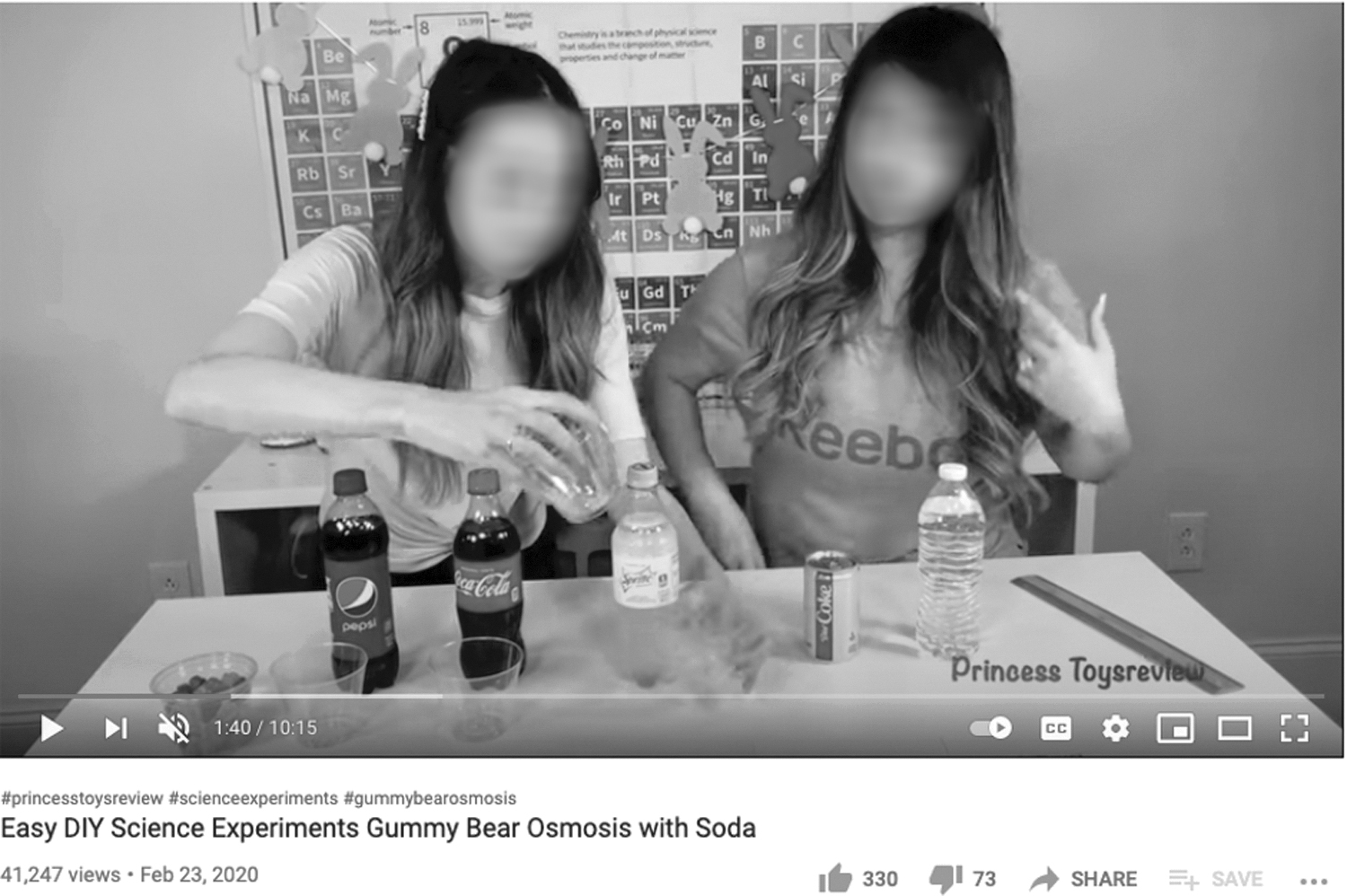
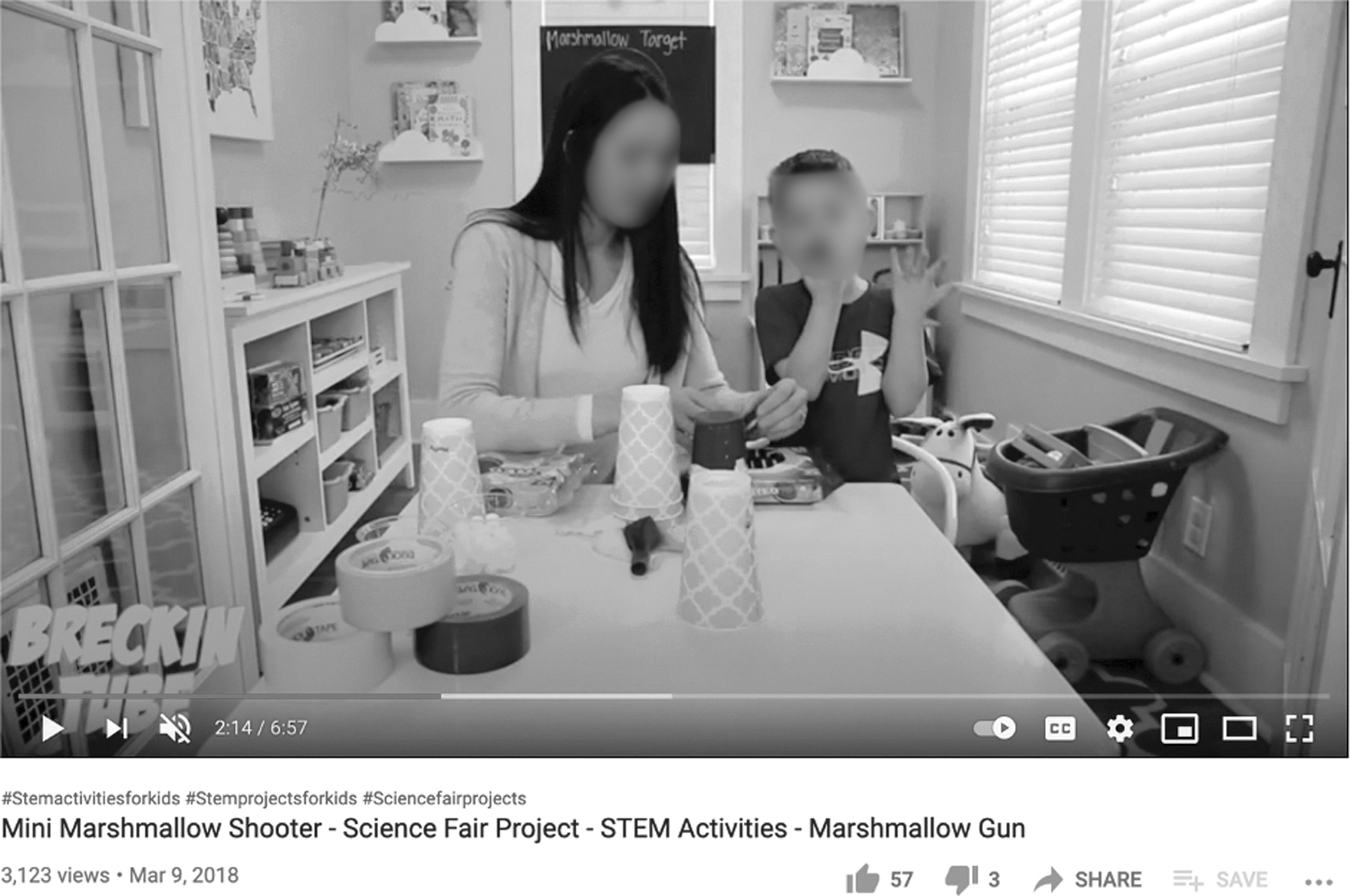
In 143 (86.7%) of these videos, food/beverages were used in the experiment (i.e., soda and mints chemical reaction; pumpkin cannon; and so on) (Fig. 1); 19 (11.5%) videos contained food/beverages that were not part of the experiments (i.e., snacks); and 3 (1.8%) videos contained both food/beverages that were used in the experiment, and other food/beverages that were consumed by people in the videos (Table 2 and Fig. 2). Of the 165 videos featuring food/beverages, 91 (55.2%) did not depict food/beverages in their video thumbnail (Table 2).
Descriptive Statistics for YouTube Videos Containing Food/Beverages (N = 165)
In our sample of videos featuring food/beverages, 34.5% (n = 57) featured only healthy food/beverages, while 42.4% (n = 70) featured only unhealthy food/beverages, and 23.0% (n = 38) of videos featured both healthy and unhealthy food/beverages (Table 2). Branded food/beverages appeared in 52.1% (n = 86) of videos featuring food/beverages, while unbranded food/beverages appeared in 47.9% (n = 79). Of the 86 videos featuring branded food/beverages, 60 (69.8%) did not feature the branded products in their video thumbnail (Table 3). Over a third of the featured brands were those associated with unhealthy food/beverages (n = 57, 34.5%). The most frequently featured brand was Coca Cola (31%), followed by Skittles (15%), Mentos (12.2%), JELL-O (5.3%), M&M's (4.4%), Kellogg's (4.4%), Heinz (4.4%), and Sprite (4.4%).
Descriptive Statistics of Brand Appearances in Video “Thumbnail” Images of YouTube Videos Containing Branded Food/Beverages (N = 86)
Discussion
This study quantified the prevalence and nutritional content of food and beverages in YouTube child-oriented educational videos. Results indicated that more than 41% of videos in our sample featured food/beverages, generating over 994 billion impressions for these products. This is concerning because 67% of the videos containing food and beverages featured unhealthy products, and more than half featured branded products. Coca-Cola, for example, accounted for the highest number of branded food/beverage product placement (31%).
Past studies have documented that videos by Kid Influencers (i.e., user-generated content) commonly use specific tactics to deliver commercial contents, including ability to bring feelings of trust, blurring boundaries between video content and advertising, and so on.13,30 User-generated content on YouTube videos has become a new frontier for advertising, raising concerns about under-regulation, 13 as numerous studies have shown that positive attitudes toward unhealthy food/beverage products results from advertising exposures in childhood, persisting into and throughout adulthood 31 with brand exposure in one's childhood to last the longest. 32 Even when done unintentionally, the simple occurrence of food may trigger the viewers, and indirectly influence their later eating decisions.
Food and beverage companies have a history of capitalizing on educational programming in-school and now on digital platforms.20,33–36 According to studies examining schools in the United States and abroad, up to 65% of schools have utilized food-and-beverage sponsored programming.37–39 Using nationally representative samples, some US-based studies have found such sponsorship in 11% of elementary, middle, and high schools, 40 as well as 21% of high schools. 41 As food and beverage companies respond to the growing use of digital media,10,42 food and beverage sponsorships have shifted to include digital platforms.
According to a 2017 analysis on digital advertising, of the 10 children's websites with the most banner advertisements promoting foods and beverages, 30% were educational websites. 43 These forms of marketing are especially concerning as parents may inadvertently expose their children to unhealthy food and beverage advertisements while attempting to provide educational content, particularly during remote learning periods following the COVID-19 school closures. 20
In our sample, branded product placement may be an unintentional choice by video creators. It may be the case that these products appear in the video simply because they are the most useful option for a given experiment. Most of these videos do not seem to be sponsored by food brands, but they may still increase brand preferences regardless of the reason they were included. 44 Brand awareness is shown to be the first step in the hierarchical effects of brand promotion, which can, in turn, lead to consumption of the food products. 45 Because the use of social media for science experiment videos is relatively new, many research questions remain. Future research, for example, should examine whether covering or blurring the brand logo reduces children's preference for that brand. Experimental studies could also examine whether children's preferences for a given category (e.g., soft drinks) are affected with or without blurred brand logos.
Further, of the videos in our sample that featured food/beverages, more than half did not depict food/beverage products in their video thumbnails. This is concerning because many parents choosing these videos for their children may not be aware of the presence of branded food/beverage products in these videos. Although exposure to unhealthy food/beverage products—branded or unbranded—may affect children's preferences,46–48 exposure to branded products increases children's pester power requests for those brands.49–51 Further, the majority of foods/beverages in the videos from our sample were branded, suggesting that they account for the majority of products.
This study has limitations. Not every food/beverage and brand items featured in each video was recorded for purposes of simplicity. The codebook instructed coders to record four food/beverage items and three brands and stop once the categories reach maximum recorded items. While the codebook is designed to obtain an estimate of the data, it is possible that additional food/beverages or branded items were not recorded. Further, due to a limited number of YouTube channels focusing solely on science tutorials for children, researchers relied substantially on keyword searching and view count filtering, instead of focusing on a specific set of channels. Because coders worked remotely with time differences, the list of video samples was compiled separately in different time zones. This has led to yielding different results in every search due to different region-based video policies and fluctuations in view count.
Furthermore, because of YouTube's algorithmic setup, several videos minimally relevant or unrelated to educational videos appeared when using the research keywords, which were excluded in the data collection. Viewers could potentially choose any video to watch under the selected search keywords. Our study has several strengths, including being the first to analyze a sample of scientific tutorials aimed at kids to determine the frequency of food/beverage product placement, recording the exact minutes of food duration shown, and analyzing absence of branded food/beverage products in thumbnails in relationship to the presence of such products in the actual video.
Our findings suggest that there is a prevalence of branded food and beverages featured in child-oriented educational YouTube videos. We focused on educational YouTube videos as an unassuming parent or teacher may be unaware of the presence of unhealthy food and food branding present in educational videos geared toward children. As the presence of food and food brands have shown to influence children's taste preferences, 52 repeated exposure to unhealthy food/beverages while viewing educational YouTube videos may lead to a change in the child's eating behaviors and increase risk for childhood obesity, diabetes, and other health issues. 52 Further research must be conducted to investigate the effects of unhealthy food/beverages and food/beverage branding in educational videos on a larger scale.
These data suggest that the Federal Trade Commission (FTC) should use its investigative authority 53 to require the food and beverage industry to disclose expenditures on their sponsorship of YouTube videos aimed at children and adolescents, including educational and tutorial style videos. In 2021, advocates urged the FTC to provide an updated report on food marketing to children and adolescents focusing on targeted and digital marketing, and educational platforms 54 ; this study highlights the use of food and beverages in educational-digital media, but it is unknown whether such marketing is sponsored or user-generated without sponsorships.
Footnotes
Authors' Contributions
All persons who meet authorship criteria are listed as authors, and all authors certify that they have participated sufficiently in the work to take public responsibility for the content, including participation in the concept, design, analysis, writing, or revision of the article. Furthermore, each author certifies that this material or similar material has not been and will not be submitted to or published in any other publication before its appearance in the Childhood Obesity.
Acknowledgments
P.P., C.L., A.S., and L.P. conceived and carried out the study, led data collection, generated tables and figures, and conducted a literature review. K.A.T. conducted data analyses, interpreted data, and led the writing of the article. M.A.B. and J.L.P. provided feedback on drafts of the article. All authors were involved in writing the article and had final approval of submitted and published versions.
Funding Information
No funding was received for this article.
Author Disclosure Statement
No competing financial interests exist.