




Abstract
FAM13A is associated with aging lung disease (primarily chronic obstructive pulmonary disorder and pulmonary fibrosis) and shows stable expression throughout lung development. However, a few systematic studies of FAM13A have been conducted to assess the pathogenesis of lung cancer, particularly susceptibility. We predicted that single-nucleotide polymorphisms (SNPs) in FAM13A may be associated with lung cancer development. We systematically selected five functional SNPs (rs2602120, rs3017895, rs9224, rs7657817, and rs3756050) and genotyped them with the Genesky proprietary improved Multiligase Detection Reaction multiplex SNP genotyping system in a case-control study of 626 lung cancer cases and 667 cancer-free controls. The functional effects of FAM13A and specific miRNAs (miRNA-22-5p and miRNA-1301-3p) were evaluated based on The Cancer Genome Atlas database. We found that rs9224 in the 3′ untranslated region (UTR) of FAM13A was potentially associated with an increased risk of lung squamous carcinoma (LUSQ) (additive model: odds ratio = 1.47, 95% confidence interval = 1.04–2.07, p = 0.028). In addition, the results of expression quantitative trait loci analysis suggested that the rs9224 polymorphism affects the expression of FAM13A (p = 0.050) and miRNA-22-5p (p = 0.031) in LUSQ. Further, survival analysis indicated decreased overall survival in the presence of the variant alleles of rs9224 (p = 0.048). The present results indicate that variant genotypes of rs9224 in the FAM13A 3′UTR may modify LUSQ susceptibility by affecting the binding of miRNA-22-5p and predict a poor prognosis of patients with LUSQ.
Introduction
The amount of cancer cases is continuously rising, greatly decreasing life expectancy worldwide. According to recent global cancer statistics, in 2018, there were 18.1 million new cancer cases and 9.6 million cancer deaths, among which lung cancer remains to be diagnosed most commonly and the major cause of death due to cancer worldwide (Bray et al., 2018). Although the 5-year relative survival rate of lung cancer has increased substantially in recent decades (Zeng et al., 2018), the number of new lung cancer cases increases each year (Siegel et al., 2017, 2018), greatly threatening human health.
In etiological studies of lung cancer, environmental exposure (e.g., smoking) has been shown to increase lung cancer risk (Avino et al., 2018). However, interactions between environmental exposure and hereditary factors have been found to greatly contribute to lung cancer development (Pierce et al., 2019). In addition, heritability is involved in ∼20% of lung cancers, indicating that hereditary susceptibility (mainly single-nucleotide polymorphisms, SNPs) plays an important role in the development of lung cancer (Mucci et al., 2016).
Family with sequence similarity 13, member A (FAM13A) is reported to have a strong connection with aging lung disease (van Moorsel, 2018) and exhibits stable expression throughout lung development (Miller et al., 2016). Most studies involving FAM13A have focused on chronic obstructive pulmonary disease (COPD) (Castaldi et al., 2019), and FAM13A may affect COPD susceptibility by activating β-catenin degradation (Jiang et al., 2016). Meanwhile, FAM13A may participate in the mechanism of lung disease by promoting the Wnt pathway (Jin et al., 2015). In addition, FAM13A was identified as a novel pulmonary fibrosis susceptible gene in a genome-wide association study (GWAS) (Fingerlin et al., 2013), which was confirmed in a recent independent resequencing study (Moore et al., 2019). Further, FAM13A was reported to function as a modifier gene of cystic fibrosis lung phenotype as being associated with RhoA activity, actin cytoskeleton dynamics, and epithelial-mesenchymal transition (Corvol et al., 2018). Interestingly, our previous study has replicated that a GWAS-identified pulmonary fibrosis-related FAM13A marker SNP rs2609255 was also associated with increased silicosis risk (Wang et al., 2018). In addition, FAM13A has recently been considered as a novel hypoxia-induced gene (Ziolkowska-Suchanek et al., 2017), the abnormal expression of which was demonstrated to be associated with lung cancer development (van Moorsel, 2018). Although polymorphisms of FAM13A have been reported to potentially play a role in other cancers (Wei et al., 2019a), no additional systematic studies of FAM13A functional SNPs and lung cancer susceptibility have been conducted.
Herein, we hypothesized that potentially functional variants across the FAM13A region might play a role in lung cancer susceptibility. To verify this hypothesis, we systematically selected five functional SNPs in FAM13A by screening using the 1000 Genomes Project and prediction with the SNPinfo database, and we then conducted a case-control study of 626 lung cancer cases and 667 cancer-free controls to evaluate the association between the selected SNPs and lung cancer susceptibility (Fig. 1).

Schematic of study design. eQTL, expression quantitative trait loci; iMLDR, improved Multiligase Detection Reaction; LUSQ, lung squamous carcinoma; SNP, single-nucleotide polymorphisms; TCGA, The Cancer Genome Atlas.
Materials and Methods
Study design and study population
To assess the association between functional variants across the FAM13A region and the risk of lung cancer, a case-control study was carried out. Totally, 626 lung cancer cases and 667 cancer-free health controls were included in this study (Supplementary Data). All cases with lung cancer were newly diagnosed and consecutively recruited from three hospitals (the Affiliated Hospital of Nantong University, the Sixth People's Hospital of Nantong, and Changshu No.1 People's Hospital) in Jiangsu from 2015 to 2017. All cases were histopathologically confirmed by pathologists. Patients with a history of other malignant tumors and administration of chemotherapy or radiotherapy were excluded from the study. A total of 667 healthy controls, matched by age and gender, were randomly selected from a pool of more than 4000 cancer-free individuals who participated in routine health surveillance in Nantong. Subjects who had smoked, on average, less than one cigarette per day for less than 1 year in their lifetime were identified as “never smokers.” Subjects not adhering to these criteria were considered “smokers,” and individuals who had quit smoking cigarettes for more than a year before recruitment were defined as “former smokers.” Both current and former smokers were classified into light and heavy subgroups based on the threshold of 20 pack-years, which was the median pack-years of the controls.
This study was allowed by the Ethics Committee of Nantong University (approval no.: 2019-021), and each subject signed informed consent documents. After approval, 5-mL venous blood was collected from all subjects, and demographic data and exposure information were collected face-to-face by trained interviewers.
Functional SNP selection and genotyping
The 1000 Genomes Project and HaploView 4.2 software were utilized to screen the common SNPs, followed by allele frequency (≥0.05), in the FAM13A region (including 20-kb upstream) of the Chinese Han population. Next, the potential functions of the selected SNPs were predicted by the public SNPinfo database. Further, filters were applied based on linkage disequilibrium analysis, with an r2 threshold of 0.80 among these functional SNPs. Ultimately, five functional SNPs were selected and subjected to genotyping (Fig. 2). The extraction of genomic DNA from peripheral blood was performed by using a DNA extraction kit (Qiagen, Hilden, Germany), and genotyping was conducted with the Genesky proprietary improved Multiligase Detection Reaction (iMLDR) multiplex SNP genotyping system (Shanghai, China), an improved multiplex ligation detection reaction technique developed by Genesky Biotechnologies, Inc. (Shanghai, China). The iMLDR genotyping system employs a multiplex PCR-ligase detection reaction method. For each SNP, the alleles were distinguished by different fluorescent labels of allele-specific oligonucleotide probe pairs. Thereafter, different SNPs were further distinguished according to different extended lengths at the 3′end. Two negative controls were: Set one consisted of double-distilled water as the template, whereas the other set consisted of a DNA sample, excluding primers to ensure consistent conditions. Further, 10% of samples (randomly selected) were verified by sequencing. The results coincidence rate reached 100%.
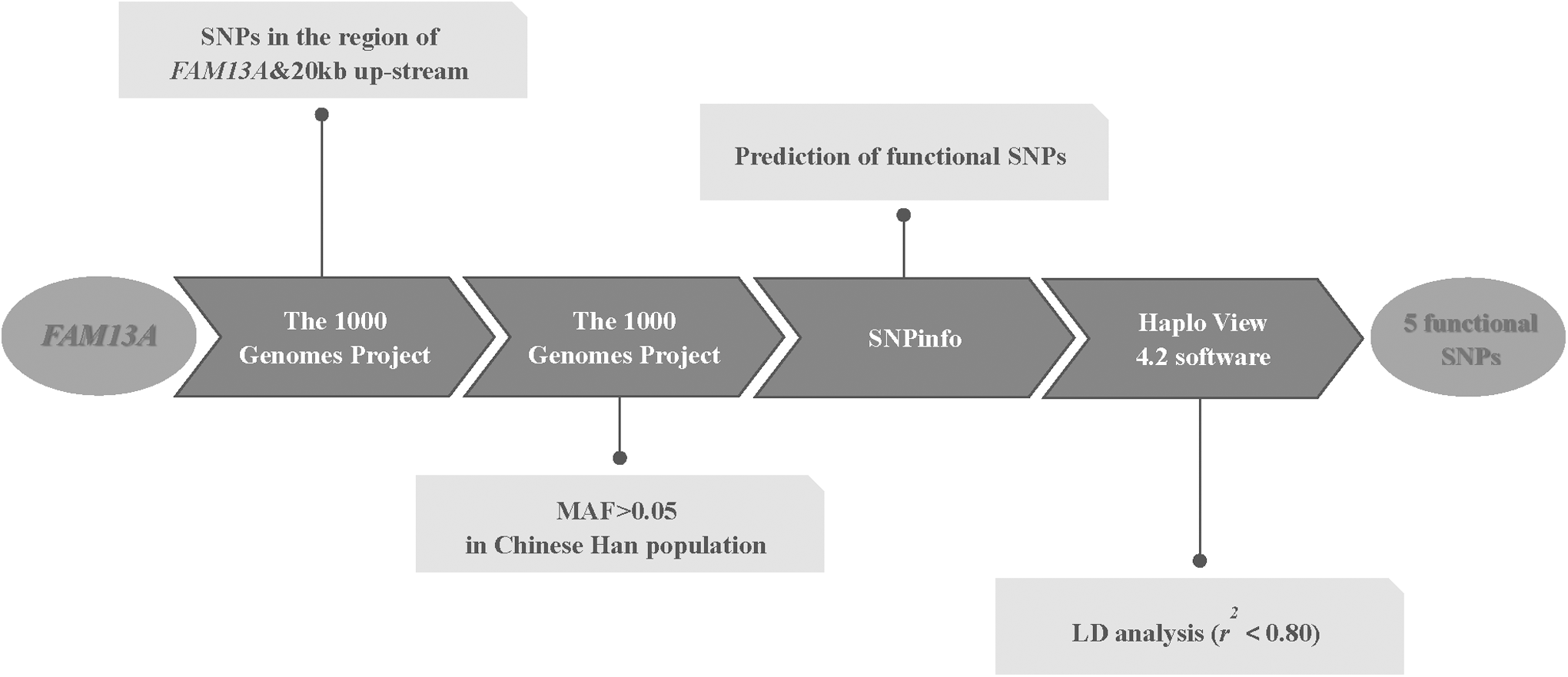
The selection of FAM13A functional SNPs. LD, linkage disequilibrium; MAF, minor allele frequency.
Expression quantitative trait loci analysis based on The Cancer Genome Atlas database
Publicly available data from The Cancer Genome Atlas (TCGA) database were utilized to perform expression quantitative trait loci (eQTL) analysis. The genotyping data of selected SNPs were downloaded from TCGA lung adenocarcinoma (LUAD) and lung squamous carcinoma (LUSQ) database. The expression data of FAM13A and miRNAs that may target FAM13A were also downloaded from the TCGA LUAD and LUSQ database. Notably, only samples containing both specific SNP genotyping data and expression data of FAM13A or specific miRNAs (miRNA-22-5p/miRNA-1301-3p) remained. Finally, a total of 1122 samples (514 LUAD tumor samples, 501 LUSQ tumor samples, and 107 normal samples) were used to evaluate expression differences in FAM13A and miRNA-22-5p/miRNA-1301-3p in specific SNP genotypes.
Statistical analysis
We used two-sided χ 2 tests in categorical variables and Student's t-tests in continuous variables to assess the differences of demographic characteristics and the included variables between cases and controls. Then, to evaluate the Hardy–Weinberg equilibrium between these SNPs, we compared the differences between observed genotype frequencies and expected frequencies by the goodness-of-fit χ2 test. Logistic regression analyses were applied to evaluate the associations between those SNPs and risk of lung cancer based on the adjusted odds ratios (ORs) and 95% confidence intervals (CIs), adjusting for gender, age, and pack-years of smoking. Differences in expression of FAM13A and miRNA-22-5p/miRNA-1301-3p between the rs9224 different genotypes were assessed by Kruskal–Wallis tests. Kaplan-Meier survival analysis was conducted to evaluate the effect of FAM13A-specific polymorphisms and overall survival of lung cancer cases. Log-rank test was utilized to compare differences in survival rates between different groups. p-value <0.05 was considered to indicate statistical significance. All statistical analyses were conducted based on Stata Version 12.0 software (Stata, College Station, TX).
Results
Characteristics of the subjects
The characteristics of the lung cancer cases and cancer-free controls in this study are summed up in Table 1. In total, the lung cancer population consisted of 155 LUSQ and 471 LUAD patients. The average age of the lung cancer population (62.73 ± 9.23) was comparable with controls (62.31 ± 6.73). Similarly, the gender ratio was comparable between cases and controls. Compared with controls, the cases reported a higher smoking rate (current and former: 52.40% vs. 44.53%, p = 0.008).
Characteristics of the Subjects Enrolled in This Study
FAM13A polymorphisms and lung cancer risk
As illustrated in Table 2, among the selected five genotyped SNPs (rs2602120, rs3017895, rs9224, rs7657817, and rs3756050), logistic regression analysis adjusting for age, gender, and pack-years of smoking indicated that the variant A allele of rs9224 was marginally significantly associated with an increased risk of lung cancer (additive model: OR = 1.20, 95% CI = 0.97–1.48, p = 0.090). Stratified analysis was conducted between LUSQ and LUAD, and the variant A allele of rs9224 was found to be potentially associated with an increased risk of LUSQ (additive model: OR = 1.47, 95% CI = 1.04–2.07, p = 0.028). However, there was no significant association between the variant A allele of rs9224 and LUAD risk (additive model: OR = 1.13, 95% CI = 0.90–1.42, p = 0.284) (Table 3).
Associations Between FAM13A Polymorphisms and Lung Cancer Risk
Major/minor allele.
Wild-type homozygote/heterozygote/variant homozygote.
MAF between cases and controls.
Hardy–Weinberg equilibrium.
Logistic regression analysis adjusted for age, gender and pack-years of smoking in the additive model.
CI, confidence interval; HWE, Hardy–Weinberg equilibrium; MAF, minor allele frequency; OR, odds ratio; SNP, single-nucleotide polymorphism; 3′UTR, 3′ untranslated region.
Stratified Analysis on the Association of rs9224 with Lung Cancer Risk
Logistic regression analysis adjusted for age, gender, and pack-years of smoking.
Associations between rs9224 and expression of FAM13A
To characterize the functional relevance of the rs9224 polymorphism and the potential function of FAM13A, further eQTL analyses were conducted to evaluate the relationship between this variant of rs9224 and the expression level of FAM13A based on the LUSQ public data available in the TCGA database. As illustrated in Figure 3a, low FAM13A expression level was potentially observed in the subjects carrying the variant GA/AA alleles of rs9224 compared with those with the wild-type GG genotype in LUSQ (p = 0.050). In addition, compared with adjacent nontumor tissues, the low expression level of FAM13A was also observed in LUSQ tissues (p < 0.001) (Fig. 4a).
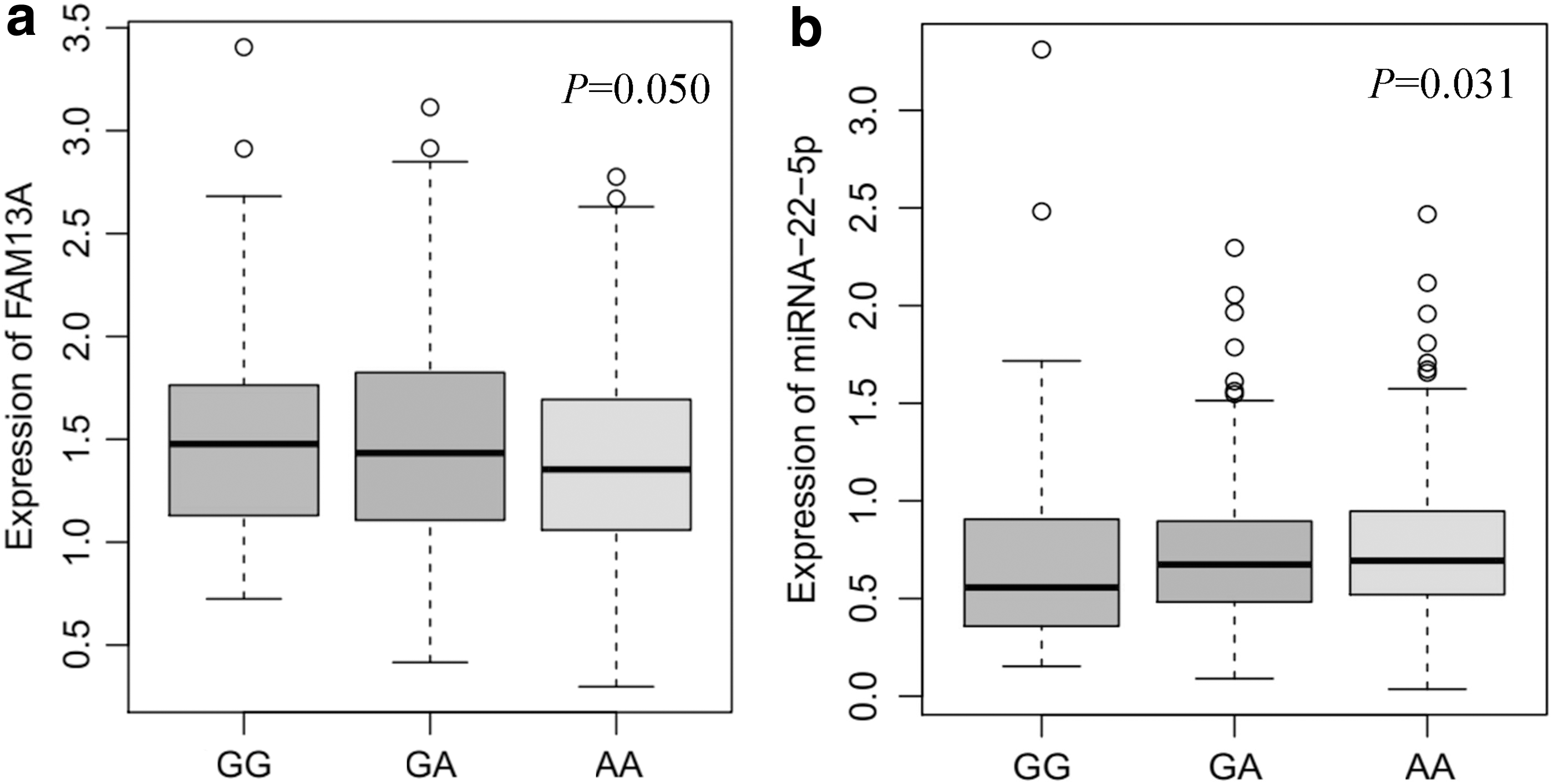
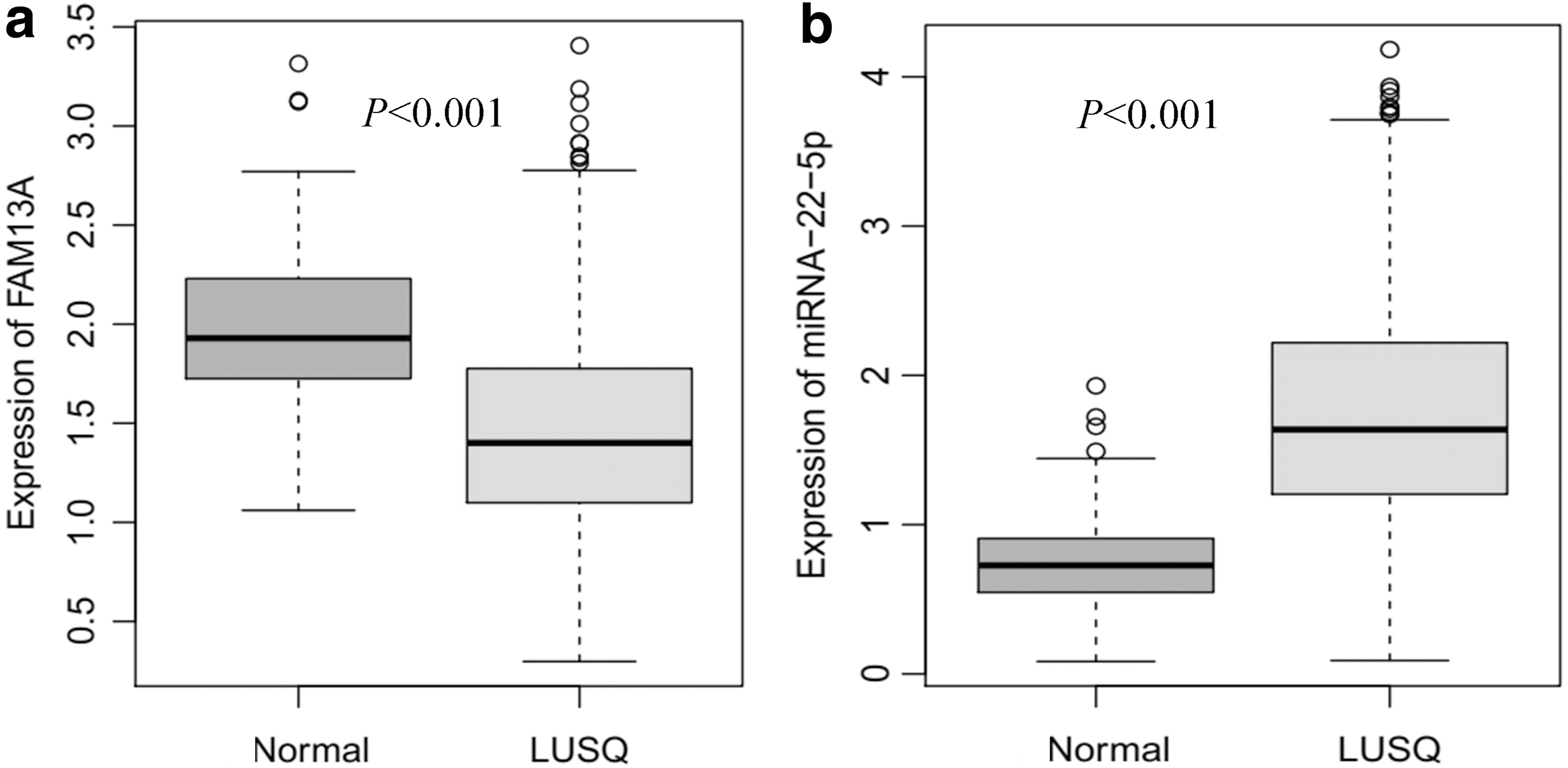
The expression levels of
Associations between rs9224 and expression of miRNA-22-5p
Considering that rs9224 is located in the 3′ untranslated region (UTR) of FAM13A, using the miRanda database, we predicted that the binding of two miRNAs (miRNA-22-5p and miRNA-1301-3p) would be affected by this variant. As shown in Figure 3b, the high expression level of miRNA-22-5p was potentially observed in the subjects carrying the variant GA/AA alleles of rs9224 compared with those with the wild-type GG genotype in LUSQ (p = 0.031). In addition, compared with adjacent nontumor tissues, the high expression level of miRNA-22-5p was also observed in LUSQ tissues (p < 0.001) (Fig. 4b). However, no significant trend was found in the expression of miRNA-1301-3p in LUSQ (p = 0.693).
Survival analysis
To evaluate the function of rs9224 in the survival of LUSQ, we first conducted Kaplan-Meier survival analysis according to FAM13A polymorphisms and the survival of patients with lung cancer based on the TCGA database. A total of 1017 patients (515 LUAD patients, 502 LUSQ patients) with lung cancer survival information was downloaded from the TCGA database. However, 20 patients, including 12 LUAD patients and 8 LUSQ patients, were excluded due to a lack of follow-up information. As shown in Figure 5, the variant alleles of rs9224 have potential significant association with shorter overall LUSQ survival compared with those carrying the wild-type homozygous genotype (p = 0.048). We also observed that the low expression of miRNA-22-5p was potentially associated with a poor prognosis in subjects with LUSQ (p = 0.057) (Fig. 6b). However, FAM13A expression was not found to be associated with the survival of subjects with LUSQ (p = 0.344) (Fig. 6a).
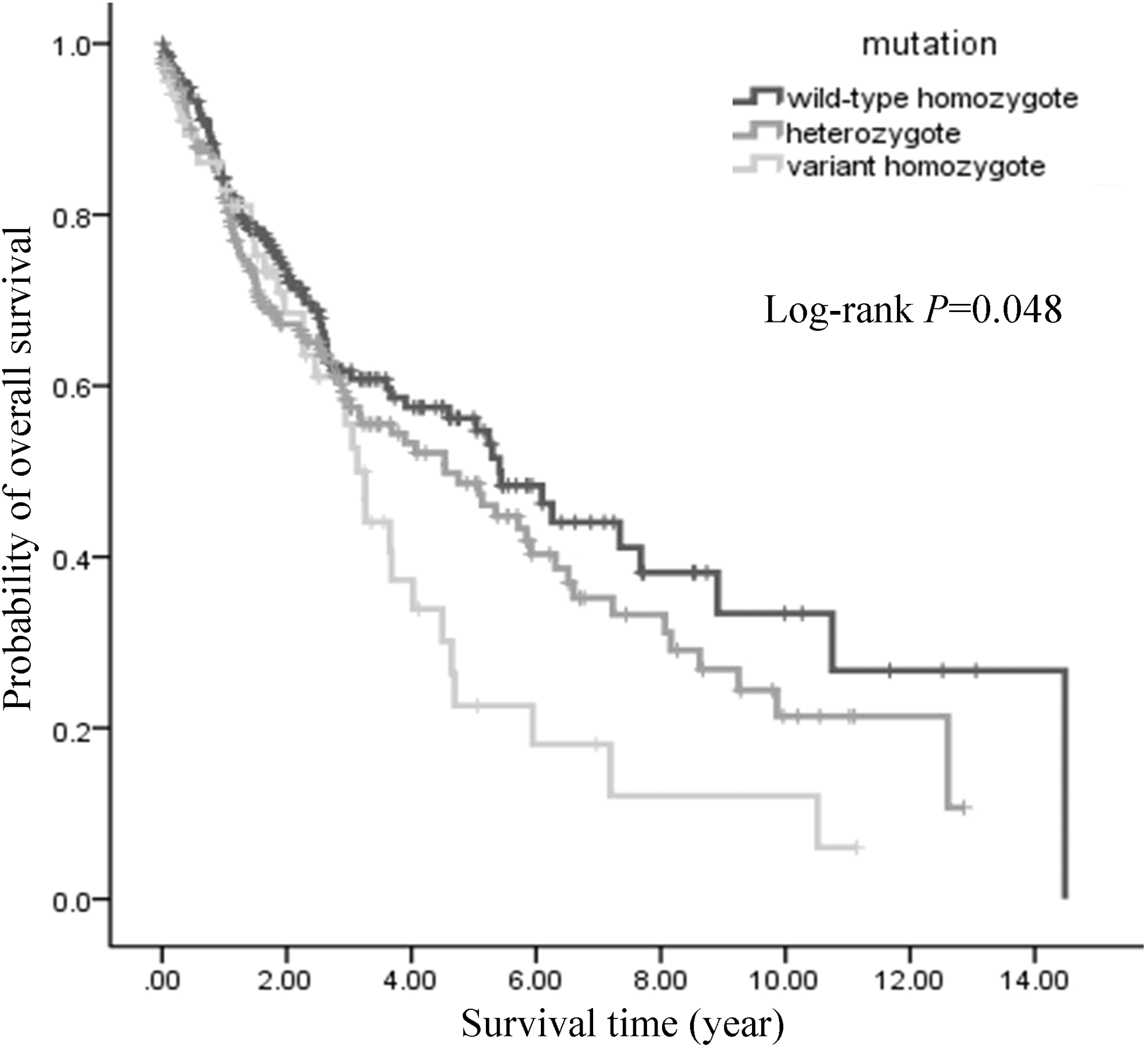
Overall LUSQ survival time curves for FAM13A polymorphism.
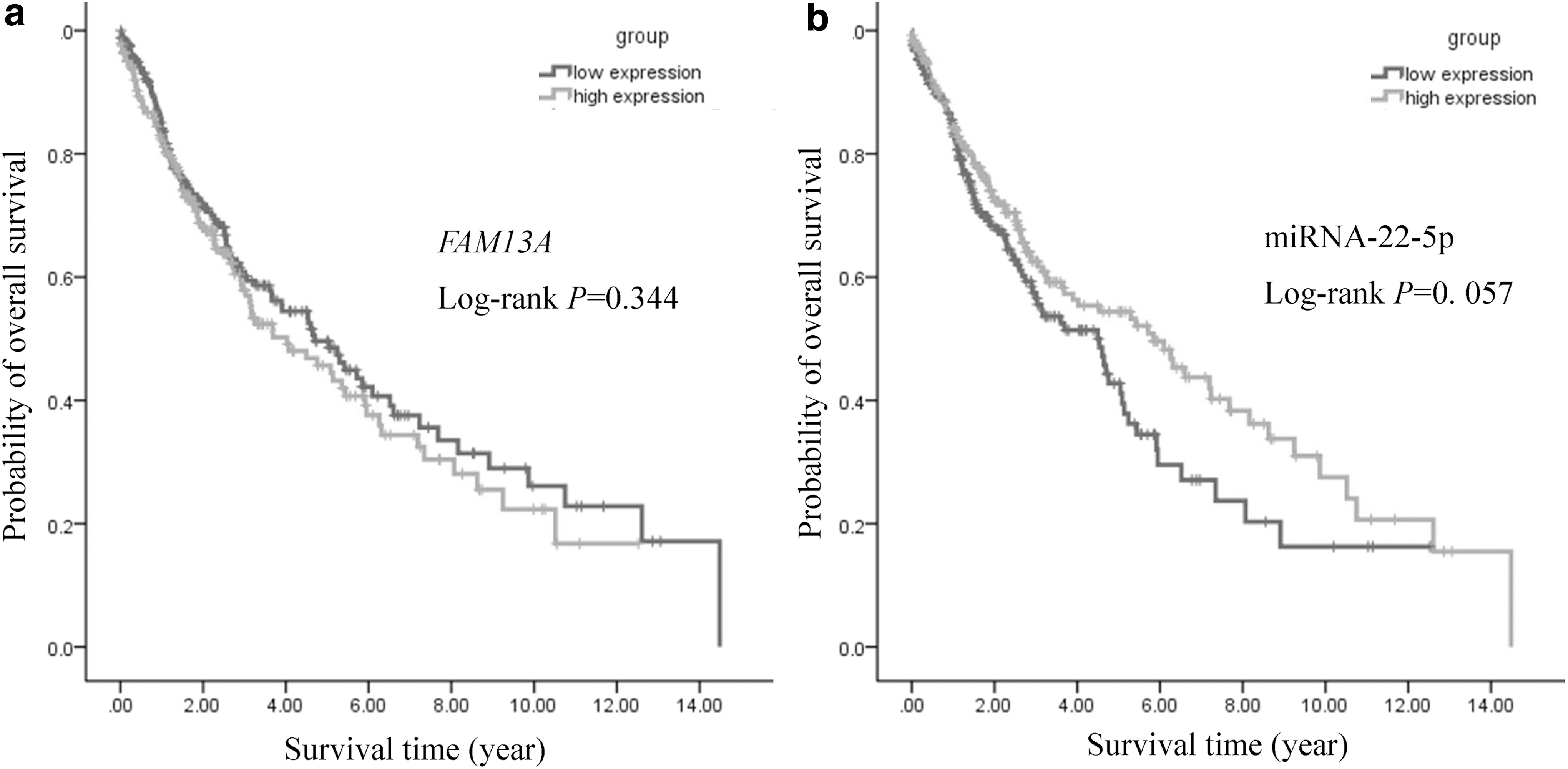
Overall LUSQ survival time curves for different expression level of
Discussion
Lung cancer is the world's leading cause of death and accounted for nearly 30% of all cancer deaths in 2018 in the United States (Smith et al., 2018). FAM13A has been well studied in lung function and numerous pulmonary diseases. Although the differences of the FAM13A polymorphism existed among various GWASs, there was no evidence showing significant association between FAM13A SNPs and lung cancer risk (Ziolkowska-Suchanek et al., 2015). In this study, we systematically appraised the association between functional SNPs in FAM13A and the risk of lung cancer in a case-control study of 626 lung cancer cases and 667 cancer-free controls. Among the five predicted functional SNPs, the variant A allele of rs9224 in the 3′UTR of FAM13A was significantly associated with an increased risk of LUSQ potentially and may affect the expression of miRNA-22-5p due to its location. In addition, variant alleles of rs9224 and the marker miRNA-22-5p may function as a prediction index of LUSQ survival.
FAM13A was previously reported as a candidate gene of COPD (Nakamura, 2011). Functional variants in FAM13A are reportedly associated with COPD, which is also a known risk factor of lung cancer, in different populations (Korytina et al., 2016; Zhang et al., 2018; Castaldi et al., 2019). As a key regulator of non-small cell lung cancer growth and regression, FAM13A, which is strongly induced by a hypoxic environment (Ziolkowska-Suchanek et al., 2017), is involved in tumor cell proliferation and survival (Eisenhut et al., 2017). In addition, FAM13A is directly associated with mRNA expression of hypoxia-inducible factor-1α in non-small cell lung cancer tissues (Eisenhut et al., 2017), whereas hypoxia-inducible factor-1α is stabilized by overexpression of AK4 under hypoxia in lung cancer metastasis (Koh et al., 2019). Functions related to FAM13A under hypoxia have also been confirmed in breast cancer, and high expression of FAM13A was found to be associated with tumor shrinkage, which may serve as a therapeutic predictor (Goto-Yamaguchi et al., 2018). Thus, it is biologically plausible that FAM13A can potentially function as a tumor suppressor by responding to hypoxia in certain pathways.
The SNP rs9224 is located in the 3′UTR of FAM13A, and miRNA-22-5p, which specifically binds this region, was detected in this study. The 3′UTR determines the fate of mRNA, and miRNA can affect the expression of mRNA by guiding associated proteins to binding sites in the 3′UTR (Mayya and Duchaine, 2019). MiRNA-22 was suggested as a potential biomarker for several cancer types, such as gastric cancer (Chen et al., 2018), colorectal cancer (Li et al., 2017a), and hepatocellular carcinoma (Li et al., 2017b). In addition, miRNA-22 was reported to affect the radiotherapy resistance of esophageal squamous cell carcinoma via the Rad51 pathway (Wang et al., 2013). According to eQTL analysis, high miRNA-22-5p expression was observed in the variant GA/AA alleles of rs9224, whereas FAM13A expression was lower in the same variant GA/AA alleles of rs9224 in this study. This suggests that miRNA-22-5p functions as an oncogene and affects the expression of FAM13A at the transcriptional level by binding specific sites. Further studies are needed to evaluate this mechanism.
Although lung cancer shortens life expectancy of patients worldwide, increased survival has been reported in China after the development of medical therapies, such as immunotherapy (Doroshow et al., 2019; Rajappa et al., 2019), and because of increased concern regarding a prognostic index and an early survival prediction system (Astaraki et al., 2019; Sorich et al., 2019). In addition, miRNAs were reported to be involved in the pathogenesis of LUSQ (Uchida et al., 2019). Numerous miRNAs function as tumor suppressors, or oncogenes, and can be used to predict the prognosis of patients with lung cancer, as well as regulate target genes (Wang et al., 2019; Wei et al., 2019b; Zheng et al., 2019). Based on TCGA database analysis, FAM13A may function as a tumor suppressor. Further, a poor prognosis was observed in those carrying the variant genotypes of FAM13A SNP rs9224. Low expression of FAM13A has been observed in both LUSQ tissues and subjects carrying the variant genotypes of rs9224, whereas shorter overall survival was found after variation. Increasing evidence has indicated that the regulation function of miRNAs toward FAM13A should be considered in LUSQ individualized treatment at the transcriptional level.
This study has several strengths. One of the advantages of our study is that we have confirmed an LUSQ susceptibility locus rs9224 in FAM13A, according to an independent case-control study in the Chinese population. The locus can also affect the prognosis of LUSQ. In addition, considering the functional location of rs9224, we determined the rs9224-related specific transcriptional effect of FAM13A and miRNA22-5p in LUSQ through eQTL analysis. Meanwhile, in LUSQ tissues, compared with adjacent nontumor tissues, lower expression of FAM13A was observed concurrently with higher expression of miRNA-22-5p. Our hypothesis regarding the miRNA-mRNA regulation mechanism between the variant alleles of rs9224 in FAM13A and miRNA-22-5p was confirmed.
However, certain limitations unavoidably exist in this study. First, in most results, the normalized expression of FAM13A mRNA was higher in LUSQ tumor tissues than in normal tissues (Eisenhut et al., 2017), which was contrary to our study. Further studies are warranted to explore the function of FAM13A and validate our findings. Second, the association of rs9224 with LUSQ risk may not be statistically significant because the Bonferroni corrected p-values were less than 0.01 (0.05/5) and the results should be interpreted with caution.
Conclusion
In conclusion, this study revealed that variant genotypes of rs9224 in FAM13A are potentially associated with an increased risk of LUSQ in a Han Chinese population. The variant of rs9224 can affect the binding of miRNA-22-5p potentially and possibly predict the poor prognosis of patients with LUSQ. Further evaluation of the biological mechanisms of rs9224 and FAM13A/miRNA-22-5p in LUSQ is warranted to confirm our findings.
Footnotes
Acknowledgments
All of the data employed in functional annotation in this study were downloaded from TCGA database, and the authors thank the National Cancer Institute (NCI) and the National Human Genome Research Institute (NHGRI) that funded TCGA project.
Funding Information
This work was partially supported by the National Natural Science Foundation of China (81502876, 81602021, 81871115), the Natural Science Research of Jiangsu Higher Education Institutions (15KJB330006), the Science and Technology Program of Nantong City (JC2018061, MS12017014-6, MS12017002-1), the Jiangsu Students' Platform for Innovation and Entrepreneurship Training Program (201710304034Z, 201810304057Z), the Postgraduate Research & Practice Innovation Program of Jiangsu Province (KYCX18_2432), the science and technology program of changshu health and family planning commission (csws201612) and Jiangsu Overseas Visiting Scholar Program for University Prominent Young & Middle-aged Teachers and Presidents in 2017. The funding sources had no role to play in the study design, the collection and interpretation of the data, writing of the article, or decision to submit this article for publication.
Disclosure Statement
No competing financial interests exist.
Supplementary Material
Supplementary Data
References
Supplementary Material
Please find the following supplemental material available below.
For Open Access articles published under a Creative Commons License, all supplemental material carries the same license as the article it is associated with.
For non-Open Access articles published, all supplemental material carries a non-exclusive license, and permission requests for re-use of supplemental material or any part of supplemental material shall be sent directly to the copyright owner as specified in the copyright notice associated with the article.
