




Abstract
Long noncoding RNAs (lncRNAs) play essential roles in the occurrence and development of multiple human cancers. An accumulating body of researches have investigated thymopoietin antisense RNA 1 (TMPO-AS1) as a newly discovered lncRNA, which functions as an oncogenic lncRNA that is upregulated in various human malignancies and associated with poor prognosis. Many studies have detected abnormally high expression levels of TMPO-AS1 in multiple cancers, such as lung cancer, breast cancer, colorectal cancer (CRC), hepatocellular carcinoma, CRC, gastric cancer, ovarian cancer, thyroid cancer, esophageal cancer, Wilms tumor, cervical cancer, retinoblastoma, bladder cancer, osteosarcoma, and prostate cancer. TMPO-AS1 has been subsequently demonstrated to play a pivotal role in tumorigenesis and progression. The aberrantly expressed TMPO-AS1 acts as a competing endogenous RNA (ceRNA) that inhibits miRNA expression, thus activating the expression of downstream oncogenes. This study comprehensively summarizes the aberrant expressions of TMPO-AS1 as reported in the current literature and explains the relevant biological regulation mechanisms in carcinogenesis and tumor progression. Corresponding studies have indicated that TMPO-AS1 has a potential value as a promising biomarker or a target for cancer therapy.
Introduction
The pathogenesis of cancer is a multistep, multifactorial, and complicated process (Huarte, 2015; Schmitt and Chang, 2016). Cancer is a partially heritable disease and may result from many genetic anomalies involving multiple genetic mutations, epigenetic modifications, and chromosomal chromosome copy number variation (Hanahan and Weinberg, 2011; Bhan et al., 2017; Ruiz-Casado et al., 2017). The development of next-generation sequencing technologies has allowed researchers to establish that <2% of the human genome encodes proteins, whereas a significant fraction accounting for 75% can be transcribed into noncoding RNAs (ncRNAs) (Carninci, 2008; Huarte, 2015; Kopp and Mendell, 2018). Based on the length of nucleotides, ncRNAs can be short ncRNAs, midsize ncRNAs, and long noncoding RNAs (lncRNAs) (Kopp and Mendell, 2018).
lncRNAs are a class of RNAs with transcripts longer than 200 nucleotides (St Laurent et al., 2015), which are involved in various biological processes, such as gene expression and RNA metabolism, transcription, RNA splicing, translation, RNA localization, decay, editing, and epigenetic modification (Qian et al., 2019). Studies have also validated that lncRNAs play crucial roles in cellular stemness maintenance, tissue differentiation, cell-cycle regulation, autophagy, apoptosis regulation, and even in cancers and viral infection (Kitagawa et al., 2013; Fatica and Bozzoni, 2014; Bhan et al., 2017; Frankel et al., 2017; Qian et al., 2019; Guo et al., 2020a). The majority of lncRNAs are abundant, whereas the aberrant expression of lncRNA is closely linked to cancer initiation, tumorigenesis, metastasis, and tumor progression (Kornfeld and Bruning, 2014; Bartonicek et al., 2016). LncRNAs are predominantly localized in the nucleus, and their specific functions depend on their sequence and structure, as well as their subcellular location (Clark and Mattick, 2011; Djebali et al., 2012). A growing pool of evidence indicates that lncRNAs are involved in various genomic modifications, such as chromosome remodeling, transcription, and posttranscriptional regulation (Yan and Wang, 2012; Bhan et al., 2017) (Fig. 1). LncRNAs may exhibit both tumor-suppressive and carcinogenic functions, which make them potential novel biomarkers and therapeutic targets for cancer (Bhan et al., 2017). Thymopoietin (TMPO), a protein coding gene, has been described as a novel oncogenic molecule in lung cancer (Park et al., 2008). The TMPO was reported to participate in the structural organization of the nuclear envelope, lamin filament transportation to the inner nuclear membrane, DNA replication initiation, or T cell development and function (Dechat et al., 2000). TMPO is in the 12q23.1 region and contains 34,779 bases. The lncRNA TMPO antisense RNA 1 (TMPO-AS1) is an RNA that is located at the 12q23.1 region with a length of 6,038 bases. The specific regulation mechanism of TMPO-AS1 has not yet been fully explored in many cancers. In this study, we comprehensively summarized the genomic information, aberrant expression, and regulation mechanism across pan-cancers.
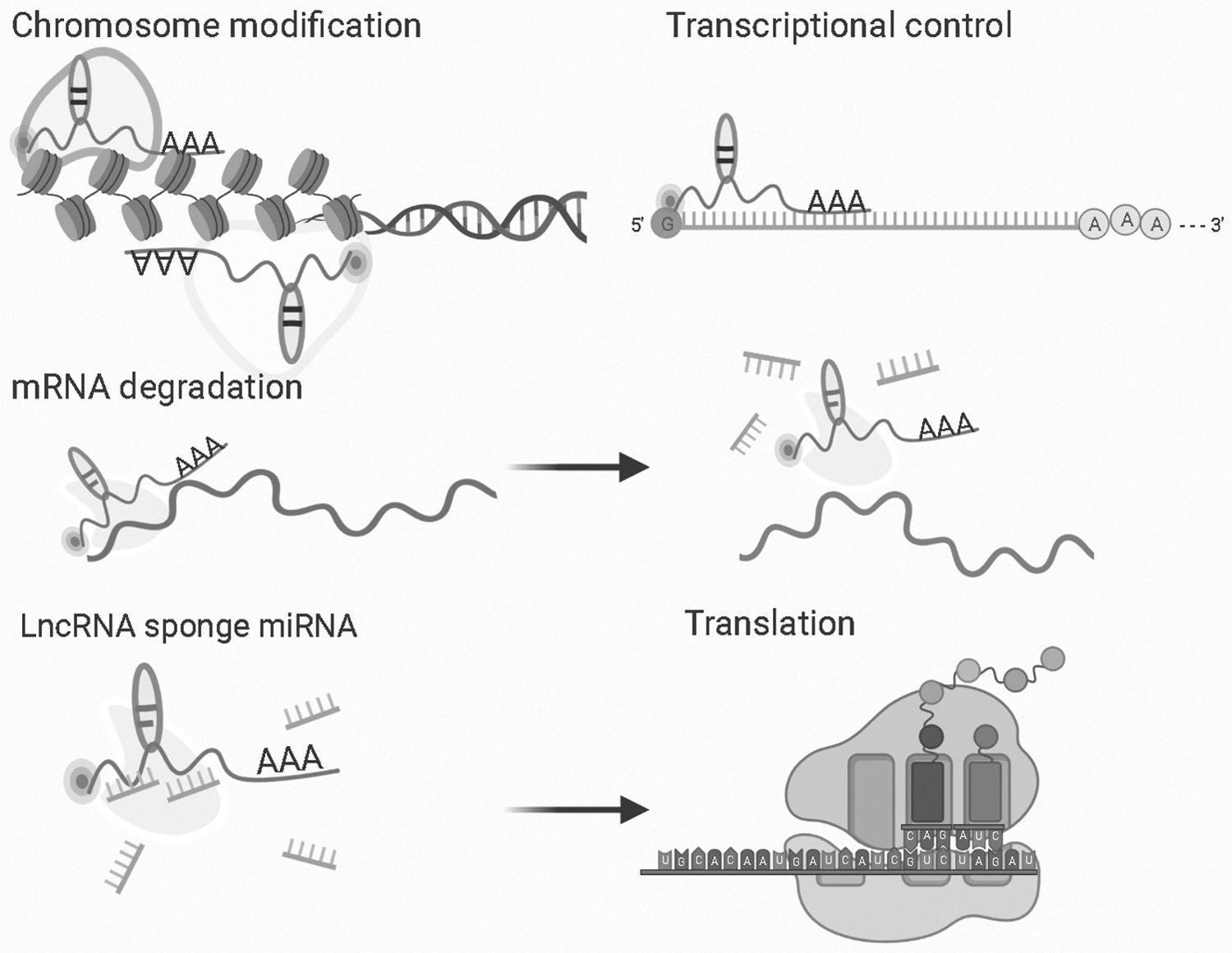
LncRNAs are involved in chromosome modification, transcriptional control, transcriptional interference, posttranscriptional, translation, and mRNA degradation processes. lncRNA, long noncoding RNA.
TMPO-AS1 Functions as Oncogenic lncRNA in Various Cancers
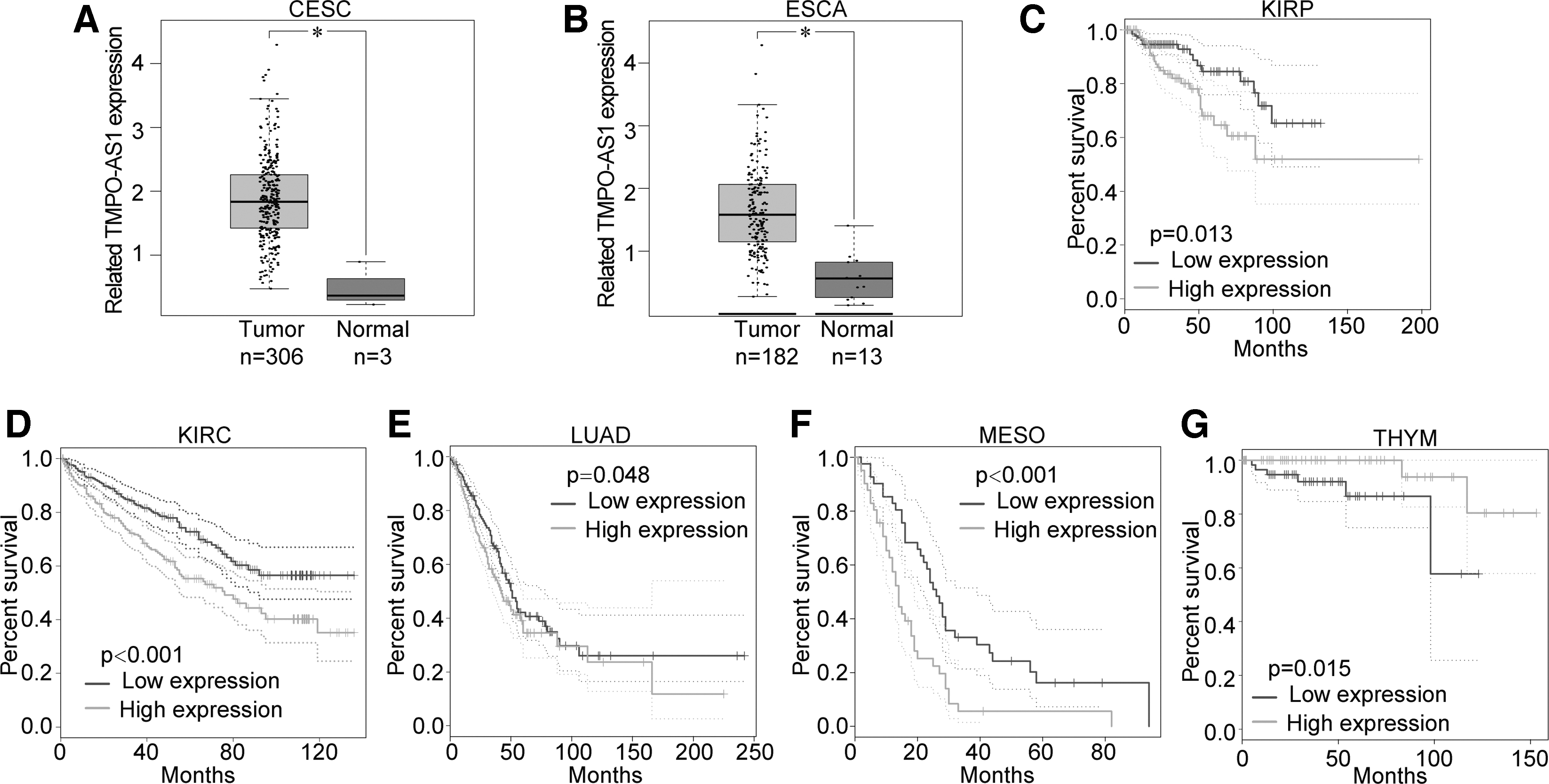
TMPO-AS1 was reported to be significantly upregulated in various cancers, such as lung cancer (Yu et al., 2020), breast cancer (Mitobe et al., 2020), colorectal cancer (CRC) (Mohammadrezakhani et al., 2020), hepatocellular carcinoma (HCC) (Liu and Shen, 2020; Wang et al., 2020), gastric cancer (GC) (Sun and Han, 2020), bladder cancer (He et al., 2020b), laryngeal squamous cell carcinoma (LSCC) (Zhang et al., 2020b), ovarian cancer (Li et al., 2020a; Zhao et al., 2020), thyroid cancer (Li et al., 2020b), esophageal cancer (Gao et al., 2020), Wilms tumor (Zhang et al., 2020a), cervical cancer (Gang et al., 2020), retinoblastoma (Peng et al., 2020), osteosarcoma (Cui and Zhao, 2020), or prostate cancer (Huang et al., 2018), and functions as an oncogene in carcinogenesis and tumor progression. To further investigate the aberrant expression of TMPO-AS1 in various cancers and their associated prognosis, this study applied the Gene Expression Profiling Interactive Analysis (GEPIA) online data analysis tool (Tang et al., 2017). The results demonstrated that TMPO-AS1 transcription was significantly upregulated in cervical squamous cell carcinoma and esophageal carcinoma (Fig. 2A, B). In addition, the overexpression of TMPO-AS1 in kidney renal papillary cell carcinoma, kidney renal clear cell carcinoma, lung adenocarcinoma (LUAD), and mesothelioma indicated poor overall survival (Fig. 2C–F). However, its high expression in thymoma implicated favorable prognosis compared with the low TMPO-AS1 expression group (Fig. 2G).
The aberrant expression of TMPO-AS1 in these cancers has been validated in human tumors compared with adjacent tumor tissue in clinical studies (Table 1). The specific regulation mechanism of TMPO-AS1 has been established in human cancer cell lines and corresponding in vivo experiments (Table 2). TMPO-AS1 functions as a sponge targeting microRNAs, thus enhances downstream gene expression and activates oncogene expression in carcinogenesis and tumor progression in various cancers (Fig. 3).
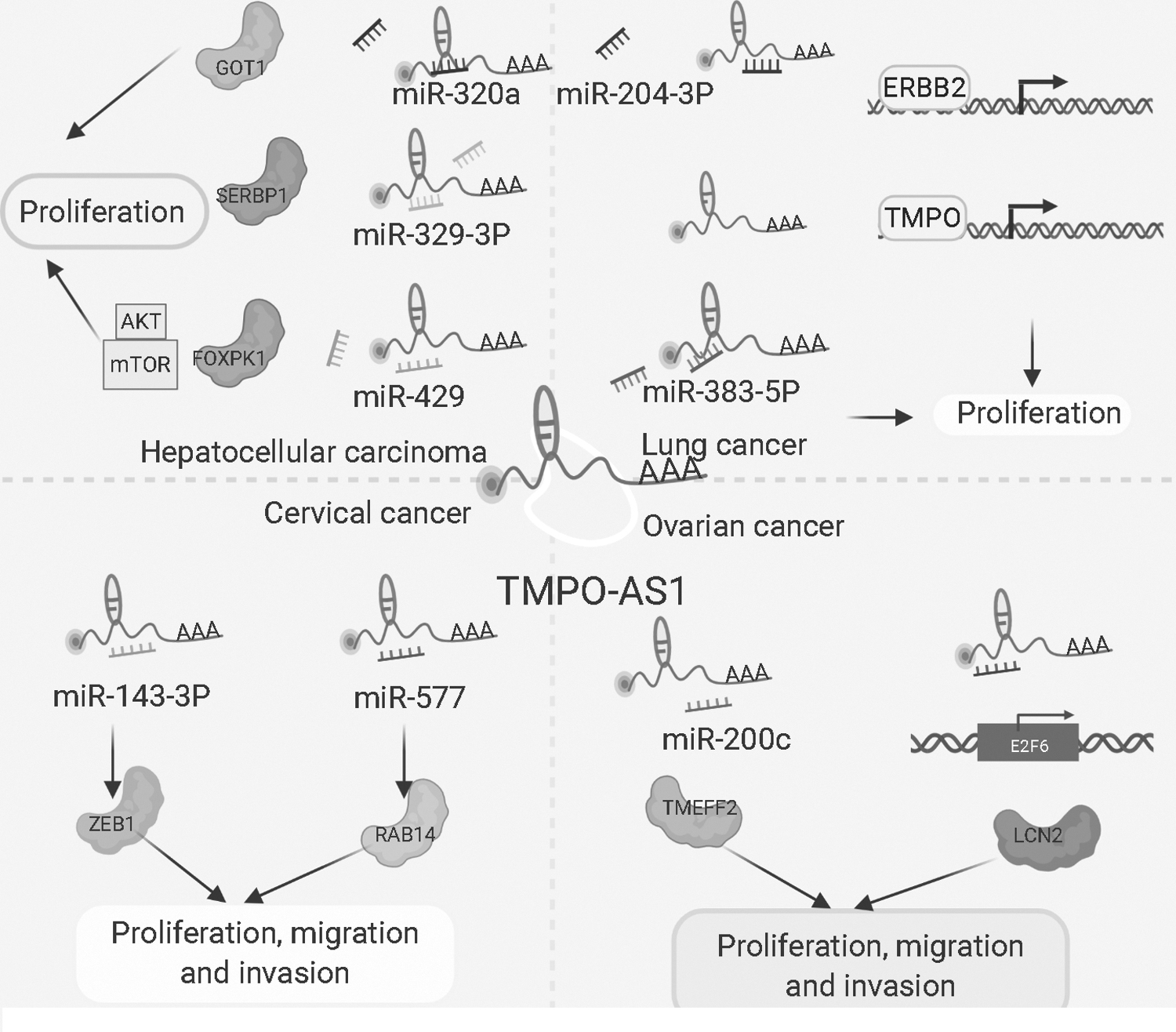
The regulation mechanisms of TMPO-AS1 in various cancers.
Overexpression of Thymopoietin-Antisense RNA 1 Has Close Relationship with Clinical Features
AS1, antisense RNA 1; TMPO, thymopoietin.
Thymopoietin-Antisense RNA 1-Related Regulation Mechanism in Cancer Cell Lines
E2F6, E2F transcription factor 6; EBF1, EBF transcription factor 1; EMT, epithelial/mesenchymal transition; ESR1, estrogen receptor 1; LCN2, olipocalin-2; RAB14, Rab14 GTPase; TMEFF2, two follistatin motifs 2; ZEB1, zinc finger E-box-binding homeobox 1.
Lung Cancer
Lung cancer has become the leading malignancy with 1.8 million affected individuals and 1.6 million deaths worldwide (Ferlay et al., 2015). The 5-year survival rate is no more than 17% (Hirsch et al., 2017). Non-small-cell lung cancer accounts for 75–80% of lung cancer cases, and LUAD is the most common subtype with a medium overall survival rate of <16% (Horn et al., 2017). Although advanced strategies have improved lung cancer prognosis, early screening and early detection are vital to improve patient survival. There is an extremely urgent need to elucidate the underlying mechanisms of carcinogenesis and progression to identify efficient and reliable biomarkers for early detection, diagnosis, and cancer treatment.
LncRNAs have already provided unique opportunities and challenges for cancer diagnosis and therapy (Loewen et al., 2014; Beermann et al., 2016; Li et al., 2019), of which TMPO-AS1 is a newly recognized lncRNA. Zhou et al. (2019) and Li et al. (2016) performed bioinformatics analysis of The Cancer Genome Atlas (TCGA) database, and their results indicated that TMPO-AS1 is upregulated and may function as a prognostic lncRNA in LUAD (Wang et al., 2019b). Zhou et al. observed that the transcription of TMPO-AS1 expression in advanced stages (stages III–IV) was higher than in early stages (stages I–II). They also established that the low expression level of TMPO-AS1 was associated with a higher survival rate in LUAD (Zhou et al., 2019). The functional analysis indicated that TMPO-AS1 functions in cell division, DNA repair, and DNA replication (Zhou et al., 2019). Moreover, TMPO-AS1 expression was significantly increased in non-small-cell lung cancer (NSCLC) tissues compared with adjacent normal tissue (Qin et al., 2019; Mu et al., 2020). Yu et al. (2020) revealed that the overexpression of TMPO-AS1 was closely related to NSCLC-related progression. In in vitro studies, increased TMPO-AS1 promoted proliferation, migration, and invasion and inhibited apoptosis in lung cancer lines (Yu et al., 2020). Qin et al. (2019) reported that both TMPO-AS1 and TMPO were significantly overexpressed in NSCLC clinical samples, which was linked to adverse clinical outcomes (Qin et al., 2019). The upregulation of TMPO-AS1 was closely related to advanced TNM stage and lymph node metastasis (p < 0.001). The increased TMPO expression was remarkably associated with an aggressive phenotype and tumor size in NSCLC tissues (Qin et al., 2019). It was also validated that TMPO-AS1 knockdown could inhibit tumor cell line growth and invasion in vitro and promote tumorigenesis in vivo (Qin et al., 2019). Peng et al. demonstrated by bioinformatics analysis that TMPO-AS1 was upregulated in NSCLC in both simulated data and real pairwise data of cancer and standard samples. Cyclin-dependent kinases (Cdks) are a family of protein kinases that play important roles in cell cycle control, mRNA expression, transcription, and differentiation (Bury et al., 2021). Researchers also figured out that TMPO-AS1 downregulation might suppress cellular apoptosis in lung cancer cells through modifying the miR-143-3p/CDK1 axis (Peng et al., 2017). In a similar fashion, Mu et al. showed that the TMPO-AS1 was significantly upregulated in LUAD tumor samples in comparison with standard models. The acceleration of TMPO-AS1 in in vitro studies facilitated the proliferation, migration, and invasion abilities of cells. Knocking down TMPO-AS1 could inhibit LUAD cell growth and invasion. These findings revealed that TMPO-AS1 presents oncogenic characteristics during the progress of NSCLC.
Hepatocellular Carcinoma
HCC, an aggressive form of cancer with high recurrence rates and mortality, is the fourth leading cause of cancer-associated death globally, and its impact is expected to increase in the coming years (Faivre et al., 2020). Significant progress has been achieved through advanced therapeutics for HCC (Rebouissou and Nault, 2020). Carcinogenesis in HCC is a multistep process with a complex interaction of various genetic backgrounds and the tumor microenvironment (Yang et al., 2019b; Rebouissou and Nault, 2020). Research on epigenetics alterations has provided a new perspective of the pathogenesis of HCC, while identifying useful novel serum biomarkers, such as proteins and miRNAs, could help to facilitate the early detection of HCC (Klingenberg et al., 2017). TMPO-AS1 functions as an oncogene in HCC carcinogenesis and tumor progression. Wang et al. (2020), Guo and Wang (2020), and Liu and Shen (2020) reported that TMPO-AS1 was overexpressed in clinical HCC samples as compared with matched noncancerous tissues, as shown by reverse transcription quantitative real-time polymerase chain reaction (RT-qPCR) (). In clinical practice, upregulated TMPO-AS1 is associated with advanced stages and worse prognosis (Wang et al., 2020). These scholars also investigated the TMPO-AS1 function both in cell lines and in vivo. The increased TMPO-AS1 expression was closely related to tumor progression activities, such as cell proliferation, invasion, migration, and epithelial/mesenchymal transition (EMT) process (Guo and Wang, 2020; Liu and Shen, 2020; Wang et al., 2020) Liu and Shen (2020) also demonstrated that upregulated TMPO-AS1 expression has a close relationship with tumor stemness, and it inhibited HCC cell apoptosis. These results uncovered that the lncRNA TMPO-AS1 could contribute to carcinogenesis, tumor progression, and stemness. However, the potential of TMPO-AS1 as a therapeutic target in HCC needs to be further explored.
Colorectal Cancer
CRC has become the third leading malignancy worldwide. Although some progress has been made in early detection and therapies, most cases are diagnosed in advanced stages and feature high metastasis and reoccurrence rate even after surgery (Okugawa et al., 2015; Javed et al., 2020; Ogunwobi et al., 2020). Recent studies have revealed that lncRNAs act as a sponge by targeting certain RNA sequences, thus sequestering the expression of miRNAs and influencing the posttranscriptional regulation of downstream gene expression (Wang et al., 2019a). The lncRNA/miRNA/mRNA interactions have been detected in a broad spectrum of carcinogenic and malignancy activities associated with CRC (Sun et al., 2018; Wei et al., 2019). LncRNA TMPO-AS1 was found upregulated in both CRC tumor tissues and cell lines. Researchers demonstrated that TMPO-AS1 expression was upregulated in CRC tumors and associated with patients' clinicopathological features in advanced stages, such as lymph node and distant metastasis (Mohammadrezakhani et al., 2020). Zhao et al. reported that the increased TMPO-AS1 was detected by RT-qPCR in CRC cell lines (SW480, HCT15, SW1116, and HCT116), whereas miR-143-3p expression was significantly decreased in comparison with normal connective mucosal epithelial cells (NC M460) (Gang et al., 2020). Furthermore, it was validated that TMPO-AS1 deficiency remarkably suppresses the proliferation, migration, and invasion abilities of cancer cells in vitro. The bioinformatics analysis indicated that TMPO-AS1 could be targeting the miR-143-3P site, and the luciferase assay uncovered that TMPO-AS1 could be binding with miR-143-3P and negatively regulate miR-143-3P expression in CRC cell lines. In in vivo studies, TMPO-AS1 deficiency could suppress tumor volume and weight, suggesting that the lncRNA TMPO-AS1 might act as a prognostic tumor marker and thus pave ways for novel options of CRC therapy.
Gastric Cancer
GC is the most common malignancy and the leading cause of cancer-related death of the digestive tract. In GC, the 5-year overall survival rate was reported as just over 60% in the early stage, whereas that for patients in advanced stages with distant metastasis was <5% (Wei et al., 2020; Yuan et al., 2020). Recently, lncRNAs were demonstrated to exhibit improved accuracy, sensitivity and specificity for cancer diagnosis, prognosis, drug response, and treatment efficacy (Dragomir et al., 2020; Nie et al., 2020; Wei et al., 2020). TMPO-AS1 is a novel lncRNA that functions as an oncogene in GC carcinogenesis and progression (Sun and Han, 2020). In the study of Zhao et al., increased TMPO-AS1 expression was associated with advanced stages, such as those featuring aggressive clinicopathological characteristics and poor overall survival. In in vitro studies, the overexpression of TMPO-AS1 facilitated GC cell malignancy activities, such as proliferation, migration, and invasion. The upregulation of TMPO-AS1 triggers a severe cascade reaction of EMT. Prediction based on the online database indicated that the 3′untranslated region (3′-UTR) of SRY-related high-mobility group box 4 (SOX4) contains a miR-140-5p banding target. The elevated TMPO-AS1 could band with mi-140-5p and promote SOX4-induced EMT in vitro (Sun and Han, 2020). TMPO-AS1 has the potential to become an indicator of GC tumor malignancy and therapeutic targets in the future, although further research is needed in this regard.
Breast, Cervical, and Ovarian Cancers
Breast cancer, cervical cancer, and ovarian cancers are the most commonly occurring malignancies severely threatening women's health (Adiga et al., 2020; Britt et al., 2020; Qian et al., 2020), with the morbidity rate increasing annually (Kohn et al., 2013). Improvements of the sensitivity and specificity of early detection biomarkers are strongly linked to greater chances of cancer survival (Kumar et al., 2020). Emerging evidence suggests that lncRNAs play an essential role in the biological process, particularly in such cancers, which considerably changes the concept of the genome's functional aptitude (Brown et al., 2020). The lncRNA TMPO-AS1 has been characterized as an oncogene with a vital role in female tumors, for example breast cancer (Brown et al., 2020), cervical cancer (Yang et al., 2019a), and ovarian cancers (Abildgaard et al., 2019).
Previous studies have reported that lncRNAs diversely function in transcriptional, translational, and posttranslational processes through interactions with proteins, RNA, and DNA (He et al., 2020a). LncRNAs are also involved in DNA repair, cell proliferation, and EMT through regulating the expression of various genes linked to carcinogenesis and tumor progression. TMPO-AS1 was demonstrated to have abnormal expression in breast cancer (Mitobe et al., 2020), cervical cancer (Zhao et al., 2020), and ovarian cancers (Li et al., 2020a). In triple-negative breast cancer, the upregulation of TMPO-AS1 was associated with tumor proliferation-related biomarkers. Elevated TMPO-AS1 positively correlated with advanced tumor stages (p = 0.0074), pathological T factor (p = 0.022), histological grade (p = 0.018), and HER2 status (p = 0.026) (Mitobe et al., 2020). TMPO-AS1 knockdown also inhibited proliferation-related gene expression, such as that of cell division cycle 6 (CDC6) and mitotic arrest-deficient 2-like 1 (MAD2L1). In in vitro studies, the upregulation of TMPO-AS1 suppressed the estrogen receptor 1 (ESR1) mRNA expression through RNA/RNA interaction at the 3′-UTR of ESR1 (Mitobe et al., 2020). The elevation of TMPO-AS1 regulates E2F- and transforming growth factor (TGF)-related signaling pathways and promotes tumor progression. It was further established that TMPO-AS1 deficiency strongly impaired the estrogen-dependent upregulation of growth-regulating estrogen receptor binding 1 (GREB1) and WNT1-inducible signaling pathway 2 (WISP2). These findings provide an insight into understanding the molecular mechanisms underlying the functions of TMPO-AS1 in regulating breast cancer malignancy activities.
In ovarian cancer, TMPO-AS1 had significantly higher expression in tumor tissues based on RT-qPCR. In ovarian cancer cell lines, TMPO-AS1 knockdown significantly suppressed the drug resistance and malignancy activities. Furthermore, TMPO-AS1 was evidenced to function as a sponge targeting miR-200c and downregulating its expression. As demonstrated by the dual-luciferase reporter gene assay, miR-200c could target transmembrane protein with epidermal growth factor and two follistatin motifs 2 (TMEFF2). Elevated TMPO-AS1 expression activated the mRNA expression of TMEFF2 and coactivated the PI3K/Akt signaling pathway through targeting miR-200c, thus inhibited drug resistance and metastasis (Li et al., 2020a). TMPO-AS1 was also upregulated in ovarian cancer tissues and cell lines in the study of Zhao et al. They validated that increased TMPO-AS1 activates the expression of lipocalin-2 (LCN2) through binding to E2F transcription factor 6 (E2F6). As a whole, TMPO-AS1 functions as an oncogene and stimulates the malignancy activities of ovarian cancer (Zhao et al., 2020).
Cervical Cancer
Currently, cervical cancer is the second leading threat to women's health, with ∼500,000 new cases diagnosed and over 300,000 related deaths occurring annually worldwide (Rob et al., 2010). The 5-year survival rate at an early stage is 88–97%, thus the improvement of early detection efficiency is highly beneficial for patient survival (Gadducci and Cosio, 2020). A growing pool of evidence indicates that lncRNAs are involved in the initiation and promotion of cervical cancer development (Tornesello et al., 2020).
LncRNAs are also considered promising biomarkers, and are better candidates than proteins and genes for recognizing oncogenes and the activation of malignant processes. TMPO-AS1 as a newly identified lncRNA was shown to be significantly upregulated in cervical cancer tissues and corresponding cell lines in comparison to normal tissues and normal cells, therefore it has become a biomarker in cervical cancer diagnosis and treatment.
Overexpressed TMPO-AS1 promotes the malignant behaviors of cervical cancer cells, such as proliferation, migration, and invasion (Yang et al., 2019a; Gang et al., 2020). Gang et al. (2020) showed that TMPO-AS1 could function as a sponge targeting miR-143-3p and subsequently inactivate miRNA regulation. Furthermore, the inhibition of mi-143-3P elevated the expression of zinc finger E-box-binding homeobox 1 (ZEB1). Therefore, the upregulated expression of ZEB1 enhanced cell proliferation, migration, and invasion both in vitro and in vivo (Gang et al., 2020). Yang et al. (2019a) validated that TMPO-AS1 could bind with miR-577. Moreover, the TMPO-AS1/miR-577/Rab14 GTPase (RAB14) regulatory axis was shown to be involved in cervical cancer pathogenesis and act as an essential regulatory role in cervical cancer progression (Yang et al., 2019a). These studies highlighted that TMPO-AS1 functions as a promising biomarker and therapeutic target for cervical cancer patients.
The TMPO-AS1 was upregulated in esophageal cancer cell lines (Gao et al., 2020). Increased TMPO-AS1 expression promotes tumor cell migration, invasion, and EMT through inhibiting mi-498 expression. Propofol could inhibit malignant activities under hypoxic conditions. Studies also demonstrated that TMPO-AS1 overexpression weakened this inhibitory function of propofol and enhanced tumor progression (Gao et al., 2020).
Bladder Cancer
Bladder cancer is the tenth most frequent cancer with high risk of recurrence and treatment failure, which leads to poor prognosis (Schneider et al., 2019; Afonso et al., 2020), low quality of life, and increased mortality.
Many studies have validated the role of lncRNAs in cancer development, progression, and drug resistance by transcriptional or posttranscriptional modifications.
He et al. detected its high expression in bladder cancer tumor tissues and cell lines. In bladder cancer, the expression of TMPO-AS1 positively correlated with muscle invasiveness and advanced tumor stages. Moreover, TMPO-AS1 deficiency inhibited tumor proliferation and migration in in vitro studies (He et al., 2020b). Luo et al. (2020) demonstrated that elevated TMPO-AS1 expression predicts unfavorable prognosis in bladder cancer. They also verified that TMPO-AS1 functions as competing endogenous RNAs (ceRNAs) binding with miR-98-5P and inhibiting its function, thus activating downstream gene EBF transcription factor 1 (EBF1) expression. Upregulated EBF1 expression promotes tumor proliferation, migration, invasion, and inhibits apoptosis (Luo et al., 2020). In 187 LSCC tumor tissues, TMPO-AS1 was overexpressed compared with non-tumor samples. The researchers also explored the relationship between clinical features and TMPO-AS1 expression, and the result indicated that the increase in expression positively correlated with the clinical stage (p = 0.020) and lymph node metastasis (p = 0.027), but was not connected with age, gender, tobacco exposure, or tumor differentiation (p > 0.05) (Zhang et al., 2020b). Patients with high TMPO-AS1 expression had poor prognosis compared with those in the low TMPO-AS1 expression group. Accordingly, TMPO-AS1 might be a possible prognostic biomarker in LSCC.
Other Cancers
The upregulation of TMPO-AS1 was also validated in prostate cancer, thyroid cancer (Li et al., 2020b), retinoblastoma (Peng et al., 2020), osteosarcoma (Cui and Zhao, 2020; Liu et al., 2020), and Wilms tumor (Zhang et al., 2020a). In these cancers, increased TMPO-AS1 could function as ceRNA and regulate tumor progression activities by the blncRNA/miRNA/downstream gene expression axis. In vitro studies of osteosarcoma showed that TMPO-AS1 regulates tumor progression through the miR-329/E2F1 axis by targeting miR-329 and facilitating E2F1 expression (Liu et al., 2020). It was demonstrated by Cui and Zhao (2020) that TMPO-AS1 inhibits the Wnt/β-catenin pathway by regulating the miR-199a-5p/WNT7B axis and thus promoting cell proliferation and tumor progression, and inhibiting tumor cell apoptosis. In thyroid cancer, TMPO-AS1 was significantly overexpressed in TC tissues and cell lines. On the other hand, TMPO-AS1 knockdown in TC cell lines attenuated cell growth and enhanced cell apoptosis. It was also validated that miR-498 expression was negatively regulated by TMPO-AS1, thus elevating TMPO expression (Li et al., 2020b). The high expression of TMPO-AS1 occurred in RB tissues and was positively correlated with tumor stage (p < 0.001). The elevated TMPO-AS1 expression could promote hypoxia-inducible factor-1 alpha expression by binding with miR-199a-5p, and thereby encourage the malignant phenotype of retinoblastoma (Peng et al., 2020).
Conclusions
A wealth of studies has illustrated the irreplaceable role of lncRNAs in the interplay of transcription controls in gene expression (Gowthaman et al., 2020; Guo et al., 2020b). LncRNAs are crucial regulators in diverse cellular contexts and biological processes, especially in cancers where they are linked to carcinogenesis and tumor progression both at transcriptional and posttranscriptional levels (Fabrizio et al., 2020). TMPO-AS1, a newly identified lncRNA, plays an essential role in carcinogenesis and tumor progression. As evidenced by recent studies, TMPO-AS1 is highly expressed in various cancers and is correlated with clinical characteristics, advanced tumor stage, and poor prognosis. In in vitro studies, upregulated TMPO-AS1 expression was shown to function as a sponge of ceRNAs, targeting and binding with miRNAs and thus inhibiting miRNA expression, which in turn contributes to the overexpression of downstream genes. During these processes, the aberrant TMPO-AS1 expression regulates the lncRNA/miRNA/target gene axis, activates proliferative pathways, and facilitates tumor initiation and development.
In summary, the oncogenic effects associated with the novel lncRNA TMPO-AS1 in various cancers were summarized based on up-to-date research results. These implied that elevated TMPO-AS1 expression is a potential diagnostic and therapeutic target for cancers. Nevertheless, the exact role and biological function of TMPO-AS1 needs to be clarified in further research. Recent efforts to investigate the regulatory mechanisms of TMPO-AS1 are still in the preliminary stage, thus there is much room for future investigation in this field.
Footnotes
Authors' Contributions
Q.Z. and J.J. prepared and drafted the article. Z.Z., Q.C., and W.L. prepared the figures and tables. Z.C. designed and funded the study. All authors read and approved the final article.
Disclosure Statement
No competing financial interests exist.
Funding Information
This study was funded by the National Science and Technology Major Project of China (Nos. 2018ZX10302206 and 2017ZX10202203), and Dr. Zheng was supported by the Zhejiang University Academic Award for Outstanding Doctoral Candidates (2020052).