




Abstract
MicroRNA is a small noncoding RNA that plays a role in regulating gene expression. miR-1271 is a tumor suppressor microRNA, which is related to the biological changes of many cancers. miR-1271 is considered a biomarker with a potential prognosis and high therapeutic value in tumors. Besides, the expression of miR-1271 is also regulated by many factors. In this study, we summarize the role of miR-1271 in tumors, focusing on the molecular mechanisms of the target genes of miR-1271. Our review will provide a comprehensive understanding of miR-1271 in tumors, as well as ideas for subsequent tumor research related to miR-1271.
Introduction
MicroRNA is a type of small noncoding RNA that inactivates or decreases the expression of target genes by regulating the target mRNA (Shruthi Sureshan and Habeeb, 2015). It is a large family of highly conserved noncoding genes that negatively regulate the expression of a wide variety of genes by binding to complementary sequences in the 3′-untranslated regions (UTRs) of target mRNAs (Liu et al., 2019a). In addition, miRNA expression itself is dysregulated in human malignancies through several mechanisms, including amplification or deletion of genomic regions containing miRNAs, abnormal transcriptional regulation of miRNAs, and defective epigenetic changes (Jansson and Lund, 2012).
Among them, miR-1271 is a tumor suppressor microRNA that has been widely researched in recent years. In the digestive system, respiratory system, gynecology, urinary system, blood system, and other tumors, miR-1271 regulates disease progression and prognosis in different ways.
miR-1271 and Its Related Genes in Multiple Tumors
We found 38 genes related to miR-1271 in different tumors, including 1 circRNA and 3 long noncoding RNAs (lncRNAs) (Tables 1 and 2). In tumor tissues or cell lines, the decreased expression of miR-1271 is accompanied by an increased expression of the corresponding target genes. This may imply that the high expression of these miR-1271 targeting genes will promote tumorigenesis. In different tumors, abnormal expression of miR-1271 can lead to changes in multiple signaling pathways. Based on cancer type, we tried to find some common pathways or similarity in miR-1271 regulators' function. It seems that in digestive system tumors, miR-1271 mainly acts on upstream regulators, and most of them affect the occurrence and development of cancer through epithelial–mesenchymal transition (EMT) pathway. In tumors of the reproductive system, miR-1271 can regulate the expression level of target mRNA through both upstream regulators and downstream genes, playing vital biological role in cell proliferation, apoptosis, and invasion. More details are illustrated in Table 3.
Upstream Genes of miR-1271
CRC, colorectal cancer; GC, gastric cancer; HCC, hepatocellular carcinoma; lncRNA, long noncoding RNA; OC, ovarian cancer; PC, pancreatic cancer.
Downstream Targets of miR-1271
miR-1271 in Different Cancer Types
EMT, epithelial-mesenchymal transition; UTR, untranslated region.
miR-1271 and upstream regulators
Among the aforementioned relevant genes, there are 26 upstream genes (Table 1). Taking the digestive system as an example: In gastric cancer (GC), Yang et al. (2014) found that miR-1271 regulated cisplatin resistance in human GC cell lines by targeting IGF1R, IRS1, mTOR, and BCL2. Xiang et al. (2015) found that miR-1271 inhibited cell proliferation, invasion, and EMT in GC by targeting FOXQ1. In hepatocellular carcinoma (HCC), Maurel et al. (2013) explained the role of miR-1271 downregulation in liver cancer. Qin et al. (2017) found that miR-1271 inhibits HCC cell proliferation. Yang et al. (2017) showed that miR-1271 reduced FOXO1 expression in HepG2 hepatocytes. Lu et al. (2017) found that Zic2 promoted tumor growth and metastasis through PAK4 in liver cancer. Sun et al. (2018) demonstrated that miR-1271 inhibited the proliferation and invasion of colorectal cancer (CRC) cells by regulating metadherin/Wnt signaling. Yao et al. (2019) found that miR-1271 enhanced the sensitivity of CRC cells to cisplatin. Wu et al. (2017) suggested that BET-Bromodomain inhibitor JQ1 synergized ABT-263 against CRC cells by inhibiting c-Myc-induced miR-1271 expression. HCG18 exerts a potential oncogenic function in CRC by enhancing MTDH/Wnt/β-catenin signaling through sponging of miR-1271 (Li et al., 2020). Xie et al. (2018) showed in pancreatic cancer (PC) that miR-1271 negatively regulated AKT/mTOR signaling and promoted apoptosis by targeting PDK1 in PC. Liu et al. (2016) found that miR-1271 inhibited migration, invasion, and EMT by targeting ZEB1 and TWIST1 in PC cells.
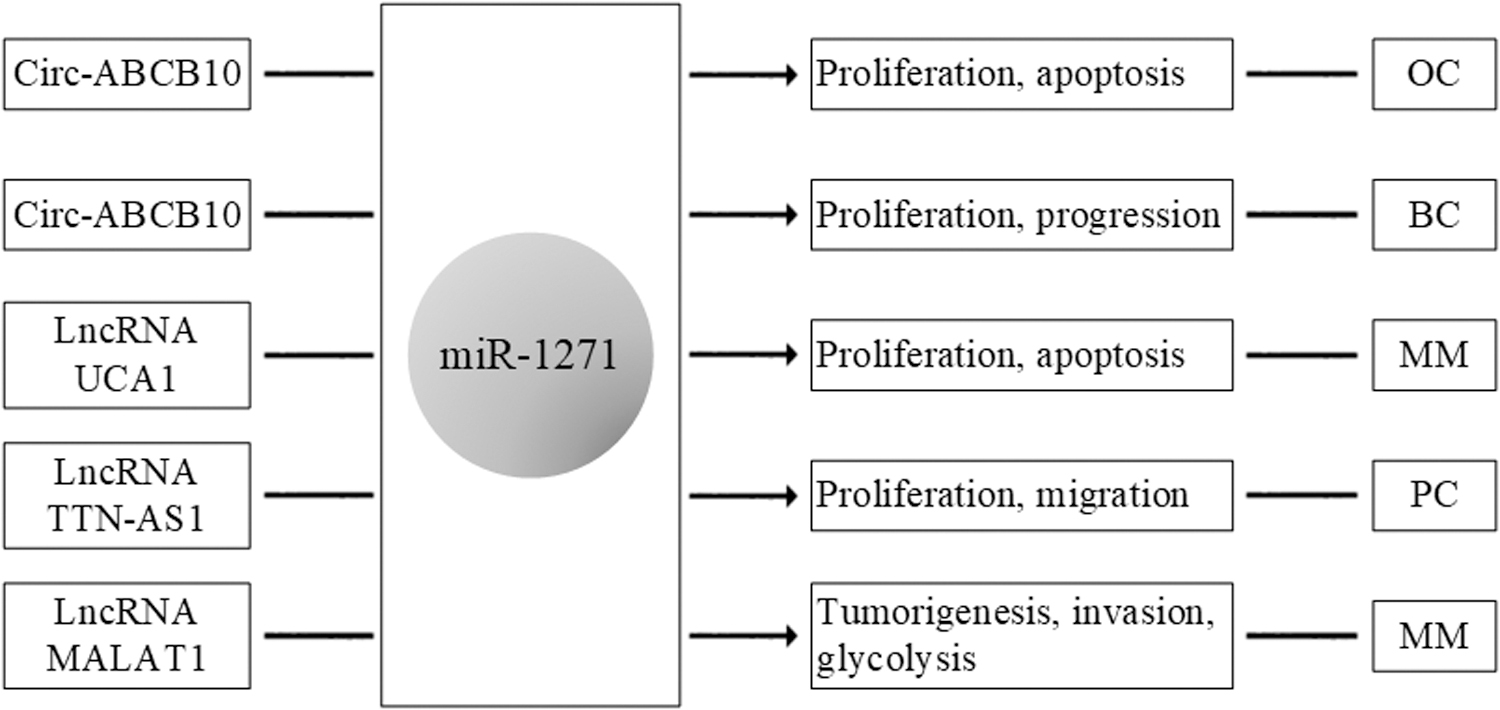
Meanwhile, among upstream regulators related to miR-1271 expression, we found that 1 circRNA and 3 lncRNAs were involved in the regulation of miR-1271 expression (Fig. 1). In epithelial ovarian cancer (OC), circ-ABCB10 correlated with advanced clinicopathological features and unfavorable survival and promoted cell apoptosis (Chen et al., 2019d). Besides, circ-ABCB10 promotes breast cancer proliferation and progression through sponging miR-1271 (Liang et al., 2017). Downregulation of lncRNA UCA1 facilitates apoptosis and reduces proliferation in multiple myeloma through regulation of the miR-1271-5p/HGF axis (Yang and Chen, 2019). lncRNA TTN-AS1 enhances cell proliferation and migration through sponging miR-1271 in prostate cancer (Zhu et al., 2019). lncRNA MALAT1 level was upregulated in multiple myeloma (MM) patients and cells and MALAT1 promoted tumorigenesis, invasion, and glycolysis through the regulation of miR-1271-5p/SOX13 axis (Liu et al., 2020b).

Upstream genes that regulate the expression of miR-1271 play a role in tumorigenesis and development.
miR-1271 and its downstream genes
We further performed the functional analysis of 10 downstream genes of miR-1271 (Table 2). Lim et al. (2018) proposed that epigenetic silencing of miR-1271 enhanced MEK1 and TEAD4 expression in GC. Chen et al. (2019e) found that miR-1271 bound to CCNA1 and played a potential tumor-suppressive role in hepatitis B virus-related liver cancer through the AMPK signaling pathway. Li et al. (2018a) demonstrated that miR-1271 acted as a metastatic and EMT inhibitor in human HCC by targeting the PTP4A1/c-Src axis. Li et al. (2018b) proposed that the inhibition of Capn4 by miR-1271 would prevent the proliferation and invasion of cancer cells in CRC. Li et al. (2017) found that overexpression of miR-1271 can inhibit the proliferation of endometrial cancer cells and induce apoptosis by targeting CDK1. Tian et al. (2019) also found that miR-1271 can also target LDHA to inhibit cell proliferation and metastasis in endometrial cancer. Xu et al. (2017) found that miR-1271 inhibited the SMO-mediated Hedgehog signaling pathway to inhibit MM cell proliferation and promote apoptosis. Chen et al. (2019c) discovered that miR-1271 can not only inhibit EMT of OC but also block the expression of mTOR, make cisplatin-induced cells sensitive to drugs, and then induce apoptosis of SKOV3 cells. miR-1271 can regulate the expression of FOXK2 and thus inhibits non-small cell lung cancer EMT and proliferation (Chen et al., 2017).
miR-1271-Related Signaling Pathways
miR-1271 is involved in regulating multiple signaling pathways, involving a total of 30 upstream genes and 11 downstream sites (Fig. 2). miR-1271 can mainly affect the occurrence and development of breast cancer, prostate cancer, and PTC through EMT (Liu et al., 2016, 2019b; Chen et al., 2019b). Lu et al. (2017) found that miR-1271 targeting gene Zic2 promotes the growth and metastasis of HCC through the PAK4 pathway. In CRC, miR-1271 plays a role in c-Myc and Wnt signaling pathways by interacting with Noxa and MDTH genes, respectively (Wu et al., 2017; Sun et al., 2018). As an effective tumor suppressor for PC, miR-1271 reduces AKT/mTOR signaling and thus exerts its proapoptotic function (Xie et al., 2018). Meanwhile, Yang et al. (2014) found that miR-1271 can regulate the cisplatin resistance of human GC cells by targeting the IGF1R/IRS1 signaling pathway. In addition, miR-1271 targets PTP4A1, mTOR, and FOXK2 in HCC, OC, and NSCLC, respectively, thereby exerting its tumor-suppressive effects through the EMT signaling pathway (Chen et al., 2017, 2019c; Li et al., 2018a).

miR-1271-mediated signaling pathway in tumors.
miR-1271-Related Cellular Functions
As shown in Figure 3, the related cellular functions of miR-1271 involve cell growth, proliferation, invasion and metastasis, and apoptosis.
Cellular function regulated by miR-1271 and its upstream and downstream genes.
Lim et al. (2018) found that miR-1271 can inhibit the growth, metastasis, and invasion of GC EpCAM+/CD44+ GC cells. Through targeted inhibition of PAK4, miR-1271 can modulate the Raf/MEK/ERK pathway to inhibit liver cancer cell growth (Lu et al., 2017).
In CRC, miR-1271 can inhibit the invasion of SW480, HCT116, and LoVo cells by regulating the metadherin/Wnt signaling pathway (Sun et al., 2018) and downregulating Capn4 (Li et al., 2018b). In addition, miR-1271 downregulates MTDH, activates the Wnt signaling pathway, and inhibits CRC cell proliferation and invasion (Sun et al., 2018). Chen et al. (2019b) found that in papillary thyroid carcinoma, increased expression of miR-1271 can downregulate IRS1 gene expression, thereby inhibiting the migration and proliferation of TPC-1 cells.
miR-1271 can target PTP4A1/c-Src, thereby inhibiting the transfer of HCC (Li et al., 2018a). In MM, miR-1271 can target the SMO gene by inhibiting the smoothened-mediated Hedgehog signaling pathway to inhibit cell proliferation and promote apoptosis (Xu et al., 2017). In HBV-related HCC, the high expression of miR-1271 can downregulate CCNA1, thereby inhibiting the replication, proliferation, metastasis, and invasion of LO-2 and HCC HepG2.2.15 cells, and the high expression of miR-1271 also activates AMPK signaling pathway to accelerate apoptosis of HCC cells (Chen et al., 2019e). In addition, miR-1271 can inhibit AKT/mTOR signaling pathway by downregulating PDK1 in PC, thereby promoting apoptosis of PC cells (Xie et al., 2018).
In epithelial OC, the upregulation of circ-ABCB10 negatively regulates miR-1271, promotes cancer cell proliferation, and reduces cancer cell apoptosis (Chen et al., 2019d). In BC, circ-ABCB10 promotes cancer cell proliferation by binding to miR-1271 (Liang et al., 2017). The downregulation of miR-1271 expression by lncRNA UCA1 can inhibit the proliferation of human MM RPMI8226 cells and promote its apoptosis (Yang and Chen, 2019). Zhu et al. (2019) found that lncRNA TTN-AS1 promotes the proliferation of 22Rvl cells and the metastasis of prostate malignant tumors by inhibiting the expression level of miR-1271 in PC. Liu et al. (2020b) also found that lncRNA MALAT1 further affects tumorigenesis, invasion, and glycolysis by affecting the miR-1271-5p/SOXQ13 axis in MM.
miR-1271 and Chemotherapy and Radiotherapy Resistance of Cancer Cells
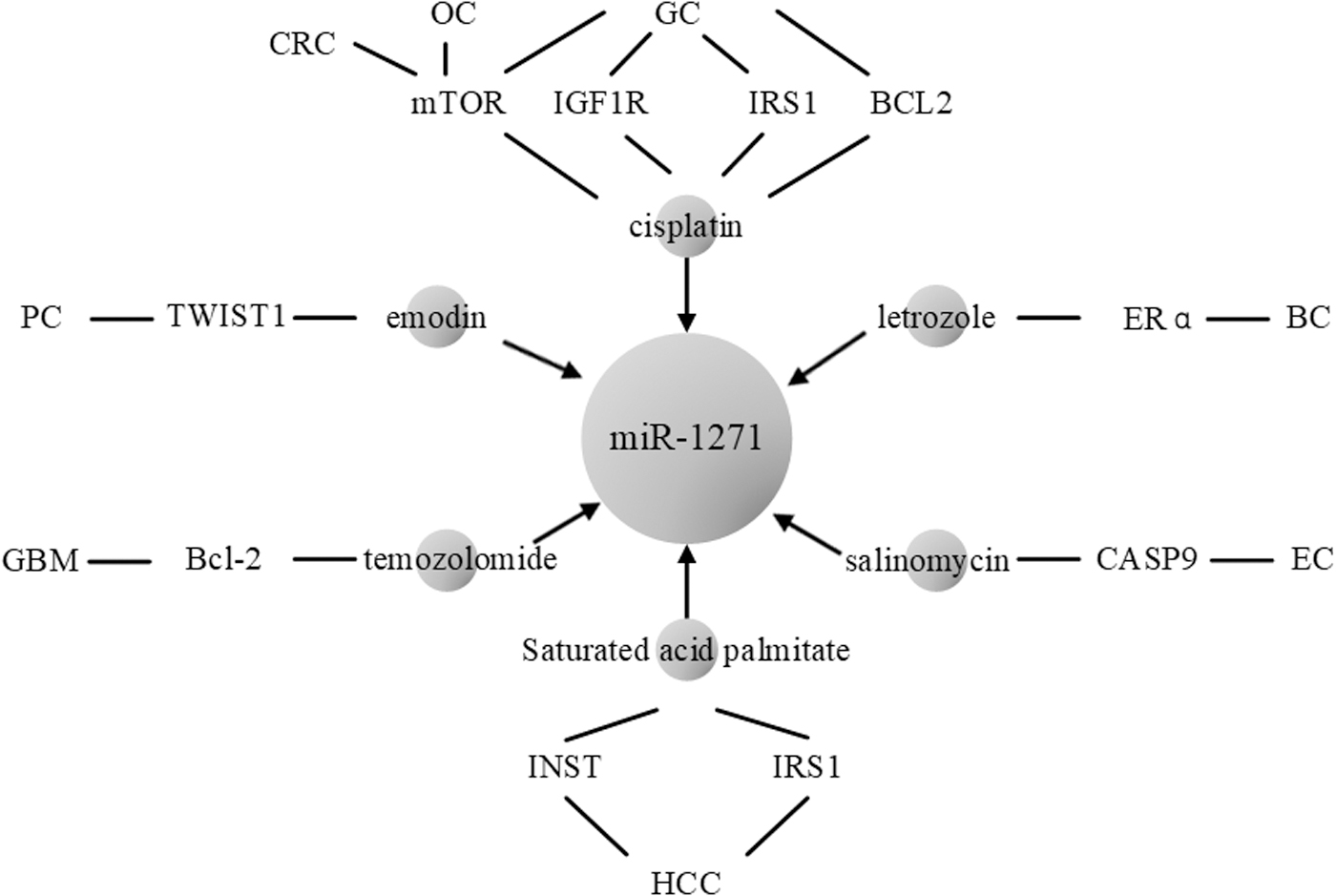
As shown in Figure 4, miR-1271 is closely related to the sensitivity and therapeutic effects of various tumor drugs. Target genes of miR-1271 include IGF1R, IRS1, mTOR, and BCL2, which are closely related to cisplatin resistance of human GC cell lines (Yang et al., 2014). miR-1271 can downregulate mTOR, which can increase the sensitivity of CRC SW480 cells (Yao et al., 2019) and OC SKOV3/DDP cells to cisplatin (Chen et al., 2019c). In addition, miR-1271 inhibits ERα expression, thereby conferring letrozole resistance in breast cancer (Yu et al., 2017). miR-1271 can target CDK1, which will further inhibit the growth of SMMC-7721 and HuH-7 cells and enhance the sensitivity of liver cancer to radiotherapy (Liu et al., 2020a).
Correlation between miR-1271 and tumor drug resistance.
Januszyk et al. (2020) found that salinomycin can upregulate miR-1271 gene expression in endometrial cancer cells. Bcl2 promoted temozolomide-induced apoptosis in glioblastoma multiforme (Yang et al., 2018) by inhibiting miR-1271. Emodin can upregulate the expression of miR-1271, which can suppress EMT and metastasis of PC (Li et al., 2018c). Saturated fatty acid palmitate has also been found to upregulate miR-1271 to inhibit INSR and IRS-1 expression in HepG2 cells, resulting in impaired insulin signaling (Yang et al., 2016).
The aforementioned evidence shows that cancer treatment drugs can interfere with the expression of miR-1271, and the targeting gene of miR-1271 is also related to drug sensitivity and radiosensitivity.
miR-1271 and Tumor Prognosis
A retrospective study found that GC patients with high miR-1271 expression had a higher 3-year survival rate (Liu et al., 2019b). Lin et al. (2017) found that HCC patients with low miR-1271 expression have high expression of the target gene FOXK2, which corresponds to a worse overall survival rate and a shorter disease-free survival period. In epithelial OC, Circ-ABCB10 can downregulate the expression of miR-1271. Patients with epithelial OC with low miR-1271 expression have a lower degree of tumor differentiation, a larger tumor size, a more advanced stage of the International Federation of Gynecology and Obstetrics (FIGO), and a lower overall survival rate (Chen et al., 2019d). Similarly, Jiao et al. (2019) found that the downregulation of miR-1271 in OC corresponds to a reduction in overall survival.
Conclusions
MicroRNAs are a class of small noncoding RNAs, which co-ordinate gene expression networks through post-transcriptional repression of mRNAs (Huntzinger and Izaurralde, 2011). When considering the target gene ontologies at a transcriptome-wide level, previous studies has suggested that overexpression of miR-1271-5p predominantly affected genes involved in DNA organization, extracellular matrix interactions, and cellular locomotion, whereas knockdown impacted genes associated with mitochondria, post-translational protein modifications, wnt signaling, and neuronal function. In addition, strong enrichment of miR-1271 regulated genes in ontologies relating to actin filament dynamics and cellular junctions was also witnessed (Kiltschewskij et al., 2020).
According to our research, miR-1271's anticancer effect in various human tumors mainly covers the digestive system, respiratory system, obstetrics and gynecology, urinary system, blood system, and so on. The mechanism of action of miR-1271 mainly involves a variety of biological processes, including cell proliferation, apoptosis, metastasis, cell cycle regulation, and signaling pathways. The sensitivity of tumors to radiochemotherapy is also closely related to the abnormal regulation of miR-1271. At the same time, we found that high expression of miR-1271 in cancer patients implies a better overall survival. The expression of miR-1271 is also regulated by various upstream noncoding RNAs.
Moreover, miR-96 and miR-1271 have already been found to potentially regulate the same genes on cell and protein level. Individuals bearing a mutated miR-96 gene might have a less pronounced sensory deficit phenotype due to the potential compensatory activity of miR-1271 (Kiltschewskij et al., 2020). Mechanistic analyses additionally revealed that knockdown of miR-1271-5p strikingly resulted in increased expression of the highly conserved miR-96-5p, which shares an identical seed region with miR-1271-5p, suggesting the presence of feedback mechanisms that sense disruptions to miRNA levels. No change in miR-96-5p was detected after miR-1271-5p overexpression, which suggests that miR-96-5p was specifically induced in response to miR-1271-5p suppression (Kiltschewskij et al., 2020).
All in all, this review systematically analyzes that miR-1271 can affect the occurrence, progression, metastasis, prognosis, and treatment effect of tumors from multiple perspectives. Hafner et al. (2010) found that noncoding RNAs associated with argonaute proteins to direct post-transcriptional gene suppression through base pairing with target transcripts. This reveals the relevance of microRNA to protein and genomics.
Studies through in vivo and in vitro experiments have found that oncogenic microRNA was upregulated in cancer and inhibition of corresponding microRNA could successfully resensitize tumors to chemotherapy (Van Roosbroeck et al., 2017; Li et al., 2018d). As a consequence, scientists are focused on developing anti-miR to serve as a potential alternative for the treatment of cancer in the near future. What made us excited is that exo-anti-214 (Exosomes Serve as Nanoparticles to Deliver Anti-miR-214) has already been verified to reverse the resistance to DDP in GC (Wang et al., 2018c). Further research has found that the efficient delivery of anti-miR-191 in SA liposome complex was found to be highly effective in killing the cancer cells than a comparable dose of SA-free anti-miR-191 liposome complex. The formulation also showed negligible cytotoxicity in human erythrocytes (Sharma et al., 2017). In addition, mice experiment has intimated that anti-miR-181a could prolong survival from 23% to 45% in nude mice bearing chondrosarcoma xenografts (Sun et al., 2019).
Undoubtedly, more research would be needed to deepen our understanding of miR-1271 in the future.
Footnotes
Authors' Contributions
K.Z., C.C., and Y.H. collected and analyzed literature. K.Z. and M.Z. drafted the figures. K.Z., C.C., and S.D. wrote this article. All the authors conceived and gave the final approval of the submitted version.
Disclosure Statement
No competing financial interests exist.
Funding Information
This study was supported by Zhejiang Key Laboratory of Pathophysiology and K. C. Wong Magna Fund from Ningbo University.