




Abstract
Background and Purpose:
Despite the evolution and progressive improvements of ureteroscopes, problems related to visibility and maneuverability can still hinder the goals of surgical intervention. We evaluate the attributes of a dual-channel flexible ureteroscope compared with a single-channel device and discuss the implications for expanded techniques afforded by this new technology.
Materials and Methods:
In vitro measurements of active deflection, irrigant flow through the working channel, luminescence, and optical resolution were performed between the single-channel Wolf Viper and the dual-channel Wolf Cobra ureteroscopes. Characteristics were obtained with the working channels both empty and with combinations of a 200 μ holmium aser fiber, 3.0F biopsy forceps, and 1.5F, 2.4F, and 2.8F nitinol basket. Luminescence from each scope was measured using a commercial luminometer. Three blinded physicians rated the optical resolution captured electronically using a standard test image.
Results:
The single-channel scope has improved upward deflection both empty and with all but the largest single tools, with an improved range of 4 to 15 degrees. The dual-channel scope has superior downward deflection across all comparisons (average increase of 24.5 degrees) and superior upward deflection with large or multiple instruments in the working channel. Baseline flows through each individual-channel of the dual-channel scope were slower than the larger single-channel ureteroscope. Because flow can be provided through a dedicated port in the dual-channel configuration, however, overall flow, depending on instrumentation, can be up to 37 times faster than the single-channel (range 1.5–37×). Optical resolution and luminescence are comparable between the two scopes.
Conclusion:
The dual-channel flexible ureteroscope provides similar deflection characteristics to the current single-channel scope. Deflection and flow characteristics are superior, however, when larger or multiple simultaneous instruments are used in the working channel. These benefits may facilitate the development and implementation of novel endoscopic procedures.
Introduction
Although semirigid ureteroscopes have been introduced with dual working channels, to date modern flexible ureteroscopes have been limited to a single working channel. The inclusion of a second working channel may significantly increase the flow through the scope, thus having the potential to improve visibility, one of the key factors in case progression. 1 The objective of this study is to evaluate the flow, deflection, luminescence, and optical clarity characteristics of a new dual-channel flexible ureteroscope, the Wolf Cobra.
Materials and Methods
Ex-vivo deflection and flow measurements were made with both the Wolf Viper (7325.076) single-channel flexible ureteroscope and the Wolf Cobra (7326.076) dual-channel flexible ureteroscope (Richard Wolf Endoscopy, Vernon Hills, IL). All ureteroscopes tested had been used in fewer than 10 clinical procedures. Flow rate was obtained by connecting tubing from physiologic saline placed 135.7 cm (creating a pressure of 100 mm Hg) above the workbench to the working channel and running fluid for 1 minute. The fluid was captured and measured in graduated cylinders of appropriate size.
Before initiating each test, fluid was run through the channel for sufficient time to allow the flow to come to equilibrium. Flow rates were separately obtained through each channel of the Cobra ureteroscope and the single-channel of the Viper ureteroscope. Measurements were made with the channels empty and with a 1.5F Halo basket (Sacred Heart Medical, Minnetonka, MN), a 2.4F N-Compass basket (Cook Urological, Spencer, IN), a 2.8F N-Trap basket (Cook Urological, Spencer, IN), a 3.0F Piranha biopsy forceps (Boston Scientific, Natick, MA), and a 200 μ laser fiber (Laser Peripherals, MN) in both the Viper ureteroscope and in the main working channel of the Cobra ureteroscope.
Flow through the laser channel was measured empty and with the laser fiber. In addition, flow with both a 1.5F basket and laser fiber was obtained through the Viper ureteroscope. Care was taken to standardize extrusion of the tip of the working instrument 5 mm beyond the end of the working channel.
For deflection angle, each ureteroscope was flexed to its maximal deflection point and placed on a copier machine with a copy image obtained. This was performed in triplicate for both upward and downward deflection. A protractor was used to measure the angle between the ureteroscope shaft and a line parallel to the tip. The measured angle was obtained by averaging the three attempts. Care was taken to keep the ureteroscope in a straight position to maximize the deflection capabilities. For the Viper ureteroscope, these measurements were repeated with the channel empty and with each of the aforementioned tools or combinations. For the Cobra ureteroscope, the main working channel was left empty or with one of the aforementioned tools. The laser channel was either empty or had a laser fiber in place.
Luminescence was tested using a LabSphere luminometer (North Sutton, NH). The ureteroscope light cable (Wolf 8069.256, 2.5 mm cable) was attached to a Wolf 5132 300W xenon light source, and luminescence levels were measured at full light intensity on the light source (Fig. 1).
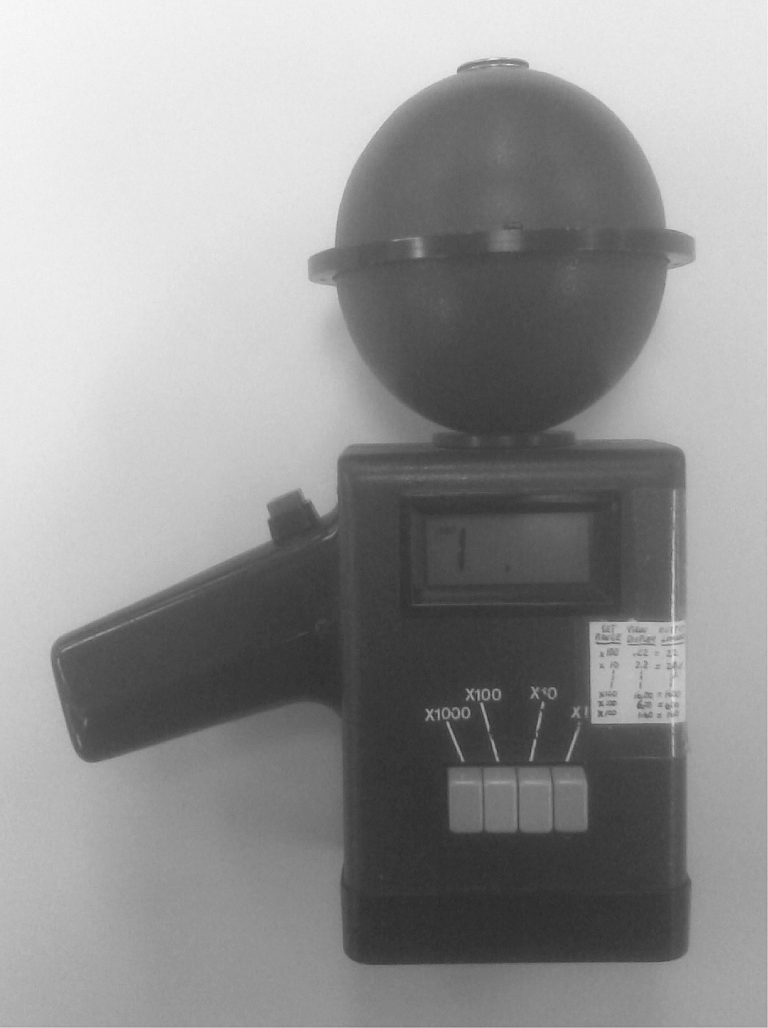
LabSphere luminometer used for assessing luminance from the ureteroscopes.
Optical resolution was measured by positioning the ureteroscope tip 2 mm from the surface of a United States Air Force resolving power test target (1901) (Fig. 2). A Wolf 8069.356 light cable (3.5 mm) was attached to a Wolf 5132 xenon light source and used to backlight the test target. A Wolf HD 1080p endocamera (85550.975) was attached to the endoscope, and images were captured on a Wolf Medicapture video recorder (5654.007). Optical resolution was then recorded by three independent observers who were blinded to the identity of the scope used for each image.
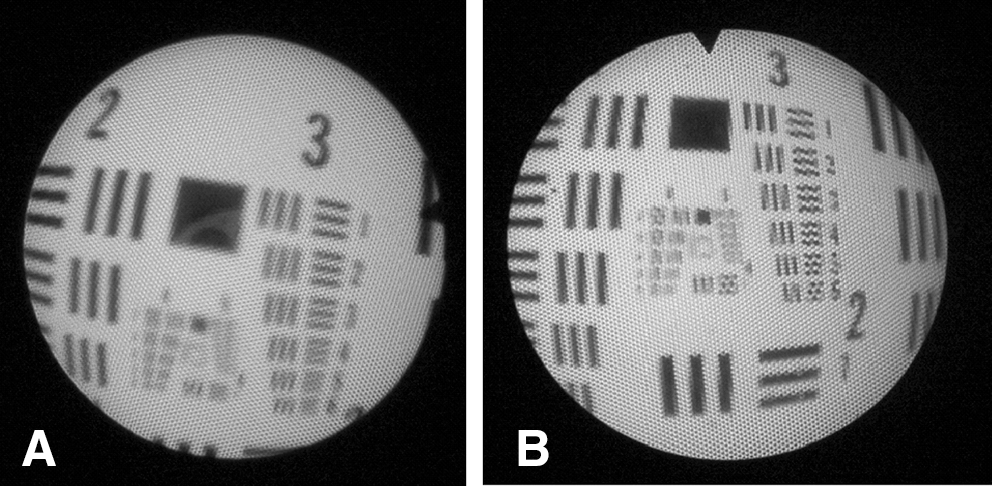
United States Air Force resolving power test target (1901) as seen through the single-channel Viper ureteroscope
Results
Table 1 shows the manufacturer's specifications for the Viper and Cobra ureteroscopes. Each of the Cobra's two channels are smaller in size (3.3F compared with 3.6F) but give a larger total cross-sectional area when added together. Distal tip sizes are equivalent (6F, beveled in both), although shaft size is slightly larger in the dual-channel ureteroscope (Cobra 9.9F, Viper 8.8F).
Table 2 has the results from the flow tests with each channel tested individually. The larger 3.6F Viper channel provides increased flow compared with a single 3.3F Cobra channel both alone and with single tools in place. Figure 3 compares the flow between the scopes in common clinical scenarios with the dual-channel scope having one channel as a working channel and a second channel dedicated to fluid flow (except when a combination of tools is used). Flow is measured through the empty laser advancement channel, except for a time when a combination of tools is used, in which case flow is assessed through this second channel with a laser fiber in place. For the single-channel scope, flow is provided through the common channel with the various tool combinations. Using a two-tailed paired Student t test, flow was significantly greater through the Cobra scope with all comparable combination of instruments with P=0.01.
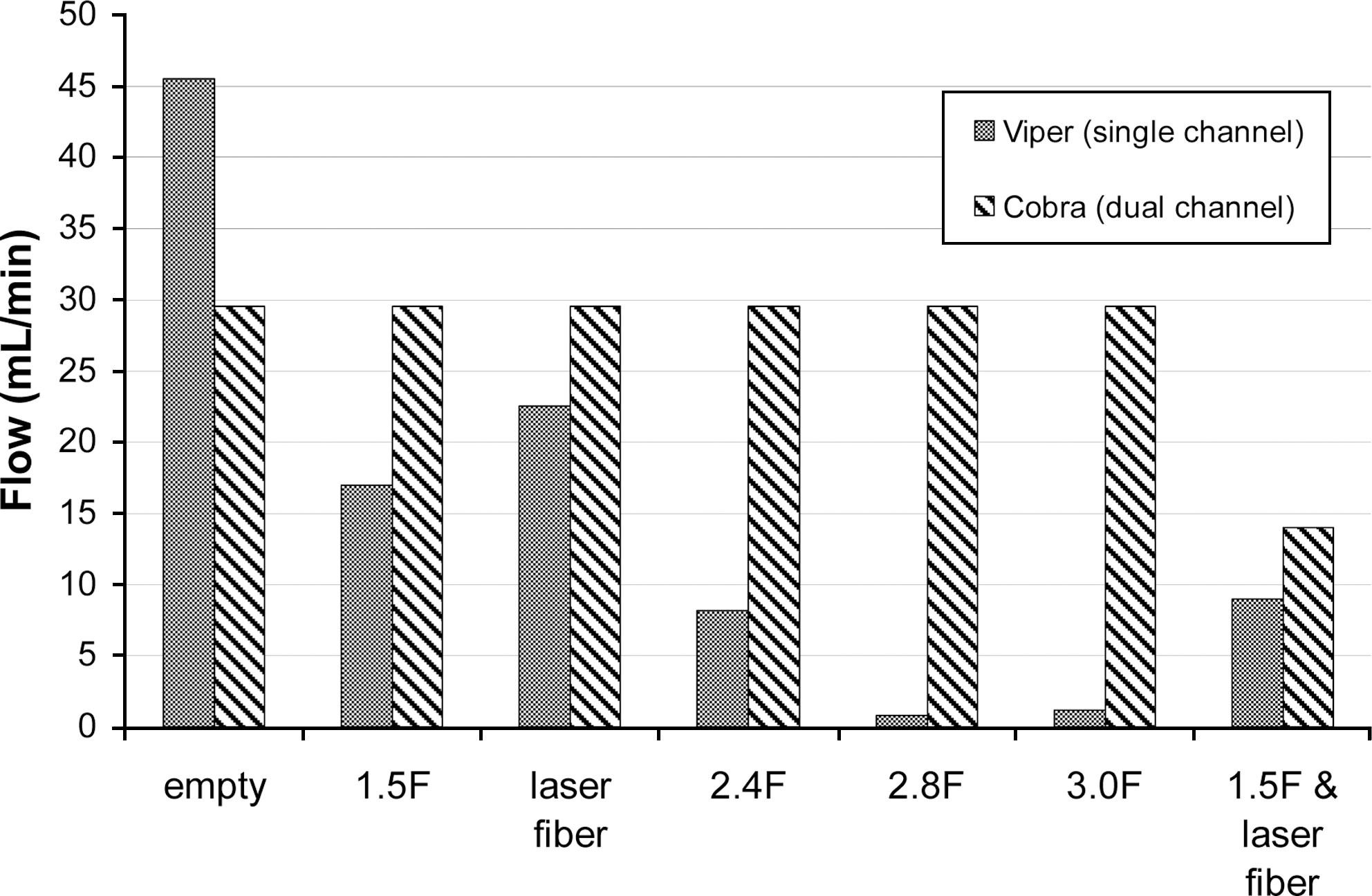
Ureteroscope flow with different tool combinations. Comparison of flow between single- and dual-channel ureteroscopes in a common clinical scenario. Cobra flow was measured through the dedicated laser channel that was always empty, except with the combination of the 1.5F basket and laser fiber, when flow was measured with the laser fiber in one channel and the basket in the other. Viper flow was measured empty and with various tool combination in the single-channel.
Results from our deflection angle testing are seen in Figure 4. With empty channels, both scopes had greater than 250 degrees of deflection. For upward deflection angle, both empty and with small single instruments (2.4F or less), the dual-channel scope had an average of 8.9 degrees less deflection. With both a laser fiber and 1.5F basket in place, however, the dual-channel ureteroscope had 8 degrees better upward deflection. Using a two-tailed paired Student t test, no statistical difference in upward deflection angle could be shown (P=0.55). For downward deflection, the dual-channel ureteroscope had improved deflection both empty and with single instruments with an average of 24.5 degrees of increased deflection. It also had improved deflection with the common working combination of a laser fiber and 1.5F basket (24.7 degrees). Using the same t test as above, the dual-channel scope had statistically significant improved downward deflection (P=0.002).
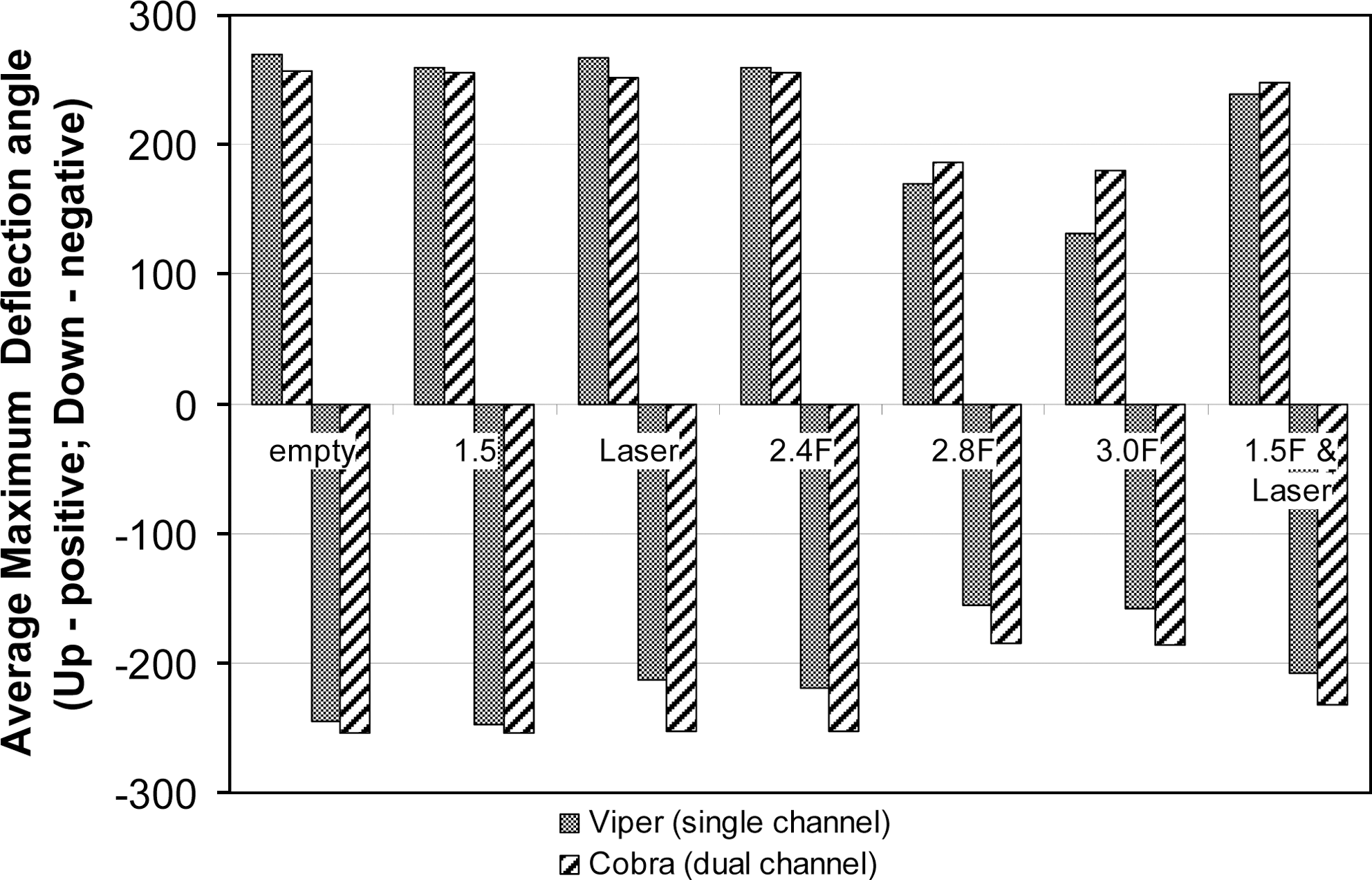
Ureteroscope deflection angle with different tool combinations. Comparison of deflection angle between single- and dual-channel ureteroscopes both empty and with different tools placed in the working channels.
Discussion
Both of these modern ureteroscopes have tip diameters of 6F, made possible by beveling at the most distal aspect (Fig. 5). They quickly enlarge to their maximum shaft diameter of 8.8F (Viper) and 9.9F (Cobra). The slightly larger size of the dual-channel scope allows for the advantages of the second channel and may contribute to its improved deflection characteristics with larger working instruments. Although this enlargement does not preclude its use with the commonly used 12F/14F ureteral access sheath, there may be added difficulty or risk if used without an access sheath or in a ureter that has not had stent placement. With this in mind, the dual-channel scope may serve some more as a specialty scope for use in scenarios like those we outline below rather than for more routine cases.
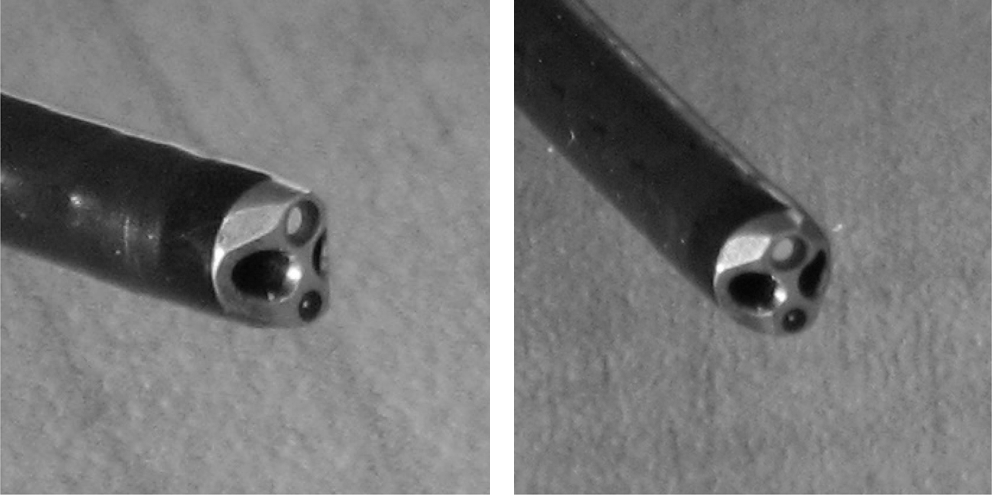
Beveled tip of the dual-channel handle Cobra ureteroscope.
According to the manufacturer's specifications, both ureteroscopes should have equal maximum upward and downward deflection. Because all ureteroscopes tested had been used clinically before testing, active deflection was lower than the manufacturer specifications. Despite this, our analysis showed deflection angles similar to that seen in other comparisons of modern single-channel flexible ureteroscopes. 3,4 The dual-channel scope had deflection in our analysis comparable to these single-channel ureteroscopes, implying that the addition of a second working channel does not impact active deflection.
Knudsen and associates 5 have shown that loss of deflection angle is a common problem relating to the durability of modern flexible ureteroscopes. At this time, it is also unknown how the smaller channel size of the Cobra scope may be affected by the use of small (200 μ laser fiber) and large (2.8–3.0F) working instruments. Further testing of the dual-channel ureteroscope will be needed to evaluate its durability in clinical practice.
Slight decreased flow at baseline was seen in the laser advancement channel compared with the main working channel, despite specifications stating that each is 3.3F. From the image of the Cobra ureteroscope seen in Figure 6, the input port of the laser channel is further from the patient end of the scope. Poiseuille's law shows that the flow is inversely related to the length of the tube, and the extra 17 cm of length on the laser advancement channel likely accounts for this difference. Although some extra flow is lost with the added length, however, the addition of the dedicated second channel for irrigation provides significantly increased flow over single-channel models when accessory instrumentation is used. Similar studies of other manufacturers' single-channel ureteroscopes report flow rates of 45 to 55 mL/min through open working channels. 3,4 Flow with the 3.0F biopsy forceps was found to be slightly better than that with the 2.8F basket in the single-channel scope, and this may be because of texture and material differences between the instruments.

Cobra dual-channel ureteroscope demonstrating two working channels
The flow rate has been documented to be a significant contributor to visibility, which is critical to successful ureteroscopic interventions. 2 In addition to the natural tendency for visibility to diminish with case progression because of stone fragmentation and mucosal irritation, effective irrigation is more critical with increasing numbers of patients receiving anticoagulation and antiplatelet medication. 6
With the most significant improvements in both deflection and flow seen with clinically relevant basket/laser combinations and with larger baskets such as the 2.4F and 2.8F basket, the Cobra's primary advantages will likely be seen in scenarios in which larger, perhaps more durable baskets would be useful, such as a large stone burden necessitating multiple basket passes and when multiple simultaneous tools provide benefit such as stone stabilization during laser ablation in a dilated ureter or kidney.
We have recently reported on the clinical applications of the dual-channel flexible ureteroscope. 7 In one case, the working channel was used to deploy a stone basket to secure a renal stone in a hydronephrotic kidney while the laser fiber was deployed through the secondary channel. In a second case, a sessile urothelial tumor was held on traction by a stone basket placed through the working channel while the laser fiber deployed through the secondary channel was used to transect the base of the tumor. As such, the use of the second channel can facilitate novel methods and more efficient means to address upper tract pathology.
Conclusion
The dual-channel flexible ureteroscope provides similar deflection characteristics to the current single-channel scopes that are available. Its real benefit can be seen with improved flow characteristics with instruments in the working channel and the ability to simultaneously use multiple instruments. These benefits can allow novel approaches to traditional procedures and have the potential to facilitate improved visibility in complex cases. Limitations related to size and further durability testing should be considered.
Footnotes
Disclosure Statement
No competing financial interests exist.