




Abstract
Synechiae are intracavitary adhesions; although rarely reported, they may occur within the urinary tract. They are well recognized within the gynecologic literature but are rarely reported as a cause of urologic pathology. We describe the endoscopic appearance of two such lesions, describing their pathologic role and the endoscopic management in two patients.
Introduction
Case Reports
A 30-year-old man with a distant history of tapered left ureteral reimplant presented for ureteroscopy after failure to pass a 4-mm stone over several months. On inspection, intraureteral synechiae were encountered distal to the stone, impeding passage (Fig. 1). The synechiae were divided with the holmium laser (settings 1 J/10 Hz). The calculus, found entangled in an additional synechia, was then readily fragmented and extracted.
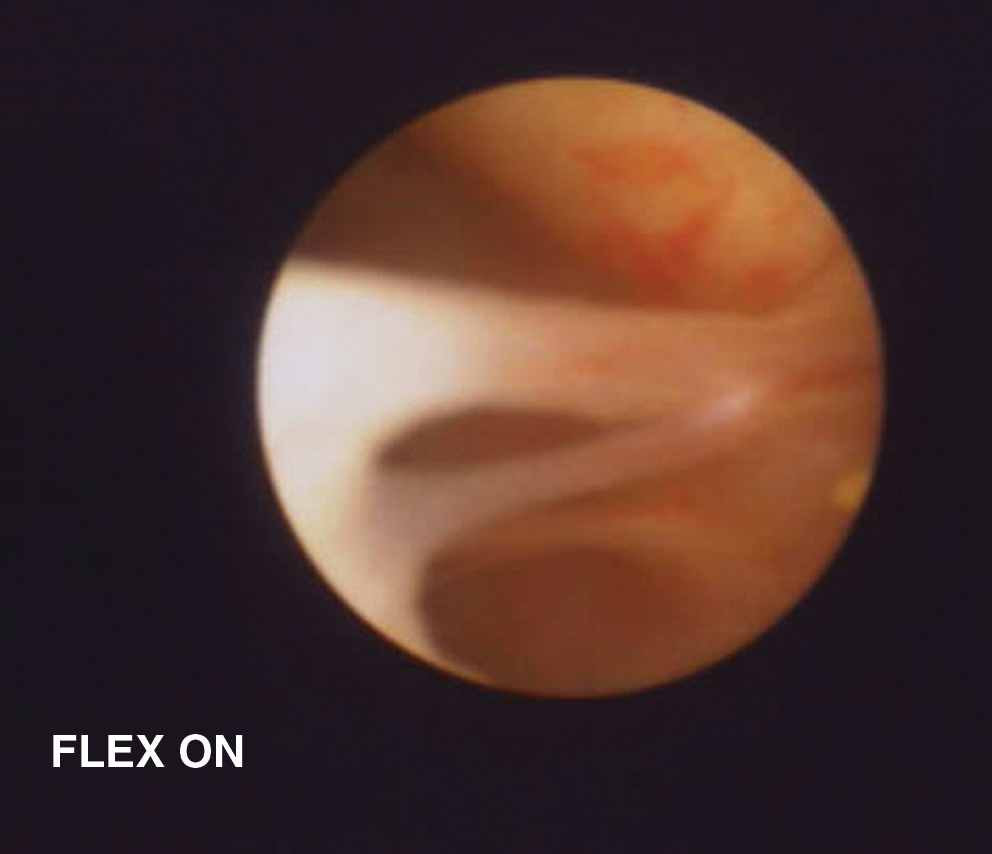
Ureteroscopic appearance of ureteral synechiae which prevented passage of a ureteral calculus.
A 65-year-old woman underwent cadaveric renal transplantation with Lich-Gregoir ureteral reimplantation. Six weeks postoperatively, she presented for stent removal. Cystoscopy revealed synechiae at the dome of the bladder entrapping the stent, preventing its removal. Subsequently, the synechiae were lysed using the holmium laser, and the stent was removed.
On follow-up, neither patient had recurrence of synechiae or obstructive sequelae.
Discussion
Synechiae are recognized in the gynecologic literature as postoperative intrauterine adhesions. 1 Patients with these lesions most commonly present with menstrual disturbance or infertility. Hysteroscopy is considered the gold standard for diagnosis and allows definitive therapy via hysteroscopic adhesiolysis with either blunt, sharp, or electocautery dissection. 2
Urologic synechiae are rarely reported but may be a source of symptomatic urologic pathology. A synechia in the prostatic urethra caused obstructive symptoms 3 years after transurethral resection of the prostate. 3 Flank pain and hematuria were attributed to possible ureteral synechiae after ureterolithotomy. 4
In our report, synechiae prevented spontaneous passage of a ureteral stone and prevented routine stent removal after transplant. Synechiae appear to be related to trauma from surgery and in our experience may be readily managed endoscopically.
Footnotes
Disclosure Statement
No competing financial interests exist.