




Abstract

Croes Council
Chairman
Jean de la Rosette, M.D.
Amsterdam (The Netherlands)
Adrian Joyce, M.S.
Leeds (UK)
Stavros Gravas, M.D.
Larissa (Greece)
Margaret Pearle, M.D.
Dallas, TX (USA)
Dean Assimos, M.D.
Wake Forest, NC (USA)
Ying-Hao Sun, M.D.
Shanghai (China)
Tadashi Matsuda, M.D.
Osaka (Japan)
Treasurer
John Denstedt, M.D.
London (Canada)
Executive Director
Sonja van Rees Vellinga
Amsterdam (The Netherlands)
Mission
Through worldwide collaboration, CROES seeks to assess, using evidence based scientific methodology, the various aspects of clinical endourology.
Vision
By applying rigorous scientific evaluation to the field of clinical endourology, CROES will enable all urologic surgeons to bring to their patients the most effective and efficient care possible.
Projects
• Global PCNL study
• Global URS study
• Global Greenlight Laser study
• Global Renal Mass study
• Global NBI study
Contact
For more information please contact Sonja van Rees Vellinga (
An Update on Croes at the World Congress of Endourology in Kyoto
Sonja van Rees Vellinga, Stavros Gravas, and Jean de la Rosette
At the World Congress of Endourology in Kyoto, Japan, the Clinical Research Office of the Endourological Society (CROES) was visible in many aspects of the program. The main event for CROES was the presentation on the CROES Update in the plenary session (Picture 1). In addition, five posters on the PCNL study were presented by Doctors Gutierrez, Xue, Fuller, and Wang. The presentations focused on percutaneous nephrolithotomy (PCNL) and urinary tract infections, PCNL and large stones, PCNL and lithotriptors, and PCNL and obesity. To view the posters in detail, please visit the CROES website:
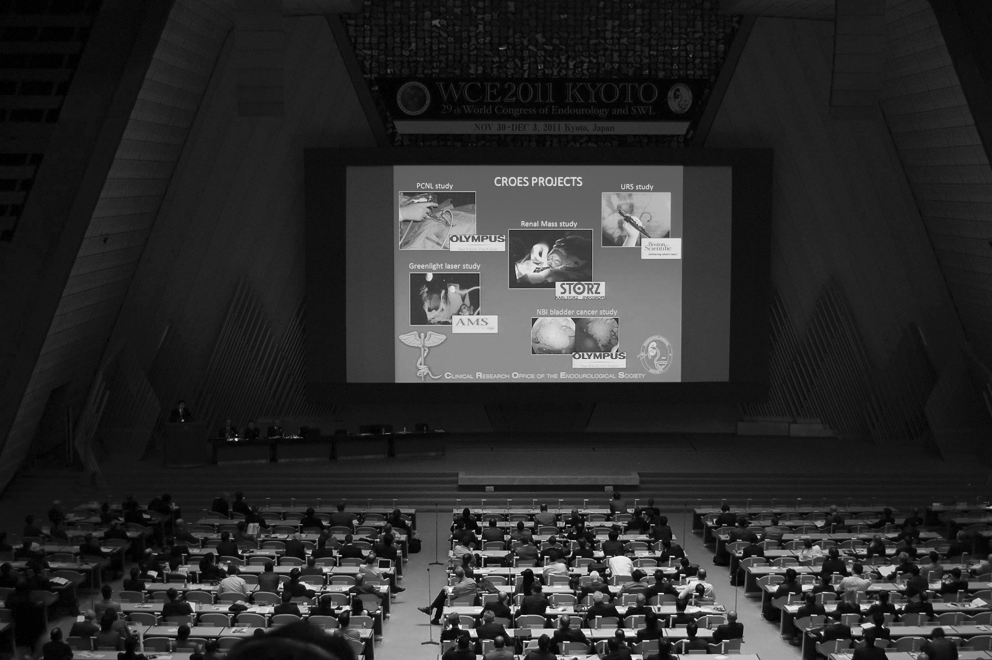
Plenary Session at the WCE: Update on CROES.
All investigators who are participating in CROES studies were invited to join the Investigators Meeting at the International Conference Center to receive an update on the current projects and to exchange ideas on new studies and projects. The invitation was accepted by the vast majority of CROES participants who attended the WCE in Kyoto, and we would like to thank them for joining the meeting and their fruitful comments (Picture 2).
A short summary on the CROES projects based on Dr. de la Rosette's presentation and the Investigators Meeting follows:
The Global PCNL Study was the first study launched, and at present, data from 5803 patients treated in 96 centers are analyzed. The value of the PCNL Study is that it is a real-life study: It demonstrates contemporary global practices in stone management.
Currently, seven articles have been published, two more manuscripts have been accepted for publication, and five articless are under review. Approximately 15 more articles will follow on the CROES PCNL Study. Each principal investigator has been included in at least one of the publications. We would like to acknowledge all those who send us their proposals for analysis in the last few months. It is a pleasure to work with enthusiastic urologists with a passion for research. An overview of the different topics currently analyzed is presented on the CROES website.
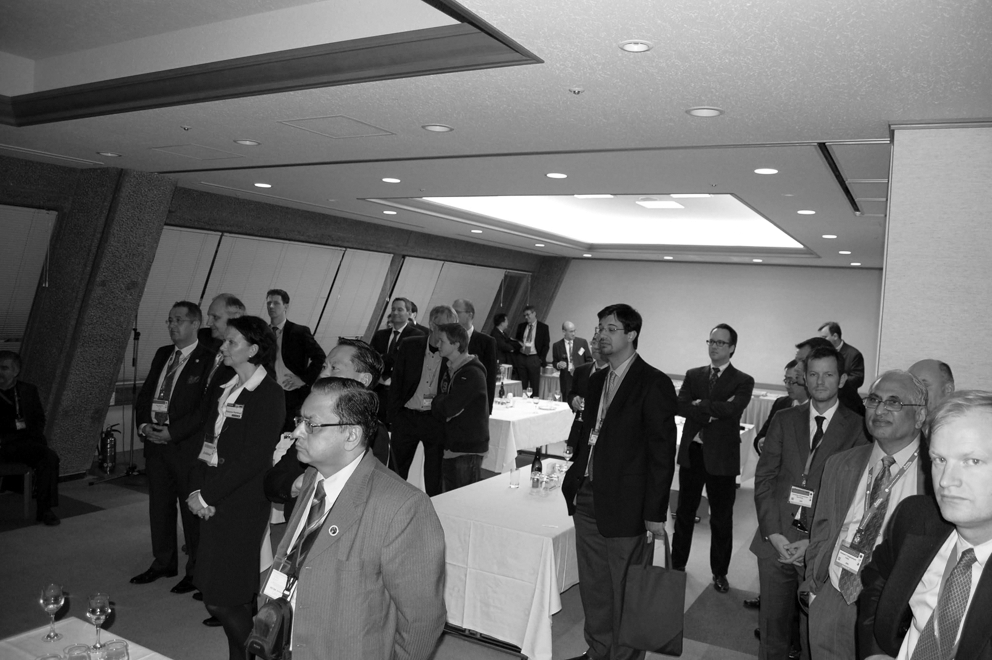
CROES Investigators Meeting.
The current projects have been discussed, and some preliminary results were shown. The Global Ureteroscopy (URS) Study 1 has included more than 15,000 cases, and approximately 150 centers are working very hard to accomplish this. The sites are located in 38 different countries, of which India, Romania, and Turkey are contributing with large numbers. In the URS Study, we will investigate possible (institutional) differences concerning indications for surgery, equipment used, and maybe outcomes. Moreover, specific factors may influence treatment-related morbidity. At the moment, the database consists of patients with a mean age of 48 years. Most stones are ureteral stones, and about one quarter of the patients treated have kidney stones. The type of URS most frequently performed is semirigid (around three quarters). About 85% of the area is stone free after treatment with URS, as indicated in this study. This study has been closed since January 2012, but centers can still make use of the web-based Data Management System.
The Renal Mass Study 2 is also proceeding well with approximately 5000 cases included. In this prospective study, we aim to assess on a global basis the indications, treatment modality, and outcomes of instrumental treatment for renal masses, including radical or partial nephrectomy and ablative treatments. At the moment, the biggest contributions in number of cases come from countries such as Turkey, France, Czech Republic, and the United States. The mean age of the patients now included in the database is approximately 60 years, but also a significant portion of younger patients is included. The technique performed in more than half of the cases is a partial nephrectomy. The open and laparoscopic approaches are almost equally used. The laparoscopic approach tends to have less complications in this study with regard to a partial or radical nephrectomy. In approximately 20% of the cases, an ablative therapy was used. This study has also been closed since January 2012.
In the Global HPS Study, 3 we will study on a global basis the indications and outcomes of HPS GreenLightTM laser treatment for benign prostatic hyperplasia. This study closed for new centers in April 2011, and at the moment, 30 centers have included more than 1000 patients. The countries that have included most patients are Japan, the Netherlands, and Norway. The mean age of the patients is approximately 70 years. The mean operative time is approximately 70 minutes. About half of the patients has an American Society of Anesthesiologists (ASA) score of 2; the others have an ASA score of 1 or 3 (equally distributed). In about 90% of the cases, there are no complications, and the hospitalization time is in most cases less than 2 days. The analysis of the data will start when the study has closed in April 2012.
The first randomized study, comparing the use of narrow band imaging (NBI) in addition to white light cystoscopy in the treatment of nonmuscle-invasive bladder cancer 4 is still open for new centers. Close to 40 centers worldwide have accepted the challenge and will randomize their cases according to a strict inclusion protocol during a 1-year period. During the WCE, we discussed the progress of the study at the NBI Investigators Meeting. There is an active involvement from centers from Asia and Europe. We therefore especially invite centers from the United States to join in this prestigious project. At the moment, there are more than 300 patients included. At the WCE, there were seven centers that have expressed their willingness to participate, so we expect this number to increase rapidly in the coming year. At the meeting, an Independent Data Monitoring Committee to monitor the study and the data independently of the steering committee was introduced by Dr. Bryan. In the coming months, this proposal will be further specified, because we believe this will strongly improve the validity of the data.
As is well known, an Audit Committee for CROES studies that aims to enhance the quality of research projects has been installed by the CROES Council and the Executive Board of the Endourological Society. 5 The first results of the audit were discussed in the meeting of the CROES Audit Committee [Picture 3]. We are proud to confirm that the audit process has been initiated with the GreenLight Laser Study. All centers and all data have been audited. Each center has received 10 queries and was requested to return two original documents (for example, a report on creatinine levels and operative time). Special attention has been given to data that are missing or suspicious data. All centers were cooperative, and almost all information has been returned. In January 2012, the auditing process for the Renal Mass and URS Study has started. The Audit Committee aims to install an automated system in 2012 that can check all the cases entered; in addition, a quality score for each center will be developed. 6
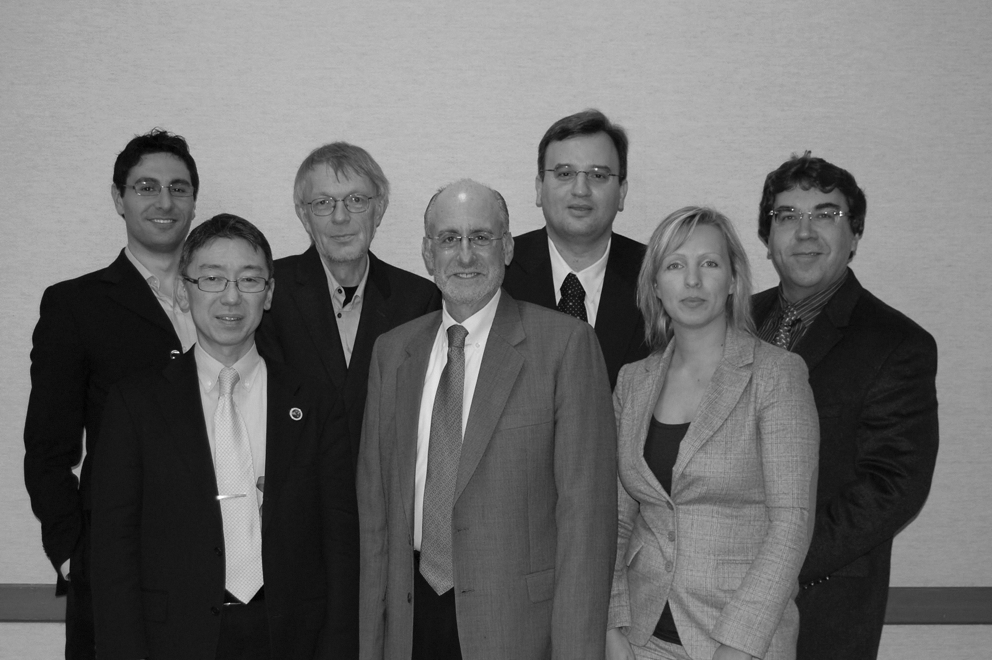
Audit Committee members, left to right: Giovanni Pagliuca, Tomonori Habuchi, Hessel Wijkstra, Glenn Preminger, Andreas Skolarikos, Sonja van Rees Vellinga, and Jean de la Rosette.
From all these CROES activities in Kyoto, it became once more evident that the CROES network of 740 centers offers wide possibilities with regard to studies, registries, surveys, and other activities to bring the urologic community closer to each other.
We would like to emphasize that all contributions, small or large, are highly appreciated. All feedback is welcome, and we invite you to contact the CROES office with new ideas and suggestions regarding ongoing studies and future projects. At the upcoming American Urological Association meeting in Atlanta, CROES is looking forward to present you with a new update on the CROES projects (Tuesday, May 22, 2012, from 5.30 to 7.30 pm).
All institutions are encouraged to become a member of the global endourology platform entitled CROES. CROES clearly states its philosophy: “The time is now – with CROES, the ability is yours.” 7