




Abstract
Objective:
To prospectively analyze and compare the outcomes of using externalized ureteral catheter (EUC) vs Double-J ureteral stent (DJ) in tubeless minimally invasive percutaneous nephrolithotomy (MPCNL).
Patients and Methods:
A total of 109 patients underwent tubeless MPCNL in our institute and have been enrolled into this study. Fifty-six and 53 patients had EUC and DJ positioning at the conclusion of the procedure, respectively. The two approaches have been compared for operative time, intraoperative blood loss, postoperative visual analogue pain scale (VAS) score, analgesic requirement, stent-related symptoms, hospital stay, degree of vesicoureteral reflux (VUR) on the operative side, and complications according to the modified Clavien system.
Results:
There were no statistically significant differences between the two groups regarding the mean operative times, mean VAS scores, analgesic requirements, mean hemoglobin drop, mean hospital stay, and overall complication rate. However, compared with DJ group, EUC group presented fewer postoperative stent-related symptoms and less occurrence of severe VUR (p < 0.05).
Conclusion:
Positioning EUC in tubeless MPCNL is a safe alternative to DJ in patients with renal or upper ureteral calculi. EUC provides several benefits: obviated the need of a second endoscopic procedure, reduced stent-related discomfort, and lowered the occurrence of severe VUR.
Introduction
U
Nephrostomy tube is frequently used to provide drainage and tamponade bleeding at the end of PCNL procedures. It can also preserve the nephrostomy tract for repeated percutaneous interventions. However, nephrostomy tube can result in urine leakage around the tube and increase postoperative morbidities. 5
With accrued experience and improved technique, the use of nephrostomy tube has been reexamined. Currently, PCNL without nephrostomy tube, also known as tubeless PCNL, has gradually gained wide acceptance. 6,7 Externalized ureteral catheter (EUC) and Double-J ureteral stent (DJ) are both commonly used to drain the upper urinary system and this is considered to be safe and effective. 8 –10 .
Minimally invasive PCNL (MPCNL) is a modified PCNL using miniaturized nephroscope through a 14F to 18F nephrostomy tract. This procedure has been proven to be safe and effective in treating large or complex stones. 11,12 There is paucity of data regarding the use of EUC vs DJ in patients who underwent MPCNL. We therefore embark on this prospective and randomized trial comparing the use of EUC vs DJ in tubeless MPCNL patients.
Patients and Methods
Patients
This study was conducted at our institution and was approved by the Ethics Committee of the First Affiliated Hospital of Guangzhou Medical University.
Patients with upper urinary tract calculi appropriate for tubeless MPCNL were randomized into either EUC group (tubeless MPCNL with EUC) or DJ group (tubeless MPCNL with DJ). Surgical nurses randomly picked an envelope containing the group assignment for each of the patients at the time of surgery. Inclusion criteria have been as follows: patients signed written informed consent; patients who were 18 to 70 years old; cumulative stone diameter ≤4 cm; patients with only a single access site; and patients without ureteral obstruction. Patients who experienced the following conditions were excluded from the study: pyuria; perforation of the renal collecting system; severe intraoperative or postoperative hemorrhage, second-look procedure necessity; and presence of residual calculi ≥4 mm.
Methods
All the patients had preoperative contrasted or noncontrasted CT or intravenous urogram studies. Laboratory tests included complete blood cell count, blood biochemistry, urinalysis, urine culture and sensitivity, and coagulation studies. Prophylactic antibiotics were administered to all patients 30 minutes before the operation, while patients with positive urine cultures were treated with appropriate antibiotics based on the culture result until negativization was obtained.
MPCNL technique
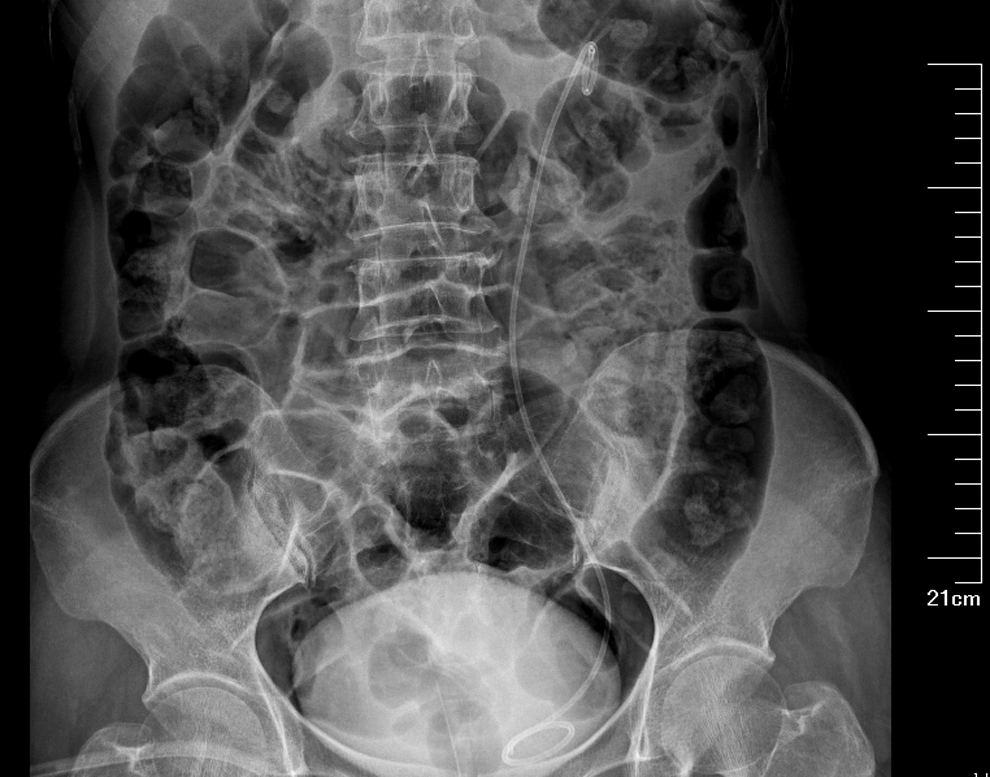
Single surgeon (Dr. Yongda Liu) performed all the tubeless MPCNLs. The technique of the tubeless MPCNL has been previously reported. 12,13 Hereinafter is a brief summary of the procedure. All the procedures were performed under general anesthesia. The patients were first placed in lithotomy position and an open-ended 5F EUC was inserted in a retrograde manner into the affected renal pelvis. A Foley catheter was placed. The patients were next turned into prone position. An 18-gauge coaxial needle was used to puncture the targeted calix under either fluoroscopic or ultrasonographic guidance. A flexible 0.035-inch flexible guidewire was next inserted into the renal collecting system or passed down into the ureter through the needle sheath. Nephrostomy tract dilation was performed from 8F to a maximum 18F using fascial dilators. A matched nephrostomy sheath was left in place. Lithotripsy was performed using pneumatic lithotripter through an 8.5F/11.5F nephroscopy. Stone fragments were either removed with forceps or flushed out with a pulse perfusion pump. At the end of the procedure, a 5F DJ (Fig. 1) was placed through the nephrostomy sheath or a 5F EUC (Fig. 2) was left in place. The incision of the nephrostomy tract was closed with 4-0 silk sutures.
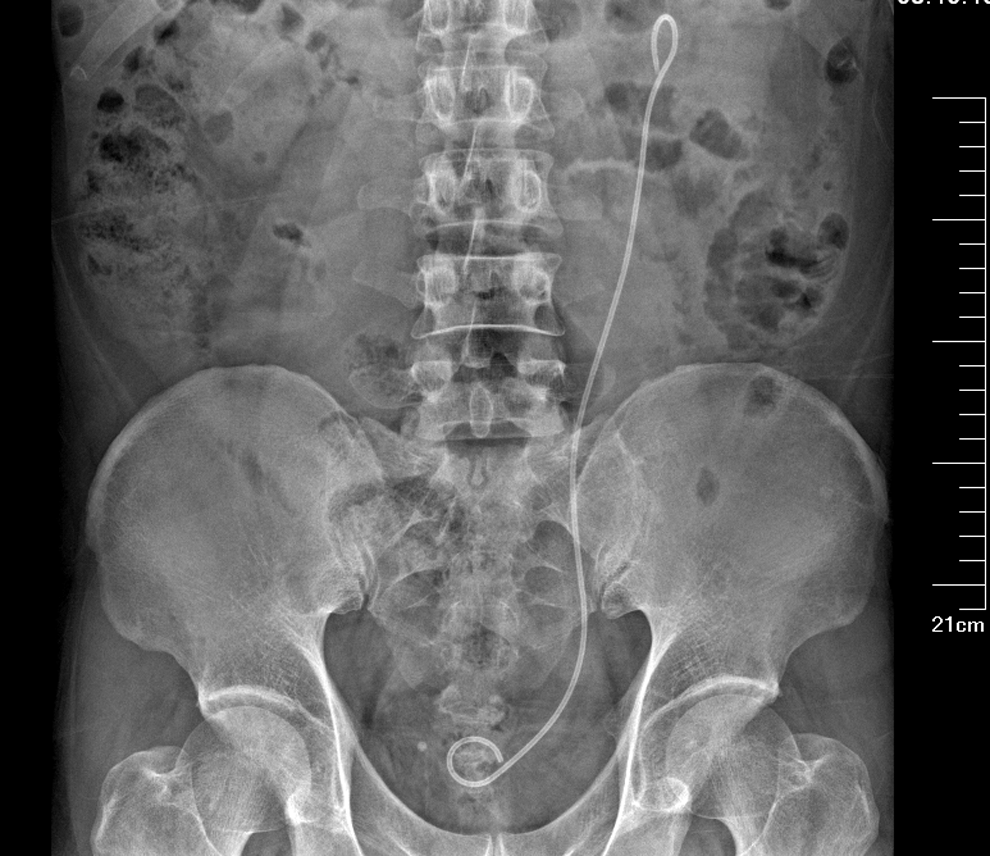
Postoperative X-ray KUB region showing calculi in the left kidney was removed by tubeless MPCNL with DJ. DJ = Double-J ureteral stent; KUB = kidney, ureter, and bladder radiograph; MPCNL = minimally invasive percutaneous nephrolithotomy.

Postoperative X-ray KUB region showing calculi in the left kidney was removed by tubeless MPCNL with EUC. EUC = externalized ureteral catheter.
Other treatments
The EUC and Foley catheter were removed on postoperative day 1 unless complications arose, such as fever, urinary extravasation, and so on. In such cases, they have been maintained until symptomatology regression. DJ was left in place for 2 to 4 weeks and removed as an outpatient under local anesthesia. Voiding cystourethrogram (VCUG) was performed before the removal of Foley catheter to assess vesicoureteral reflux (VUR) (Figs. 3 and 4). VUR severity was graded as follows: Grade I—Reflux into nondilated ureter; Grade II—Reflux into renal pelvis and calices without dilation; Grade III—Reflux with mild to moderate dilation and minimal blunting of fornices; Grade IV—Reflux with moderate ureteral tortuosity and dilation of renal pelvis and calices; and Grade V—Reflux with gross dilation of ureter, pelvis, and calices, loss of papillary impressions, and ureteral tortuosity. 14
Postoperative plain film cystography with DJ.

Postoperative plain film cystography with EUC.
On postoperative day 1, blood analyses were performed. Pain score was determined using 100 mm visual analogue pain scale (VAS) from 1 to 10, with 10 being most severe. On postoperative day 2, ultrasonography, KUB, and eventually noncontrasted CT were performed to check for residual stone. Residual stone fragment ≤4 mm was considered not clinically significant. 15 Urinary extravasation was also judged by VCUG. A follow-up evaluation to assess stent-related symptoms was done 2 weeks postoperatively.
Statistical analysis
Numerical data were recorded as mean ± standard deviation. Student's t-test and the chi-square test were used to analyze variables. Values of p < 0.05 were considered statistically significant. SPSS13.0 software was employed for the statistical analysis.
Results
A total of 130 patients who underwent tubeless MPCNL between December 2014 and January 2016 were included in this randomized study. Patients were randomly divided into two groups according to the used ureteral stent technique: EUC group (n = 65 patients) and DJ group (n = 65 patients). Of the 130 patients, only 109 patients (56 [51.4%] in EUC group and 53 [48.6%] in DJ group) completed the study. Residual calculi ≥4 mm after one-stage MPCNL was presented in one patient of EUC group and two patients of DJ group. Pyuria was observed in two patients of EUC group and two patients of DJ group. Significant intraoperative hemorrhage occurred in four patients of EUC group and six patients of DJ group. Perforation of the renal collecting system occurred in two patients of EUC group and two patients of DJ group. These 21 patients were excluded from the study. Patients' characteristics were summarized in Table 1. There were no significant differences between the two groups in terms of gender, age, body mass index, stone size, and stone distribution (location and numbers).
BMI = body mass index; DJ = Double-J ureteral stent; EUC = externalized ureteral catheter.
The outcomes and complications are displayed in Table 2. Puncture site, operative time, postoperative hemoglobin drop, urinary extravasation, VAS scores, analgesic requirement, and length of hospital stay of the two groups showed no statistical significances. Postoperatively, 2 (3.6%) patients in the EUC group and 2 (3.8%) patients in the DJ group required anti-infection treatment for urinary tract infections. Three (5.4%) patients in the EUC group and 2 (3.8%) patients in the DJ group presented postoperative prolonged hematuria and were managed conservatively with bed rest and oral hemostasis. No patients required auxiliary surgical or endoscopic procedures. Severe VUR (grade 4–5) was found in 34 (64.2%) patients of the DJ group. Only 7 (12.5%) patients had severe VUR in the EUC group (p < 0.001). In the DJ group, 32 (60.4%) patients experienced stent-related symptoms postoperatively. The symptoms included frequency, urgency, painful urination, flank pain, and bladder pain. In 11 (20.8%) patients, the symptoms were severe enough that required early removal of DJ. In the EUC group, only 11 (19.6%) patients experienced stent-related symptoms postoperatively before removing the EUC (p < 0.001).
Statistically significant.
VAS = visual analogue pain scale; VUR = vesicoureteral reflux.
Complications were minimal. Five (9.4%) patients in the DJ group and 7 (12.5%) patients in the EUC group experienced Clavien grade I complications (fever). It was not statistically significant (p = 0.609).
Discussion
In 1997, Bellman and colleagues introduced the concept of tubeless PCNL. 16 They demonstrated that tubeless PCNL not only did not increase the complications but also reduced the adverse events caused by nephrostomy tubes. An internal or external stent was used for draining the upper urinary system postoperatively. Previous studies have found that tubeless PCNL resulted in less postoperative pain and shorter hospital stay. 8 –10,16,17
In 2001, as an external stent, a 6F ureteral catheter was first used for 48 hours in PCNL and demonstrated that this technique in selected patients could reduce postoperative discomfort without increasing complications. 17 DJ is the most common form of internal drainage in the urinary surgery. 18 In several reports, tubeless PCNL with DJ has confirmed the safety and efficacy. 8 –10,16
Nevertheless, stent-related discomfort should not be taken lightly. Shah and colleagues found that 30% of the patients experienced discomfort related to DJ placement. 19 Similarly, 52.1% of the patients had some sort of stent-related symptom in a study by Gonen and colleagues. 20 In this study, the outcomes suggested that there were no statistically significant differences in most of the parameters between the EUC and DJ groups. However, 60.4% of the patients in the DJ group experienced stent-related discomfort such as urgency, frequency, painful urination, and flank and bladder pain. Eleven of them (20.75%) presented such severe symptoms to require early removal of the DJ. Mean pain scores were 2.80 and 2.92 in the EUC and DJ group, respectively. This indicated that other discomforts in addition to pain were caused by DJ positioning.
Gonen and colleagues reported that using an EUC instead of a DJ stent for postoperative drainage did not increase postoperative morbidity of the tubeless PCNL. 20 Similarly, Mouracade and colleagues concluded that replacement of DJ with EUC in tubeless PCNL was a safe and effective procedure for patients with a mean stone burden of 17.25 mm. 21 Our results also showed that replacing the DJ with EUC for postoperative drainage eliminated the stent-related discomfort without increased morbidity of tubeless MPCNL.
We also found that the use of EUC could decrease VUR when compared with DJ. Yossepowitch and colleagues prospectively analyzed the outcomes of 30 renal units with DJ and found that VUR occurred in 19 (63%) of them. They concluded that VUR occurred in the majority of patients with DJ. 22 The VUR was at a high grade during voiding and at a low grade during vesical filling. In this study, VCUG was performed before the removal of Foley catheter. This allowed tiered grading of the VUR. We found that grade 4 to 5 VUR occurred in 34 (64.2%) patients in the DJ group, whereas only 7 (12.5%) patients in the EUC group had comparable degree VUR. High-grade VUR could have a detrimental effect on the kidney.
We believe that any technique has its own indications. As a method of drainage after MPCNL, EUC will not replace DJ for patients with large stone size or large residual stone fragments. The careful selection of patients is one of the key factors for increasing the success rates and avoiding complications.
Conclusion
Our study confirmed that tubeless MPCNL with EUC is as safe and effective as a DJ for postoperative drainage. In addition, the former provided several other benefits. These included eliminating stent-related discomforts, reducing severe VUR, and obviating the need of DJ endoscopic removal.
Footnotes
Acknowledgments
This work was financed by grants from the Science and Technology Department of Guangdong Province, China (No. 2016A020212023), and Science and Technology project in Guangzhou (No. 201507020026).
Author Disclosure Statement
No competing financial interests exist.