




Abstract
Purpose:
To summarize the scientific published literature on new robotic surgical platforms with potential use in the urological field, reviewing their evolution from presentation until the present day. Our goal is to describe the current characteristics and possible prospects for these platforms.
Materials and Methods:
A nonsystematic search of the PubMed, Cochrane library's Central, EMBASE, MEDLINE, and Scopus databases was conducted to identify scientific literature about new robotic platforms other than the Da Vinci® system, reviewing their evolution from inception until December 2020. Only English language publications were included. The following keywords were used: “new robotic platforms,” “Revo-I robot,” “Versius robot,” and “Senhance robot.” All relevant English-language original studies were analyzed by one author (R.F.) and summarized after discussion with an independent third party (E.M., S.Y., S.P., and M.A.).
Results:
Since 1995, Intuitive Surgical, Inc., with the Da Vinci surgical system, is the leading company in the robotic surgical market. However, Revo-I®, Versius®, and Senhance® are the other three platforms that recently appeared on the market with available articles published in peer-reviewed journals. Among these three new surgical systems, the Senhance robot has the most substantial scientific proof of its capacity to perform minimally invasive urological surgery and as such, it might become a contender of the Da Vinci robot.
Conclusions:
The Da Vinci surgical platform has allowed the diffusion of robotic surgery worldwide and showed the different advantages of this type of technique. However, its use has some drawbacks, especially its price. New robotic platforms characterized by unique features are under development. Of note, they might be less expensive compared with the Da Vinci robotic system. We found that these new platforms are still at the beginning of their technical and scientific validation. However, the Senhance robot is in a more advanced stage, with clinical studies supporting its full implementation.
Introduction
The 1990
During the last few years, several companies have been developing new robotic platforms. Unique features, such as the addition of haptic feedback, different interaction with the surgical room staff, different types of user interfaces, variations in hand and foot controls (simple squeeze vs complex squeeze), and location/positioning of the ports. However, to date, only a few companies were able to develop their robotic platforms to the point of obtaining approval for their use in humans. The current article aims to provide an overview of the three robotic surgical platforms with a substantial number of scientific publications that show their current and potential future application in urology and, more generally, in robotic surgery.
Methods
A nonsystematic search of the PubMed, Cochrane library's Central, EMBASE, MEDLINE, and Scopus databases was conducted to identify scientific literature about new robotic platforms, other than the Da Vinci system, reviewing their evolution from inception until December 2020. We aimed to analyze the preclinical, feasibility, and clinical application studies of these potential competitor robotic surgical platforms, already introduced in the market, and assess the quality of the scientific published literature about them.
Evidence acquisition
A nonsystematic search of the PubMed, Cochrane library's Central, EMBASE, MEDLINE, and Scopus databases was conducted to identify scientific literature about new robotic platforms, other than the Da Vinci system, reviewing their evolution from inception until December 2020.
Selection of the studies and criteria of inclusion
Inclusion criteria
Only English language publications were included. The following keywords were used “new robotic platforms,” “Revo-I robot,” “Versius robot,” and “Senhance robot.” All relevant English-language original studies were analyzed by one author (R.F.) and summarized after discussion with an independent third party (E.M., S.Y., S.P., and M.A.).
Results
Search results
The main findings of this study are presented in Table 1. Dedicate description and characterization of each specific robotic system is provided below.
Model Side-by-Side Comparison
N/A, information not available at the time of writing; console (B—Closed; D—Open); seated or standing (S—Seated; U—Seated or standing); instrument and arm control (A—Manipulator mimics the end effectors through pinching or grasping motion; B—Manipulator is trigger operated; C—Manipulator based on traditional laparoscopic instruments; D—Manipulator resembles a game controller); instrument feedback (E—Visual cues are used for instrument feedback; F—Haptic feedback applied to hand controllers); Tremor removal (P—Feature is present); clutching arms (G—Feature provided by axillary controls on hand controller; H—Feature provided by foot pedal); arm switching (G—Feature provided by axillary controls on hand controller; H—Feature provided by foot pedal); endoscope control (G—Feature provided by axillary controls on hand controller; H—Feature provided by foot pedal; I—Endoscope controlled by eye tracking); diathermy (G—Feature provided by axillary controls on hand controller; H—Feature provided by foot pedal; I—Endoscope controlled by eye tracking); cart (O—single; M—individual/modular).
3D = three-dimensional; HD = high-definition; N = no; Y = yes.
Revo-I
Revo-I® was developed by Meerecompany, Inc. (Seongnam, Korea) in cooperation with Yonsei University. It is the latest version of a long tract of prototypes. They started developing a laparoscopic surgical robot in 2007. Due to several technical issues, the company updated different prototypes (MSR-1000, MSR-HI, MSR-2000, MSR-3000, MSR-Ceiling type, MSR-MAC, MSR-4000, MSR-BSP, and MSR-MAS) between 2009 and its latest version launched in 2015. Patented since 2014, this system has been updated and strengthened to increase its operational stability. First, before proving its safety for human application, its surgical performance was tested in the preclinical setting. After that, the first clinical results were published in 2016. They validated the necessary design specifications and controls needed to obtain Korean Food and Drug Administration (FDA) approval for humans' use.
Features
This robotic system consists of a surgeon closed console, a four-arm robotic operation cart mounted on a single boom, a 3D high-definition (HD) vision cart, reusable endoscopic instruments, and presenting motion scaling and tremor filtration (Fig. 1). 19 –21 The 8-mm-diameter instruments have 7 degrees of motion freedom. Two manipulator arms are matched to the operating surgeon's hands. A third arm controls the surgeon's view by 3D HD scope manipulation. A fourth arm is used for organ or tissue retraction. 19 –21 Each manipulator's arm has an active and a passive component. The active component performs yaw, pitch, and sliding motion through the remote center of action in the abdominal cavity. The passive component determines the pose of the active part. 19 –21 The port positions play a critical role in how smoothly and far the end-effector of the instrument reaches. The relationship between the ports' position and the passive component is important in determining the dynamic range of the surgical manipulation, which influences the surgeon's operational efficiency by avoiding any collision between manipulator arms. 19 –21
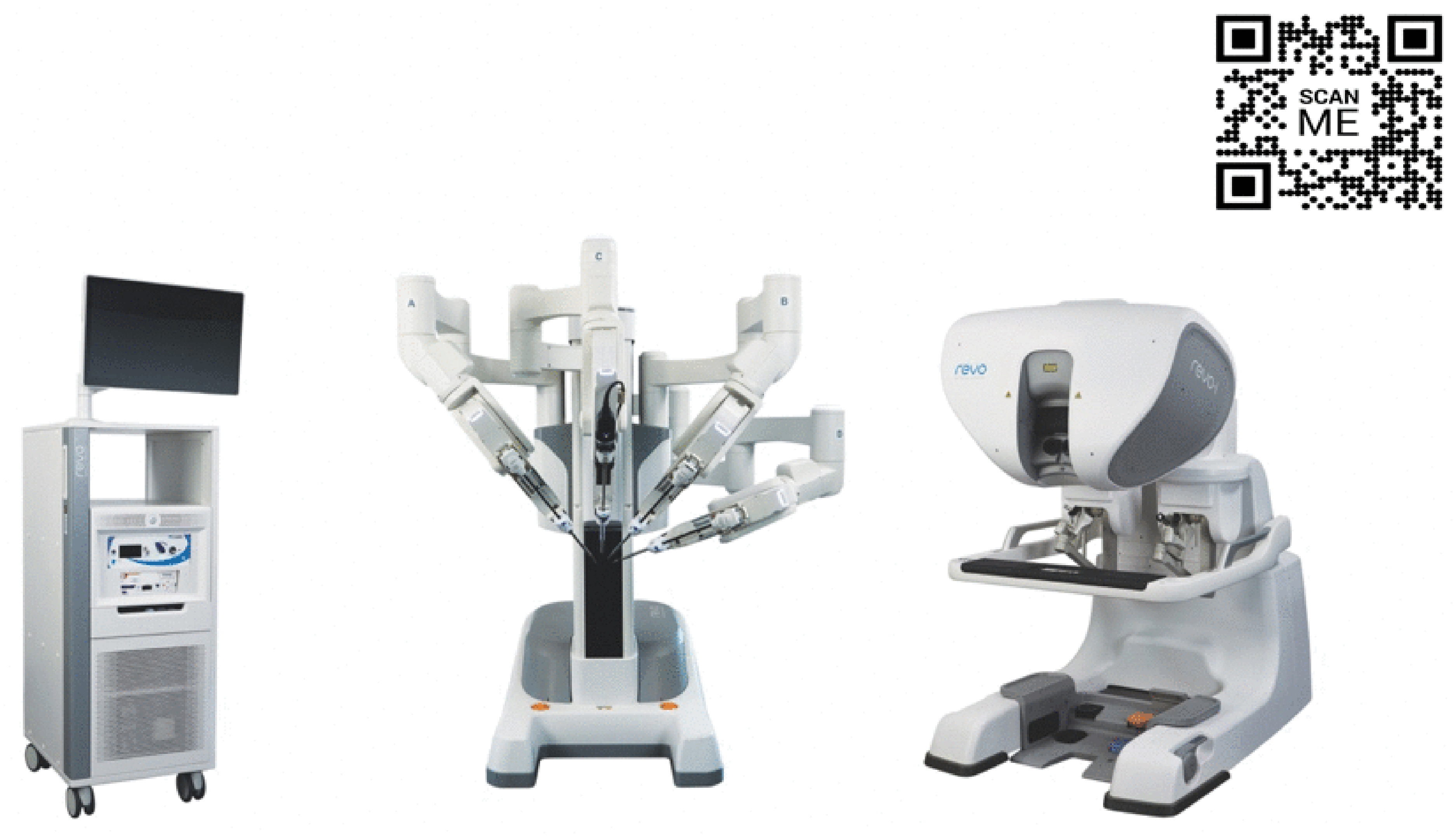
Revo-I® surgical system (Meerecompany, Inc., Seongnam, Korea). Scan the QR code in the top right-hand corner for additional video contents. Color images are available online.
Preclinical studies
The first preclinical studies were performed in porcine models. Four robot-assisted partial nephrectomies (RAPN), 22 four fallopian tube transection and anastomosis (FTTA), 19 and eight cholecystectomies 20,23 were performed to test this platform. The RAPN study reports a mean operative time of 36 minutes, a mean docking time of 12 minutes, and a mean warm ischemia time of 13 minutes. The FTTA study reports a mean operating time of 66 minutes, a mean docking time of 22 minutes, and a mean console time of 18 minutes. The two cholecystectomy studies report a mean operating time of 72 minutes, a mean docking time of 4 minutes, and a console time of 46 minutes. All the authors demonstrate the feasibility of the procedures and the safe use of this system, showing good operative and perioperative results, no technical problems, and no intra-, peri-, or postoperative complications.
They highlight its ease of use and, although based on a small number of performed cases, they report a short learning curve. 19 In these preclinical studies, the authors refer that the potential lower cost of this platform might derive from the increased reusability of instruments, without reporting any specific price. 19,20
One limitation is the limited range of motion in the needle-driver use. Specifically, hyperextension and hyperflexion motions resulted in resistance on the surgeon control due to the wires system (although safeguard mechanisms were in place to prevent any undesirable injuries), which led to modifications in both the hardware and software to minimize these inconveniences. 19
Another limitation of the Revo-I system is the small variability of robotic instruments for tissue dissection. Specifically, only monopolar- and bipolar-type instruments were available to achieve adequate dissection and hemostasis. To overcome this limitation, Meere company programmed to develop robot-mountable energy devices, such as vessel sealers and harmonic scalpels for rapid coagulation and easy tissue dissection. 23
One innovative upgrade planned to be introduced in the next future will be the haptic feedback feature that might improve robotic surgery quality by decreasing the grasping forces and reducing tissue damage. 24 After these preclinical studies, the Korean Ministry of Food and Drug Safety confirmed good manufacturing practices of the robot and instruments used, allowing the company to start clinical trials involving humans to achieve clinical usage approval.
Clinical studies
The first surgeries performed in a clinical setting were robot-assisted radical prostatectomy (RARP), 25 pancreaticoduodenectomy, 26 and cholecystectomy. 21 The RARP study involved 17 patients, with a mean docking time of 8 minutes, mean console time of 92 minutes, mean operating time of 186 minutes, mean urethrovesical anastomosis of 26 minutes, and a length of hospital stay (LOS) of 4 days. 25 The pancreaticoduodenectomy study involved one patient with operative time in line with the literature. 26 The cholecystectomy study involved 15 patients, with a mean docking time of 10 minutes, mean console time of 50 minutes, mean operating time of 115 minutes, and LOS of 2 days. 21 All the interventions were carried out successfully, demonstrating the feasibility of the procedures and the system's safety. Good perioperative results, no technical problems, and no intra-, peri-, or postoperative complications were reported. In one study, the authors used a “physician questionnaire” covering different aspects of the use of this surgical console, which was scored based on a Likert scale. Based on this methodology, they concluded that the surgeons were satisfied with the robotic platform. 25 As advantages, they remarked the comfortable porting and docking, the convenient console and video monitor, the outstanding camera resolution, the few “foggy effects” of cautery, and the effectiveness of the articulating movements of robotic instruments. 21,25,26 They found no major technical problems, and the minor technical issues could be managed immediately with no reported risk for the patients.
The authors identified several criticisms, namely the fact that the robotic arms of the patient cart were not sensitive enough to recognize the instruments when inserted (the instruments sometimes had to be repeatedly inserted), the scissors were not sharp enough to cut the tissues as easily as Da Vinci scissors even on their first usage (scrub nurses had to prepare two or three additional scissors for the bedside table), there was a limited instrument variability (only monopolar and bipolar energy delivery systems), the operation was occasionally interrupted because of the safety feature, whereby the robot stopped if the speed of the surgeon's hand movement exceeded the optimum rate adjusted for the robot (this restricted the surgeon's performance as he had to wait for a while to resume surgery again), and the robotic arm's size is larger compared with the Da Vinci robot, requiring more precaution from the bedside assistant to ensure adequate space between the components to minimize the occurrence of external and internal collisions.
A common limitation of these studies was that no cost-effectiveness comparison with the Da Vinci was carried out because the company had not yet fixed the retail price, and the robotic system, supplements, and all instruments used were internally funded for the trial. All authors concluded that further prospective studies were warranted to support these preliminary results, and all technical problems were received and recorded by the company engineer team. 21,25,26 After these studies, the Revo-I received approval for commercial use from the Korean government in August 2017.
Versius
Features
The Versius® surgical robotic system (CMR Surgical, Inc., Cambridge, United Kingdom) has a modular design and dual-console feature, allowing two surgeons to operate in two different anatomic fields simultaneously and independently (Fig. 2).
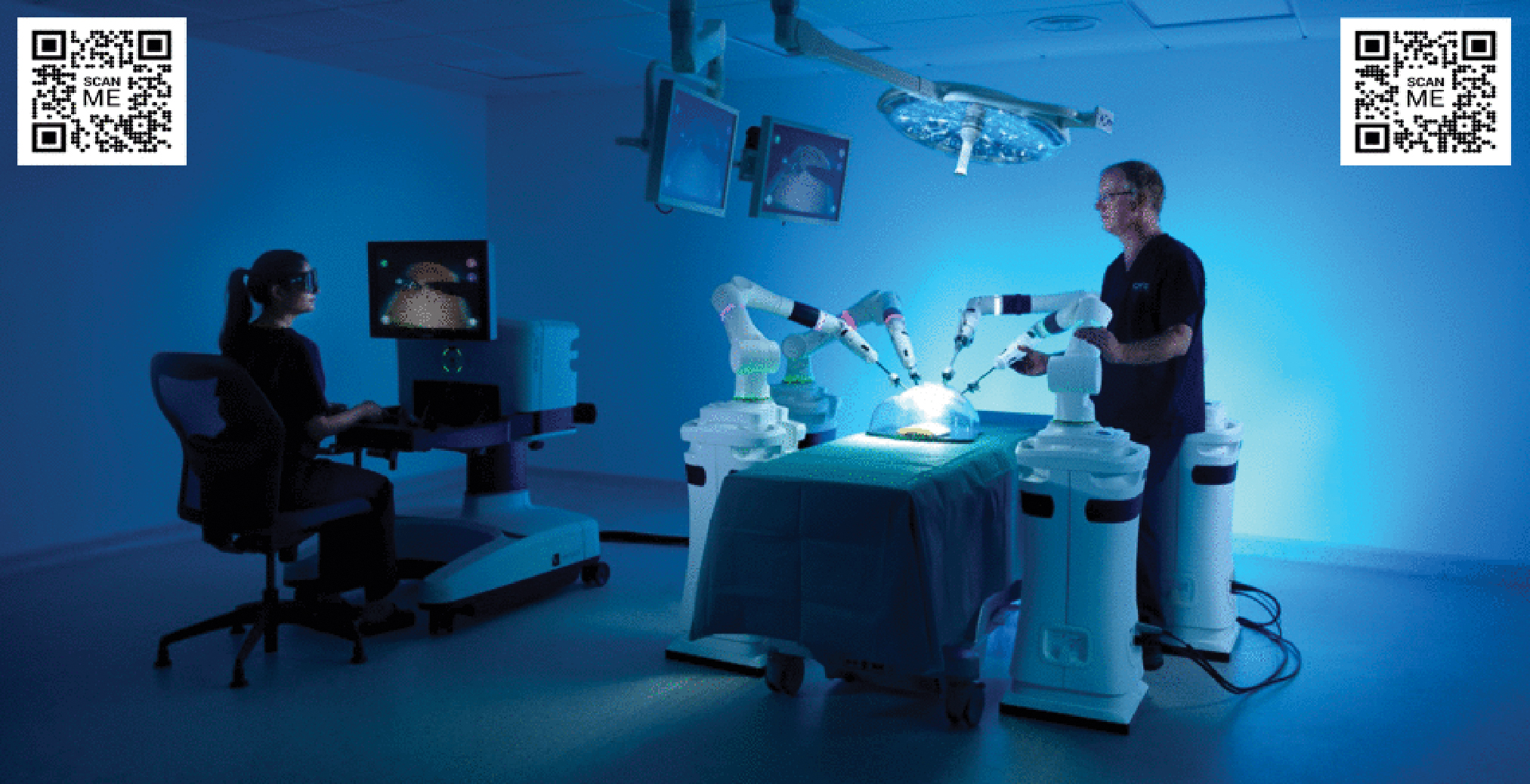
Versius® surgical robotic system (CMR Surgical, Inc., Cambridge, United Kingdom). Scan the QR code in the top right- and left-hand corners for additional video contents. Color images are available online.
Preclinical studies
The first preclinical studies used porcine and human cadaveric models. The researchers performed nine cholecystectomies, small bowel enterotomies, and six radical nephrectomies (RN) in the porcine model. 27,28 Nine cholecystectomies, 16 RN, 4 RARP with lymph node dissection, and a robotic transanal total mesorectal excision (taTME) were performed in the human cadaver. 27 –29 These studies were able to prove the feasibility, safety, and effectiveness of the system, not reporting major device- or nondevice technical problems. For instance, the challenging taTME, usually performed with a two-team dual-field approach, such as a laparoscopic transabdominal access coupled with transanal access, 29 was used to test the flexibility of the Versius platform. taTME is a time-consuming surgery, already performed laparoscopically and proved to be robotically feasible by using the Da Vinci Surgical system, 30,31 although presenting some technical difficulties. 32,33 Specifically, there is an intrinsic issue related to the need for redocking and the fact that it cannot be completed in synchronicity by using the Da Vinci Xi®. 34,35 In contrast, the modular-designed Versius robotic system allowed to perform a dual-field synchronous, totally robotic taTME. The first study was completed in a cadaveric model. 36 The surgeons successfully performed a synchronous, totally robotic taTME in a fresh-frozen human cadaver working simultaneously in an abdominal and a transanal field. The operational safety and ease of use of this system were tested in a feasibility study by several surgical teams from different surgical specialties. They performed various tasks in human cadaveric models to identify and address the causes of any user errors, after which the usability-related aspects of the system were assessed, and no critical task failures were observed. 37
Clinical studies
The first clinical studies were performed as an interim safety analysis of one salpingectomy, one ovarian cystectomy, two oophorectomies, two fallopian tube recanalizations, three salpingo-oophorectomies, five diagnostic laparoscopies, six robot-assisted total laparoscopic hysterectomies, nine cholecystectomies, and four appendectomies. 38 The intra-, peri-, and postoperative results were in line with published literature, with no need for conversion to open surgery, no perioperative complications and no readmittance at 30- and 90 days after surgery, confirming the safety and effectiveness of the Versius Surgical System. All these studies supported the plan to extend patient recruitment and test its applicability in major surgical procedures.
Senhance
The Senhance® robotic platform is supported by the largest number of scientific articles published (n = 34), from which we can build a precise historical track. Initially developed by SOFAR Surgical Robotics (Milan, Italy), the Telelap ALF-X® was first patented in 2007 and reported as a novel telesurgical system in 2012. 39 It received ethical mark approval by European regulators in 2014, and it was approved for clinical use in gynecological, general surgery, thoracic, and urological procedures, triggering its clinical implementation. The first clinical cases were successfully completed in 2015 in Europe. 40 –43 The first feasibility and safety report was performed in Italy in 2015, 44 and a second important publication confirmed the same success in colorectal cancer surgery. 45 After its initial clinical use, the robotic division of SOFAR S.P.A. was acquired by TransEnterix Surgical, Inc. (Morrisville, NC), and the platform was renamed Senhance. The FDA approved this system in October 2017, 46 and soon thereafter, the first article reporting its use in the USA was published. 47 In May 2018, the FDA approved its use in cholecystectomies and inguinal hernia repairs.
Features
The Senhance is an open remote console with 3D HD visualization and up to six times magnification, requiring polarized glasses. It has three totally independent robotic arms mounted on three separate carts, with potentially higher configuration versatility than the Da Vinci system, and two handles similar to laparoscopic handpieces (Fig. 3). These handles manipulate 4 and 6 degrees of freedom, fully reusable instruments (with no limited lives) and connected to the robotic arms. This platform uses 3- and 5-mm commercially available laparoscopic trocars. It has haptic feedback 39 and an eye-tracking system that controls camera movements. 48
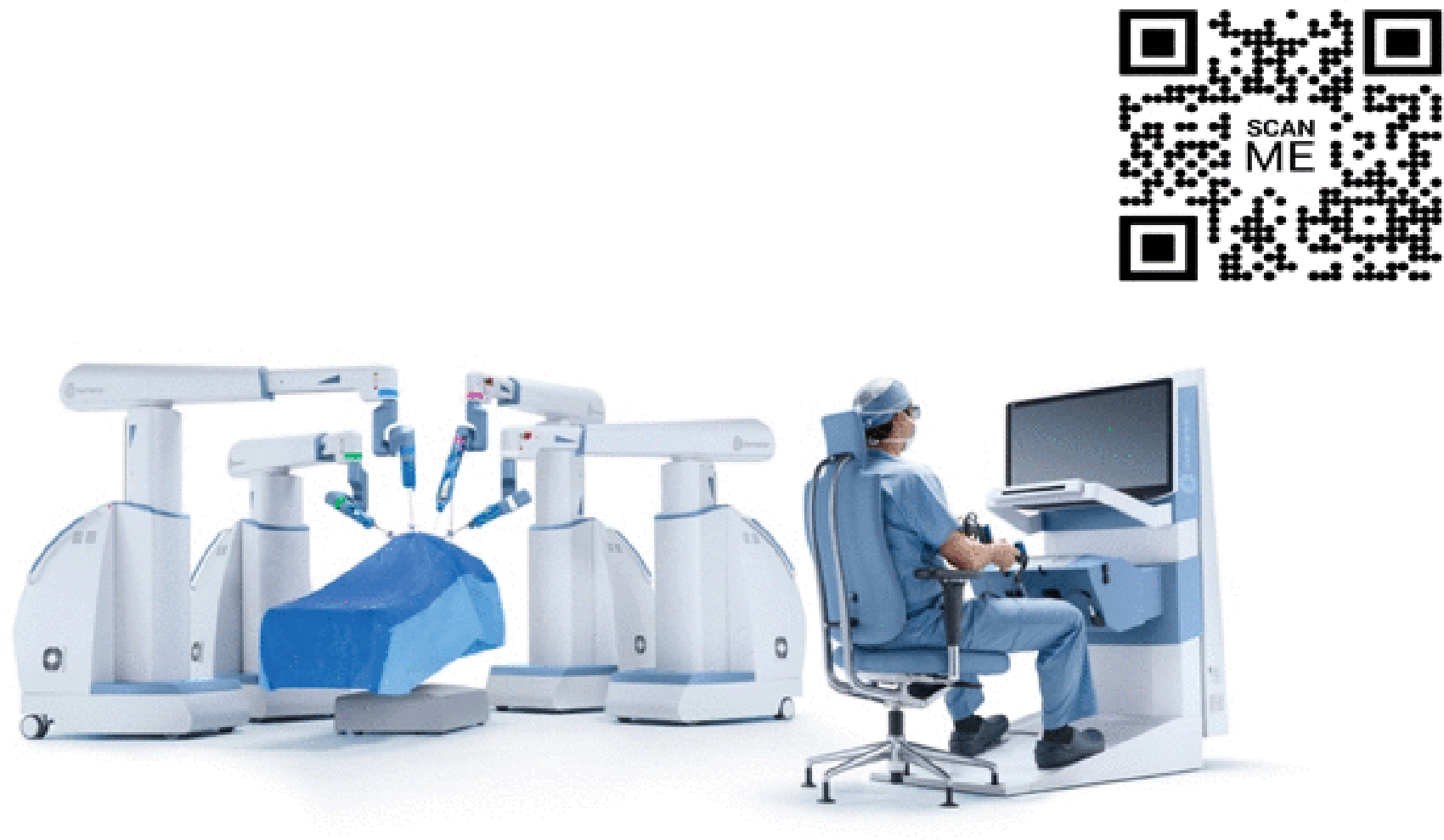
Senhance® robotic platform TransEnterix Surgical, Inc. (Morrisville, NC). Scan the QR code in the top right-hand corner for additional video contents. Color images are available online.
Preclinical studies
Dry laboratory
This is the only new robotic platform with available published studies testing its use in a dry laboratory setting, 39,49 using a laparoscopic endotrainer, and performing basic and complex laparoscopic tasks. Specifically, they evaluated the correlation between basic skills training programs and new user trainees' learning curves. Overall, they showed a stable robotic system, characterized by an easy-to-use interface, which allowed the performance of essential endoscopic skills, demonstrating that the systematic training in dry laboratories produced measurable improvements in surgical skills. 39,49 Two of the most innovative features of this new platform are the haptic feedback and the possibility of using 3-mm instruments. The first feature and its influence in the early learning curve were studied, demonstrating a rapid adaptation to the controls regardless of the experience level. 50 The second feature was also successfully tested to its maximum by using these instruments to simulate intracorporal suturing in small boxes of progressively smaller sizes. 51
Wet laboratory
This robotic platform was also studied in the wet laboratory setting, using ovine and porcine models. In the ovine model, the researchers performed 4 pulmonary lower lobectomies plus mediastinal lymph node dissection, whereas 12 nephrectomies and 20 urethrovesical anastomoses were performed in the porcine model. 48,52,53 These studies showed its ease and safety of use. The haptic feedback feature was accurate and the system had a fast docking time. Due to its open architecture and articulated handles, it was considered versatile and ergonomic, and a quick learning curve was described during the period of these studies.
Clinical studies
As previously remarked, the Senhance robot is the new robotic system supported by the largest number of clinical studies. After its first appearance in Italy, it was introduced in several countries. 40 –44,54 –57 Of note, there is published data confirming its use in the USA, Lithuania, Germany, Japan, France, England, and Croatia. 47,58 –73 After its introduction in the USA market, some researchers questioned the selection of optimal future users and the need for targeted training pathways. 47,62 In this context, experienced surgeons in open and laparoscopic surgery were selected to be involved in specific dry and wet laboratory training courses. Experienced Senhance-robotic surgeons proctored them during their robotic experience with this new platform in their own departments. After the initial implementation in the gynecological field, its use increased throughout different surgical specialties. In Italy, gynecologists were the first surgeons to use the system in benign diseases and, progressively, in more complex oncological cases. 40 –44,54 –57 The second biggest group of users of this new robot was general surgeons, who applied it to treat benign diseases, such as cholecystectomies and inguinal hernia repairs, and, then, colorectal malignant diseases. 45,47,58 –61,64 –68,70,71,73 On the other hand, urology is the surgical specialty with less penetration from this robot to date. 62,63 Few studies reported their results from a variety of surgical specialties and with different types of surgical procedures. Only two studies compared this platform with classical laparoscopic cholecystectomy, reporting that, despite being a feasible and safe procedure, the costs were still in favor of classical laparoscopy. 62,66,68,73 The majority of the studies reported similar results, confirming that the use of this new robotic platform was safe and agreeing on the feasibility of the surgeries performed. Overall, they underlined the need for the standardization of docking time and fast adaptation of the surgical team. All of them also reported favorable operative times, a low percentage of intra- and perioperative complications, as well as open conversions. 66 The eye track control (ETC) and the haptic feedback were two new features brought to the robotic surgical market by this platform. Still, the studies did not confirm whether these new features were associated with real advantages in the clinical setting. Conversely, ETC has an apparent disadvantage because it needs to be calibrated before each surgical session. 47 Two important technical aspects are the arms and the size of the trocars and instruments. Of note, the arms are placed independently on the surgical field allowing the surgeon to use the same configuration as in classic laparoscopy. Moreover, they can be easily relocated in case of limited movement range during the procedure or if an open conversion is needed. However, this independence also brings the disadvantage of the excessive lateralization of the arms, which might limit the execution of lateral-pelvic procedures. Similarly, arm size is also reported as a potential disadvantage in terms of working space on the surgical table, as well as its large footprint in the operating room and storage. 45,47,63 The size of the trocars and instruments is also a unique feature of this platform. The first version used 5-mm instruments, and then 3-mm instruments. In the latest publications, the authors reported the advantageous use of wristed 5- and 3- mm instruments, which were considered stable, safe, and without a specific long learning curve. 57,63,69,72 The lack of instrument variety was recently addressed by the company by developing wristed needle holders, articulated hooks, and new ultrasonic devices. 45,55,57,64,72 It is noteworthy to remark that one of the most significant advantages is the unlimited reusability of the Senhance instruments and trocars, which will theoretically impact the overall cost of robotic surgery. Moreover, studies calculating the cost per patient showed at least a two-fold cost reduction as compared with the Da Vinci surgical platform. 41,43,47,63,65
Discussion
With the aim of improving some gaps left by the Da Vinci robot, several new robotic surgical systems are being developed. Our research analyzed the scientific published literature on new robotic surgical platforms with potential use in the urological field (Table 1).
Main features
Each one of these new “large volume workspace” robotic platforms introduces new specific features.
The Revo-I robot is structurally similar to the Da Vinci robot, it has an integrated haptic feedback system, and the surgical instruments can be used for up to 20 procedures. The main limitations found were the restricted range of motion of the needle driver, when compared with the Da Vinci surgical system, the resistance in the surgical console of the hyperextension and hyperflexion motions and the fact that energy devices, such as vessel sealers and harmonic scalpels, did not exist at that time.
The Versius robot has a modular design that allows positioning of the ports and bedside units (BSUs) according to the lead surgeon's preferred laparoscopic set-up. It has an ergonomic handgrip with left and right-hand control boxes, not requiring foot pedal control. There are also 5-mm laparoscopic trocars and a wristed instrument that facilitates procedures in confined spaces such as the pelvis. This platform introduces new and specific terminology to its different components. The robotic effector arm is named instrument BSU, and the robotic camera is the visualization BSU. It also introduces the concept of “collaborative surgery” in the robotic surgical field, allowing two surgeons to operate simultaneously in two surgical areas, which might benefit when case complexity warrants such an approach. This might be applied to colorectal surgery, vein harvest during coronary artery bypass grafting, organ transplantation, two-field esophagectomy for cancer of the distal esophagus, 74 and abdominoperineal resection. 75 This collaborative surgical approach might reduce anesthetic and overall operative time, improve operative efficiency, diminish overall operating room cost, surgeon workload, fatigue and stress, decrease the need for human resources/operatory room personnel and, potentially, improve clinical outcomes.
The Senhance independent arms positioning allows laparoscopic surgeons to adapt faster, because they can use the classic laparoscopy trocar set-up. Moreover, it allows an easier and faster conversion to a standard laparoscopic approach if needed and the arms can be easily relocated in case of limited motion range. The haptic feedback and ETC system showed no advantage in the clinical setting [47]. The 3- and 5-mm trocars and reusable wristed instruments are smaller than the Da Vinci 8-mm ports, crossing the line of both minimally invasive and robotic surgery.
There is an increasing concern regarding ergonomics in laparoscopic and robotic surgery. However, although these new consoles offer new designs, the published studies lack detailed data concerning its corresponding features, and ergonomic advantages or disadvantages. Therefore, no significant considerations can be drawn on this issue and future studies are necessary to disentangle potential advantages on ergonomics between different robotic platforms.
Preclinical development
In the preclinical development of these new platforms, only Senhance published studies in the dry laboratory setting. 39,49 –51 The Revo-I and Senhance performed wet laboratory preclinical development using porcine models. 19,20,22,23,48,52,53 The Versius was developed using the porcine and human cadaver models. 27 –31,34 –36
Clinical development
All clinical studies from the Revo-I were reported from surgical centers located in the Republic of Korea. 19 –23,25,26 The Versius studies were based in U.K., 27,28,37,38 Spain, 29,34 and USA. 36 The first publications of the Senhance robot came from Italy, 40 –44,54 –57 and after that, centers from the USA, Lithuania, Germany, Japan, France, England, and Croatia 47,58 –73 published their results. The Versius and the Senhance robots were first used in gynecology. 38,40 –44,54 –57 The field of general surgery was also explored by these three new robots. 21,26,38,45,47,58 –61,64 –68,70,71,73 Urology was the less explored, although Revo-I and Senhance have few publications in this field. 25,62,63
In all the published studies, benign diseases were first used to test the new technology. 21,26,38,40 –44,54 –57,59 –61,66,72,73 As soon as companies were able to prove its safe functioning, more complex malignant cases started to be treated. 25,40,44,45,47,48,55,58,63,64,67 –71
Economic studies
One of the Da Vinci robot's major drawbacks is the acquisition price and price per patient/procedure. From these three new platforms, only Senhance performed economic studies, showing that the cost per patient can be two times less expensive compared with the Da Vinci system. 41,43,47,63,65 However, since the price has been appointed as one of the most important factors in delaying the dissemination of robot-assisted surgery, 76 it is surprising that we did not find any specific referral to the price of the console and no strong cost-effective studies showing that these new robotic platforms will be less expensive than the Da Vinci robotic platform.
Taken together, each of these new robotic platforms presents specific innovations. The Revo-I promises longer usability of its instruments. The Versius introduces a new concept of collaborative surgical approach in robotic surgery. The Senhance brings to reality the haptic feedback, the ETC system, and the 3- and 5-mm trocars and reusable wristed instruments. But all innovations, namely, the announced more extended functionality and durability of the Revo-I instruments; the potential advantage of the modular BSUs of Versius; and the independent arms, the haptic feedback, and the ETC system of the Senhance system should be tested in the challenging field of daily routine use. Also, some new ideas require more reliable scientific proof. For instance, it has been suggested that having independent modules or arms may be an advantage as it might allow the surgeon to transfer his/her preferred laparoscopic port placement to robotic surgery. However, there is no evidence that the transition to the Da Vinci port placement represents a significant hurdle in the surgeon's learning curve. Moreover, whether this new arms configuration with multiple components makes standardization of port placement more difficult and docking more time consuming has never been assessed. Future studies should also investigate whether the haptic feedback and ETC systems might allow for a quick adaptation and increased self-confidence during surgery, and whether an open console is better than a fixed, closed design. Finally, it might also be important to assess whether an on-board handled control unit, removing the need for foot pedal controls, might be better than having hand and control pedals.
Conclusion
We herein reviewed the main features of new “large workspace” robotic platforms that might be potentially used in the urological field. These new features may bring important changes in the near future of robotic surgery, but all of them need to be tested in strong clinical and cost-effective studies. Each one of these clinically approved products is currently marketed but undergoing incremental changes to instruments, hardware, and software are being developed, always taking into account its safe and effective use in a clinical setting, judging its benefits for patients and surgeons.
Footnotes
Author Disclosure Statement
No competing financial interests exist.
Funding Information
No funding was received.