




Abstract
A total of 1280 banknotes were obtained from food outlets in 10 different countries (Australia, Burkina Faso, China, Ireland, the Netherlands, New Zealand, Nigeria, Mexico, the United Kingdom, and the United States), and their bacterial content was enumerated. The presence of bacteria on banknotes was found to be influenced by the material of the notes, and there was a strong correlation between the number of bacteria per square centimeter and a series of indicators of economic prosperity of the various countries. The strongest correlation was found with the “index of economic freedom,” indicating that the lower the index value, the higher the typical bacterial content on the banknotes in circulation. Other factors that appear to influence the number of bacteria on banknotes were the age of the banknotes and the material used to produce the notes (polymer-based vs. cotton-based). The banknotes were also screened for the presence of a range of pathogens. It was found that pathogens could only be isolated after enrichment and their mere presence does not appear to be alarming. In light of our international findings, it is recommended that current guidelines as they apply in most countries with regard to the concurrent hygienic handling of foods and money should be universally adopted. This includes that, in some instances, the handling of food and money have to be physically separated by employing separate individuals to carry out one task each; whereas in other instances, it could be advantageous to handle food only with a gloved hand and money with the other hand. If neither of these precautions can be effectively implemented, it is highly recommended that food service personnel practice proper hand washing procedures after handling money and before handling food.
Introduction
Even though money is highly sought after, it is often seen as a potential source of contamination by bacteria through handling, because its history of exchange is at best doubtful: “You never know where the money you receive has been!” The hygienic status of currency has been a scourge to some for over a century. During the late 1800s and early 1900s, several authors raised the issue that banknotes could be vectors in the transmission of disease causing microorganisms (Schaarschmidt, 1884; Hilditch, 1908; Morrison, 1910; Boyer, 1921; Ward and Tanner, 1921). It was then easy to find heterogenous mixtures of bacteria on currency, as it has been more recently (Abrams and Waterman, 1972; Oo et al., 1989; Goktas and Oktay, 1992; Ferenc, 2000; Singh et al., 2002; El-Dars and Hassan, 2005; Barro et al., 2006; Hosen et al., 2006; Emikpe and Oyero, 2007; Oyero and Emikpe, 2007; Uneke and Ogbu, 2007; Kumar et al., 2009). However, each of these studies were carried out in complete isolation with no means of comparison or control of sampling and processing.
Many food outlets heavily rely on the exchange of cash for their goods. The possibility that the handling of money by the same person (who also serves and even prepares the food) might cause contamination has resulted in several changes with regards to how foods are handled and traded, especially with regard to ready-to-eat foods. In some instances, the handling of food and money have been physically separated by employing separate individuals to carry out one task each; in other instances, there has been a move to handle food only with a gloved hand. However, employees in the food service industry are still sometimes observed handling both food and money, even with the same gloved hands (Michaels, 2002).
This study aims at providing a cross-sectional overview of the number of bacteria associated with banknotes obtained from food outlets, through a standardised method, and their relative occurrence on commonly handled currency notes from various countries.
Materials and Methods
Sampling and extraction
A basic standardised protocol between collaborating laboratories was used in this study. All banknotes used in this study were sampled from food vending sites, with an emphasis on the two most commonly used denominations in the particular country involved (Table 1). The food vending sites where samples were taken varied between the various countries; however, typical examples of food vending sites that were targeted are sandwich bars; coffee shops; street vendors; supermarkets; butchers; cafeterias; and fast-food outlets. Only banknotes that were not obviously damaged or worn out were used in this study. When banknotes were collected from the various food vending sites, each individual banknote was deposited into an individual, sterile stomacher bag. All samples were processed on the day of sampling. Forty milliliter of extraction buffer (NaCl [10 g/L]; K2HPO4 [2 g/L]) was added to each stomacher bag, which was then stomached twice for 5 minutes with a 30-minute soak-interval.
Microbial analysis
Bacteria were enumerated on Columbia base agar (Oxoid), whereas specific pathogens were screened for following overnight enrichment in liquid medium containing (final concentration: peptone [9 g/L]; K2HPO4 [6.5 g/L]; NaCl [2 g/L]; glucose [1 g/L]) (Vriesekoop and Shaw, 2010). After overnight enrichment, Escherichia coli cultures were isolated on Eosin Methylene Blue Agar (Oxoid) and Baird Parker Agar (Oxoid) for Staphylococcus aureus, Bacillus cereus Agar (Oxoid) for B. Cereus; whereas Salmonella was screened for according to the dual enrichment method described elsewhere (Jay et al., 1997). General microscopic observations and standard biochemical characterization (Finegold and Baron, 1986) were employed to further corroborate the tentative identity of the bacteria.
Scanning electron microscopy of banknote surfaces
Small sections of banknotes were removed and coated with gold using a sputter coater (Agar Aids). Banknote surfaces were visualized using a JSM-6300 scanning electron microscope (JEOL).
Statistical analysis
One-way analysis of variances on the effects of both country and banknote substrate on microbial presence were performed. Differences were identified using Tamhame's T2 post hoc test. Relationships between the average number of bacteria on banknotes and various socioeconomic indicators were investigated using the Pearson's correlation coefficient. All statistical analyses were performed using SPSS 16 (SPSS, Inc.).
Results and Discussion
Enumeration of bacteria on the surface of banknotes
The number of bacteria on banknotes obtained from food outlets varied widely within a single country and, to an even greater degree, between individual countries (Fig. 1). The interquartile range (central 50% of data with regard to bacterial numbers per cm2) of bacterial populations found on the banknotes from the various countries varied by less than two logs across all currencies. Although there is an obvious difference among the various countries, the interquartile range within individual countries varied from about half a log to about one and a half log (Australia and Ireland vs. Nigeria respectively); whereas the interquartile range for the majority of countries was approximately one log (Fig. 1). For instance, the median 50% (interquartile range) of notes from the United States contained bacteria in the range from 2.5 to 14 colony forming units (CFU)/cm2. Further, the total range (interquartile range and both outer quartiles) reveals that the lowest number of bacteria detected on a banknote from the United States was about 20 CFU per note (0.1 CFU per cm2), whereas the highest number found in the United States was about 2.5 × 10⁴ CFU per note (128 CFU per cm2). Similar differences and spread of ranges in bacterial numbers on banknotes were observed in most countries. Although there were significant differences among most countries with regard to the mean bacterial presence (Table 2); there were no significant differences between, for example, the Netherlands, Nigeria, and the cotton-based notes sampled in Mexico (p > 0.05).
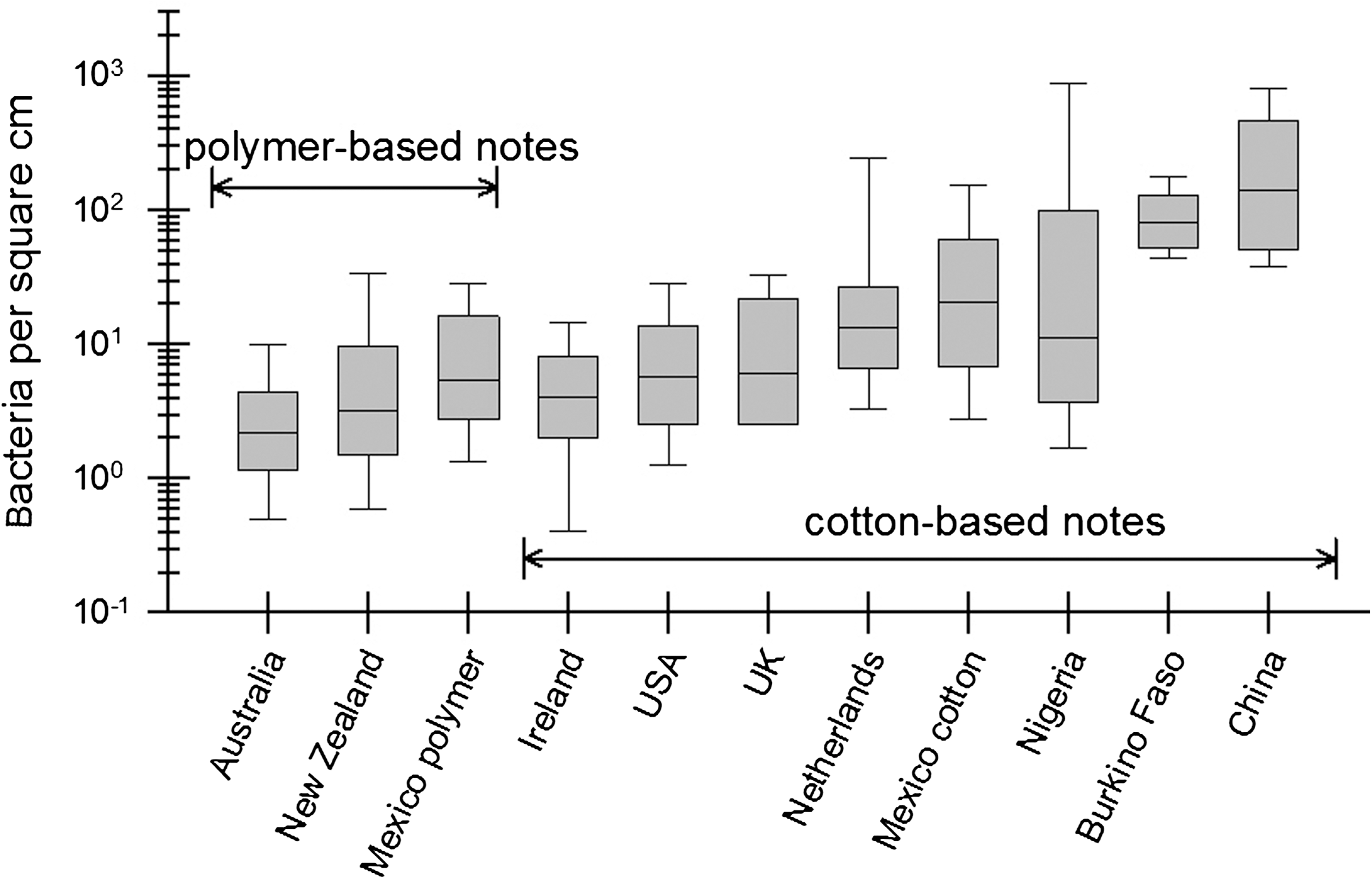
Number of bacteria per square cm on banknotes. The gray box represents the interquartile range (central 50%) of the data regarding the number of bacteria on banknotes analyzed, whereas the whiskers (viz. error bars) represent either the upper or lower 25% of banknotes analyzed. Number of banknotes sampled per country: Australia (n = 134); New Zealand (n = 120); Mexico—polymer notes (n = 129); Mexico—paper notes (n = 81); Ireland (n = 195); United States (n = 118); United Kingdom (n = 40); the Netherlands (n = 113); Nigeria (n = 60); Burkina Faso (n = 20); China (n = 99).
Differences are based on a one-way analysis of variance investigating the effect of country on microbial content. The differences were identified using Tamhame's T2 post hoc test, using SPSS 16 (SPSS, Inc., Chicago, IL). A p-value > 0.05 is deemed to indicate a significant similarity between countries, whereas a p-value <0.05 is deemed to indicate a significant difference between countries.
The difference between the ranges of bacteria detected on the banknotes appears to relate to a number of different factors. First, the material used to produce banknotes plays a role in the number of bacteria that can be isolated from banknotes; whereas the age of the banknotes and the social and/or economic status of a given country appear to have a large influence on the disparity in the number of bacteria found on the various banknotes of the various countries.
Bacterial numbers influenced by banknote material
Most banknotes are produced from a cotton-based material, which provides more strength and durability than paper. A recently developed polymer-based substrate presents an alternative banknote material with an even greater durability and strength. The data shown in Figure 1 reveals that banknotes produced on polymer-based substrate have a relatively low bacterial count compared with the cotton-based banknotes (p < 0.05, see also Table 2). During this study, we sampled banknotes in Mexico where the denominations sampled were concurrently available in both polymer and cotton-based notes. The average number of bacteria encountered on the polymer notes was approximately 25% of that found on the cotton-based notes. Hence, it is clear that the substrate material plays a significant role in the number of bacteria found on banknotes. The polymer notes are a bi-axial polypropylene based substrate that provides a relatively smooth surface (Fig. 2) which appears to hinder the adherence of bacteria. On the other hand, the cotton-based banknotes provide a fibrous surface, which provides ample opportunity for bacterial attachment.
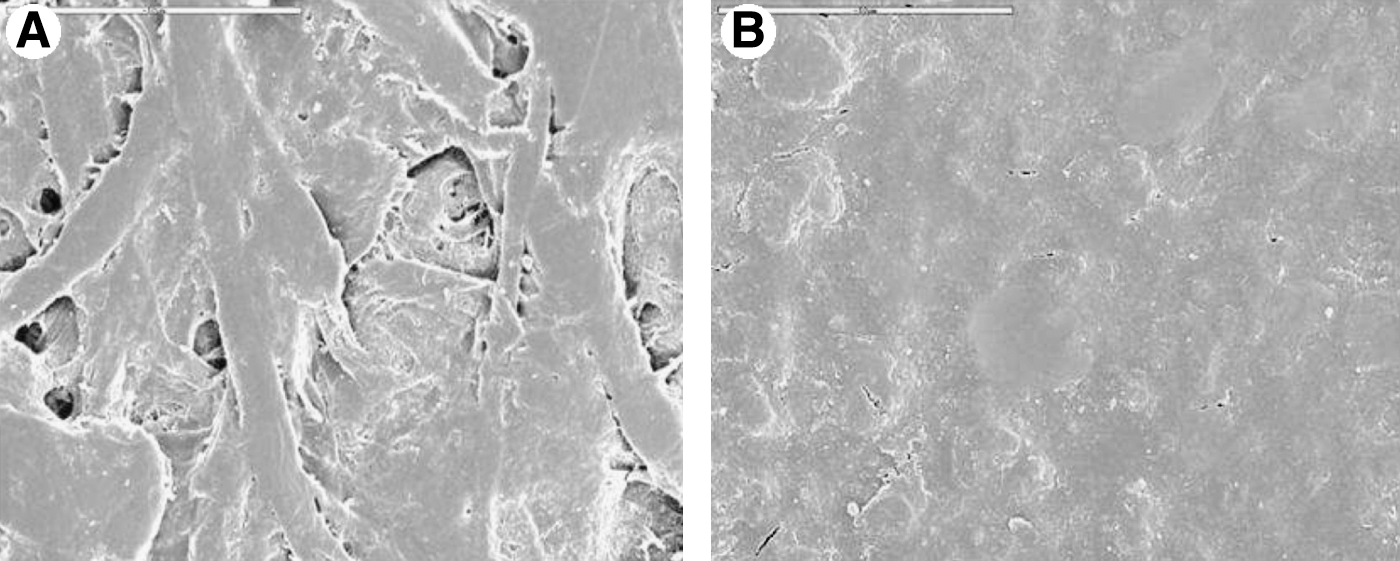
Electron micrographs of the surface of banknotes. (
Bacterial numbers influenced by social and/or economic status
The social and/or economic status of a given country can be expressed in terms of the “index of economic freedom.” The index scores most of the world's nations according to 10 factors deemed to be of significant influence to the economic freedom of individuals living in a given country. These factors include business freedom; trade freedom; monetary freedom; freedom from government; fiscal freedom; property rights; freedom to invest; financial freedom; freedom from corruption; and labor freedom (Gwartney and Lawson, 2006). Figure 3 shows the average number of bacteria detected on a range of banknotes from different countries plotted against the index of economic freedom for each country. The correlation between the average number of bacteria on banknotes and the index of economic freedom for banknotes is quite strong (Pearson's correlation coefficient: r-cotton based = 0.92; r-polymer based = 0.98). Other indicators of social and/or economic prosperity also show strong correlations, such as gross domestic product per capita (r-cotton based = 0.74; r-polymer based = 0.99); human development index (
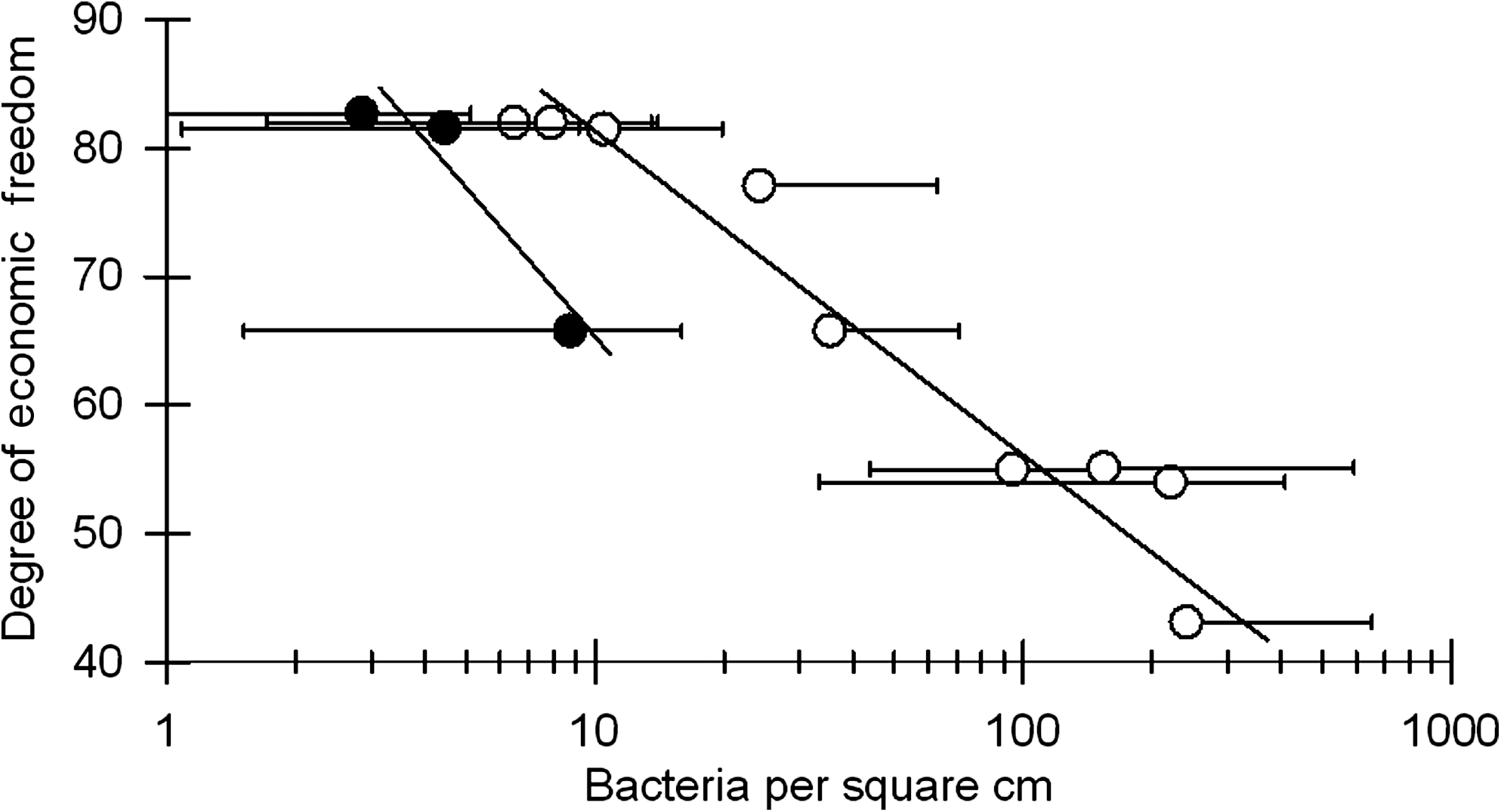
Correlation of average bacterial number (error bars = SD) on banknotes and the degree of economic freedom. • Average bacterial number of polymer-based banknotes; ○ average bacterial number on cotton-based banknotes.
Bacterial numbers influenced by age of banknotes
It is typically difficult to determine the age of banknotes, as most printworks do not specifically indicate a production date or year. However, the British system is different from most systems, and an approximation of age can be made. On examination of the British banknotes, we were able to determine that there was a linear correlation between the age of the notes and the signs of wear (taken as folds or creases on the notes). It was observed that, on average, the number of folds increased by one per year in circulation (p < 0.05). This correlation held true for notes up to 5 years of age (Fig. 4). Further, we found that the number of folds on the British banknotes was linked to a logarithmic increase in average bacterial cells found per cm2 (p < 0.05) (Fig. 4).
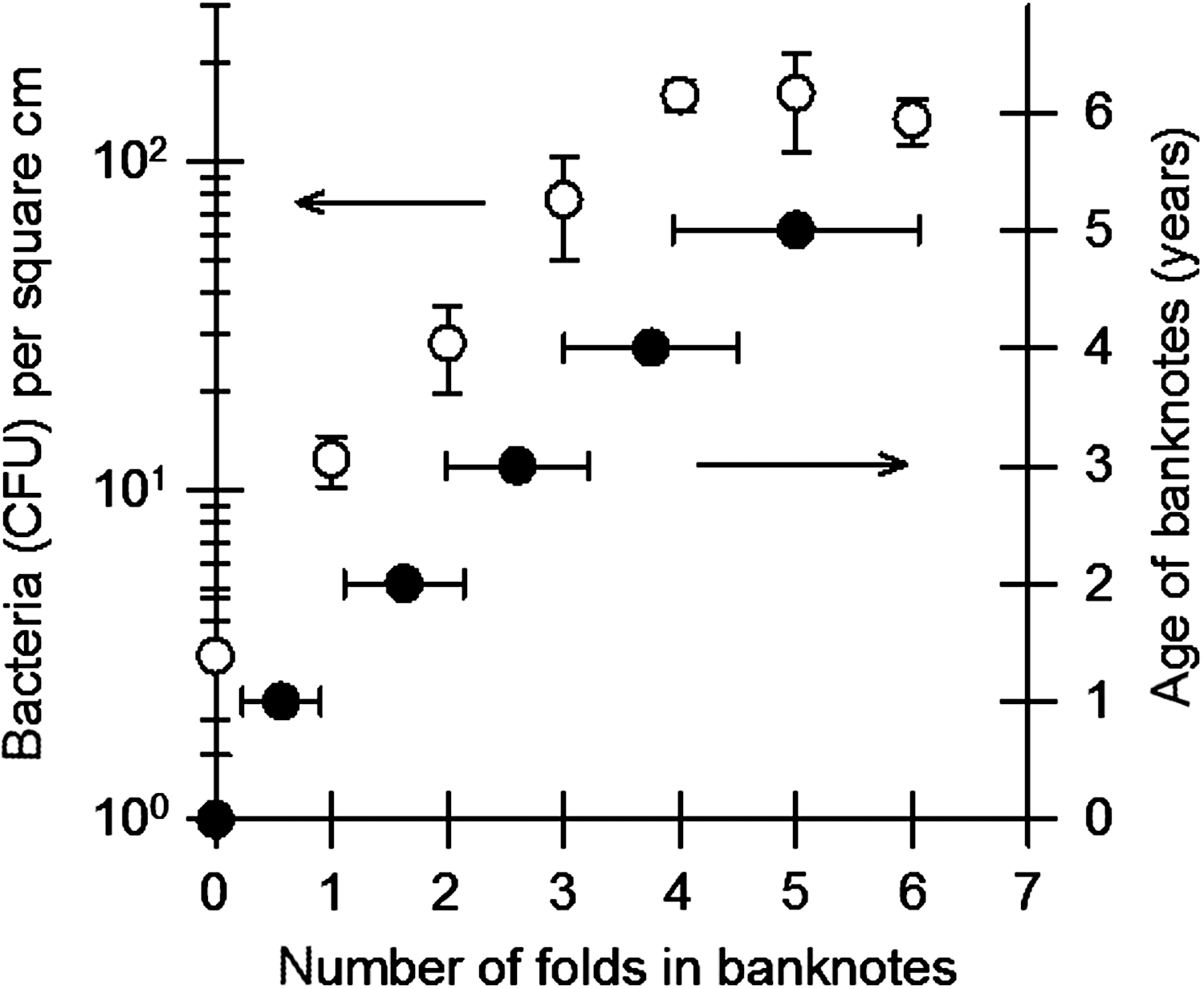
Influence of age and deterioration on the bacterial content of banknotes (British Pounds). • Effect of age (years in circulation) on the number of folds on banknotes (p < 0.05); ○ influence of number of folds on banknotes on the average number of bacteria per square cm (p < 0.05). (n = 40; error bars = SD).
The presence and persistence of foodborne pathogens on the surface of banknotes
In addition to the quantitative investigation into the occurrence of bacteria on banknotes, we extended our investigation to screen for the occurrence of typical foodborne pathogens. Enumeration of pathogens was found to be extremely difficult, presumably because their presence was below that of a typical detection threshold for enumeration. Moreover, in the instance of food handling, the mere presence of certain pathogens is considered to be potentially detrimental. Hence, we carried out a qualitative analysis to screen for the presence of E. coli, S. aureus, B. cereus, and Salmonella spp. The incidence of E. coli (typically associated with facal contamination) was taken as an indicator of poor hygiene and sanitation standards; whereas the presence of Salmonella spp. was taken as an indicator of severely compromised hygiene and sanitation standards. The presence of S. aureus was taken as a “background” microorganism, because it is a common resident bacterium on human skin, and all the banknotes analyzed in this study were recently handled by hand; whereas the presence of B. cereus was taken as an indicator of the ability of spore forming bacteria to persist on banknotes. There was a significant correlation between the overall number of total bacteria and either the index of economic freedom or the material banknotes are made of (Fig. 3); whereas there was no discernable correlation between the presence of specific pathogens and any external influence such as banknote substrate or prosperity level of a given country.
E. coli was found at a relatively low incidence (≤25%) in all countries (Fig. 5), except for banknotes sampled in the United States and China, where the incidence of E. coli was 55% and 50%, respectively. The more severe pathogenic Gram-negative bacterium Salmonella could not be isolated from the banknotes in most countries; however, Salmonella spp. were found to be present on banknotes sampled in the United States, Ireland, and China at 4%, 6%, and 25% respectively. It is not clear whether the presence of facal bacteria on banknotes could cause an infection in those humans who handle and receive the currency. However, the presence of these bacteria is indicative of compromised or poor personal hygiene of those who recently handled the banknotes, or the presence of these bacteria could have been influenced by the manner in which the banknotes were kept at the food outlet. S. aureus is a common skin-associated bacterium whose presence on recently handled banknotes should not be taken as alarming. The bacterial cultures presumed to be S. aureus were found at varying incidences in all countries (Fig. 3). The lowest incidence (<25%) of S. aureus occurred in Australia, Mexico, and Ireland; whereas a relatively high incidence (>50%) of S. aureus occurred in New Zealand, the Netherlands, and China. The spore forming, Gram-positive bacterium B. cereus was found to be present in relatively low to moderate levels in most countries, whereas a high incidence (>75%) of this bacterium was detected on banknotes from New Zealand and China. A similar high incidence of B. cereus has also been reported on currency notes from India and Turkey (Goktas and Oktay, 1992; Basavarajappa et al., 2005).
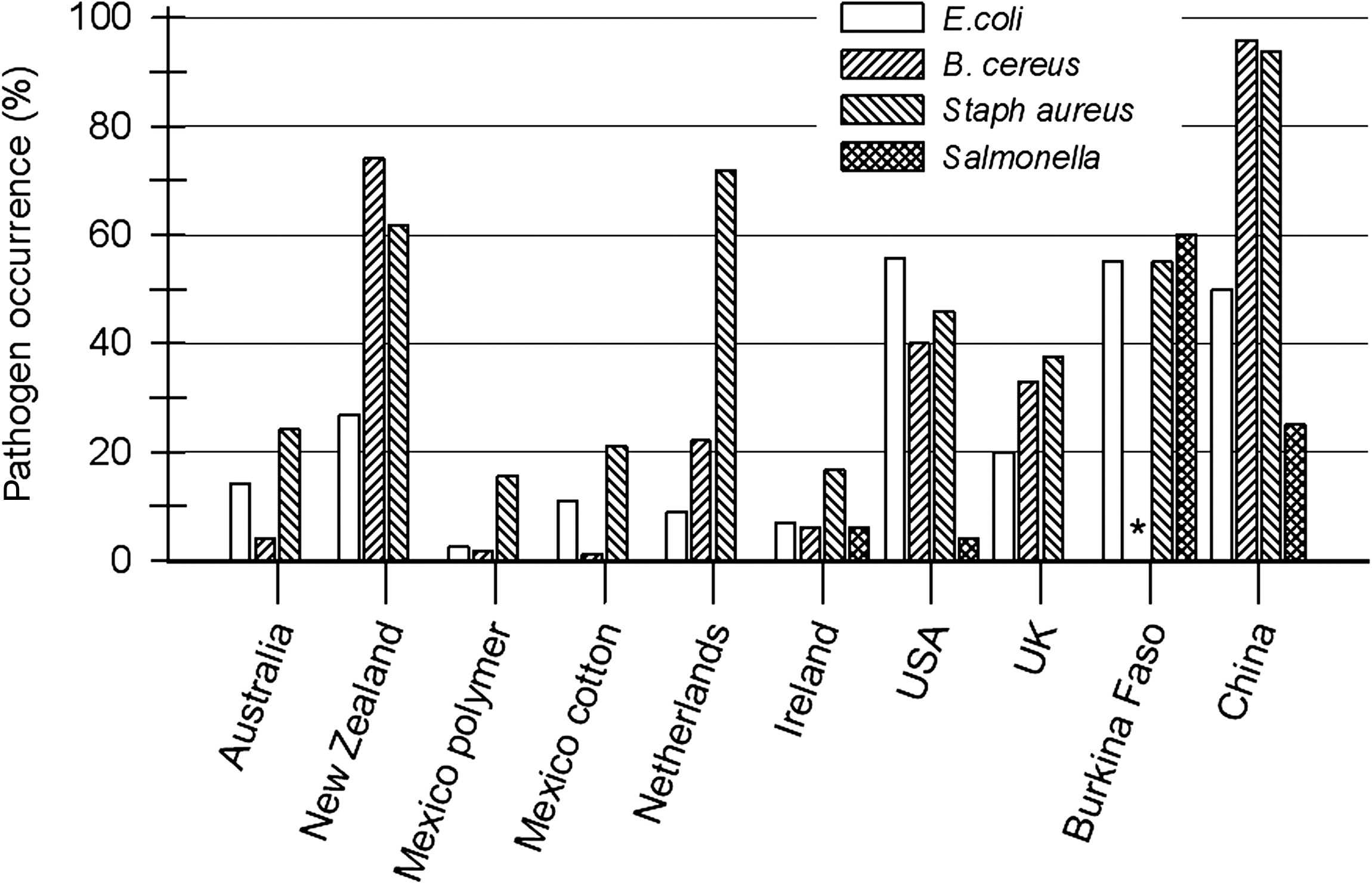
The occurrence of presumed pathogens on banknotes. Number of banknotes sampled per country: Australia (n = 134); New Zealand (n =120); Mexico—polymer notes (n = 129); Mexico—paper notes (n = 81); Ireland (n = 195); United States (n = 118); United Kingdom (n = 40); the Netherlands (n = 113); Burkina Faso (n = 20); China (n = 99). *The banknotes sampled in Burkina Faso were not screened for the presence of Bacillus cereus.
The number of bacteria found on banknotes obtained from food outlets varies enormously within individual countries. The variation of bacterial numbers was even greater between separate countries; there appears to be three dominating influences for the disparity in bacterial numbers. These include national economic factors such as the index of economic freedom, where a relatively low index of economic freedom correlated to an elevated presence of bacteria. The age of the banknotes reveal a similar correlation; whereas the material that the banknotes are made of represents a very significant influence on the presence of bacteria. It appears that to minimize the bacterial presence on banknotes, there are two main measures which can be adapted, namely a change from cotton-based notes to polymer-based notes and a reduced half-life for notes with regard to the time they remain in circulation. The foodborne pathogens isolated in this study were present at very low numbers only. Further, commonsense with regard to the hygienic handling of foods and money have to prevail, and current guidelines as they apply in most countries should be universally adopted. This would mean that, in some instances, the handling of food and money have to be physically separated by employing separate individuals to carry out one task each; whereas, in other instances, it could be advantageous to handle food only with a gloved hand and money with the other hand. If neither of these precautions can be effectively implemented, we suggest that food service personnel implement proper hand washing procedures after handling money and before handling food. Note, this latter suggestion is merely a reiteration of a statement made by Boyer in 1921: “ … run a risk of infection … by handling dirty money and their bread or fruit without first washing the hands.”
Footnotes
Acknowledgments
The authors are grateful for the support they received from Stafford McKnight with the scanning electron microscopic analysis and Julie Worrall for her unrelenting help during the initial stages of the project.
Disclosure Statement
No competing financial interests exist.