




Abstract
Typhoid fever caused by Salmonella enterica serovar Typhi remains a significant public health problem in developing countries. Although the main method for diagnosing typhoid fever is blood culture, the test is time consuming and not always able to detect infections. Thus, it is very difficult to distinguish typhoid from other infections in patients with nonspecific symptoms. A simple and sensitive laboratory detection method remains necessary. The purpose of this study is to establish and evaluate a rapid and sensitive reverse transcription–based loop-mediated isothermal amplification (RT-LAMP) method to detect Salmonella Typhi infection. In this study, a new specific gene marker, STY1607, was selected to develop a STY1607-RT-LAMP assay; this is the first report of specific RT-LAMP detection assay for typhoid. Human-simulated and clinical blood/stool samples were used to evaluate the performance of STY1607-RT-LAMP for RNA detection; this method was compared with STY1607-LAMP, reverse transcription real-time polymerase chain reaction (rRT-PCR), and bacterial culture methods for Salmonella Typhi detection. Using mRNA as the template, STY1607-RT-LAMP exhibited 50-fold greater sensitivity than STY1607-LAMP for DNA detection. The STY1607-RT-LAMP detection limit is 3 colony-forming units (CFU)/mL for both the pure Salmonella Typhi samples and Salmonella Typhi–simulated blood samples and was 30 CFU/g for the simulated stool samples, all of which were 10-fold more sensitive than the rRT-PCR method. RT-LAMP exhibited improved Salmonella Typhi detection sensitivity compared to culture methods and to rRT-PCR of clinical blood and stool specimens from suspected typhoid fever patients. Because it can be performed without sophisticated equipment or skilled personnel, RT-LAMP is a valuable tool for clinical laboratories in developing countries. This method can be applied in the clinical diagnosis and care of typhoid fever patients as well as for a quick public health response.
Introduction
T
The main nucleic acid amplification diagnosis technologies, such as polymerase chain reaction (PCR) (Ho et al., 2012), reverse transcription (RT)-PCR (Nga et al., 2010), and nested PCR (Kumar et al., 2012) assays, have been used in Salmonella Typhi detection. However, each of these methods has displayed certain disadvantages, such as high susceptibility to inhibition factors (Fredricks et al., 1998) or false positives, and they may require skilled laboratory personnel and expensive equipment (Anthony et al., 2000; Ortu et al., 2006).
Recently, loop-mediated isothermal amplification (LAMP) has been used to detect infectious diseases (Notomi et al., 2000; Mori and Notomi, 2009) due to its competitive advantages, such as a closed-tube reaction, real-time monitoring, visible fluorescence detection results, isothermal amplification, high sensitivity, and less sophisticated conditions (Poon et al., 2006; Boehme et al., 2007). The LAMP primers recognize six to eight regions of the target gene (for additional details, see
In our study, a STY1607-RT-LAMP assay was developed and optimized. The evaluation of STY1607-RT-LAMP was performed with RNA from a pure bacterial sample, Salmonella Typhi–simulated specimens, and clinical specimens collected from patients during two recent outbreaks. The RT-LAMP assay was compared with STY1607-LAMP, culture, and rRT-PCR.
Materials and Methods
Ethics statement
The blood and feces samples were acquired after oral informed consent from healthy donors at our institute. After voluntary oral informed consent was obtained, clinical samples were collected from suspected patients from the Maigaiti County Hospital administration and Shatu Town Branch of Jinsha County Hospital administration during the two outbreaks of typhoid fever in 2013. This study was also reviewed and approved by the ethics committee of the National Institute for Communicable Disease Control and Prevention, China CDC, in accordance with the medical research regulations of the Ministry of Health, China (Approval No. ICDC2014003). The RT-LAMP primers used in this research are patented (patent No. ZL201210093406.X).
Bacterial strains
Overall, 48 Salmonella Typhi and 75 non-Salmonella Typhi strains were used to test the specificity of the RT-LAMP assay (Table 1). All Salmonella serotypes were identified using the agglutination test and Danish Salmonella antisera. In addition, the tested strains also included other enteric pathogens and febrile pathogens that can be isolated from blood specimens. All of the strains were obtained from the National Institute for Communicable Disease Control and Prevention, Chinese Center for Disease Control and Prevention.
The number is the quantity of the strain used in the study.
V. cholerae, Vibrio cholerae; V. parahaemolyticus, Vibrio parahaemolyticus; S. dysenteriae, Shigella dysenteriae; S. flexneri, Shigella flexneri; S. boydii, Shigella boydii; S. sonnei, Shigella sonnei; ETEC, enterotoxigenic Escherichia coli; EHEC, enterohemorrhagic Escherichia coli; S. aureus, Staphylococcus aureus; S. pneumoniae, Streptococcus pneumoniae; N. meningitidis, Neisseria meningitidis.
RT-LAMP and LAMP assay
LAMP primers (Table 2) were designed using PrimerExplorer V4 (Eiken Chemicals, Japan,
r-RT-PCR, reverse transcription real-time polymerase chain reaction.
Real-time fluorescent quantitative reverse transcription polymerase chain reaction (rRT-PCR)
rRT-PCR was performed with RNA extracted from specimens according to One Step SYBR Primerscript RT-PCR Kit II (TaKaRa, Japan) with the F3 and B3 primers (Table 2). The reaction conditions were as follows: 42°C for RT for 30 min followed by 45 cycles of 94°C for 30 s and 60°C for 15 s. The samples were amplified on a CFX96 PCR platform (Bio-Rad, CA).
Sensitivity assessments of RT-LAMP, LAMP, and rRT-PCR
Two milliliters of fresh Salmonella Typhi cells (3×10⁸ colony-forming units [CFU]/mL) were cultured in Luria-Bertani (LB) broth at 37°C; the total RNA was extracted from 1 mL of this culture using an RNeasy Mini Kit (QIAGEN, China), and genomic DNA was extracted from the remaining milliliter of cells using a Genomic DNA Purification Kit (Promega, China). After DNase treatment, real-time PCR using the F3/B3 primers was performed to ensure that there was no DNA contamination in the purified RNA solution. The RNA quality was assessed by gel electrophoresis. The RNA or DNA concentration (ng/μL) was measured using a NanoDrop ND-1000 apparatus (Thermo Scientific). The RNA or DNA solutions were diluted in 10-fold serial dilutions, corresponding to 3.0×10⁵ to 10−1 CFU/mL, and were used as the templates for RT-LAMP, rRT-PCR, and LAMP.
Preparation and RNA extraction of Salmonella Typhi–stimulated blood samples
A serial 10-fold gradient of 108 to 10−1 CFU Salmonella Typhi were inoculated into 5 mL of fresh whole blood at room temperature for 30 min, and the bacterial cell numbers in these simulated samples were quantified by viable counts. RNA was extracted using QIAamp UCP PurePathogen Blood Fieldtest Kit (QIAGEN) and eluted in 50 μL of nuclease-free water; 5 μL was used as a template in the RT-LAMP and rRT-PCR assays.
Preparation and RNA extraction of Salmonella Typhi–simulated stool specimens
The CT18 fresh culture (108 CFU/mL) was serially diluted to 104 to 10−1 CFU/mL. One milliliter of these bacterial dilutions was mixed with 3 g of healthy human feces. Then, 400 μL of TE buffer was added to 0.5 g of each simulated stool specimen, mixed by vortexing, and centrifuged at 1000×g for 1 min to remove bigger particles, and the supernatant was collected and centrifuged at 8000×g for 5 min. The pellet was resuspended in TE buffer and centrifuged again to obtain the bacterial pellet for further RNA extraction using RNeasy Minikit (QIAGEN). We quantified the bacterial cell number in each Salmonella Typhi–stimulated stool sample on CHROMagar medium plates. Feces without Salmonella Typhi simulation served as the negative control.
Detecting blood and stool specimens from patients
Clinical specimens were collected from 51 patients, including 22 males and 29 females with average age of 14 (7–19 years old), with suspected typhoid fever. All samples were collected on the first day of the hospital visit, primarily in the acute phase of the disease, which is approximately 3.6 days (0–7 days) after fever onset. None of the patients were prescribed antibiotics.
Whole blood (15 mL) was collected from each patient, and RNA was extracted from 4 mL of blood using the QIAamp UCP PurePathogen Blood Fieldtest Kit (QIAGEN). The RNA was eluted in 40 μL of ddH2O, and 5 μL was used in the RT-LAMP or rRT-PCR assays. An additional 8 mL of blood was transferred into blood culture bottles (BD BACTEC lytic/10 Anaerobic/F culture vials) and incubated at 37°C. Subculturing was performed on samples from the culture bottle using xylose lysine deoxycholate agar each day. Suspected colonies on the media were identified using Salmonella biochemical tests kit. Negative broth cultures were incubated for at least 7 days before they were reported as negative.
RNA was extracted from each 0.1 g stool sample using an RNeasy Minikit (QIAGEN). Each stool specimen was plated on two CHROMagar plates using an inoculating loop. Two additional CHROMagar plates were used to culture samples after enrichment in selenite cystine broth for 18–24 h. Purple and light purple/red colonies were identified using biochemical tests and an agglutination test with Danish Salmonella antisera. All medium and reagents for Salmonella Typhi identification and screening were purchased from Beijing Land Bridge Technology Co., Ltd. (China).
Additionally, whole blood and stool specimens from 20 paratyphoid fever patients, 5 diarrheal cases with fever (1 case was Vibrio parahaemolyticus–culture positive, 2 were enteropathogenic Escherichia coli–culture positive, and 2 cases were Shigella dysenteriae positive), and 6 healthy controls were also used to test the specificity of STY1607-RT-LAMP. The total RNA from each specimen was extracted and used as the template for RT-LAMP amplification.
Results
Screening a new target gene specific to the Salmonella Typhi serotype
To identify Salmonella Typhi–specific genes, Salmonella Typhi CT18 (NC_003198) and Ty2 (NC_004631) were first compared to find conserved genes in these two genomes. The shared genes were compared using genomic sequences from other Salmonella serotypes in the GenBank database and the human genome using the BLAST-Like Alignment Tool with default parameters. Alignments that included more than 50% of the total gene size were selected as candidate genes. Regular PCR was performed using the 123 strains (Table 1) to test the specificity of each candidate gene. The results show that the STY1607 gene was amplified from 48 Salmonella Typhi strains circulating in China. Seventy-five strains that comprised 34 other common Salmonella serotypes, primary enteric pathogens, and some critical febrile microorganisms yielded negative amplification results. The sequencing results of the PCR amplicons (531 bp) randomly selected from 15 Salmonella Typhi strains showed 100% sequence identity in these strains. This finding indicates that STY1607 is conserved and can be used as a marker gene for detecting Salmonella Typhi.
Establishing the STY1607-RT-LAMP assay
Each set of LAMP primers included six primers. After screening 15 sets of primers designed based on the STY1607 gene sequence, 1 primer set (Table 2) with a high amplification efficiency was selected. This test can be performed over a temperature range from 60°C to 65°C within 30 min. In this study, we chose 65°C as the reaction temperature.
Testing the RT-LAMP assay specificity
The RT-LAMP assay was tested against 48 Salmonella Typhi strains and 75 other strains (Table 1) to evaluate cross-reactivity. The strains were cultured to an OD600 of approximately 0.6 in LB broth at 37°C. DNA was extracted using a Genomic DNA Purification Kit (Promega) and eluted in ddH2O. The DNA quantity used in the specificity evaluation was 100 ng/reaction, which is sufficiently high to avoid false-negative results due to a low template concentration. Positive amplification was detected in all Salmonella Typhi strains within 30 min; however, the 75 other strains were not amplified, even during a 60-min reaction period (Table 1).
Sensitivity comparison between the STY1607-RT-LAMP, LAMP, and rRT-PCR
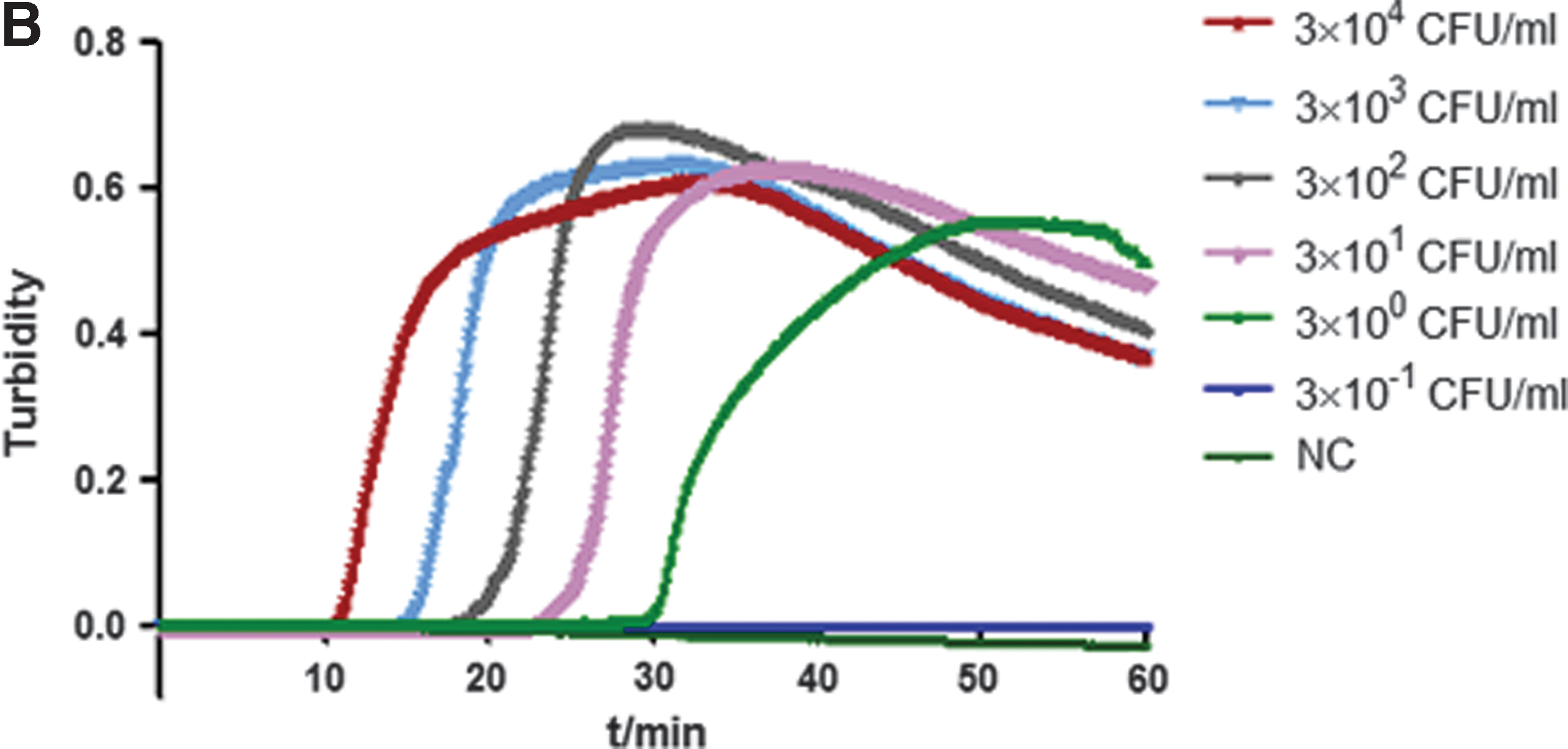
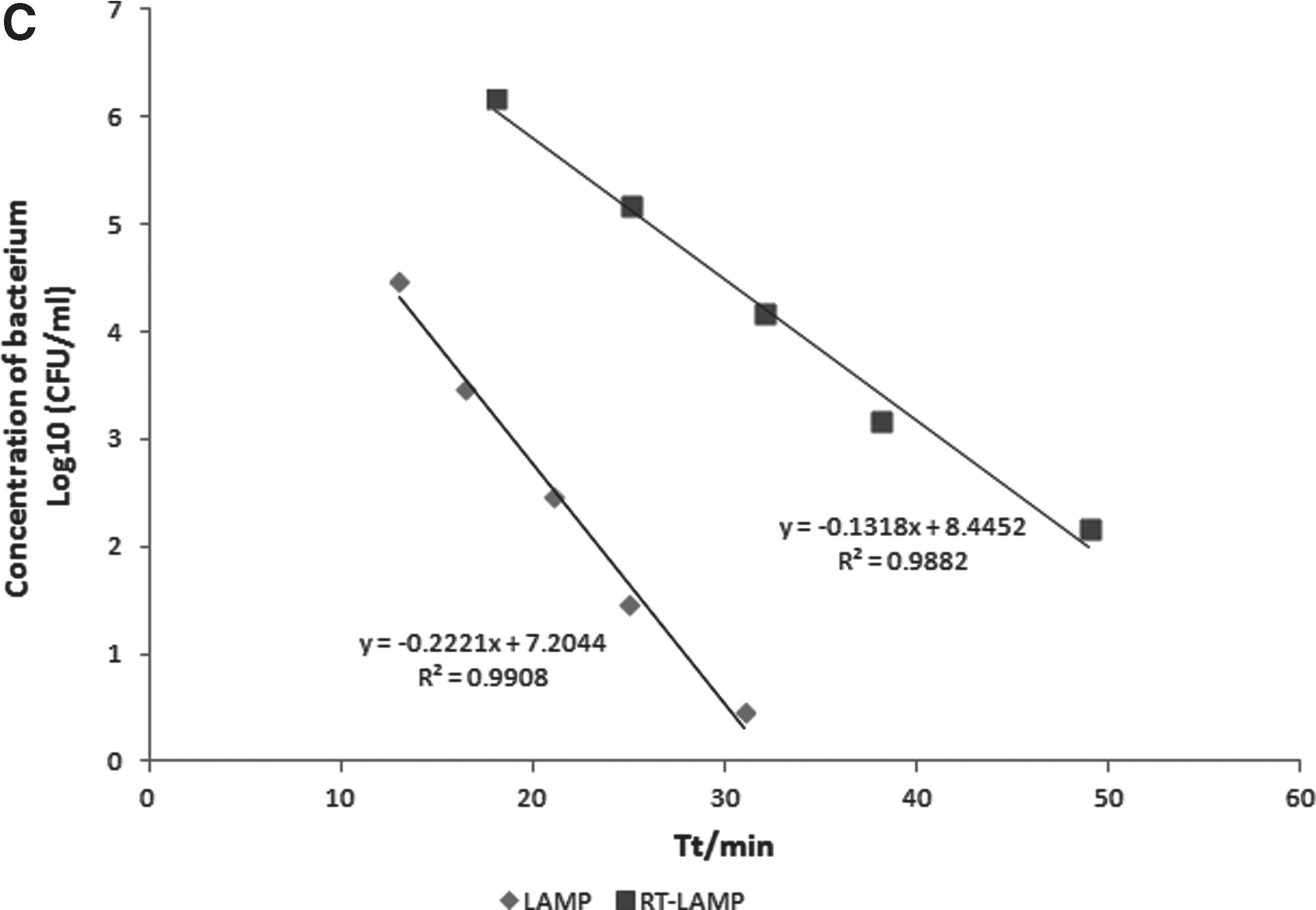
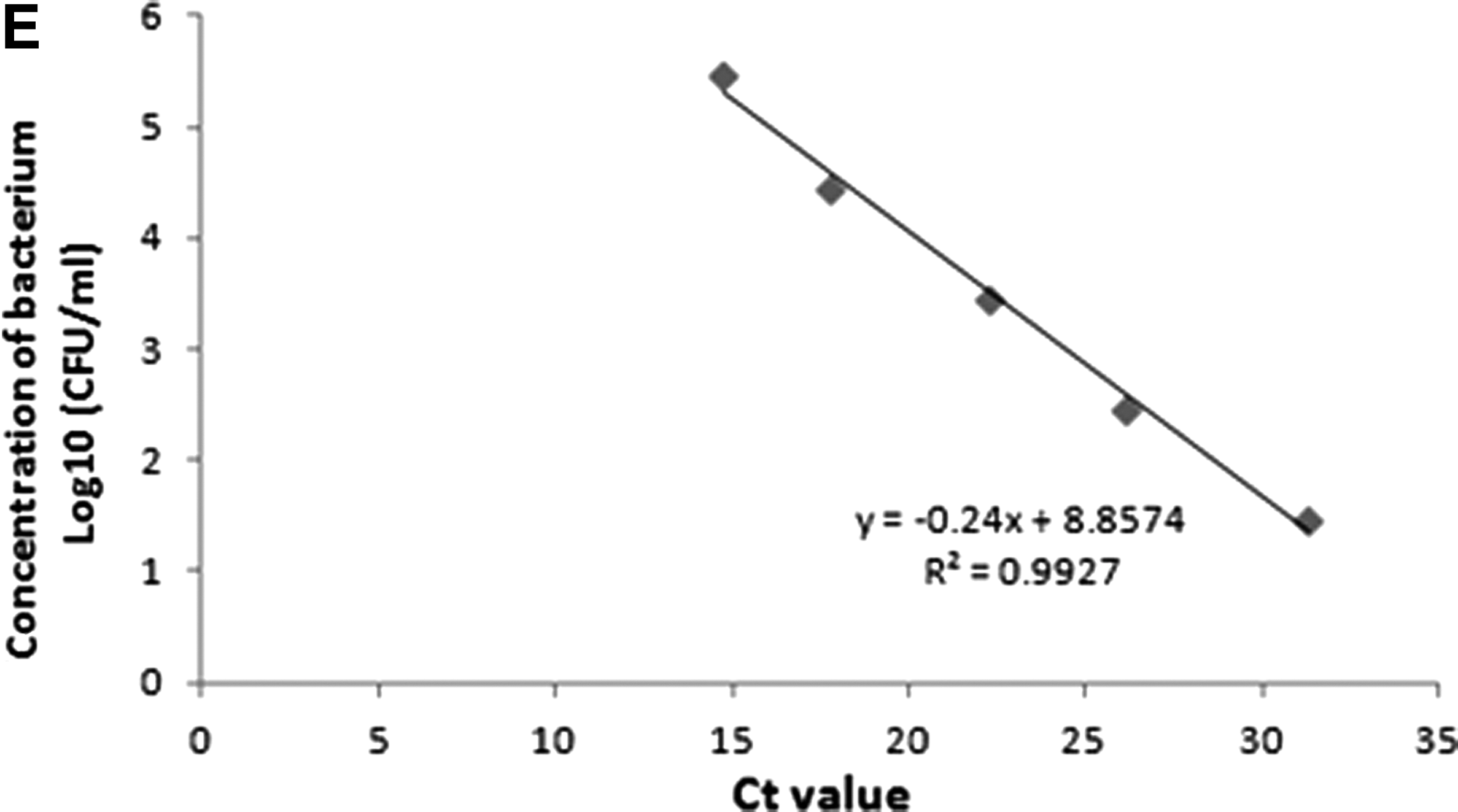
As shown in Figure 1, the detection limits of STY1607-LAMP (Fig. 1A), STY1607-RT-LAMP (Fig. 1B), and rRT-PCR targeting STY1607 (Fig. 1D) were 150, 3, and 30 CFU/mL, respectively, demonstrating that the STY1607-RT-LAMP assay is more sensitive than STY1607-LAMP and rRT-PCR. Thus, in our study, we focused on STY1607-RT-LAMP, not STY1607-LAMP, and we compared its performance to that of rRT-PCR.
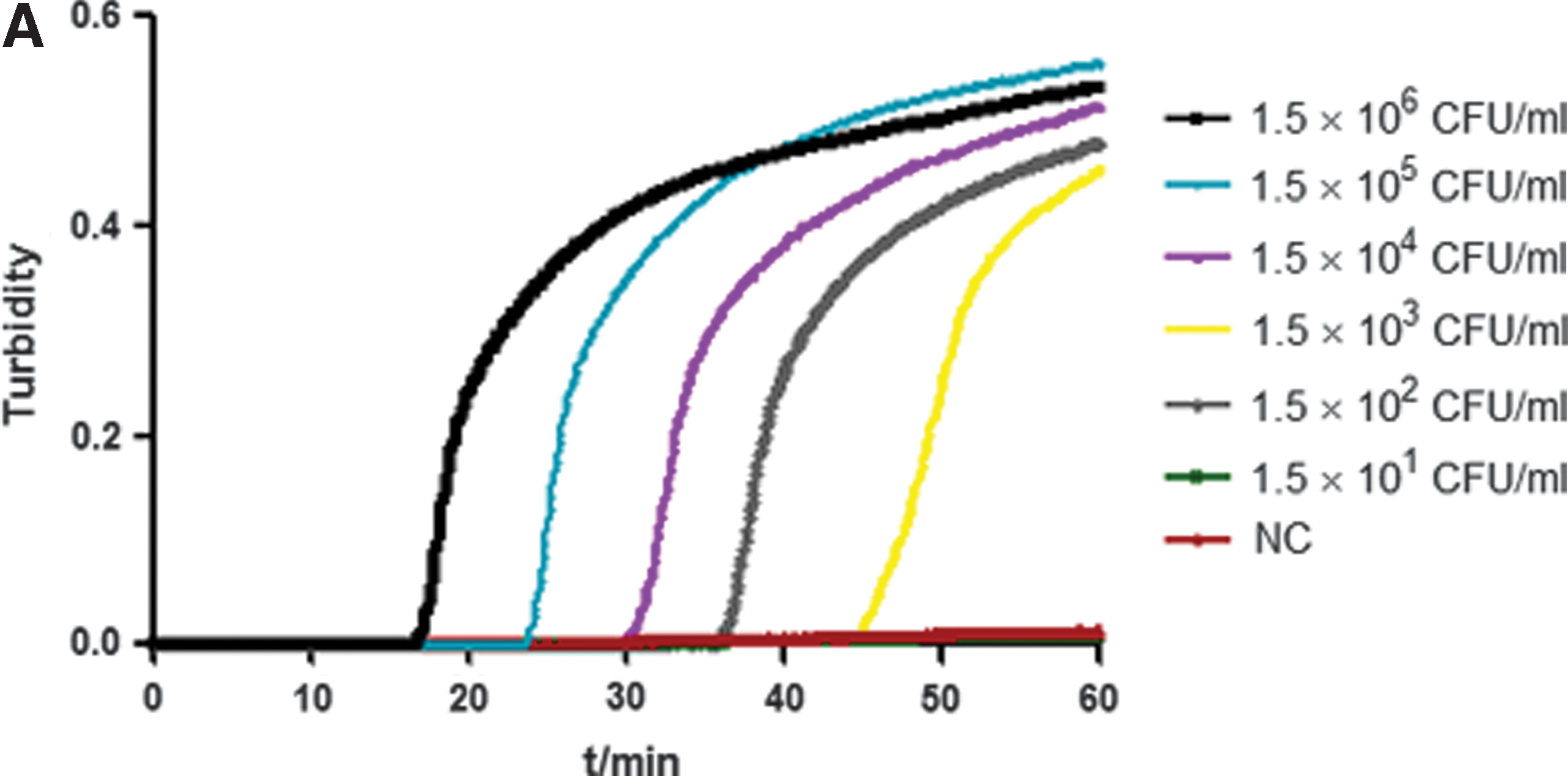
Real-time reverse transcription–based loop-mediated isothermal amplification (RT-LAMP), LAMP, and reverse transcription real-time polymerase chain reaction (rRT-PCR) sensitivity using pure bacteria samples.

RT-LAMP sensitivity with pathogen-simulated samples
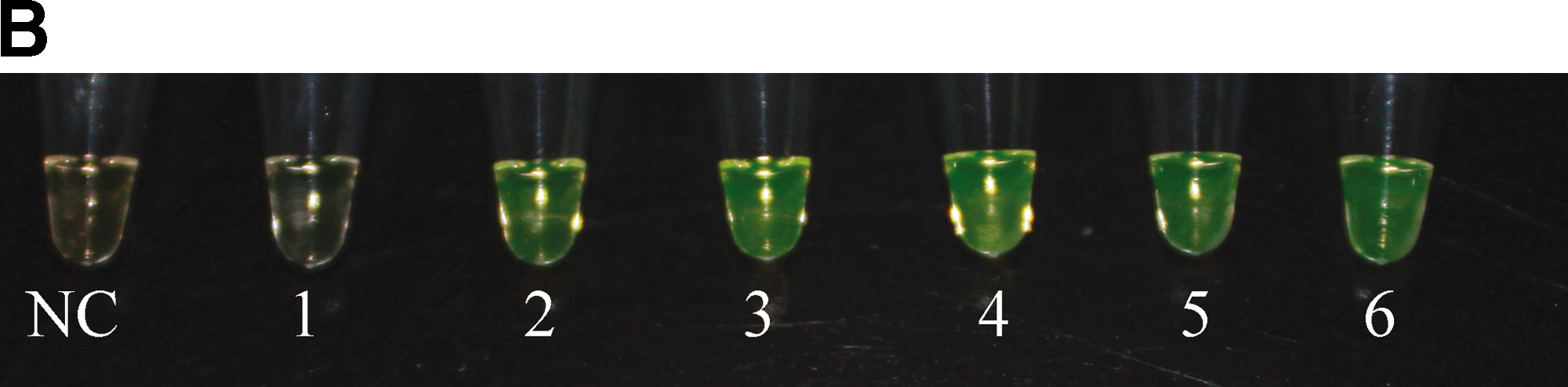
We observed positive amplification of STY1607-RT-LAMP using the Salmonella Typhi–stimulated blood samples with the lowest bacterial dilution of 100 CFU/mL (Fig. 2). Based on colony enumeration, the STY1607-RT-LAMP sensitivity is 3 CFU/mL for Salmonella Typhi simulated blood samples, which is 10-fold better than rRT-PCR (30 CFU/mL).

Reverse transcription–based loop-mediated isothermal amplification (RT-LAMP) assay detection limits using RNA from pathogen-simulated blood samples.

RNA extracts from the simulated stool samples were used as a template for RT-LAMP or rRT-PCR. The isolation limit by culturing the initial simulated stool samples on CHROMagar medium was 3×10⁴ CFU/g (Table 3), which was 1000-fold lower than that of RT-LAMP (3×101 CFU/g). However, after the initial simulated stool samples were enriched overnight, the detection limits of the three methods were all 3 CFU/g (data not shown).
Mean Ct value calculated using three individual replicates; N/A, Ct value is not available.
CFU, colony-forming units; Ct, threshold cycle; r-RT-PCR, reverse transcription real-time polymerase chain reaction; NC, negative control.
Evaluating the RT-LAMP assay in clinical specimens
We further evaluated the STY1607-RT-LAMP assay using blood and stool specimens from patients and compared it with rRT-PCR and culture method. Statistical significance was designated as a p value<0.017 by the chi-square test. For the 51 blood specimens from the suspected typhoid fever cases, significant differences in the detection rates (74.5% positive for STY1607-RT-LAMP, 51.0% for rRT-PCR, and 41.1% for culture) were observed among the three methods by chi-square test (chi-square=12.124, p=0.002). Differences were also observed between RT-LAMP and culture (chi-square=11.61, p=0.001) and RT-LAMP versus rRT-PCR (chi-square=6.039, p=0.014), but there was no difference between rRT-PCR and culture. In addition, all culture-positive blood samples were positive using RT-LAMP and rRT-PCR, and all rRT-PCR-positive specimens were RT-LAMP positive. For the 51 stool specimens, differences were also found among the 3 methods (33.3% positive for RT-LAMP, 17.6% for rRT-PCR, 11.7% for culture; chi-square=7.666, p=0.022) and RT-LAMP versus culture (chi-square=6.973, p=0.009), while no difference was observed between rRT-PCR versus culture and RT-LAMP versus rRT-PCR, although all 6 stool culture-positive specimens were positive for both RT-LAMP and rRT-PCR. These results demonstrated that STY1607-RT-LAMP is a more sensitive diagnostic method than rRT-PCR and bacterial culture for both blood and stool specimens. Furthermore, the RT-LAMP product was consistent with the expected size of 190 bp after AvaI digestion and agarose gel electrophoresis (Fig. 3); the product was also verified by sequencing.
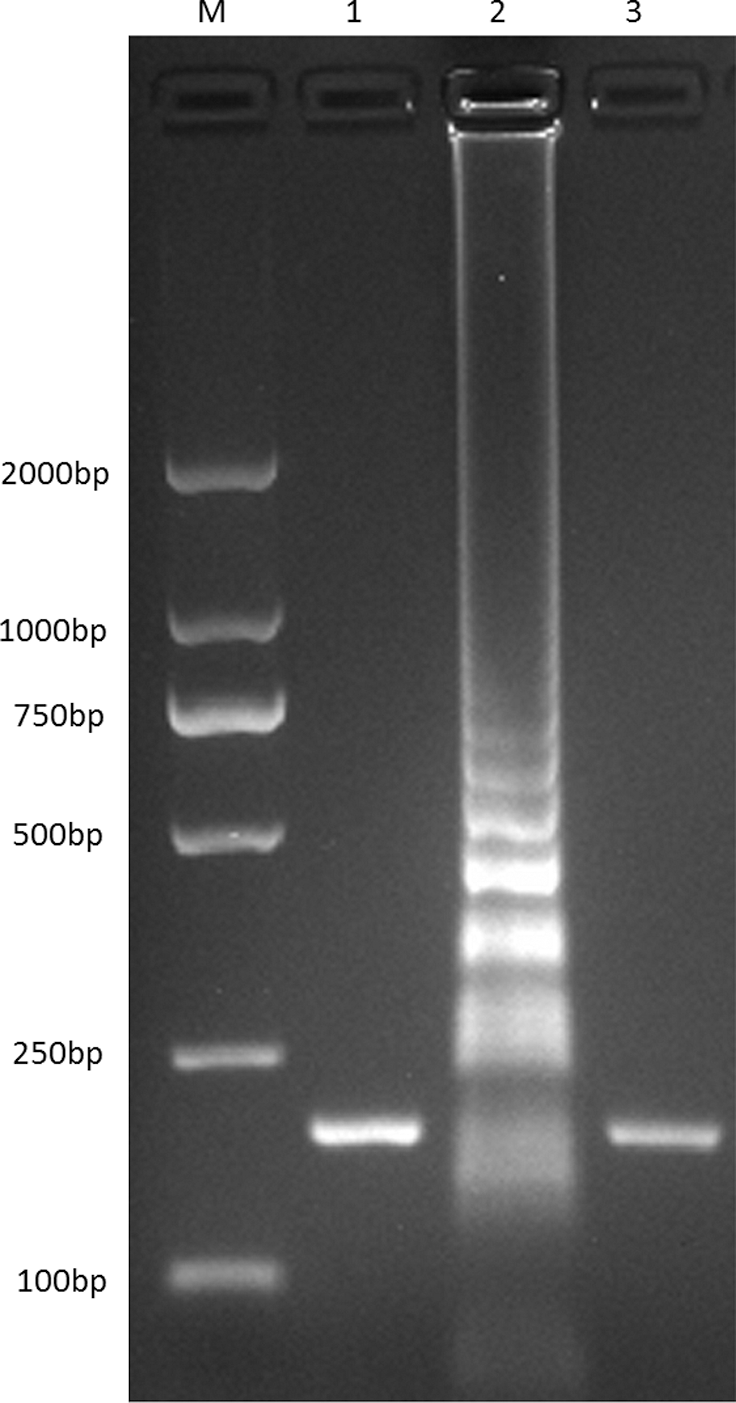
Electrophoretic analysis of reverse transcription–based loop-mediated isothermal amplification (RT-LAMP) and reverse transcription real-time polymerase chain reaction (rRT-PCR) amplified products. Lane M, DL2000 marker; lane 1, the result of electrophoretic analysis of rRT-PCR product with the expected size of 196 bp; lane 2, the result of electrophoretic analysis of RT-LAMP with the typical ladderlike bands on agarose gels; lane 3, the RT-LAMP product shows a single band with the expected size of 190 bp after AvaI digestion on agarose gel electrophoresis.
The high specificity of STY1607-RT-LAMP was also demonstrated by the failure of RT-LAMP and rRT-PCR to target to the STY1607 gene in blood samples and feces from the healthy individuals and individuals with Salmonella Paratyphi A and other enterobacterial infections.
Discussion
Certain genes, such as invA (Francois et al., 2011) and fliC (Song et al., 1993; Tomlinson et al., 2010; Kumar et al., 2012; Liu et al., 2013) have been used to detect typhoid fever. Homologous gene sequences of invA exist in other Salmonella serotypes, and the presence of a hypervariable region in fliC (Joys and Stocker, 1963, 1966) increased the possibility of false results (Nagarajan et al., 2009). Furthermore, the fliC-LAMP assay cross-reacts with the Salmonella serovars Schwarzengrund, Livingstone, Liverpool, and Stanley strains (Fan et al., 2012). Other studies have evaluated the use of the fimbrial chaperone protein gene usid000040 (96 bp) and the fimbrial protein gene usid000078 (113 bp) in PCR-based detection assays (Ho et al., 2012), but these genes are not long enough for LAMP primer design. According to our knowledge, there is no specific detection of typhoid fever by RT-LAMP.
After extensive screening work, we found that STY1607 is a conservative and specific gene in Salmonella Typhi. STY1607 encodes a hypothetical protein belonging to the nucleotide-associated protein (NdpA) family. Based on the sequence of STY1607, a set of six primers was designed for RT-LAMP. Our data show that STY1607-RT-LAMP based on RNA detection has a higher sensitivity than STY1607-LAMP. Furthermore, positive RT-LAMP results suggest that there is a high possibility that live Salmonella Typhi cells are present. The STY1607-RT-LAMP assay was able to detect low levels of Salmonella Typhi that were missed by RT-PCR or culture methods. However, RT-LAMP faces the possibility of being contaminated. Protective measures can be taken during the preparation of the template. LAMP has its own precaution by containing the reaction in a closed tube to reduce the probability of contamination.
The percent of clinical specimens that tested positive by STY1607-RT-LAMP varied compared to previous studies (Kumar et al., 2012; Andualem et al., 2014). These differences may be due to the different detection methods and clinical specimens used in each study. In the future, we will further evaluate the feasibility using STY1607-RT-LAMP for detecting Salmonella Typhi in clinical samples by testing more clinical specimens. The potential for false-negative results should also be considered and carefully controlled (Ni et al., 2012) especially when the target copy number may be low. Internal amplification controls (IAC) are commonly used in PCR or RT-PCR reactions to exclude false-negative results. Recently, IAC was also applied to real-time duplexed LAMP using labeled primers (Tomlinson et al., 2010; Kubota and Jenkins, 2015). Because our LAMP primers were not labeled with any fluorescent dyes initially, it is not possible to contain IACs in the reaction described in this article, but we will improve our assay in future studies either by using labeled primers or by adding more sensitive markers to the assay.
Conclusions
We established and evaluated an STY1607-RT-LAMP assay that is more sensitive than LAMP, rRT-PCR, and culture methods for pure and spiked specimens. For clinical samples, the STY1607-RT-LAMP detection performance was much better than culture and rRT-PCR. Our data indicate that the STY1607-RT-LAMP assay is suitable for quickly diagnosing Salmonella Typhi infections and can aid in rapid response and disease control.
Footnotes
Acknowledgments
We would like to thank the Chinese Ministry of Health for supporting this project (2013ZX10004216, 2012ZX10004215, 2011ZX10004-001 and 2008ZX10004-008).
Disclosure Statement
No competing financial interests exist.