




Abstract
The present work was undertaken to study the prevalence, molecular characterization, virulence factors, and antimicrobial susceptibility of methicillin-resistant Staphylococcus aureus (MRSA) in raw milk and dairy products in Mansoura City, Egypt. MRSA was detected in 53% (106/200) among all milk and dairy products with prevalence rates of 75%, 65%, 40%, 50%, and 35% in raw milk, Damietta cheese, Kareish cheese, ice cream, and yogurt samples, respectively. The mean S. aureus counts were 3.49, 3.71, 2.93, 3.40, and 3.23 log10 colony-forming units (CFU)/g among tested raw milk, Damietta cheese, Kareish cheese, ice cream and yogurt, respectively, with an overall count of 3.41 log10 CFU/g. Interestingly, all recovered S. aureus isolates were genetically verified as MRSA strains by molecular detection of the mecA gene. Furthermore, genes encoding α-hemolysin (hla) and staphylococcal enterotoxins (sea, seb, sec) were detected in all isolates. The antimicrobial susceptibility pattern of recovered MRSA isolates against 13 tested antimicrobials revealed that the least effective drugs were penicillin G, cloxacillin, tetracycline, and amoxicillin with bacterial resistance percentages of 87.9%, 75.9%, 65.2%, and 55.6%, respectively. These findings suggested that milk and dairy products represent a potential infection risk threat of multidrug-resistant and toxigenic S. aureus in Egypt due to neglected hygienic practices during production, retail, or storage stages. These findings highlighted the crucial importance of applying more restrictive hygienic measures in dairy production in Egypt for food safety.
Introduction
S
Traditional dairy products, especially those produced from raw milk under neglected hygienic conditions, are potential vehicles for the transmission of different foodborne pathogens including toxigenic S. aureus (Kadariya et al., 2014). MRSA, including animal-associated strains, have been frequently recovered from different dairy products such as raw milk or raw-milk cheeses worldwide (Peton and Le Loir, 2014). Kareish cheese (acid curd skim-milk cheese) is a kind of homemade soft cheese manufactured in Egyptian villages that is considered a major protein supplement consumed by most Egyptian farmers, while Damietta cheese is a famous soft, white pickled cheese industrially processed and distributed in Egypt under different market names. Since these types of cheese are manufactured from unpasteurized milk under low hygienic standards, they may serve as a potential vehicle for the transmission of MRSA.
Several virulence factors have been reported to be correlated with the symptoms and severity of infections caused by S. aureus and representing major concerns for the food-processing industry (Xing et al., 2016). These factors include hemolysins (alpha, beta, gamma, and delta), leukocidin, toxic shock syndrome toxin-1, and staphylococcal enterotoxins (SEs) (Dinges et al., 2000). Staphylococcal enterotoxins are a group of single-chain, low molecular mass proteins that are produced during all phases of growth (Naffa et al., 2006) and are responsible for gastrointestinal symptoms such as nausea, emesis, abdominal cramps, and diarrhea (McLauchlin et al., 2000; Le Loir et al., 2003). Many types of S. aureus enterotoxins have been reported but the major five serological types are SEA, SEB, SEC, SED, and SEE (Omoe et al., 2003; Orwin et al., 2003). SEs are resistant to inactivation by gastrointestinal proteases as well as to heat and therefore may retain their biological and immunological activities even following pasteurization, food processing, and exposure to gastrointestinal proteases
The present study was planned to gain better insight into the prevalence of MRSA in raw milk, Damietta cheese, Kareish cheese, ice cream, and yogurt marketed in different locations in Mansoura City, Egypt and to characterize the strains recovered using molecular analysis of marker genes (nuc, coa, and mecA), virulence genes (hla, sea, seb, sec, and tst), and antimicrobial resistance patterns.
Materials and Methods
Collection of samples
A total of 200 samples (40 samples of raw milk, Damietta cheese, Kareish cheese, ice cream, and yogurt) were collected on 12 occasions, during the period of June–November 2012 from different retail outlets, different shops, and supermarkets in Mansoura City, Egypt. All samples were transported in an ice box to Food Hygiene and Control Department Laboratory, Mansoura University, Egypt, for conventional bacteriological analysis.
Isolation, enumeration, and identification of S. aureus
The count of S. aureus was determined according to the International Commission on Microbiological Specifications for Foods (ICMSF, 1996) by using a surface plate technique onto Baird Parker agar (BP) with Egg Yolk Tellurite Emulsion (Baird Parker; Oxoid Ltd., Hampshire, UK, CM0257; Egg Yolk Tellurite Emulsion; Oxoid Ltd., Hampshire, UK, SR0054) followed by incubation at 37°C for 48 h. Suspected colonies were selected and picked up for further identification as previously reported by Bennett and Lancette (2001). One S. aureus isolate per positive sample was used to calculate the prevalence rate among different samples of raw milk and dairy products.
Molecular characterization of MRSA
Molecular identification and characterization of isolated S. aureus strains was carried out in the Bioproduction Research Institute, National Institute of Advanced Industrial Science and Technology, Hokkaido, Japan. All S. aureus strains isolated from the sampled milk and dairy products were screened by polymerase chain reaction (PCR) for nuclease (nuc) and coagulase (coa) genes (S. aureus species-specific determinants) and mecA (methicillin resistance determinant). Simultaneous amplification of the three genes was used for MRSA confirmation. MRSA-confirmed isolates were used as targets for detection of five selected virulence genes including hla, sea, seb, sec, and tst genes encoding α-hemolysin, staphylococcal enterotoxins A, B, C, and TSS-T1, respectively. Genomic DNA of S. aureus isolates were prepared according to the method described by Sallam et al. (2015) using the Maxwell 16-cell DNA purification kit (Promega Corporation, Madison, WI). Genomic DNA from E. coli K12DH5α strain was similarly prepared and used as a negative control template for PCR analyses. PCR for target genes was conducted using primers sets and cycling conditions previously described (Sallam et al., 2015). The oligonucleotide primers were synthesized by Hokkaido System Science Co. Ltd. (Hokkaido, Sapporo, Japan). GeneAmp PCR system 2700 thermal cycler (Applied Biosystems, Foster City, CA) was used for detection of various target genes.
PCR was carried out in a 20-μL reaction mixture containing 1.6 μL S. aureus genomic DNA template, 1 μL (6 pmol) for each of forward and reverse primers, 4 μL dNTPs (2 mM), 0.4 μL KOD FX Neo Polymerase enzyme (1.0U/μL), 10 μL of 2×PCR Buffer for KOD FX Neo (Toyobo Co., Ltd., Osaka, Japan) and 2 μL PCR grade water. Amplified genes of each PCR reaction mixture were separated by subjecting 3 μL aliquots to agarose (1.2%) gel electrophoresis for 30 min at 100 V followed by a 20-min staining in ethidium bromide solution. The separated PCR products were then visualized under ultraviolet light and photographed.
DNA sequencing
For confirmation of the amplified genes, DNA sequencing was conducted using the BigDye Terminator v3.1 Cycle Sequencing Kit (Applied BioSystems) following the manufacturer's instructions on an ABI Prism 3100 automated sequencer (Applied Biosystems). The resultant sequences were subjected to the GenBank database for homology search using BLAST, Basic Local Alignment Search Tool (
Antimicrobial susceptibility testing
Antimicrobial susceptibility patterns for recovered S. aureus isolates were determined by the agar disk diffusion method as published (Jorgensen and Turnidge, 2007). The antimicrobials tested were penicillin (10 IU), amoxicillin (30 μg), tetracycline (30 μg), streptomycin (10 μg), cloxacillin (5 μg), rifampicin (5 μg), chloramphenicol (30 μg), netilmicin (30 μg), ciprofloxacin (5 μg), amikacin (30 μg), gentamicin (10 μg), vancomycin (30 μg), and sulfamethoxazole/trimethoprim (25 μg). Results were recorded and interpreted after 24-h incubation at 35°C according to the guidelines of the National Committee of Clinical Laboratory Standards guidelines (Kiehlbauch et al., 2000).
Results and Discussion
In this study, the mean S. aureus counts were 3.49, 3.71, 2.93, 3.40, and 3.23 log10 CFU/g among tested raw milk, Damietta cheese, Kareish cheese, ice cream, and yogurt, respectively, with an overall count of 3.41 log10 CFU/g (Table 1). Our results showed that 75% (30/40) of raw milk samples exceeded the maximal limits of 100 CFU/mL proposed by both Egyptian standards (ES, 2005) and European regulations (EEC, 1992). On the other hand, 65% (26/40), 40% (16/40), 40% (16/40), and 30% (12/40) of Damietta cheese, Kareish cheese, ice cream, and yogurt samples, respectively, exceeded the maximal limit of 100 CFU/g set for S. aureus by European Economic Community food legislation for soft and fresh cheeses, frozen milk-based products, and fermented dairy products (EEC, 1992) (Table 1). According to the Egyptian standards, soft cheeses (including Damietta and Kareish cheeses), ice cream, and yogurt must be free from pathogenic organisms and their toxins. Therefore, all cheese, ice cream, and yogurt samples in this study exceeded the permissible limits of S. aureus counts reported in Egyptian Standards.
No significant difference at p ≤ 0.05.
Maximum permissible limit is 2 log10 colony-forming units (CFU)/g or mL according to the European Economic Community (EEC, 1992).
From each positive sample identified through conventional culturing on BP agar, five characteristic colonies or all characteristic colonies of S. aureus were picked from BP plates and then subjected to biochemical identification and molecular characterization by positive amplification of nuc, coa, and mecA genes. The nuc gene encodes the thermonuclease enzyme and has been used as a valuable genetic marker for rapid identification of S. aureus. The staphylocoagulase is used as a genetic marker for discriminating coagulase-positive S. aureus from other less pathogenic coagulase-negative staphylococci (Watanabe et al., 2009). All coagulase-positive S. aureus were screened for MRSA using positive detection of the mecA gene. This gene is located on a mobile genetic element (staphylococcal cassette chromosome mec [SCCmec]) and encodes for PBP2a responsible for resistance against β-lactam antibiotics by interfering with their binding to cell wall proteins (Sakoulas et al., 2001). By simultaneous amplification nuc, coa, and mecA genes, a total of 53% (106/200) of tested samples were confirmed as MSRA positive. Among 106 positive samples, a total of 414 colonies were confirmed to be MRSA. This molecular screening of MRSA is reported to be more efficient than other phenotypic methods that are considered time consuming, expensive, and less accurate (Oliveira and Lencastre, 2002; Normanno et al., 2007; Aras et al., 2012). PCR analyses verified the existence of nuc, coa, and mecA genes at the expected molecular size of 660 bp (Fig. 1A), 1000 bp (Fig. 1B), and 1200 bp (Fig. 1C), respectively, in all isolates. Furthermore, sequence analyses of the amplified genes showed 100% identity with the corresponding gene sequences of S. aureus accessible in the GenBank. Among dairy samples tested, MRSA was detected in raw milk, Damietta cheese, Kareish cheese, ice cream, and yogurt samples with prevalence rates of 75% (30/40), 65% (26/40), 40% (16/40), 50% (20/40), and 35% (14/40), respectively. The relatively lower prevalence rate in both Kareish cheese and yogurt might be attributed, in part, to the acidity of these dairy products. On the other hand, the higher contamination rate in Damietta cheese samples suggested lack of appropriate hygienic measures during production, handling, and/or distribution of cheese. A significantly lower prevalence rate from raw milk and dairy products was reported during a minisurvey analysis in Dakahlia province, Egypt where only 5 samples out of 95 tested yielded positive results for the mecA gene (3 raw milk samples and 1 each from Kariesh cheese and ice cream samples). Similarly, very low contamination rates for MRSA in milk and dairy products were recorded in different countries. Gücükoğlu et al. (2013) revealed that 2.8% (1/35) of ice cream samples tested in Turkey were positive for MRSA. In another study in Turkey, 7.5% (3/40) S. aureus strains isolated from Urfa cheese samples were MRSA positive (Kav et al., 2011). MRSA was not detected among any of the S. aureus–positive samples associated with foodborne illness in Alberta, Canada (Crago et al., 2012). In Italy, Normanno et al. (2007) reported that 3.75% (6/160) of dairy products were positive for MRSA. In Korea, Lee (2003) revealed the occurrence of MRSA in 1.34% (12/894) of bovine milk samples. Another study in Iran revealed that 4% (2/50) of both pasteurized milk and traditional soft cheese samples were positive for MRSA while it could not be detected in raw milk (Mirzaei et al., 2011). A study in the United States identified MRSA in 21.8% (29/133) of bovine milk samples (Matyi et al., 2013). This diversity in prevalence rates among different studies might be related to different attributes including source of samples, geographical origin, sensitivity of the identification methods, the quantity of samples, inappropriate antimicrobial administration, prevention practices, production techniques, use of either pasteurized or raw milk in production, storage, and handling of different samples (Sader et al., 2006; Chen et al., 2010).
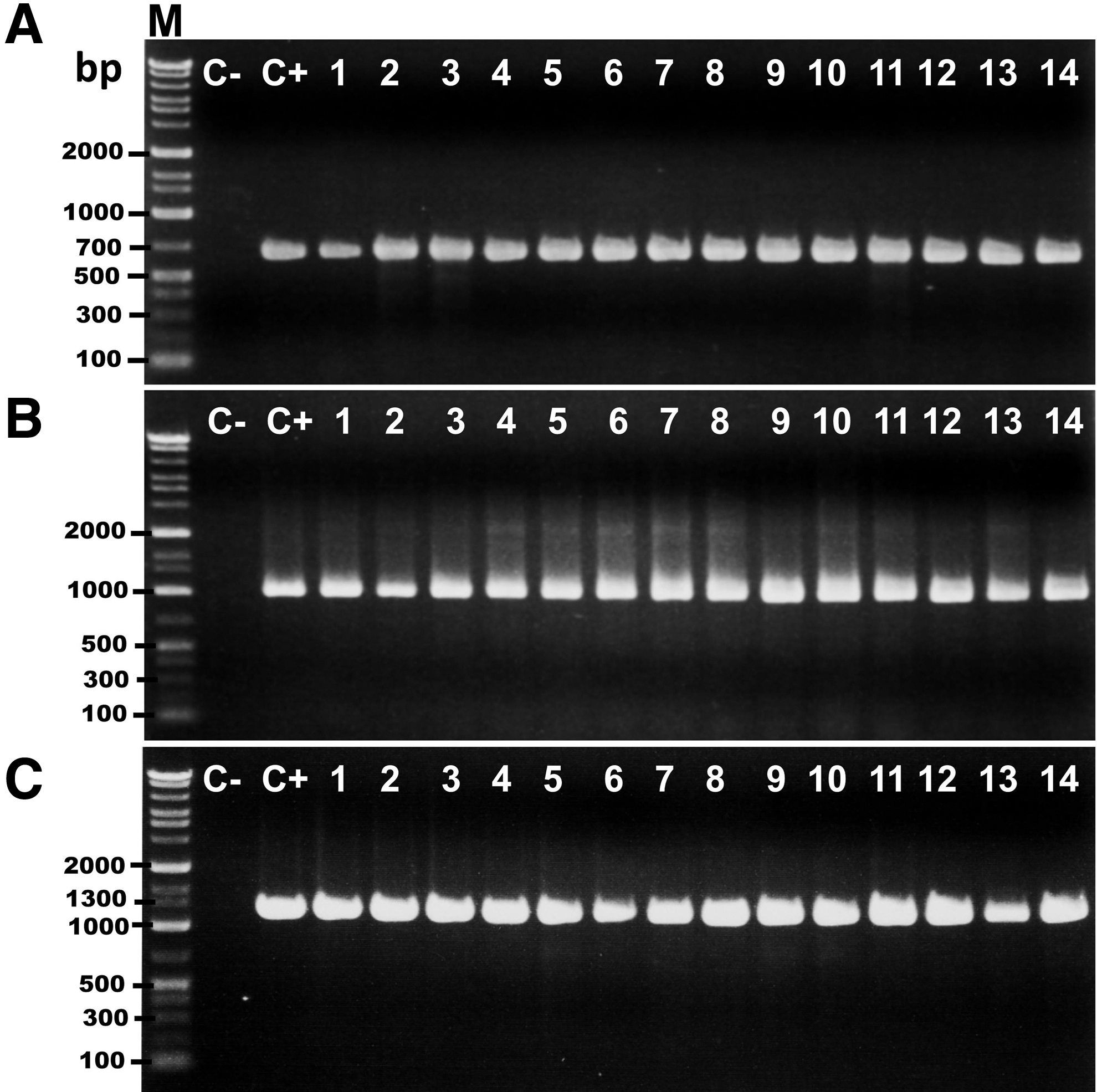
Representative agarose gel electrophoresis for polymerase chain reaction (PCR) products of the marker genes identified in the Staphylococcus aureus strains isolated from milk and different dairy products. Three microliters from the PCR products were separated by electrophoresis on 1.2% agarose gel. Amplified DNA of the expected molecular size of 660 bp for nuc gene
All MRSA confirmed isolates were further tested for five additional virulence genes, including hla, sea, seb, sec, and tst genes encoding α-hemolysin, S. aureus enterotoxins sea, seb, sec, and toxic shock syndrome toxin, respectively. The hla gene, which encodes the α-hemolysin (Hla) toxin is considered one of the most important virulence factors of S. aureus and is formed by most S. aureus strains. Interestingly, all MRSA recovered isolates (100%) were positive for the hla gene, which was detected at the expected molecular size of 744 bp (Fig. 2A). Likewise, all MRSA isolates (100%) were positive for the three enterotoxin genes, sea, seb, and sec, which were detected by PCR at the expected molecular size of 500 bp (Fig. 2B), 600 bp (Fig. 2C), and 300 bp (Fig. 2D), respectively. Nonetheless, no amplification of the tst gene was observed among recovered isolates (0%). Reports of the existence of SEs in S. aureus isolated from milk and dairy products vary from one study to another.
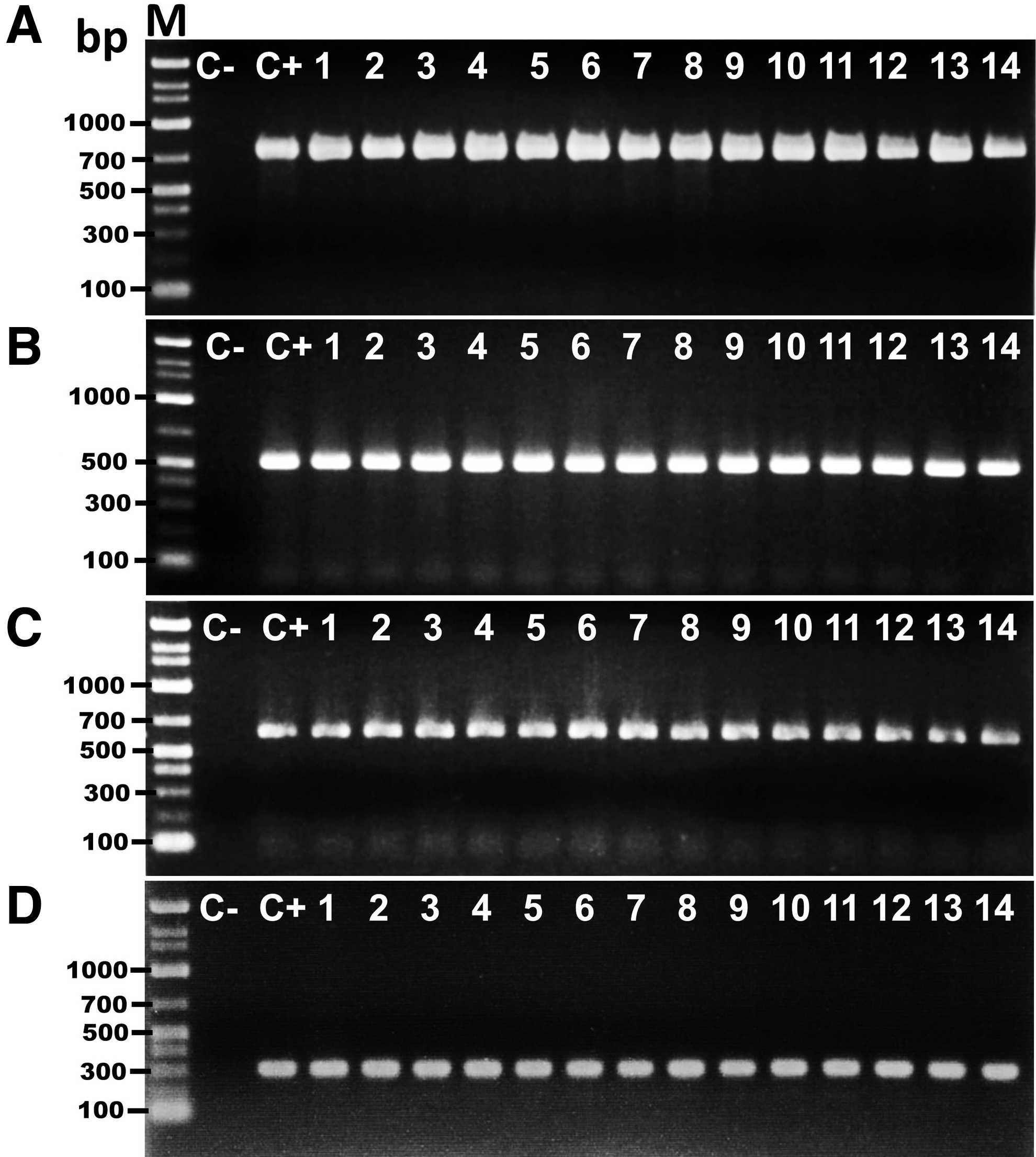
Representative agarose gel electrophoresis for polymerase chain reaction (PCR) products of the virulence genes identified in the Staphylococcus aureus strains isolated from different dairy products. Three microliters from the PCR products were separated by electrophoresis on 1.2% agarose gel. Amplified DNA of the expected molecular size of 744 bp for hla gene
Normanno et al. (2005) reported that 55.5% of isolated S. aureus from several food products including raw milk, cheeses, ice cream, and other dairy products produced one or more SEs. Of these strains, 33.9% produced SEC, 26.5% produced SEA, 2.7% produced SEB, 1.7% produced SEA+SEB, 0.3% produced SEA + SEC, and 0.3% SEB + SEC. In another study, Morandi et al. (2007) revealed that 36 (51%) of 71 isolates from cow's milk were positive for the sea gene. In contrast to our high findings for the existence of sea, seb, and sec in all MRSA isolates recovered from milk and dairy products, Zouharova and Rysanek (2008) detected sea in 27.1% of isolates while the seb and sec genes were observed in 10% and 1.4% of the isolates, respectively. Jørgensen et al. (2005) reported that the sea gene was not detected in any of the isolates of S. aureus from bulk tank cow's milk samples, but found the sec gene in 17.2% of isolates and seb in 1.2% of the isolates. Low detection rates for SEs were also reported by Oliveira et al. (2011) who detected the sec gene in 6% (5/83) of isolated S. aureus strains from milk obtained from cows with subclinical mastitis, while they could not identify enterotoxin genes, sea or seb in any of the strains tested.
The antimicrobial susceptibility patterns for MRSA isolates are shown in Table 2. Of the 13 tested antimicrobials, the least effective drugs were penicillin G, cloxacillin, tetracycline, and amoxicillin with bacterial resistance percentages of 87.9%, 75.9%, 65.2%, and 55.6%, respectively. The most effective antimicrobials against MRSA isolates were vancomycin, sulfamethoxazole/trimethoprim, ciprofloxacin, netilmicin, and gentamicin, which exhibited bacterial sensitivity percentages of 76.3%, 75.45%, 70.1%, 69.1%, and 63.3%, respectively. Of the MRSA isolates tested, 348 (84.1%) isolates were resistant to 3 or more antimicrobials. In agreement with our study, MRSA strains isolated from Turkish Tulum cheese were found to have resistances to multiple antibiotics (Yesim and Çelik, 2012). Furthermore, several studies reported different antibiotic resistance patterns by S. aureus strains recovered from different raw milk and dairy products (Aarestrup et al., 1995; Lange et al., 1999; Tondo et al., 2000; Xing et al., 2016). The heterogeneity in antimicrobial susceptibility patterns observed among MRSA isolates may reflect the microbial adaptive response to the use and overuse of antimicrobials, geographical location, drugs approved, and farm-level management. One idea is that multidrug-resistant bacteria, particularly staphylococci associated with milk samples and its related products, might be related to human contamination rather than contamination with animal origins (Spanu et al., 2012).
MRSA, methicillin-resistant Staphylococcus aureus; S, susceptible; I, intermediate; R, resistant.
In summary, the present study suggested that raw milk and dairy products marketed in Mansoura, Egypt might be considered as potential vehicles for the transmission of multidrug-resistant MRSA that might have the potential to cause severe infection in humans due to the presence of a wide array of virulence factors. The high prevalence rate in this study shows that the application of more strict hygienic measures in the production of raw milk and dairy products is crucial to prevent the further spread of MRSA. As the implementation of a food safety system in a dairy processing plant included applying good manufacturing practices, sanitation standard operating procedures, and hazard analysis and critical control point (HACCP) (Cusato et al., 2013), proper diagnosis of indicator microorganisms including MRSA from dairy samples is crucial in assessing the system's implementation performance. Future studies should be directed toward using a larger number of strains and samples in parallel with studying the epidemiological and pathogenic potential of these strains to monitor distribution, pathogenesis, and epidemiology of enterotoxigenic MRSA.
Footnotes
Disclosure Statement
No competing financial interests exist.