




Abstract
Toxoplasma gondii is a widely distributed protozoan parasite. The Centers for Disease Control and Prevention reported that T. gondii is one of three pathogens (along with Salmonella and Listeria), that together account for >70% of all deaths due to foodborne illness in the United States. Food animals are reservoirs for T. gondii and act as one of the sources for parasite transmission to humans. Based on limited population-based data, the Food and Agriculture Organization/World Health Organization estimated that approximately 22% of human T. gondii infections are meatborne. The objective of the current study was to conduct a systematic meta-analysis to provide a precise estimation of T. gondii infection prevalence in food animals produced in the United States. Four databases were searched to collect eligible studies. Prevalence was estimated in six animal categories (confinement-raised market pigs, confinement-raised sows, non-confinement-raised pigs, lamb, goats, and non-confinement-raised chickens) by a quality-effects model. A wide variation in prevalence was observed in each animal category. Animals raised outdoors or that have outdoor access had a higher prevalence as compared with animals raised indoors. T. gondii prevalence in non-confinement-raised pigs ranked the highest (31.0%) followed by goats (30.7%), non-confinement-raised chickens (24.1%), lambs (22.0%), confinement-raised sows (16.7%), and confinement-raised market pigs (5.6%). These results indicate that T. gondii-infected animals are a food safety concern. The computed prevalence can be used as an important input in quantitative microbial risk assessment models to further predict public health burden.
Introduction
T
The meat and poultry industries are important components of U.S. agriculture. The main meats consumed in the United States are poultry meat, beef, and pork. Cattle are not considered important hosts for T. gondii based on the inability to isolate parasites from adult cattle (Dubey, 2010); pigs and poultry, as well as sheep and goats, are important hosts for T. gondii (Dubey, 1981, 1986, 2010). Although only limited data are available, T. gondii infection prevalence is believed to be low in confinement-raised chickens; their short lifespan leads to a minimal opportunity for exposure to oocysts from the environment (Dubey, 1981, 2010). The estimated prevalence of T. gondii infection in confinement raised pigs varies across studies, from 0% in well-managed facilities to 92.7% in high-risk farms (Dubey, 2010). While not major commodity meats, lamb and goat meat are popular meats among some ethnic groups. Sheep and goat are raised mainly on pasture, allowing continuous exposure to oocysts in the environment; a high prevalence of T. gondii infection has been observed in these animals, creating significant risk from the consumption of lamb and goat meat (Guo et al., 2015). In addition, growing consumer demand for organic and free-range meat has resulted in more animals reared outdoor (free-range) or with free access to outdoor areas for certain periods of their lives (United States Department of Agriculture, 2014a). Animals raised in these nonconfinement rearing systems have increased risk for T. gondii infection as compared with their indoor-raised counterparts (Guo et al., 2015), as animals raised outdoors are more likely to ingest oocysts-contaminated feed and water or oocysts in the environment (Hill and Dubey, 2013).
Three methods have been used to detect T. gondii in meat animals, including bioassay, serological assays, and polymerase chain reaction (PCR) amplification of parasite DNA. Among these three methods, bioassay in mice or cats is the only method that can determine the viability of T. gondii in animal tissues, and bioassay in cats is considered to be the “gold standard” (Gamble et al., 2005). Serological assays are rapid and have good accuracy for detecting anti–T. gondii antibodies in food animals. Among the various serological assays, the modified agglutination test (MAT), the indirect fluorescent antibody test, and enzyme-linked immunosorbent assay (ELISA) are commonly used techniques with >85% in sensitivity and specificity (Gamble et al., 2005; Dubey, 2010). PCR-based methods are available but are not widely used. Neither serological tests nor PCR are able to determine the viability of T. gondii in meat. Bioassay is the only suitable method for demonstrating inactivation or absence of viable T. gondii, but due to the length of time required to perform the test, it is not suitable for use as a slaughter inspection method (Guo et al., 2015).
Meta-analysis is a method to synthesize the results of various studies for a given question, and has been applied to a wide range of food safety questions (Gonzales-Barron and Butler, 2011). The quantitative results obtained from meta-analysis have been used as inputs in risk assessment models (Barron et al., 2009; Smadi and Sargeant, 2013). The advantages of performing a meta-analysis include providing summary statistics based on multiple individual studies, increasing precision in estimating effects, and taking the size of studies into account (Gliner et al., 2009). A quality-effects model was used in the present study, which incorporates a study-specific quality score to redistribute inverse variance weights and obtain more conservative estimates (Doi and Thalib, 2008; Doi et al., 2011). A series of assessment tools have been developed to analyze the quality of observational studies, and six of them were targeted to assess incidence/prevalence studies (Shamliyan et al., 2010). Among these assessment tools, the risk of bias tool (Hoy et al., 2012) is effective for addressing both external and internal validity, and has been used in several meta-analysis studies (Kelly et al., 2015; Lassemillante et al., 2015; Noubiap et al., 2015).
To the best of our knowledge, there has been no systematic meta-analysis conducted in the United States regarding T. gondii prevalence in food animals. The objectives of the present study were to collect eligible studies, integrate results from these studies, and provide a quantitative estimate of T. gondii prevalence in certain food animals in the United States.
Materials and Methods
Literature search
A comprehensive literature search was conducted in 2015 to identify studies of T. gondii prevalence published after 1964 in four databases: PubMed, Google Scholar, MEDLINE, and Web of Science. The following key words and their combination were used during the literature search: “Toxoplasma gondii or toxoplasmosis” and “United States” and “incidence or prevalence or infection or isolation or epidemiology” and in combination with one of the following animal or meat categories: “pig or pork or boar or sow,” “chicken or poultry,” “sheep or lamb,” “goat,” and “meat animals or meat.”
Eligibility criteria
The search was limited to full-text, peer-reviewed articles, national surveys, or government reports that were conducted for meat animals raised in the United States and provided information on the study population, sample size, location, detection methods, and number of positive cases.
Data extraction
No studies were found that reported T. gondii prevalence in confinement-raised chickens in the United States. Thus, all eligible studies were classified into six categories: confinement raised market pigs, confinement-raised sows, non-confinement-raised pigs, sheep, goats, and non-confinement-raised chickens. Quantitative data were extracted from each study by two independent assessors, including year of the study, study population, geographic location of the study, type of samples (e.g., serum, tissue, and organ), detection method, number of positive cases, and sample size. For publications that contained multiple studies, data were extracted separately.
Quality assessment of eligible studies
Each eligible study was assessed for quality and bias using the risk of bias tool, which is a methodological quality assessment checklist for prevalence studies (Hoy et al., 2012). Ten questions were contained in this checklist and each of the 10 questions was scored 1 or 0 based on the quality of each eligible study (Supplementary Table S1; Supplementary Material is available online at
Data analysis
In order for the prevalence values (mean, and 95% confidence interval [CI]) to be within 0 and 1, and to stabilize the variance, data were transformed by a double arcsine transformation as described by Barendregt et al. (Barendregt et al., 2013). A quality-effects model was used to calculate the population prevalence (PP) across studies, which is a more precise method to describe overall prevalence as compared with a random-effects model (Brockwell and Gordon, 2001). In the quality-effects model, the inverse variance weights of each study were redistributed based on quality score. The pooled prevalence was back transformed and normalized (Barendregt et al., 2013). Heterogeneity among studies was evaluated by Cochrane Q and I2 statistical methods. A significant value (p < 0.05) in the Cochrane Q method suggests a real effect difference in the meta-analysis. A value of I2 was used to measure the inconsistency across studies. Values of 25%, 50%, and 75% were considered as having a low, moderate, and high degree of heterogeneity, respectively (Higgins et al., 2003). Data were constructed in Microsoft Excel (Microsoft Corporation, Redmond, WA), analyzed by using MetaXL version 2.0 software (EpiGear Int Pty Ltd, Wilston, Australia), and graphed as forest plots.
Results
Characteristics of eligible studies
A total of 263 studies were generated by the systematic search and 39 articles met the criteria for inclusion. A total of 58 studies were reported in these 39 articles, and included 1537 goats, 9976 sheep/lambs, 43,386 confinement-raised market pigs, 35,975 confinement-raised sows, 174 non-confinement-raised chickens, and 797 non-confinement pigs (Table 1). High specificity and sensitivity diagnostic methods such as MAT (n = 33) and ELISA (n = 9) were commonly used in these studies, while low sensitivity detection methods such as indirect hemagglutination antibody test, SFDT, and Western blot were only used in 3, 3, and 1 studies, respectively. Animal bioassay was used in eight eligible studies.
QS, quality score; Prev, prevalence; SFDT, Sabin-Feldman dye test; MAT, modified direct agglutination test; IHAT, indirect hemagglutination antibody test; ELISA, enzyme-linked immunosorbent assay; N/A, not available; NAHMS, the National Animal Health Monitoring System.
Quality assessments
The quality scores in the eligible studies ranged from 5 to 10 (Supplementary Table S1). Most studies were considered at moderate risk of bias (quality score ranges from 6 to 8). The common quality deficiency in the eligible studies pertained to external validity. A total of 48 of 58 eligible studies were conducted in local farms or regions, which were not representative of the national population. The flaws in internal validity were mainly due to the use of nonoptimal detection methods and the application of sampling from proxy.
Population prevalence in food animals
A wide variation in prevalence was observed in each animal category (Table 2), which reflected the heterogeneity of sample sets and real differences in effect size across studies (Large Cochran's Q value with p < 0.05, and I2 > 95%). Among the six animal categories, T. gondii population prevalence ranked the highest in non-confinement-raised pigs (31.0%, Fig. 1.) followed by goats (30.7%, Fig. 2), non-confinement-raised chickens (24.1%, Fig. 3), and lambs (22.0%, Fig. 4). Compared to non-confinement-raised pigs, indoor-raised pigs showed a lower prevalence. The prevalence was computed as 5.6% and 16.5% in confinement-raised market pigs (Fig. 5) and sows (Fig. 6), respectively.
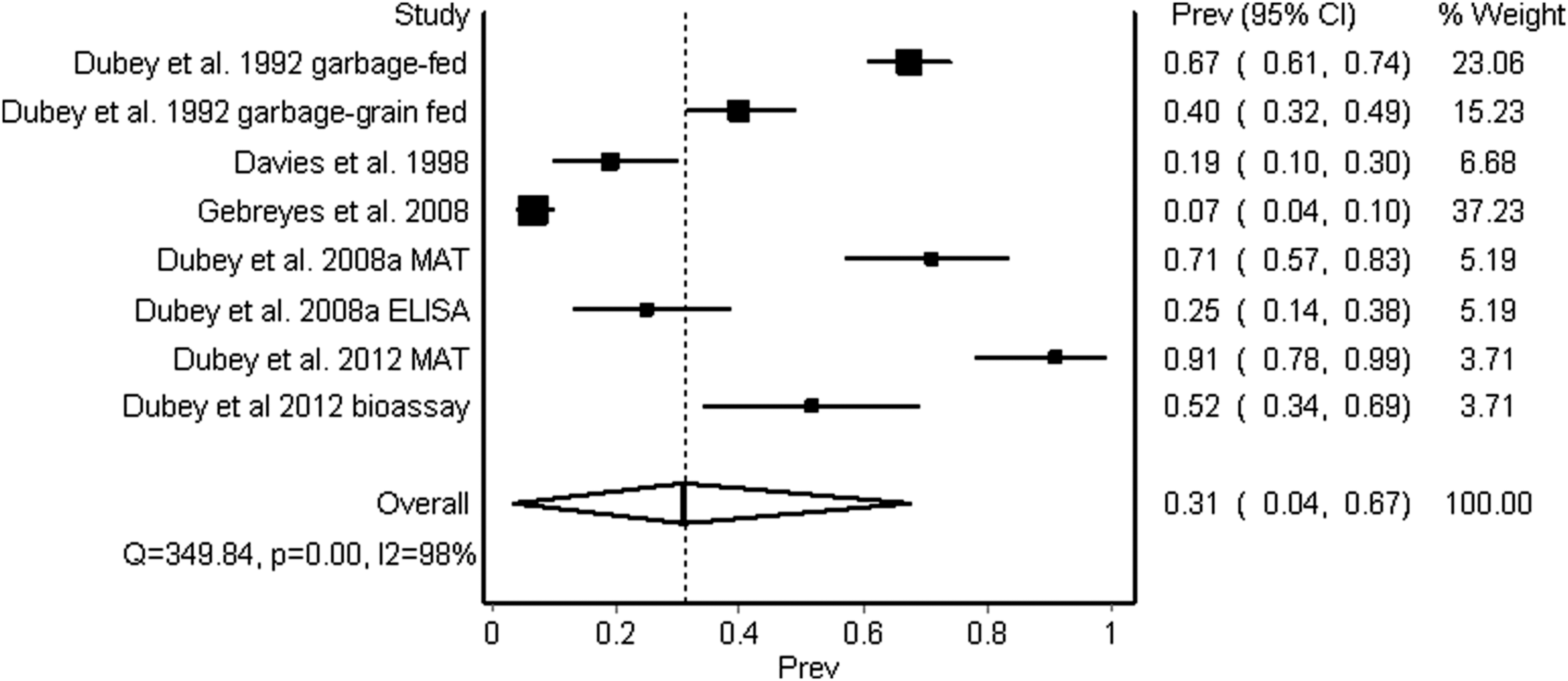
Forest plot of Toxoplasma gondii infection prevalence in non-confinement-raised pigs (quality-effects model). In a forest plot, each study is represented by a line, the width of the line represents the confidence intervals for effect estimate of each study, and area of the box indicates the weight given to each study. This description of forest plot is applied to all forest plots presented in Figures 1 –6. MAT, modified agglutination test; ELISA, enzyme-linked immunosorbent assay; Prev, prevalence.
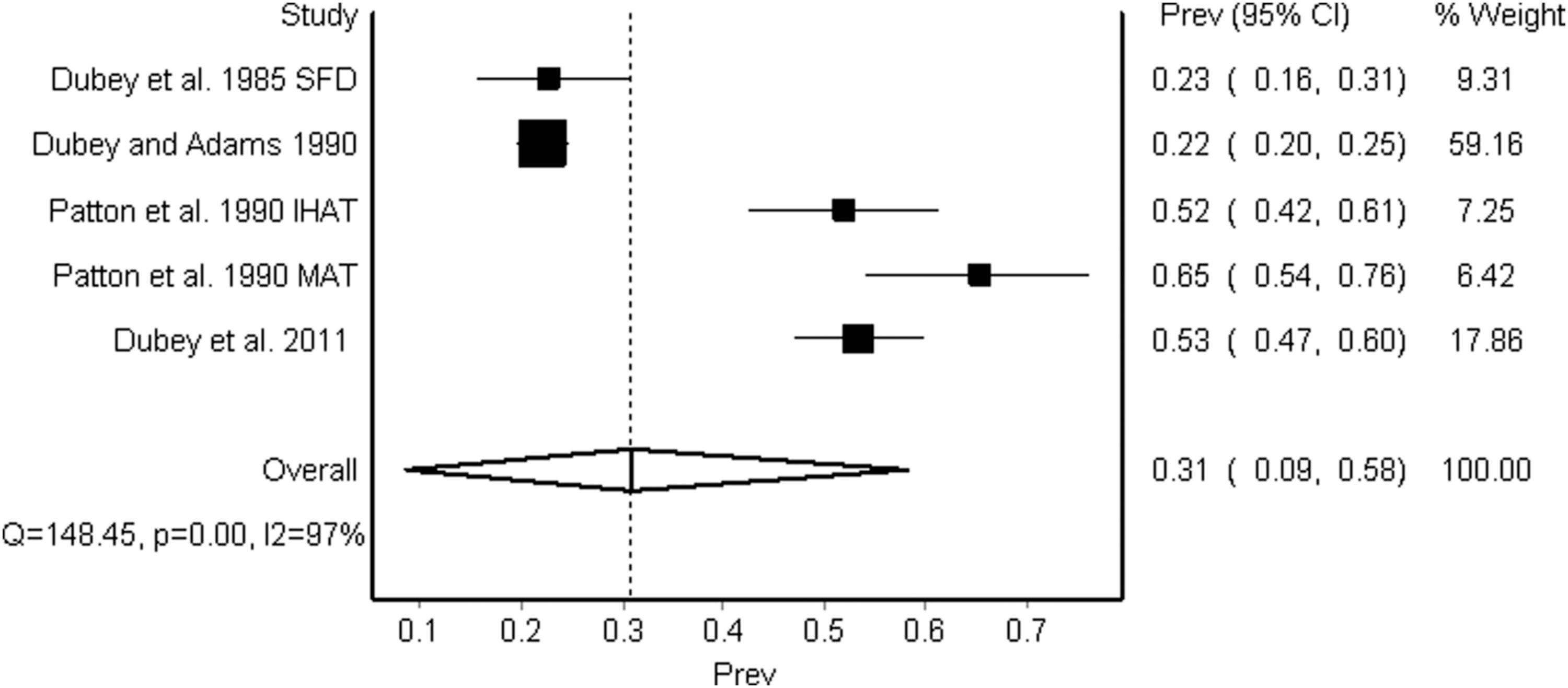
Forest plot of Toxoplasma gondii infection prevalence in goats (quality-effects model). SFD, Sabin-Feldman dye; IHAT, indirect hemagglutination antibody test; MAT, modified agglutination test.
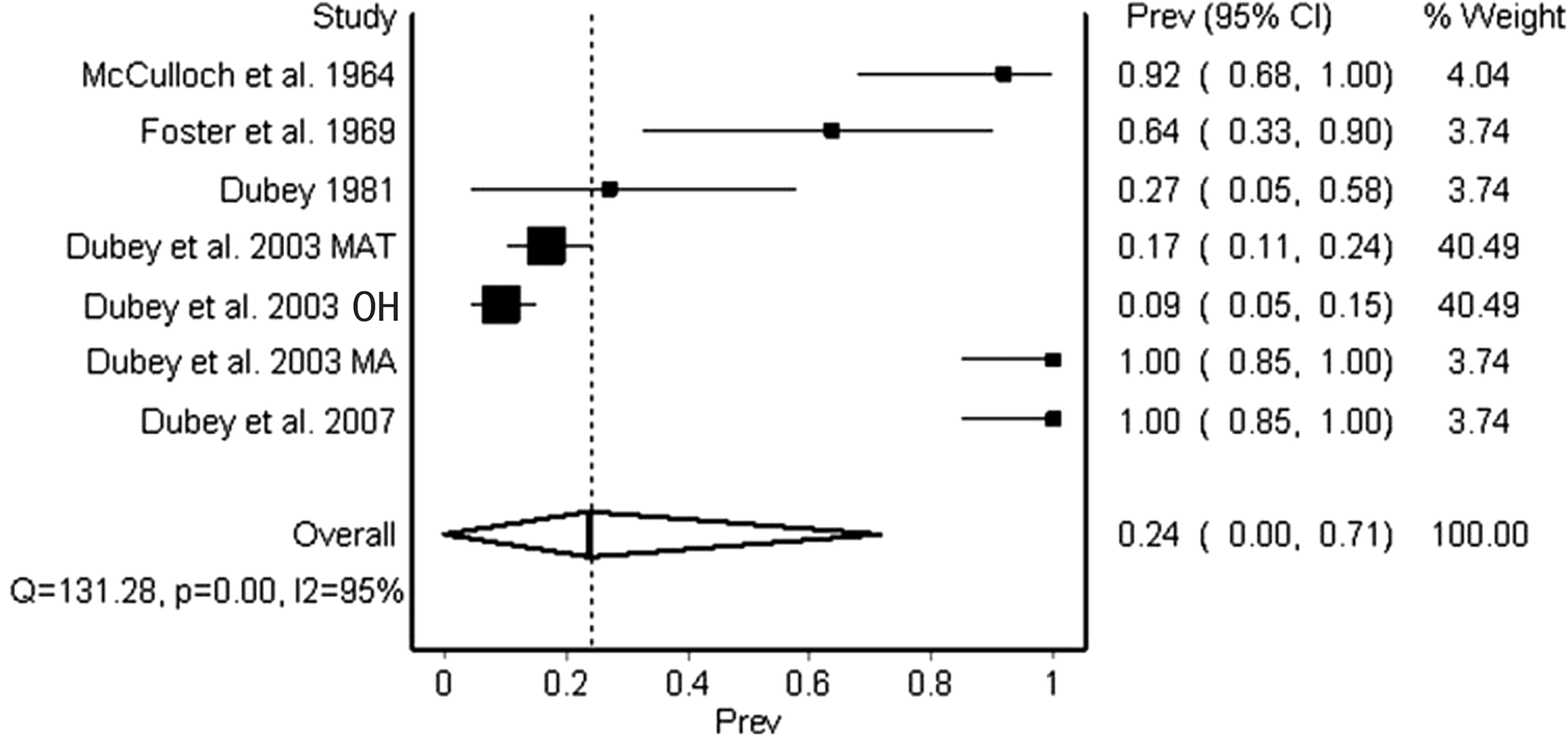
Forest plot of Toxoplasma gondii infection prevalence in non-confinement-raised chickens (quality-effects model). MAT, modified agglutination test; OH, samples from Ohio (detection method-bioassay); MA, samples from Massachusetts (detection method-bioassay).
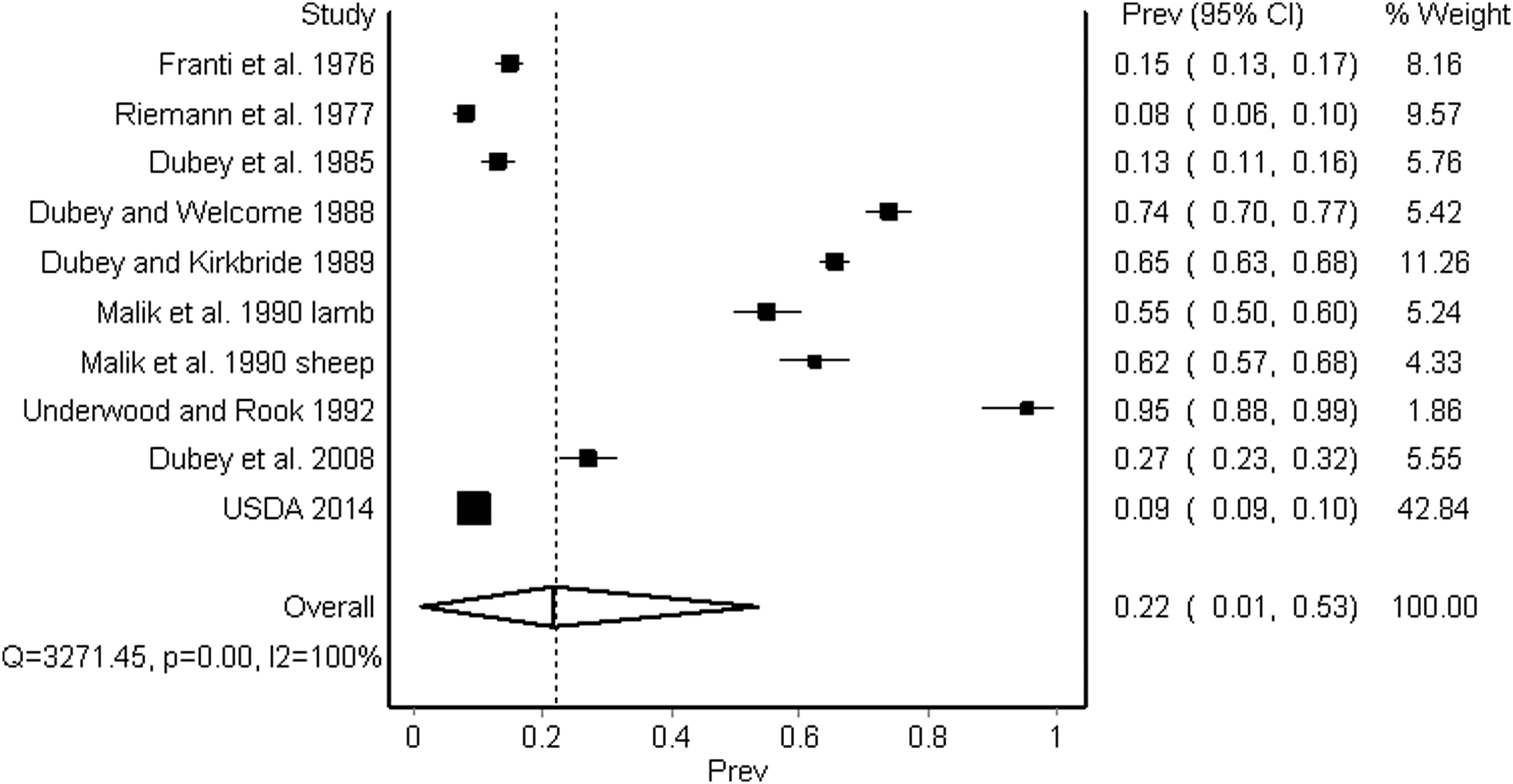
Forest plot of Toxoplasma gondii infection prevalence in lambs (quality-effects model).
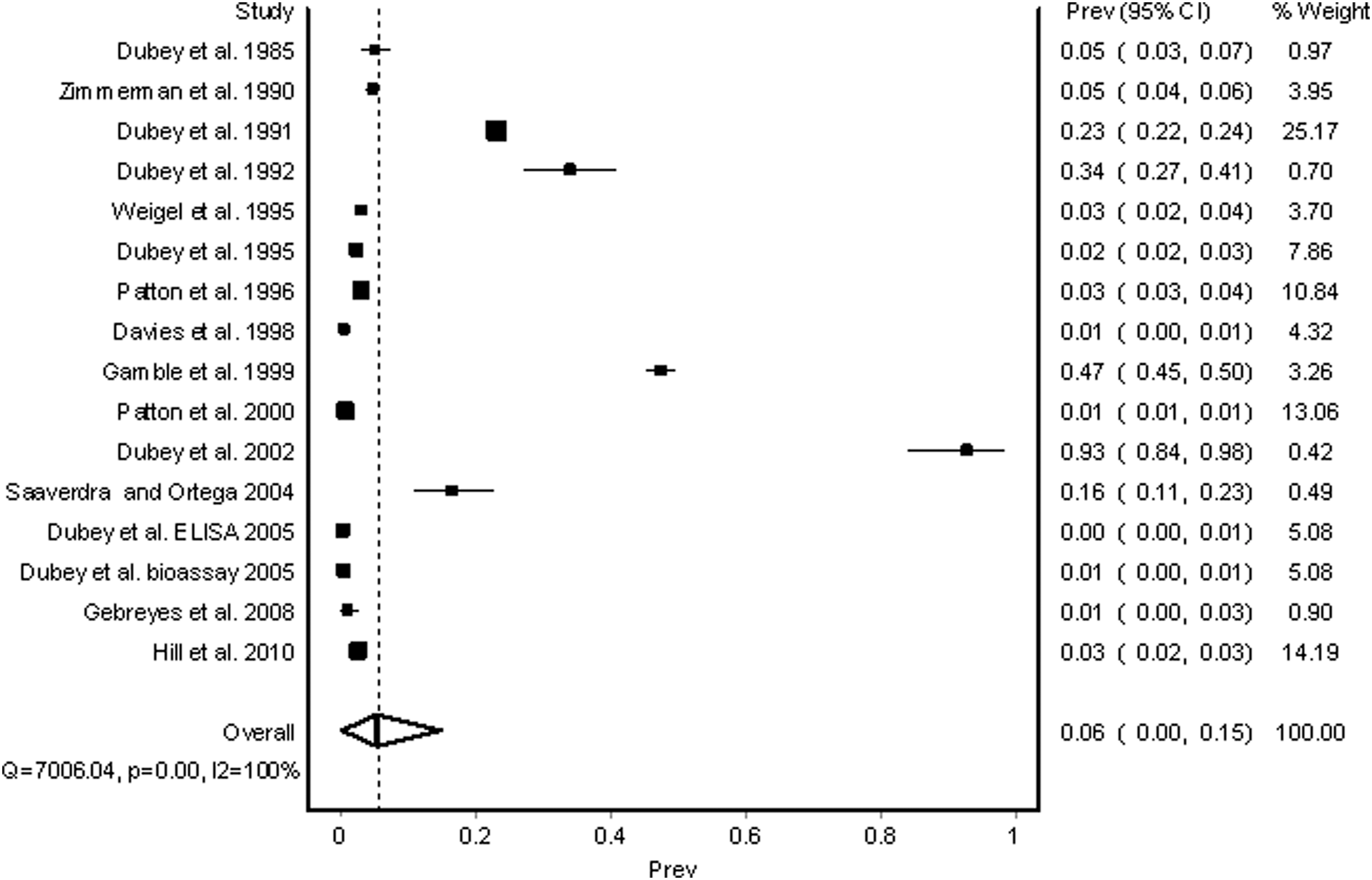
Forest plot of Toxoplasma gondii infection prevalence in confinement-raised market pigs (quality-effects model). ELISA, enzyme-linked immunosorbent assay.
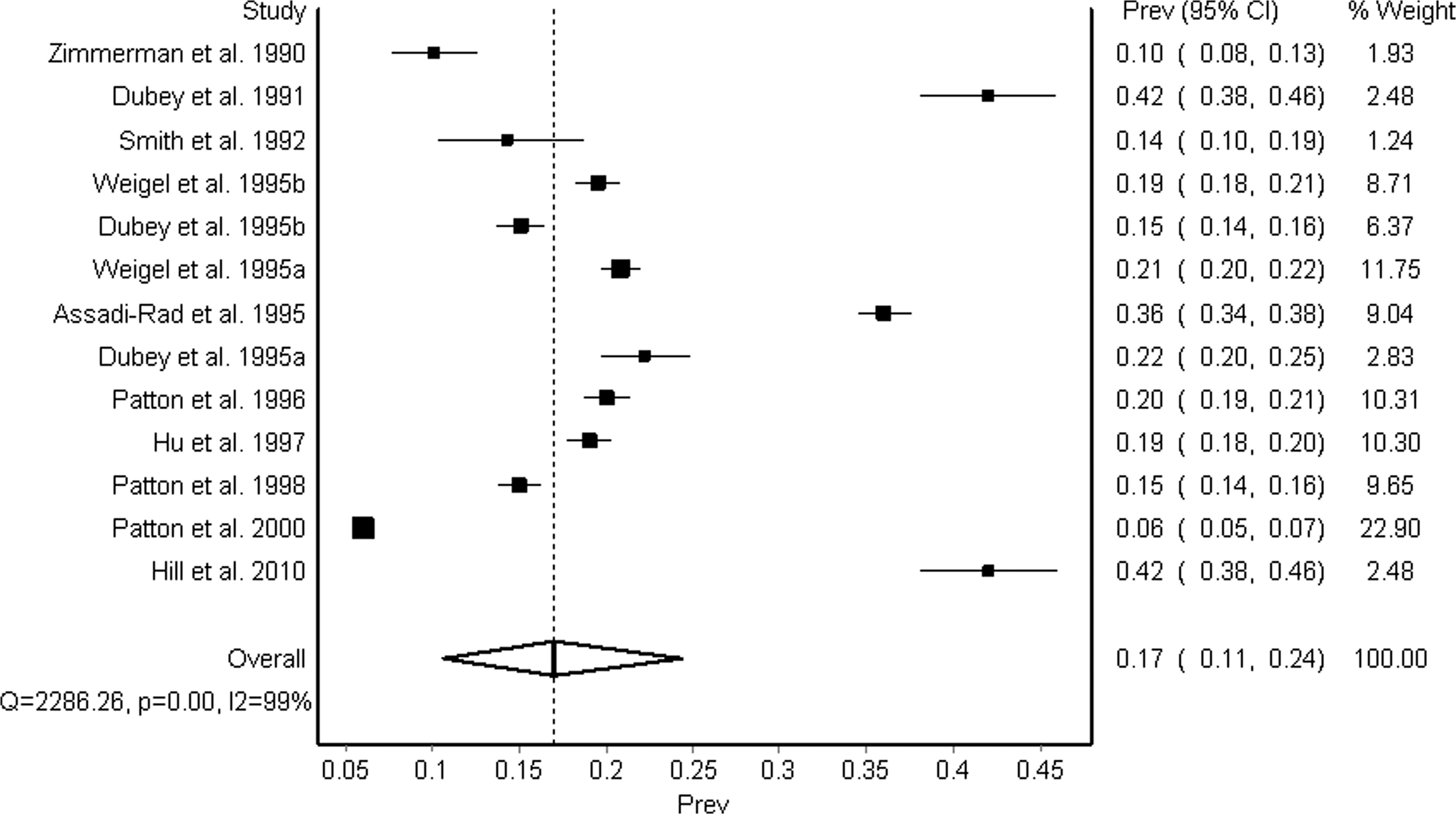
Forest plot of Toxoplasma gondii infection prevalence in confinement-raised sows (quality-effects model).
CI, confidence interval; PP, population prevalence.
Discussion
Approximately 92.3 billion pounds of red meat and poultry meat were produced in 2014, among which 22.8 billion pounds (24.7%) and 0.16 billion pounds (0.2%) came from pigs and lamb (United States Department of Agriculture, 2015a), respectively. In 2006, approximately 1.5 million head of goats were consumed in the United States, and nearly half of goats were raised domestically (Solaiman, 2007). This represents an increase of 150% and 320% from 2002 and 1999, respectively. In addition, the U.S. consumer demand for pasture- or organically raised meats has grown increasingly in recent years. According to the United States Department of Agriculture (USDA), 12,373 pigs were certified organic in 2011, which is approximately three times more than the number in 2004 (United States Department of Agriculture, 2013). From a public health standpoint, it is critical to understand the status of T. gondii infections in these meat animals since they account for 25% of the total meat production in the United States (United States Department of Agriculture, 2015a).
According to our results, T. gondii infection is widespread in certain food animals, specifically lamb, goats, non-confinement-raised chickens, and non-confinement-raised pigs. Compared with confinement-raised market pigs (5.6%), a higher prevalence was found in non-confinement-raised pigs (31.0%). In a prevalence study included in the meta-analysis, of 13 seropositive samples from 2238 pig serum samples, 12 (92.3%) were from pigs raised on pasture and only 1 was from pigs kept in confinement (Davies et al., 1998). Similarly, a high prevalence of T. gondii was observed in goats and sheep; they are mostly raised on pasture and risk for exposure to infective oocysts is continuous. Based on limited studies, T. gondii prevalence in non-confinement-raised chickens is also considerably higher than chickens raised indoors (Guo et al., 2015).
T. gondii prevalence is higher in breeding sows (female pigs that have farrowed at least one litter) as compared to market pigs (pigs less than 6 months old), indicating the increase in exposure to T. gondii with age. Similarly, T. gondii prevalence was higher in sheep as compared to lambs (<1 year) (Table 1). A wide variation in prevalence was observed in each category of meat animals; this could be attributed to the fact that the studies differ in geographic region, years, and diagnostic methods. The heterogeneity in prevalence could also be related to the presence of risk factors including farm type, feeding practices, presence of cats, rodent control and bird control methods, farm management, carcasses handling and disposal, and water source and quality (Guo et al., 2015). Among the various studies of food animals, the highest prevalence was found in sheep (73.8%) from a farm that experienced T. gondii–induced abortion in ewes (Dubey and Welcome, 1988), and in market pigs (92.7%) from poorly managed farms (Dubey et al., 2002). The high prevalence in this latter study might be related to two specific risk factors that were observed on this farm: feeding pigs with garbage and the presence of feral cats (Dubey et al., 2002).
It is noteworthy to mention that T. gondii prevalence in food animals may not be directly translated into human infection risk through consumption of meats. The amount of meat consumed, meat processing, and cooking behavior could change the infection risk at the time of consumption. For example, high T. gondii prevalence was observed in non-confinement-raised chickens. However, it is not considered an important source for T. gondii infection in humans, due to the fact that consumers tend to cook chicken thoroughly and the amount of consumption of non-confinement-raised chicken is low in the United States. On the contrary, T. gondii prevalence in confinement-raised pigs is lower than non-confinement-raised animals; however, conventional pork is still an important source for meatborne toxoplasmosis. Based on an expert elicitation, among meats, pork was associated with 41% of meatborne T. gondii infection (Hoffmann et al., 2007). As one of the major consumed meats in the United States, the number of meals prepared with potentially T. gondii–infected pork could be high, considering the large amount of conventional pork production and consumption annually.
In this meta-analysis, nationwide studies such as the National Animal Health Monitoring System (NAHMS) are considered to be good samples. NAHMS represents more than 90% of swine operations with 100 or more pigs, but does not include the animal population from small farms (<100 pigs) (United States Department of Agriculture, 2015b). In addition, studies using proxy animals and nonoptimal diagnostic methods were also included in the meta-analysis. Quality assessments account for these differences among studies by assigning a quality score to each study. The quality-effects model discounts a study weight in relation to all other study weights based on its quality score (Doi et al., 2011). Compared to the random-effects model, the quality-effects model is more appropriate for the purpose of the current study, and provided more conservative CI.
Caution is warranted in the interpretation of results of T. gondii prevalence in goats, non-confinement-raised chickens, and non-confinement-raised pigs. Prevalence data used in this study were analyzed based on a limited number of regional studies, and nationwide surveys are not available in these meat animals, which resulted in a wide 95% CI of the estimated prevalence. The main data gaps identified are (1) no data on T. gondii prevalence in confinement-raised chickens; (2) no studies to evaluate T. gondii infection in organically raised chickens; and (3) a need for nationwide surveys to understand T. gondii prevalence in goats, non-confinement-raised chickens, and non-confinement-raised pigs.
Conclusions
Overall, the quality-effects meta-analysis approach in the current study provided an estimate of T. gondii prevalence in various meat animals with an increased level of precision. The widespread prevalence of T. gondii in animals, specifically goats, lamb, confinement-raised pigs, and non-confinement-raised pigs, indicates a food safety concern in the United States. The results obtained from this meta-analysis will not only allow researchers to understand T. gondii prevalence in different animal species, but also can be used as an important input in quantitative microbial risk assessment models.
Footnotes
Acknowledgments
This work was supported through a grant from the USDA National Institute of Food and Agriculture (NIFA) Agriculture and Food Research Initiative (award 2012-67005-19611).
Disclosure Statement
No competing financial interests exist.
References
Supplementary Material
Please find the following supplemental material available below.
For Open Access articles published under a Creative Commons License, all supplemental material carries the same license as the article it is associated with.
For non-Open Access articles published, all supplemental material carries a non-exclusive license, and permission requests for re-use of supplemental material or any part of supplemental material shall be sent directly to the copyright owner as specified in the copyright notice associated with the article.
