




Abstract
This study aims at investigating the distribution, antimicrobial resistance, and genetic relationship of Salmonella isolated from 18 farms, their downstream abattoirs, and markets of chickens and pigs in Sichuan province, China. A total of 193 Salmonella isolates were identified from 693 samples with an isolation rate of 26.27% (88/335) in chickens and 29.33% (105/358) in pigs. Salmonella was isolated more frequently in abattoirs and markets than from farms. Serotypes were determined according to the White-Kauffmann-Le Minor scheme and 16 different serotypes were identified, with Derby being the most common, followed by Typhimurium and Meleagridis. Antimicrobial resistance phenotypes and genotypes were studied by using the disk diffusion method and polymerase chain reaction (PCR) amplification, respectively. Overall, 44.04% (n = 85) of all isolates were multidrug resistant (MDR) and resistance to nalidixic acid (51.30%) was the most frequently observed. bla CTX-M-55 was the most prevalent extended-spectrum β-lactamases gene, and polymyxin resistance gene mcr-1 was present in strains with various serotypes. Multilocus sequence typing indicated that sequence type (ST) had a close relationship with serotype, and 34.20% of all strains were ST40, which was the most prevalent. The unweighted pair group method with arithmetic means (UPGMA) dendrogram of pulsed-field gel electrophoresis showed that Salmonella isolates belonging to the same serovar from different parts of the production chain were highly genetic related, indicating that Salmonella as well as resistance genes could potentially be transmitted from farms to markets. Our study highlights the fact that Salmonella isolates from chicken and pig production chain were frequently exhibiting MDR profiles, and the dissemination of MDR Salmonella from farm to market could pose significant threats to food safety and public health.
Introduction
S
Although salmonellosis is always self-limiting, antimicrobial therapy is necessary in severe cases (Kim et al., 2016). However, the use of antibiotics has led to selection of bacteria exhibiting antimicrobial resistance, especially multidrug resistance that is resistant to at least three antibiotic classes (Magiorakos et al., 2011). This presents a new and significant threat to the public. Moreover, the infection by multidrug resistant (MDR) Salmonella can increase instances of morbidity and mortality (Bai et al., 2016). Extended-spectrum β-lactams and fluoroquinolones are frequently used to treat Salmonella infections (Harrois et al., 2014), so the resistance to these drugs has increased dramatically (Zhang et al., 2016). The main contributor to extended-spectrum β-lactams resistance is bla CTX-M, which is always located on transferable plasmids (Bonnet, 2004; Cantón and Coque, 2006). The major mechanisms mediating resistance to fluoroquinolones are the mutations of quinolone resistance-determining region (QRDR) and the presence of plasmid-mediated quinolone resistance (PMQR) genes (particularly qnr genes), which could provide an advantage of selection and facilitate the mutation of fluoroquinolone resistance genes (Hernández et al., 2011). In addition, plasmid-mediated colistin resistance gene mcr-1 has been reported in Escherichia coli (Liu et al., 2016), as well as in Salmonella (Yang et al., 2016).
The contamination and antimicrobial resistance of Salmonella isolated from food-producing animals has been particularly severe in China (Li et al., 2013; Kuang et al., 2015; Cai et al., 2016; Meng et al., 2016; Zhang et al., 2016). Further, several studies have reported that Salmonella isolates recovered from pigs might be disseminated along the production chain from slaughterhouses to retail markets (Cai et al., 2016; Li et al., 2016). However, there are very few studies focusing on Sichuan province, which was one of the biggest producers of food-producing animals. Therefore, the intention of this study is to investigate the contamination, antimicrobial resistance, and genetic relationship of all Salmonella isolates recovered from chickens and pigs on farms, abattoirs, and markets located in Sichuan.
Materials and Methods
Isolation of Salmonella and serotyping
A total of 693 samples were collected from three cities in Sichuan between March 2015 and February 2016. For the purpose of this study, 18 sites were visited in each city, including 3 pig herds, 3 chicken farms, 6 related downstream abattoirs (3 for chickens and 3 for pigs), and 6 downstream markets (three for chicken and three for pork). Numeric details of the samples collected are illustrated in Table 1. The process of the selection of farms was based on their scale: Breeding stock of chickens and pigs consisted of more than 100,000 and 1000 heads, respectively. At farms, rectal swabs were randomly collected. At the downstream abattoirs, cotton swabs that had been premoistened with buffered peptone water (BPW; Luqiao, Beijing, China) were collected by swabbing the surface of carcasses from rump to cheek. There were no living animals sold in the sampled markets, although this was a traditional feature in China, and meat samples (pork and chicken) were purchased at markets. Salmonella isolation was carried out as previously described (Cai et al., 2016). In brief, samples were cultured overnight in BPW, then inoculated into Rappaport-Vassiliadis (Luqiao) for 24 h. They were ultimately streaked onto xylose lysine tergitol 4 (XLT4; Luqiao) agar plates. Among suspected colonies, only one was picked up from a plate and confirmed by BD Diagnostic systems (Sparks, MD). Serotypes were conducted by slide agglutination according to the White-Kauffmann-Le Minor scheme (Issenhuth-Jeanjean et al., 2014) (Tianrun Bio-Pharmaceutical, Ningbo, China).
Number of samples positive for Salmonella.
Total number of samples.
Antimicrobial susceptibility testing
Antimicrobial susceptibilities of Salmonella isolates to 18 antibiotics were tested by the Kirby-Bauer disk diffusion method according to the Clinical and Laboratory Standards Institute (CLSI) recommendations (CLSI, 2013). Antimicrobials were selected as follows: amikacin (AMK, 30 μg), amoxicillin-clavulanic acid (AMC, 30 μg), ampicillin (AMP, 10 μg), ampicillin-sulbactam 1:1 (SAM, 20 μg), aztreonam (ATM, 30 μg), cefotaxime (CTX, 30 μg), cefoxitin (FOX, 30 μg), ceftazidime (CAZ, 30 μg), ceftriaxone (CRO, 30 μg), ciprofloxacin (CIP, 5 μg), doxycycline (DOX, 30 μg), florfenicol (FFC, 30 μg), gentamicin (GEN, 10 μg), imipenem (IPM, 10 μg), nalidixic acid (NAL, 30 μg), norfloxacin (NOR, 10 μg), polymyxin B (PB, 300 U), and sulfamethoxazole-trimethoprim19:1 (SXT, 25 μg). E. coli ATCC 25922 was used as a quantity control strain.
Investigation of antimicrobial resistance genes
Antimicrobial resistance genes, including extended-spectrum β-lactamases (ESBLs) genes (bla
TEM, bla
SHV, bla
CTX-M), AmpC-encoding genes (bla
MOX, bla
CMY, bla
DHA, bla
ACC, bla
ATC, bla
FOX), sulfonamides resistance genes (sul1, sul2, sul3), tetracycline resistance genes (tetA, tetC, tetM), 16S rRNA methylase genes (armA, rmtB), the florfenicol resistance gene floR, the polymyxin resistance gene mcr-1, and carbapenemases genes (bla
NDM, bla
KPC, bla
VIM), were screened by PCR with primers listed in Supplementary Table S1 (Supplementary Data are available online at
Multilocus sequence typing
Multilocus sequence typing (MLST) was carried out with seven housekeeping genes. This was accomplished with the application of the primers and conditions stipulated on the following site:
Pulsed-field gel electrophoresis
Pulsed-field gel electrophoresis (PFGE) was performed by following the standards formulated by the Centers for Disease Control and Prevention (Ribot et al., 2006) with some modifications. Genomic DNA was digested by 50 U XbaI (Takara, Dalian, China) for 3 h, and the electrophoresis run time was 18.5 h with an initial switch time of 2.2 s and a final switch time of 63.8 s. Salmonella Braenderup H9812 was used as a reference strain. A dendrogram was developed with 1.5% tolerances by BioNumerics software (Applied Maths) by employing the unweighted pair group method with arithmetic means (UPGMA).
Results
Isolation of Salmonella and serotyping
A total of 193 (27.85%) Salmonella strains were isolated from 693 samples, with 88 (45.60%) from chickens and 105 (55.40%) from pigs (Table 1). All isolates belonged to 16 distinct serotypes, except 3 untypable isolates (Table 2). Derby, Typhimurium, and Meleagridis were isolated most frequently. These three serovars and Mbandaka were shared by all sources and origins. By contrast, Give, Indiana, Worthington, Riseen, and Goldcoast were only found in the samples of pigs and Anatum was only detected in chicken samples.
Number of Salmonella isolates.
Percentage of this serovar, unit was: %.
ST, sequence type.
Antimicrobial susceptibility testing
Among 193 Salmonella isolates, more than half (51.30%) were resistant to nalidixic acid whereas the rates of resistance to ciprofloxacin (9.84%) and norfloxacin (8.29%) were much lower. Resistance to florfenicol (38.34%), ampicillin (36.27%), doxycycline (34.72%), and sulfamethoxazole-trimethoprim (33.68%) were frequently observed but no isolate showed resistance to imipenem (Table 3).
Number of Salmonella isolates.
Percentage of resistance isolates, unit was: %.
AMC, amoxicillin-clavulanic acid; AMK, amikacin; AMP, ampicillin; ATM, aztreonam; CAZ, ceftazidime; CIP, ciprofloxacin; CRO, ceftriaxone; CTX, cefotaxime; DOX, doxycycline; FFC, florfenicol; FOX, cefoxitin; GEN, gentamicin; IPM, imipenem.; NAL, nalidixic acid; NOR, norfloxacin; PB, polymyxin B; SAM, ampicillin-sulbactam 1:1; SXT, sulfamethoxazole-trimethoprim 19:1.
Based on the results of antimicrobial susceptibility testing, seven isolates belonging to different serotypes (two Albany, one Newport, one Stanley, one Indiana, one Thompson, and one Mbandaka) were resistant to ciprofloxacin and ceftriaxone concomitantly. Overall, 124 (64.25%) strains were resistant to at least one antibiotic and 85 (44.04%) isolates were MDR (Fig. 1) but displayed different resistance phenotypes (Supplementary Table S2).
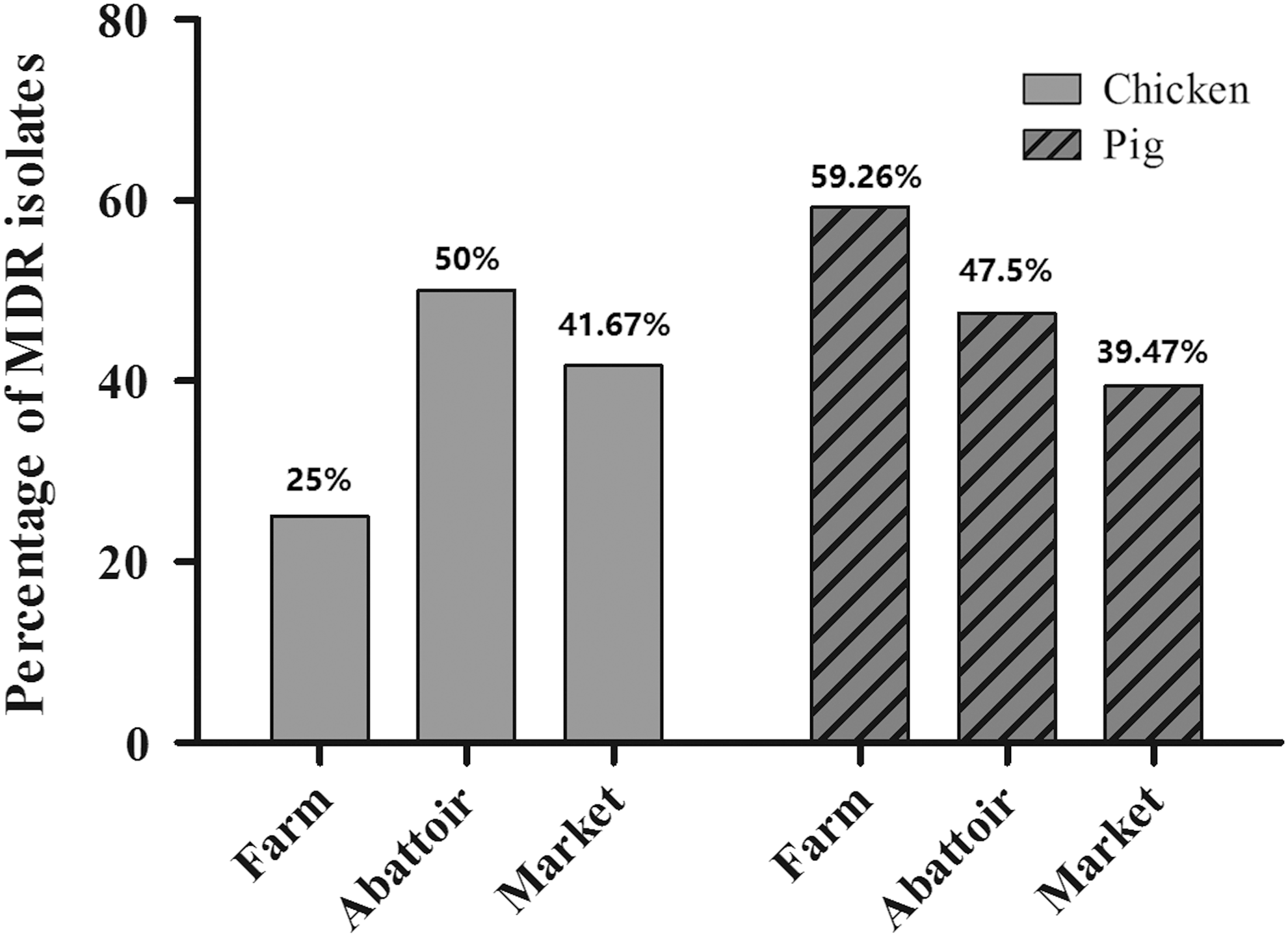
Proportions of multidrug-resistant (MDR) Salmonella isolated from chickens and pigs on farms, abattoirs, and markets.
Prevalence of antimicrobial resistance genes
For most of the isolated strains, there was a close relationship between antibiotic resistance phenotypes and genotypes. Among 28 aminoglycoside-resistant isolates, one carried armA and the other 27 strains harbored rmtB (Table 4). bla TEM-1 was present in 57 out of 70 ampicillin-resistant isolates and bla CTX-M was found in 36 third-generation cephalosporin-resistant isolates with bla CTX-M-55 (n = 18), bla CTX-M-164 (n = 7), bla CTX-M-79 (n = 5), bla CTX-M-15 (n = 4), bla CTX-M-65 (n = 1), and bla CTX-M-14 (n = 1). bla CMY-2 was detected in two amoxicillin-clavulanic acid-resistant isolates, one of which coexisted with bla CTX-M-55 (Supplementary Table S2). mcr-1 was present in 22 polymyxin B-resistant isolates, and 20 were concurrent with ESBLs genes. Sixty-two out of 67 doxycycline-resistant isolates carried tetracycline resistance genes, of which 49 and 1 were detected in tetA and tetM, respectively, and 12 carried tetA and tetM simultaneously. Among 74 strains carrying sulfonamides resistance gene, sul1 was the most common (43.24%). All florfenicol-resistant strains (n = 74) were positive for floR.
Among the 99 isolates that were resistant to nalidixic acid, 95 (95.96%) carried PMQR genes, of which aac(6′)-Ib-cr (54.74%) and qnrS1 (44.21%) were the most prevalent. But all tested strains were negative for qnrA, qnrC, and qnrD. The mutations of QRDR were found in 22 strains, of which a single mutation was found in 17 isolates (S83F, n = 9; D87N, n = 6; D87N, n = 2) and double mutations were found in 5 isolates (S83F and D87N, n = 3; S83L and D87N, n = 2). In contrast, mutations in gyrB, parC, and parE were not detected.
Multilocus sequence typing
We found 20 different ST (Table 2), of which 14 ST were from chickens and 16 ST were from pigs. Sixty-six isolates were ST40 as the most prevalent, with 30 and 36 from chickens and pigs, respectively. ST463, ST292, ST413, and ST34 were also widespread. ST34, ST40, ST413, and ST463 were shared by all origins and sources.
Pulsed-field gel electrophoresis
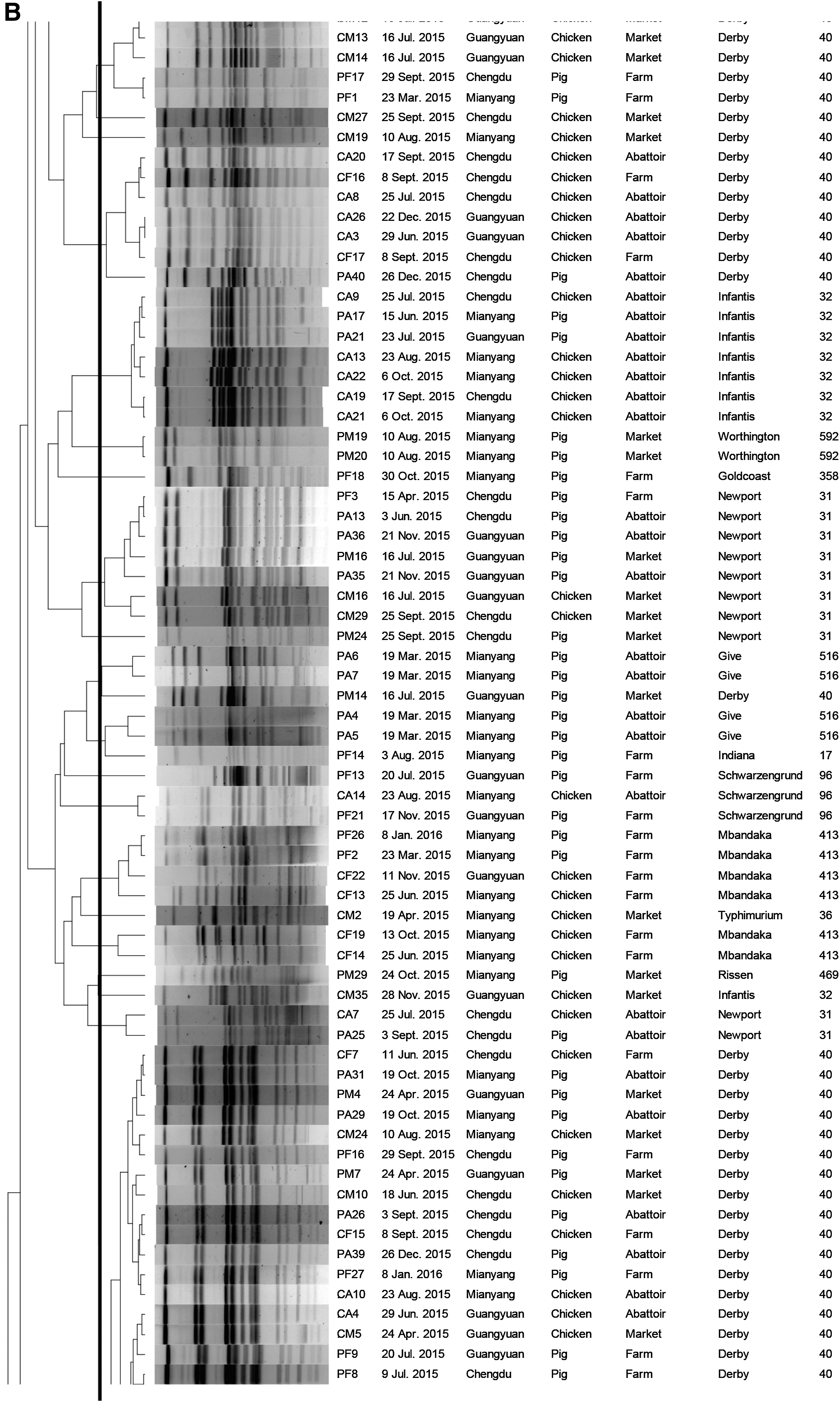
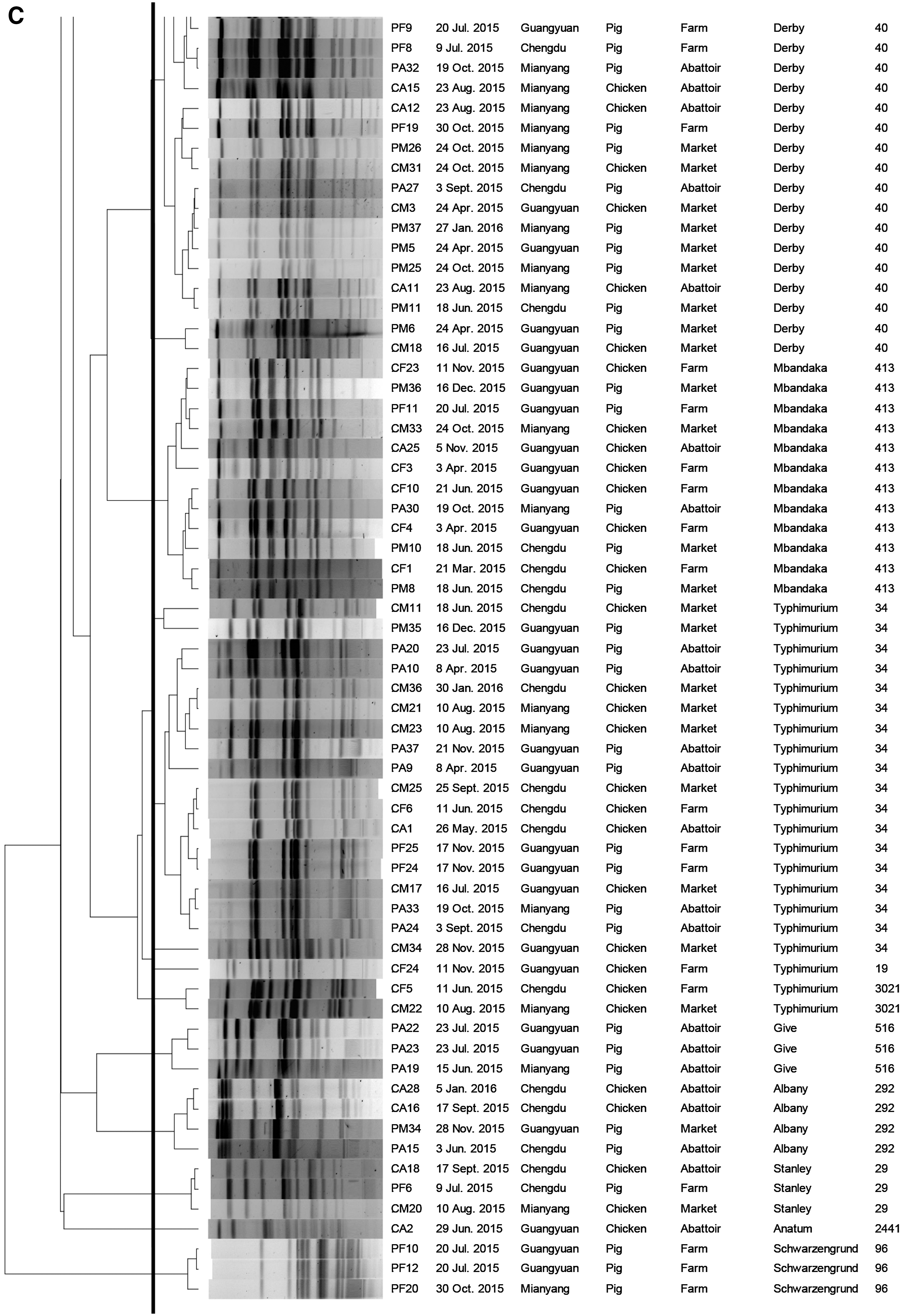
According to the similarity of 80%, 193 Salmonella isolates could be grouped into 39 clusters (Fig. 2A–C). Some Salmonella isolates recovered from different stages of production chain could generate similar PFGE fingerprint profiles and belong to same serovar. For example, 21 out of 22 Typhimurium isolates occupied the same cluster and 22 Salmonella Meleagridis strains belonged to a single cluster. However, the antibiotic susceptibility of the same serotype in one cluster was not always identical such as Salmonella Meleagridis, of which 16 resistant isolates showed 13 different antibiotic resistance patterns.
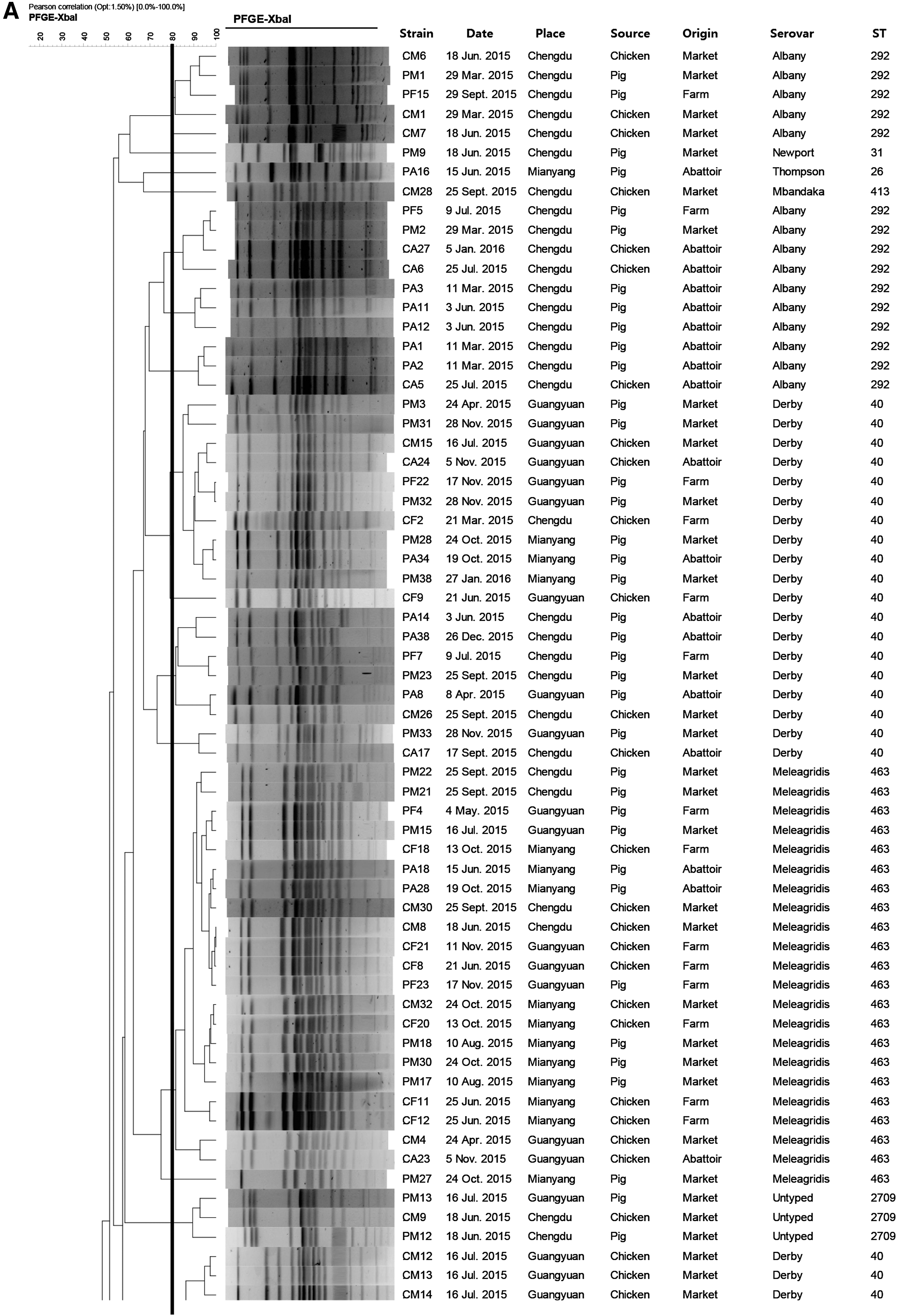
Unweighted pair group method with arithmetic means (UPGMA) dendrogram based on XbaI-pulsed-field gel electrophoresis (PFGE) profiles of the 193 Salmonella isolated from chickens and pigs on farms, abattoirs, and markets.
Discussion
For the purpose of this study, Salmonella isolates were recovered from a number of sites, including farms, abattoirs, and markets of chickens and pigs. The levels of antimicrobial resistance and serotype were assessed. All strains were then subtyped by PFGE to determine their genetic relationships. The results showed that Salmonella strains from different parts of the food production chain were genetically related. This leads to the conclusion that Salmonella isolates may proliferate through the processing of food products, which poses a potential challenge to food safety and public health.
In total, the isolation rate of Salmonella was 27.85%, which was higher than the average of pigs, chickens, and ducks (12.0%) in 2011 (Li et al., 2013). It was found that the rate of prevalence was variable for Salmonella samples derived from food-producing animals. In central China, it was rated at 11.35% (Kuang et al., 2015); whereas in Yangzhou, occurrences were higher than 70% (Cai et al., 2016). The differences between different regions of China were related to collection areas, samples, seasons, and isolation methods. The isolation rate of Salmonella was higher in abattoirs and markets than in farms. One reason might be that Salmonella is likely to colonize in bile or liver other than gut in healthy-looking animals, but they might frequently shed in the stool. The other reason might be that Salmonella spread more readily in slaughterhouses and markets. The stress of transportation and poor control measures during the slaughter process could increase the shedding and thus the likelihood of Salmonella contamination (Li et al., 2016). Moreover, improper storage conditions for retail meat in markets could also foster conditions that encourage the survival of Salmonella.
Derby was the most prevalent serotype of all Salmonella isolates. For chickens, Derby and Typhimurium were the dominant serotypes, which was in line with the investigation conducted in Sichuan (Li et al., 2013), but differed from that conducted in Shandong (Lai et al., 2014). The diversity of Salmonella serovars is likely to be associated with specific geographical areas (Zhang et al., 2016). In addition, they were also the dominant serotypes of Salmonella isolated from humans (Cui et al., 2009; Xia et al., 2009). Besides Derby, the dominant serotype detected in pigs was Meleagridis, which has never been reported in this region, whereas it has been found to be the most common serovar in humans and retail meats in Yucatan (Zaidi et al., 2006). Great attention should be paid to this serotype as 68.18% of isolates (15/22) were MDR in this study. Typhimurium was also prevalent in pigs. This serovar usually exhibits high-level resistance to antibiotics, and the mortality associated with infection by Typhimurium was much higher than with other serovars according to previous studies (Wong et al., 2013).
Antimicrobial resistance limits the choice for useful antibiotics and may lead to discount or even failure to treat salmonellosis (Liang et al., 2015). Some isolated strains showed resistance to nearly all tested antibiotics except carbapenem, which remains as a choice to treat fluoroquinolone- and cephalosporin-resistant Salmonella infections. As a result, resistance to carbapenems linked to carbapemases has been widely reported in recent years, particularly among E. coli. However, to date, it has never been found in Salmonella of animal origin in our country. Therefore, long-term supervision and monitoring are required. Colistin has been recognized as the last-resort antibiotic for a number of bacterial infections (Falagas et al., 2011; Halaby et al., 2013) but bacteria that are resistant to colistin have been in connection with acquisition of mcr-1 increasingly reported worldwide (Liu et al., 2016; Yao et al., 2016).
Above all, antibiotic resistance is frequently a common feature within a serotype such as serovar Indiana, which is related to MDR and has a broad distribution in China (Bai et al., 2016; Zhang et al., 2016). Similarly, in this study, this serotype was resistant to eight antibiotic classes. Moreover, it carried armA, bla TEM-1, and bla CTX-M-65. Besides this strain, the other amikacin-resistant isolates were all positive for rmtB, which was the most common of 16S rRNA methyltransferase genes among E. coli in China (Deng et al., 2013; Xia et al., 2016). In line with other studies (Xia et al., 2016), nearly all (90.91%) rmtB-positive isolates harbored other resistance genes. Importantly, rmtB was usually located on different plasmids accelerating the dissemination of resistance genes (Xia et al., 2016). All isolates carrying mcr-1 genes displayed MDR patterns and 90.91% (20/22) harbored ESBLs genes. Moreover, the serotype of mcr-1-positive isolates was various (Albany, Derby, Newport, Mbandaka and Stanley), suggesting the horizontal transmission of this gene. mcr-1 was located on transmissible plasmid and could spread rapidly between Gram-negative strains, causing some untreatable infections (Liu et al., 2016). Consistent with our previous study (Yang et al., 2016), serotype Albany harbored mcr-1 and bla CTX-M-55 at the same time. bla CTX-M-55 was the most prevalent ESBLs gene in this study. It was not common in Salmonella as reported and differed from the bla CTX-M-27 and bla CTX-M-65 that were dominant in Guangdong and Henan, respectively (Bai et al., 2016; Zhang et al., 2016). bla CTX-M-55 was initially found in E. coli (Rao et al., 2014) and has been widely reported in humans (Hu et al., 2013; Zhang et al., 2014). In addition, it was always located on conjugative plasmids (Bai et al., 2016), which indicated that bla CTX-M-55 of Salmonella might originate from E. coli (Wong et al., 2015).
Co-occurrence of ESBLs, especially CTX-M genes and PMQR genes, has been widely reported (Bai et al., 2016). In this study, 28 bla CTX-M-encoding isolates (77.78%) harbored PMQR genes. To the best of our knowledge, this is the first report of serovar Thompson carrying qepA and it was the third serovar after Typhimurium and Indiana (Al-Gallas et al., 2013; Bai et al., 2016). Contrary to previous studies (Eaves et al., 2004), substitutions of amino acid in gyrA at codon 83 or 87 did not differ between serotypes. There was no significant association between fluoroquinolone resistance genes and serotypes.
It was obvious that ST was related to serotype such as ST40 with Derby and ST463 with Meleagridis. It is worth noting that 18 out of 22 Typhimurium isolates were ST34, which was frequently isolated in Europe and Spain with ACSSuT (ampicillin, chloramphenicol, streptomycin, sulfamethoxazole, and tetracycline) resistance type and could expand quickly through environments and animals (Antunes et al., 2011; Wong et al., 2013). We found that all of the ST34 were resistant strains and 14 isolates (77.78%) showed MDR in this study. To our knowledge, this is the first time that Salmonella serovar Rissen ST469 was isolated in China, which had only previously been reported in a few European countries and could also affect humans through travels and the consumptions of pig products (Hendriksen et al., 2008). Strains with identical ST and serovar were isolated from different parts of the production chain, suggesting that Salmonella might spread during the process.
PFGE has an advantage of discriminating the genetic relatedness of strains, particularly for the same serotype and ST isolates (Soyer et al., 2010; Cai et al., 2016). The PFGE patterns of isolates from different stages of food production such as strains PF19, PA32, and PM26 were similar, which indicated that those isolates were clonally related and Salmonella isolates could disseminate from farm to abattoir and then to market. The antimicrobial resistance of isolates generating the same pulsotypes may be different, implying that resistance genes can be acquired or lost through horizontal transmission depending on the environment.
Conclusion
This investigation emphasizes the fact that pigs and chickens may be identified as potential sources of Salmonella for humans. And there are possible cross-contaminations in the slaughterhouses and on the markets, which can increase the possibility of Salmonella infection. In addition, Salmonella isolates from food-producing animals frequently exhibited MDR patterns and antimicrobial resistance genes bla CTX-M, mcr-1, and rmtB were prevalent. Importantly, Salmonella isolates from different sections of production chains were genetically homologous and may be liable to spread along processing routes from farms to markets. Therefore, measures should be taken to normalize the processing of food-producing animals and the use of antibiotics to reduce the chance of Salmonella contamination and antimicrobial resistance.
Footnotes
Acknowledgments
This work was funded by the National Key Research and Development Program of China (No. 2016YFD0501608), “973” National Basic Research Program of China (No. 2013CB127200), Earmarked Fund for Modern Agro-industry Technology Research System (No. CARS-41-K09), Special Fund for Agro-scientific Research in the Public Interest of China (No. 201303044, 201403054), and the general program of the National Natural Science Foundation of China (No. 31572547).
Disclosure Statement
No competing financial interests exist.
References
Supplementary Material
Please find the following supplemental material available below.
For Open Access articles published under a Creative Commons License, all supplemental material carries the same license as the article it is associated with.
For non-Open Access articles published, all supplemental material carries a non-exclusive license, and permission requests for re-use of supplemental material or any part of supplemental material shall be sent directly to the copyright owner as specified in the copyright notice associated with the article.
