




Abstract
This study was undertaken to investigate the antimicrobial resistance patterns of major causative agents to clinical mastitis in Danish dairy cows collected in 2016 to provide data on the current resistance patterns. Such data may subsequently serve as basis for a guideline for prudent use of antimicrobial agents in mastitis treatment. In addition, this study serves as a baseline for future comparison. The minimum inhibitory concentrations in Escherichia coli (n = 62), Klebsiella pneumoniae (n = 18), Staphylococcus aureus (n = 63), coagulase-negative Staphylococci (CNS) (n = 49), Streptococcus uberis (n = 61), Streptococcus dysgalactiae (n = 33), and Streptococcus agalactiae (n = 13) were determined to antimicrobial agents representing most classes relevant for treatment. The occurrence of resistance in the 299 bacterial isolates in total was evaluated using Clinical and Laboratory Standards Institute clinical breakpoints or in-house breakpoint values. For E. coli, low resistance levels were detected, 11.3% being resistant to ampicillin while resistance to other compounds was lower or zero. In contrast, K. pneumoniae revealed frequent ampicillin resistance (83.3%), but was susceptible to most other antimicrobial agents tested. Staphylococci were susceptible to the majority of antimicrobial agents tested, only 17.7% of the S. aureus isolates and 22.4% of the CNS being resistant to penicillin. Species distribution of the CNS isolates revealed that Staphylococcus simulans, Staphylococcus chromogenes, and Staphylococcus epidermidis were the most prevalent species. One S. aureus and one S. chromogenes isolate was found to be cefoxitin resistant and confirmed as methicillin resistant by polymerase chain reaction detection of the mecA gene, showing that methicillin resistance in staphylococci is present. All species of streptococci were susceptible to penicillin. No other critical resistance was found in any species, and resistance was in general low to all clinically relevant compounds. We emphasize the need for continuous surveillance of antibiotic resistance in major mastitis pathogens and the need for harmonization of methods and interpretations.
Introduction
Bovine mastitis is the most common endemic infectious disease in dairy cows with adverse effects on milk production and quality. Cases of mastitis are divided into clinical mastitis (CM) when milk appears visibly abnormal, and other local or systemic clinical symptoms may be apparent, and subclinical mastitis (SCM) when no visible signs of infection are displayed (
Among the most important contagious mastitis pathogens are Staphylococcus aureus and Streptococcus agalactiae, while major environmental ones are Escherichia coli and other Enterobacteriaceae, Streptococcus uberis, and other streptococci and coagulase-negative staphylococci (CNS) (Bi et al., 2016; Nonnemann et al., 2018). Environmental mastitis is in general the most common form of mastitis and therefore the most costly to the industry, but the situation differs between countries (Klaas and Zadoks, 2017).
Antibiotics are widely used for treatment and control of intramammary gland infections, both in the form of systemic and intramammary treatment (Pyorala, 2009; DANMAP-2016, 2017). However, use of antimicrobial agents may lead to a selection of resistant strains of bacteria, which may lead to treatment failure. Treatment practices vary between countries, and even between veterinarians, that is, in some countries, mainly CM is treated, and maybe even restricted to common penicillin, whereas in other countries routine treatment at drying off is practiced. In any case, it is important to know or be able to predict which bacterium is involved and whether treatment can be expected to work and therefore susceptibility testing should precede every mastitis treatment that can be planned.
Prudent use of antibiotics is an important part of the strategy of maximizing the therapeutic efficacy and reducing antimicrobial resistance (WHO, 2000; Food and Agriculture Organization of the United Nations, 2016b). In rare cases of acute severe CM, empirical treatment might be needed to save the life of a cow. For that, monitoring data on resistance are needed. More importantly, these data are also needed to continuously monitor and react on resistance trends.
The major driver for development of antimicrobial resistance is the use of antimicrobial agents (Food and Agriculture Organization of the United Nations, 2016a), and the emergence of resistant pathogens has contributed to an increased focus on the consumption of antimicrobial agents for treatment (WHO, 2000; Ministry of Environment and Food of Denmark, 2016). The total use of antimicrobials for intramammary treatment is low in Denmark and decreased from 2005 to 2013, followed by a slight increase in 2014. At present, the primary antimicrobial agents used to treat CM in Danish dairy cows are penicillins. The consumption of these make up about 81% of the total antimicrobial agents used for intramammary treatment, while small amounts of cephalosporins and aminoglycosides are used. The use of antibiotics for systemic treatment of mastitis is, however, not possible to extract from current registrations (DANMAP-2016, 2017).
The objective of the present study was to obtain new data on susceptibility of common mastitis pathogens for monitoring purposes. The resistance levels obtained are discussed in relation to previous resistance data and the antimicrobials used for treatment in Denmark. Moreover, we show the minimum inhibitory concentration (MIC) distributions to allow other researchers to compare with their own data.
Materials and Methods
Isolation and identification of the pathogens
Bacterial cultures or mastitis milk secreta from CM were obtained from veterinary practices and submitted for laboratory investigation at the National Veterinary Institute, DTU in 2016. Some submissions included only agar plates, while others included both agar plates and the corresponding milk sample. In case the milk sample was included, the isolate from milk had priority over cultures submitted on agar plates. All in all 299 submissions were included in the study. The submitted bacterial isolates were subcultured on blood agar (Columbia agar supplemented with 5% calf blood), while milk samples were streaked onto blood agar. All plates were thereafter incubated overnight at 37°C. Pure cultures were identified by matrix-assisted laser desorption/ionization time of flight mass spectroscopy (MALDI-TOF MS) as previously described (Nonnemann et al., 2018) and kept at −80°C until further examination. Only one colony type—the pure culture or the dominant colony type—from each sample was subcultured for further analysis. No further selection of isolates took place.
Antimicrobial susceptibility testing
The MIC for each bacterial isolate was determined to antimicrobial agents depending on bacterial species. The panels of antibiotics tested were the panels that are routinely used in the diagnostic laboratory at the department, and different panels were used for Gram-positive and Gram-negative bacteria, according to Figures 1 –7. The panels were a compromise, formulated to represent both antibiotics and antibiotic classes of relevance for veterinary use and antibiotics of relevance for surveillance, such as nalidixic acid, ciprofloxacin, cefotaxime, and chloramphenicol although these compounds are not approved for use in animals. The panels were custom made, DKNVM4 for Enterobacteriales and Pseudomonas and DKVP for staphylococci and streptococci, by TREK Diagnostic Systems, United Kingdom, according to Clinical and Laboratory Standards Institute (CLSI) guidelines.
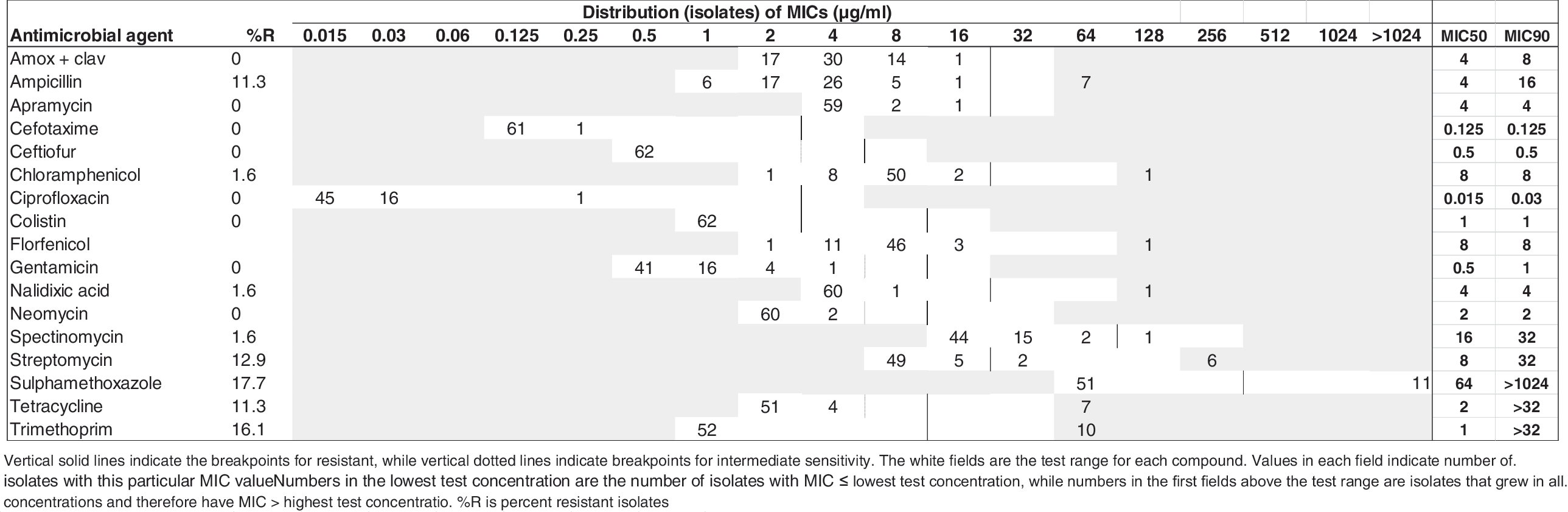
MIC distributions and % resistant isolates (n = 62) of Escherichia coli from Danish dairy cows. MIC, minimum inhibitory concentration.
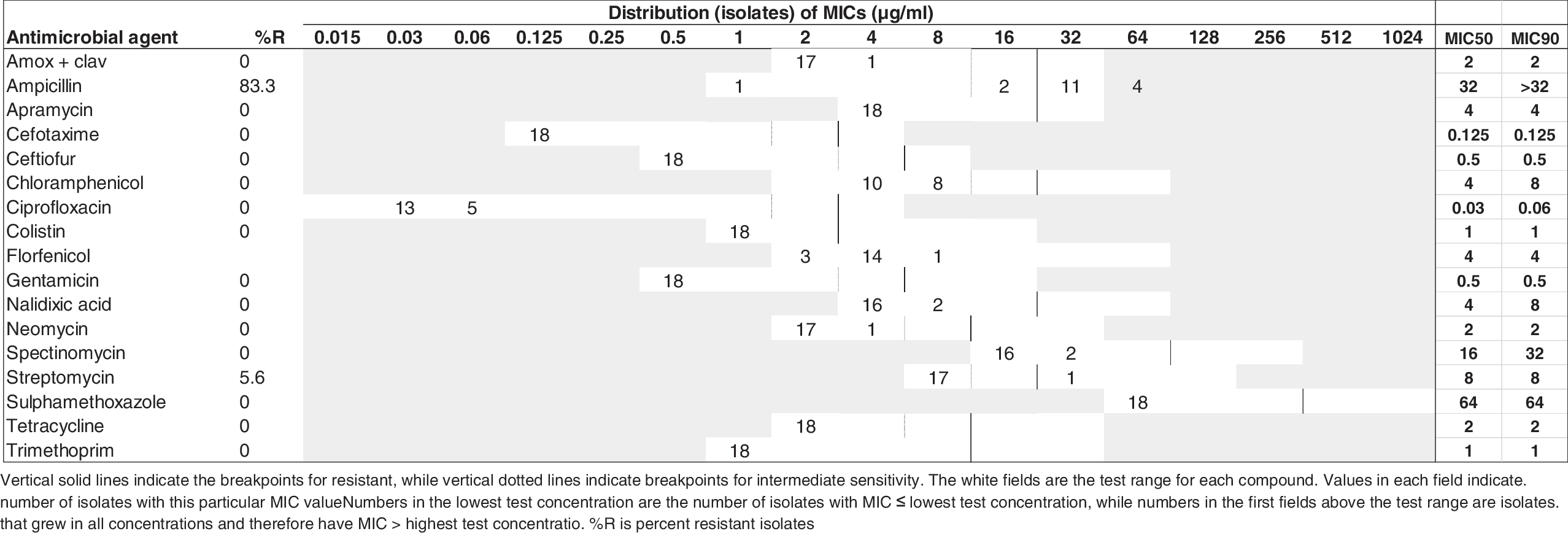
MIC distributions and % resistant isolates (n = 18) of Klebsiella pneumonia from Danish dairy cows. MIC, minimum inhibitory concentration.
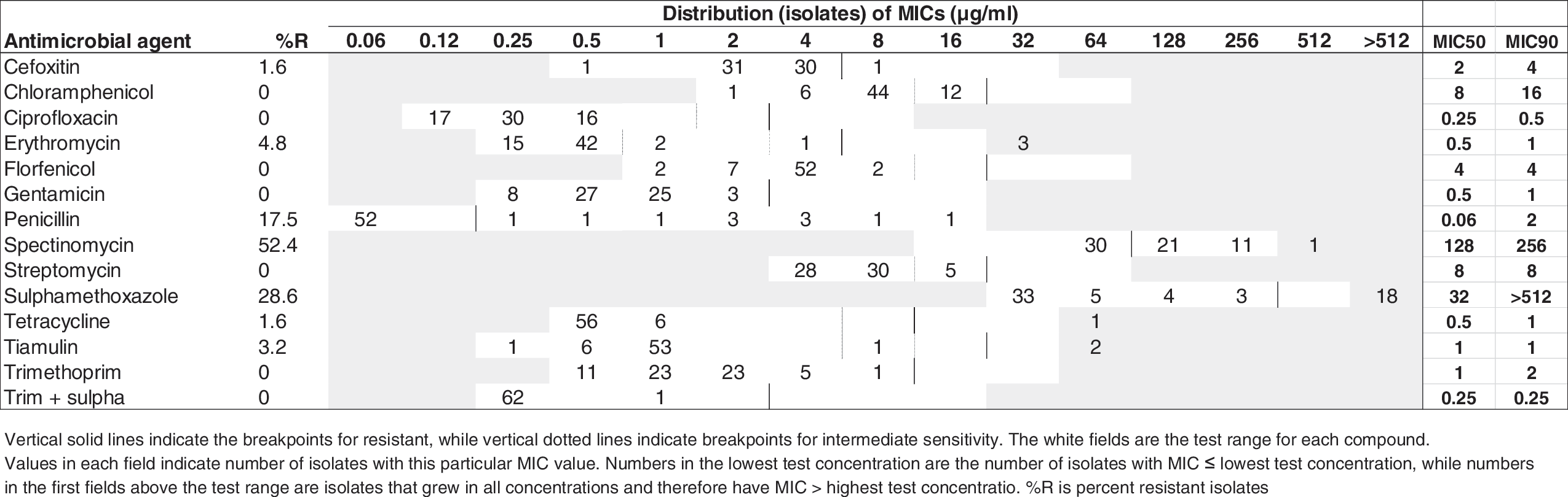
MIC distributions and % resistant isolates (n = 63) of Staphylococcus aureus from Danish dairy cows. MIC, minimum inhibitory concentration.
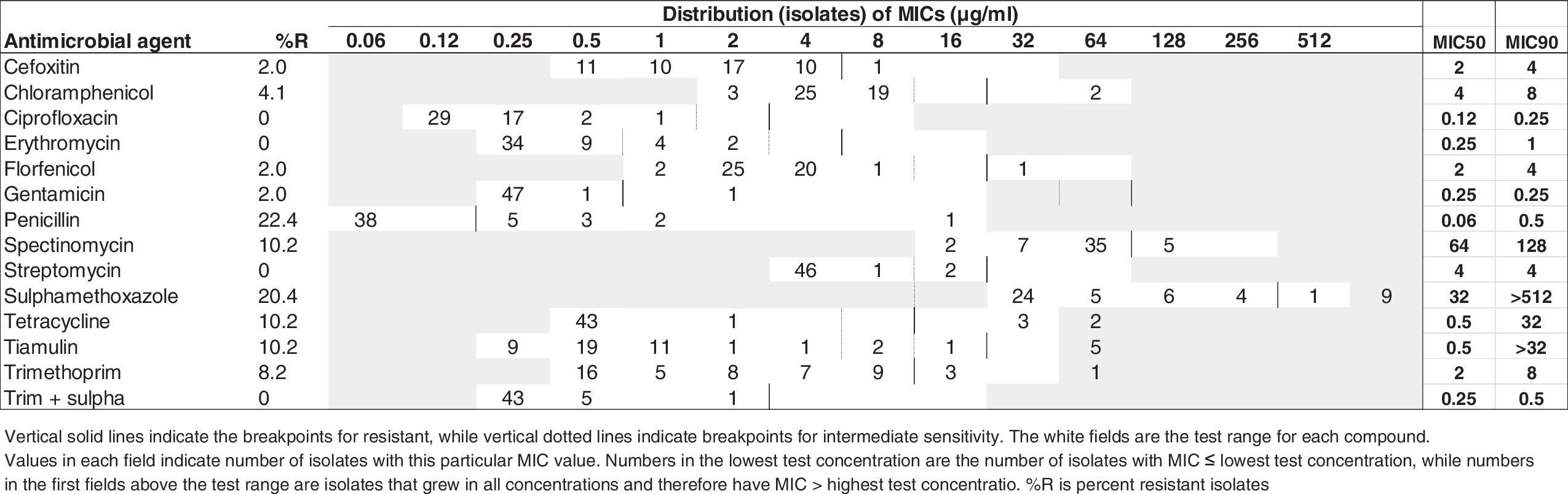
MIC distributions and % resistant isolates (n = 49) of coagulase-negative Staphylococci from Danish dairy cows. MIC, minimum inhibitory concentration.
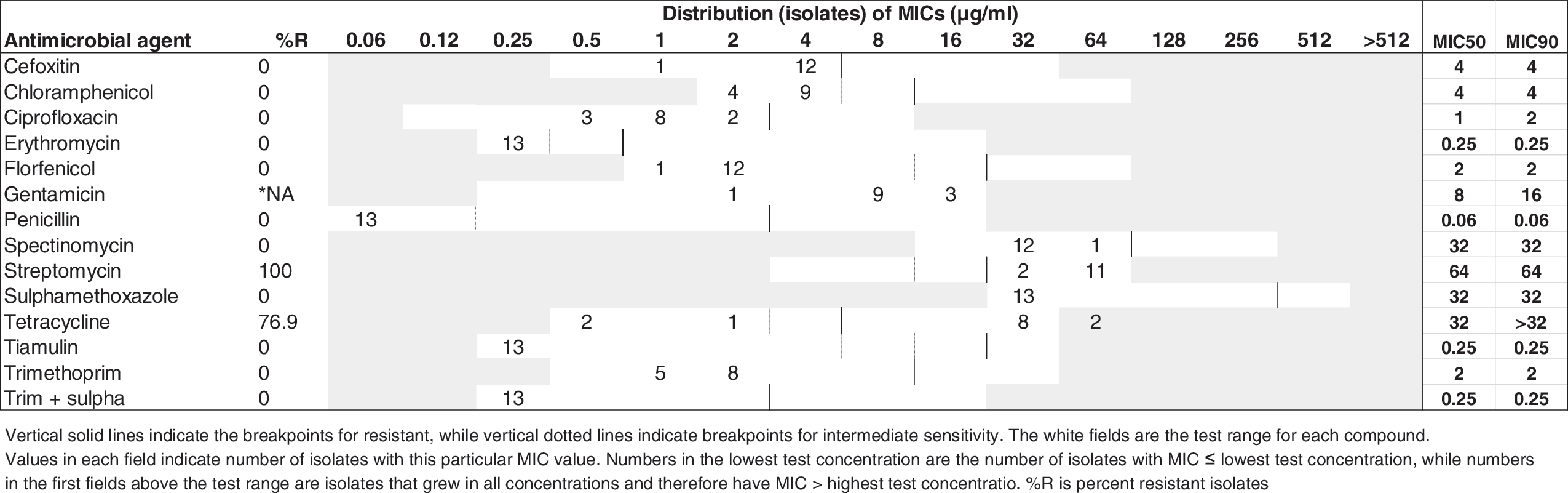
MIC distributions and % resistant isolates (n = 13) of Streptococcus agalactiae from Danish dairy cows. MIC, minimum inhibitory concentration.
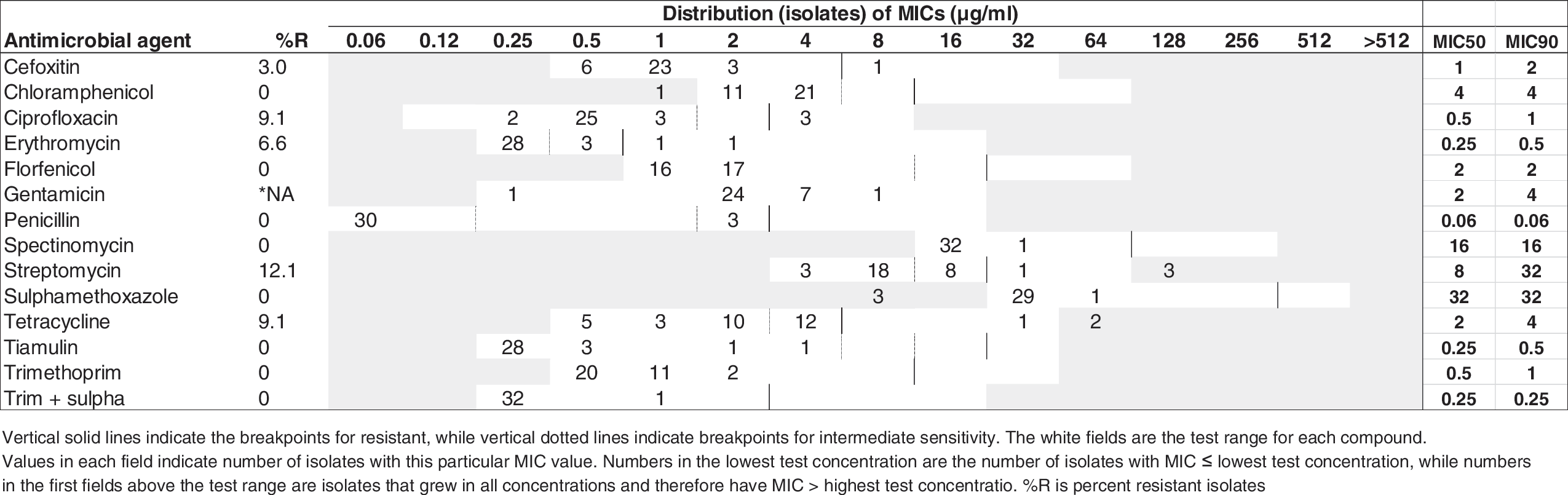
MIC distributions and % resistant isolates (n = 33) of Streptococcus dysgalactiae from Danish dairy cows. MIC, minimum inhibitory concentration.
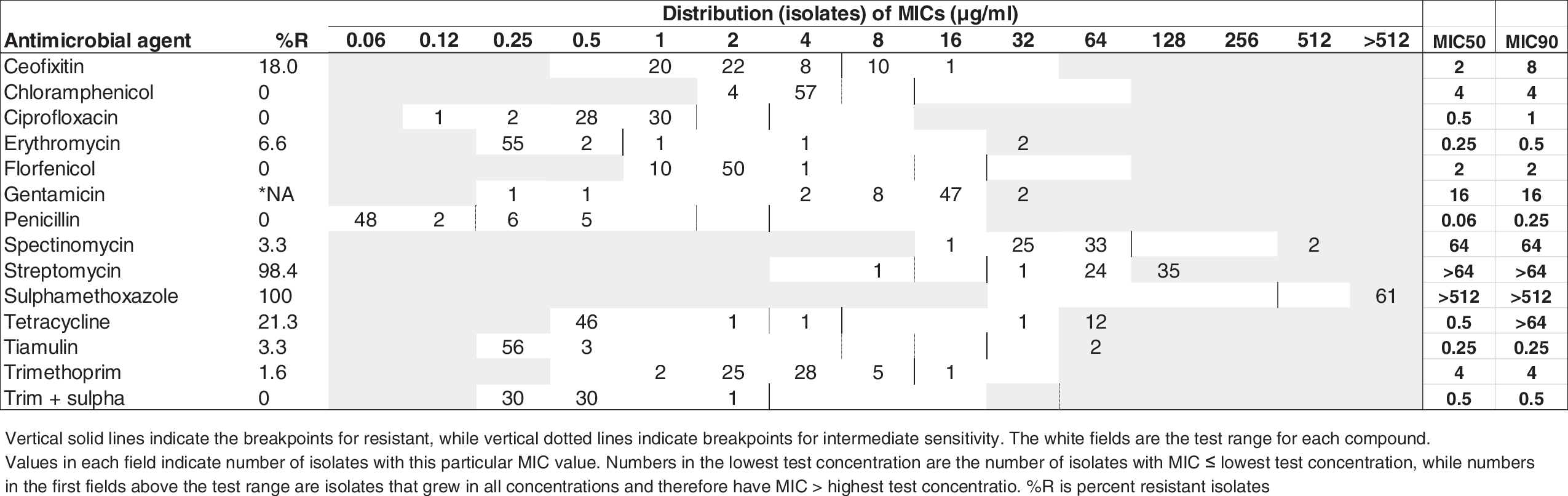
MIC distributions and % resistant isolates (n = 61) of Streptococcus uberis from Danish dairy cows. MIC, minimum inhibitory concentration.
The MIC determination was carried out by broth microdilution using a semiautomatic system (SensiTitre; TREK Diagnostic Systems). Interpretation of the obtained MIC values was based on breakpoints set by CLSI when available (CLSI, 2018a, b) or EUCAST epidemiological cutoff values (
Antibiotics Tested and the Used Breakpoint Values (μg/mL) for Escherichia coli, Klebsiella pneumoniae, Streptococci, and Staphylococci from Bovine Mastitis
CLSI M100 (2018b).
DANMAP-2015 porcine.
CLSI VET08 4th ed. (2018a).
EUCAST (v 8.1 Breakpoint Tables).
EUCAST Epidemiological cutoff values (ECOFFs).
CNS, coagulase-negative Staphylococci; I, intermediate; NA, not applicable; R, resistant; Ref., reference for breakpoint data; S, susceptible.
Results
In this study, 299 bacterial isolates were tested for antimicrobial susceptibility: E. coli (n = 62), Klebsiella pneumoniae (n = 18), S. aureus (n = 63), CNS (n = 49), S. agalactiae (n = 13), Streptococcus dysgalactiae (n = 33), and S. uberis (n = 61). The isolates were from farms from all regions of Denmark.
In the E. coli isolates, the highest occurrence of resistance was found for sulfamethoxazole (17.7%). Resistance to ampicillin was 11.3%, while resistance to other compounds was ≤16.1%. All isolates were susceptible to gentamicin and apramycin, cephalosporins (cefotaxime and ceftiofur), fluoroquinolones (ciprofloxacin), and colistin (Fig. 1). One isolate was resistant to nalidixic acid, and this isolate also had decreased susceptibility to ciprofloxacin.
The K. pneumoniae isolates were susceptible to the entire panel of antimicrobial agents tested, except to ampicillin and streptomycin. The isolates displayed high MIC values to ampicillin, most of them above breakpoint, and with a unimodal distribution. Furthermore, two isolates (11.1%) were intermediate to ampicillin. Resistance to streptomycin was found in one of the isolates (5.6%) (Fig. 2).
All S. aureus isolates (100%) were found susceptible to ciprofloxacin, chloramphenicol, florfenicol, gentamicin, trimethoprim, and the combination of sulfamethoxazole and trimethoprim, and 82.5% was susceptible to penicillin (Fig. 3). The highest occurrence of resistance was found to spectinomycin (52.4%) followed by sulfamethoxazole (28.6%). One S. aureus isolate was resistant to cefoxitin and subsequently confirmed as livestock-associated MRSA (LA-MRSA) CC398.
Among the 49 CNS isolates, the most prevalent CNS species were Staphylococcus simulans (n = 13), Staphylococcus chromogenes (n = 11), and Staphylococcus epidermidis (n = 9), while the remaining isolates were made up of several species (Table 2).
Species of Staphylococcus Among 49 Coagulase-Negative Staphylococci Isolates
Species identification was performed using matrix-assisted laser desorption/ionization time of flight.
All CNS isolates, irrespective of species, were susceptible to ciprofloxacin, the combination of sulfamethoxazole and trimethoprim, erythromycin, and streptomycin. Most resistance was recorded for penicillin (22.4%) (Fig. 4). One CNS isolate identified as S. chromogenes was found to be cefoxitin resistant and carried the mecA gene, which identified it as a methicillin-resistant S. chromogenes.
In the S. agalactiae isolates, resistance was only recorded for streptomycin (100%) and tetracycline (76.9%). Notably, all isolates were susceptible to penicillin (Fig. 5).
Resistance levels among the tested S. dysgalactiae isolates were low, and they were all susceptible to penicillin. The highest level of resistance was recorded for streptomycin (12.1%) followed by ciprofloxacin and tetracycline (9.1% to each). Intermediate isolates were also found for streptomycin (24.3%) and tetracycline (36.4%). Low resistance (<7%) was found for the macrolide erythromycin (Fig. 6).
All S. uberis isolates were resistant to sulfamethoxazole and the majority (98.4%) to streptomycin. Resistance for cefoxitin, erythromycin, spectinomycin, tetracycline, tiamulin, and trimethoprim was ≤21.3%. All isolates were sensitive to penicillin, but some of the isolates (18%) had increased MIC values and were in the intermediate interval. Intermediate isolates were also found for other antimicrobial agents tested, erythromycin (3.3%) and tetracycline (1.6%) (Fig. 7).
Discussion
The bacterial species included in the study represent some of the most dominant species causing mastitis in Danish dairy cows (Nonnemann et al., 2018). In the following, all comparisons to antimicrobial resistance data from other studies refer to studies on clinical or SCM.
Overall, resistance levels in Danish isolates from CM were found to be low with resistance for most drug-bug combinations being below 10%—often zero—and multiresistance being rare. This is in accordance with conclusions for European mastitis pathogens in general (de Jong et al., 2018).
E. coli is one of the most important causes of environmental mastitis in Denmark. In this study, the highest level of resistance among the E. coli isolates was recorded for sulfamethoxazole (17.7%). Low resistance levels have also been reported from Sweden (Bengtsson et al., 2009), Finland (Lehtolainen et al., 2003), Canada (Saini et al., 2012), and France (Botrel et al., 2010), while resistance levels among isolates from Korea were in general considerably higher (Nam et al., 2009).
Resistance to ampicillin, sulfonamides, and streptomycin is not uncommon in clinical isolate E. coli from other animal species, often combined with resistance to tetracycline, and occasionally in high level (DANMAP-2015, 2016; Nikolaisen et al., 2017 ). Although cephalosporins were used for treatment of mastitis (DANMAP-2016, 2017), no E. coli isolates were suspected as extended spectrum beta lactamase (ESBL) producing as they were all sensitive to cefotaxime and ceftiofur. In the study of de Jong et al. (2018), a small percentage of European isolates were resistant to cephalosporins suggesting that in other countries, ESBL strains are present.
High MIC values were found to ampicillin (MIC90 >32) in the investigated K. pneumoniae isolates suggesting an intrinsic higher tolerance to aminopenicillins (Bernardini et al., 2018). In our study, a low level of streptomycin resistance (5.6%) was furthermore recorded in the K. pneumoniae isolates. In contrast, among K. pneumoniae from human urinary tract infections, resistance to several antimicrobials have been recorded, including sulfonamides (17%), fluoroquinolones (3%), third generation cephalosporins (7%), and gentamicin (3%) (DANMAP-2016, 2017). In a previous study from Canada (Saini et al., 2012) resistance to streptomycin in Klebsiella species was more common (17.4%). Erskine et al. (2002) found almost all K. pneumoniae isolates resistant to ampicillin, but also reported resistance to other antibiotics, that is, tetracycline (33%) and ceftiofur (14.1%), compared to 0% for both compounds in our study. However, it should be noted that the number of isolates in our study was small, and comparisons to other studies should be done with caution. The K. pneumoniae isolates were in general susceptible to other antimicrobial compounds, which suggest that treatment of mastitis would be efficient. However, often cases of mastitis caused by this bacterium are acute and severe and not responding well to treatment, which emphasizes that in vitro susceptibility is not a guarantee for clinical efficacy.
For S. aureus, the isolates had high MIC values, 64 μg/mL or above (MIC90 = 256), for spectinomycin, which is higher than values for both CNS (MIC90 = 128) and E. coli (MIC90 = 32), and suggest that this bacterium has natural high MIC values for spectinomycin, which is also reflected in the EUCAST ECOFF values, which is 128 μg/mL for S. aureus compared to 64 for E. coli. In contrast, penicillin resistance was only found for 17.5% of the S. aureus isolates in our study. This is a favorable situation since narrow spectrum penicillin is the drug of choice for treatment of staphylococci in mastitis. Comparison with previous Danish resistance data from 2003 does not indicate any change in the level of penicillin-resistant S. aureus isolates (Vintov et al., 2003). In a previous study from France (Guérin-Faublée et al., 2003), a considerably higher level of resistance for penicillin was observed (36.2%). Using the same breakpoints as these authors, 45% of the isolates investigated by Tenhagen et al. (2006) would have been considered resistant.
In a study of 357 S. aureus isolates from the United States, Anderson et al. (2006) found low resistance in general. Thus, only 10% of the isolates were penicillin resistant, lower than in our study, while tetracycline and erythromycin resistance was comparably low as our results. The Canadian study by Saini et al. (2012) had similar results, 8.8% of the isolates being penicillin resistant and lower levels to other compounds. This was not entirely supported in another investigation from the United States where Erskine et al. (2002) found only 49.6% of S. aureus isolates from the period 1994 to 2000 susceptible to penicillin, although increasingly susceptible over the period. A surprisingly high level of penicillin resistance was found in Finnish S. aureus isolates: Pitkälä et al. (2004) found 52.1% of the isolates resistant. The authors were aware that this number was considerably higher than most other investigations and they suggested that this high number was due to widespread use of beta-lactam intramammaria.
The results of these investigations in different countries suggest that there are differences in resistance to penicillin that may be caused by differences in usage of antimicrobials for treatment or drying off. While intramammary antibiotic treatment is routinely used at drying off in some countries, the Danish legislation requires that a laboratory test has confirmed presence of udder pathogenic bacteria in a milk sample from individual cows before antibiotic drying off treatment can be allowed (
One of the S. aureus isolates from our study was furthermore resistant to cefoxitin. Since this resistance may indicate MRSA, the observation led to a further investigation of the isolate. The draft genome sequence of this isolate (Ronco et al., 2017) revealed that it was LA-MRSA CC398. This is the first case of CM in a dairy cow in Denmark caused by LA-MRSA CC398, and we therefore think it is important to follow any development and monitor dairy cattle for LA-MRSA. The prevalence of LA-MRSA in Danish cattle is currently low (Hansen, 2017) and is mainly a result of spill over from pig production. This conclusion is corroborated by Locatelli et al. (2016) in an Italian study who found spa types t011 and t034, which are also the dominant spa types in CC398 from pigs. A markedly higher prevalence of MRSA was reported from Korea, where Nam et al. (2011) found 6.2% of the S. aureus to be MRSA but belonging to other clonal complexes than CC398.
The term CNS covers several species, and more species than reported have previously been associated with mastitis (Bochniarz et al., 2013; Mahmmod et al., 2018; Placheta et al., 2018). There may very well be differences in resistance between species, but in our investigation and several others, CNS has been regarded as a group and data recorded irrespective of species. In this study, the CNS isolates displayed highest resistance to penicillin (22.4%), which is similar to the level (22.6%) from a previous study from Switzerland (Frey et al., 2013). A lower occurrence of penicillin resistance was however found (12.9%) in CNS in previous resistance data from Sweden (Bengtsson et al., 2009), while a Finnish study reported 32% penicillin resistant isolates (Pitkälä et al., 2004). For most compounds we found no major differences in MIC distributions between S. aureus and CNS but for spectinomycin both MIC50 and MIC90 were higher and % resistant was higher, whereas for trimethoprim CNS had a bimodal distribution and higher MIC50 and MIC90. One of the studied CNS isolates moreover displayed resistance to the antimicrobial agent cefoxitin. This isolate was therefore further investigated by polymerase chain reaction amplification and was confirmed as a methicillin-resistant S. chromogenes carrying the mecA gene.
In this study, the isolated streptococci encompassed S. agalactiae, S. dysgalactiae, and S. uberis. Despite the fact that penicillin is the most commonly used antimicrobial agent in cattle with CM, all isolates of streptococci in this study were found susceptible to penicillin. In a previous study from Germany, all S. agalactiae, S. dysgalactiae, and S. uberis isolates were also found susceptible to penicillin and ampicillin (Schroder et al., 2005). This pattern is also known for streptococci from e.g., pigs, mink, and dogs (Pedersen et al., 2007; DANMAP, 2016; Nikolaisen et al., 2017).
The three Streptococcus species had in general low MIC values for most compounds (Table 2 and Figs. 4 and 5), but there were also notable differences between them, MIC50 for sulfonamides was far higher in S. uberis than in the other two species, MIC50 for spectinomycin and streptomycin was higher for S. uberis and S. agalactiae than for S. dysgalactiae. A relatively high number of S. agalactiae isolates were resistant to tetracycline (76.9%). These tetracycline resistant isolates displayed high MIC values; the majority had MICs of 32 μg/mL and the rest ≥64 μg/mL. Since tetracycline is not used for intramammary treatment in Denmark (DANMAP-2015, 2016), the resistance seems not to be directly linked to usage, but tetracycline is still used for systemic treatment.
Studies from the United States suggest that the tetM gene is common among S. dysgalactiae, while tetO, tetL, and tetT may also be present (Metcalf et al., 2017). Comparison with previous studies from Sweden and France (Guérin-Faublée et al., 2002; Bengtsson et al., 2009) suggests that tetracycline resistance in our study was higher, as less than half of the S. agalactiae isolates were found resistant in the former studies. In contrast, studies from France, Germany, and Iran (Minst et al., 2012; Rato et al., 2013; Emaneini et al., 2014) also reported tetracycline resistance as one of the highest in S. agalactiae, S. dysgalactiae, and S. uberis.
Erskine et al. (2002) found considerably more tetracycline (45.2%) and erythromycin (31.9%) resistance in American S. uberis isolates, while Pitkälä et al. (2004) found only 1.1% and 0% resistance, respectively, to these two compounds. There seems therefore to be major differences in resistance patterns for S. uberis between countries.
In the present study, we used MALDI-TOF for identification of all bacterial isolates. We have previously evaluated MALDI-TOF for identification of mastitis bacteria with very good results (Nonnemann et al., 2018). Identification of CNS may be a challenge, but with an amended database, Mahmmod et al. (2018) found MALDI-TOF rapid and very reliable.
Comparison of data from different countries and pathogens is difficult due to differences in methods and the lack of approved clinical breakpoints. There is a need for establishment of such standards, and it is important to determine and report antimicrobial resistance both for monitoring of critical resistance and for continuous updating of treatment guidelines and prudent use of antimicrobials. Data from different countries suggest some relation between antibiotic consumption and resistance, although such relations are not necessarily direct or simple, but these mechanisms need to be further investigated.
In conclusion, overall occurrence of resistance to most antimicrobial agents tested in this study was low. Streptococci were all susceptible to penicillin. For E. coli resistance to ampicillin was 11.3%. In contrast, a high proportion of ampicillin resistant isolates (83.3%) were found in K. pneumoniae. However, K. pneumoniae only displayed resistance to ampicillin and very low streptomycin resistance (5.6%). Penicillin resistance was 17.7% in S. aureus, which justifies penicillin as first choice drug against this bacterial species, and 22.4% in CNS. Species distribution of CNS showed that the most prevalent species in this study were S. simulans, S. chromogenes, and S. epidermidis. The two cefoxitin resistant isolates of S. aureus and S. chromogenes were confirmed as methicillin resistant staphylococci.
Footnotes
Acknowledgments
This investigation was supported by grants from The Danish Veterinary and Food Administration and Promilleafgiftsfonden for Landbrug. The gratefully acknowledge Ms. Sophia Rasmussen for skillful technical assistance.
Disclosure Statement
No competing financial interests exist.