




Abstract
Prolonged and widespread in-feed use of antimicrobials as either growth promoters or to treat bacterial infections in commercial poultry production contributed to the emergence of resistant bacterial strains globally. A total of 3544 avian pathogenic Escherichia coli strains isolated from commercial broilers in South Africa between 2009 and 2015 were tested for susceptibility against eight classes of antimicrobials. Time series analyses were conducted to assess seasonal and general trends in antibiotic resistance. Seasonal trends were seen in the tetracyclines, with peaks of resistance in the winter months when respiratory diseases are at their worst. Resistance to quinolones peaked in 2012 after which there was an overall decreasing trend in resistance. Colistin resistance increased gradually from 2009 with a drastic rise to 12.08% in 2015, but its use in feed was stopped in 2016. Florfenicol also showed a sharp increase in resistance from 2.36% in 2009 to 6.63% in 2015. Resistance to trimethoprim-sulphadiazine decreased sharply by the end of 2015, as did spectinomycin and fosfomycin and amoxicillin. The overall prevalence of multidrug resistance (MDR) was 80.6 (95% confidence interval, 0.743–0.819), but the years 2013, 2014, and 2015 showed a significantly lower level of MDR compared with 2009. This study is the first detailed analysis of antimicrobial resistance in poultry production in the country, and constant monitoring of resistance data should be continued to aid in the judicious use of antimicrobial compounds.
Introduction
Poultry meat and eggs are one of the most affordable protein sources worldwide, and improving production in the developing world has a great potential to stimulate economies and ensure food security (FAO, 2015). The South African poultry industry dominates regional production in the Southern African Development Community (SADC), accounting for 80% of total broiler production and 66% of egg production among the 15 member states (FAOstats, 2017). Poultry is the largest single contributor to the agricultural sector in South Africa, comprising 15% of total agricultural gross value in 2016. A total of 988.7 million broilers were produced for slaughter in 2016, and the laying hen population was estimated at 24.8 million (SAPA, 2016). Global poultry production has improved remarkably in the last few decades because of genetic selection, improved feeding, and health management practices such as the in-feed use of antimicrobials as either growth promoters or to treat bacterial infections (Apata, 2009). First-generation tetracyclines, for example, chlortetracycline and oxytetracycline, were historically widely used as growth promotors, while second-generation tetracyclines, for example, doxycycline, is used for prophylactic and therapeutic treatments (Ljubojevic et al., 2016).
Prolonged and widespread use of antimicrobials leads to the emergence of resistant bacterial strains (Chopra and Roberts, 2001), and antimicrobial resistance (AMR) in poultry production has become a worldwide concern. European countries took an early lead in regulating antimicrobial growth promotors in food-producing animals, decreasing their use by up to 65% in Sweden (Kiers and Connolly, 2014). By 2006 all antimicrobial growth promotors were banned from feed, and the resistance to tetracyclines in broilers in Europe dropped to 50% (EFSA, 2016). The annual usage of antimicrobials for therapeutic purposes, however, increased in some countries (Cogliani et al., 2011).
In South Africa, antimicrobials intended for use in animals are listed in the Medicines and Related Substances Control Act 101 of 1965 as a Schedule 4 substance, that is, prescription-only medicines that are available from a pharmacy dispensary, for example, colistin, and can only be prescribed by a veterinarian. However, the Fertilizers, Farm, Feeds, Agricultural and Stock Remedies Act (Act 36, 1947) makes provision for certain antimicrobials to be purchased over-the-counter without a prescription, such as tetracyclines, sulphonamides, trimethoprim, to be used as growth promotors (Mendelson et al., 2018). The use of tetracyclines is especially widespread in South African poultry because the drugs are readily available and inexpensive.
Colibacillosis, caused by Escherichia coli strains, causes major annual losses in the poultry industry worldwide (Barnes et al., 2003). Likewise, E. coli is generally considered the leading cause of poultry losses in South Africa, and as such, only E. coli isolates have been cultured by veterinary laboratories on a routine basis. In this study, time series analysis was used to determine antimicrobial susceptibility trends and seasonality in E. coli in South African poultry over a 7-year period, 2009–2015, for eight antimicrobial classes that are of veterinary importance.
Materials and Methods
Sample collection
Sampling was undertaken between January 2009 and December 2015 in intensive commercial broiler operations. The broiler chickens were Ross® 408-type kept in open houses with average flock sizes of 15,000 chickens, or closed houses with flock sizes between 30,000 and 40,000 chickens. Six of the nine provinces were sampled with the distribution of sampling sites as follows: Mpumalanga Province (n = 3), Gauteng Province (n = 4), Limpopo Province (n = 4), Western Cape Province (n = 3), Free State Province (n = 3), and KwaZulu-Natal Province (n = 1) (Fig. 1). Postmortem examinations were performed by consulting veterinarians on diseased chickens and fresh fatalities. A sterile swab was taken from any organ showing pathological lesions, for example, purulent exudates or inflammation of the air sacs, and shipped on ice packs to the laboratory.
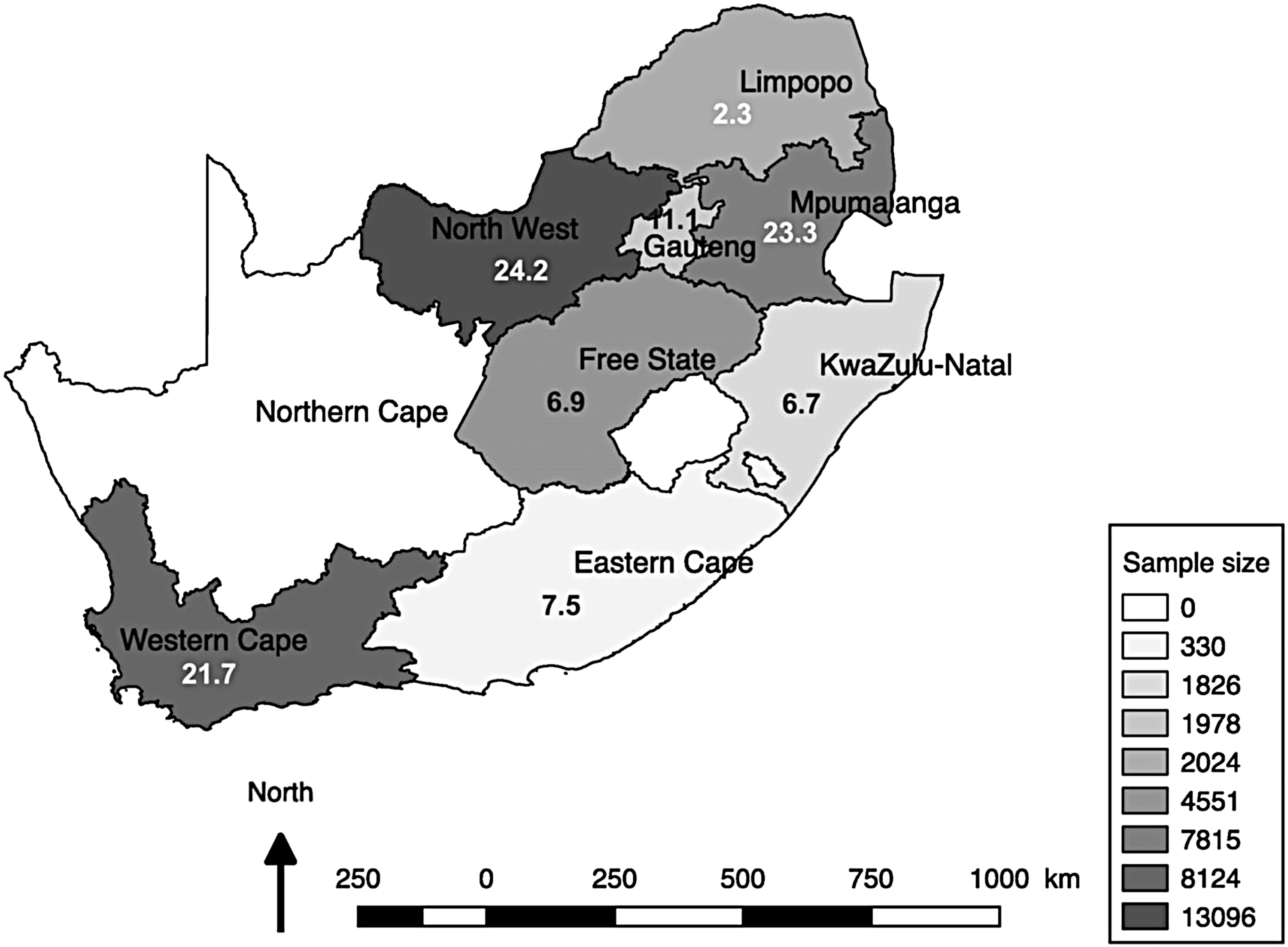
Distribution of broiler production in South Africa and sampling in the present study. The numbers represent the provincial boiler chicken population in millions. Production in the Northern Cape province is minimal (SAPA, 2017).
Bacterial isolation and identification
All microbiological analyses were performed at Deltamune (Pty) Ltd. in Pretoria. Isolation and identification of E. coli was done within 36 h after sampling, by standard bacteriological methods (Clinical and Laboratory Standards Institute [CLSI], 2018), with samples stored at 4°C until testing. Briefly, isolation was performed on Oxoid blood tryptose agar with 5% horse blood and Oxoid MacConkey agar without salt and crystal violet (both Thermo Fisher Scientific, Hampshire, United Kingdom), with incubation at 37°C for up to 24 h. Biochemical identification to presumptive level was performed with Selecta-media Hugh-Leifson tubes (Thermo Fisher Scientific) for oxidation fermentation; Kovack's reagent (Merck, Darmstadt, Germany) for indole production; and oxidase reagent (Merck).
Antimicrobial susceptibility testing
Axenic E. coli cultures were used for antimicrobial sensitivity determination. Minimum inhibitory concentrations (MICs) were determined by broth microdilution method in Mueller–Hinton medium and agar (Difco, Thermo Fisher Scientific) (Caprioli et al., 2000; CLSI, 2018). MIC was defined as the lowest concentration of antimicrobial that prevented growth. The E. coli strains were tested for susceptibility to tetracyclines (oxytetracycline, doxycycline, chlortetracycline), quinolones (enrofloxacin, norfloxacin), polymyxcin (colistin), phosphonic antimicrobial (fosfomycin), amphenicols (florfenicol), potentiated sulphonamides (trimethoprim-sulphadiazine), aminoglycosides (neomycin and spectinomycin), and β-lactam (amoxicillin). All antimicrobials were supplied by VTech (Pty) Ltd. (Midrand, South Africa). Resistance breakpoints were as per CLSI guidelines (2018). Multidrug resistance (MDR) is defined as resistance to at least three antimicrobial classes (Tenover, 2006).
Statistical analyses
The MIC data were collated into a pivot table (Microsoft Excel, 2007) and resistance percentages were calculated. Where the MIC equaled the break point, the isolate was classified as intermediate. The “zoo” and “xts” packages and the “stl” function of the “stats” package of the R Software© (version 3.3.3 for Mac) were used to decompose time series. Data were averaged per month, and if no data were recorded for a specific month, the missing mean was filled using seasonal Kalman filter (Cleveland et al., 1990). Local polynomial regression smoothing was applied to the data after the effect of seasonality was extracted. The same method was applied to the data (without seasonality) to obtain the trend (Cleveland et al., 1990). The result of the stepwise analysis of the data into seasonal, trend, and remainder components was obtained after several iterations of this process. To test the goodness of fit, the autocorrelation function (acf) of the “remainders” (residues) was analyzed, and the Augmented Dickey–Fuller (adf) test allowed to check for stationarity, using the “adf.test” function of the package “tseries” of the R software. A simple logistic regression was used to determine the overall prevalence of AMR and MDR. Next, the seasonal effect was confirmed with a logistic regression using a generalized mixed model applying seasons as the explanatory factor and including the farms as random variable to remove the cluster effect. Logistic regressions were done using the “lme4” package of the R software.
Results
Annual and seasonal trends in antimicrobial susceptibility
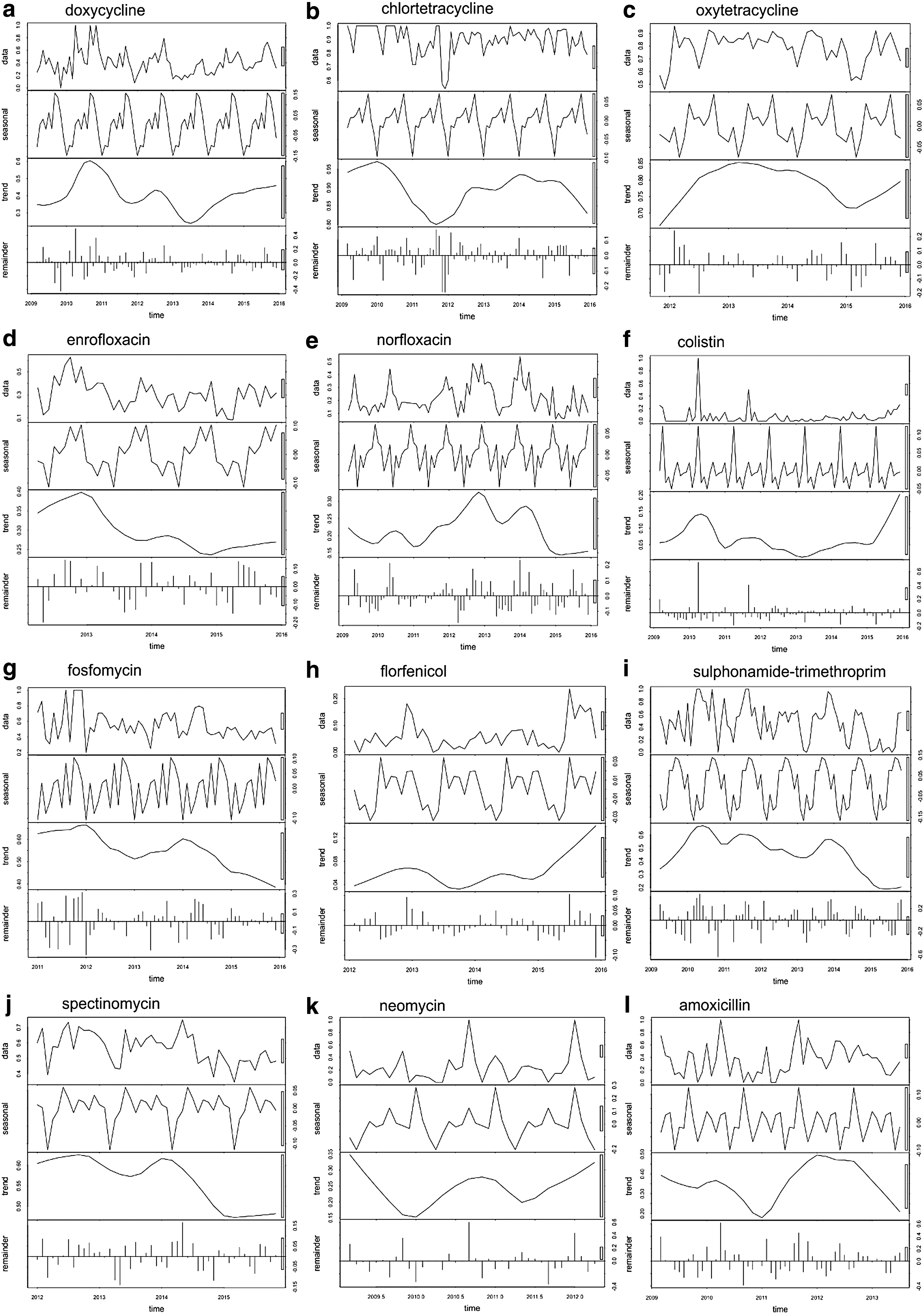
In total, 3544 isolates collected between January 1, 2009 and December 31, 2015 were analyzed for AMR, which encompassed 12 commonly prescribed antibiotics in eight classes. Generally, resistance was seen to increase with the usage of antimicrobial compounds by the poultry industry (Table 1). Tetracyclines showed peaks of resistance in the winter months of June to August (Fig. 2a–c). The highest prevalence of resistance to chlortetracycline was in 2009 (Fig. 2b), but there was a slight improvement in sensitivity in 2011. Resistance to oxytetracycline was high, but sensitivity improved slightly in 2014, although resistance remained above 60% (Fig. 2c). Quinolones showed the highest resistance in 2012. After 2012 there was however an overall decreasing trend in resistance to enrofloxacin (Fig. 2d) and norfloxacin (Fig. 2e). Colistin (Fig. 2f) displayed a gradual increase in resistance from 2009 to 2015, with resistance increasing dramatically from 3.9% (5/127) to 12.08% (100/828) in 2015. Florfenicol, similar to colistin, showed an increase in resistance from 2.36% (3/127) in 2009 to 6.63% (55/829) in 2015 (Fig. 2h and Table 1).
Antimicrobial Resistance in Escherichia coli Isolated from Broiler Flocks
MIC breakpoint CLSI (2018).
MIC, minimum inhibitory concentration; nt, not tested.
In 2010 the resistance to trimethoprim-sulphadiazine was the highest with 59.4% (40/69) of the isolates tested being resistant (Fig. 2i), but in 2015, results showed a decrease in resistance to just 11.8% (97/829). Amoxicillin (Fig. 2j) did not show any significant seasonal trends. The MIC data for the aminoglycoside neomycin (Fig. 2k) are only available from 2009 to mid-2012, after which it was no longer used (Table 1). Spectinomycin did not show any significant seasonal trends (Fig. 2j), and neither did amoxicillin (Fig. 1l) that was used only sporadically because of the risk of anaphylaxis in humans.
MDR to antimicrobials
The overall prevalence of MDR was 80.6% (95% confidence interval, 79.3–81.9) (Table 2). The years 2013, 2014, and 2015 showed a significantly lower level of MDR compared with 2009 (Table 3). This trend, visible on the time series analysis in Figure 3, was confirmed with the general linear mixed model (glmm) using the months as random variable to remove the effect of seasonality. The seasonal nature of MDR was also evident with the time series analysis (Fig. 3). Using a similar approach, we confirmed the seasonality with glmm using the year as random effect to exclude the trend. The predominant MDR profile from 2009 to 2014 was oxytetracycline/chlortetracycline/fosfomycin/trimethoprim-sulphadiazine/amoxicillin. In 2015 the profile changed to predominantly oxytetracycline/chlortetracycline/doxycyline/fosfomycin/amoxicillin.
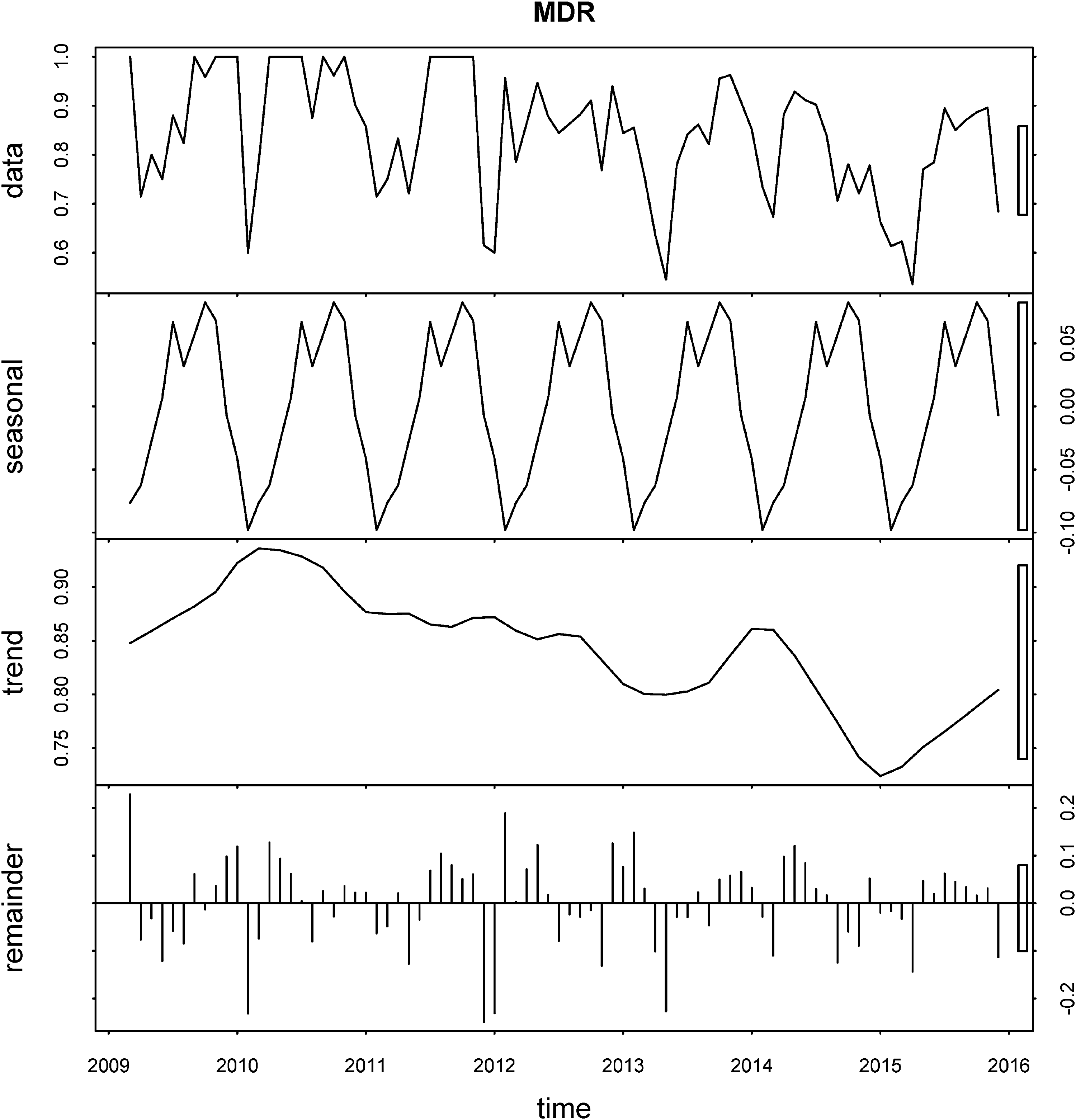
Time series decomposition data for MDR Escherichia coli in commercial broiler farms in South Africa. MDR, multidrug resistance.
Overall Prevalence of Antimicrobial Resistance
MDR, multidrug resistance.
Percentage of Escherichia coli Isolates Exhibiting Multidrug Resistance to Various Numbers of Antimicrobials for Each of the Years in the Study Period
Discussion
In the past the use of antimicrobials in food-producing animals in South Africa was generally unrestricted, and prophylactic treatment was given as an “insurance” to prevent the outbreak of coli-septicemia secondary to chronic infections from Mycoplasma gallisepticum and Mycoplasma synoviae, as well as viral infections such as Newcastle disease (ND). Today this practice is uncommon, but metaphylactic treatment is still used in some operations to prevent the outbreak of coli-septicemia due to known stresses such as vaccinations. This study is the first to report AMR trends in South African poultry. E. coli strains isolated from commercial poultry under intensive production across the country between 2009 and 2015 were tested for susceptibility against eight antimicrobial classes that are commonly used for therapy in the local industry.
An increase in poultry respiratory diseases is usually observed in the winter months of June to August (unpublished laboratory data). The South African poultry industry experienced a severe outbreak of exotic virulent ND caused by a sub-genotype VIIh strain that started in late August 2013 in the Limpopo and North West Provinces and was widespread throughout the country by October 2014 (Abolnik et al., 2018). At the time many poultry veterinarians used enrofloxacin in the drinking water as a first line of treatment to avoid secondary infection by E. coli, because the MIC profiles, which were continually monitored for the affected farms at the time, showed the best susceptibility to this drug. Enrofloxacin is a broad-spectrum antibiotic that is well absorbed in poultry after oral administration and widely distributed to various tissues, resulting in adequate target tissue concentrations. The affected houses could be medicated immediately via the water, and serum levels could be attained in the diseased birds within hours of application. From Figure 1d it is apparent that the overall resistance to enrofloxacin remarkably decreased during the period of ND outbreak. This unexpected trend might be due to the rigorous MIC monitoring at the time and judicious use of enrofloxacin on the affected farms.
In-feed administration of antimicrobial compounds is convenient, but florfenicol usage in the feed showed poor results (unpublished laboratory data; V-Tech [Pty] Ltd.). For this reason, a water-soluble florfenicol solution was formulated by V-Tech (Pty) Ltd. Since the peak serum concentration of florfenicol is measured within 30 min after oral gavage (EMEA, 1999), it was advised that florfenicol be administered to the diseased birds in their water over a 4- to 6-h period. The results of the present study showed the correlation between the increase in florfenicol use and an increased number of isolates showing resistance.
Fosbac (BUPO Animal Health, Silverton, Pretoria, South Africa), whose active ingredient is fosfomycin, was registered over 30 years ago in South Africa and was the antimicrobial of choice for many years, which led to the development of high levels of resistance. From 2009 to 2012 we, however, detected a reduction in the levels of resistance from 80/127 (63%) to 336/602 (55.7%), and from the time series analysis, the trend continued to the end of the study period (Fig. 2g). If the improvement in sensitivity continues, fosfomycin could in future, under stricter control, again become an option for the treatment of E. coli septicemia in poultry.
The emergence of carbapenemase-producing bacteria (CPE) worldwide and in South Africa has led hospitals to use colistin as a last-line antimicrobial; where resistance to colistin already exists, the CPE infection is untreatable (Nguyen et al., 2016; Mendelson et al., 2018). In late 2015, the emergence of the mcr-1 gene, a plasmid-bound resistance to colistin found in Enterobacteriaceae of people, chickens, and pigs was reported in China (Lui et al., 2016; published online 2015) and Denmark (Hasman et al., 2015). In a South African study, mcr-1 was found in 19 out of 20 colistin-resistant APEC from 2015 (Perreten et al., 2016). These strains originated from six geographically distant broiler operations throughout South Africa, suggesting a locally widespread distribution. The widespread use of compounded colistin was immediately stopped in January 2016, and later that same year the Registrar of Medicines released a statement to veterinarians strongly discouraging the use of colistin in food-producing animals (Mendelson et al., 2018). Colistin may be used if the consulting veterinarian can justify its use based on a sensitivity test (i.e., MIC), and that it is used as the last resort to treat diseased animals. Colistin was widely included in medicated feed over the entire trial period from 2009 to 2015. Our study showed that colistin-resistant E. coli increased sharply in the second half of 2015, which can be attributed to the emergence of the mcr-1 gene in South African poultry operations. Since the usage of colistin was stopped in January 2016, the resistance has dropped to <1.77% of the 443 E. coli strains tested in the surveillance program during 2017 (unpublished laboratory data; V-Tech [Pty] Ltd.).
Increases or decreases in resistance can clearly be correlated with use in poultry, for example, due to a higher prevalence of resistance seen with trimethoprim-sulphadiazene in 2014, veterinarians opted not to utilize it in feed during 2015, and consequently a substantial decrease in resistance against trimethoprim-sulphadiazine was seen toward the end of 2015. MIC profiles for doxycycline showed a reduction in resistance in 2013 that similarly was attributed to a reduction in use, but resistance increased during 2015 when doxycycline use again increased for in-feed medication based on the efficacy against mycoplasma, which was of great concern within the poultry industry at that time (Beylefeld et al., 2018).
The emergence of populations of bacteria resistant to multiple antimicrobials is a worldwide concern (Witte, 1998). A prior but limited study in South Africa reported a high prevalence of MDR (71.5%) and extended-spectrum β-lactamase resistance in E. coli from 2010 to 2011 (Ott, 2012). The time series analysis in the present study showed a clear trend of decrease in MDR E. coli isolates in South Africa from 2010 to 2015 (Fig. 3), but it is concerning that a large proportion of isolates in 2015 (77%) was MDR. In comparison, the prevalence of MDR in E. coli in the European Union in 2014 ranged from 1.5% to 86.4% depending on the country, with an average of 54.6% (EFSA, 2016).
Conclusions
Although the results of this study reveal, for the first time, that AMR was widespread in E. coli in commercial South African poultry between 2009 and 2015, drastic measures such as the immediate ban on the use of antibiotic growth promotors in the short or medium term could prove disastrous to the local industry and, consequently, to the food security in the SADC region. This is because profit margins are narrow, and the potential to expand poultry production in South Africa is limited because of factors such as a lack of government subsidies that are the privilege of wealthy nations, the severe droughts that, from time to time, affect maize production used for feed, the constant economic threat from international poultry meat dumping practices, and disease outbreaks. Reus (2011) modeled the economic effects of antibiotic reduction at broiler farm level, taking into consideration the additional costs as a result of the presence of disease. The model estimated that total disease costs for an average farm would increase by 16% when antibiotic usage was reduced by 20%, and when antibiotic usage was reduced by 100%, disease costs would increase by 81%. The costs of additional management measures, for example, changes in stocking density, health and technical management, would further increase the production costs to farmers who face pressure to reduce antimicrobial usage. As South Africa endeavors to align with global practices in attaining the objectives of the World Health Organization (WHO, 2015) Global Action Plan on Antimicrobial Resistance, and support the development of National Action Plans (OIE, 2016), this study is the first detailed analysis of AMR in poultry production in the country. Constant monitoring of MIC data should be continued to aid in the judicious use of antimicrobial compounds in poultry production.
Footnotes
Acknowledgments
Funding was provided by V-Tech (Pty) Ltd. Poultry producers' AMR data were used with permission. S.T. was funded by a Health and Welfare Sector Education and Training Authority bursary. V-Tech (Pty) Ltd, represented by D.G., is a major supplier of antimicrobial compounds in South Africa; to avoid conflict of interest, D.G. was not involved in the statistical analysis of the data.
Disclosure Statement
No competing financial interests exist.