




Abstract
Objective:
The emergence of antibiotic-resistant Staphylococcus aureus, especially methicillin-resistant S. aureus (MRSA), poses a great challenge for animal and public health. This study aimed to isolate a broad-spectrum and high-efficiency MRSA phage and explore the phage–antibiotic synergistic effect on MRSA.
Results:
Phage STPX-6 belongs to Caudovirales, Podoviridae. It has a hexahedral head and a short tail. Its genome length was 17,007 bp, and it did not contain resistance genes and virulence genes. STPX-6 lysed 79.6% (133/167) of 167 S. aureus and 87.96% (95/108) of MRSA from different sources. The titer of phage was 1.18 × 10¹⁰ PFU/mL, the optimal multiplicity of infection was 1, the latent period and lysis period were about 10 min and 60 min, respectively, and the burst amount was 68 PFU/cell. At 50°C and 70–90°C, the titer of STPX-6 was maintained at about 1010 PFU/mL and at least 103 PFU/mL, respectively. In the range of pH 4–12, the titer of phage remained above 108 PFU/mL, and it remained above 104 PFU/mL at pH 2, 3, 13, and 14. The combined application of phage STPX-6 and enrofloxacin, doxycycline, ampicillin could reduce the minimum inhibitory concentration (MIC) of the three antibiotics to 1/4 MIC, 1/16 MIC, and 1/2 MIC, respectively.
Conclusion:
This study found that for the host MRSA, lytic phage STPX-6 had the characteristics of a broad lytic spectrum, a short latent period, strong adaptability and strong tolerance to high temperature, a strong acid and strong alkali environment, and might maintain certain activity under extreme environment. More importantly, the combination of phage STPX-6 with enrofloxacin, doxycycline, and ampicillin could reduce the antibiotic concentration used for MRSA. In other words, phages as new antibacterial agents have received increasing attention. The combined application of phages and antibiotics provides a new method for controlling multidrug resistant bacteria and reduce the use of antibiotics.
Keywords
Introduction
In recent years, with the continuous expansion of the scale of the livestock and poultry breeding, the widespread and imprudent use of antimicrobials has become a global problem. It not only leads to excessive antibiotic residue in animal-origin food but also causes food safety problems. What’s more, the antibiotic resistance rates of poultry is rising, and the resistance spectrum is also expanding. Since the 1960s, with the clinical use of methicillin, methicillin-resistant Staphylococcus aureus (MRSA) have been detected in animal products in several countries, including Asia, Europe, and North America (Andie et al., 2018). Studies have shown that MRSA strains were resistant to almost all β-lactam antibiotics and were highly resistant to other antibiotics (Sharon and Gavin, 2015). In addition, MRSA generally has a strong ability to adapt to the environment and colonization. It is worth noting that MRSA usually leads to high infection and mortality rates (Vanessa et al., 2023). However, there are few effective therapeutic drugs in clinical settings (Paul et al., 2018), and the treatment of MRSA has become a serious challenge. Therefore, it is urgent to find a new option to effectively control MRSA from the source.
It is well known that phages, as the new antibacterial agents, have attracted widespread attention due to their advantages of safety, no residue, and strong specificity (Wernicki et al., 2017). However, studies have confirmed that bacteria could adapt to phages and produce resistance, which indicated that it was very important to overcome the resistance of bacteria to phages (Tania et al., 2014). Therefore, phage–antibiotic combination therapy has great potential (Kebriaei et al., 2020; Kebriaei et al., 2022; Razieh et al., 2023). In this study, the dominant MRSA strain ST9 was used as the host strain to study the combined application effect of phage STPX-6 with enrofloxacin, doxycycline, or ampicillin, which could be an effective preventive measure in MRSA.
Materials and Methods
Strain source
The host MRSA strain MRA202109P0009 used for phage screening was isolated from a healthy broiler farm in Shandong Province, China, in 2021 (Xiao et al., 2023), which was resistant to 13 types of antibiotics according to the Clinical and Laboratory Standards Institute (CLSI) and contained 12 drug resistance genes. The laboratory growth conditions of the host MRSA strain were: Tryptone Soya Agar (TSA) culture medium at 37°C for 18–20 h or 180 r/min LB broth at 37°C for 6 h. A total of 167 strains of S. aureus were isolated from healthy poultry (layer, broiler, waterfowl farm) by throat swabs from 49 farms in 2021 (Xiao et al., 2023). They were used to verify the bactericidal effect and determine the lytic spectrum of phage. Supplementary Table S1 shows the information of different isolates of S. aureus strains and the host strain.
Isolation, purification, host range determination, and physiological characteristics of phage
According to Fang Tang (Tang et al., 2019), phage STPX-6 was isolated and purified from the broiler fecal samples in Shandong Province, China, in 2021. In total, 5 g of fecal samples were collected for sample treatment. Phages were isolated and purified by plaque assay and double-layer agar assay until the uniform size of the phage plaque appeared. After purification, phages were added to SM buffer solution and stored temporarily at 4°C. The titer of phage was determined by double-layer agar assay.
A total of 167 S. aureus isolates were used to determinate the host range of phage STPX-6 (Tang et al., 2019). The transmission electron microscope (TEM) observation, optimal multiplicity of infection (MOI) determination, one-step growth curve and burst amount determination, thermal stability and pH stability determination of phage were conducted as described previously (Tang et al., 2019).
The whole-genome sequencing of STPX-6 was conducted by Shanghai Tappu Biotechnology Co., LTD through Illumina (NovaSeq 6000) sequencing platform, SPAdes and MEGAHIT software. The genome map of phage STPX-6 was drawn by Phastest software. The BLAST-ORFfinder programs of the National Center for Biotechnology Information website and Phastest software were used for preliminary analysis and gene annotation of the coding sequence of phage STPX-6 genome.
Combined antibacterial experiments of bacteriophage and antibiotics
According to CLSI, the minimum inhibitory concentrations (MICs) of enrofloxacin, doxycycline, and ampicillin to host MRSA strain were determined by broth micro dilution method. Antibiotics with different concentrations were added to the bacteriophage STPX-6 solution for 16 h, and the effect of each antibiotic on phage titer was observed by double-layer agar assay.
The combined antibacterial experiment was divided into four groups: blank control group, antibiotic group, bacteriophage group, and combined application group. According to the MOI, the initial concentrations of host bacteria and phage were set at 5 × 10⁵ CFU/mL, respectively. To observe whether there was phage–antibiotic synergy, the bacterial concentration in each group was measured every 4 h by the spread plate counting method and was monitored for 20 h in total. Three independent experiments were repeated.
Statistical analyses
Statistical analyses were performed using GraphPad Prism (GraphPad Software, La Jolla, CA, USA) and Origin2019 (OriginLab Corporation, USA). SD was used for the analysis of the degree of dispersion in data points. Statistical significances were established at *, ** and *** and were represented by p < 0.05, p < 0.01, and p < 0.001, respectively.
Results
Isolation, purification, and titer determination of phage
In this study, MRSA strain MRA202109P0009 was used as the host bacteria. The phage named STPX-6 was isolated from the feces of broiler chickens. The morphology of phage plaque in the double-layer agar assay was shown in Figure 1. The phage plaque formed by STPX-6 was 2∼3 mm in diameter, and the inside was smooth and clear. When the purified phage solution was coated on TSA plate alone, no bacterial growth was observed. The titer was 1.18 × 10¹⁰ PFU/mL.
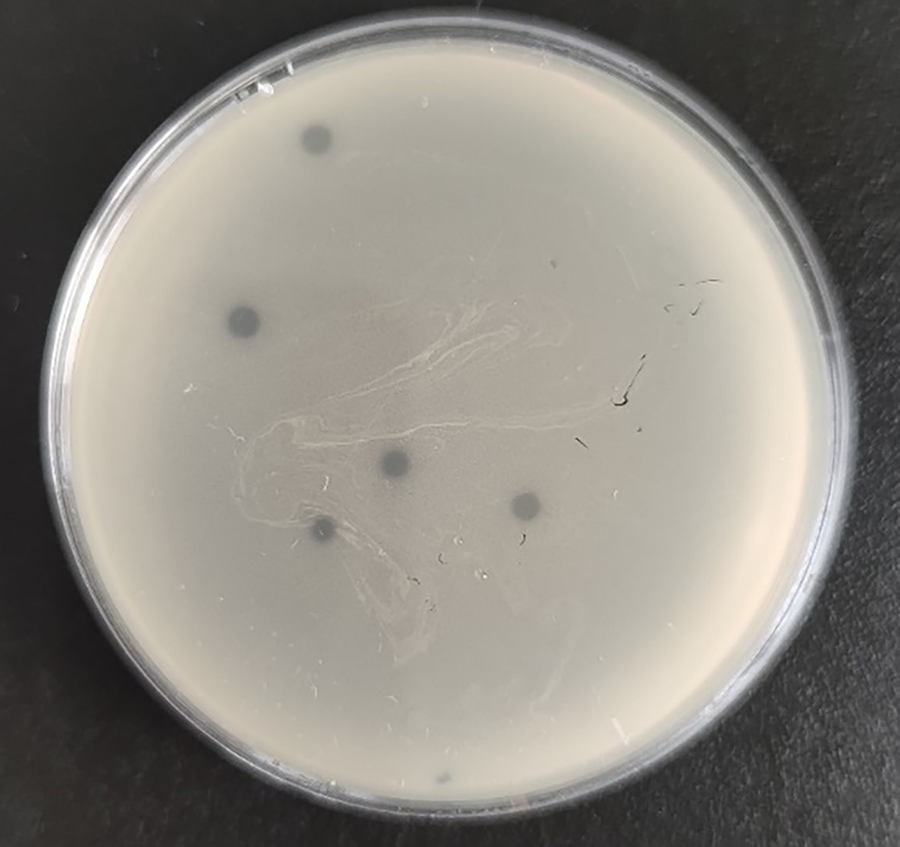
Morphology of phage plaque of STPX-6.
Host range analysis of STPX-6
Table 1 and Supplementary Table S1 showed that STPX-6 lysed 79.6% (133/167) of S. aureus and 87.96% (95/108) of MRSA. In addition, the lytic effect of STPX-6 on three different sources of S. aureus was different. In particular, the lytic rates of STPX-6 on broiler strains, laying hens strains and waterfowl strains were 78.95% (60/76), 81.48% (44/54), and 78.38% (29/37), respectively.
Host Range Analysis of STPX-6

Note: The morphology of phage plaque is described as follows: “+++” the degree of phage plaque transparency = 100%; “++” 50% ≤ the degree of phage plaque transparency < 100%; “+” 0 < the degree of phage plaque transparency < 50%; “−” no plaque.
Physiological characteristics of STPX-6
Morphological observation of phage under TEM
TEM (Fig. 2) showed that phage STPX-6 belonged to Caudovirales, Podoviridae. Its outer capsid was bright and the inner nucleic acid was dark. The head had a standard regular hexahedron structure with a diameter of about 40 nm. It had a nonshrinkable tail of about 20 nm.
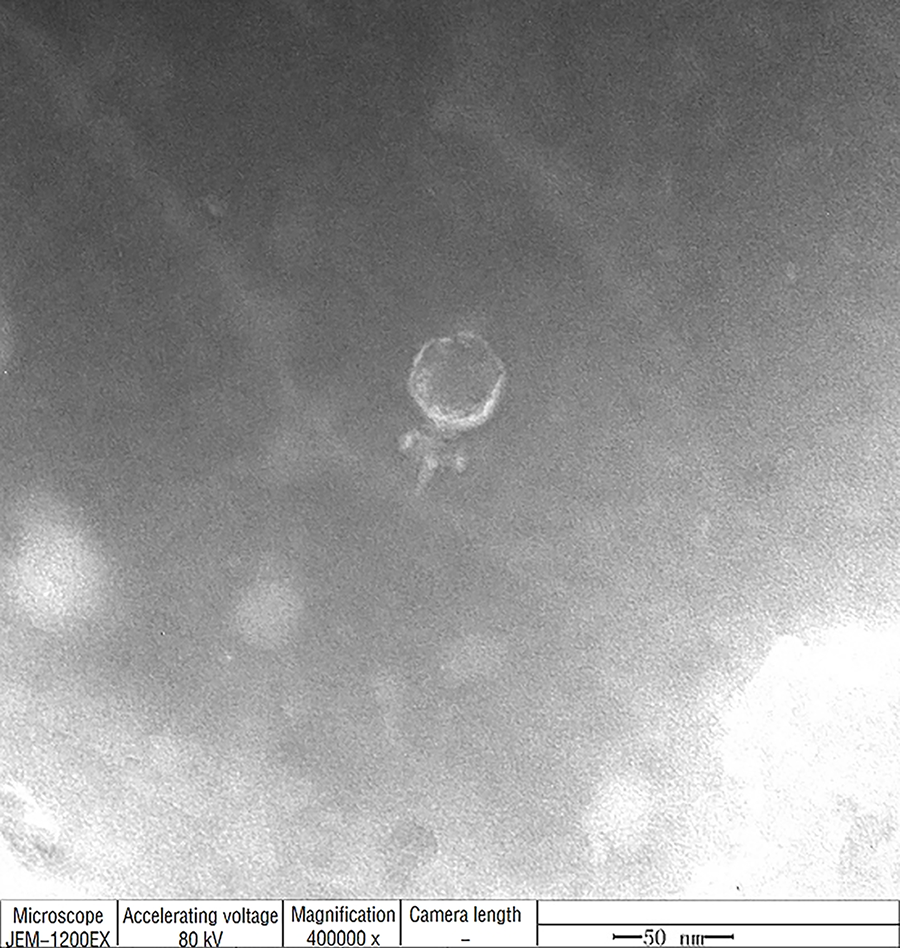
Transmission electron microscopic morphology of phage STPX-6.
MOI of phage STPX-6
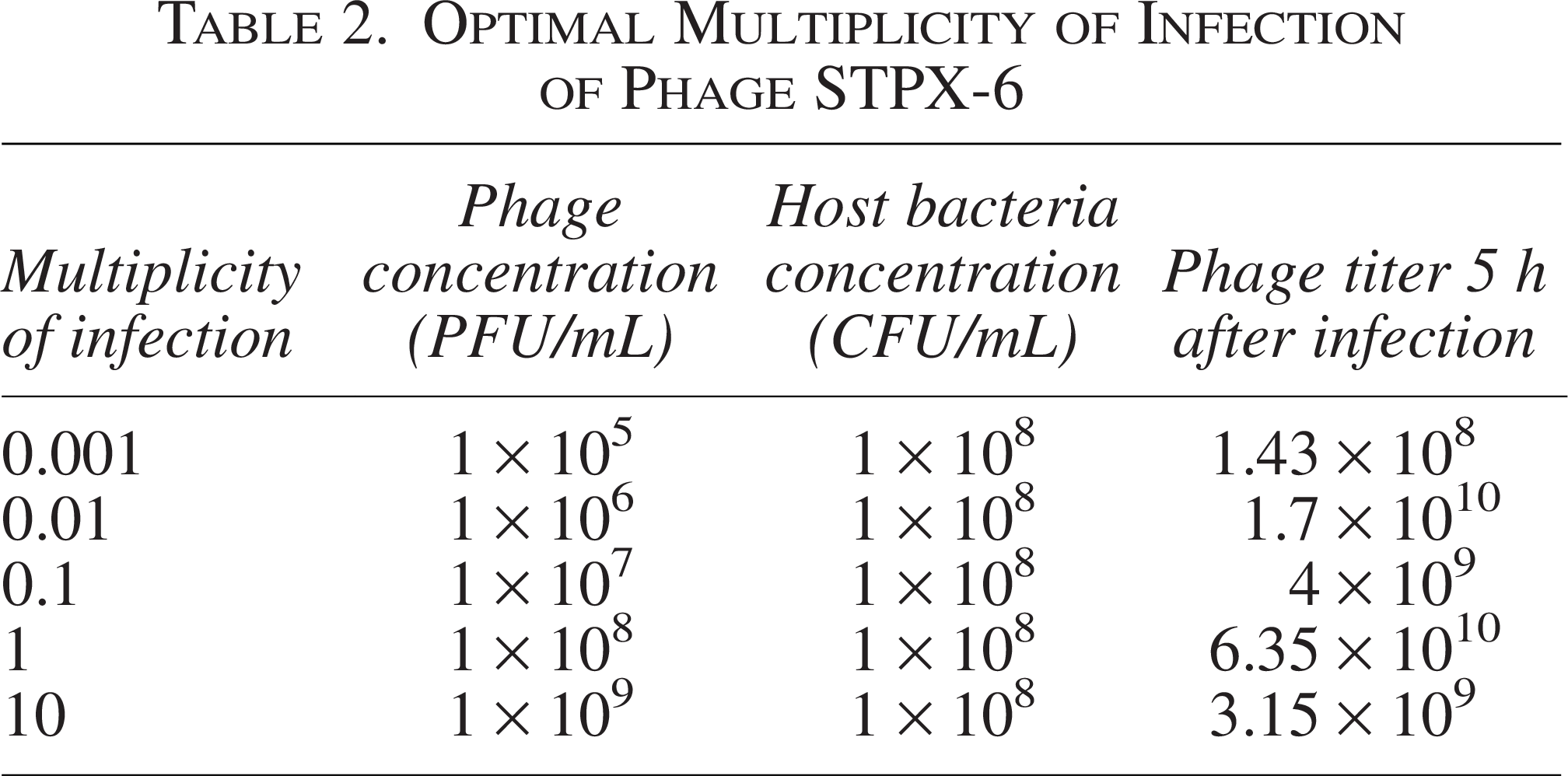
As shown in Table 2, when the MOI of STPX-6 was 1, the offspring of STPX-6 infected with host bacteria had the highest titer, reaching 6.35 × 10¹⁰.
Optimal Multiplicity of Infection of Phage STPX-6
One-step growth curve of phage STPX-6
As shown in Figure 3, the latent period of the phage STPX-6 was approximately 10 min and the titer increased rapidly between 10 min and 70 min. The lysis period was approximately 60 min. The titer basically remained at about 1011 PFU/mL after 70 min, and the burst amount was approximately 68 PFU/cell.
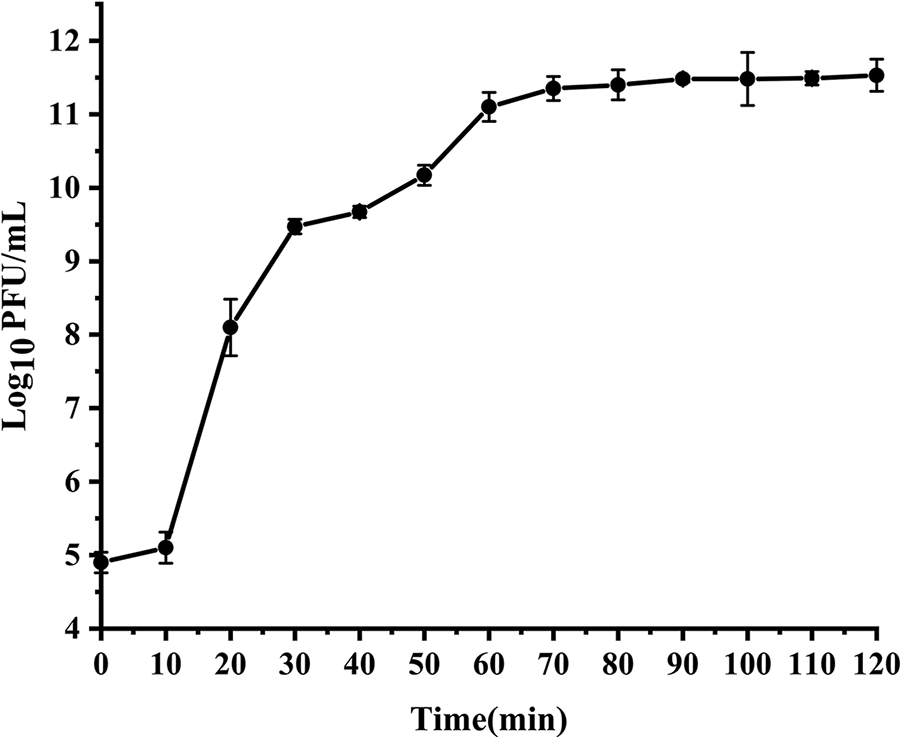
One-step growth curve of STPX-6.
Thermal stability and pH stability of phage STPX-6
The result of the thermal stability of phage STPX-6 was shown in Figure 4A. At 50°C, the titer of STPX-6 hardly changed, but when the temperature rose to 70°C or higher and lasted for 20 min, the titer decreased significantly. After being treated at 90°C for 60 min, phage STPX-6 still maintained a certain bactericidal activity, indicating that STPX-6 had a high temperature resistance.
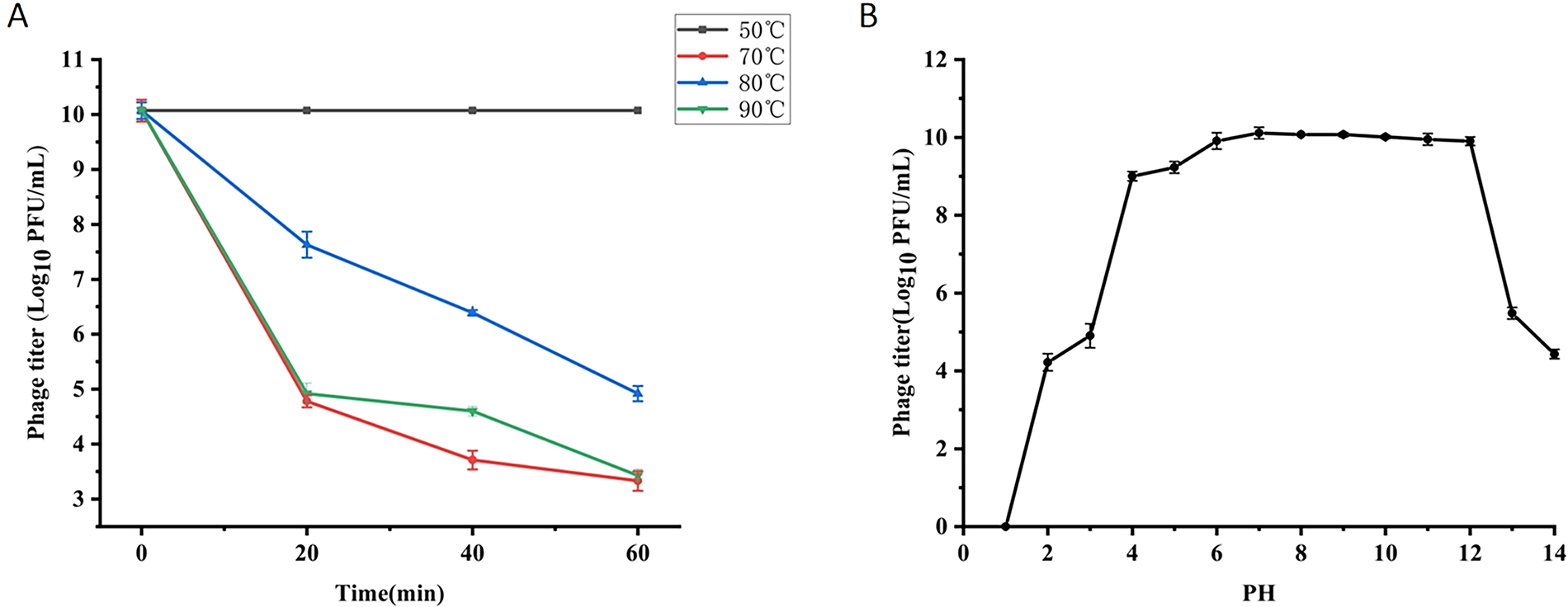
Thermal stability and pH stability of STPX-6.
In order to further study the pH stability of STPX-6, its titer at different pH was determined (Fig. 4B). In the pH range of 6–12, the titer of STPX-6 did not change significantly. In the range of pH 4–5, the titer of STPX-6 decreased slightly. When pH value was lower than 3, the titer of STPX-6 decreased significantly, and when pH value was 1, the phage STPX-6 was completely inactivated. Although the titer of STPX-6 decreased significantly in the pH range of 13–14, some bacteriophages still survived in the alkaline condition of pH 14. These results indicated that phage STPX-6 had strong tolerance to acidic and alkaline environments, especially alkaline environments.
Genomic features of phage STPX-6
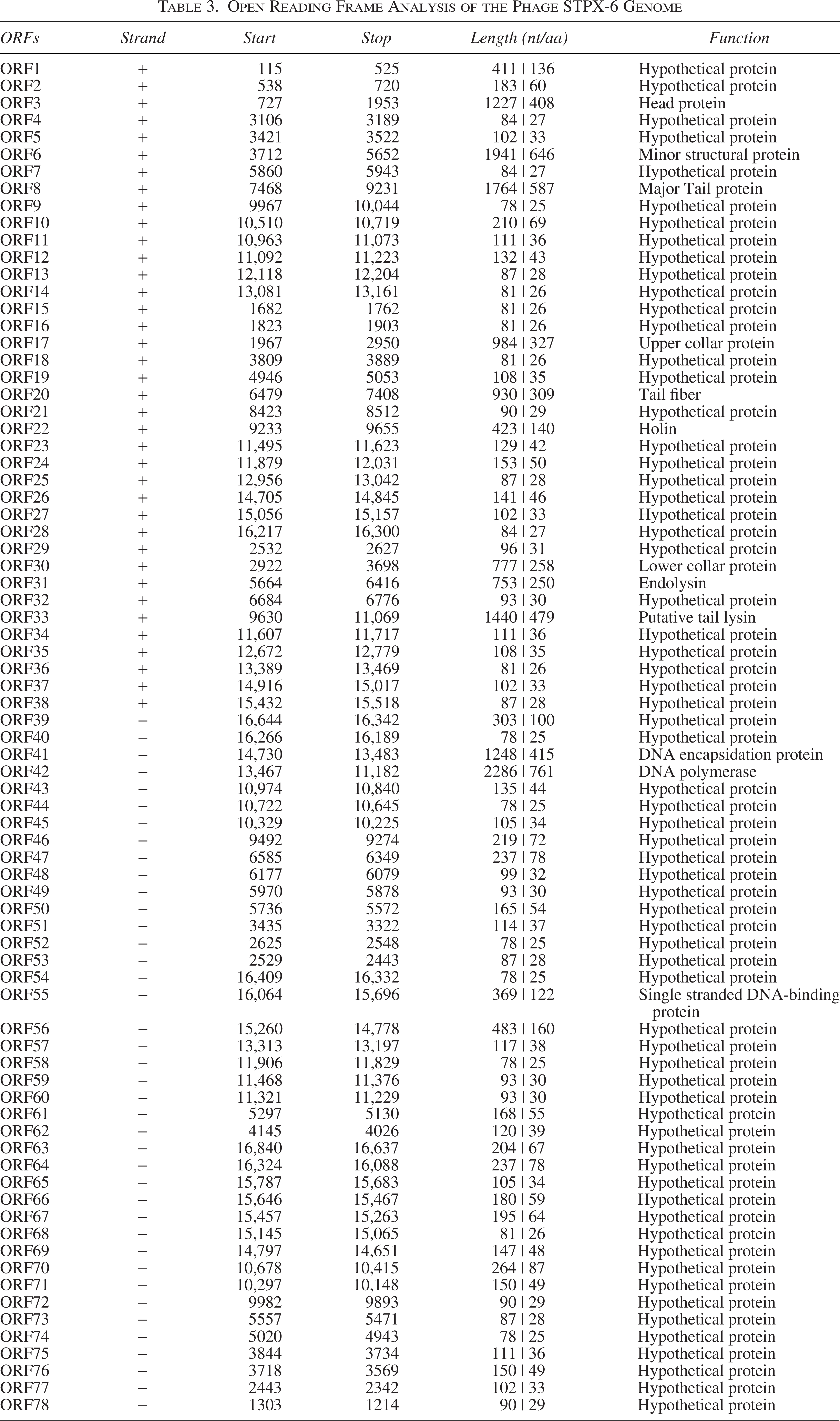
Whole-genome sequencing analysis (Fig. 5) showed that STPX-6 was encoded by double-stranded DNA, with a total genome length of 17,007 bp and a GC% content of 29.65% (GenBank accession number: PP723060). According to the search results of ORF finder, STPX-6 encoded 78 open reading frames (ORFs) larger than 78 bp, of which 38 were positive chains and 40 were negative chains (Table 3). Analysis showed that 20 ORFs had the functions of coding genes, including main structural modules, DNA replication and assembly modules, lysis modules, and other hypothetical proteins (unknown functional proteins). No genes related to antibiotic resistance and virulence factors of bacteria were found.
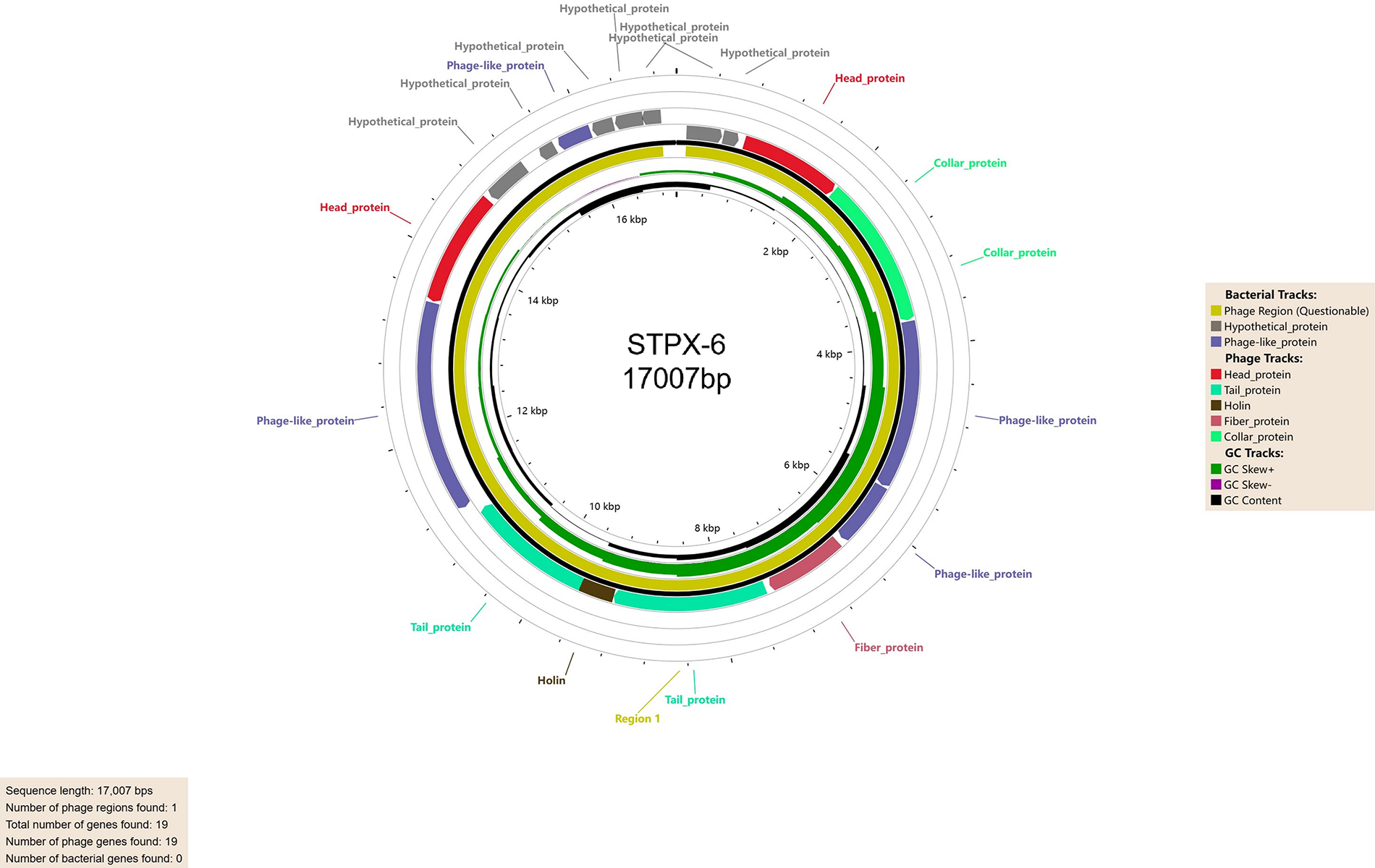
Genome map of STPX-6.
Open Reading Frame Analysis of the Phage STPX-6 Genome
Combined antibacterial effect of phage STPX-6 and three antibiotics
An increasing number of studies have shown that the combination of phages and antibiotics is more effective in controlling pathogenic bacteria than either alone. This could better control the existence of the respective resistant bacteria and produce a phage–antibiotic synergy, achieving a better antibacterial effect (Clara and Michael, 2016). Next, we conducted a bacteriostatic experiment of STPX-6 combined with enrofloxacin, doxycycline, and ampicillin, which were commonly used in animal clinical for S. aureus. First, the MICs of enrofloxacin, doxycycline, and ampicillin against host bacteria were determined, which were 8 µg/mL, 8 µg/mL, and 32 µg/mL, respectively. According to the CLSI standard, the host bacteria was resistant, intermediate, and resistant to the above three antibiotics, respectively. Then, the effects of three antibiotics on the titer of STPX-6 were studied. Compared with the control group, the titer of STPX-6 after interacting with antibiotic for 16 h at the concentration of MIC, 1/2 MIC, 1/4 MIC, 1/8 MIC, and 1/16 MIC, and there was no significant difference (p > 0.05). Therefore, these three antibiotics had no effect on the titer of STPX-6.
Combined antibacterial effect of phage STPX-6 and enrofloxacin
In order to further explore the bactericidal effect of the combination of enrofloxacin and phage STPX-6, a phage–antibiotic synergistic experiment was carried out, and the results were shown in Figure 6A. In the blank group, the bacteria grew normally from 0 to 20 h, and the final concentration reached 2.67 × 10⁸ CFU/mL. When enrofloxacin with different concentrations (1/2 MIC, 1/4 MIC, 1/8 MIC, and 1/16 MIC) was used alone, the bacterial concentration did not decrease significantly. At the same time, the bacteriostatic effect of phage group alone was the best within 4 h, and it gradually decreased from 4 h to 20 h, and the bacterial concentration reached 1.17 × 10⁷ CFU/mL at 20 h. Interestingly, the combined application group showed that different concentrations of enrofloxacin and phage STPX-6 could effectively kill all bacteria at 4–12 h. It is worth noting that the combination of phage STPX-6 and enrofloxacin at 1/8 MIC and 1/16 MIC had significant bacteriostatic effect at 4–12 h (p < 0.001). After 12 h, the bacteriostatic effect decreased, and the bacterial concentration was 2.13–2.17 log10 CFU/mL lower than that of the blank group. Last but not least, the combination of MIC, 1/2 MIC, and 1/4 MIC concentration of enrofloxacin and phage STPX-6 had a strong synergistic effect, and there was no bacterial growth within 0–20 h.
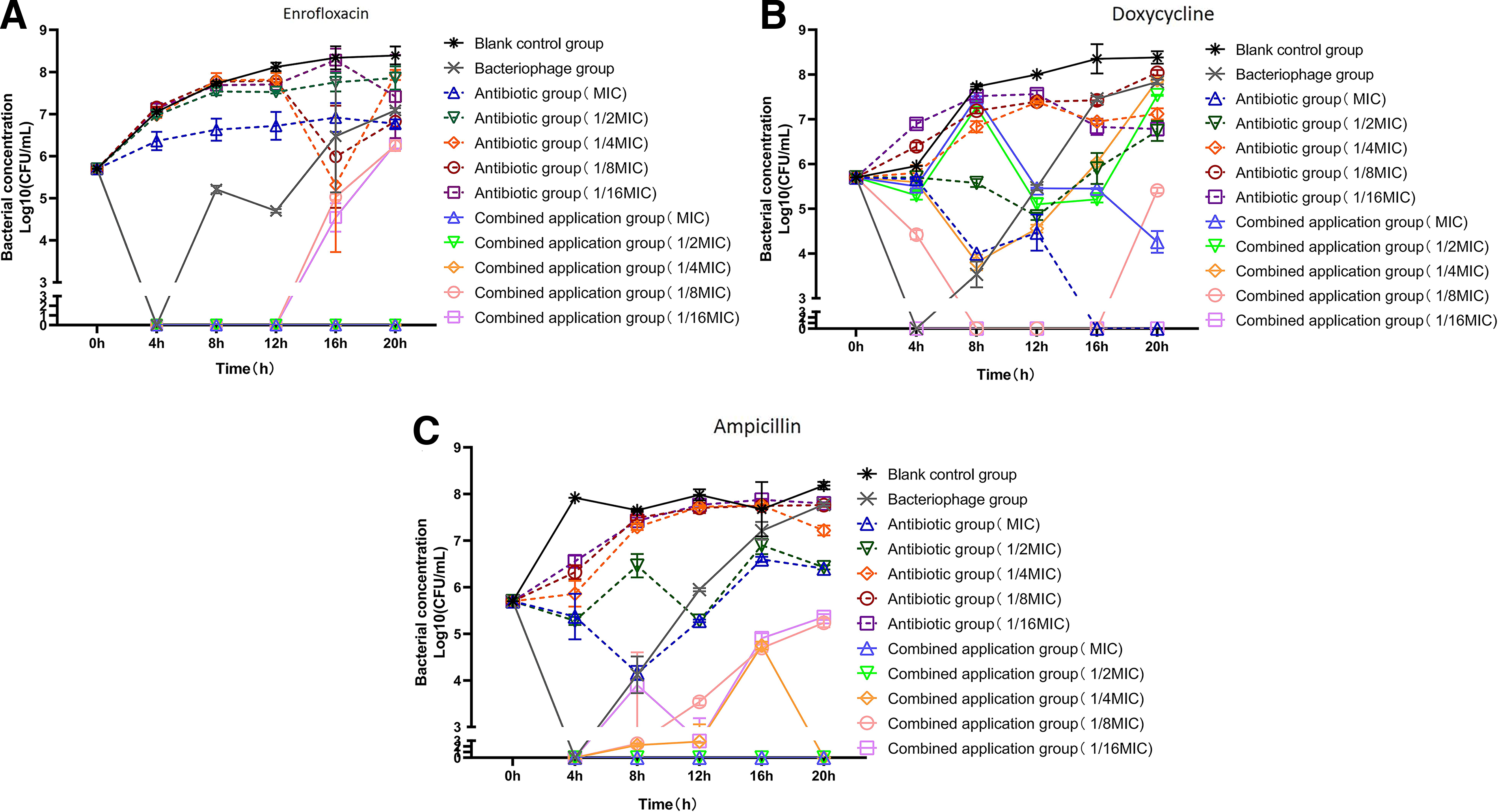
Bactericidal results of combination of STPX-6 and three antibiotics.
Combined antibacterial effect of phage STPX-6 and doxycycline
It is well known that doxycycline belongs to tetracycline antibiotics, which have a broad antibacterial spectrum and good clinical effect. In this study, the combined bactericidal effect of doxycycline and phage STPX-6 was further explored, and its synergistic effect was shown in Figure 6B. As can be seen from the figure, bacteria in the blank group grew normally with 0–20 h, and the final concentration reached 2.5 × 10⁸ CFU/mL. When different concentrations of doxycycline (1/2 MIC, 1/4 MIC, 1/8 MIC, and 1/16 MIC) were used alone, the bacterial concentration did not decrease. At the same time, the bacteriostasis effect of phage group was the best within 4 h, and it gradually decreased from 4 h to 20 h, the bacterial concentration reaching 6.87 × 10⁷ CFU/mL at 20 h. The combined application group showed that the concentration of 1/16 MIC doxycycline and phage STPX-6 maintained a good synergistic bactericidal effect within 4–20 h (p < 0.001), and no bacterial growth was observed. In addition, the concentration of 1/8 MIC doxycycline also had a good synergistic bactericidal effect with phage STPX-6 within 8–16 h (p < 0.001), and the bacterial concentration at 20 h was 2.99 log10 CFU/mL lower than that of blank control group, showing a good synergistic bactericidal effect (p < 0.001). However, there was no synergistic relationship between doxycycline and bacteriophage STPX-6 at higher concentrations (MIC, 1/2 MIC, and 1/4 MIC), which may be due to the antagonism between doxycycline and STPX-6.
Combined antibacterial effect of phage STPX-6 and ampicillin
Ampicillin, a beta-lactam antibiotic, is used to treat a variety of bacterial infections. As shown in Figure 6C, the synergistic effect of ampicillin and phage STPX-6 was studied. In the blank control group, the bacteria grew normally from 0 h to 20 h, and the final concentration reached 1.52 × 10⁸ CFU/mL. As shown in the figure, when different concentrations of ampicillin (1/4 MIC, 1/8 MIC, and 1/16 MIC) were used alone, bacterial concentration did not decrease significantly. According to the data of phage group, the bacteriostasis effect was the best within 4 h and gradually decreased within 4–20 h. However, it was worth noting that the MIC and 1/2 MIC concentration of ampicillin in the combined application group had a significant synergistic bactericidal effect with the phage combination (p < 0.001), and no bacterial growth was observed in all periods. In addition, a synergistic bactericidal effect was also observed after 1/4 MIC ampicillin interacted with phage STPX-6 for 20 h (p < 0.001). After 20 h of treatment, compared with the blank group, the bacterial concentration in 1/8 MIC and 1/16 MIC phage groups finally decreased by 2.94 log10 CFU/mL and 2.81 log10 CFU/mL, respectively.
In summary, when phage STPX-6 was 5 × 10⁵ PFU/mL and the minimum concentrations of enrofloxacin, doxycycline and ampicillin could be reduced to 1/4 MIC, 1/16 MIC, and 1/2 MIC, respectively, and the phage–antibiotic combination group had an obvious combined bactericidal effect.
Discussion
S. aureus is the third major pathogen causing bacterial food-borne diseases (Di Pinto et al., 2004). The World Health Organization (WHO) listed it as a high-priority pathogen (Subramanya et al., 2021). As we all know, with the widespread use of antibiotics worldwide, the antibiotic resistance of S. aureus has become increasingly serious in recent years, especially the multidrug-resistant strains typical of MRSA have been increasingly reported. According to the Centers for Disease Control and Prevention (CDC), approximately 241,000 people in the United States were sickened each year by consumption of animal-derived foods contaminated with S. aureus (Zeaki et al., 2019), among which, about 80,000 cases of MRSA occurred every year, resulting in about 11,000 deaths (Kochanek et al., 2016). In recent years, with the rise and application of the concept of “One Health,” many studies have found that human infection with S. aureus is more and more closely related to animals (Hanning et al., 2012; Haag et al., 2019). Therefore, MRSA, in animal-derived foods, would not only bring huge economic losses to animal husbandry due to difficult treatment but also be transmitted to people through the food chain, which seriously threatens human health. At present, the research and development of anti-drug products has become an important breakthrough to solve the serious resistance of MRSA. Recent studies have shown that the value of phage therapy as a potential adjuvant to traditional antibiotics has been re-recognized (Ferry et al., 2020; Jault et al., 2019). It has shown good application effects (Adhya et al., 2014; Cai et al., 2019; Wei et al., 2020; Wernicki et al., 2017) in human clinics, disinfection of livestock and poultry breeding environments, prevention and treatment of bacterial infection, and so on, and it has gradually become the focus of attention in recent years. Poultry, as the source of common animal-derived food, is an important host of S. aureus. In this study, a virulent phage was isolated from feces samples of poultry farms in Shandong Province, China, and its lysis effect on S. aureus isolated from different poultry was evaluated, so as to control the spread of food-borne MRSA from the breeding process as the source. Through TEM observation, it was found that STPX-6 belonged to Caudovirales, Podoviridae, which had a broad lytic spectrum and high efficiency for the host MRSA strain. Importantly, STPX-6 had a certain ability to lyse S. aureus from different poultry sources, and lysed 79.6% (133/167) and 81.48% (44/54) of S. aureus and S. aureus from laying hens, respectively. In contrast, the phage isolated by Wang Yifan et al. (Wang et al., 2022) could only lyse the host bacteria, but it had no ability to lyse other experimental strains of S. aureus, and its lytic spectrum was narrow.
In the natural environment, it is well known that the ability of phage to infect host bacteria depends on its tolerance to environmental pressure. Therefore, good tolerance to environmental pressure is a prerequisite for phages to be used as new biological antibacterial agents. In this study, the biological characteristics and genome-wide sequencing results showed that for the host MRSA, phage STPX-6 had the characteristics of short latent period, high burst amount, strong tolerance to high temperature, strong acid, and strong alkaline environment, and maintained certain activity under extreme environment, indicating its potential application value as a candidate for phage preparation. Compared with the research results of Cai Tianshu et al. (Cai et al., 2013), phage STPX-6 showed better thermal stability. For example, some STPX-6 were still alive under extreme conditions of 90°C. However, when the temperature is higher than 70°C, phage activity was unstable. Carey-Smith GV (Carey-Smith et al., 2006) concluded that most phages could maintain high activity at pH 5–9, whereas phage STPX-6 could still maintain partial activity at pH 2 and 14, which indicated that phage STPX-6 was still useful in extreme pH environments. In this study, the burst amount of phage STPX-6 was slightly lower than that of S. aureus phage (about 80 PFU/cell) isolated by Fan Jindai et al. (Fan et al., 2015), but it was higher than that of S. aureus phage found by Dang Ruiying (Dang et al., 2022), Cai Tianshu (Cai et al., 2013), Jéssica Duarte da Silva (Jéssica et al., 2023) and Peisong Zhao et al. (Zhao et al., 2024). In addition, the latent period of STPX-6 was only 10 min, which was much shorter than that of other S. aureus phages studied by Jéssica Duarte da Silva (Jéssica et al., 2023) and Peisong Zhao (Zhao et al., 2024). Therefore, these biological characteristics indicated that for the host S. aureus, phage STPX-6 had the characteristics of short latent period, high burst amount, and easy mass preparation, which had great advantages and potential for the prevention and control of MRSA.
Phage is a virus that infects bacteria in a special host. Because of its high affinity and rapid proliferation, it is an important anti-infection application in the initial stage (Luo et al., 2018; Macneal et al., 1934; Zhang et al., 2017). It is worth noting that a large number of studies have proved that bacteria could also develop resistance to phage in the process of using it to treat bacterial infections (Liu et al., 2021; Luo et al., 2022). Therefore, the combination of bacteriophage and antibiotics can better control the respective resistant bacteria and produce a phage–antibiotic synergistic effect, thus better reducing the number of bacteria (Clara and Michael, 2016; Ma et al., 2017; Rahman et al., 2011). The earliest report of this kind of research in China could be traced back to the 1950s. Peng Renling (Peng, 1959) found that the combined application of chloramphenicol and phage had a good synergistic effect on typhoid bacillus. Mathias Jansen et al. (Mathias et al., 2018) found that KARL-1, a new T4-like phage, had a synergistic antibacterial effect on multidrug resistant Acinetobacter baumannii when used in combination with various antibiotics. Phage YC#06 isolated and identified by Luo Jun (Luo et al., 2022) against highly multidrug-resistant Acinetobacter baumannii had a synergistic effect with antibiotic mixtures such as chloramphenicol, imipenem, and cefotaxime. In the early stage of this study, the combined application of phage and antibacterial drugs was explored. A variety of antibiotics commonly used in veterinary clinics and with serious drug resistance were selected for relevant experiments. The results showed that only enrofloxacin, doxycycline, and ampicillin had different degrees of synergy with bacteriophage STPX-6 and could reduce the MIC of antibacterial drugs. In this study, when the concentration of phage STPX-6 was 5 × 10⁵ PFU/mL, the combined treatment group had obvious combined antibacterial effect, whereas the concentrations of enrofloxacin, doxycycline, and ampicillin could be reduced to 1/4 MIC, 1/16 MIC, and 1/2 MIC, respectively. It was still necessary to continue to explore the effect of phage–antibiotic synergistic inhibition of S. aureus in vivo in different animals, and we continued to monitor whether phage STPX-6 would produce new drug resistance during the clinical application of animals. The study revealed that the combined application of bacteriophage STPX-6 and antibiotics not only provided support for the research and development of antidrug products for the prevention and control of MRSA but also reduced the use of antibiotics and thus reduced the production of drug-resistant strains, which had important research value and clinical production guidance significance.
In conclusion, the effect of a single antimicrobial agent on the eliminating bacterial infection is extremely limited, and its excessive use will lead to the increasing antibiotic resistance, as well as phage therapy. Therefore, the combined application of phage and antibiotic has become a trend, which can not only reduce the use of antibiotics but also inhibit the emergence of self-resistant bacteria. This provides a feasible scheme for reducing the use of antibiotics in breeding, guiding clinical drug use in livestock and poultry breeding and eradicating new multidrug-resistant strains.
Authors’ Contributions
L.W.: Conceptualization, investigation, methodology, writing—original draft. Z.X.: Conceptualization, methodology, data curation, writing—original draft. J.W.: Conceptualization, validation, formal analysis. N.L.: Methodology, data curation, investigation. W.J.: Supervision, writing—review and editing. Y.L.: Data curation, software, visualization. F.H.: Methodology, data curation, validation. H.L.: Resources, supervision, J.L.: Supervision, resources, writing—review and editing. Z.Q.: Conceptualization, funding acquisition, project administration, resources, supervision, writing—review and editing. J.W.: Funding acquisition, project administration, supervision, Resources.
Footnotes
Funding Information
This study was funded by the National Key Research and Development Program of China (Grant no: 2022YFC2303900).
Disclosure Statement
No Interests to disclose.