




Abstract
Objective:
Wordbot, a chatbot designed for gamified education, transforms the process of memorizing complex medical terminology into an engaging and enjoyable activity for medical students. Taking inspiration from the “guessing words” game, Wordbot aims to improve medical students' learning outcomes by making the vocabulary memorization process more memorable.
Materials and Methods:
Wordbot, which can be implemented on the LINE platform, was created for this research, specifically to improve medical terminology learning. Wordbot incorporated mobile devices and personal computer-compatible flashcard games with features such as user ranking and personalization to enhance motivation and optimize learning outcomes. In the experimental research setting, half of a total of 48 nursing students were randomly assigned to use Wordbot for 4 months, and the other half were assigned to a control group relying on self-study without the help of Wordbot. Both groups received pretest and post-test to assess their respective learning of medical terminology. In this study, a statistical t-test was used to analyze the results between the two groups. In addition, user usability testing was conducted to evaluate the usability of Wordbot and gather feedback on user experience.
Results:
The results of this study have demonstrated that Wordbot is effective in facilitating students learning of medical terminology. Students experienced a significant improvement in their knowledge of medical terminology. An average user usability test score of 83.25 indicated that users' satisfaction with Wordbot is high.
Conclusion:
Incorporating gamification and personalization elements in Wordbot can significantly improve the overall enjoyment of the learning process. By participating in diverse interactive activities, users can effectively enhance their proficiency in spelling, recognition, and speaking. Wordbot utilizes sophisticated algorithms to generate customized questions based on identified mistakes, which facilitate error identification and correction. The robust findings of this study overwhelmingly support Wordbot's role as a convenient and easily accessible tool for learning medical terminology. The study was conducted according to the guidelines of the Declaration of Helsinki and approved by the Institutional Review Board of Chang Gung Medical Foundation (Protocol code: 202201586B0, date of approval: 8 November 2022). We obtained informed consent from all of our study participants regarding their willingness to participate in this study.
Introduction
Medical English terminology is different from general English vocabulary and is rarely encountered in daily life but is still important for students in the medical field. In Taiwan's medical services, medical terminology is commonly used in writing admission records, medication records, and physician prescriptions and is the common language for communication among medical practitioners. 1 Thus, professional knowledge of medical terminology is essential for students in the medical field, and the correct understanding and use of medical terminology are important abilities for efficiently and safely fulfilling responsibilities.
Despite the importance of medical terminology for medical students, learning and memorizing medical terminology remain challenging. Unlike most nursing courses that emphasize analyzing, synthesizing, and applying information, medical terminology largely relies on rote memorization, which is usually a dull task. 2 The author observed that students in medical terminology classes often exhibit behaviors such as occasional yawning, a blank stare, or low head and playing with cell phones, indicating a low motivation to learn. Game-based teaching can help students maintain an interest in learning. 3
Theories or studies about games mostly come from anthropological and psychological perspectives. Philosopher Herbert Spencer defined games as “purposeless exertion with full energy.” His basic assumption is that both humans and animals are motivated by basic needs and engage in serious work, while games are a tool for releasing surplus energy after basic needs are satisfied. 4 Piaget believed that games were an individual's assimilation of environmental stimuli, making reality fit their original cognitive framework. 5 The concept of gamification was conceptualized around 2010 6 and has gained increasing attention from scholars and practitioners.
Werbach 7 viewed gamification as the process of making activities more game-like, with the key elements and experiences of games being essential. Deterding et al. 8 defined gamification as the “application of game elements in non-game contexts.” Landers et al. suggested that these definitions have variations but maintain the core idea of making nongame tasks more engaging by using game-like elements. 9 To summarize, gamification can be defined as adding game elements to nongame things to make them fun and entertaining.
Game-based learning advocates improving the teaching and learning environment with fun unit activities. The authors believed that the most important factor affecting students' cognitive processes is students continuously developing and growing through actual actions and feelings, which leads to forming a conceptual structure and improving problem-solving abilities. 10 Gamification in learning prioritizes “interactivity” rather than “motivation” and defines gamification in the learning environment as “simple gameplay to support effective interaction between learners and teachers.” Gamifying teaching can enhance traditional methods by adding interactivity and appeal to improve students' attention. Traditional one-way teaching often leads to low learning motivation, and gamified teaching is the process of modifying training content and methods using game elements. 11
The integration of “fun” into the learning process enhances the overall learning experience. 12 This helps traditional classroom management and assessment methods by attracting students' attention through goal-oriented and ranked game-like activities. Results also show improved teacher management and guidance in the classroom and increased student participation and willingness to learn. 13 Game-based learning is not playing games in the classroom but incorporating game elements into existing teaching processes, as a teaching design process rather than a teaching method. The user learns from the teaching content, not from gamification. 11
A chatbot is a computer program designed as a conversational agent that can act as a software agent for a user or other software, enter specific commands to collect various data, respond by simulating human thinking through dialogue, text, voice, or actions, and implement computer programs that interact like real human conversations. 14 Seidlein et al. 15 proposed a gamified e-learning platform for learning medical terminology, using web-based interactive medical games. Students learned medical terminology with good evaluations from anonymous questionnaires. Raines 16 used a word game to teach nursing students medical terminology, and the results showed that it can be used to help students or new nurses learn terminology and concepts and as a mechanism to reinforce and assess experienced nurses.
With the rapid development of mobile phones and the internet, the field of mobile learning has experienced explosive growth, meaning that the trend of digital learning is shifting toward mobile platforms and chatbots are also emerging. In the field of education, chatbots are considered one of the important innovations in digital learning and have been proven to be the most creative solution between technology and education. 17 Simple learning platforms do not provide students with enough motivation to learn; therefore, combining gamification with chatbot-based learning can greatly enhance learning motivation, 18 allowing students to learn anytime and anywhere while increasing their motivation to learn.
Eliza was the first chatbot in history and was launched by Joseph Weizenbaum at the MIT Artificial Intelligence Laboratory in 1966. 19 Today, chatbots have evolved from simple dialogue answering to incorporating derivative technologies in artificial intelligence. Chatbots are gradually developing toward higher levels and, in addition to basic response functions, they can also learn user semantics and, through the user's use of context and conversational emotion logic, provide more accurate responses. 20
Today, most chatbots incorporate Artificial Intelligence and Natural Language Processing technologies, and with the widespread use of instant messaging software, almost all communication software service providers, businesses, and media build chatbot message integration platforms to enhance communication and service. 21 Chatbots can assist in learning due to their convenience, ability to respond in real time, and lack of time and environment limitations. 22 In education, they can be used as a learning aid by incorporating course content into the chatbot, allowing students not only to passively absorb knowledge in class but also to participate in more diverse teaching activities through the chatbot's integration with mobile devices.23,24
Game-based learning has been proven to improve and supplement traditional learning methods, making English learning more enjoyable for students. Integrating chatbots into game-based learning is considered a new mobile learning approach. 25 This study aims to construct students' LINE-based interactive chatbot with game-based scoring and ranking elements to assist in learning medical terminology in a fun way, improve their motivation to learn, and enhance their learning outcomes.
In recent years, several research articles have been devoted to game-based vocabulary learning. For example, Zou et al. 26 and Mohanty et al. 27 have conducted research in this area. Kusmayanti and Hendryanti introduced a vocabulary learning software called Square Talks®, which was specifically developed to assist English as a Foreign language beginners in Indonesia with their English vocabulary. 28 Also, Wu and Huang proposed a mobile game-based English vocabulary practice system that utilized portfolio analysis. 29 In addition, Tamtama et al. conducted a study using gamification to design an English vocabulary mobile app, with a particular focus on an Indonesian case study for kindergarten children. 30 To date, several systematic review articles have been published, including Lin and Lin, 31 Vnucko and Klimova, 32 Dehghanzadeh et al., 33 and Elaish et al., 34 among others.
However, none of these articles specifically mentioned personalized games. Instead, this study focused on personalized games, with vocabulary cards that would be adjusted based on each individual's responses.
The research questions examined in this study were as follows:
Does the word-guessing game provided by Wordbot improve students' learning of medical terminology? How useful is Wordbot?
Materials and Methods
Study design
Wordbot, an online chatbot, was designed and developed in this study to facilitate the learning of medical terminology. It features engaging flashcard games that can be accessed conveniently on both mobile devices and personal computers. The subsequent section will introduce Wordbot. The study adopted an experimental method. Our experiment design was divided into an experimental group and a control group. Both groups of students participated in two medical terminologies pretest and post-test. Students in the experimental group received Wordbot as a self-study tool and were required to use it for a 4-month practice experiment for at least 1 h/week. The control group students did not use any experimental operations. The final experiment results were to compare the differences between the two groups.
Participants
The participants were recruited for this 4-month study, with 24 anonymous nursing students assigned to the experimental group and 24 anonymous nursing students assigned to the control group. The experimental group was given access to Wordbot for practicing medical terminology at any time, whereas the control group did not have access to Wordbot. Four months later, all 48 participants took a post-test on the online medical terminology examination.
Study instruments
Wordbot is an online chatbot that can run on the popular instant messaging platform, LINE. Participants in this study could interact with the Wordbot by adding it as a friend on LINE. They could play a flashcard game to learn new vocabulary by clicking on the menu and choose to practice medical terminology with the Wordbot on their mobile phones, iPads, laptops, and personal computers as the games Wordbot offered including user's rankings and scores to improve learning outcomes and motivation.
The personalized Wordbot
This study will design and use a chatbot system. Users can access the system through the LINE app on their mobile phones and devices, which run either iOS or Android. On the server side, the system requires Ubuntu, Python version 3.7, Ngrok, PostgreSQL, line-bot-sdk, Flask, and a LINE Developers account. The system uses the LINE SDK for communication with the LINE platform and the Flask package as a back-end server to receive user-executed status and answer processes. The PostgreSQL database is used for question access and recording user information. Figure 1 shows the system connection diagram.

System connection diagram. Color images are available online.
The main screen of Wordbot is shown in Figure 2, when a user enters the Wordbot main screen, the system will determine whether it is the first-time logging in based on the lineid. If it is the first time, it will ask for the user's nickname and write the lineid and nickname to the database and record the usage status. If it is a registered user, it will continue from the previous operation status.

Main screen of Wordbot. Color images are available online.
The database design
Wordbot is a gamified medical terminology learning system, where all medical terminologies are stored in a PostgreSQL relational database, which is open-source software. Figure 3 shows the database relationship diagram. The “account” table stores the basic information of users and the current status of their program, with the “answer” field recording the user's answering status and the “qid” field recording the time the user started practicing. The “questions” table stores all the questions used in the system, along with the corresponding vocabulary images, to be retrieved by the system and compared by the user. The “qid” field records the question ID, the “imgurl” field records the image URL, the “en_answer” field records the English answer to the question, and the “ch_answer” field records the Chinese answer to the question. The “record” table records the user's answers, keeping track of the wrong and correct answers in each attempt. The “correctlog” field records the correct questions, and the “errorlog” field records the incorrect ones.

The diagram of the relationship. Color images are available online.
Play Wordbot
As shown in Figure 4, when the user logs into the system, they click the “Game mode” button on the menu, and a pop-up window appears for the user to choose from multiple modes (Multiple choice, Spelling patterns, and Speech comparison). After selecting a mode, the user clicks the “Play Game” button to start the game. The system then generates a picture and waits for the user to answer the meaning of the picture. The user can click the “Answer button” to answer the question.
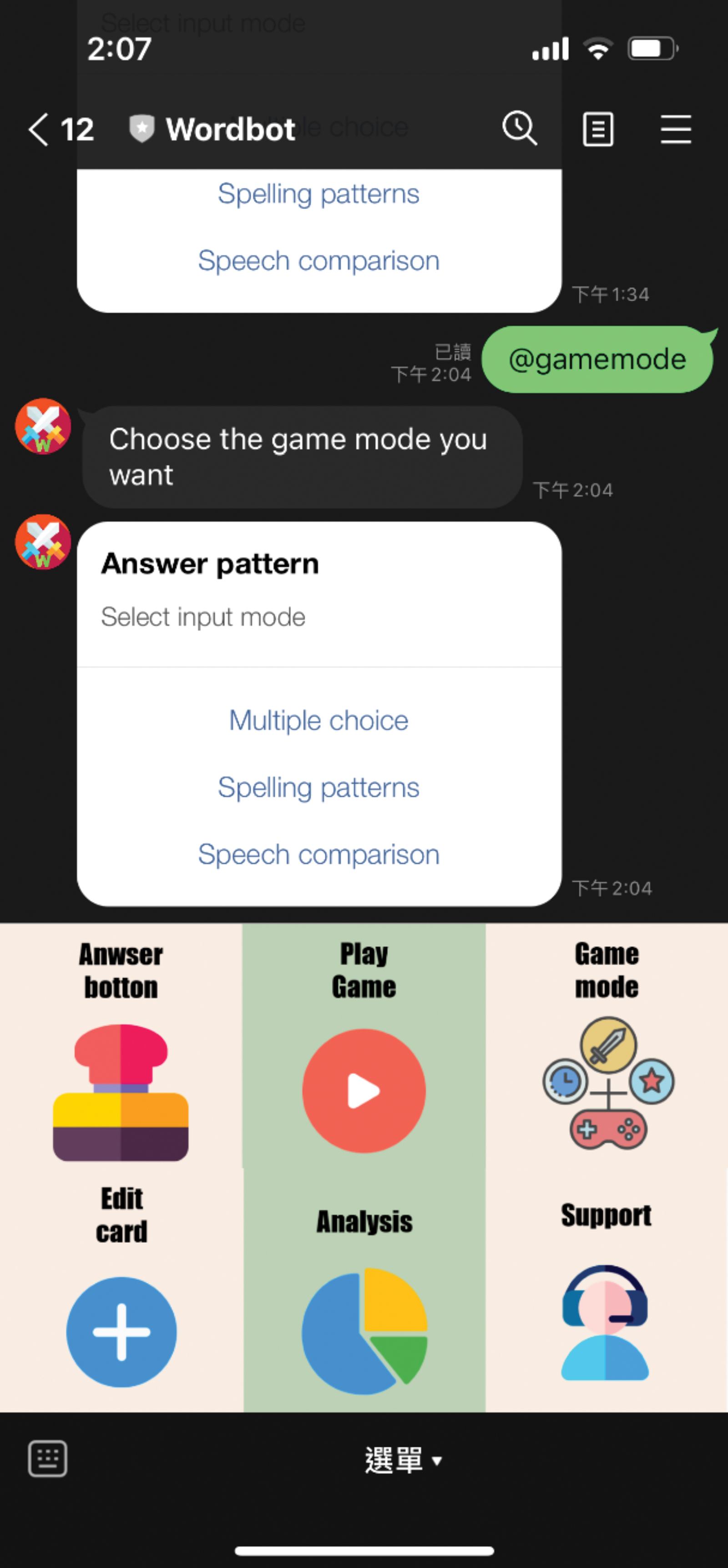
Game interface. Color images are available online.
Edit card
As shown in Figure 4, by clicking the “Edit card” button in the function menu, the system will pop-up the card editing window, as shown in Figure 5. You can browse the cards that have been created and click “edit” on the right side of the card to enter the editing and modification of the card.
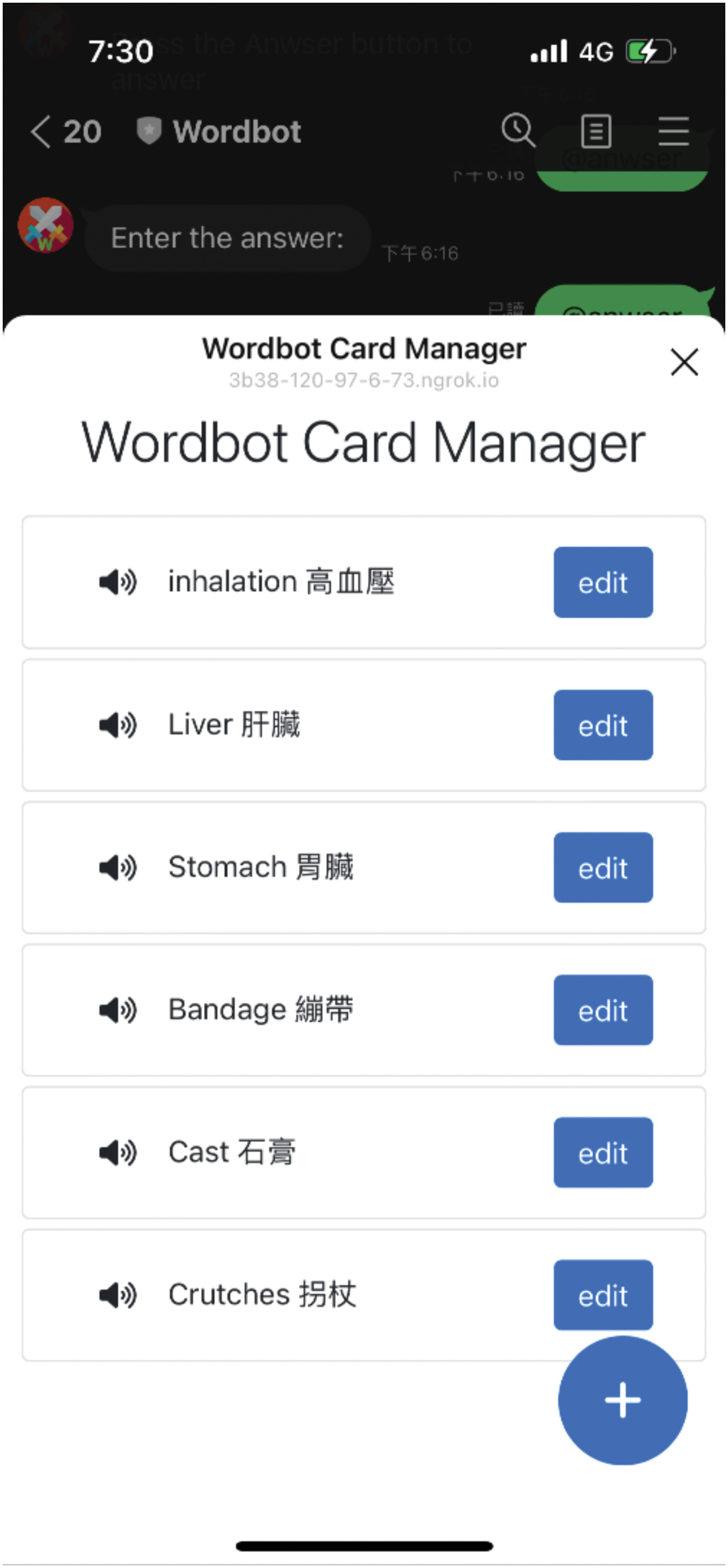
Card management screen. Color images are available online.
The user can click the “+” sign at the bottom right corner, shown in Figure 5, to add a new card and create a personalized deck. The system will then switch to the screen shown in Figure 6, where the user can upload a picture and edit it. If the user clicks the “add card” button, the system back end will automatically upload the picture to the Imgur network album website, write the picture URL into the database, and, if the user selects the “auto” button, the system back end will use Google speech conversion and download the audio file, as shown in Figure 6.
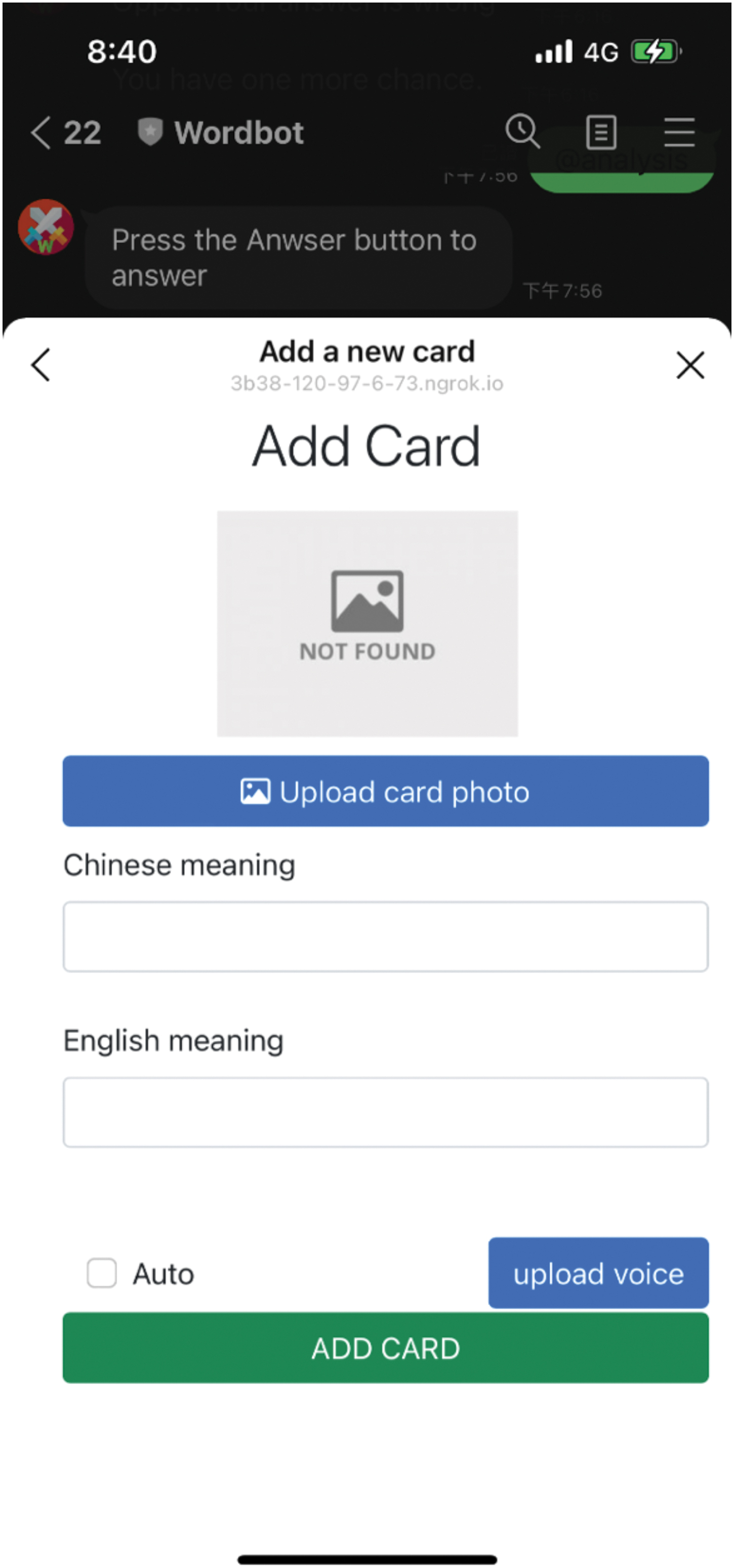
Added card screen. Color images are available online.
Analysis: click the button in the functionality menu, and a personal record screen will pop-up, displaying the play records, best answer records, and frequently wrong questions, as shown in Figure 7.
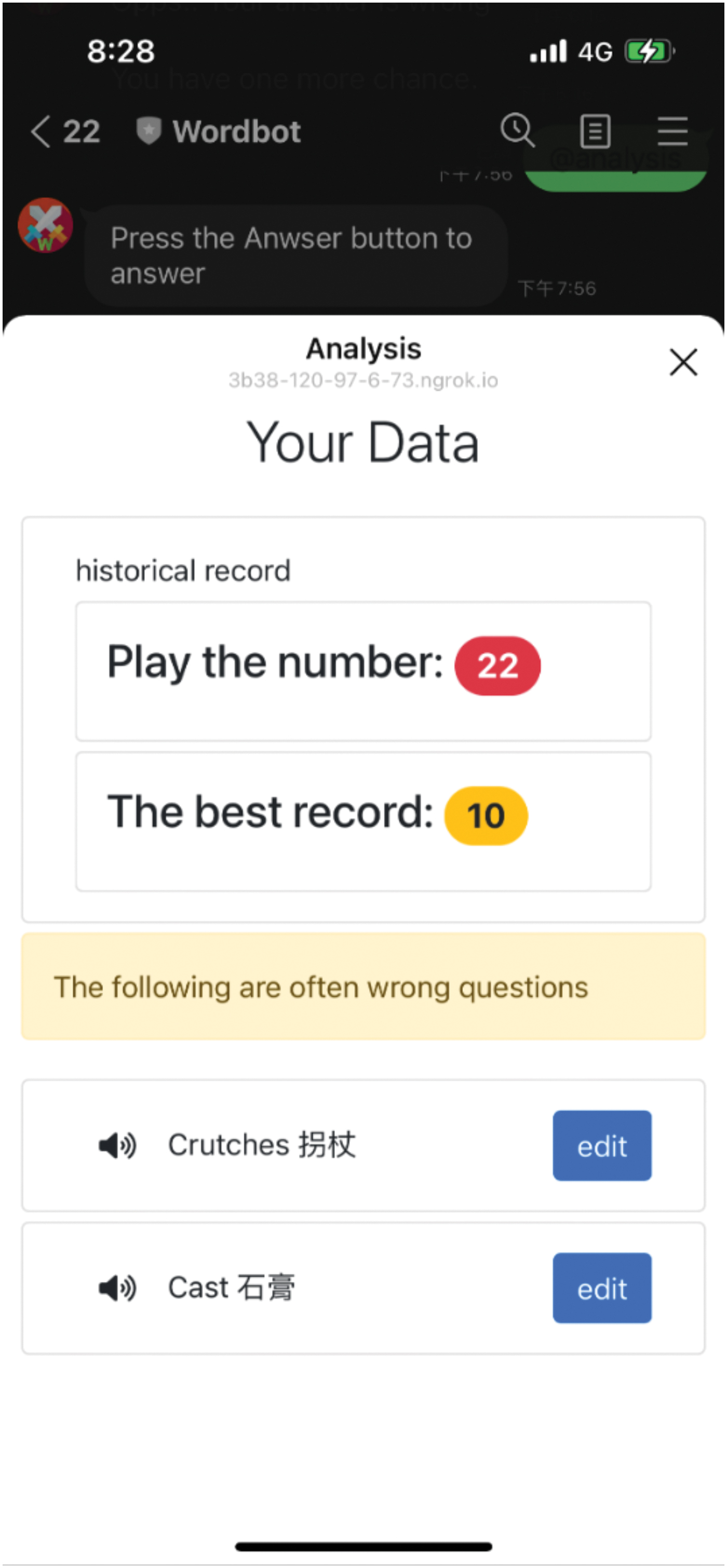
Answer record screen. Color images are available online.
Support: displays detailed information and information of each function.
Personalized questions
When entering the game, the system will divide the user's answer records into incorrect, correct, and new questions, and each will be stored in three databases. When a question is asked, the system will randomly select from the three databases with a probability of 60%, 30%, and 10%. For example, when RAND() < 0.60, a question from the incorrect database will be randomly selected. When 0.6 ≤ RAND() < 0.90, a question from the correct database will be randomly selected, and when RAND() ≥ 0.90, a question from the new database will be randomly selected. In other words, when the user answers the questions again, there is a high probability of playing the previously incorrect questions, to improve the memory of incorrect questions. When the user correctly answers a question three times, it will be deleted from the incorrect question database and added to the correct question database, as shown in Figure 8.
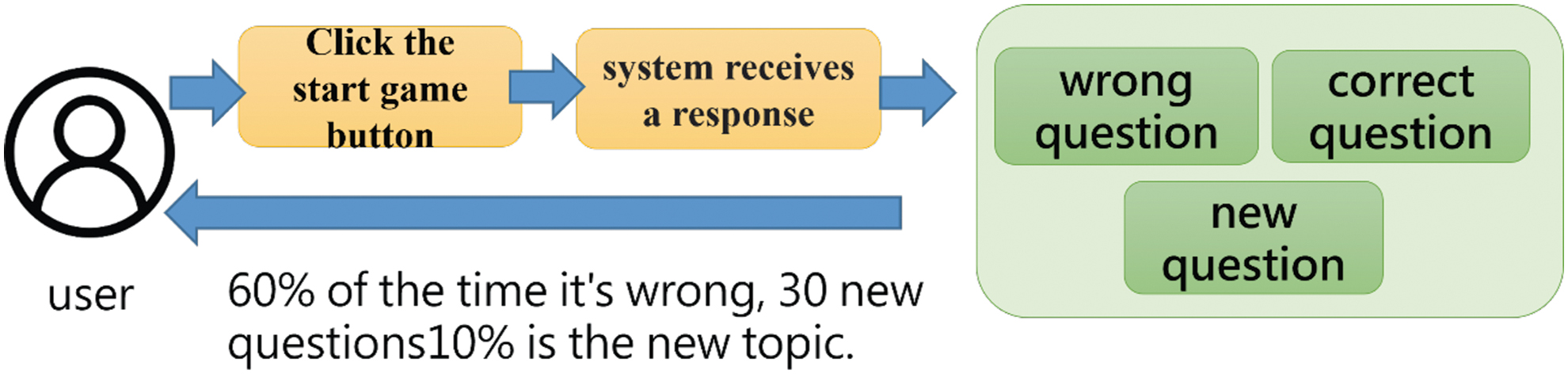
Question process. Color images are available online.
Institutional review board statement
The study was conducted according to the guidelines of the Declaration of Helsinki and approved by the institutional review board of Chang Gung Medical Foundation (Protocol code: 202201586B0, date of approval: November 8, 2022). On top of that, we obtained informed consent from all our study participants regarding their willingness to participate in this study.
Informed consent statement
Informed consent was obtained from all subjects involved in the study.
Results
As previously noted, 48 students failed the medical terminology pretest, with 24 in the experimental group and 24 in the control group. The experimental group utilized Wordbot to study medical terminology for a minimum of 2 h/week, whereas the control group employed an independent learning method without the aid of Wordbot. The results showed significant progress among students in the experimental group, compared with little to no progress among those in the control group. The statistical analysis is presented below.
Statistical analysis of pre-experiment
In this study, a t-test was conducted to compare the scores between the control group (24 individuals, average score of 54.14) and the experimental group (24 individuals, average score of 53.31). Table 1 displays these results. The t-value was 1.1485, and the P-value was 0.2557, which did not reach the significance level of α = 0.05. Therefore, the null hypothesis was not rejected, indicating that there was no statistically significant difference between the scores of the two groups.
Initial Assessment Scores of Both Groups Before the Experiment
SD, standard deviation.
Statistical analysis of post-experiment
Four months after the pretest, the 48 students were tested again on their knowledge of medical terminology. The post-test results demonstrate a notable improvement for the students in the experimental group, compared with no improvement for the control group. The average test score for the control group, composed of 24 individuals, was 61.48, whereas the experimental group, also consisting of 24 individuals, recorded an average score of 82.69, as shown in Table 2. The t-value for the test statistic was −10.1604, and the P-value was 0.0000, reaching the significance level of α = 0.05. Thus, the null hypothesis was rejected, and the alternative hypothesis was accepted.
Scores Following the Experiment for Both Broups
The analysis results suggest that the mean scores of the two groups differ significantly, with the experimental group scoring significantly higher than the control group.
User usability test
This study uses the System Usability Scale (SUS) questionnaire to evaluate the usability of Wordbot. The SUS, created by John Brooke in 1986, has been widely used to quickly test the usability of product interfaces, desktop applications, and website interfaces. 35 The SUS questionnaire was modified to have 10 questions, with questions 1, 3, 5, 7, and 9 being positive and questions 2, 4, 6, 8, and 10 being negative, as shown in Table 3. The SUS score ranges from 0 to 100, and a score below 68 is considered poor according to Sauro. 36 The study collected data using Google Forms, with a total of 15 responses, resulting in an average score of 83.25, indicating a high level of user satisfaction with the system, as shown in Table 4.
System Usability Scale
Users' Satisfaction
Discussion
The study aimed to investigate the effectiveness of using Wordbot for medical terminology learning. Forty-eight students who failed the pretest were randomly assigned to the experimental group (using Wordbot) and the control group (using independent learning methods). After 4 months, the post-test results showed significant improvement in the experimental group, whereas the control group showed no improvement. The t-test analysis indicated a significant difference between the mean scores of the two groups, with the experimental group scoring higher.
Therefore, under the conditions of using Wordbot for at least 2 hours every week over a span of 4 months, the study supports the hypothesis that Wordbot can be an effective tool for medical terminology learning. Therefore, the study confirms that the use of Wordbot facilitates the learning of medical terminology to a certain extent, supporting research question 1.
Wordbot has a personalized question-making method (as seen in the “Personalized questions” section) that effectively assists students in learning. As noted by Guo et al., effective learning and extracurricular exercises are important. 37 The results of the pre-post experiment showed significant differences between the control and experimental groups, with the mean value of the experimental group being significantly higher than that of the control group. This result aligns with the findings of the “Gamified E-learning in Medical Terminology: the TERMINator Tool” study by Seidlein et al. 15
According to Soegoto, 38 students spend nearly 6 h/d on their smartphones, using various apps, with the most common being for social and communication purposes. Chatbots are a quick and convenient way to provide customized services, and in this age where everyone has a smartphone and can communicate through messaging software at all times.
For situations where Wordbot is not used, learners may rely on traditional learning methods such as using medical terminology dictionaries, reference books, or online searches to obtain the definitions and explanations of terms. This learning method may take more time and effort, and it can be difficult to ensure the accuracy and completeness of the information. In addition, when learners need to obtain term definitions and explanations anytime and anywhere, this method may be limited by time and location. In contrast, using Wordbot can improve the fun and convenience of learning. Wordbot can provide learners with accurate and complete term definitions and explanations anytime and anywhere and can provide personalized learning experiences through conversation with Wordbot. Therefore, compared with not using Wordbot, using Wordbot can be more effective in learning medical terminology and more convenient and efficient.
This study makes a significant contribution and distinction to the field of game-based vocabulary learning by emphasizing personalized play, and dynamically adjusting the difficulty level of vocabulary cards based on learners' answer outcomes. While previous research on learning English words through games has yielded valuable insights, rarely has there been an explicit in-depth study of the concept of personalized games. Enhance the learning experience and optimize vocabulary acquisition outcomes by incorporating personalized concepts into the game. Uniquely, this aspect of personalization introduced a novel dimension to this study, offering a unique approach to game-based vocabulary learning and opening up new opportunities for learning medical terminology.
The researchers sorted out some strengths and weaknesses of the study.
Strengths of the study
Engagement and Motivation: By incorporating gamification elements, such as the “guessing words” game, Wordbot aims to engage and motivate medical students in the process of learning complex medical terminology. Generally, gamified education can make the learning process more enjoyable and interactive, leading to increase engagement and better learning outcomes.
Personalization: Wordbot provides a chatbot interface that adapts to the needs of individual learners and offers personalized feedback and game modes. This personalization caters to different learning styles and paces, increasing the effectiveness of learning medical terminology.
Experimental Design: The study employs a randomized controlled trial design, randomly dividing participants into an experimental group using Wordbot and a control group using self-study methods. This design helps establish a cause–effect relationship between the use of Wordbot and improved learning outcomes, increasing the study's internal validity.
Pretest and Post-test: The study includes pretest and post-test assessments to measure the effectiveness of Wordbot. By comparing the scores of the experimental and control groups before and after the intervention, the study could assess Wordbot's impact on knowledge of medical terminology.
Statistical Analysis: The study utilized a t-test to analyze the difference in scores between the experimental and control groups. This statistical analysis provides a quantitative assessment of Wordbot's effectiveness in improving knowledge of medical terminology.
Weaknesses of the study
Small Sample Size: The study included a relatively small sample size of 48 nursing students, which may limit the generalizability of the findings. Larger, more diverse samples can provide stronger evidence for Wordbot's effectiveness.
Limited Duration: The study covered only a 4-month intervention period and may not have captured the long-term effects of using Wordbot for medical terminology learning. A longer follow-up evaluation will provide a fuller picture of Wordbot's impact on learning outcomes.
A modification of the SUS was made in this study, which may reduce the validity of the scale as the modified instrument has not been tested. In addition, due to the non-compulsory nature of the test, only 15 of the 24 participants answered, which may also have affected the reference value of the results. The SUS survey indicated that Wordbot was usable and also supported research question 2.
Another limitation was the lack of experimental interventions or opportunities for the control group. The students in the experimental group actively used Wordbot through at least 1 hour of hands-on experiments per week for 4 months, whereas the control group did not receive any similar interventions. This discrepancy in treatment between the two groups could be considered another limitation of this study.
To improve Wordbot's user experience, future research will focus on developing more user-friendly interfaces, such as Messenger and Facebook, and integrating the tool with a recommender system for enhanced effectiveness. In addition, game modes such as word fill-in games or connect-the-dots will be added to help users learn more easily. These developments will further enhance the learning experience and make Wordbot an even more effective tool for language learning.
Future research will also integrate Wordbot with a recommender system 25 for improved effectiveness.
Conclusion
The inclusion of gamification elements and the system's capacity to generate questions based on previously incorrect answers empower users to recognize and rectify their errors, leading to enhanced learning outcomes.
The findings of this study indicate that Wordbot is a valuable tool for professionals, students, and individuals aiming to enhance their understanding of medical terminology. Its convenience and accessibility make it a practical learning option that can be utilized at any time and from any location, further supporting the feasibility of mobile learning.
Footnotes
Author Disclosure Statement
The authors declare no conflict of interest.
Funding Information
No funding was received for this article.