




Abstract
Purpose:
Malignant pleural mesothelioma is a rare neoplasia with a poor prognosis, and the majority of patients have advanced disease at the time of presentation. Exposure to asbestos is the most important risk factor for malignant pleural mesothelioma.
Materials and Methods:
To determine the cytotoxicity of geldanamycin in mesothelioma H28 cells, the MTT assay was used. To determine changes in microRNA (miRNA) expression in geldanamycin-treated H28 cells, miRNA microarray analysis was performed. To determine the function of miR-196b-5p, we performed Gene Ontology and Kyoto Encyclopedia of Genes and Genomes pathway enrichment analyses of miR-196b-5p targets predicted by miRwalk.
Results:
Our data showed that geldanamycin treatment reduced H28 cell viability in a dose-dependent manner. MicroRNA array analyses showed that expression of hsa-miR-196b-5p was downregulated in geldanamycin-treated H28 cells. Geldanamycin regulated miRNAs with roles in processes such as aging, angiogenesis, apoptosis, cell cycle, cell differentiation, cell proliferation, DNA repair, and secretion. Survival analysis showed that decreased expression of hsa-miR-196b-5p was significantly associated with a better outcome in mesothelioma patients. Expression of miR-196b-5p was also significantly associated with the developmental stages of mesothelioma. To narrow down the target genes of miR-196b-5p, we determined the overlap between the predicted target genes of miR-196b-5p and downregulated mRNAs in mesothelioma cancer based on the Gene Expression Omnibus dataset GSE12345. PDE1A, LAMA4, and PAPPA were identified as both miR-196b-5p targets and downregulated genes in GSE12345 and were thus considered targets of miR-196b-5p. Gene-miRNA expression correlation analysis showed that PDE1A, LAMA4, and PAPPA expression was negatively correlated with miR-196b-5p expression.
Conclusions:
We suggest that geldanamycin has potential for the treatment of mesothelioma via regulating miR-196b-5p. Furthermore, miR-196b-5p may be a potential biomarker for mesothelioma.
Introduction
Asbestos, a hydrated magnesium silicate fibrous mineral, has insulating properties. However, asbestos exposure causes mesothelioma, asbestosis, and lung cancer. Mesothelioma is a highly aggressive tumor, and most patients die within 2 years of diagnosis (Carbone et al., 2012). Mesothelioma, which arises from the mesothelium, is divided into three types according to the site of origin: pleural mesothelioma, peritoneal mesothelioma, and pericardial mesothelioma. The latency period between asbestos exposure and the development of mesothelioma is 20-40 years (Bianchi and Bianchi, 2007). The number of cases of malignant mesothelioma has been increasing worldwide due to the use of asbestos (Jain and Wallen, 2021).
Malignant pleural mesothelioma is difficult to diagnose due to multiple somatic changes that occur during its long latency period, as well as its resistance to treatments [6-8]. Therefore, identifying biomarkers predicting the diagnosis and treatment response of malignant mesothelioma is important. The biomarkers mesothelin-related peptide, megakaryocyte potentiation factor, and osteopontin have been used to predict the prognosis of mesothelioma (Sun et al., 2017).
MicroRNAs (miRNAs) are 18-25 nucleotide noncoding RNAs that regulate the expression of target genes at the posttranscriptional level (Bartel, 2009). miRNAs have also been suggested as potential therapeutic targets and diagnostic markers of several diseases, including cancer and infectious diseases (Bartel, 2009), and they are readily detected in tissue and bodily fluids such as serum and plasma (Bartels and Tsongalis, 2009). Evidence suggests that miRNAs are expressed in mesothelioma cells. For example, miRNA 1 is downregulated in malignant pleural mesothelioma (Xu et al., 2013), and its overexpression in malignant pleural mesothelioma cells in vitro suppressed proliferation (Xu et al., 2013); miRNA 126 is highly expressed in nonmalignant mesothelial cells such as MET5A and H28 cells (Tomasetti et al., 2012).
In the present study, we show that geldanamycin is potentially useful as an anticancer drug for the treatment of mesothelioma via downregulation of miR-196b-5p. Furthermore, miR-196b-5p may be a useful prognostic tool for mesothelioma.
Methods
Cell culture
Mesothelioma H28 cells (American Type Culture Collection) were cultured in RPMI 1640 medium (WelGENE, Daegu, Korea) supplemented with 10% fetal bovine serum (WelGENE) and 1% penicillin/streptomycin (Invitrogen, Carlsbad, CA) at 37°C in a humidified 5% CO2 atmosphere. Geldanamycin was obtained from Sigma-Aldrich (St. Louis, MO).
Cytotoxicity assay
To determine the cytotoxicity of geldanamycin in H28 mesothelioma cells, the MTT colorimetric assay (Sigma-Aldrich) was performed. H28 cells were seeded into 96-well microplates and treated with various compounds. After incubation with the compounds, MTT working solution (5 mg/mL in phosphate-buffered saline) was added, and the plates were incubated at 37°C for 2 h. The optical density (OD) was measured at 570 nm using the Sunrise microplate reader (TECAN, Männedorf, Switzerland). Cell viability was calculated as the percentage of viable-treated cells relative to the untreated control cells as follows: cell viability (%) = [OD (treatment) − OD (blank)]/[OD (control) − OD (blank)] × 100.
miRNA array
H28 cells were treated with geldanamycin, and total RNA was collected from treated and untreated cells using QIAzol (Invitrogen). To determine miRNA expression, miRNA microarray analysis was performed as described previously (Sohn et al., 2015).
Clinical pathological characteristics of patients with malignant pleural mesothelioma expressing miR-196b-5p using the OncoMiR database
The OncoMiR database (www.oncomir.org) was used to analyze the clinical pathological characteristics of mesothelioma patients expressing miR-196b-5p.
Selection of Gene Expression Omnibus datasets
The public Gene Expression Omnibus (GEO) datasets of NCBI GSE99362 and GSE12345 were evaluated (www.ncbi.nlm.nih.gov/gds). The GSE99362 dataset included 5 normal peritoneal and 51 diffuse malignant peritoneal mesothelioma frozen tissue specimens. The GSE12345 dataset included four pleural and nine pleural mesothelioma tissue specimens. A GEO2R algorithm was performed to identify differentially expressed genes in the GSE99362 and GSE12345 dataset.
Survival analysis
The overall survival of mesothelioma patients according to miRNA and mRNA expression levels were analyzed using starBase (v2.0; http://starbase.sysu.edu.cn)
Gene-miRNA expression correlation analysis
starBase was used (v2.0; http://starbase.sysu.edu.cn) to determine the correlation between miRNA and mRNA expression in mesothelioma.
Kyoto Encyclopedia of Genes and Genomes pathway analysis
To predict miRNA196b-5p targets, the miRWalk database was used. Kyoto Encyclopedia of Genes and Genomes (KEGG) analysis of miR-196b-5p target genes was conducted using the Database for Annotation, Visualization, and Integrated Discovery (DAVID; version 6.8) software program (www.david.ncifcrf.gov) (Huang et al., 2009). The top 10 KEGG pathways based on p-values were selected.
Statistical analysis
The data are represented as the mean ± standard deviation of the mean. Student's t-test in GraphPad Prism (GraphPad Software, La Jolla, CA) was used for analyses.
Results
Differential miRNA expression in geldanamycin-treated H28 mesothelioma cells
Our data showed that geldanamycin was cytotoxic to mesothelioma H28 cells in a dose-dependent manner (Fig. 1A), but geldanamycin treatment did not induce apoptosis of these cells (data not shown). To further elucidate the effects of geldanamycin on H28 cells, we performed miRNA microarray analysis after treatment with 20 μM geldanamycin. A total of 20 miRNAs (miR204-3p, miR378a-5p, miR1296-5p, miR921, miR3935, miR4442, miR4461, miR4521,miR4668-5p, miR4721, miR2467-3p, miR5088-5p, miR6726-5p, miR6728-5p,miR6797-5p, miR6807-5p, miR6867-5p, miR6871-5p, and miR7975) were upregulated and 7 miRNAs (miR 204-5p, miR196b-5p, miR3622b-5p, mmiR4720-5p, miR6782-5p, miR4419a, and miR4502) downregulated in geldanamycin-treated H28 cells compared to control.(Fig. 1B). Next, we investigated the potential biological functions of the differentially expressed miRNAs in geldanamycin-treated H28 cells. As shown in Figure 1C and D, the miRNAs regulated by geldanamycin were associated with aging, angiogenesis, apoptosis, cell cycle, cell differentiation, cell proliferation, DNA repair, immune response and others.

Differential miRNA expression in geldanamycin-treated H28 mesothelioma cells.
Association between miR-196b-5p expression and mesothelioma patients
As miR-196b-5p was a downregulated miRNA by geldanamycin, we focused on its role in mesothelioma. To assess the expression of miR-196b-5p in mesothelioma patients, the microarray gene profiling dataset GSE99362 was used. As shown in Figure 2A, the expression level of miR-196b-5p was higher in mesothelioma tissue compared with normal tissue (Fig. 2A). Next, we determined the overall survival of miR-196b-5p in mesothelioma using Kaplan-Meier survival analysis, which showed worse survival of mesothelioma patients with high levels compared with low levels of miR-196b-5b expression (Fig. 2B).

Association between low miR-196b-5p expression and longer survival in mesothelioma patients.
Next, we investigated the association between miR-196b-5p and the clinical pathological characteristics of mesothelioma samples using the OncoMiR database. As shown in Figure 3, expression of miR-196b-5p was significantly associated with the tumor, lymph node, and metastasis (TNM) stages of mesothelioma. This suggests that miR-196b-5p expression might contribute to the progression of mesothelioma (Fig. 3).
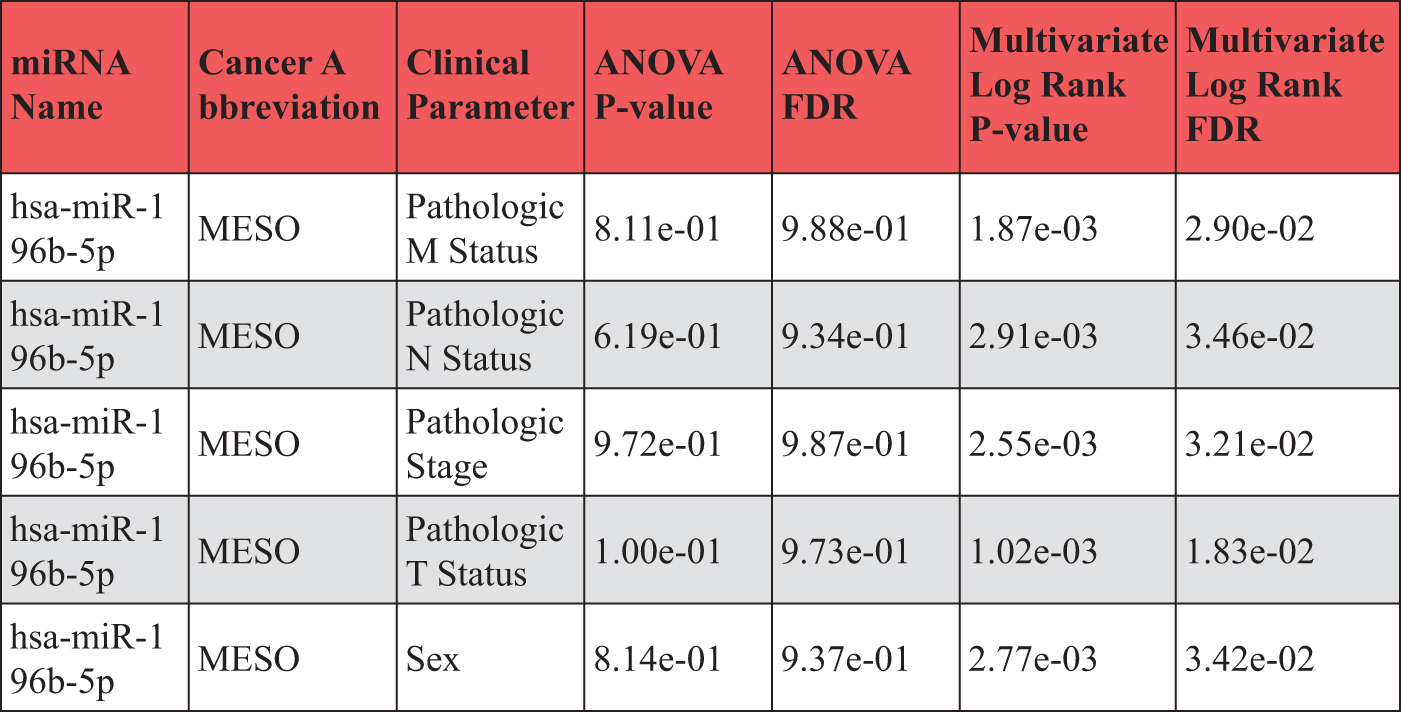
Clinical pathological characteristics of miR-196b-5p in mesothelioma patients using the OncoMiR database. M, metastasis; N, node; T, tumor. Color images are available online.
Biological functions of miR-196b-5p in mesothelioma
To determine the biological function of miR-196b-5p, the target prediction website miRWalk was used to identify target genes of miR-196b-5p (sum >4). The biological process, cellular component, and molecular function categories that were significantly enriched among the miRNA target genes based on WebGestalt pathway analysis are indicated in Figure 4A. The KEGG categories determined by DAVID analysis included Hippo signaling, axon guidance, proteoglycans in cancer, and pathway in cancer (Fig. 4B).
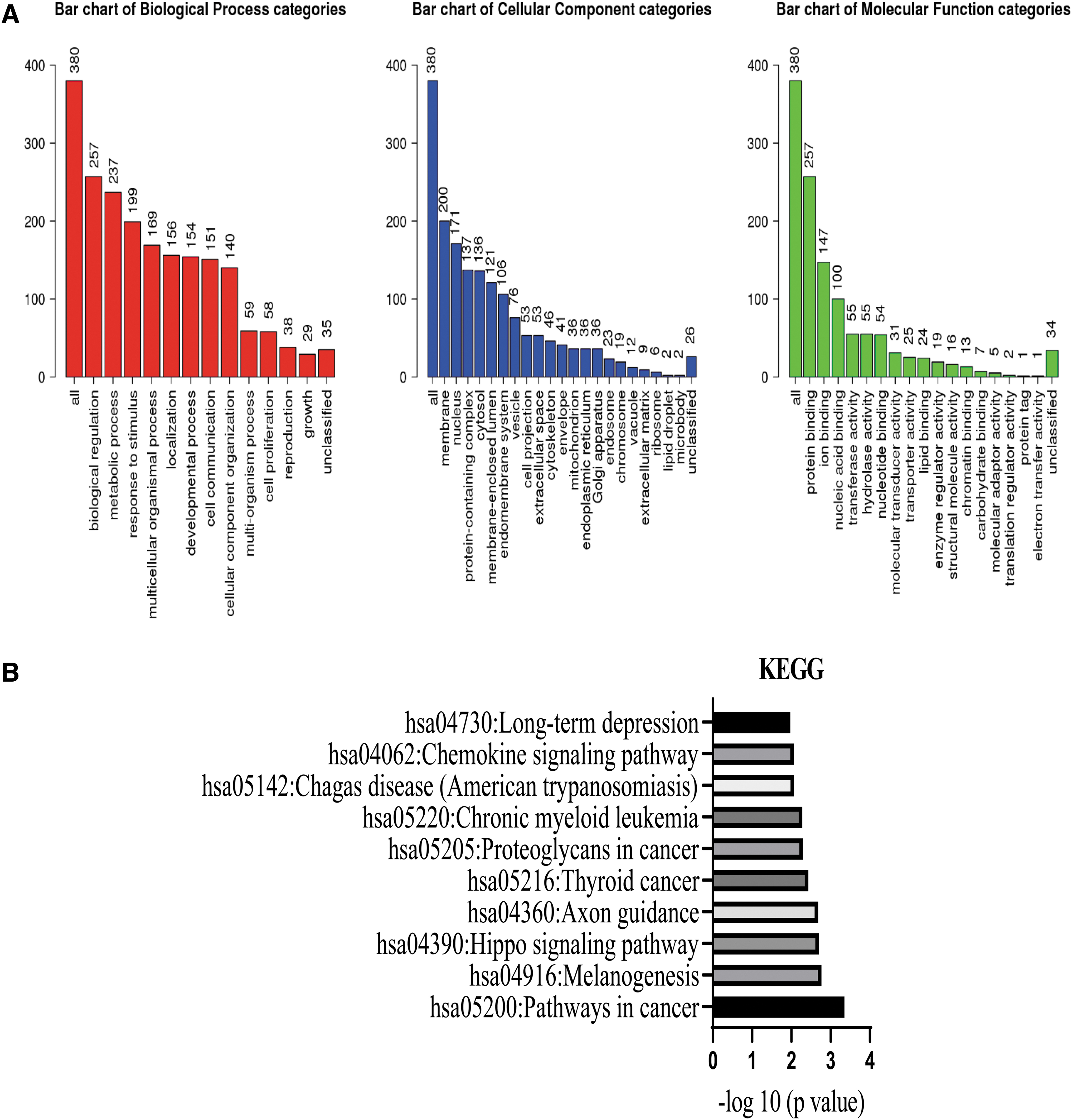
Biological functions of miR-196b-5p target genes in mesothelioma.
To narrow down the targets of miR-196b-5p, we compared the 384 targets of miR-196b-5p with the downregulated genes in the GSE12345 dataset, which contains global gene expression data from human pleural mesotheliomas. We found that PDE1A phosphodiesterase 1A (PDE1A), laminin subunit alpha 4 (LAMA4), and pappalysin-1 (PAPPA) were miR-196b-5p targets that were downregulated in pleural mesothelioma (Fig. 5A). Next, we determined the overall survival curves of mesothelioma patients according to PDE1A, LAMA4, and PAPPA expression levels using Kaplan-Meier survival analysis. Both low expression of LAMA4 and high expression of PAPPA were associated with poor prognosis in mesothelioma patients.
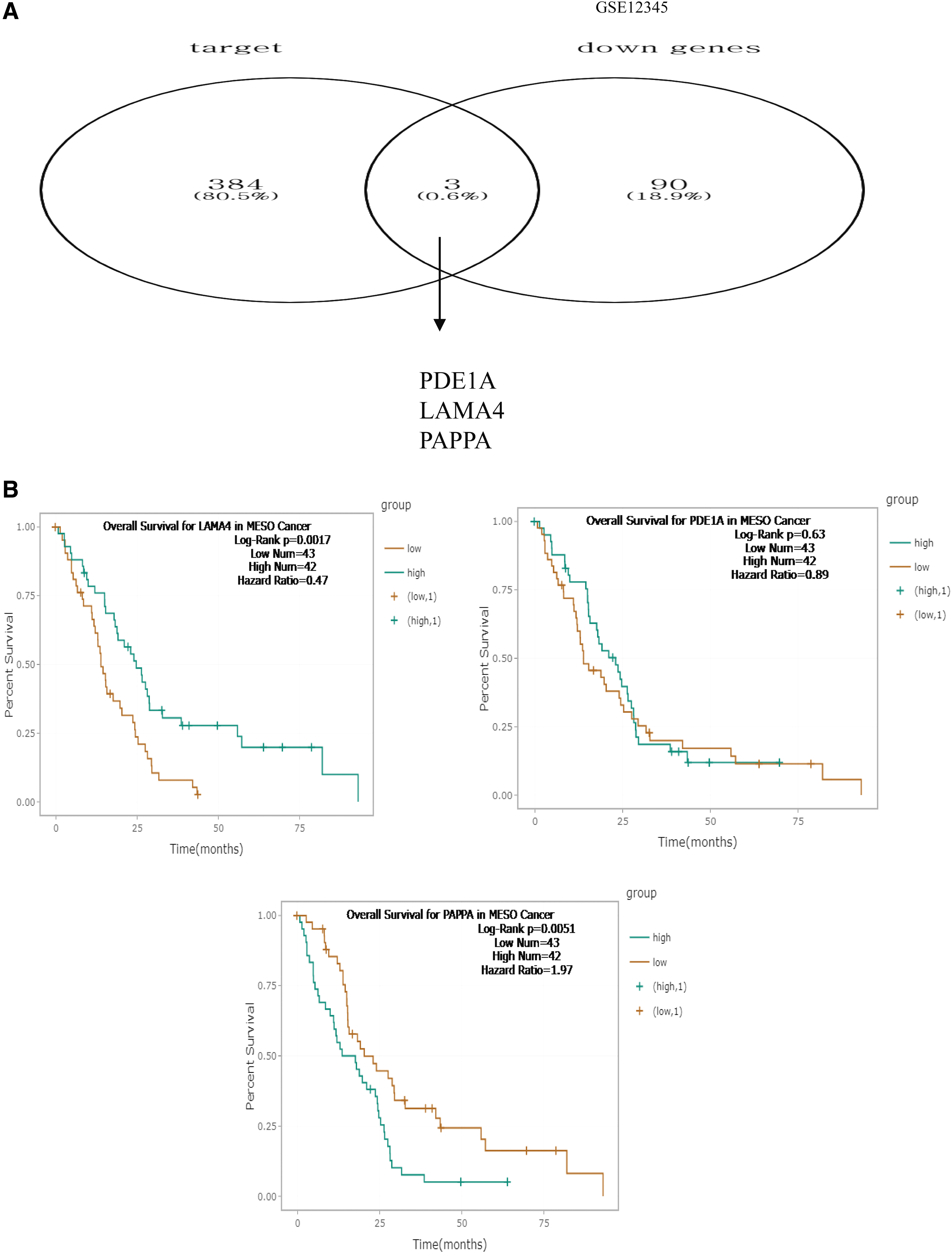
miR-196b-5p target genes that are downregulated in the GSE12345 dataset.
However, PDE1A was not significantly associated with overall survival of mesothelioma patient in Kaplan-Meier survival (Fig. 5B). To determine the correlations of miR-196b-5p expression with LAMA4, PAPPA, and PDE1A expression in mesothelioma, data from starBase were compared with the mesothelioma patient database. In mesothelioma, miR-196b-5p was negatively correlated with mRNA expression of LAMA4, PAPPA, and PDE1A (Fig. 6).
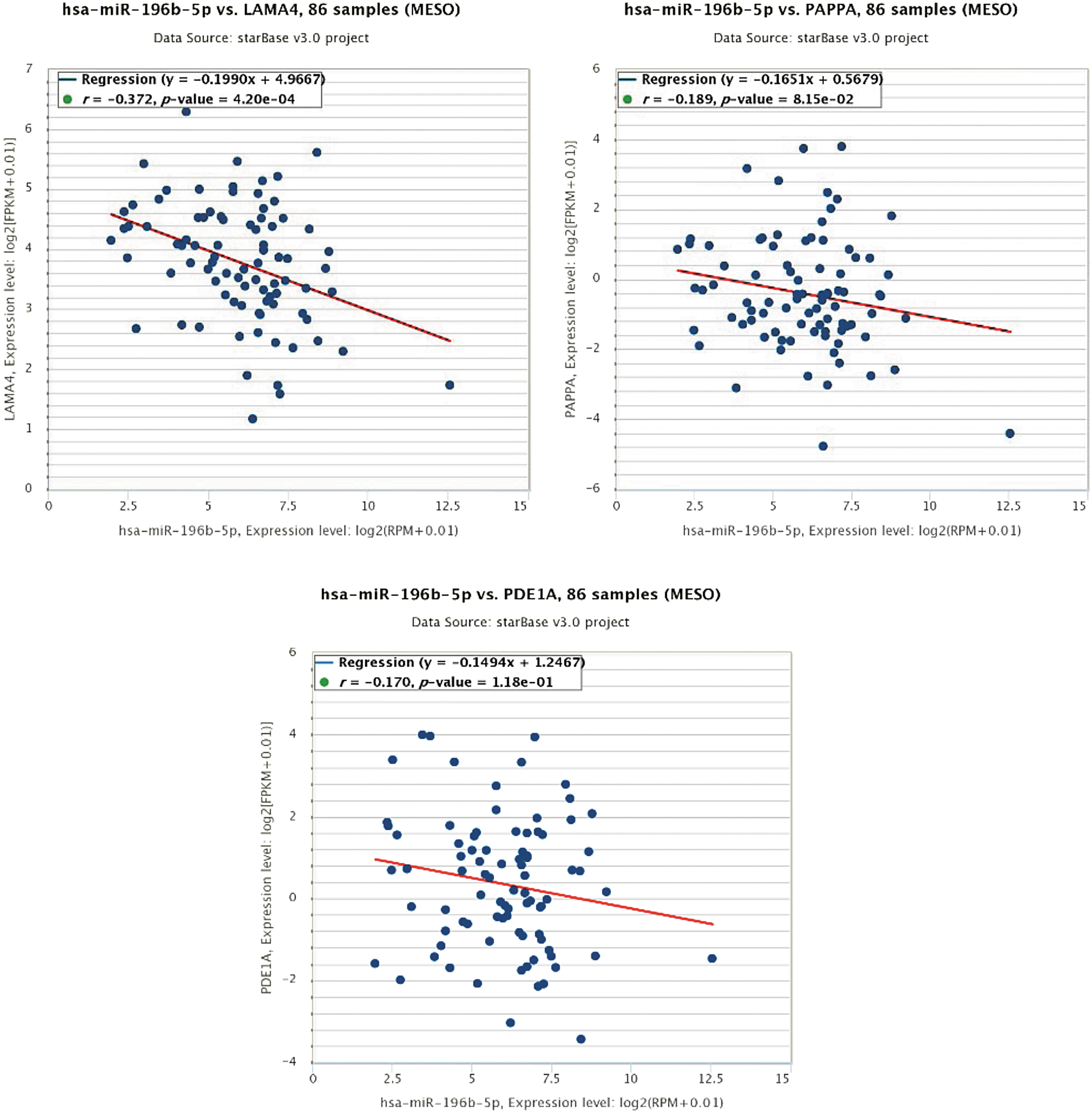
Correlations between miR-196b-5p expression (x-axis) and LAMA4, PDE1A, and PAPPA (y-axis) expression in mesothelioma patients. Color images are available online.
Discussion
Recent studies have indicated that miRNAs are associated with the progression of mesothelioma and are potential biomarkers of mesothelioma (Lo Russo et al., 2018; Han et al., 2021). In the present study, miR-196b-5p was selected as the most downregulated miRNA in geldanamycin-treated H28 cells according to microarray analysis. High expression of miR-196b-5p predicted longer overall survival, and miR-196b-5p expression was significantly associated with the developmental stages of mesothelioma. Thus, our data suggest that miR-196b-5p may be a useful prognostic marker for mesothelioma.
Geldanamycin, an HSP90 inhibitor, induces apoptosis in human gastric carcinoma by affecting several oncogenic kinases that have synergic effects with tumor necrosis factor-related apoptosis-inducing ligand (Vanden Berghe et al., 2003; Chen et al., 2015). Geldanamycin mediates apoptosis of gastric carcinoma cells via inhibition of EphA2 protein expression (Wang et al., 2014). We showed that geldanamycin exhibited cytotoxicity in mesothelioma cells, suggesting that it may be useful for the treatment of mesothelioma.
miR-196b-5p exhibited low expression in geldanamycin-treated H28 mesothelioma cells. Several studies have reported that miR-196b-5p is associated with cancer development. Xu and Xu (2020) showed that miR-196b-5p overexpression enhanced the proliferative and invasive capacities of lung adenocarcinoma cells, while Xin et al. (2020) demonstrated that miR-196b-5p was highly expressed in colorectal cancer tissues and cell lines such as SW480 and HCT116. Also, expression of miR-196b-5p was associated with increased migration and invasion of colorectal cancer cells (Xin et al. 2020). Here, according to the GSE99362 dataset, miR-196b-5p was highly expressed in mesothelioma cells compared with normal cells. In addition, miR-196b-5p was associated with the clinical pathological characteristics of mesothelioma. Survival analysis showed that miR-196b-5p predicted the overall survival of mesothelioma patients. Thus, we propose that miR-196b-5p is useful as a prognostic marker in mesothelioma.
To determine the regulatory mechanism of miR-196b-5p in mesothelioma, we predicted and analyzed the biological functions of miR-196b-5p target genes in mesothelioma using KEGG pathway and GO analyses. GO annotation showed that the top-ranked terms were biological regulation and membrane and protein binding. KEGG analysis identified enrichment of cancer, melanogenesis, hippo signaling, axon guidance, thyroid, and chemokine signaling pathways among the target genes.
We found that PDE1A, LAMA4, and PAPPA were regulated by miR-196b-5p and were downregulated in the GSE12345 dataset, containing global gene expression data from patients with pleural mesothelioma. A previous study showed that silencing of PDE1A expression resulted in growth inhibition, cell cycle arrest, and apoptosis (Abusnina et al., 2011). Overexpression of PAPPA suppressed the viability as well as proliferation and invasion of renal cell carcinoma cells (Lu et al., 2021). LAMA4, a member of the laminin family, regulates progression of ovarian cancer by sponging miR-30e-3p (Liu et al., 2020). Thus, PDE1A, LAMA4, and PAPPA may play important roles in mesothelioma via their regulation by miR-196b-5p. Further studies are needed to elucidate the functions of PDE1A, LAMA4, and PAPPA in mesothelioma.
Conclusions
Overall, our data showed that geldanamycin exerted anticancer effects on mesothelioma cells in association with downregulation of miR-196b-5p. Furthermore, miR-196b-5p was associated with the clinical pathological characteristics and overall survival of mesothelioma patients. These results suggest that miR-196b-5p is a useful prognostic and/or diagnostic marker in mesothelioma.
Footnotes
Authors' Contributions
All authors read and approved the final article.
Availability of Data and Materials
The datasets are available from the corresponding author on reasonable request.
Author Disclosure Statement
No competing financial interests exist.
Funding Information
This research was supported by Basic Science Research Program through the National Research Foundation of Korea (NRF) funded by the Ministry of Education (No. 2018R1D1A1B07043762 and 2021R1I1A1A01052609).