




Abstract
Background:
A high-altitude environment has inhibitory effects on obesity. Tibetans are not a high-risk population for obesity, but there are still obese individuals within that population. Obesity has become a worldwide health problem, and previous studies have found that obesity is closely associated with hereditary factors. Few studies have investigated obesity in Tibetans, and the association between gene polymorphisms and obesity in Tibetans remains unclear.
Methods:
Our study investigated the fat mass of 140 native Tibetan individuals (70 men and 70 women) from Lhasa and analyzed the associations between polymorphisms of melanocortin 4 receptor (MC4R), Src homology 2B adapter protein 1 (SH2B1), and neuronal growth regulator 1 (NEGR1) and obesity.
Result:
Among Tibetan individuals, there were differences in genotype and allele frequencies between those in the obesity group and those in the healthy group at MC4R (rs17782313) and SH2B1 (rs7359397). The polymorphisms of MC4R (rs17782313) were associated with fat mass and obesity in Tibetan men and women, and there was an association between SH2B1 (rs7359397) polymorphisms and fat mass and obesity in Tibetan men. However, polymorphisms of NEGR1 (rs3101336) were not associated with fat mass or obesity in Tibetan individuals.
Conclusion:
Among Tibetan individuals, polymorphisms of MC4R (rs17782313) and SH2B1 (rs7359397) were associated with obesity, but NEGR1 (rs3101336) polymorphisms were not associated with obesity.
Introduction
According to the World Health Organization, more than 1.9 billion adults were overweight and over 650 million were obese in 2016 (The website of World Health Organization). Obesity has become a serious worldwide health problem. Obesity is closely related to several genes; for example, melanocortin 4 receptor (MC4R) (Fairbrother et al., 2018), Src homology 2B adapter protein 1 (SH2B1) (Bachmann-Gagescu et al., 2010; Willer et al., 2009), and neuronal growth regulator 1 (NEGR1) (Willer et al., 2009) have been identified to be associated with obesity. C-allele carriers at MC4R rs17782313 indicated a high risk of obesity (Loos et al., 2008; Yu et al., 2020), whereas T-allele carriers at SH2B1 rs7359397 were associated with higher body weight (Speliotes et al., 2010), and the T-allele at NEGR1 rs3101336 was associated with body mass index (BMI) (Cheung et al., 2010; Hester et al., 2012). Therefore, investigating obesity susceptibility genes is essential for diagnosing, screening, and eliminating obesity problems. The plateau environment has a negative association with body composition. Loss of skeletal muscle mass, fat mass, and body water occurs with increased altitude (Dünnwald et al., 2019), and the prevalence of obesity is negatively associated with altitude. The high-altitude environment has inhibitory effects on obesity. Tibetans have lived at very high altitudes for thousands of years and have a distinctive suite of genetic traits that enable them to tolerate environmental hypoxia (Simonson et al., 2010; Song et al., 2020). Tibetans are not a high-risk population for obesity (Sherpa et al., 2010; Zhang et al., 2021), but there are still obese individuals among the Tibetan population. Few studies have investigated obesity in Tibetans, and the association between gene polymorphisms and obesity is still unknown. Therefore, we investigated the fat mass of 140 Tibetan individuals (70 men and 70 women) from Lhasa (altitude of 3600 meters) and analyzed the associations between polymorphisms of MC4R rs17782313, SH2B1 rs7359397, and NEGR1 rs3101336 and obesity and fat mass. It is hoped that these findings will help to explore the pathogenesis of obesity and provide a theoretical basis for the prevention and treatment of obesity in Tibetan individuals.
Material and Methods
Study population
The survey was carried out through health examinations in August 2016 in Lhasa (altitude of 3600 m), China (Fig. 1). Native Tibetans over 20 years of age participated in this study. A total of 1453 subjects (607 men and 846 women) were investigated, including 206 participants (71 men and 135 women) in the obesity group and 1247 participants (536 men and 711 women) in the healthy control group. We randomly selected 140 adults (70 men and 70 women) from the obesity and healthy control groups with an average age of 44.49 years. The following subjects were excluded from the study: (1) secondary obesity; (2) drug-related obesity; and (3) individuals with heart, lung, liver, kidney, or brain diseases. The interviewers were trained before the survey. The study was approved by the Research Ethics Committee of Jinzhou Medical University in accordance with the Declaration of Helsinki. Verbal and written informed consent was obtained from all participants. A statement to confirm that all methods were carried out in accordance with relevant guidelines and regulations.
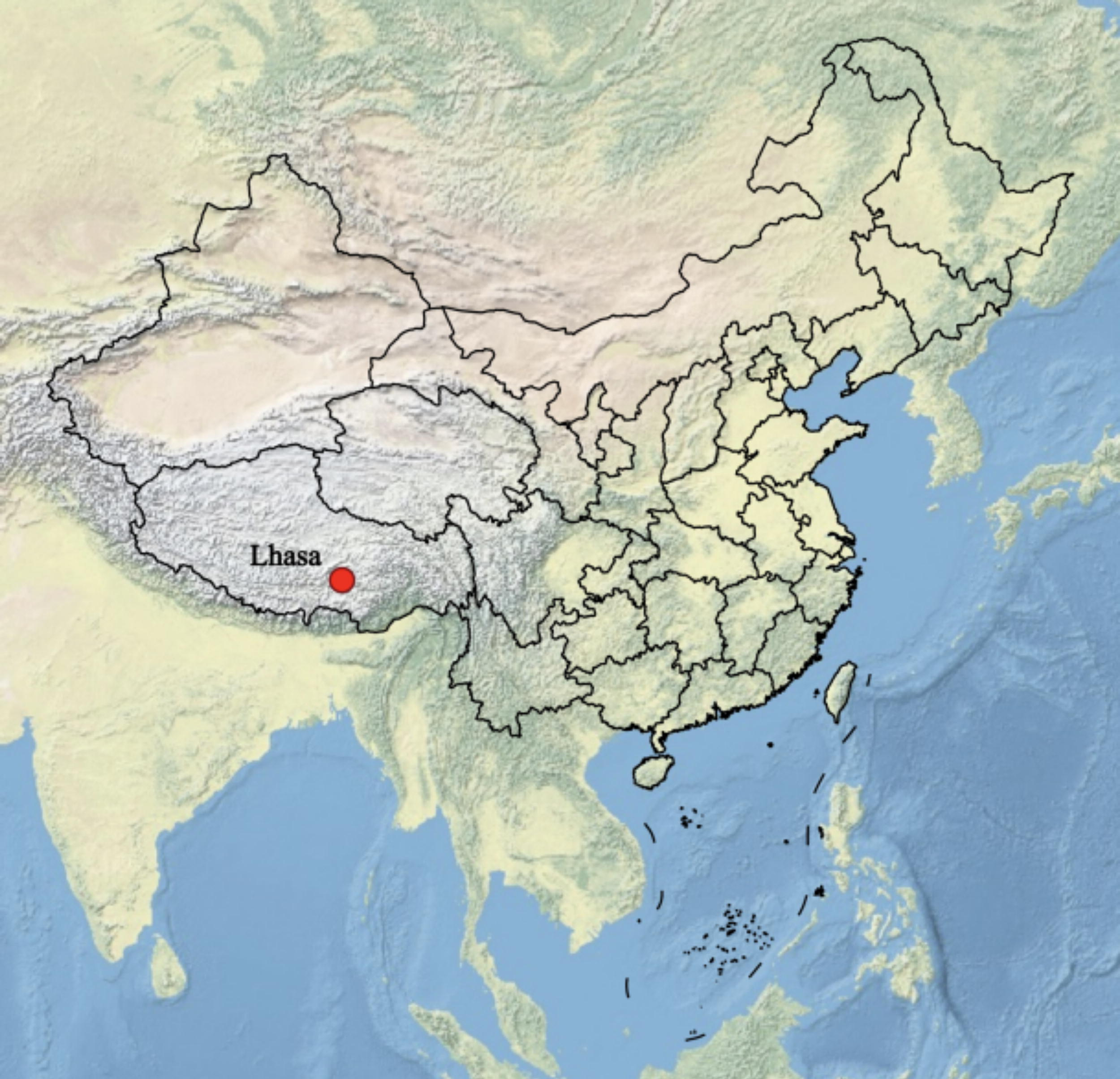
Map of the sample collection location.
-A statement confirming that all experimental schemes have been approved by the Medical Ethics Committee of Jinzhou Medical University.
-Must include a sentence confirming that informed consent was obtained from all subjects and/or their legal guardian.
Measurements
Height
Height was measured using a portable stadiometer (HM200P, American Charder Company, America) and recorded to the nearest 0.1 cm. BMI was calculated from weight and height.
Weight and fat mass
A bioelectrical impedance analyzer (MC-180, Bailida, Japan) was used to measure weight, fat mass, visceral adipose tissue, subcutaneous adipose tissue, trunk fat mass, left upper limb fat mass, right upper limb fat mass, left lower limb fat mass, and right lower limb fat mass. The following indices were calculated: body fat percent, trunk fat mass percent, left upper limb fat mass percent, right upper limb fat mass percent, left lower limb fat mass percent, and right lower limb fat mass percent.
Obesity diagnosis
According to the “Guidelines for the Prevention and Control of Overweight and Obesity in Chinese Adults” (Chen, 2006), we defined obesity as BMI ≥ 28 kg/m2, overweight as 24 kg/m2 ≤ BMI < 28 kg/m2, and normal weight as 18.5 kg/m2 ≤ BMI < 24 kg/m2.
DNA extraction
Two milliliters of venous blood was collected from all participants, and DNA was extracted from the whole peripheral blood sample using a DNA Extraction Kit (Blood DNA Extraction Kit, EIibioTM). DNA samples were stored at −80°C before genotyping. After DNA extraction, the concentration of the extract material was obtained using a spectrophotometer (BioPhotometer Plus, Germany).
PCR and genotyping
The DNA fragments containing the MC4R rs17782313 polymorphism were amplified using a forward primer sequence (ATGAGTTGCATCAGAGACTCACA) and a reverse primer sequence (CGGGCAAATGACCTTCTGGA). Those containing SH2B1 rs7359397 were amplified using a forward primer sequence (CTCCCGTCACACACTACAGG) and a reverse primer sequence (ATCTCTCACTGCCAGCTCTC). The DNA fragments containing NEGR1 rs3101336 were amplified using a forward primer sequence (GACCAGGGATGGAGCTATGC) and a reverse primer sequence (AGCCTGTCAGATGTTTTGCC). For three polymorphism samples, the reactions were carried out in a 20 μL volume of 0.5 μL DNA, 10 μL Taq Master Mix (Novoprotein, E005-02B), 7.5 μL Deuterium Depleted Water, and 1 μL of each primer. The polymerase chain reaction (PCR) conditions were as follows: initial denaturation at 94°C for 5 min, followed by 35 cycles of denaturation at 94°C for 30 s, annealing at 60°C for 30 s and extension at 72°C for 30 s, and then a final extension at 72°C for 5 min. Genotypes for the MC4R rs17782313 (TT/TC/CC), SH2B1 rs7359397 (TT/TC/CC), and NEGR1 rs3101336 (TT/TC/CC) polymorphisms were determined using a 3730 XL Gene Sequencer (ABI, USA).
Statistical analyses
The Hardy-Weinberg equilibrium (HWE) was calculated to determine the distribution of alleles and genotypes within the population. The data are expressed as the mean ± standard deviation. The chi-square test was used to analyze the differences in genotype and allele frequencies between the obesity group and the healthy control group. The association between genotypes and anthropometric indices and body fat mass was determined through analysis of variance. Logistic regression analysis was used to determine the odds ratio (OR) and 95% confidence interval (95% Cl) of obesity among the genotypes. All data analyses were performed using SPSS (ver. 25.0, IBM Company). The map of China was plotted by QGIS (https://www.qgis.org/).
Results
The basic characteristics of the samples are listed in Table 1. There were no significant differences in age or height between the obesity group and the healthy control group in men and women (p > 0.05). The HWE of the MC4R rs17782313, SH2B1 rs7359397, and NEGR1 rs3101336 genotypes in the healthy group and the obese group are listed in Table 2, respectively. The genotypes in the healthy control group and obesity group were in HWE.
Basic Characteristics of Tibetan People
BMI, body mass index; FM, fat mass; PBF, body fat percent; VAT, visceral adipose tissue; SAT, subcutaneous adipose tissue; TFM, trunk fat mass; TFMP, trunk fat mass percent; LUFM, left upper limb fat mass; LUFMP, left upper limb fat mass percent; RUFM, right upper limb fat mass; RUFMP, right upper limb fat mass percent; LLFM, left lower limb fat mass; LLFMP, left lower limb fat mass percent; RLFM, right lower limb fat mass; RLFMP, right lower limb fat mass percent.
Hardy-Weinberg Equilibrium Test for MC4R rs17782313, SH2B1 rs7359397, and NEGR1 rs3101336
Comparisons of the MC4R rs17782313, SH2B1 rs7359397, and NEGR1 rs3101336 polymorphisms between the obesity group and healthy group are given in Table 3, respectively. The genotype and allele frequencies of MC4R rs17782313 were significantly different between the groups (p < 0.05), and C-allele carriers exhibited a 14.889-fold higher risk for obesity than TT homozygotes (Table 4). The genotype and allele frequencies of SH2B1 rs7359397 were significantly different in men (p < 0.05), and T-allele carriers exhibited a 2.969-fold higher risk for obesity than CC homozygotes (Table 4). Tibetans carrying the C allele at MC4R rs17782313 and the T allele at SH2B1 rs7359397 exhibited a 9.273-fold higher risk for obesity compared to other genotypes (Table 4). There was no difference in genotype or allele.
Comparison of Allele and Genotype Frequencies at MC4R rs17782313, SH2B1 rs7359397, and NEGR1 rs3101336 Polymorphism Between the Healthy Control and Obesity Groups
P1: Differences in genotype frequency between the two groups, P2: Differences in allele frequency between the two groups.
The Results of Logistic Regression Analysis
The association between genotypes of MC4R rs17782313, SH2B1 rs7359397, NEGR1 rs3101336 and body fat mass and anthropometric indices are listed in Supplementary Tables S1-S3, respectively. Except for trunk fat mass percentage and right lower limb fat mass percentage in women, MC4R rs17782313 was associated with fat mass and fat mass percentage in Tibetans, and C-allele carriers had higher fat mass. SH2B1 rs7359397 was only associated with fat mass and fat mass percentage in Tibetan men, and T-allele carriers had higher fat mass. NEGR1 rs3101336 was not associated with fat mass or fat mass percentage in Tibetans.
Allele frequencies of NEGR1 rs3101336 between the healthy group and obesity group were not significantly different (p > 0.05).
Discussion
MC4R is one of the known hereditary factors of obesity, which plays an important role in hypothalamic body mass regulation by embedding in the leptin-melanocortin pathway (Kühnen, Krude, & Biebermann, 2019), and MC4R is essential for appetite control, as knockout mice lacking MC4R have hyperphagia and obesity (Baldini & Phelan, 2019). MC4R has been identified as an obesity-related gene in different populations, and mutation carriers have severe obesity, hyperphagia, and hyperinsulinemia (Farooqi et al., 2003). The MC4R rs17782313 polymorphism is also associated with obesity in different populations. C-allele carriers have a higher BMI and a higher risk of obesity in the Chinese Han nationality and the French, Korean, and Danish populations (Cauchi et al., 2009; Huang et al., 2011; Sull et al., 2013; Zobel et al., 2009), and the association between the MC4R rs17782313 polymorphism and a high risk of obesity also appears in both children and adolescents (Bordoni et al., 2017; Cauchi et al., 2009; Yang et al., 2019). The MC4R rs17782313 polymorphism is associated with visceral and subcutaneous fat distribution (Liu et al., 2010; Wang et al., 2016). In this study, we found that MC4R rs17782313 was associated with fat mass and fat mass percentage in Tibetan men and women, except for trunk fat mass percentage and right lower limb fat mass percentage in women. C-allele carriers had higher fat mass and exhibited a 14.889-fold higher risk for obesity than TT homozygotes (OR = 14.889, CI: 4.259-52.050, p = 0.000). The minor allele (C) frequency of MC4R rs17782313 was 11.8% for the total Tibetan population, 21.4% in the obesity group, and 2.1% in the healthy control group. It was significantly diverse among different ethnicities, being the highest in Chinese Han nationality (43.2%) and lowest in Tibetans (11.8%) (Table 5). Previous studies have found that individuals with the homozygous mutant genotype of MC4R rs17782313 would be more likely to suffer from obesity (Yu et al., 2020), but there was a lower frequency of CC homozygosity in Tibetans (2.9% in the obesity group and 0.0% in the healthy control group). Therefore, Tibetans may have a low mutation rate at MC4R rs17782313, and the low frequency of the C allele and CC genotype may be the reason for the low prevalence of obesity in the Tibetan population. These apparent differences in the frequency of the C allele and CC genotype could reflect genetic and environmental differences.
Comparison of Allele and Genotype Frequencies at MC4R rs17782313 among Different Populations
SH2B1 is essential for regulating energy balance and/or body weight (Flores et al., 2019; Ren et al., 2007; L. Rui, 2014), and genetic deletion of SH2B1 results in severe leptin resistance, insulin resistance, hyperphagia, and obesity (Liangyou Rui, 2014), whereas SH2B1 loss-of-function mutations are accompanied by severe obesity (Doche et al., 2012). Previous studies have found that the polymorphism of SH2B1 is associated with obesity in different populations, such as Hong Kong Chinese (Ng et al., 2010) and Mexican (León-Mimila et al., 2013) populations, and it is also associated with child obesity (Aerts et al., 2015; Xi et al., 2013). In this study, we found that SH2B1 rs7359397 was only associated with fat mass and fat mass percentage in Tibetan men. T-allele carriers had higher fat mass and exhibited a 2.969-fold higher risk for obesity than CC homozygotes in men (OR = 2.969, CI: 1.103-7.990, p = 0.031). The frequency of the T allele was higher in the obesity group (30.0%) than in the healthy control group (19.3%). This risky genotype was in line with the results of Perez-Diaz-Del-Campo et al., 2020, and Speliotes et al. According to Fall et al. (Fall et al., 2012), T-allele carriers at SH2B1 rs7359397 were associated with decreased insulin sensitivity; therefore, being a T-allele carrier may increase the risk of obesity due to decreased insulin sensitivity. We found that one person who carried the C allele at MC4R rs17782313 and the T allele at SH2B1 rs7359397 exhibited a 9.273-fold higher risk for obesity compared to other genotypes (OR = 9.273, CI: 2.033-42.296, p = 0.004), but the risk of obesity was lower compared with people who only carried the C allele at MC4R rs17782313, revealing that the MC4R rs17782313 polymorphism was significantly associated with obesity in Tibetans. According to Joo (Joo et al., 2019), NEGR1-deficient mice showed increased adiposity and decreased muscle mass. NEGR1 was associated with regulating energy intake in the brain (Boender et al, 2012) while playing a regulatory role in adipocyte differentiation and biology (Bernhard et al., 2013), and the expression of NEGR1 was upregulated during adipogenesis (Bernhard et al., 2013). Previous studies found that NEGR1 was significantly associated with BMI and obesity in humans (F. Renström et al., 2009; Willer et al., 2009). In this study, we found that NEGR1 rs3101336 was not associated with fat mass or fat mass percentage in Tibetans, which is the same as the results of studies on Mexican (León-Mimila et al., 2013) and Japanese (Hotta et al., 2009) individuals. However, there was an association between the NEGR1 rs3101336 polymorphism and obesity in Hong Kong Chinese individuals (Cheung et al., 2010). The results revealed that the relationship between NEGR1 polymorphisms and obesity is different in different populations. The T allele is a high-risk allele (Cheung et al., 2010; Hester et al., 2012), but we found that the frequency of the T allele was 15.0% in the obesity group and 17.9% in the healthy control group. The low frequency of the T allele in Tibetans was the main reason why there was no association between polymorphism and obesity.
The main limitation of our study was the limited sample size, which may have led to a certain deviation in the association between obesity and gene polymorphisms. Hypoxia develops in tissue as fat mass expands (Kayser & Verges, 2013; Trayhurn, 2013), and high altitude causes environmental hypoxia, so there are internal and external negative impacts in obese Tibetan individuals. Investigating obesity in Tibetan populations is beneficial to understand the mechanism of obesity and the influences of the plateau environment on human body composition.
Conclusion
To the best of our knowledge, this is the first study to investigate the associations between polymorphisms of MC4R rs17782313, SH2B1 rs7359397, NEGR1 rs3101336, and obesity in Tibetan individuals. We found that the MC4R rs17782313 polymorphism was associated with fat mass and fat mass percentage in Tibetan men and women, except for trunk fat mass percentage and right lower fat mass percentage in women. C-allele carriers had higher fat mass and exhibited a 14.889-fold higher risk of obesity than TT homozygotes. SH2B1 rs7359397 was only associated with fat mass and fat mass percentage in Tibetan men, and T-allele carriers had a higher fat mass and exhibited a 2.969-fold higher risk of obesity than CC homozygotes. NEGR1 rs3101336 was not associated with fat mass or fat mass percentage in Tibetan individuals. Therefore, the C allele at MC4R rs17782313 and the T allele at SH2B1 rs7359397 were associated with obesity in Tibetans.
Footnotes
Acknowledgment
The authors are grateful to the Lhasa Tama Community Health Service Center for their help.
Authors’ Contributions
X.L., J.Y., J.S., Y.C., C.L., X.P., and T.H. carried out the investigation of the Tibetan population. L.Y. and X.Z. guided and helped perform the experiments. Y.W. guided the investigation and modified and reviewed the article. Q.L. carried out the experiments and conceived and wrote the article. All authors contributed to the article and approved the submitted version.
Author Disclosure Statement
The authors have no conflicts of interest to declare.
Funding Information
This study was supported by grants from the

References
Supplementary Material
Please find the following supplemental material available below.
For Open Access articles published under a Creative Commons License, all supplemental material carries the same license as the article it is associated with.
For non-Open Access articles published, all supplemental material carries a non-exclusive license, and permission requests for re-use of supplemental material or any part of supplemental material shall be sent directly to the copyright owner as specified in the copyright notice associated with the article.
