




Abstract
Abstract
Objective:
The aim of this research was to assess the perioperative outcomes of cytoreductive surgery (CRS) and hyperthermic intraperitoneal chemotherapy (HIPEC) for ovarian cancers and evaluate the factors having impacts on morbidity and mortality.
Design:
This was a prospective, single-institutional study.
Materials and Methods:
The study included all patients undergoing CRS and HIPEC from November 1, 2014 to December 31, 2015, at the Rajiv Gandhi Cancer Institute and Research Centre, in New Delhi, India. Patient characteristics, disease factors, and operative outcomes were analyzed using descriptive statistics, and the impact of these variables on perioperative outcomes was evaluated using a Chi-square test.
Results:
Twenty-five patients, with mean age, body mass index, and body surface area of 48.7 years, 24.8kg/m2, and 1.592 m2, respectively, underwent primary (32%) or secondary (68%) CRS with HIPEC at a mean temperature of 42.5°C for 90 minutes. On average, time to oral feeds, intensive-care unit stay, and hospital stay were 3.96, 5.04, and 7.96 days, respectively. Major morbidity (Common Toxicity Criteria for Adverse Events grades 3–5) was seen in 5 patients and was significantly higher in patients aged >50 years (p = 0.040) or with other comorbidities (p = 0.044). Minor complications, including all chemotherapy-related complications, were seen in 36% patients with a slightly higher risk in suboptimally debulked patients. Two patients succumbed to disease in the perioperative period and were seen to have significantly longer surgeries (p = 0.045). No other parameters were seen to affect the perioperative outcomes.
Conclusions:
CRS with HIPEC is feasible and safe for advanced and recurrent ovarian cancer. Patient's age, comorbidity, and surgery duration affect perioperative outcomes and may be used to define selection criteria for HIPEC. (J GYNECOL SURG 33:4)
Introduction
E
Intraperitoneal (i.p.) chemotherapy came as a new hope for treating patients who faced the grim situation of peritoneal surface malignancies. Consideration of peritoneal metastasis as loco regional rather than metastatic disease by Spratt et al. 7 and Sugarbaker et al. strengthened this idea. 8 Instillation of chemotherapy via the i.p. route promises not only a diminution in systemic adverse effects but also better disease control due to higher chemo-concentration at the peritoneal surface. This can be accomplished by using postoperatively given normothermic i.p. chemotherapy (NIPEC) or intraoperative hyperthermic i.p. chemotherapy (HIPEC). Though NIPEC has proven to be beneficial in studies and is an upcoming treatment modality for advanced ovarian cancer, postoperative adhesions limiting uniform drug distribution and catheter-related complications limit NIPEC's use.9–11 A desire for better outcomes has paved the way for HIPEC. With the added benefit of higher temperature enhancing the penetration and cytotoxicity of chemotherapy, HIPEC ensures uniform distribution of the drug, as it is given during surgery and is emerging as a reliable treatment option for peritoneal carcinomatosis.
The first report of HIPEC in EOC came in 1995, 12 but there is still a paucity of prospective studies to support its role in either upfront or recurrent EOC. The technical requisite and the perioperative morbidity and mortality associated with prolonged CRS and simultaneous chemotherapy prevents HIPEC from being widely accepted. Moreover, the patient and disease characteristics that would benefit most from the upcoming treatment modality remains to be defined.
This article hereby presents the current authors' initial experience of 25 patients undergoing CRS and HIPEC PLUS (simultaneous hyperthermic i.p. as well as intravenous) for advanced and recurrent EOC. This prospective study was conducted to bring out patient characteristics, intraoperative details, and perioperative outcomes after HIPEC. The study was aimed to evaluate the impact of clinical and operative parameters on morbidity and mortality. This could aid in augmenting the survival benefit of HIPEC in ovarian malignancies by defining criteria for patient selection and taking preemptive measures to reduce complications.
Materials and Methods
This was a prospective study conducted in the department of surgical oncology of the Rajiv Gandhi Cancer Institute and Research Centre, in New Delhi, India. All patients undergoing HIPEC after CRS for advanced or recurrent ovarian cancers from November 1, 2014, to December 31, 2015, were included. The study was performed after obtaining permission from a scientific committee and institutional review board. The authors adhered strictly to ethical norms.
Various clinical parameters—including demographics, clinical presentation, and investigation results—were recorded. For patients undergoing upfront surgery, the preoperative work-up included clinical examination, contrast enhanced computed tomography (CECT) of the abdomen, tumor markers (CA-125, carcinoembryonic antigen [CEA], CA 19-9), and chest X-ray. Esophagogastroduodenoscopy, colonoscopy, CECT of the thorax, and ascitic or pleural fluid cytology were performed if clinically indicated. For patients undergoing secondary CRS, CA-125, CECT of the abdomen and positron emission tomography/computed tomography (PET/CT to rule out distant metastasis were performed. Preanesthesia evaluation was conducted and patients were counseled. HIPEC was planned for patients younger than 65, having Eastern Cooperative Oncology Group (ECOG) performance status of 0 or 1, having advanced or recurrent EOC, and giving consent for the procedure. Patients with other malignant pathologies, extra-abdominal metastasis, unresectable disease seen on imaging, and/or active infections were excluded.
Exploratory laparotomy was performed and the Peritoneal Carcinomatosis Index (PCI) was calculated. 13 Cytoreduction—including radical oophorectomy, hysterectomy, bilateral salpingo-oophorectomy, supracolic omentectomy, and retroperitoneal lymph-node dissection—was performed in all patients undergoing primary surgery. Peritonectomy of the seven subsites—including pelvic, right or left subphrenic, right or left parietal, Glisson's capsule, or the lesser omentum—was performed according to the extent of disease. Bowel resection and resection of other visceral organs performed according to the extent of the disease. In patients undergoing secondary debulking, resection of recurrent disease was performed. Completeness of cytoreduction score (CC score) was calculated for all patients. 14
HIPEC was planned using a closed abdominal technique (Fig. 1) and en mass closure of abdomen was performed over the inflow and outflow channels, and temperature probes of the HIPEC machine (Fig. 2). The peritoneal dialysate solution (PDS; 1.5%) was circulated through the circuit and peritoneal cavity at the rate of 750 mL/minute and a set temperature of 42.5°C (41°–43°C) was attained (Fig. 3). Both i.p. and i.v. chemotherapy were given simultaneously for 90 minutes. If required, peritoneal lavage and bowel anastomosis was performed after completion of the HIPEC. Intraoperative details were recorded for all patients. Perioperative outcomes—including intensive care unit (ICU) stay, hospital stay, morbidity, and mortality—were noted. NCIC-CTAE [National Cancer Institute—Common Terminology Criteria for Adverse Events] scoring was used to grade perioperative complications. Grades 1 or 2 were included in minor, and grades 3–5 were included in major complications. Perioperative mortality included death within 30 days of surgery.
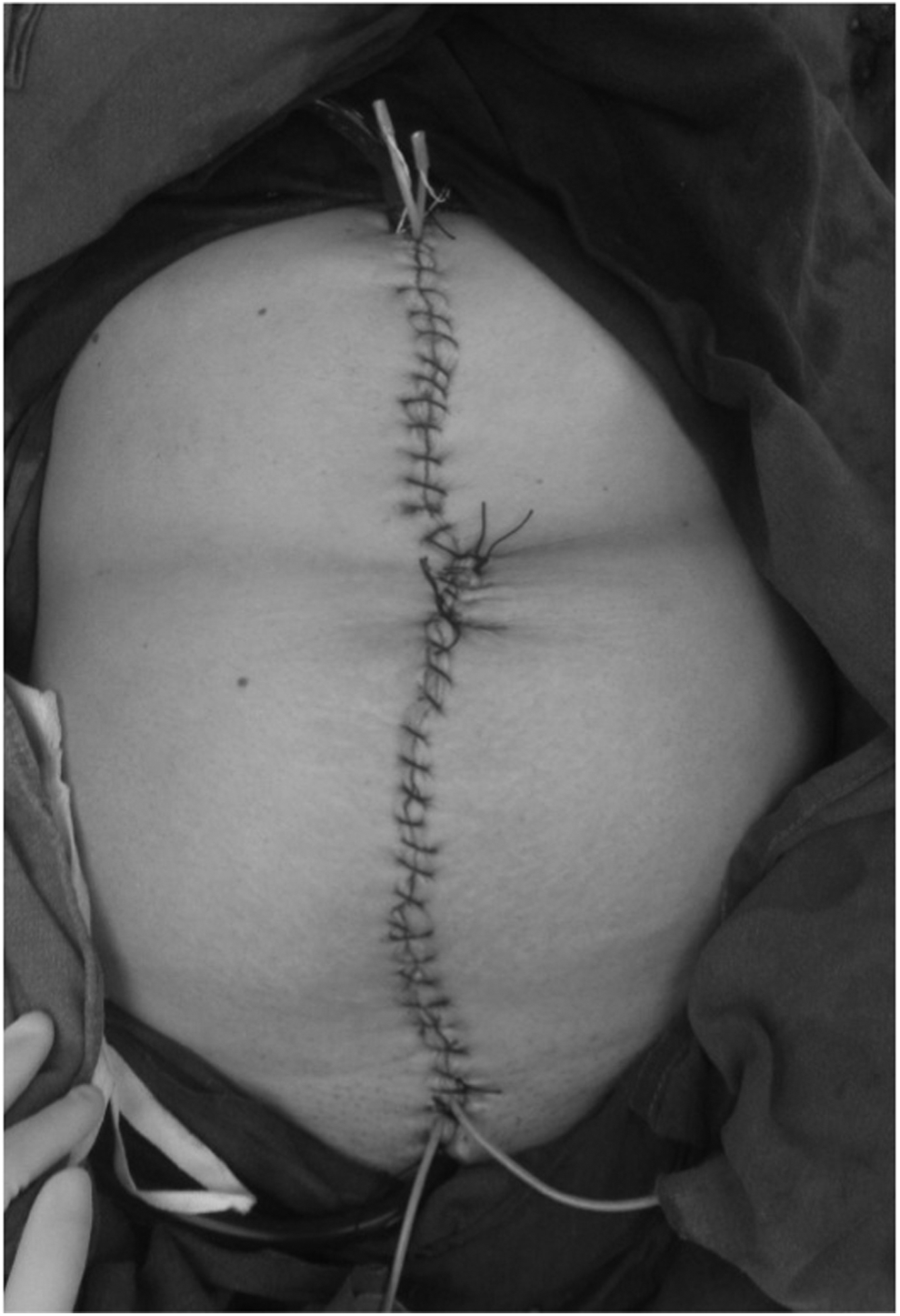
Closed technique of hyperthermic intraperitoneal chemotherapy. Inflow and outflow tubes and temperature probes.
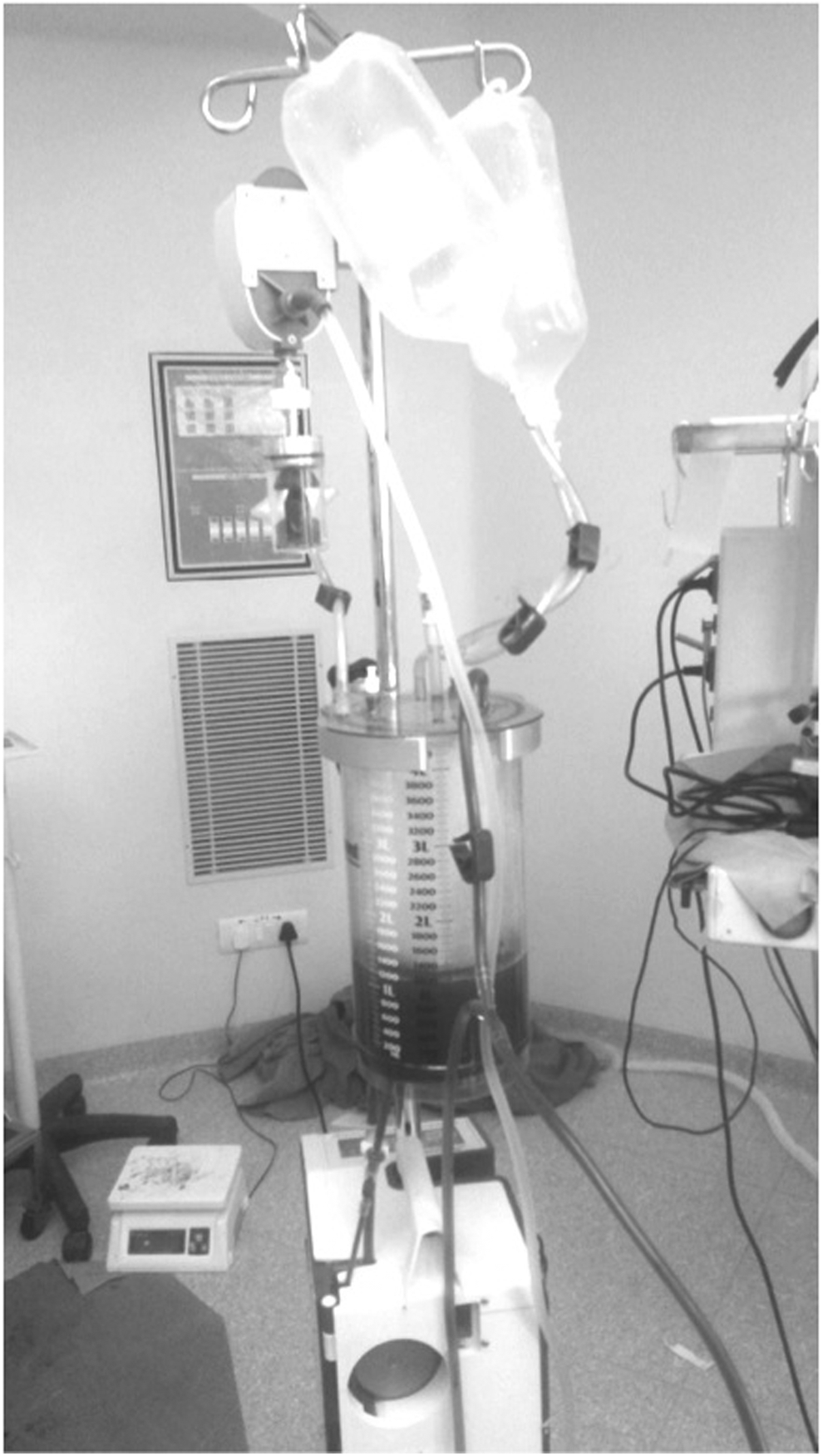
Hyperthermic intraperitoneal chemotherapy machine. Belmont Instrument Corporation hyperthermia pump.
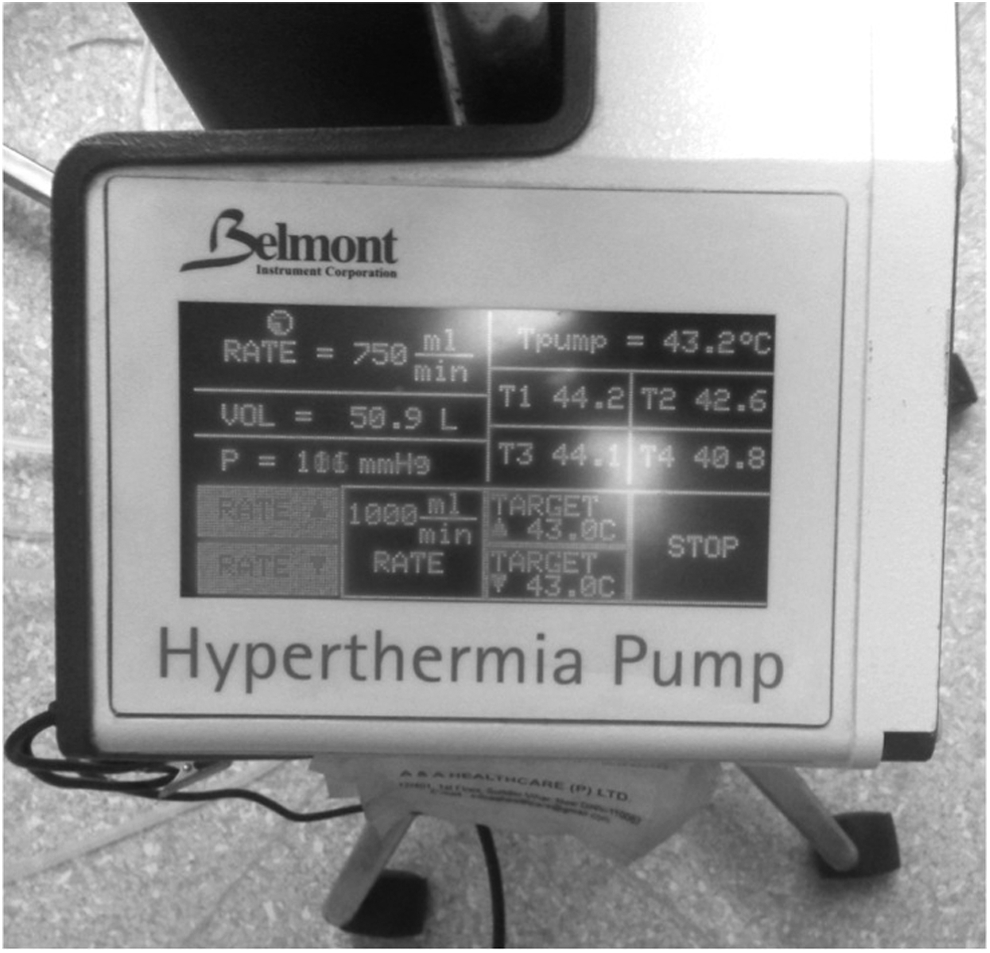
Monitor displaying temperature and flow rate.
Statistical analysis
Patient characteristics and intraoperative details were analyzed using descriptive statistics in SPSS, version 22. Descriptive statistics were used to calculate mean, range, and standard deviation (SD) for continuous variables and frequencies and proportions for categorical variables. Morbidity and mortality were analyzed, and their relations to various clinical and operative parameters were calculated using a Chi-square test. Significance was set at a p-value of 0.05.
Results
Patients' characteristics
Twenty-five patients underwent CRS with HIPEC from November 1, 2014, to December 31, 2015, and were included in the study. The mean age, body mass index (BMI), and body surface area (BSA) were 48.7 years, 24.8 kg/m2, and 1.592 m2, respectively (Table 1). Hypertension was seen in 3 (12%), hypoalbuminemia (< 3.5 g) in 7 (28%), and hypothyroidism in 3 (12%) patients. Eight patients underwent upfront surgery and the rest were operated on for recurrences. Among the 17 patients who underwent secondary CRS, 5 presented with symptoms, and the remaining 12 were asymptomatic; the recurrences were detected via raised tumor markers and imaging during surveillance. Most of the patients had serous ovarian adenocarcinoma (84%), while the rest had a mucinous form of disease.
SD, standard deviation; BMI, body mass index; BSA, body surface area; HTN, hypertension; CAD, coronary artery disease; DM, diabetes mellitus; COPD, chronic obstructive pulmonary disease; PDS, primary debulking surgery; SDS, secondary debulking surgery.
Intraoperative details
In the 25 patients included in the study, exploration revealed a mean PCI of 12.4 (Table 2). Most of the patients had aggressive disease as revealed by high PCI scores (≥ 15) in 40% and need for bowel resections in 48% of the patients. Pelvic peritonectomy was performed in two-thirds of the patients and subphrenic peritonectomy in approximately half of them. Thirty-two percent of the patients required extensive peritonectomies including parietal, Glisson's capsule, or lesser omentum resection, while 28% did not require any. After cytoreduction, CC score was 0 in 16 patients, 1 in 5 patients, and 2 in the remaining 4 patients. All patients received i.p. cisplatin (50 mg/m2) + doxorubicin (15 mg/m2) and i.v. iphosphamide simultaneously. Mesna was given 15 minutes prior and 4 and 8 hours after iphosphamide to reduce complications. A mean temperature of 42.5°C could be reached, ranging from 41°C to 43°C. HIPEC was given for 90 minutes to all the patients. Mean duration of surgery was 6.52 hours and average blood loss was 956 mL. Intraoperative complications related to raised temperature or chemotherapy were not seen in any of the 25 patients.
PCI, Peritoneal Carcinomatosis Index; CC, Completeness of Cytoreduction; HIPEC, hyperthermic intraperitoneal chemotherapy; IVC, inferior vena cava.
Perioperative outcomes
In the perioperative period, a Ryle's tube was removed and oral feeds were started with the return of bowel sounds at an average of 3.96 days (Table 3). Patients were kept in the ICU until they required strict vitals and input–output monitoring (mean ICU stay = 5.04 days) and were discharged once these patients were on normal diets and oral treatments (mean hospital stay = 7.96 days). Using NCIC-CTAE grading for perioperative morbidity, 5 patients (20%) had major morbidity (grade 3–5). Respiratory distress was the most common and also was the most morbid complication. It was managed with intensive monitoring, chest physiotherapy, spirometry, or oxygen supplementation in 4 patients (grade1/2) but required pleural fluid drainage in 2 patients and intubation with ventilator support in another 2 patients. Two patients could not be salvaged despite best efforts being made and succumbed to the morbidity. Cardiac complications were seen in 2 patients (arrhythmia = 1; myocardial infarction = 1), which were managed according to a cardiologist's advice.
ICU, intensive care unit.
Among the other chemotherapy related morbidities were deranged renal function, neutropenia, and thrombocytopenia, all of which were managed with observation or minimal changes in treatment (e.g., granulocyte macrophage colony-stimulating factor [GM CSF] for neutropenia. Six patients were given GM CSF prophylactically when a trend toward decrease in leukocyte count was seen. Wound infection occurred in 4 patients and was managed with daily dressings (n = 1) or secondary suturing (n = 3). Reexploration was required in 2 patients, 1 each for burst abdomen and anastomotic leak. One patient had paralytic ileus, which was managed conservatively.
Impact of clinical and operative parameters on perioperative outcomes
On comparing various clinicopathologic parameters in patients with morbidity and in those without morbidity, patient's age (p = 0.040) and presence of comorbidity (p = 0.044) were seen to be significantly related to major complications (Table 4). Forty-four percent of older patients (>50 years) and 37.5% of those with comorbidities had major complications, compared to 6.3% (<50 years) and 11.8% (in patients without comorbidities), respectively. Other clinical parameters including BMI, BSA, preoperative serum albumin, primary or recurrent setting, and histology had no effects on major complications. The operative parameters that might suggest extensive surgery did not statistically affect perioperative outcomes. However, minor complications were significantly higher in patients undergoing suboptimal cytoreduction (CC 2; p = 0.038). This needs special mention, as most of the chemotherapy-related complications were grade 1 or 2 (included in minor complications) and all 4 patients with suboptimal cytoreduction had at least one of these complications.
BSA, body surface area; PCI, Peritoneal Carcinomatosis Index; PDS, primary debulking surgery; SDS, secondary debulking surgery; CC, Completeness of Cytoreduction.
pa = p value for morbidity; pb = p-value for mortality.
Bold, italic and underlined values suggest statistical significance.
On considering the impact of various factors on perioperative mortality, only the duration of surgery was found to be significantly associated (p = 0.045) with this parameter. The patients who could not be salvaged in the perioperative period had a mean duration of surgery of 8.75 hours, compared to 6.32 hours in the remaining patients.
Discussion
The ultimate aim in ovarian cancer surgery is to achieve a CC of 0 (no visible disease) or a CC of 1 (any visible tumor nodule <2.5 mm in its greatest dimension). Even after complete cytoreduction, microscopic tumors remain on the peritoneal surfaces, and, for eradication of these microscopic tumors, there is a role for HIPEC. Instillation of chemotherapy in the peritoneal cavity makes the best use of the pharmacokinetic and pharmacodynamic profile of the chemotherapeutic agent. Cisplatin and doxorubicin, can attain plasma levels to peritoneal area under curve of up to 20 ± 6 and 162 ± 113, respectively, and were thus used in the current study. 15 A mean temperature of 42.5°C was attained to enhance the penetration and cytotoxicity of the drug. Thus the aim was to achieve a wide therapeutic window (i.e., a maximum local action of the drug) on microscopic or up to 2.5 mm of residual disease with the least systemic side-effects.
The major concerns preventing wide application of HIPEC for ovarian cancer (i.e., morbidity and perioperative mortality) were found to be congruous in the patients undergoing CRS with HIPEC, compared to CRS alone. 16 A retrospective study reported major morbidities of 28.6% and 26.7% and perioperative mortality of 0% and 11% in patients undergoing CRS with HIPEC or CRS alone, respectively. Other prospective studies on HIPEC observed major morbidity in 26%–36% of patients and perioperative mortality in 4.2%–5.6% of patients.17–19
The present study corresponded to others in numbers as well as in the types of complications, with respiratory distress being most common. Pulmonary complications, with others including gastrointestinal fistula and sepsis, was also the common cause leading to death (2 patients in the current study). However, in the rest of the patients, aggressive management of pulmonary complications—including chest physiotherapy, incentive spirometry, early ambulation, pleural fluid drainage, and antibiotics—prevented major untoward events. Reexploration was required in 2 patients (8%), which was akin to other studies on CRS with (12.4%) or without HIPEC (14.3%). Wound infection, burst abdomen, paralytic ileus, and anastomotic leak were the other surgery-related complications.16–20
None of the patients undergoing HIPEC for ovarian cancer in the current study or in other reports showed thermal intolerance or hyperthermia-induced complications. 19 Though severe and persistent cisplatin-induced renal toxicity was reported in 9.2% patients in a single study, most other studies and the current study observed grade 1 renal toxicity only.17,19,20 Neutropenia and thrombocytopenia, the chemotherapy induced hematologic complications, was managed with stimulating factors and were graded as minor complications. Preemptive administration of GM CSF to patients showing a trend toward cytopenia might have prevented the major setbacks of chemotherapy in the perioperative period in the current study.
ICU stay in the current study (3–14 days) corresponded to that in other studies (1–10 days) and indicated an acceptable time to the ambulatory phase without the need of i.v. fluid and critical monitoring.17,19,20 Bowel sounds returned at an average of 3.96 days and confirmed the absence of the effect of i.p. chemotherapy on bowel movements. A shorter hospital stay was observed in the current study (7.96 days), compared to most other studies (22–27 days). A shorter stay surely signifies early patient recovery and return to basic activities.
In the current study, a detailed analysis was conducted to compare the patient, disease, and operative parameters between the patients with and without complications. The mean patient's age was lower in the current study (48.7 years), compared to others (ages 55–60), while the comorbidities were similar.10,19 Statistical analysis revealed a significantly higher rate of major complication in older patients (p = 0.040) than in younger ones and in those with comorbidities (p = 0.044) than otherwise fit patients. Thus, the younger population in the current study might be the reason for the early recovery seen in these patients. It seems prudent to say that patient's age should be strictly considered before selecting patients for HIPEC. Other patients' characteristics, such as performance score, preoperative serum albumin, and BMI, did not affect perioperative outcomes.
The PCI score in the current study (mean = 12.4; range = 2–26) was comparable to that in other studies on CRS with HIPEC (mean = 10–15; range = 2–28). PCI score was not related to perioperative morbidity or mortality, similar to a study by Eisenkop et al., 21 which was against the use of PCI as a threshold for CRS. A higher number of peritonectomies and primary debulking surgeries were related to poorer outcomes, compared to their counterparts in some of the studies,17,19 but few other studies and the present one, negate this.
Serous papillary carcinoma was seen in most patients and mucinous carcinoma was seen in approximate one-fifth of patients in the current as well as in other studies. 20 Histology was not seen to affect perioperative outcomes. Another important and controversial aspect is the use of HIPEC in patients undergoing bowel resection with or without anastomosis or stoma. Higher surgery-related complications have been reported in these patients. 18 However, this remains controversial because other studies as well as the current one failed to find any significant relationship. Incomplete cytoreduction, has shown to be related to morbidity as well as mortality in other studies.17,20 In the current study, also, a higher number of minor complications was seen in suboptimally debulked patients (CC = 2). It is imperative to say at this point in time that HIPEC may do more harm than benefit in these patients (CC ≥2).
CRS in itself is a prolonged surgery associated with massive blood loss. Adding HIPEC to CRS may not only increase the duration of surgery but also the problems pertaining to prolonged surgery. This is evident by a higher duration of surgery in patients undergoing CRS with HIPEC (8.4 hours), compared to CRS alone (4.5 hours), in a retrospective study. 16 In the current study, mean duration of surgery was comparable to other studies on HIPEC but was significantly higher in the patients who succumbed to the disease in perioperative period (8.75 hours vs. 6.32 hours; p = 0.045). Mean blood loss was similar in the current study and in other reported studies. Though a higher blood loss was seen in patients with morbidity and mortality (1420 and 1500 mL) than in those without (840 and 909 mL), the difference was not statistically significant (p = 0.107 vs. p = 0.272). Thus, HIPEC may be considered with caution after extensive CRS, as other studies also show poor impact of too-lengthy surgery and massive blood loss. 18
Median disease-free survival ranging from 10 to 26 months and median overall survival ranging from 24 to 106 months has been reported in the literature and was seen to be related to age, CC score, and chemosensitivity.17,20,22–24 Spiliotis et al. 24 in a small phase-III prospective trial evaluated the role of CRS and HIPEC plus systemic chemotherapy versus CRS plus systemic chemotherapy in women with recurrent ovarian cancer after initial debulking surgery and systemic chemotherapy. The median survival rate was 19.5 months versus 11.2 months (p < 0.05) and the 3-year survival rate was 50% versus 18% in favor of the HIPEC group. Moreover, a randomized trial on the role of HIPEC in recurrent EOC (Center for Healthcare Innovation and Patient Outcomes Research [CHIPOR] study) is being conducted by the U.S. National Institutes of Health. 26 As the current study was small with a short follow-up, a survival analysis could not be obtained. However, the aim of the study was to analyze the perioperative outcomes and the factors affecting these outcomes. With respect to the perioperative outcomes altogether, CRS with HIPEC seems to be feasible with acceptable morbidity and mortality.
Patient's age, comorbidities, incomplete cytoreduction, and prolonged surgery were related to poor outcomes. Thus, the current study ensures better patient selection and offers guidance regarding prevention and management of complications. This could lay the foundation for a large and long-term study.
Conclusions
HIPEC is a feasible, safe, and promising approach for advanced and recurrent ovarian cancers after optimum cytoreduction. Advanced age, other comorbidities, incomplete cytoreduction, and prolonged duration of surgery affect perioperative outcomes poorly. However, the role of HIPEC in EOC remains to be investigated until the survival benefits are proven in randomized trials. Better patient selection and preemptive measures to prevent complications may boost the outcomes.
Footnotes
Acknowledgments
The authors acknowledge Ms. Surbhi and Ms. Luxmi for their contributions in collecting data for the article.
Author Disclosure Statement
The authors have nothing to disclose. Thus, they have no conflicts of interest.