




Abstract
Abstract
Rodway, George W., Scott E. McIntosh, and Jennifer Dow. Mountain research and rescue on Denali: a short history from the 1980s to the present. High Alt. Med. Biol. 12:277–283, 2011.— Alaska's Denali (Mt. McKinley), 6194 m, is the highest and perhaps most celebrated peak on the North American continent. The cold and stormy nature of this mountain just 3° of latitude south of the Arctic Circle enhances its legend as a challenging peak. It has been the desired objective of over 1000 summit aspirants per climbing season for the last 20 years. As mountaineering traffic on the peak increased in the 1960s and 1970s, an increase in deaths and helicopter evacuations followed suit. These were largely owing to altitude illness, cold injuries, and trauma. By the late 1970s and early 1980s, the U.S. National Park Service (NPS) began exploring potential solutions regarding the problems with rescue scenarios in remote and hostile surroundings. The NPS eventually placed a team equipped with communications and medical supplies high on the mountain to remedy the problem. This seasonal high altitude camp, established in 1982, carried out clinical research, preventive education, and rescue work. Although this operation has undergone substantial changes since 1982, it continues to serve Denali climbers each season and has likely reduced the frequency of serious accidents, death, and helicopter rescues. In addition, a parallel increase in NPS infrastructure, medical research, and mountain rescue on this peak has contributed to an increased benefit for climbers and others, which has served (and continues to serve) a wide range of interests, from the safety concerns of mountaineers to high altitude-related scientific discoveries advantageous to the scientific community.
Introduction
The barometric pressure of approximately 253 mm (as measured on the summit of Everest in October 1981) would be predicted to be only about 224 mm at the same elevation in the latitude of Mount McKinley.… [T]here is a very large mass of heavy cold air in the stratosphere above the equator. This air mass weighs more than the air mass nearer the poles. Thus local barometric pressure at all elevations around the equator is higher, compared with more northern and southern areas nearer the poles. (p. 6)
Largely because Denali is the highest peak on the North American continent and has obtained legendary status, it has been the desired objective of well over 1000 summit aspirants per climbing season for the last 20 years. This, in combination with the harsh environmental challenges, has over the years proved an administrative challenge for the Denali Park and Preserve of the United States National Park Service.
Mountaineering traffic on the peak increased in the 1960s and 1970s, with an increase in deaths and helicopter evacuations owing to altitude illness, cold injuries, and trauma (McIntosh et al., 2008). The mounting casualty toll was starting to strain NPS resources. As a result, Bob Gerhard, Denali Park's chief climbing ranger in the late 1970s, initiated action that bore far-reaching and long-term fruit. Realizing that Peter Hackett, MD, had spent several years in Nepal as a physician for the Himalayan Rescue Association (HRA), Gerhard recruited Hackett to help reduce the number of injuries on the mountain. In 1980, it was agreed that placing a team equipped with communications and medical supplies on the mountain at a relatively high altitude could potentially be the best solution to the problem. The mission for this high altitude camp would be to perform clinical research, conduct preventive education, and to be available for rescue work. Hackett, with Drs. Drummond Rennie and Frank Sarnquist, climbed Denali in 1981 to reconnoiter the best location for a laboratory and rescue post so that the program could be established and in service by the time the 1982 climbing season began. Although this operation has changed somewhat in character since 1982 (e.g., no current dedicated focus on medical research), it continues to serve Denali climbers each season and has likely reduced the frequency of serious accidents, death, and helicopter rescues on what can be a very hostile mountain.
However, it should also be noted that in the last three decades there has been a major investment in climber-oriented educational resources by the NPS (at Denali). In the early 1980s, the preclimb briefing performed by the South District of Denali National Park in Talkeetna consisted of an informal meeting, in a converted house trailer, between the expedition and a climbing ranger, where a short discussion of the route and safety issues occurred. By the late 1990s, the present South District Ranger Headquarters had been built and included additional educational resources for climbers, as well as a genuine operations center for mountain rescues. This steady improvement in educational resources for climbers, along with climber preregistration (discussed in more detail later), has most likely also contributed to the improved safety of climbers on Denali. Accident prevention through increased climber education and awareness has thus become as important a factor to the NPS Denali mission as the rescue service itself.
Background
Given the relatively long history of this unique program on Denali, surprisingly little has been written about it, especially from the perspective of its evolving mission over the 25 plus years of its annual seasonal operation. Articles appeared in medical and climbing journals in the late 1970s and early-to-mid 1980s explaining the need for, or reporting on the progress of, medical and rescue operations on the mountain (Wilson et al., 1978; Mills and Rau, 1983; Rau et al., 1984; Hackett, 1988). In addition, many other articles published in peer-reviewed medical journals over the years have reported the results of original medical science investigations performed on Denali. A great and ever-growing literature aimed at the Denali summit aspirant—and the armchair mountaineer— details the serious nature of the mountain, providing much needed cautionary tales for those who might choose to seek high altitude adventure in this venue (Waterman, 1991).
Two recent articles appearing in medical journals have offered a statistical analysis of climbing-related fatalities and rescue missions on the mountain (McIntosh et al., 2008; McIntosh et al., 2010). The overall fatality rate was shown to be 3.08 per 1000 summit attempts and was declining (Fig. 1). Fatalities were decreased by 53% after a NPS registration system was established in 1995 (45% of fatalities since 1995 have been caused by injuries sustained from falls). Climbers from Asia have historically had the highest odds of dying on the mountain (McIntosh et al., 2008). In addition, Asian mountaineers are also more likely to require a rescue (odds ratio=4.1) than those from other countries, although this trend has diminished in the past decade (McIntosh et al., 2010).

Fatality data from the mountain during the years 1970–2009. 1970 was the first year that more than 100 people attempted Denali, and there have been 100 or more attempting the peak each year since. Data available from Denali National Park and Preserve South District Ranger Station.
From 1990 to 2008, 1.16% of all Denali climbers required a search and rescue effort by the NPS. Most rescues were undertaken for high altitude illness, cold injuries, and trauma from falls. Mountaineers that attempt routes other than the standard West Buttress route are more likely to require rescue.
Regardless of this expanding body of literature, historical coverage of the development of the medical research and rescue program on Denali is incomplete. This is reflected in the encyclopedic High Life: A History of High Altitude Physiology and Medicine (West, 1998), where Denali only merits approximately half a page (p. 386).
The high altitude medical and rescue project on Denali was born partly from a section of a program at the University of Alaska Anchorage called the High Latitude Study. This particular endeavor began with a small group of researchers focused primarily on examining cold injuries. The University of Alaska accepted a policy statement in January 1980 that
placed the area of cold injury investigation, including hypothermia, immersion injury, freezing injury and other human Arctic medical problems requiring study directly in the research pathway of the projected Department of High Latitude studies at the University of Alaska Anchorage (Mills and Rau, 1983).
In April 1980, a research grant request was submitted by Dr. William Mills to the Alaska State Legislature for funds to develop this proposed section of the High Latitude Study at the university. To the amazement of many, and consternation of some who somewhat ironically saw it as an extravagant use of public funds, the grant request succeeded and $850,000 was allocated to develop this program. Initially slated as a 3-yr trial program, the project was assigned to the University of Alaska School of Nursing, since no College of Health Sciences was yet on campus. In January 1981, the project was set in motion, with Dr. Mills named as section head and principal investigator and Dr. Dean Rau as second in command. Over the next 2 years, other faculty appointments were made to the Department of High Latitude Study (including Dr. Hackett), and the initial 3- year program was expanded to permit 5 years of research funding.
During the period that the High Latitude section was being conceived (i.e., the years prior to actually being funded), physicians in Alaska who were caring for patients with freezing injury, hypothermia, and other cold-related trauma realized that the state's subarctic mountains, especially Denali, were a major source of cold-weather victims. Investigators and clinicians were aware that every conceivable form of cold injury was present on Denali and that the mountain was
perhaps the largest, most reliable outdoor, volunteer, risk performing, cold injury experimental laboratory in North America.… No human resources committee [institutional review board] of any university would allow human subjects to expose themselves…to such hazards as climbers [voluntarily] do each year on Denali's slopes (Mills and Rau, 1983).
Although Denali was reconnoitered in June and July 1981 by Hackett and others, research work on the mountain began in earnest in the spring of 1982. Many aspects of the Denali project were influenced to some extent by (1) Hackett's multiyear HRA experience in Nepal, (2) the 1 year he spent working on the long-running Mt. Logan High Altitude Physiology Study, and (3) the 1981 American Medical Research Expedition to Mt. Everest (AMREE) in which he participated. In fact, much of the physical makeup of the camp in the initial years was straight out of AMREE:
a Hansen weatherport, powered by solar photovoltaic cells and backup generators and heated with propane. The power panel, solar cells, and some instruments were, in fact, loaned to us by John West, the leader of [AMREE]. Our laboratory the first year on the mountain was referred to as “son of AMREE” (Hackett, 1988).
Such an equipment-intensive operation needed transport. Starting in 1982, the Denali project was fortunate enough to receive support from the Aviation Brigade of the 172nd Infantry Brigade, Fort Richardson, Alaska; the 242nd Aviation Company of Fort Wainwright, Alaska; and the members of the Mountain Warfare Training Center at Fort Greely, Alaska. In 1982, U.S. Army Chinook helicopters airlifted almost 2700 kg of research gear to the 4359-m level on Denali and over 1270 kg of gear to the base camp area at 2225 m on the southeast fork of the Kahiltna Glacier. The U.S. Army has provided similar transport assistance in many subsequent seasons on Denali, that is, when war duties have not taken priority.
Research
In 1988, Peter Hackett wrote,
Our medical research on Denali has capitalized on the uniqueness of this natural laboratory by studying persons who are severely ill with mountain sickness and pulmonary edema. Because such illnesses cannot be reproduced in an altitude chamber because of ethical considerations, and because the incidence of these problems is so low in other populations, Denali offers an ideal opportunity for research (Hackett, 1988).
Early clinical observations during the research program confirmed previous work examining the relationship of rate of ascent to altitude illness, but of particular interest was the study of the pathogenesis of acute mountain sickness (AMS). Previous work had shown that the hypoxia ventilatory response (HVR) is a factor in determining ventilatory capability during exposure to hypobaric hypoxia and the subsequent potential for the development of AMS (Hackett et al., 1984; Moore, et al., 1986). Hypoxic drive studies on approximately 200 climbers in 1982 did not show that hypoxic drive (or lack thereof ) was strongly correlated to AMS; however, it was difficult to accurately control for ascent rate and other climbing-related variables. A by-product of the hypoxic drive studies, however, was the finding that arterial oxygen saturation was consistently related to ensuing illness. From this discovery came the sensible recommendation that on arrival at the 4300 m medical camp climbers with a Sa
The oxygen desaturations associated with sleep at altitude also piqued the interest of the investigators on Denali. Previous investigators had tried without success to find a relationship between AMS and periodic breathing during sleep at altitude (Powles and Sutton, 1983). On Denali, it became apparent that periodic breathing and regular fluctuation of O2 saturation are not necessarily related to illness. However, unusual patterns of extreme desaturation during sleep were, in some cases, observed in persons who had already developed altitude illness or developed altitude illness the next day.
Further studies investigating the pathogenesis of AMS utilized transcranial Doppler to measure the velocity of cerebral blood flow. Significantly higher cerebral blood flow velocity was found in climbers with severe AMS; additionally, these individuals tended to be very hypoxemic. Oxygen administration to these patients produced a rapid decrease in cerebral flow, and AMS symptoms quickly improved. In addition, when ventilation was stimulated in AMS patients by inhalation of 3% CO2, arterial oxygen saturation improved and cerebral blood flow diminished. Taken together, these results seemed to suggest that, when ascending to high altitude, an increase in cerebral blood flow and resultant increase in arterial oxygen content are helpful in promoting effective adaptation to the hypoxic environment, but only up to a point. Beyond this threshold, the consequences are likely to be pathologic in nature, apparently because of an excessive increase in arterial cerebral blood flow and/or a decrease in venous cerebral blood drainage (and the resultant vasogenic fluid leak).
The Denali research program also presented a unique opportunity for the study of medications that might provide either prophylaxis against or treatment of high altitude illness. Both acetazolamide and dexamethasone were of particular interest to the investigators. A primary question that concerned the team was whether the usual doses of acetazolamide (e.g., 250 mg) increased cerebral blood flow in the manner seen when given in large intravenous doses. Of course, if usual doses had in fact significantly increased cerebral blood flow, this would have conflicted with the hypothesis that AMS is caused in large part by vasodilation and increased cerebral blood volume, leading to increased intracranial pressure. Study results suggested that the usual doses of acetazolamide did not significantly increase cerebral blood velocity (or presumably cerebral blood flow), and this was later confirmed by other investigators (Huang et al., 1988). Of interest, it was also discovered that acetazolamide served to maintain cerebral blood flow despite causing an increase in ventilation and a lower P
Another therapeutic feature of acetazolamide that came to the attention of the Denali program was its use during sleep to help alleviate nocturnal periodic breathing. Results suggested that acetazolamide was effective at maintaining higher mean arterial oxygen saturations at night, eliminating periodic breathing, and eradicating the intermittent episodes of severe hypoxemia that often accompany central sleep apnea experienced at high altitude.
Dexamethasone as a sole treatment for severe mountain sickness had little research to back up its efficacy when the Denali program chose to initiate investigations on this medication. No one had actually examined steroids for AMS-related problems until 1984; a chamber study that year found that dexamethasone prevented symptoms of AMS. The Denali investigators decided to use a lower dose of dexamethasone (pretreatment with a single oral dose of 2 mg repeated every 6 h) than what was originally reported in the chamber study. The chamber study had utilized 4 mg every 6 h, starting 48 h before ascent and then continuing for 2 days at altitude. In the Denali investigation, this placebo-controlled field study flew 15 military volunteers directly from sea level to the 4300-m medical camp after pretreatment with the oral dose of 2 mg of dexamethasone, with the same dose repeated every 6 h. A control group was given a placebo on the same schedule (Hackett et al., 1988). However, subjects in both the group receiving 2 mg of dexamethasone every 6 h and the placebo group nearly all became ill, some quite seriously. This situation, not surprisingly, caused concern, in no small part because of the remoteness of the study environment:
[O]ur first thought was to put all of the sick subjects on oxygen. We reasoned, however, that the problem might have been that the initial dose of dexamethasone was inadequate, and that giving more dexamethasone at this point might reverse the symptoms and turn the failure of the prevention protocol into a possible victory for a treatment study. The situation was explained to the soldiers, and they volunteered to take a higher dose of dexamethasone, although two who were severely ill were given oxygen for a short period of time [but no placebo treatment was used henceforth because of the obvious ethical issue]. The results of treatment were dramatic. Within a few hours of administration of 4 mg of dexamethasone, either orally or by injection, the soldiers' symptoms started to improve markedly. After 12 h, nearly all were asymptomatic (Hackett, 1988).
This study provided further evidence toward the establishment of dexamethasone as an effective treatment for severe AMS. Of interest, a concurrent but unrelated double-blind, placebo-controlled study examining dexamethasone for treatment of AMS (in Switzerland) also produced identical results to the findings on Denali (Ferrazzini et al., 1987).
Some of the most remarkable studies of the entire Denali Medical Research Project involved bronchoscopy and bronchoalveolar lavage of climbers diagnosed with high altitude pulmonary edema (HAPE) during the 1983 and 1985 seasons. Perhaps not coincidentally, a number of interested researchers on Denali happened to be pulmonologists by training. A study of this nature was logical to pursue, because investigators on Denali had noted that the incidence of HAPE seemed to be higher on this mountain than in other high altitude locations. Speculation as to why this increased HAPE incidence might exist centered on potential upregulation of a sympathetic nervous system mechanism owing to the extremely cold environment and extreme exertion involved in typically carrying heavy loads on this mountain (Hackett, 1988). Nonetheless, the rather daring pulmonary procedures carried out in a very remote location provided extremely important information on HAPE pathogenesis. The researchers reported novel findings, specifically, that the edema was of the high-permeability type with a large concentration of high-molecular-weight proteins and numerous cells (Hackett et al., 1986; Schoene et al., 1986; Schoene et al., 1988). In the Schoene and colleagues (1988) study, the mean protein concentration of the alveolar fluid collected surprisingly exceeded that usually seen in cases of adult respiratory distress syndrome, a disease well known for producing a high-permeability form of edema. The studies also showed abundant red and white blood cells, as well as above normal concentrations of leukotriene B4 and complement fragment C5a in the alveolar fluid. Taken together, the results suggested that HAPE was associated with damage to pulmonary capillary walls (West, 1998, p. 387). This knowledge led to the refinement of prophylaxis and treatment of HAPE and spawned many other important studies on the topic.
A Shift in Emphasis from Research to Rescue
From 1982 to 1989, the Denali Medical Research Project had become an integral part of safety while working on the mountain. While the Research Project was certainly dedicated to research, the members were also medically trained and skilled in high altitude mountaineering. The team was usually well acclimatized and in an excellent physical position to provide rescue assistance to the climbers on Denali. The rescue team was involved in the rescue and treatment of many climbers in need and provided this service free of charge. One dramatic example was related in the pages of the 1984 American Alpine Journal:
In June of 1982, two Japanese climbers fell descending the West Rib. They sustained multiple trauma including head injuries causing coma. They were spotted after their fall by personnel at the research camp and, after rescue, were carried to the 14,300 ft. (4300 m) camp by stretcher. Bad weather prevented their evacuation for nearly three days. During this time the research camp became a mini intensive care unit providing IV fluids and medications as well as respiratory support and initial rewarming. Both men survived. (Rau et al., 1984)
In 1989, when the research team turned its attention to projects outside Alaska, the NPS realized the potential void and raised the concept of developing a NPS-run rescue team. Debate grew over whether a dedicated rescue service was congruent with the mountaineering ethics of the time; balancing self-reliance while fostering a safe environment in the mountains can be a challenging proposition. \However, the growing popularity of Denali made it obvious that steps should be taken to maintain safety standards on the mountain, especially since the mountain was within the boundaries of the U.S. national park system.
In 1990, the NPS installed a dedicated patrol presence on the mountain. Mountain patrols were at that time (and still are) led by NPS mountaineering rangers who are highly trained in mountain rescue and the recognition of high altitude illnesses. The remainder of the patrol is comprised of volunteer rescue personnel with extensive mountaineering experience and may include a physician or other medical provider with advanced training in mountain and wilderness medicine. By 1990, the primary focus of NPS activity on the mountain was to ensure that climbers were adhering to NPS environmental standards and fostering a safe environment for fellow climbers. The teams were also on hand to assist in medical care and rescue if necessary.
Although basic medical care, education, and rescue became the emphasis of the mountain patrols, some high altitude medical research continued to be performed, perhaps most notably by pulmonary and critical care physician Colin Grissom and colleagues. Grissom participated in eight NPS mountain patrols (1989 and 1992 to 1998), and the medical studies conducted on Denali during this period produced results that were valuable in elucidating the mechanisms and treatment of AMS and HAPE (Grissom et al., 1992; Grissom et al., 1997; Grissom et al., 2000; Grissom et al., 2005).
Typically, the mountain patrol teams would, and still do, fly into the base camp at ∼2200 m, climb to 4300 m, and remain stationed at this camp for 1 to 2 weeks (Fig. 2). Patrols have been organized in 3- to 4-week time periods and rotated to different parts of the mountain to ensure that the peak is adequately covered. Many patrols ascend to and establish a position at the 5250-m-high camp. From this venue they are able to respond to problems encountered by parties ascending to or descending from the summit.
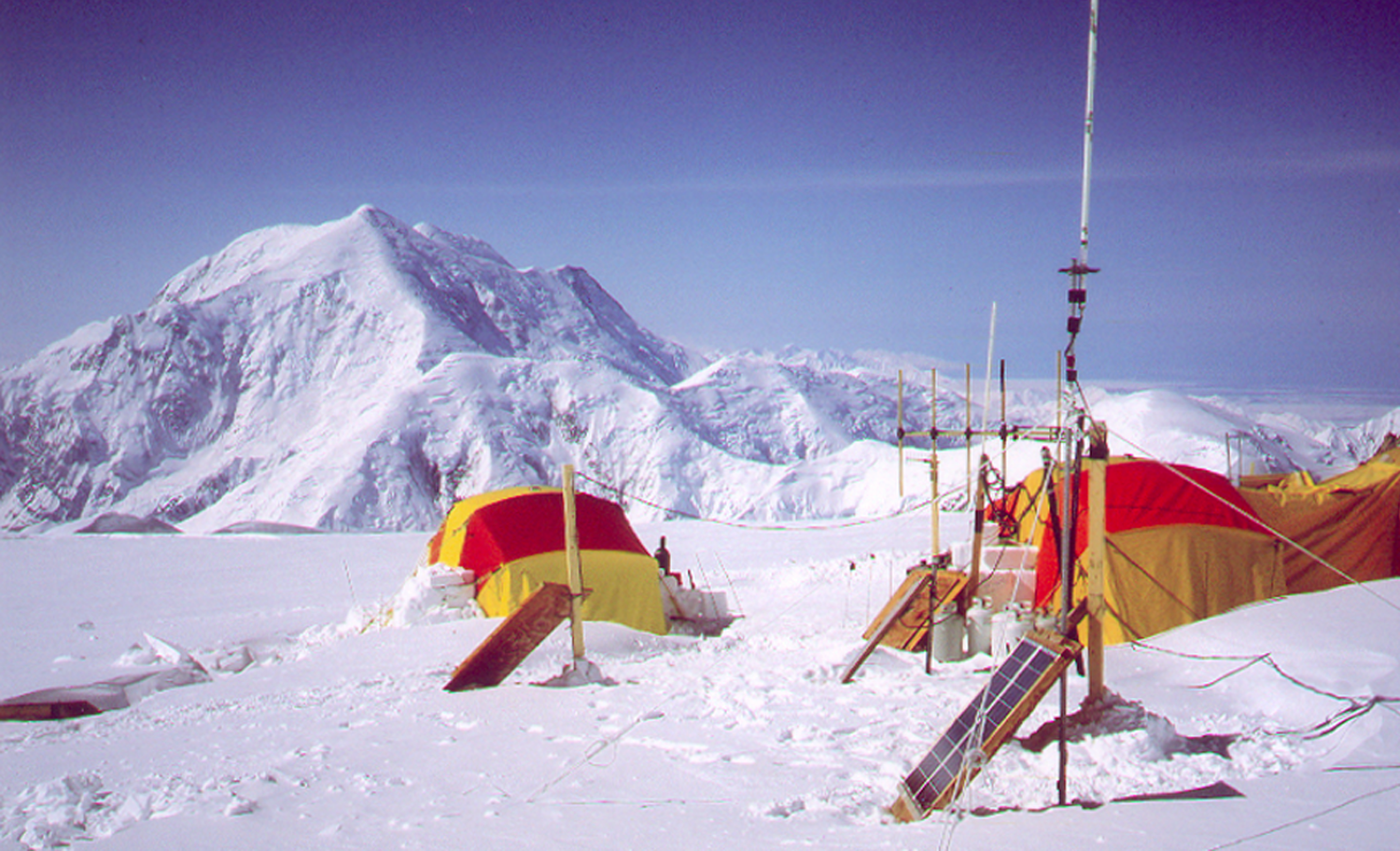
National Park Service camp at 4300 m on Denali.
The ground rescue teams became a valuable resource for the NPS and climbers in need. However, the remote rescue locations and long distances and time requirements to evacuate a sick or injured climber to base camp often demanded the use of air rescue. Military helicopters were first used for these rescues, and the Sikorsky HH-60G Pave Hawk was the airframe typically used because of its abilities at moderately high altitude, with a service ceiling of 14,000 ft (∼4260 m). Although the configuration of the Pave Hawk helicopter used by the Alaska Air National Guard typically limits its use to altitudes considerably lower than 4000 m, Alaska Air Guard records show that at least one mission has been performed with the Pave Hawk on Denali above the aircraft's service ceiling. Such instances of high altitude use of the Pave Hawk on Denali have likely been during especially favorable prevailing temperature and atmospheric pressure conditions.
Positioned in the Anchorage Kulis Air National Guard Base and part of 210th Rescue Squadron, these airships could reach Denali in just over 1 h. However, the Gulf War demanded that many of these military helicopters be removed from Alaska. In 1991, the NPS contracted for the use of a specialized high altitude Aerospatiale LAMA helicopter, nicknamed the Denali Lama, for rescues (Fig. 3). The LAMA has performed rescues up to 20,000 ft (6096 m), but the NPS now contracts for the A-Star B3 helicopter (as of 2009). This machine has touched down on the 6194 m summit of Denali at least once, but not in the course of a rescue. These helicopters have been and continue to be positioned during the spring–summer climbing season in the town of Talkeetna, the point of departure to the mountain for most Denali expeditions.
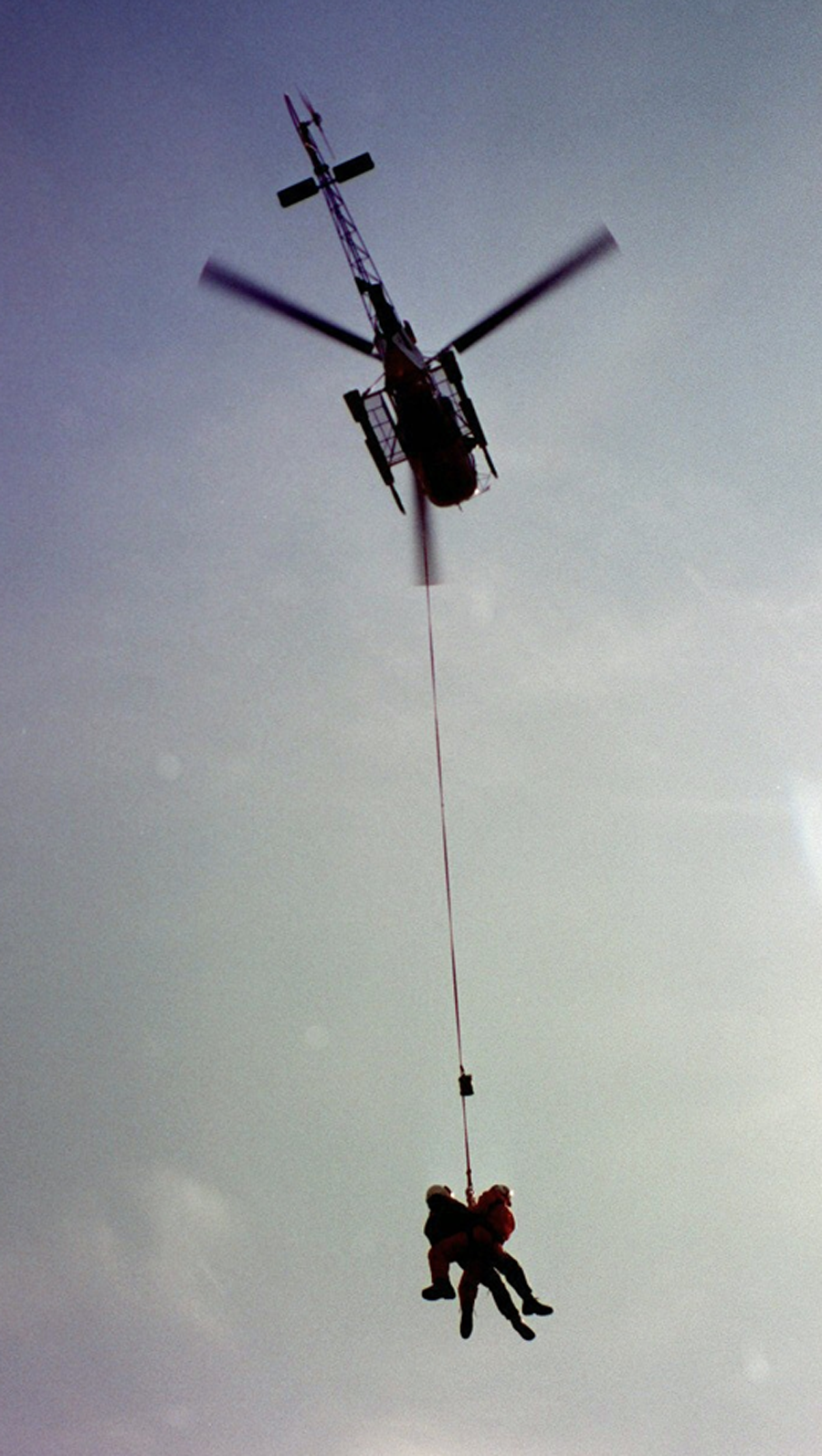
Short-haul helicopter rescue underway on Denali.
The NPS patrols undergo medical training, high-angle rescue training, and helicopter rescue training each season. Since the inception of the rescue program, NPS mountain patrols have performed an exceptional number of valiant acts. The patrols typically treat over 100 medical cases per season for climbers that either walk up to the medical tent seeking attention or are brought to the camp as part of a rescue effort. The NPS patrols routinely assist climbers who have become exhausted or have discovered that their skills are inadequate for the climbing demands. Patrols have undertaken hundreds of technical rescues, often in precarious weather and challenging terrain (McIntosh et al., 2010). The NPS has performed cargo drops to mountaineering groups that have had gear destroyed by weather or are otherwise stranded, but only in special cases to prevent further injury or death. When fatalities occur on the mountain, the NPS makes it a goal to recover the bodies when possible. To avoid putting ground rescuers at risk, body recoveries are usually performed with a hydraulic jawlike unit (called the Grabber) hung from beneath the helicopter and operated remotely by the pilot.
The self-reliance of some mountaineers unfortunately tends to dwindle if it is known that a rescue service is standing by. The NPS was careful to state early on that the primary purpose of organized mountain patrols was to enforce National Park policies and not to exclusively act as a rescue service. Further, the NPS will advise climbers if it judges their climbing experience to be incompatible with a safe Denali climb; the underlying reasoning is that the goal is to get everyone off the mountain alive and not to assist in climber's summit attempts. Although most mountaineers on Denali carefully plan their expedition with the intent of being self-sufficient, it is obvious that others do not. NPS patrols have had to assist ill-prepared climbers on numerous occasions and to rescue mountaineering parties that likely should not have been on the mountain in the first place. For example, one young solo mountaineer carried a ladder strapped to his shoulders to prevent a full drop into a crevasse. He used this strategy for less than 1 mile when he jettisoned the ladder because it was too heavy. His ascent profile up the West Buttress was too fast for proper acclimatization, and he was subsequently found unconscious at 5730 m and suffering from HAPE and high altitude cerebral edema. He was short-hauled to base camp by the NPS Lama helicopter; NPS efforts along with other altruistic climbers undoubtedly saved his life.
In another instance, a climber whose mountain résumé included (only) three hikes up the standard route of Long's Peak in Colorado was advised by the NPS rangers to abort his attempt to climb Denali. His lack of mountaineering and glacier experience along with his anticipated solo climb was foolish according to NPS staff. He ignored their warnings. The climber carried a 2.5-m-long, 5-×5-cm piece of wood to protect himself from a crevasse fall. This wood piece would likely support only ∼45 kg in a fall; however, this climber weighed ∼100 kg without gear. After losing a mitten, burning twice as much fuel as anticipated, and having difficulty navigating relatively easy terrain, he slipped and tumbled approximately 30 m while climbing from high camp at 5250 m to Denali Pass at 5700 m. This proved to be the last straw, and NPS personnel and a number of private climbers forcibly escorted him down to base camp.
Mountaineers are typically very independent people who shun political oversight; governmental monitoring of climbing activities has always been a delicate proposal. With the increasing number of climbers traveling to Denali, amid much controversy the NPS decided in 1995 to collect a $150 registration fee (later raised to $200 and poised to be raised again as early as 2012) for each climber intending to climb the mountain. The NPS was careful to state that this fee was designed to support mountaineering administrative costs and salaries and to produce education materials, rather than being a “rescue fee” if a climber found himself in trouble. Also in 1995, the NPS began requiring a 60-day preregistration deadline designed to give mountaineers time to properly prepare for the expedition. These changes likely resulted in a safer climbing environment; the fatality rate decreased by 53% when compared with the years before and after 1995 (McIntosh et al., 2008; McIntosh et al., 2010). Further, registration information from Denali has become the basis for an extensive climber database compiled from pre-registration information and pre- and postexpedition interviews. This database of climbers has become invaluable for epidemiological studies, as it is one of the most complete mountaineering databases for any single mountain in the world.
Conclusions
Denali's subarctic environment makes it unique among the world's big mountains. Such a venue has presented numerous distinctive challenges for both high altitude- and cold-oriented medical and physiological research and mountain rescue. Nonetheless, the opportunities in this setting over the past few decades have also proved to be exceptional for investigator, medical provider, and rescuer alike. It must be remembered that Denali, the tallest and one of the most hostile mountains in North America, possesses the potential to inflict the sort of serious “epic” on mountaineers for which it has developed a well-earned reputation. The contribution of medical research and the development of mountain rescue on this peak have resulted in substantial benefits that will continue to serve not only climbers who choose to tackle Denali itself, but also those who go to high mountains elsewhere around the globe.
Footnotes
Disclosures
The authors have no conflicts of interest of financial ties to disclose.