




Abstract
Abstract
Aldenderfer, Mark. Peopling the Tibetan plateau: insights from archaeology. High Alt. Med. Biol. 12:141–147, 2011.—Recent studies of the genome of modern Tibetans have revealed the existence of genes thought to provide an adaptive advantage for life at high elevation. Extrapolating from this discovery, some researchers now argue that a Tibetan–Han split occurred no more than 2750 yr ago. This date is implausible, and in this paper I review the archaeological data from the Tibetan plateau as one means by which to examine the veracity of this assertion. Following a review of the general state of knowledge of Tibetan prehistory, which is unfortunately only at its beginnings, I first examine the data that speak to the initial peopling of the plateau and assess the evidence that traces of their presence can be seen in modern Tibetans today. Although the data are sparse, both archaeology and genetics suggest that the plateau was occupied in the Late Pleistocene, perhaps as early as 30,000 yr ago, and that these early peoples have left a genetic signature in modern Tibetans. I then turn to the evidence for later migrations and focus on the question of the timing of the establishment of permanent settled villages on the plateau. Three areas of the plateau—northeastern Qinghai, extreme eastern Tibet, and the Yarlung Tsangpo valley—have evidence of permanent settlements dating from ca. 6500, 5900, and 3750 yr ago, respectively. These data are not consonant with the 2750 yr ago date for the split and suggest at a minimum that the plateau has been occupied substantially longer and, further, that multiple migrations at different times and from different places have created a complex mosaic of population history.
Introduction
In this article I will (1) briefly describe the state of archaeological knowledge of the Tibetan plateau, (2) examine the data for the earliest occupations of the plateau and assess the probability that these early peopling events led to the establishment of permanent populations, and (3) evaluate the data that speak most clearly to the dating of the earliest permanent occupations found on the plateau.
State of knowledge of the deep Tibetan past
Archaeological research on the Tibetan plateau is still in a developmental stage (Aldenderfer and Zhang, 2004, pp. 2–11). Relatively few Chinese and Tibetan archaeologists and even fewer scholars from other nations have had the opportunity to conduct research on the plateau. Consequently, there are major gaps in our knowledge of its prehistory, as well as significant biases in the locations of research that must be considered as we assess the evidence for the peopling of the plateau and the establishment of a permanent occupation on it. Perhaps the greatest problem facing researchers is the very small number of archaeological sites that have been excavated and that have reliable age assessments. The scale of excavation at these sites is very small, and this severely limits the degree of confidence we have about the nature of the materials discovered. Although many sites of a putatively early date have been discovered, few of them have been excavated. Thus the estimation of their age is based on the typological comparison of the stone tools, fragments of pottery, and other artifacts found at them to dated sites often located hundreds, if not thousands, of kilometers away. This cross-dating of sites is standard practice in archaeology, but it is often unreliable and thus must be used with caution. The lack of excavated sites also means that other types of critical data, such as faunal and paleoethnobotanical data useful in reconstructing diet, architectural remains that could indicate the construction of structures capable of being used over long winters, and, most importantly, evidence of storage features within them, are in short supply. Thus it is difficult to frame hypotheses about the seasonality of site use, the degree of permanence in a habitation, and the ways in which landscapes were used.
Another serious gap in our knowledge of plateau prehistory is the lack of bioarchaeological analyses of human remains. In many regions of the world, such studies, which often include standard osteological analysis, craniometrics, isotope analysis (especially for strontium, which is a key indicator of the geographic origin of an individual), and more recently the recovery of ancient DNA (aDNA), have led to major breakthroughs in understanding population history and migrations, especially when combined with the results of studies of modern mitochondrial DNA (mtDNA) and Y chromosome DNA of peoples thought to be direct descendants of founding or original populations Although the preservation of aDNA can be problematic, as is the potential for contamination, recent research on the plateau and in the Himalayan arc has demonstrated conclusively that aDNA is often well preserved and can be used to identify mtDNA haplogroups (Aldenderfer, 2010a, b). No studies of Y chromosome aDNA from plateau samples have been published to date, but these are currently underway. Two recent studies of Neolithic-era sites found below the northeastern rim of the plateau in Qinghai at Taojiazhai (1700 to 1900 yr ago; 2330 m; Zhao et al., 2011) and Lajia (3800 to 4000 yr ago; ca. 1800 m; Gao et al., 2007) attest to the likelihood that aDNA will be recoverable on the plateau itself.
In contrast to the paucity of excavated habitation sites, hundreds, perhaps even thousands, of tombs have been excavated on the plateau since the 1980s. The majority of these tombs were created 2500 to 1200 yr ago; thus the remains found within them would have had direct relevance to research directed at the assertion of a recent genetic divergence of Han and Tibetans. Unfortunately, virtually none of the human remains discovered in these tombs was either analyzed or even stored for future research, and thus a very promising data source that could speak to the peopling of the plateau is unavailable.
Yet another significant bias that conditions our knowledge of the Tibetan past is that only three areas of the plateau have seen research relevant to questions of the peopling of the plateau: the extreme northeast in what is now known as Qinghai, especially the area to the south of Lake Qinghai (Tibetan Ngonpo Tso), the extreme eastern fringe of the plateau in the Mekong (Tibetan Zachu) River drainage near the modern town of Chamdo, and the environs of Lhasa along the Yarlung and Kyichu River systems (see Fig. 1). Although this research is of high quality, what has inevitably happened is that the findings have been used to characterize the prehistory of the entire Tibetan plateau. This is especially the case for the important findings in Qinghai, where the researchers have argued that their model of the peopling of the plateau is relevant not only to the Lake Qinghai region, but can also be extended to the remainder of what they call the High Plateau, which is farther to the south (Madsen et al., 2006; Brantingham et al., in press). Although it is well known from ethnography that some hunting and gathering peoples had extensive foraging territories, this is like arguing that a site found in the state of Maine is closely related to one in Texas, but without having sites between them that define the nature of their relationship. Such assertions are especially problematic, since new data from sites located on the far west of the plateau and in the high-valley systems of the Himalayan arc from Ladakh to Nepal show clear, but as yet undated, relationships to sites at lower elevations (Aldenderfer and Olsen, 2008; Aldenderfer, 2010a, b). These data suggest that the population history of the plateau is likely to be complex and that multiple peopling events took place in many regions at different times. We should thus expect the aDNA and modern DNA evidence, as well as the archaeology, to reflect a mosaic of population interactions and migrations on the plateau over time.
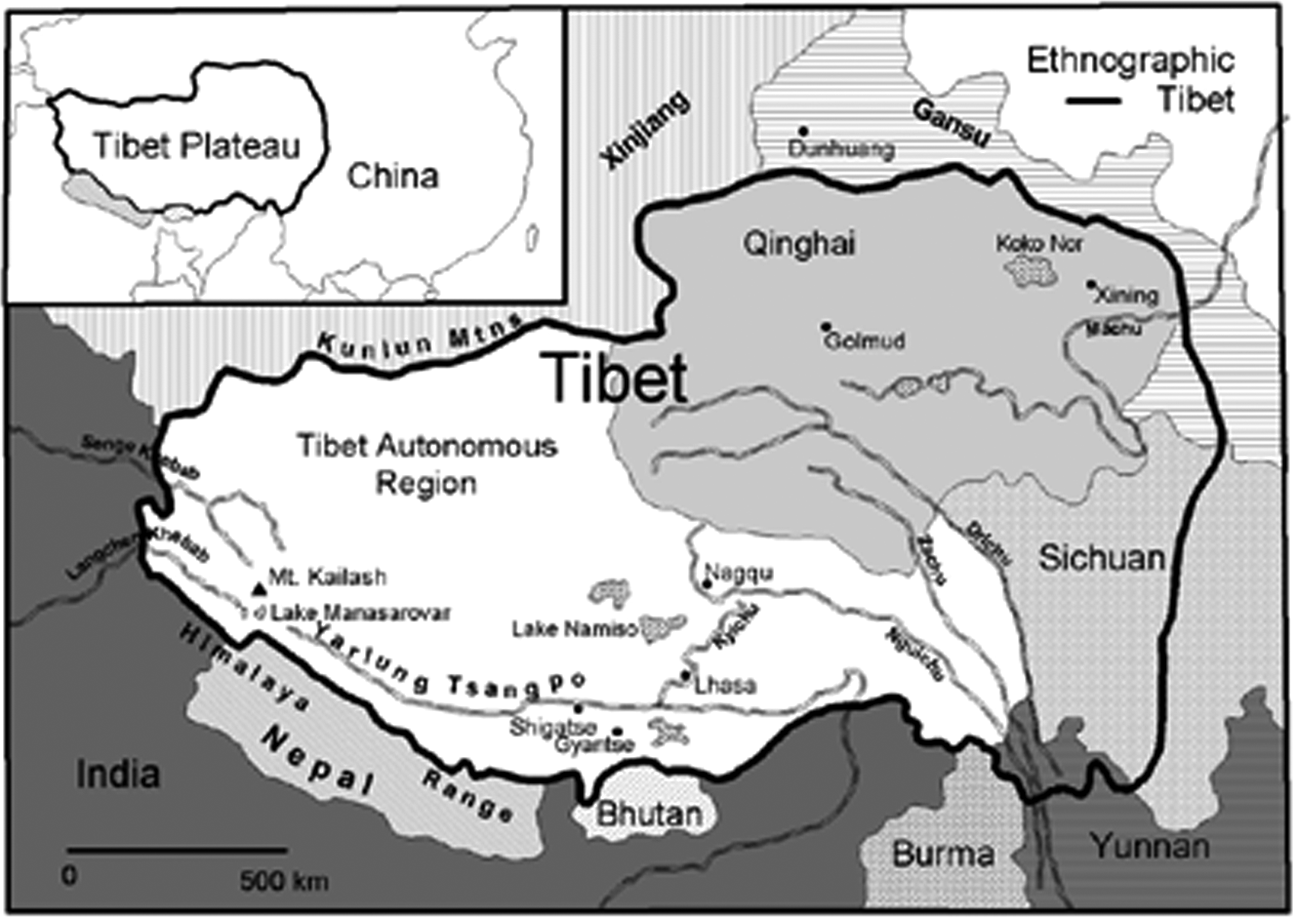
The Tibetan plateau. Ethnographic Tibet includes those areas in which the Tibetan language is spoken today. Languages related to Tibetan are also spoken in Bhutan, Sikkim, Nepal, and in the western Himalayas of India.
Earliest occupations of the Tibetan plateau
Archaeologists use the term Upper Paleolithic to describe the time frame from roughly 50,000 to 10,000 yr ago; the term Late Pleistocene covers the same period and is used primarily by geologists and paleoclimatologists. The Holocene is the period after 10,000 yr ago and describes a postglacial environmental context worldwide. Although there has been speculation that the initial occupation of the Tibetan plateau was as early as 50,000 yr ago, more recent research suggests that the earliest occupation of the plateau is no earlier than 30,000 yr ago and could be much later in time (Fig. 2). Xiao Qaidam [3100 masl (meters above sea level)] is found on the extreme northern fringe of the plateau, and the original dating of the geological context at Qaidam indicated that the site dated between 33,000 and 35,000 yr ago (Huang, 1994). A more recent examination of the geological context of the site places it between 3000 and 11,000 yr ago, with the latter the most probable date, given the reassessment of the cross-dating of the stone-tool assemblage by Brantingham and colleagues (in press; Sun et al., 2010).
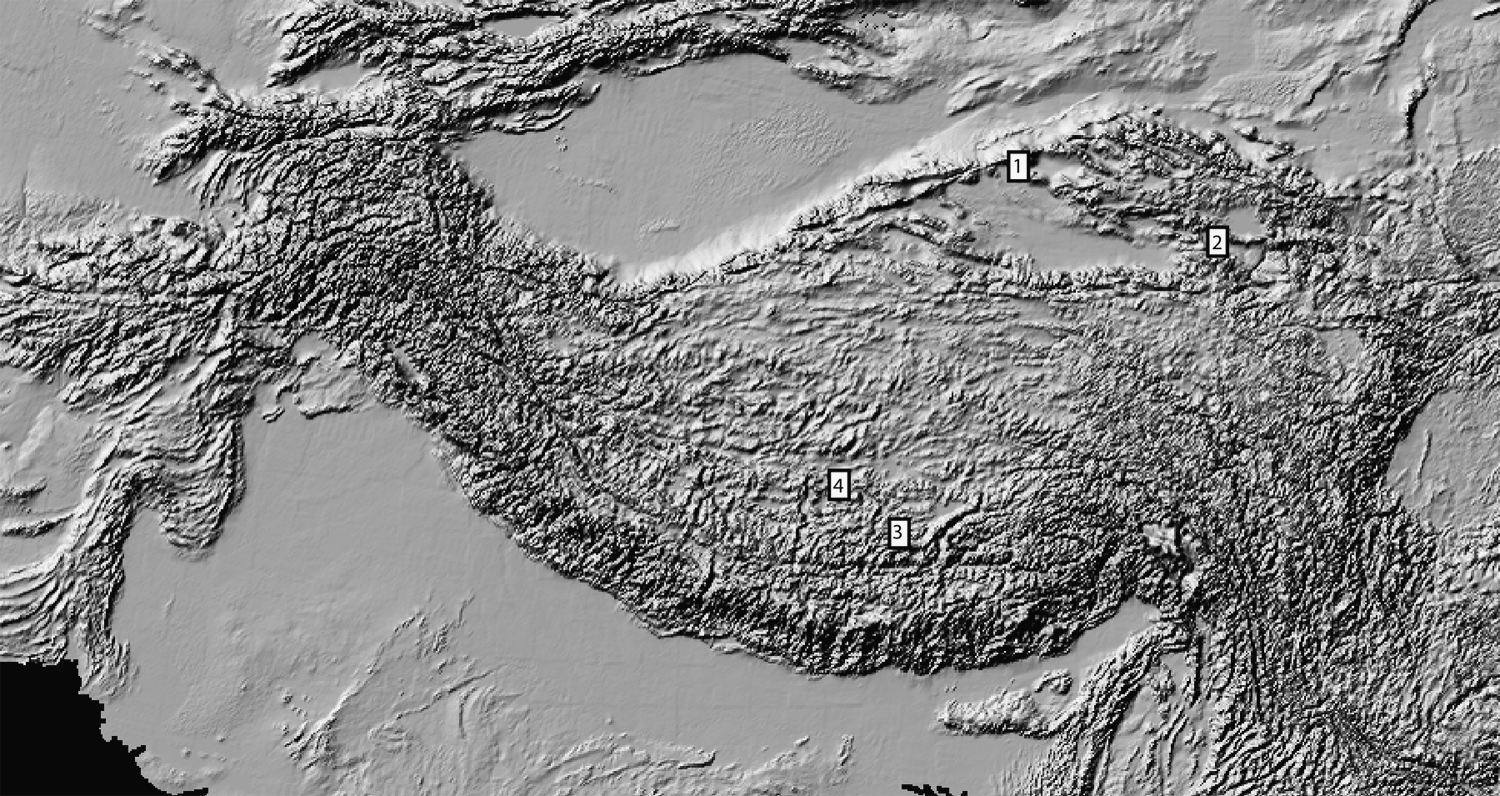
Location of Paleolithic sites on the Tibetan Plateau. (1) Xiao Qaidam, ca. 33,000 yr ago; (2) Heimahe 1, Jiangxigou 1, and Locality 93-13, 15,000 to 13,000 yr ago; (3) Chusang, 32,000 to 28,000 yr ago; and (4) Siling Tso, ca. 30,000 yr ago.
Another problematic site of a reputed early date is Siling Tso, which is located some 300 km northwest of Lhasa at an elevation of 4600 masl (Yuan et al., 2007). Assemblages of stone tools are found on a series of terraces surrounding a large lake. Using cross-dating of tool forms, the authors argue that these tools are likely to date to the Late Pleistocene. The terraces on which these tools were found date from 40,000 to 30,000 yr ago, but it is unclear if the age of the terraces significantly constrains the age of the tools. Indeed, Brantingham and colleagues (in press), based on their work in Qinghai, argue that these tool forms may in fact date to after 10,000 yr ago.
Chusang (4200 masl), located in central Tibet near Lhasa, presents a similarly confused picture. First discovered in 1995, the site consists of 19 human hand- and footprints impressed into a now calcified travertine deposit (Zhang and Li, 2002; Aldenderfer, 2006a, b; Fig. 3). All the prints were pressed into the same layer of the travertine and, because they had rough, unsmoothed edges, were not likely to have been cut or carved out of the rock. Size differences in the prints suggest that both adults and children were present when they were made. The travertine deposit began as a soft calcitic mud precipitated as dissolved CO2 degassed, and the hot spring water became supersaturated with calcium carbonate. The exact depositional environment of this mud is unclear from the recorded observations. The prints were formed sometime after this deposition, and the mud was subsequently lithified, presumably by the addition of calcium carbonate cement, forming the present hard, calcareous, travertine deposit. An initial dating of the geological context of the prints indicated that they were formed around 21,000 yr ago (Zhang and Li, 2002). Re-examination and new dating of the context using the uranium–thorium isochron method suggest a date of occupation between 28,000 and 32,000 yr ago (Aldenderfer 2006a; 2007: p. 159). Stone tools found immediately downslope from the site appear to be of considerable antiquity. If this dating holds up, Chusang is currently the oldest known site on the Tibetan plateau.
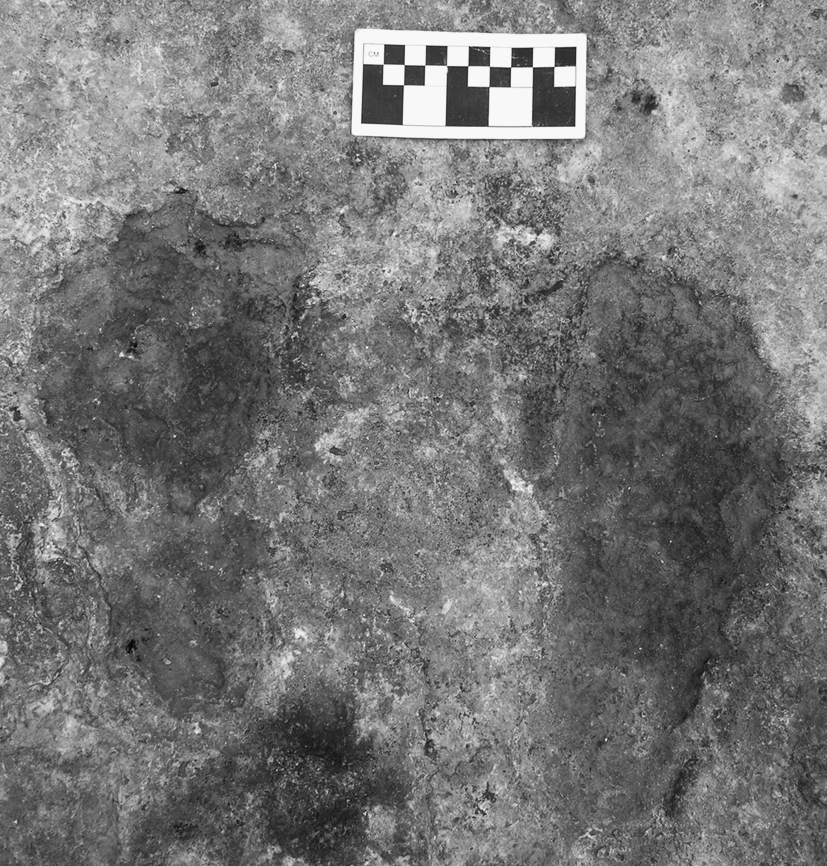
Two footprints from Chusang. The scale bar is in centimeters (Photo: Mark Aldenderfer).
All other dated sites of pre-Holocene age are found in Qinghai. Madsen and colleagues (2006) report the discovery of three archaeological sites (Heimahe 1, Jiangxigou 1, and Locality 93-13) that contain a total of five distinct occupations dating between 15,000 and 13,000 yr ago. They are found at elevations between 3200 and 3300 masl, and although the excavations at them were of limited scale, sufficient data were recovered to indicate that the sites were short-term occupations and thus part of a larger- scale settlement system that involved seasonal mobility. Although the full extent of the system remains unknown, the authors speculate that the more permanent residences of these foraging peoples were likely located at significantly lower elevations (ca. 2400 masl) some 74 km distant (Madsen et al., 2006: p. 1440). One other site, Xiadawu (4000 masl) is found along the Yellow River (Tibetan Machu) in the Kunlun range. It has a reported date of ca. 11,000 yr ago (Van der Woerd et al., 2002), but little is known of how this site relates to others found in Qinghai.
Because of the limited amount of research done at these sites, it is difficult to argue with certainty about the permanence of their occupation. However, the Qinghai sites all appear to be short-term occupations and, given their location on the rim of the plateau, it seems reasonable to assume that more permanent base camps associated with them are to be found at lower elevations off the plateau. This is a key feature of the Brantingham and colleagues' (2003; see also Madsen et al., 2006) three-step model of the peopling of the plateau. Although foragers visited sites at higher elevations, up to at least 4000 m, they did not live there permanently. Therefore, it is unlikely that these peoples had either genetic or acclimatizational adaptations to high-elevation life, although the science supporting this assertion remains to be performed. A similar step model has been proposed for the Andes (Aldenderfer, 1998); in far southern Peru, foraging peoples first used an elevation step between ca. 3000 and 3800 m, moving into sites in this range from lower-elevation base camps. However, unlike the model proposed by Brantingham and colleagues, these Andean foragers quickly (within a 500-yr period) became permanent residents at high elevation, presumably initiating the process of genetic adaptation to life at high elevation.
Chusang, and possibly Siling Tso, may well offer a different model for the peopling of the plateau. Given their location, it seems unlikely that they were part of a settlement system that included a lower-elevation component. One would have to move at least 1000 km to the north, east, or west, or cross the Himalayan arc to the south to get to a lower-elevation environment. Instead, it seems reasonable to postulate that the peoples of these sites represent an earlier occupation of the plateau that may well have persisted, albeit in small numbers, into the Holocene. This scenario is bolstered by the findings of Zhao and colleagues (2009), who use mtDNA evidence from modern Tibetan peoples to argue that they observe traces of an earlier migration of people onto the plateau, one that dates before 21,000 yr ago. The period from 45,000 to 24,000 yr ago was marked by a significant climatic amelioration in the region, especially along the northern margins of the plateau, which saw the expansion of vast grasslands that attracted large numbers of herbivores, thus creating new and attractive niches for hunters to exploit. This resource likely attracted foragers to the plateau in small numbers (Aldenderfer, 2006b). They survived the Last Glacial Maximum (ca. 24,000 to 16,000 yr ago), a period of intense cold and reduced resource density, and they most likely moved into the lower-elevation zones of the central plateau, such as the Yarlung Tsangpo valley and its tributaries. Sites like Chusang, with its permanent hot spring, may have been particularly attractive.
Earliest certain permanent occupations of the Tibetan plateau
In contrast to the confusion surrounding the nature of the Paleolithic occupation of the plateau, our understanding of its use during the Holocene is somewhat clearer, but far from ideal. During the period 6000 to 9000 yr ago, the first permanent settlements appear (Aldenderfer, 2007; Brantingham et al., 2007; Rhode et al., 2007). Climate across East and Central Asia improved significantly in the postglacial period, although this amelioration is punctuated by a series of short intervals of cold and dry events. A wide range of archaeological cultures based on the use of domesticated plants and animals (usually referred to as the Neolithic) is known from the low-elevation zones on the eastern margins of the plateau. Although a substantial amount of archaeological research has been done on these cultures, their relationships remain obscure (Liu, 2004). The earliest Neolithic culture along the northeastern margin of the plateau in Qinghai is known as Yangshao, which is dated to 7000 to 5400 yr ago (Chayet, 1994: p. 51; Aldenderfer, 2007: p. 153). This is followed by the Majiayao culture (5400 to 4800 yr ago) that is found in Gansu and eastern Qinghai. A local variant of this culture is Zongri (ca. 5600 to 4000 yr ago), which is found just below the edge of the plateau in Qinghai (Chen, 2002). In Sichuan, Neolithic cultures are known from at least 7000 yr ago (Bureau of Cultural Relics, 1985: p. 178). Although Neolithic-era cultures are known to exist to the south along the Himalayan arc, the only one studied to any extent is found at Burzahom along the far western margins of the plateau in Kashmir and is dated to ca. 4500 yr ago (Sharma, 2000). Each of these archaeological cultures has been identified as a potential source of migrants to the plateau during this period, but there remains controversy as to which, if any, can be considered an ancestral population to the Tibetan people found on the plateau today.
On the plateau itself, however, only a small number of sites of this time period have been identified and then excavated (Fig. 4). In Qinghai, Jiangxigou 2 is found near the southern margin of Ngonpo Tso at an elevation of 3312 masl. The site has three distinct uses, with the earliest from ca. 9100 to 8170 yr ago, a second from ca. 6500 to 4950 yr ago, and a final one at ca. 2000 yr ago. The second occupation is said to contain thick, undecorated, thin-cord-marked ceramics thought to date around 6500 yr ago, and the investigators suggest that the ceramics are very similar to those of the low-elevation Zongri culture (Rhode et al., 2007: p. 604). Faunal remains include ovids (most likely the Himalayan blue sheep, Pseudois nayaur) and artiodactyls. No evidence of structural remains was found, but the researchers speculate that, given the presence of ceramics, it is possible that the site may reflect a longer-term occupation. Unfortunately, no plant evidence has been recovered from the site. Heimahe 3, also on the south side of the lake at an elevation of 3202 masl, dates to ca. 8400 yr ago and is seen as a short-term occupation. Finally, Xidatan 2 (4300 masl), located some 550 km southwest of the lake, dates between 8200 and 6400 yr ago. It appears to be a short-term occupation, but one that has connections to a source of obsidian (volcanic glass), located some 951 km farther to the west on the Chang Tang.
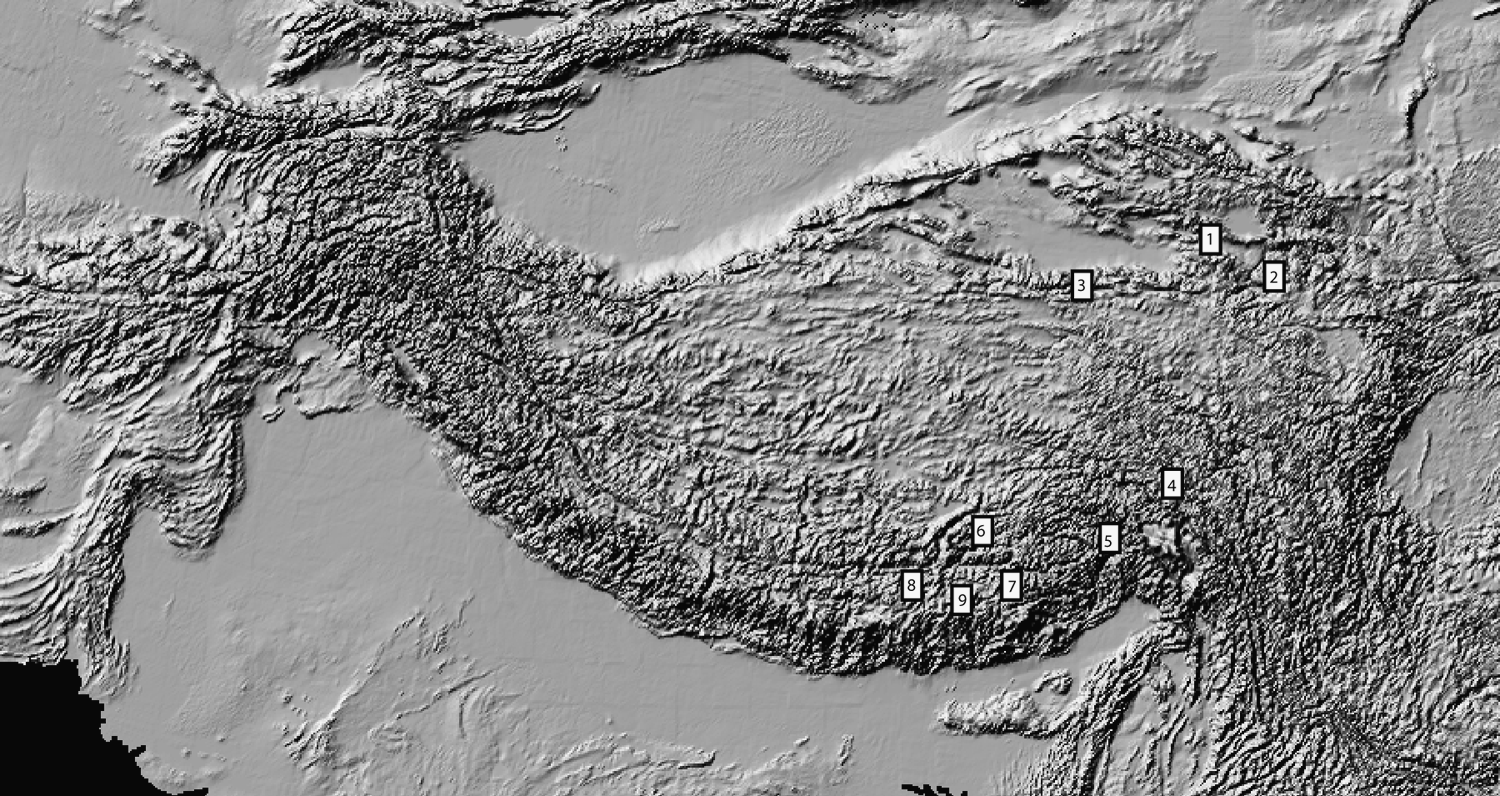
Location of Neolithic-era sites on the Tibetan Plateau: (1) Qinghai sites, including Heimahe 3 (8400 yr ago) and Jiangxigou 2 (6500 to 4950 yr ago; (2) Zongri complex sites, ca. 6500 yr ago; (3) Xidatan, ca. 8200 to 6400 yr ago; (4) Kha rub, 590 to 4145 yr ago and Rngul mdv, ca. 4160 yr ago (Karou and Xioenda); (5) sites at the great bend of the Yarlung Tsangpo; (6) Chugong, 3750 to 3150 yr ago (Qugong); (7) Bannga, (8) Phrang mgo (Changguogou); and (9) Qinba.
Aside from these sites, two others give us insight into the earliest permanent occupations on the plateau: Kha rub (Chinese Karou) and Chugong (Chinese Qugong). Kha rub is located at 3100 masl on a high terrace above the Mekong (Tibetan Zachu) River. The occupation at the site ranges from 5900 to 4145 yr ago. Substantial semisubterranean structures, copious amounts of ceramics, one cultivar (foxtail millet, Setaria italica), and the remains of two animals thought to be domesticated species (an unidentified bovid and pigs, Sus scrofa) have been discovered (Bureau of Cultural Relics, 1985: p. 168; Flad et al., 2007). There is no question that this site is a permanent settlement. At least 10 other sites said to be of Neolithic age are found near Kha rub along the Zachu and in the vicinity of Chamdo (Chayet, 1994: p. 46), but of these only Rngul mdv (Chinese Xiaoenda) has been chronometrically dated. The site is contemporaneous with the latest occupation of Kha rub (ca. 4160 yr ago; Aldenderfer, 2007: Table 1).
Chugong is located 5 km north of Lhasa at an elevation of 3680 masl (Institute of Archaeology, 1999). It has two primary occupations that range in time from ca. 3750 to 3150 yr ago. According to the investigators, domesticated species recovered included yak (Bos grunniens), domesticated sheep (Ovis aries shangi), and pig (Sus scrofa). No structures were encountered. The ceramic assemblage, however, is large and impressive. Unfortunately, there is no indication of plant remains at the site. Other sites associated with Chugong that have had some systematic work include Phrang mgo (Chinese Changguogou), located south of Lhasa on the north bank of the Yarlung Tsangpo at an elevation of 3570 masl (He, 1994; Li and Zhao, 1999), and Bangga in the Yarlung valley (Chayet, 1994). Although not radiocarbon dated, the archaeological assemblage, especially the ceramics, at Phrang mgo, are very similar to those found at Chugong. Remains of "naked" barley (Hordeum vulgare L. Var. nudum; Fu et al., 2000) have been recovered. Excavations at Bangga have uncovered at least one rectangular semisubterranean house, stone-lined interior storage pits (one of which was used for a secondary burial), and ceramics similar to those at Chugong. Sites thought to be part of the Chugong tradition, but which have seen limited work, are those in the great bend area (Nying-khri/Nyingchi) of the Yarlung Tsangpo, such as Jumu, Beibeng, and Maniweng, among others (Chayet, 1994: pp. 46–47). These sites also indicate the presence of a permanent population of agriculturalists on the plateau.
In summary, three regions of the plateau have evidence of relatively early permanent settlements: extreme northeastern Qinghai at 6500 to 5600 yr ago, extreme eastern Tibet at 5900 yr ago, and the Yarlung Tsangpo valley in central Tibet at 3750 yr ago. How does the evidence from these sites reflect the population dynamics and history of the Tibetan plateau? Two basic models can be invoked to explain how these populations and their associated material culture appeared: demic diffusion and trait diffusion. The former is the movement of people who carry their culture with them into new environments. Population expansion may push people into new, unoccupied areas or into those already inhabited. If local people are present, a wide range of possible social interactions may occur, from outright assimilation or replacement of the locals, intermarriage between them, or mutual avoidance. In contrast, trait diffusion reflects the movement of ideas, objects, and technologies into new cultural contexts. Rhode and colleagues (2007: p. 609), following Chen (2002), argue that Jiangxigou 2 may reflect the movement of Majiayao peoples into the region and the “assimilation of agricultural and ceramic traditions by local Tibetan groups, followed by settled agricultural communities peopled by these local groups.” Although Kha rub has at least two low-elevation species present that were necessarily first domesticated at lower elevation (foxtail millet and pigs), most researchers believe that the material culture at the site reflects an indigenous origin that is, a population already present on the plateau margins that adopted these domesticates into their subsistence practice (Aldenderfer 2007: p. 154). Finally, the material culture at Chugong, along with domesticated yak and barley, suggests an in situ cultural development from indigenous (i.e., high plateau) origins. Taken together, the evidence from these sites argues for a long-term presence of people on the plateau throughout the Holocene and, quite possibly, from Late Paleolithic times.
If people have been on the plateau for the past 10,000 yr or longer, these findings call into question the assertion that Han and Tibetans diverged genetically no more than 2750 yr ago. Even if the existence of a persistent Late Pleistocene population is discounted, sites with permanent occupations are found in three regions at elevations above 3000 m, and at each the dates of initial occupation range from 6500 to 3750 yr ago. These data suggest that the peoples who lived in these regions at that time were successfully adapted to life at high elevation, in that these populations grew over time and expanded across the plateau. Whether they carried the genes identified by Simonson and colleagues (2010) and Yi and colleagues (2010) cannot be answered directly by the archaeological data at hand.
A number of confounding factors may be responsible for the lack of consonance of the genetic and archaeological data. It is very likely that there were multiple migrations from multiples sources onto and off the plateau. This would create a mosaic effect, wherein people who are identified as modern “Tibetans” may well have distinct ancestries, even if they are near neighbors today who self-identify as “Tibetans.” The question of “who is a Tibetan” is not a simple one since any answer to it can only be partially addressed by genetic analysis (Aldenderfer, 2007: p. 162). Further, the small samples of Tibetans, a total of 50 from two villages, in the Yi and colleagues work (2010) raise some serious concerns. Given the potential for a mosaic of interacting and blended populations, these samples are simply too small to inspire confidence in the results of the analysis. This concern is underscored by the response of one of the researchers to a question posed to him by the New York Times reporter Nicholas Wade: “Rasmus Nielsen, a Danish researcher at the University of California, Berkeley, did the statistical calculations for the Beijing study. ‘We feel fairly confident that something on the order of 3,000 years is correct,’ he said. But in a later e-mail message, Dr. Nielsen said, ‘I cannot with confidence rule out that the divergence time is 6,000 instead of 3,000.’” (New York Times, July 1, 2010: http://www.nytimes.com/2010/07/02/science/02tibet.html). In this case, 3000 yr makes a real difference to the argument, and it brings the archaeological and genetic data into better, if incomplete, alignment. Finally, the model does not clearly indicate the elevation range in which the selective pressure for high-elevation adaptation is initiated. That is, is permanent habitation at an elevation of ca. 3000 m sufficient to create a selective pressure against those who do not have the proper combination of genes, or is it higher? Archaeology cannot answer this question, but it does suggest that elevations around 3000 m are sufficient to initiate the selective pressures.
Footnotes
Disclosures
The author has no conflicts of interest or financial ties to disclose.