




Abstract

The patient arrived in the emergency room 31 min after the beginning of prehospital treatment. There she had a GCS of 15, central cyanosis, tachypnea and coughing, and a pulse oximetry of 92% (with 6 Lmin−1 oxygen), heart rate of 120 min−1, blood pressure of 120/70mmHg and an epitympanic core body temperature of 33.8°C. (Ototemp 3000 Special Duty, Exergen, Watertown, MA) According to the Innsbruck emergency room algorithm, a head-trunk CT-scan was performed, which showed bilateral alveolar fluid accumulation consistent with lung contusions and pulmonary edema. No other pathologies were detected. At 40 min post-admission, the patient became severely dyspnoic and showed clinical signs of pulmonary edema. After anesthetization and endotracheal intubation, the patient was ventilated with an inspiratory oxygen fraction (Fi
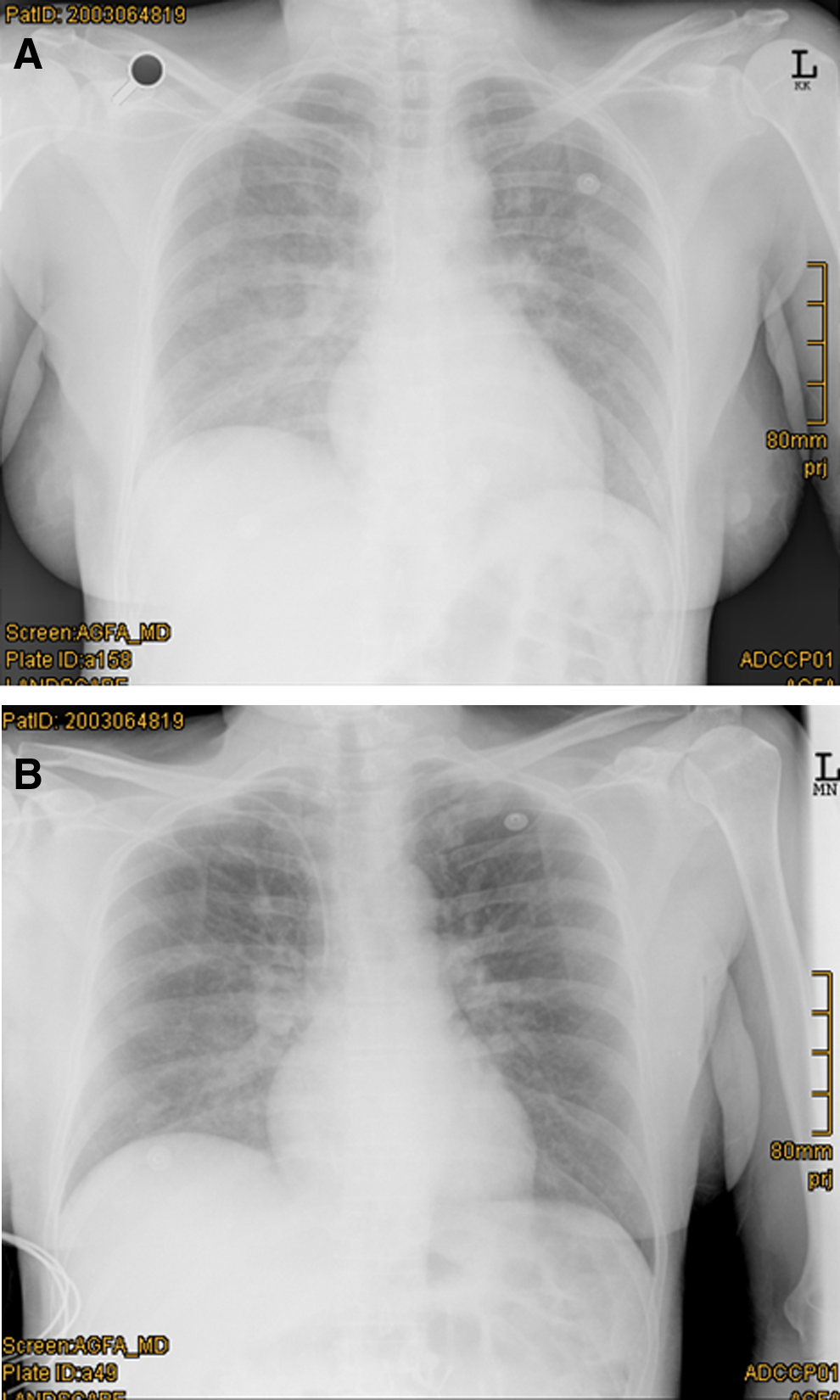
Chest x-ray shows bilateral pulmonary edema
Pulmonary edema has been reported in a 51-year-old female who sustained complete avalanche burial for approximately 20 min with a core body temperature of 32°C at extrication and who recovered with diuretics and CPAP only. (Schmid, 1981) Recently, a 42-year-old male with pulmonary edema during forced-air rewarming from 24.7°C core body temperature after complete burial for more than 2 hours has also been reported (Strapazzon et al., 2011). The incidence and the risk of pulmonary edema after avalanche burial are uncertain and are very likely under-reported. The etiology of post-burial pulmonary edema is unclear but may be a combination of negative-pressure pulmonary edema (Fremont et al., 2007), hypoxia-induced pulmonary artery hypertension, and hypoxia-induced left heart insufficiency. When caring for a complete avalanche burial patient, the potential injury pattern (Hohlrieder et al., 2007), the current treatment guidelines (Brugger et al., 2011), and the risk of a pulmonary edema must be considered. Thus, the patient should be transferred to a hospital that is capable of treating pulmonary edema with oxygen administration and positive-pressure ventilation.
In conclusion, we report a female patient who was completely buried by an avalanche for 20–30 min and who developed severe respiratory failure due to pulmonary edema. More research is needed to evaluate post-avalanche burial pulmonary edema.
Footnotes
Disclosure Statement
The authors have no competing interests or financial ties to disclose.