




Abstract

U
We conveniently sampled, interviewed, and determined BMI of 250 mountaineers at the Marangu Gate, and a logistic model with logit function in r-statistics program was used to analyze the data. About 64% (n = 159) of the respondents were males and 36% (n = 91) were females. Similarly, age of respondents ranged from 15 to 69 years and their mean age was 38.9 years old, whereas their BMI ranged from 17 to 38 kg/m2 with the mean BMI of 25.2 kg/m2. Our results show that 65% (n = 162) of the interviewed tourists managed to summit, whereas 35% (n = 88) did not (i.e., reached Uhuru Peak). Both BMI (χ21, 248 = 45.525; p = 0.001, α = 0.05, Fig. 1) and age (χ21, 248 = 9.2; p = 0.01, α = 0.05) had significant negative influence on summiting success. Both results suggest that as BMI and age increase, summiting success declines as hypothesized.
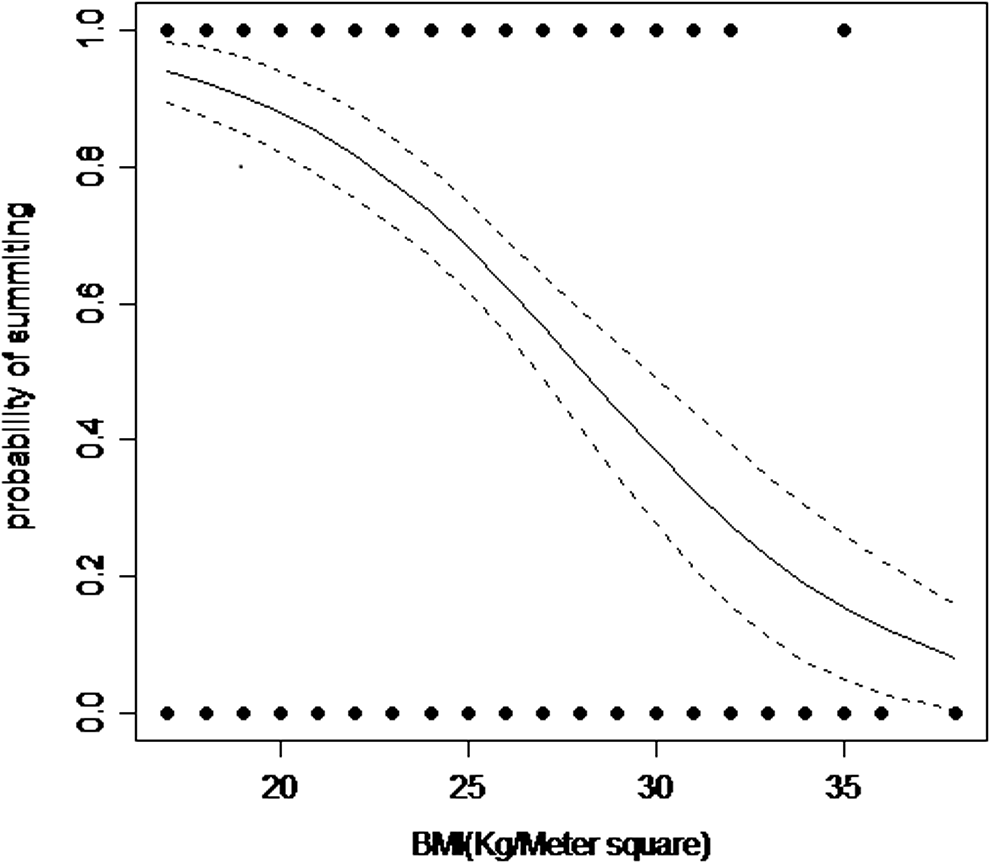
Relationship between BMI and probability of summiting. BMI, body mass index.
Huey et al. (2007) and Wagner (2008) obtained similar results on the influence of age on summiting success in the study conducted on Mount Everest (8848 m) and Mount Whitney (4421 m), respectively. Our study concurs with the arguments that the low concentration of oxygen at high altitudes reduces the body's ability to support full functioning of physiological activities (West, 1984). This study informs managers and mountaineers on success rates of summiting Mt. Kilimanjaro with respect to BMI and age. It is our anticipation that once visitors are informed of the effect of BMI, they will attempt body weight reduction before attempting climbing this highest mountain in Africa. We therefore recommend inclusion of our key findings in Kilimanjaro National Park promotional materials and interpretive media.