




Abstract

W
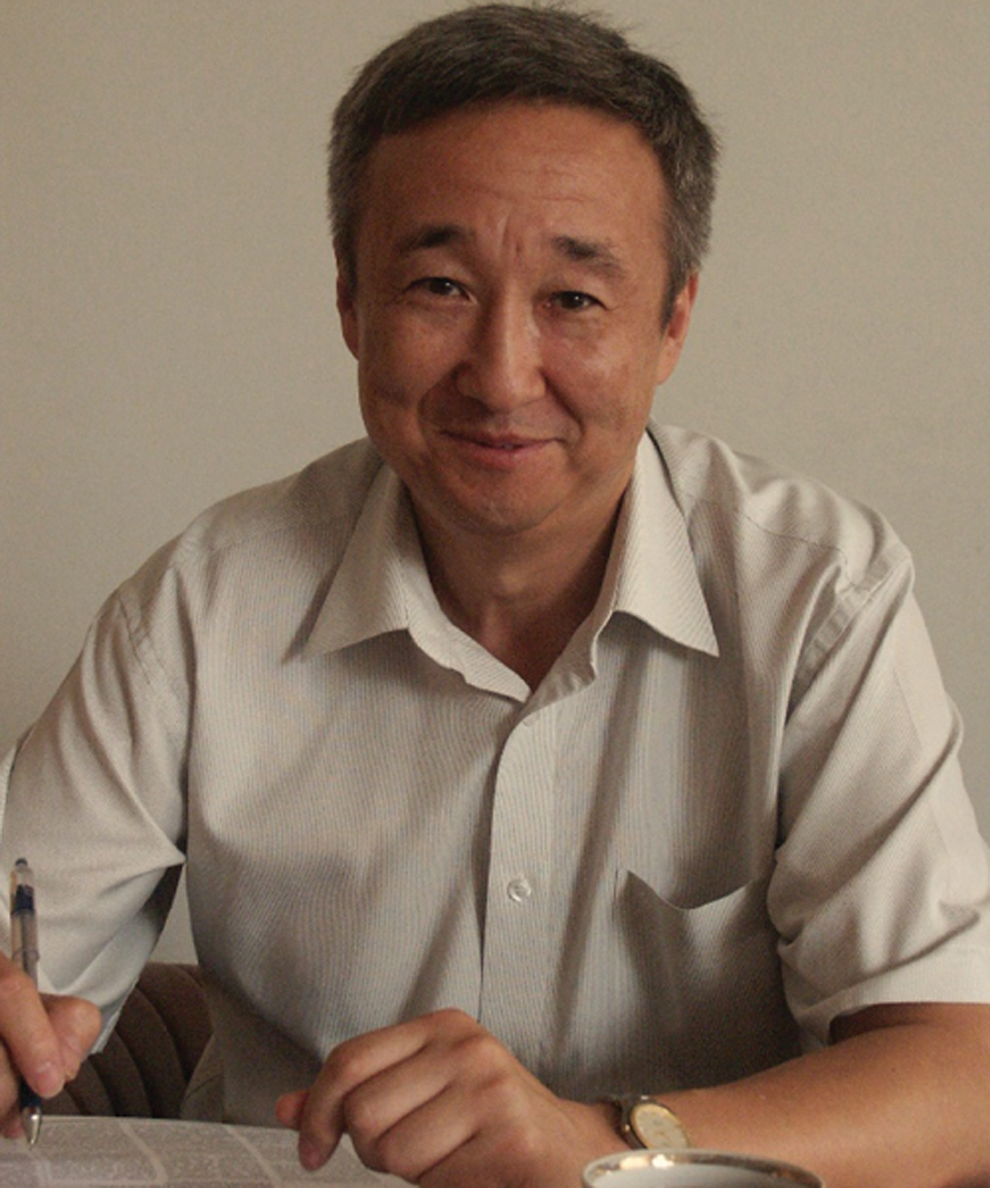
Almaz Aldashev was born into an academic Kyrgyz family in 1953. His father, a professor of veterinary medicine and pharmacology, had responsibilities for public health in the country. He undertook extensive trips to remote high mountain areas to inspect the health of highlanders and livestock, taking his son along. It might have been this experience that raised a deep interest in Almaz Aldashev for the health of highlanders and their natural environment as well as for biology, medicine, and nature in general. After completing school in the Kyrgyz capital, named Frunse at the time when the country was a member of the Soviet Union, he started studies in biophysics and biochemistry in Moscow. He completed this education with a PhD thesis on the structure of bacterial rhodopsin. Further research at the Russian Cardiological Center in Moscow resulted in a second doctoral thesis in biological sciences focusing on receptors, intracellular signaling, and hypoxic proteins in high altitude pulmonary hypertension (HAPH), a chronic altitude-related illness observed in many Kyrgyz highlanders.
In later years, as a senior researcher and director since 2002 of the Institute of Molecular Biology and Medicine in Bishkek, Aldashev performed a series of landmark studies in the field of HAPH describing clinical characteristics, hemodynamics and genetics of highlanders affected by HAPH. During visiting professorships in Denver, USA, and Paris, France, he established international research collaborations. They lead to studies on the effects of several drugs in lowering pulmonary artery pressure of patients with HAPH. Based on his extensive experience in the field, Aldashev was a member of the committee that published a consensus statement on chronic and subacute high altitude diseases on behalf of the International Society for Mountain Medicine. Further studies were devoted to forms of HAPH in yaks, new methods for molecular and genetic diagnosis of the predisposition to cardiovascular disease and diabetes in humans, and to the epidemiology and genetic characteristics of drug-resistant Mycobacterium tuberculosis observed among the penitentiary population of Kyrgyzstan. Moreover, Aldashev investigated the roots and genetic diversity of ethnic groups in Central Asia, a research that combined his interests in both natural sciences and history.
The high national and international reputation of Aldashev resulted in his election as a member and leader in various international committees and as an editor of journals and monographs. He was elected to be a member and Vice President of the Kyrgyz National Academy of Sciences, the highest academic body in the Kyrgyz Republic. In this position he dedicated all his creative energy and his influence to promote high standards in academic education and science. Importantly, he was also engaged in transferring knowledge and promoting awareness of the importance of scientific advances to the general public. Thus, he gave regular presentations on national television programs that became very popular and have shaped public opinion towards a high respect for education and research. A particular aim of Aldashev was to realize his vision of preservation and care of the national cultural heritage and of the natural resources in his country. Among his projects were the preservation of untouched mountain territories belonging to the Academy of Sciences and of the large botanical garden and parks in Bishkek, the capital of the Kyrgyz Republic, that are threatened by construction plans of financial entrepreneurs.
A man of family, Almaz Aldashev, together with his wife Nazira, enjoyed visiting the families of their son Alisher and their daughter Aisulu who pursued academic careers abroad. Meeting the grandchildren was always a special delight for Almaz. One of the hobbies that he enjoyed greatly was fishing. Spending time in nature allowed him to contemplate his life and develop new visions.
We are very sad to lose Almaz Aldashev, a highly respected friend, researcher, and colleague. A man who has promoted not only the advancement of science and education, but who has also opened our hearts to an understanding and appreciation of the hospitality of the Kyrgyz people and the beauty of nature in the mountainous Kyrgyz Republic. His memory will last in our minds and hearts.