




Abstract

I
The complex interplay of environmental, physical, and psychological stressors encountered at high altitude has the capacity to influence drug absorption, distribution, metabolism, and elimination, given their impact solus et cumulative on regional blood flow distribution especially to the liver and kidneys. This can alter drug pk-pd properties requiring adjustments in dosage regimens to maintain efficacy and prevent toxicity, especially for those with a narrow therapeutic index. Of all stressors, hypoxia has traditionally attracted the lion's share of experimental interest, and the general consensus based largely on animal and in vitro findings indicates that it reduces clearance of selected drugs, thereby increasing the probability of drug toxicity. From a mechanistic perspective, this has been attributed to (1) a reduction in the rate of drug metabolism subsequent to downregulation of select cytochrome P450 isoforms for which oxygen is a substrate, (2) altered pH and changes in protein binding and distribution volumes, and, as already outlined, (3) altered blood flow to organs of distribution or metabolism. In contrast, human findings are generally inconclusive although unified by the general observation that drug pk-pd properties are altered.
A summary of the relevant studies conducted to date is illustrated in Figure 1, reflecting some of the drugs outlined in the consensus guide with the exception of the antidepressant lithium. It is surprising that so few studies exist given the (anticipated) extent of medication and estimated 140 million “hypoxic highlanders” currently living above 2500 m, notwithstanding the millions of lowlanders who travel to high altitude for occupational, recreational, or religious purposes. Furthermore, compelling evidence suggests that arterial hypoxemia is the primary stimulus responsible for the reduced drug clearance and increased toxicity observed in patients with chronic pulmonary disease and heart failure (du Souich and Fradette, 2011). Hypoxia also causes vasogenic brain swelling (Kallenberg et al., 2007) subsequent to transient, although minor, opening of the blood–brain barrier, potentially facilitating regional uptake of (previously considered) “brain-impermeable” drugs. The situation becomes further complicated when factoring in other stressors typically encountered at high altitude notably cold temperature, psychological stress and exercise, that each have been shown to independently modulate drug pk-pd properties (Peng and Cheung, 2011).
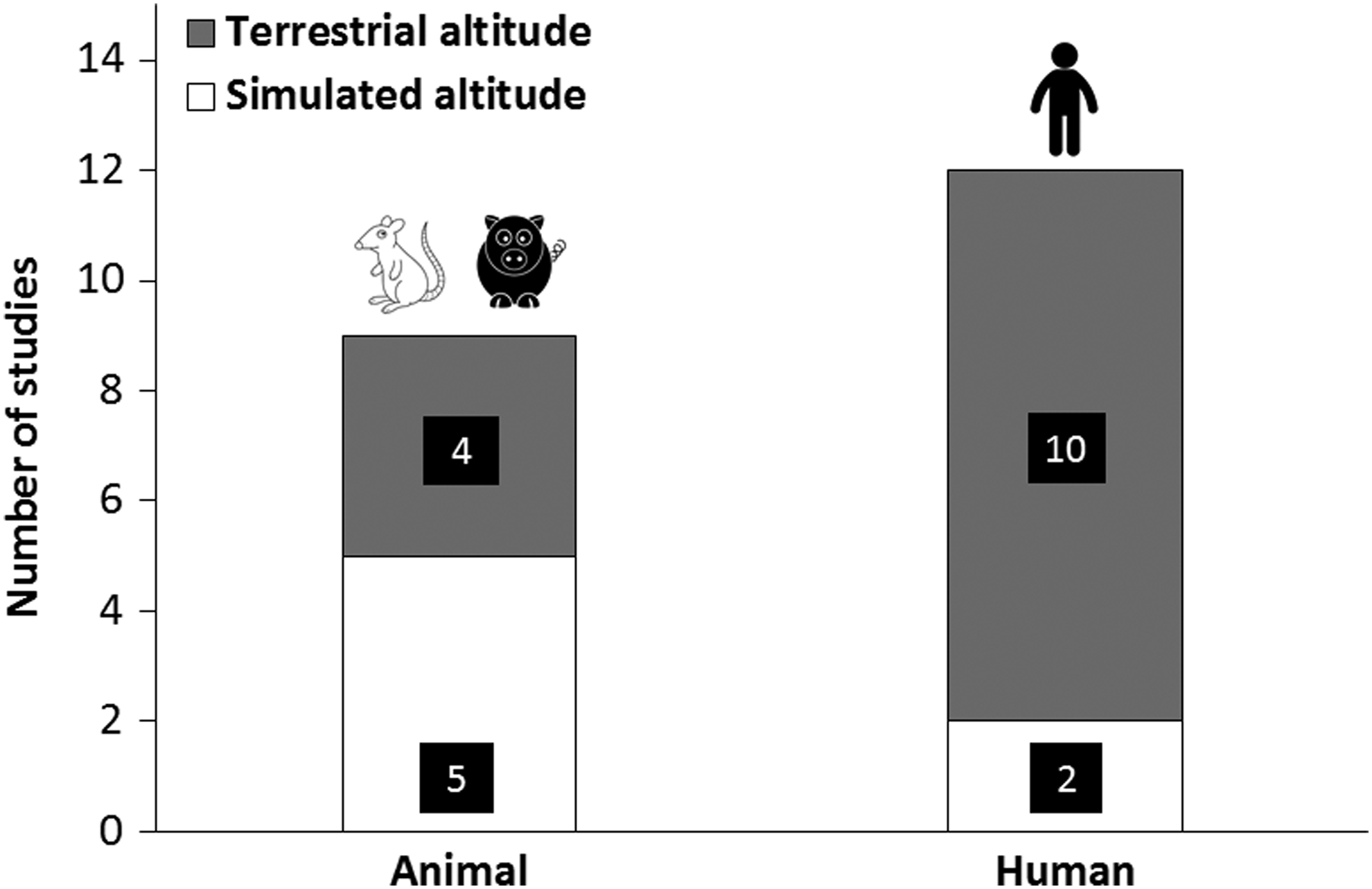
Studies investigating drug pharmacokinetic-pharmacodynamic (pk-pd) properties in response to experimental hypoxia (simulated altitude) or terrestrial altitude. Data were obtained after a systematic review of the published literature using the U.S. National Library of Medicine National Institutes of Health database (PubMed.gov) on November 3, 2016. The search terms were Pharmacokinetics or Drug Metabolism and Altitude or Hypoxia. Search results revealed a total of 109 studies of which only 21 were found to be relevant, incorporating a sea-level/normoxia control group comparator. All studies without exception reported a change in drug pk-pd properties during the experimental exposure.
Thus, although our understanding of the mechanisms and consequences of altered drug pk-pd properties at terrestrial high altitude is limited, it is important to encourage research activity in this area, including the development of physiologically based pharmacokinetic models to better define safer and more effective pharmacological interventions.
