




Abstract
Background:
The University of California White Mountain Research Center is located on Mount Barcroft, a 13,040-ft (3975-m) peak on the California White Mountain range. This report describes how the peak got its name honoring Sir Joseph Barcroft of Great Britain.
Materials and Methods:
Several publicly available webpages were the sources for this study.
Results:
On October 16, 1951, the United States Board on Geographic Names approved “Mount Barcroft” as the name for a peak on the California White Mountain range enabling the building of a facility dedicated to high-altitude research. The process of naming, however, was far from smooth. Objections came from the members of the Sierra Club, editors of a local newspaper, and a few citizens of California delaying the approval process. At least six other names had been proposed, three of which were from a Native American Indian language. Those who opposed the name “Mount Barcroft” argued that Barcroft never visited the United States, let alone the White Mountain region, and there was a paucity of Native American Indian names for geographic features in the United States.
Conclusions:
Despite oppositions and controversies, however, a much-deserved scientist was duly honored by an agency of the United States federal government.
Introduction
Scientists around the world know the remarkable contributions of Sir Joseph Barcroft (1872–1947) to medical science in general and high-altitude physiology in particular (Dunn, 2000; West, 2013; Longo, 2016). Some of his significant contributions include the development of differential blood gas manometer (the forerunner of today's blood gas-measuring apparatus), disproving that alveolar epithelium secreted oxygen at high altitudes (or at any altitude), describing the mechanism of gas transport in the blood, and many discoveries related to body's adaptation to high altitude. In 1920, he famously became a “guinea pig scientist,” living inside a glass chamber for 6 days during which the inspired PO2 was dropped to 84 mm Hg—a pressure lower than on top of Pikes Peak. In that low-oxygen environment, he studied the effects of exercise on blood gases by riding a bicycle. He had his left radial artery cannulated to obtain periodic blood samples to measure arterial blood gas tensions. In later years, he would feel amused when doctors and nurses fumbled to feel his nonexistent left radial artery pulse.
Barcroft received many honors and awards during his lifetime, and he was also posthumously honored by the United States government by naming a mountain peak in his name in the California White Mountain Range.
The process of how the United States Board on Geographic Names recognized a non-U.S. citizen for the naming of a mountain peak, “Mount Barcroft,” is not well known. In this brief report, I have described this interesting story.
Materials and Methods
I have based my research from consulting publicly available sources, including the webpages of the United States Geological Survey (USGS, 1951) and the history page of the California White Mountain Research Center (WMRC, 2019). Supplementary Table S1 (Supplementary Data) provides a list of the original file folders along with links to the webpages containing these documents.
Results and Discussion
The story of Mount Barcroft begins with the origin of the University of California WMRC (formerly, White Mountain Research Station) and its first director, Dr. Nello Pace, University of California, Berkeley (WMRC, 2019). Pace served in the United States Navy for 4 years and helped establish the Navy Medical Research Institute in Bethesda, Maryland. In 1946, he returned to his alma mater, University of California, Berkeley, where he continued his research on high-altitude physiology. In early 1950, Pace and a few scientists from California negotiated with the officials in the United States Office of Naval Research to approve funds to construct a public research station on an unnamed peak in the California White Mountain Range. They received the funding in July 1950.
Building a laboratory on an unnamed mountain peak was problematic because it lacked a reference point, such as a postal code. And the peak was not within a city or municipal boundary; therefore, for logistical purposes, there was a need for a name to the mountain peak.
On October 5, 1950, Pace wrote to the U.S. Board on Geographic Names in Washington, D.C., that “…a small laboratory building is being contemplated on an unnamed peak in the White Mountain Range of California…[and that]…it would be very convenient if the peak were designated by a suitable official name.” He asked that the peak be named “Mount Bert” to honor the great French physiologist Paul Bert (1833–1886), who, Pace noted, was often being referred to as “the father of aviation medicine.”
The U.S. Board on Geographic Names is a Federal body within the U.S. Department of Interior with the task of assigning names for geographic features in the United States to maintain uniformity of usage. Its executive secretary, Dr. Burrill, replied Pace that he appreciated a need for a name to the mountain peak, but was concerned that if the research facility was not going to be built, naming it “…for a French physiologist would hardly be appropriate.”
He also noted that “Mount Bert” would be corrupted in pronunciation, since most Americans would Anglicize it as “Burt” rather than using the French pronunciation as “bearh” or “behrhh” with a soft “b” and silent “t.”
Burrill sent inquiries to the secretary of the Sierra Club in San Francisco and the chief of the Forest Service in the United States Department of Agriculture in Washington, D.C., among others, to find out if the mountain peak already had any formal or informal name.
Dr. Pace soon replied that the construction of the research laboratory was indeed going to happen. He said that although he agreed that Anglicizing the pronunciation of Mount Bert was a possibility, he still preferred this name because of its appropriateness and because it was concise, too.
Now enter Mr. Chester Versteeg of Los Angles, a senior member of the Sierra Club, an avid mountain climber, and a local activist. Within a couple of weeks of Pace's correspondence with the U.S. Board on Geographic Names, Versteeg wrote identical letters to Dr. Burrill and the Forest Service. He requested that the mountain peak be given one of three names, all from the Native American Indian language called Mono, associated with Northern Paiutes, who inhabited the region. His suggestions were: “Mount Tohina,” or “Mount Tuhna,” (both meaning deer); or “Mount Davi” (meaning sunlight). Of the first two, he felt that Tohina was “not bad,” but his preference was “Mount Davi” (pronounced “daa-we”) since the peak shined with sunlight throughout the year.
The Forest Service supervisor replied Versteeg that words meaning “deer” would be inappropriate since deer rarely frequented those mountains and that Mount Davi would be easily corrupted to “Mount Davis” losing its Native Indian language connotation.
Versteeg was not convinced: on the aforementioned letter, he made a cryptic handwritten comment, “…I doubt this….”
Over the ensuing months, many letters were exchanged between those who supported Versteeg's request and others who opposed him. These letters were sent to the Board on Geographic Names and the Forest Service. The editors of a local newspaper asked that the peak be named “Mount Chalfant” or “Mount Albright” honoring two prominent California historians.
Thus, by early 1951, the officers at U.S. Board on Geographic Names had their hands full. They had six names to consider, but in their judgment, none was appropriate—but the pressure was building.
On April 16, 1951, Burrill informed Pace that the Domestic Names Committee of the Board on Geographic Names met and decided that Mount Bert will not be suitable for reasons already noted. He asked for a suggestion of names of Americans who might have contributed importantly to high-altitude physiology, which would then be “…at least equally appropriate…”
In a lengthy reply dated April 20, 1951, Pace noted that as a Californian he was used to people corrupting Spanish names with American pronunciations and that Mount Bert was already being used informally in their official correspondence—thus, he preferred Mount Bert. However, he noted that he respected the concerns of the Board, and offered “Mount Barcroft” as an alternative, honoring Sir Joseph Barcroft, who had contributed significantly to high-altitude physiology.
Yet, Pace was clear that Mount Barcroft was his second choice. He added, “…It would be fitting, therefore, in my opinion, to prefer his name as second to that of Paul Bert…”
The day after receiving Pace's letter, Burrill replied to him, as if in relief. He thanked Pace for the alternate name assuring him that the Domestic Names Committee would consider it at their next meeting, which took place on June 7, 1951, and approved “Mount Barcroft.”
But the matter hardly ended there. Someone with a knowledge of this decision complained to the Forest Service that the U.S. Board on Geographic Names had ignored their recommendations.
Within 2 weeks, the acting chief of the Forest Service, Mr. Loveridge, conveyed through his assistant Mr. Wright to Dr. Burrill that the Domestic Names Committee's tentative decision naming Mount Barcroft should be rescinded, pending additional review and concurrence by the Forest Service, and that “…no publicity be given” to the current decision.
Dr. Burrill had no choice but to comply with this demand and to wait without making additional decisions.
Versteeg, too, had learned of the tentative decision by the Domestic Names Committee and was unhappy. In a letter to Dr. Burrill dated July 30, 1951, he argued why the names he had recommended were preferable to “Mount Barcroft.” He added that he had polled eight local dignitaries, all of whom opted for “Mount Davi,” and none for “Mount Barcroft.”
He summarized the reasons for the objections. “…Barcroft probably never was in nor saw the White Mountains, probably never was in California…there are too many names of men of science already…if anyone wished to honor Professor Barcroft, they should pick out some unnamed mountain among the hundreds unnamed in Canada….Mount Davi is a truly Indian name, a tribal word of the race that lived in that area at the time of the coming of the white man…” Versteeg probably sent this letter to the local news media and other political entities.
Thus, the matter stood still for four more months.
When the Domestic Names Committee met on October 16, 1951, they reaffirmed their previous recommendation to name the peak, “Mount Barcroft” (Fig. 1). The same day, the Director of the Interior, Division of Geography, approved the decision and asked that the information be published in all government documents. The meeting minutes have not been archived. But, the names of the members in attendance have been preserved (USGS, 1951).
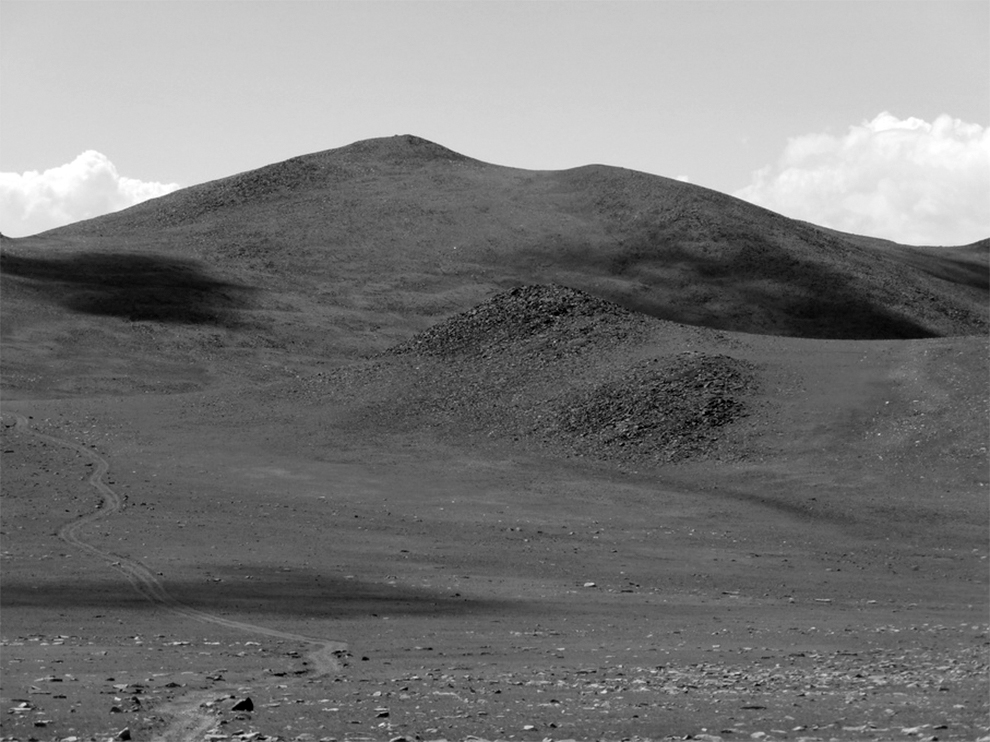
Mount Barcroft, a 13,040-ft (3975-m) peak located at latitude 37° 35′ north and longitude 118° 15′ west, 16 miles south of a city called Bishop in California, and about 4 miles southeast of the White Mountain Peak in Inyo National Forest. (Figure courtesy: Jim Bishop, University of California WMRC Archives WMRC, White Mountain Research Center.)
Dr. Burrill sent letters informing of this decision to Pace, Versteeg, some members of the Sierra Club, and to the University of California Press. However, neither did he issue a press release nor attempt to publicize this decision widely. Even the Barcroft family was not notified.
Six years after naming Mount Barcroft, on December 6, 1957, Professor Chester Hyman of University of California, Berkeley, wrote to Dr. Burrill asking about the process and the details of naming Mount Barcroft, so that he could inform Sir Joseph Barcroft's son Professor Henry Barcroft, who was Hyman's friend and a colleague. Burrill sent Hyman a detailed reply describing all the steps that went into the approval process, including the controversies and difficulties.
However, he asked Hyman not to mention all of the details to Barcroft's son, especially the controversy and “…mild” opposition in “naming for a Britisher, but would not, of course, deny it.” He added, “…we will trust your discretion.”
Hyman replied that Professor Henry Barcroft would be delighted to learn about the naming of the California mountain peak honoring his father. Hyman assured that he would not reveal the controversy. He also noted that naming the peak honoring Barcroft was “at least as appropriate as the name called Mount Bert.”
The Barcroft Station (Fig. 2) on Mount Barcroft was later named WMRC. The laboratory, initially named Barcroft Laboratory, was renamed “Nello Pace Laboratory” in 1983 honoring Pace, who was its first director. Pace died in 1995.
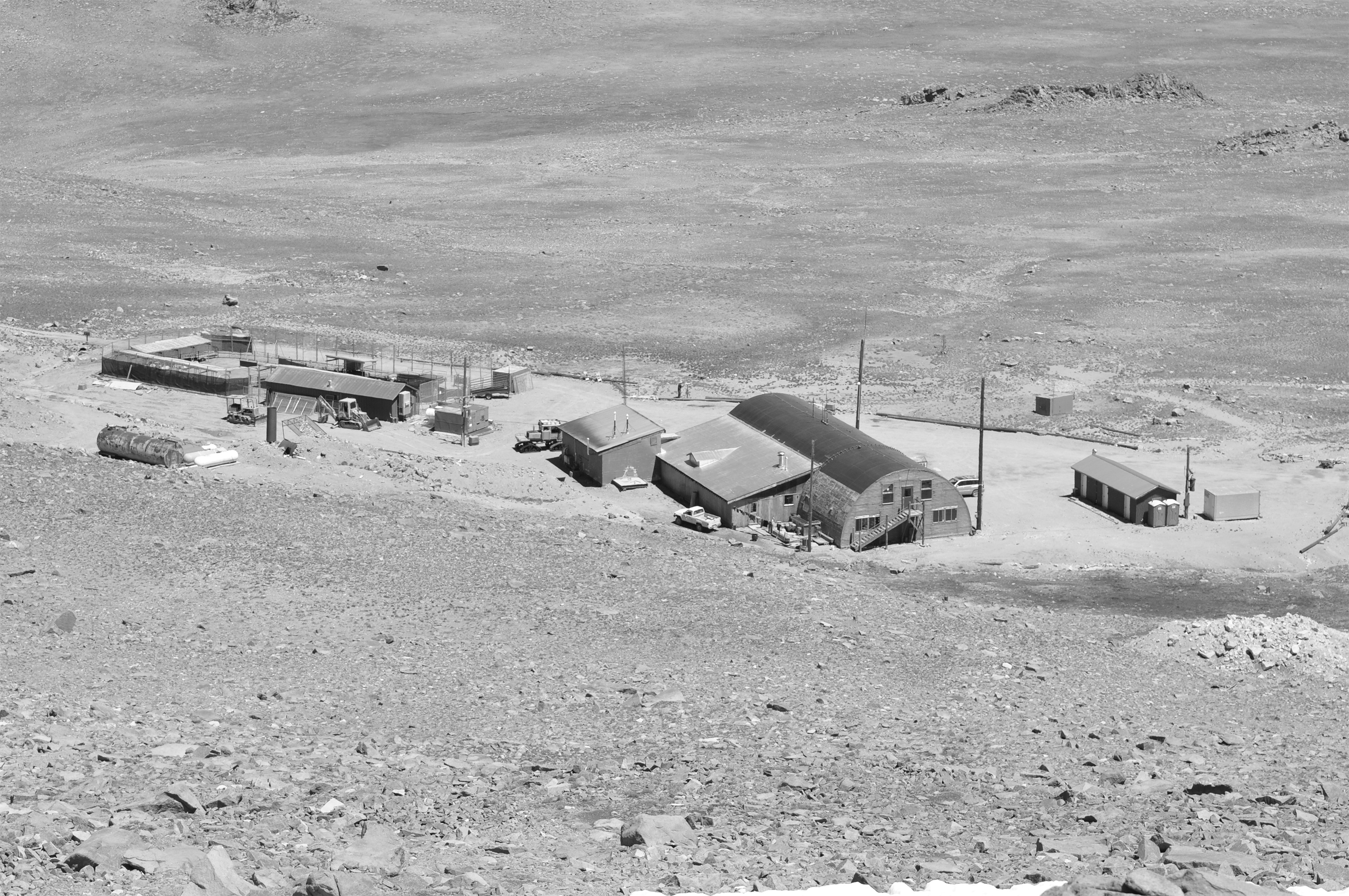
University of California WMRC, Nello Pace Laboratory. (Figure courtesy: Jim Bishop, University of California WMRC Archives).
In 1964, the U.S. Board on Geographic Names honored Versteeg by naming a 13,470-ft (4106-m) peak “Mount Versteeg” in Sequoia National Park (USGS, 1964). The official notification reads, “Named for Chester Versteeg (1887–1963), businessman, lecturer, and author, who devoted much of his life to furthering interest in the Sierra Nevada.”
Conclusions
This is how a California mountain peak was christened “Mount Barcroft,” an immensely worthy recognition for a world-renowned researcher, despite controversies and oppositions. It also underscores that scientific knowledge has no national boundaries—hypoxia is hypoxia, whether on Mount Everest or Mount Barcroft. In this context, by honoring Sir Joseph Barcroft, the United States has honored itself.
Footnotes
Acknowledgments
The author thanks Ms. Denise Waterbury (coordinator), Mr. Daniel Pritchett (historian), and Mr. Jim Bishop (archives), University of California White Mountain Research Center, for assistance with the history of WMRC and providing the figures for this article.
Author Contribution
T.N.K.R., MD, conceived, conducted research, and wrote the entire article.
Author Disclosure Statement
There are no conflicts of interest with the institution where the author has an honorary appointment.
Funding Information
No funding was received for this article.

References
Supplementary Material
Please find the following supplemental material available below.
For Open Access articles published under a Creative Commons License, all supplemental material carries the same license as the article it is associated with.
For non-Open Access articles published, all supplemental material carries a non-exclusive license, and permission requests for re-use of supplemental material or any part of supplemental material shall be sent directly to the copyright owner as specified in the copyright notice associated with the article.
