




Abstract
Editor's note:
Hildegard Büning is one of the leading gene therapy researchers in Europe. She has been a key figure in the field of adeno-associated virus research and capsid engineering for some two decades, and is currently deputy director of the Institute of Experimental Hematology at Hannover Medical School in Germany. She has also had a long-standing interest in serving the broader gene therapy community, and is currently president of the European Society of Gene and Cell Therapy (ESGCT).
In this exclusive interview, we asked Professor Büning to share some career highlights and motivations, including her latest plans for ESGCT.
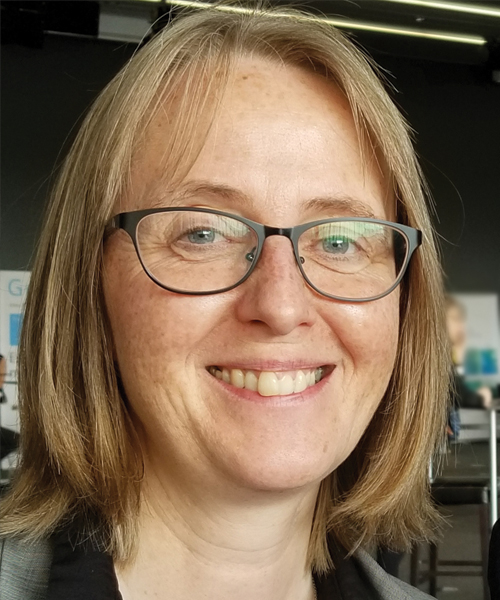
In 2004, I established my first own laboratory at the University of Cologne, appropriately entitled the “Laboratory AAV vector development.” Specifically, [the goal was] to improve the AAV vector system by capsid engineering, studying how AAV interacts with cells and how a cell responds to the AAV infection or transduction. In 2015, I accepted a professorship at Hannover Medical School (MHH). My research team is part of the Institute of Experimental Hematology at MHH (Fig. 1), and I am deputy director of the institute. It is an inspiring environment as our institute, headed by Professor Axel Schambach, focuses on improving the efficiency and safety of gene therapy. By adding AAV vectors to the institute's portfolio, we were able to complement the existing research interest centered on gamma-, lenti-, and alpha-retroviral vectors as well as patient-derived stem cells.
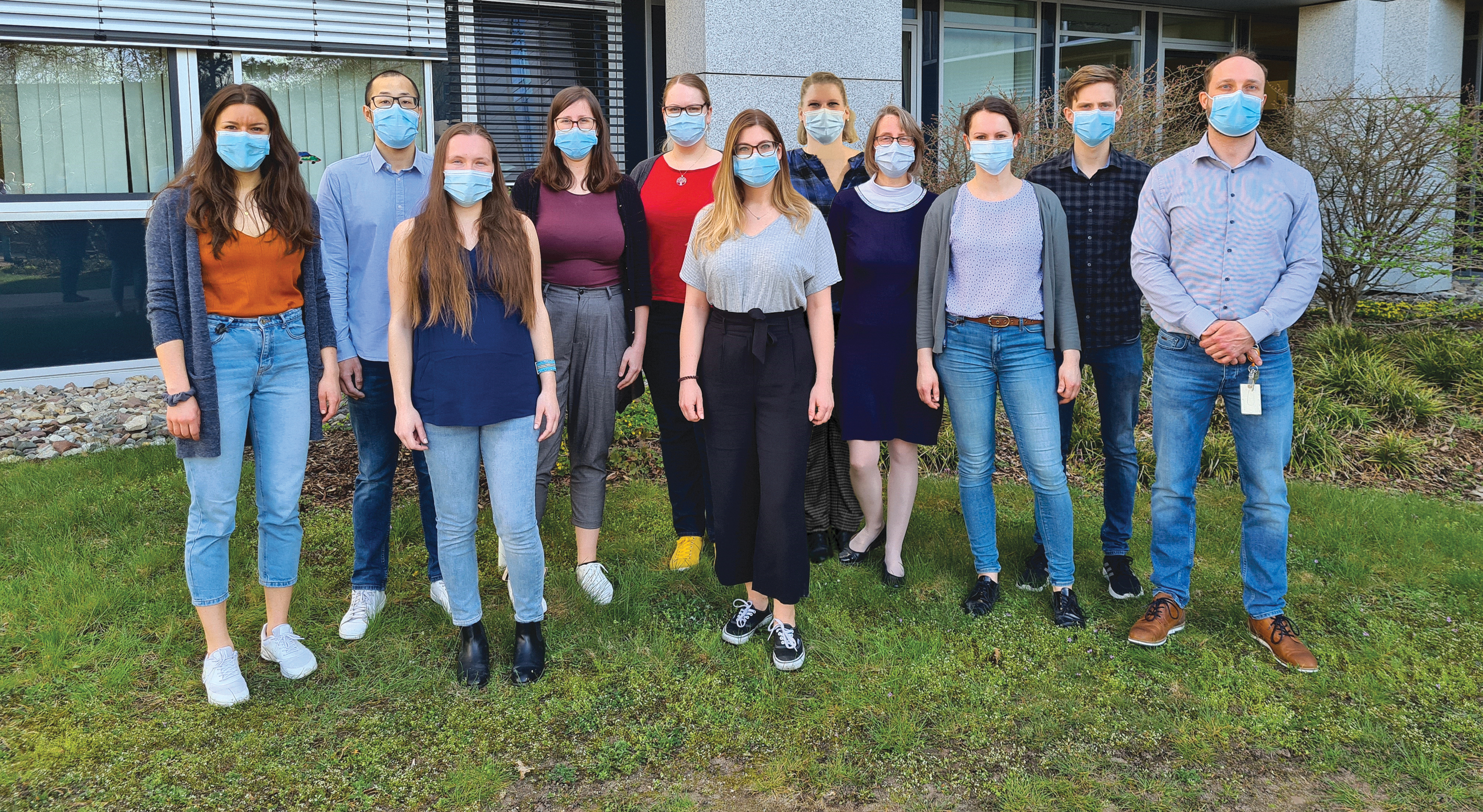
The Büning group at the Institute of Experimental Hematology, Hannover Medical School, Germany.
The key motivation driving my scientific career is the desire to help bringing gene and cell therapy to the patients in need. This is why the involvement in the gene and cell therapy societies is so important to me. You can contribute on a different level by helping to organize scientific congresses, which are key for scientific exchange and networking, through training and teaching activities for our next-generation scientists or by interacting with regulatory bodies, patient organizations, or the lay public.
It was great to start as PhD student in the Institute of Biochemistry under the guidance of Professor Ernst-Ludwig Winnacker, who was promoting the idea of innovative therapies. I was investigating how NF-kappa B, a very prominent molecule when it comes to immune responses, interacts with DNA. This was an excellent opportunity to gain broad insight into the methods in molecular biology. Later, as a post doc in the Hallek group, I took the opportunity to enter the field of gene therapy by working on AAV vectors, a vector system that was at that time relatively new to the field. We went to the national and international gene therapy meetings, hearing all the exciting talks. Then, I remember I was giving a lecture on the concept of gene therapy and what it might offer to patients on the day when, as you mentioned, the first leukemia cases were announced in France.
At that time, when the media contacted you about gene therapy, they always referred to the tragic death of Jessie Gelsinger and to the leukemia cases with first-generation gamma-retroviral vectors. We had to explain how this could happen and what this meant for the field. I remember times when the pharma industry was nearly afraid of using the term gene therapy. This has changed considerably because the efforts since then to develop efficient and safe gene therapy approaches have resulted in promising scientific as well as technological achievements and have brought back trust. It has been a long road to the first market approvals that really demonstrated that gene therapy was becoming a clinical reality. Nevertheless, it is important to present results, current challenges, and advantages, but also possible risks in a comprehensive and unbiased way.
It was pretty clear that my research interest was going to focus on optimizing AAV vectors for cell and gene therapy. Each application has distinct requirements, and thus to be able to use the full potential of your vector, you should tailor it in a way that best meets the specific needs of your application. To do so, you need to characterize the AAV–host interaction, which allows you to identify the challenges that are to be addressed and then to use engineering strategies to equip AAV with respective features.
I am proud that our team could contribute to both these areas. With regard to the host–vector interaction, for example, we identified the second pattern-recognition receptor for AAV—the toll-like receptor 2, recognizing the capsid. We were also the first to report that AAV induces autophagy in hepatocytes and that AAV requires this cell response for an effective transgene expression in hepatocytes. With this knowledge, you can use strategies to modulate the autophagic response of a cell, and to make AAV more efficient in liver-directed gene therapy.
Contributions to the second area—besides the development of a great number of novel AAV capsid variants—include defining features that enable a true vector retargeting, improving AAV library approaches, identification of sites that can be used for capsid engineering or the development of a novel vaccine platform, the single-shoot prime-boost AAV vaccines. One interesting finding is that we observed that capsid variants that we select on an AAV2 background in mice can be used across species, which makes a lot of developmental endeavors much easier.
On vectors, we have tried to understand the infection biology better and engineer the vectors to equip them with novel features for improved efficacy and safety. Further advances are related to cell culture systems and manufacturing or development of safety assay systems. This was required to reach the stage where we are. What was also very important is the engagement of patient organizations—interactions between the science community and patient organizations, an open discussion about what is possible, discuss the risks. Also, interactions with regulatory bodies are excellent and key for the field.
Now we are at the stage where people believe that gene therapy is becoming a clinical reality. We are facing a totally different set of issues and challenges, because of the high costs, the challenges accompanied by the availability of treatments and treatment centers, and so on. However, we must still improve current gene and cell therapy approaches. Let me remind you how many vectors we have to inject and that we still have to exclude patients, because they have neutralizing antibodies against the vectors we are using.
We use these as tools in gene therapy and we want them to transduce this and that cell type, independently of whether this is the preferred cell type of the parental virus or not. If you have these first-generation tools and you need to use high doses to reach your target, then it is clear that your body will not believe that these vectors are nice guys, because our immune system has been trained to recognize these particles as foreign and to be suspicious of them.
Thus, we have to improve the current vectors. I am proud because this is what our group is focusing on, to optimize how these viruses recognize the target cell and how they are processed. We would like to make AAV blind for off-target cells, and equip them with a navigation system to specifically reach the target cell of that particular treatment strategy. By increasing the specificity and adapting the vector to efficiently transduce given target cells, you can reduce the dose you have to apply. This will reduce the risk of immune responses and lower the cost of production. This is making nature more efficient and less of a hazard to the body. Automatically you will make it safer.
For some issues, you need something that is just a kiss-and-run; for others it would be good to have vector genomes stably integrated; for slowly or nonproliferating tissues you might better go for episomally maintained systems. There is not a best tool for everything, but we need to think about what would be the best fit.
I think this is a big advantage. The other things you mentioned—conventional genome editing versus prime editing, base editing, and so on—of course, if we could do something like this without cutting the genome, it would be even more of an advantage. The prospect of real repair, however it will look like, is fantastic.
I became president in 2018, and we had a wonderful congress in Barcelona in 2019 (Fig. 2). We were planning for 2020 and COVID-19 came up. Our annual meetings have a spirit that cannot be fully compensated by virtual formats, so we decided not to switch from an in-person meeting to a virtual event in 2020. As we had to postpone our ESGCT spring school as well, an advanced lecture course in a congress-like format for our PhD and MD students, we launched the ESGCT e-School in 2020 to stay in contact with our members. I am grateful to our excellent speakers who agreed to be live on YouTube giving a lecture for our audience, which was freely available to cover the entire field of gene and cell therapy. We organized an eSeminar series on COVID-19, also freely available, and our student board members had the great idea of launching webinars aimed at our early career researchers.
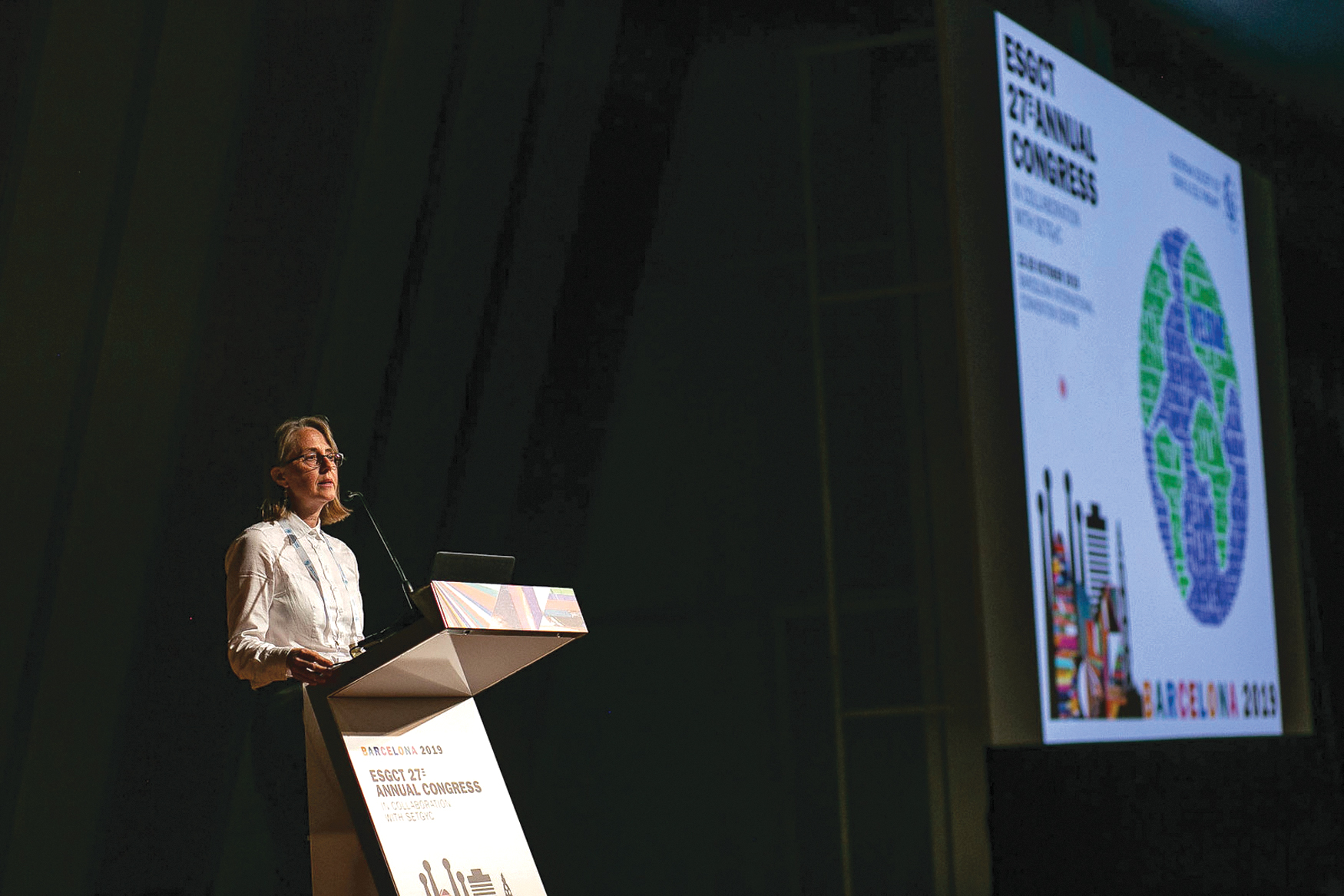
Hildegard Büning delivers the 2019 presidential address at the ESGCT annual conference in Barcelona (Courtesy: ESGCT).
In 2021, we remain active with our eSeminar organizing series of three to four seminars per topic and we are currently finalizing the program of our congress in October, which will be a virtual format this year.
Our mission is to promote basic and clinical research in gene and cell therapy including vaccine development. Creating a platform for scientific networking and exchange as well as education and training are important pillars. We are also serving as an unbiased information platform for lay people. We work closely with all the national gene and cell therapy societies in Europe and launch joint activities such as the spring school or annual congresses. That is very important to us. In this regard, I would also like to mention that—together with national societies—we are developing an information portal for patients and the lay public that we are hoping to launch by the end of the year.
The question of how we make gene therapy a clinical reality is not answered by the first marked authorizations, we tackled this topic a minute ago. ESGCT has started having workshops inviting the different stakeholders to discuss challenges and possible solutions. We have the first drugs on the market, but what are the next steps to bring this to patients? This is the mission of ESGCT—bringing gene therapy to the patients in need.