




Abstract

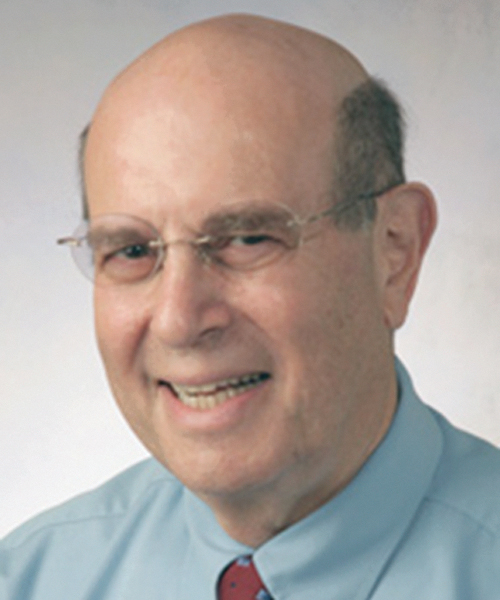
Dr. Kenneth I. Berns, a world-renowned physician-scientist, virologist, thought leader in academic medicine, mentor, teacher, a beloved colleague, and generally regarded as the “Grandfather of AAV,” passed away at the age of 85 years on January 26, 2024, in Gainesville, Florida, USA.
Ken was born on June 14, 1938, in Cleveland, Ohio, USA. His academic credentials were certainly enviable, nonetheless he was always collegial and friendly. He attended Harvard University for 3 years, transferred to, and graduated from, Johns Hopkins University with his undergraduate degree in 1960. He subsequently obtained his PhD degree in 1964, and his MD degree from Johns Hopkins University School of Medicine in 1966. After a year of internship at the Johns Hopkins Hospital, he served as a staff associate and U.S. Public Health Services Officer at the National Institutes of Health in Bethesda, he returned to Johns Hopkins University School of Medicine, where he was appointed assistant professor in the department of microbiology in 1970, and was promoted to associate professor in 1976.
In 1976, Ken was recruited to the University of Florida as professor and chairman of the department of immunology and medical microbiology, later renamed the department of molecular genetics and microbiology. After a sabbatical at the Weizmann Institute of Science in Rehovot, Israel, in 1984, he accepted an appointment as the R.A. Rees Pritchett Professor and Chairman of the department of microbiology at Cornell University Medical College in New York City. In 1998, Ken was recruited back to the University of Florida as Folke H. Peterson Professor and Dean of College of Medicine, and vice president of Health Affairs, UF Health.
He was also named president of the Mount Sinai Medical Center in New York in 2002. In 2003, Ken returned to the University of Florida as director of the UF Genetics Institute. His leadership was a guiding light for these academic health centers and he shaped the career of countless physician scientists.
Ken had a highly distinguished scientific career. He was a National Merit Scholar, a Howard Hughes Medical Investigator, and an NIH Merit Award recipient, among many others accolades. He was elected as a member of the National Academy of Medicine in 1992, and the National Academy of Sciences in 1995. He was also elected as Fellow of the American Association for the Advancement of Science in 2000. Ken was named president of the American Society for Virology in 1988, and president of the American Society for Microbiology in 1996.
He published >140 scientific articles by delineating various aspects of the basic molecular biology of adeno-associated virus (AAV). These include characterization of the dual nature of the AAV lifecycle—productive replication and latent infection; documentation of the single-stranded nature of the AAV genome; elucidation of the mechanism of AAV DNA replication and viral gene expression; characterization of AAV inverted terminal repeats; determination of the complete nucleotide sequence of the AAV2 genome; discovery of site-specific integration of the AAV2 genome into human chromosome 19; and in collaboration with Nicholas Muzyczka's laboratory, documentation of rescue of the AAV genome from recombinant plasmid DNA, and generation of the first AAV vector.
These seminal discoveries formed the basis of the field of molecular medicine using gene therapy with AAV vectors. The use of AAV vectors has been transformative in the management of severe and previously fatal conditions and will continue to impact medical practice in the future.
Ken served on numerous national and international committees, including the National Science Advisory Committee for Biosecurity, U.S. National Committee on Poliovirus Containment, Advisory Committee to Director of CDC, National Science Advisory Board for Biosecurity, National Vaccine Advisory Committee, NIH Recombinant DNA Advisory Committee, and International Committee on Taxonomy of Viruses. Furthermore, Ken's leadership as a chair, dean, senior vice president, and institute director set the course of the University of Florida as the world leader in AAV virology and gene therapy.
Ken was not only a world-class physician-scientist, but also an exemplary teacher and mentor, having guided numerous second and third generation AAV scientists.
Ken retired in 2012 yet remained active as distinguished professor emeritus in the department of molecular genetics and microbiology in the University of Florida College of Medicine. He continued to guide scientists in the field and the Ken and Laura Berns Award for Excellence in Genetics was established to recognize a Genetics & Genomics Program graduate student for significant contributions to the scientific community.
Ken is survived by his wife, Laura L. Berns, their son, Jonathan Berns, their daughter, Debbie Lingwood, his sister, Karen Newborn, and two granddaughters, Cassandra and Alexandra Berns.
Rest in peace, Ken.