




Abstract

W
Being on the cutting edge of a new field and facing a challenging problem are always exhilarating, and Pete was working at the forefront with interferon (IFN) in his crosshairs. As a protein chemist who had a great deal of experience in protein purification, he took on the challenge of purifying mouse IFN and human IFN-beta and did it successfully (Knight, 1975, 1976a). If you asked Pete what were his major contributions he would say they were 1. “The determination of 2×10⁸ U/mg as the ultimate specific activity for murine and human IFN-beta” (Knight, 1975, 1976a); 2. “The demonstration that murine IFN is a family of at least eight glycoproteins, all having IFN activity” (Knight, 1975); 3. “The demonstration that human IFN-beta is one glycoprotein of molecular weight 20,000” (Knight, 1976a); 4. “The demonstration that pure IFN-beta contains both antiviral and the antiproliferative activity” (Knight, 1976b, 2008).
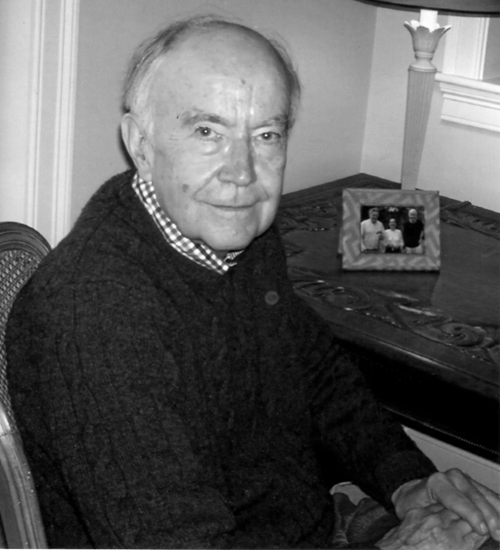
He and his colleagues then went on to sequence the first human IFN-beta with the help of Leroy Hood and Mike Hunkapiller (Knight and others, 1980). This was a true intellectual collaboration. We were proud that our lab at NIH, which was involved in the first sequencing of a human IFN-alpha, and Peter Lengyel's lab, which was involved in sequencing the first mouse IFNs, could participate in such a successful collaboration with Pete and L. Hood and M. Hunkapiller at the California Institute of Technology (Taira and others 1980; Zoon and others 1980). Pete's interest in IFN continued to grow. He discovered and studied a number of IFN-induced genes and proteins (Knight and Korant 1979; Korant and others 1984; Knight and others 1985; Blomstrom and others 1986). Pete shepherded the finances of the International Society for Interferon and Cytokine Research (ISICR) as Treasurer from 1985 to 1998. He was also very active reviewing manuscripts for the Journal of Interferon & Cytokine Research. In 1987 Pete and I co-organized the ISICR Meeting in Washington, DC, to commemorate the 30th anniversary of the discovery of IFN. Pete loved to travel and often that was in conjunction with the interferon meetings. We all have very fond memories of Pete at the meetings and the events surrounding it. Patsy often accompanied him and helped us all enjoy the beauties of the meeting sites. Pete retired from DuPont in 1990 and then went on to work with a new company, Cephalon, that same year, where he continued to provide expert advice for an additional 7 years. In 1997 he and Patsy decided to retire (really), and they went south to Hilton Head, South Carolina. There they had many wonderful years in the sun until they decided to join their son Peter and his family in Kittery, Maine, in 2005. Being together with his family and enjoying his granddaughter Caroline were of great importance to him. He and Patsy enjoyed his last years in Maine very much. Pete died with his family around him, peacefully and with dignity, the way we know he would have wanted it. Goodbye, Pete, we will miss you.